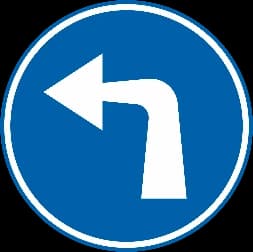
This D1b road sign, part of Belgium's mandatory signs, clearly indicates that you must turn left. It's essential to position your vehicle correctly and be prepared to follow this direction, especially when it crosses paths with pedestrians or cyclists. Always pay attention to supplementary panels, lane markings, and traffic lights, as these can refine the sign's instruction. This sign ensures orderly traffic flow by directing movements.
This section clarifies the meaning and practical application of Belgian road sign D1b, essential for your theory test revision. Proper recognition and interpretation of this mandatory traffic sign are crucial for safe navigation and adherence to Belgian traffic rules.
Belgian road sign D1b, titled "Turn left", belongs to the belgian mandatory signs group. It is used to communicate turn left in a form that drivers can recognise quickly during Belgian theory study and real traffic. The practical task is to position the vehicle early so the mandatory movement can be made without sudden braking or conflict, because the legal effect of a road sign starts from its placement and can be refined by panels, lane markings, traffic lights, or zone signs. For learners, the safest approach is to identify the sign early, say what road users or manoeuvres it affects, and then choose speed, position, and priority behaviour that match the displayed instruction.
Belgian road sign D1b means "Turn left". In practice, it tells drivers to follow the required direction, facility, or user route shown by the sign, while checking the exact road layout, markings, and any supplementary panels before acting.
Get clear, practical answers to the most common questions about the D1b - Turn left road sign. Learn how the sign works, what rules it represents, and how it affects real driving situations. This FAQ strengthens your understanding and supports accurate decision making for the Belgian driving theory exam in Belgium.
The D1b sign's main purpose is to inform drivers that they are required to turn left at the upcoming junction or route. It's a mandatory instruction designed to guide traffic flow and maintain order on the road.
When you see the D1b 'Turn Left' sign, you are prohibited from ignoring the required direction, making a conflicting manoeuvre, or using a facility reserved for other road users. You also shouldn't cut across lanes at the last moment to obey the sign late.
Upon seeing the D1b sign, you should prepare to turn left. This involves moving into the correct lane well in advance and making the turn as indicated. Remember to check for any supplementary panels that might provide additional context or restrictions.
Yes, Belgian road signs like D1b can be accompanied by supplementary panels. These panels might specify distance, time, vehicle category, or exemptions, meaning the mandatory left turn might not apply to everyone or at all times. Always read these panels carefully.
The D1b sign's instruction is often reinforced or clarified by lane markings and traffic lights. For example, lane markings might show that only the left lane can proceed with the mandatory left turn. If there's a traffic light, its signal will override or complement the sign's directive.
A clear reference image of the D1b - Turn left road sign used in Belgium.
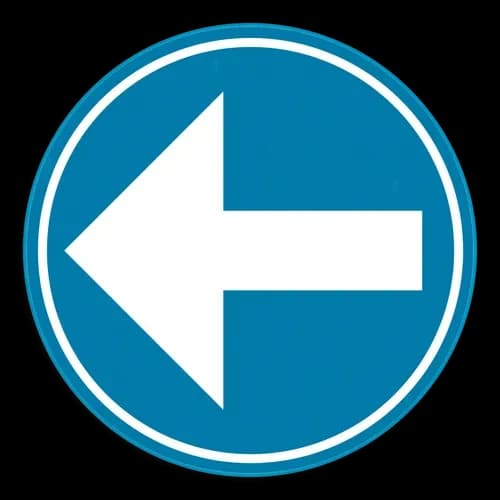
The D1b - Turn left road sign may also be known by these alternative names or terms.
The D1b - Turn left road sign is part of the Belgian Mandatory Signs category, which groups together signs with similar rules and functions.
Comparing 'Turn left' (D1b) with similar mandatory signs sharpens your recall and reduces errors on your Belgian theory test. Effective traffic sign comparison is key to understanding nuanced driving rules and achieving your licence.
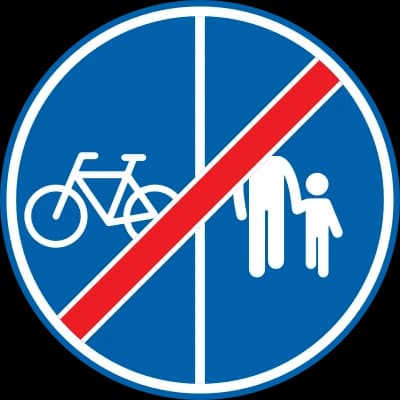
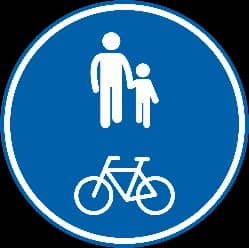
The D10 Sign: Navigating Shared Paths for Pedestrians and Cyclists
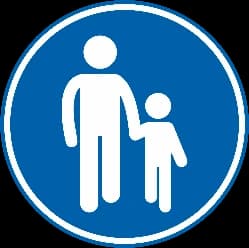
Belgium's D13 Sign: Follow the Mandatory Bridlepath Direction
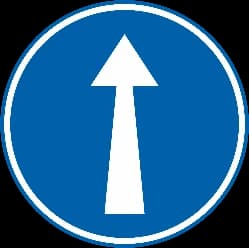
Mandatory Direction: What the Belgian D1a 'Ahead Only' Sign Means
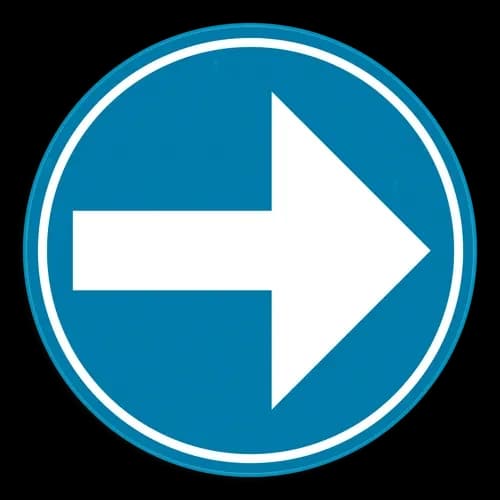
Understand the 'Turn Right' Mandatory Direction Sign (D1b)
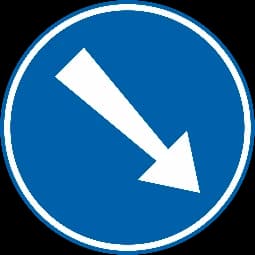
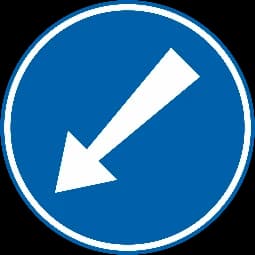
Understand the D1d 'Pass on Right' Mandatory Direction Sign
After reviewing all Belgian road signs, deepen your understanding by exploring specific categories such as warning, regulatory, or prohibitory signs. Practice recognition with targeted quizzes to reinforce learning for a successful theory test.
All Belgian Road Signs List