
This unit is crucial for your Belgian motorcycle theory exam, covering the essential language of the road: signs, markings, and traffic lights. You'll also master the critical priority rules, understanding who has right-of-way in diverse scenarios involving vehicles, trams, and pedestrians. Understanding these elements is fundamental for safe riding and passing your theory test.
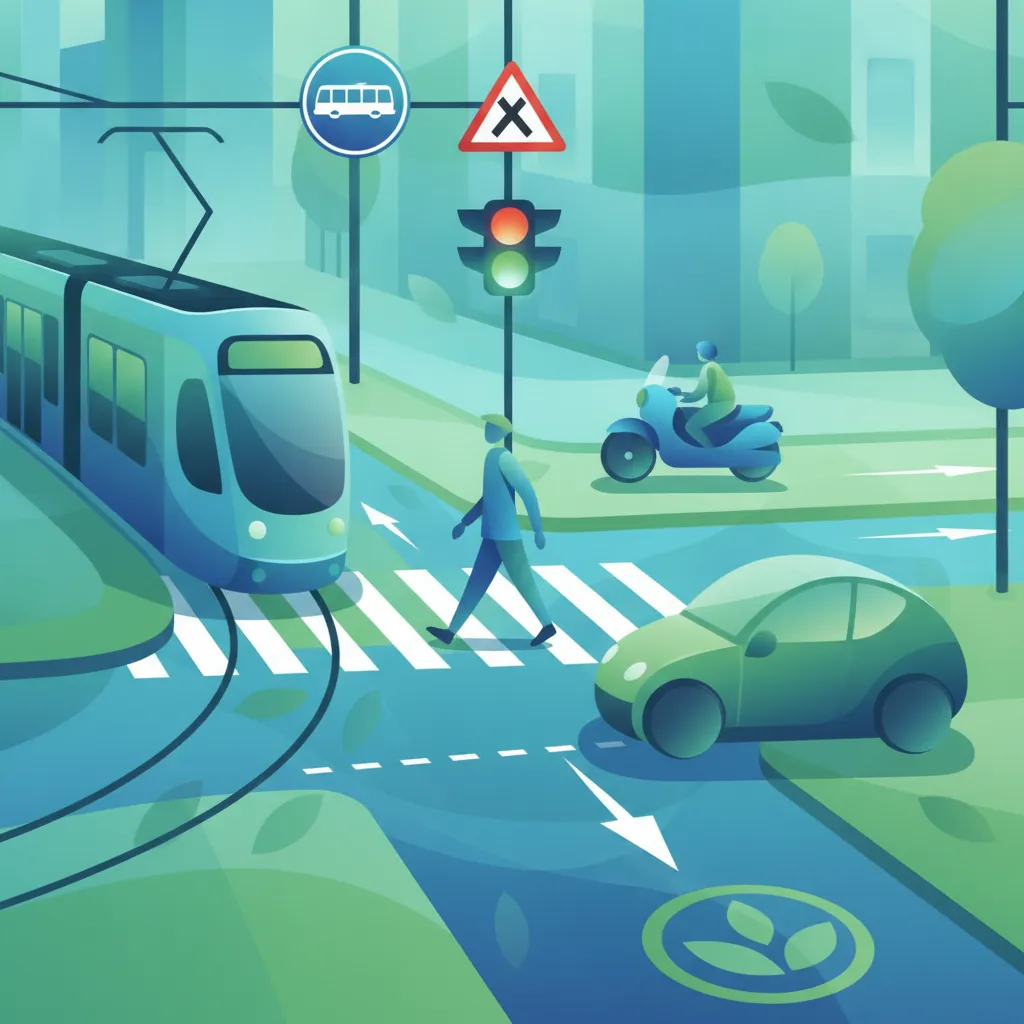
Browse all lessons that make up Belgian Road Signs, Markings, Lights and Priority Rules. Each lesson focuses on specific topics, learning objectives, and core concepts, helping you build essential knowledge and follow a clear, structured progression toward your study goals in Belgium.
This lesson focuses on the correct identification and interpretation of regulatory and informative road signs that are particularly relevant to motorcyclists. It covers signs that dictate speed limits, prohibit overtaking, and indicate compulsory routes or turns. You will learn to recognize different sign categories based on their distinct shapes and colors as defined by Belgian traffic law.
This lesson provides a detailed explanation of the various road markings found on Belgian roads and their specific significance for motorcyclists. It covers the rules associated with solid and broken lane lines, stop lines at junctions, and markings for pedestrian and bicycle crossings. Understanding these markings is essential for correct lane positioning and safe navigation.
This lesson examines the operation of traffic light systems in Belgium, clarifying the meaning of red, amber, and green signals, including flashing lights and directional arrows. It details a motorcyclist's legal obligations when approaching and navigating signal-controlled intersections. The content also addresses specialized signals for pedestrians and trams that riders must recognize and respond to correctly.
This lesson delves into the complex priority rules that govern Belgian roadways, with a strong focus on the default 'priority from the right' principle. It explains how to interpret priority signs, such as 'give way' and 'stop', and apply the correct right-of-way at various types of junctions. You will learn the hierarchy of road users and the specific rules for yielding in different traffic scenarios.
This lesson addresses unique traffic environments and special zones commonly found in Belgian urban areas. It clarifies the specific regulations concerning tramways, including where trams have absolute priority, and the conditions under which motorcycles may use bus lanes. The lesson also explains how to identify and comply with restrictions in low-emission zones.
Explore high-intent keywords and long-tail search topics learners use when researching Belgian Road Signs, Markings, Lights and Priority Rules. These terms reflect how people search for reliable study materials, structured explanations, and unit-level theory preparation support in Belgium.
Find clear answers to the most common questions learners ask about Belgian Road Signs, Markings, Lights and Priority Rules. Understand how the unit is organized, what learning goals it supports, and how it contributes to your study progression with structured explanations and practical guidance tailored for learners in Belgium.
In Belgium, the 'priority from the right' rule means that if two roads meet and there are no signs or signals to indicate otherwise, vehicles approaching from the right generally have priority. As a motorcyclist, you must be extra vigilant at intersections without signs to check for traffic approaching from your right and yield accordingly. This rule is fundamental and frequently tested.
Yes, while all signs are important, motorcyclists should pay close attention to signs related to lane restrictions, mandatory direction, speed limits, and areas with specific hazards like tram lines or pedestrian zones. Signs indicating weight or size limits, or those affecting vehicle access to certain areas, are also crucial for safe navigation.
Generally, traffic light rules are the same for all motorised vehicles, including motorcyclists. However, motorcyclists need to be more aware of their positioning to ensure they are visible to the traffic light sensor and other road users. In some cases, specific lanes with separate traffic lights (e.g., for trams) require careful observation.
Trams in Belgium often have priority, especially when moving along their designated tracks. You must yield to trams when they are crossing your path or merging onto the road, unless specific traffic signals or signs indicate otherwise. Always anticipate tram movements, especially in urban areas.
Road markings are critical for guiding motorcyclists. Lane markings dictate lane usage, while signs indicating pedestrian crossings, bicycle lanes, or parking zones alert you to potential conflicts or hazards. Solid lines usually indicate no overtaking, while dashed lines may allow it. Understanding these markings helps maintain lane discipline and anticipate other road users' actions.
Yes, many Belgian cities have Low-Emission Zones (LEZs) with specific entry requirements and restrictions. Motorcyclists need to ensure their vehicle meets the LEZ standards or is registered correctly to avoid fines. The rules vary by city, so it's essential to check the local regulations before entering an LEZ.
All included lessons
Lessons in Belgian Road Signs, Markings, Lights and Priority Rules
See who benefits most from studying Belgian Road Signs, Markings, Lights and Priority Rules. This overview explains how the unit supports different learning needs, what level of knowledge is helpful before starting, and how it fits into the overall study path in Belgium.
This unit is essential for all aspiring motorcyclists in Belgium preparing for their A, A1, or A2 theory exam. It's particularly beneficial for learners who find road signs, traffic signals, or complex priority situations confusing, providing clear explanations and exam-focused practice.

Explore our structured curriculum and choose the courses tailored to your Belgian driving licence. Master official traffic rules, road signs, and critical driving procedures. Our guided paths are designed to prepare you comprehensively for success on your theory exam.
Browse Driving Theory CoursesExplore all units and lessons included in this driving theory course.
Explore our structured curriculum and choose the courses tailored to your Belgian driving licence. Master official traffic rules, road signs, and critical driving procedures. Our guided paths are designed to prepare you comprehensively for success on your theory exam.
Browse Driving Theory Courses