
In Belgium, roads are shared by a wide array of users, each with unique characteristics and vulnerabilities. As a driver, it is your responsibility to anticipate the actions of others, adjust your behavior accordingly, and prioritize the safety of all, especially vulnerable groups. This section outlines key principles and Belgian specific rules for harmonious and safe road sharing.
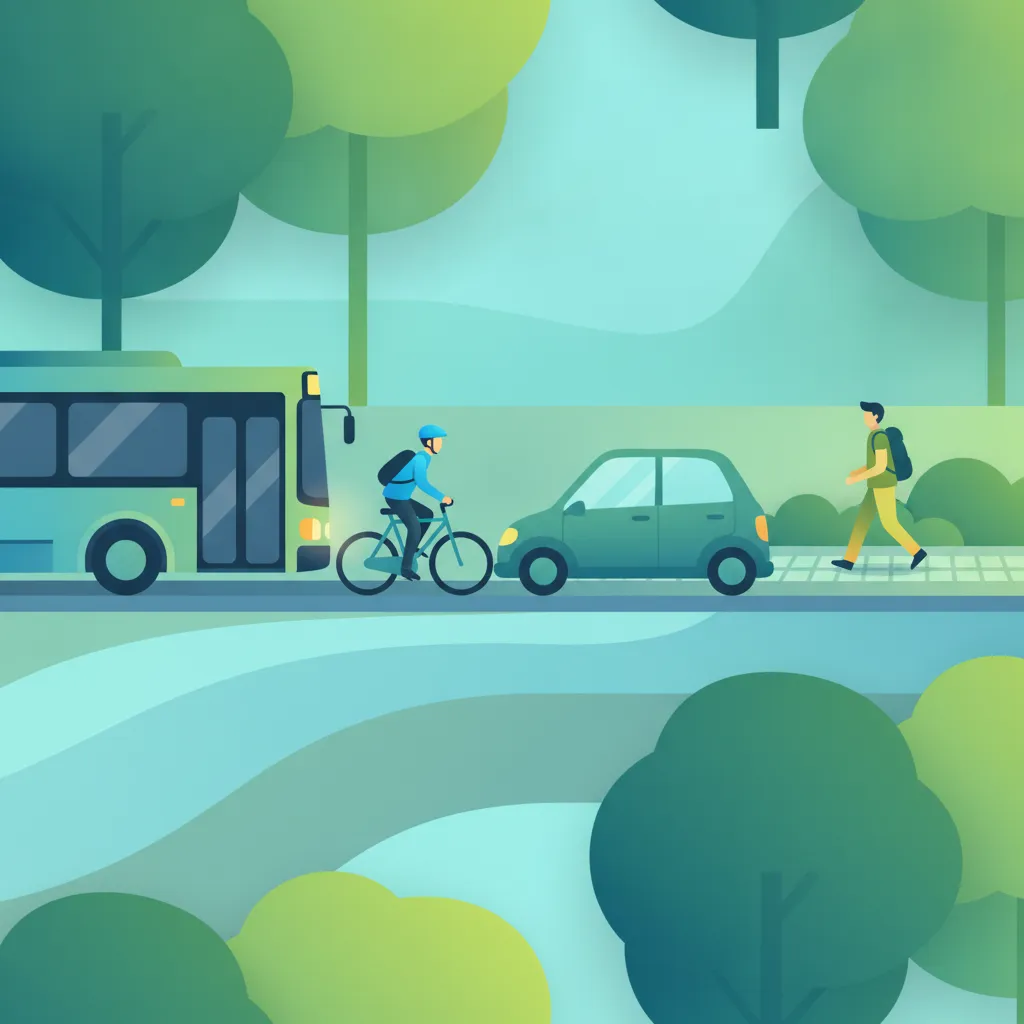
Theory topic content overview
Read the full theory topic guide for Road User Interaction with structured, easy-to-scan content built for learners in Belgium. This detailed section explains the exact rule, meaning, traffic context, comparison points, and exam logic behind this Belgian driving theory topic so you can study faster, understand the concept more clearly, and avoid common interpretation mistakes on the theory test.
The Belgian road network is a complex, dynamic environment shared by a diverse range of users, each with unique needs and vulnerabilities. As a driver, mastering the art of sharing the road safely means understanding and adapting to these differences to prevent conflicts and ensure the safety of all, particularly those less protected. This requires more than just knowing the rules; it demands constant awareness, anticipation, and a cooperative mindset.
In Belgium, sharing the road goes beyond simply coexisting. It's a fundamental principle of defensive driving and the Code de la route (Belgian Highway Code), emphasizing a hierarchy of responsibility. Drivers of larger, heavier, or faster vehicles bear a greater duty of care towards more vulnerable road users. This concept underscores:
Understanding these interactions is vital not only for safety but also for success in the Belgian driving theory exam, which frequently features scenarios involving diverse road users.
The importance of sharing the road safely in Belgium cannot be overstated. With a dense road network and a strong cycling culture, drivers frequently encounter vulnerable users.
rue scolaire or zone résidentielle) are common in the Belgian theory test.Effective road sharing in Belgium hinges on consistent application of several key principles:
The heavier or faster your vehicle, the greater your responsibility to protect other road users. This hierarchy places pedestrians and cyclists at the top, followed by motorcyclists, then smaller vehicles, and finally larger vehicles like trucks and buses. Always assume that vulnerable users might make unpredictable movements or be less visible.
When overtaking cyclists or speed pedelecs, Belgian law mandates specific minimum lateral distances:
This rule is critical and frequently tested. Always ensure you have sufficient space before initiating an overtaking maneuver. If not, wait patiently until it is safe to do so.
Look well ahead and scan your surroundings constantly. Anticipate:
Pedestrians are the most vulnerable. Drivers must:
passage pour piétons / voetgangersoversteekplaats) without traffic lights or a police officer.zone résidentielle) and encounter zones (zone de rencontre), pedestrians have full priority. Drive at walking pace if necessary and be ready to stop.rue scolaire), the road is reserved for pedestrians and cyclists. Vehicles allowed by special permit must drive at walking pace, give priority, and stop if necessary.Belgium has a strong cycling culture, with dedicated infrastructure but also shared roads.
pistes cyclables): Be aware of cyclists using these paths, especially when turning across them or exiting driveways. Cyclists on a cycle path generally have priority when crossing a road, but always confirm local signage.fietsstraat / rue cyclable): These are specifically designed for cyclists. Motorized traffic is allowed but must remain behind cyclists and is generally restricted to 30 km/h. Overtaking cyclists in these streets is forbidden.Motorcyclists are less stable and less visible than cars.
dead-angle check (blind spot check) before changing lanes, turning, or merging.These vehicles have significant differences in size, weight, and maneuverability.
Learners and even experienced drivers often make these mistakes:
dead-angle thoroughly, especially for cyclists and motorcyclists, leading to dangerous lane changes or turns.zone résidentielle or zone de rencontre, or driving too fast in a rue scolaire.Sharing the road safely in Belgium is a cornerstone of responsible driving. Always cultivate a proactive and defensive approach:
rue scolaire, zone résidentielle, zone de rencontre, and fietsstraat.dead-angle checks a habit before any lateral movement.By integrating these principles and specific Belgian rules into your driving, you contribute to a safer road environment for everyone and demonstrate the comprehensive understanding required for your Belgian driving licence.
Belgian driving theory emphasizes that drivers of heavier or faster vehicles must exercise increased duty of care toward vulnerable road users, following a clear vulnerability hierarchy. The Code de la route mandates specific lateral distances of 1 meter in urban areas and 1.5 meters outside when overtaking cyclists or speed pedelecs, with special zones requiring walking pace speeds and pedestrian priority. Drivers must constantly scan for blind spots, anticipate unpredictable movements, and respect the priority rights of cyclists on cycle paths and in fietsstraten. Understanding these interactions and the legal requirements for different zones is essential for both road safety and passing the Belgian theory exam.
A short set of high-value points that capture the most important ideas from this theory explanation.
Drivers of larger or faster vehicles bear greater responsibility for protecting vulnerable road users in Belgium's road hierarchy
When overtaking cyclists, you must maintain at least 1 meter in urban areas and 1.5 meters outside built-up areas
Special zones like rue scolaire, zone résidentielle, and zone de rencontre require specific behavior and reduced speeds
Always perform dead-angle checks before any lateral movement to detect motorcycles, cyclists, and pedestrians in blind spots
Cycle streets (fietsstraat) give cyclists priority and prohibit overtaking motorized traffic within them
Lateral distance rule: 1m (urban) and 1.5m (rural) when overtaking cyclists or speed pedelecs
Pedestrians always have priority at pedestrian crossings (passage pour piétons) without traffic control
In zone résidentielle and zone de rencontre, pedestrians have full priority and you must drive at walking pace if needed
Speed pedelecs can reach 45 km/h—treat them with the same caution as mopeds regarding speed differentials
Large vehicles have extensive blind spots: if you cannot see their mirrors, they cannot see you
Failing to maintain the required 1m or 1.5m lateral distance when passing cyclists, a frequently tested error
Neglecting to check blind spots thoroughly, especially before turning or changing lanes near motorcycles and cyclists
Assuming pedestrians and cyclists will always behave predictably or be clearly visible
Exceeding 20 km/h in zone résidentielle, zone de rencontre, or driving too fast in rue scolaire
Attempting to pass large vehicles on the inside during turns or misjudging their braking distances
Start with a short, direct summary of Road User Interaction before reading the full explanation below.
Sharing the road safely in Belgium means constantly being aware of and adapting to all other road users, from pedestrians and cyclists to motorcyclists and large vehicles. Drivers must exercise increased caution, particularly around vulnerable road users, adhering to specific Belgian traffic laws regarding distance, priority, and attention, to ensure everyone's safety and prevent conflicts.
Review the most important terms, rule signals, and traffic concepts linked to Road User Interaction.
Explore related theory topic pages connected to Road User Interaction and continue with the next useful rule explanation.
See the common search queries learners use when trying to understand Road User Interaction in Belgium.

Start your comprehensive preparation for the Belgian driving licence theory exam. Dive into our expertly curated topics, master the road rules and concepts, and build the confidence you need to pass your test and drive safely on Belgian roads. Begin mastering theory today.
Explore Belgian Theory TopicsTheory topic content overview
A short set of high-value points that capture the most important ideas from this theory explanation.
Drivers of larger or faster vehicles bear greater responsibility for protecting vulnerable road users in Belgium's road hierarchy
When overtaking cyclists, you must maintain at least 1 meter in urban areas and 1.5 meters outside built-up areas
Special zones like rue scolaire, zone résidentielle, and zone de rencontre require specific behavior and reduced speeds
Always perform dead-angle checks before any lateral movement to detect motorcycles, cyclists, and pedestrians in blind spots
Cycle streets (fietsstraat) give cyclists priority and prohibit overtaking motorized traffic within them
Lateral distance rule: 1m (urban) and 1.5m (rural) when overtaking cyclists or speed pedelecs
Pedestrians always have priority at pedestrian crossings (passage pour piétons) without traffic control
In zone résidentielle and zone de rencontre, pedestrians have full priority and you must drive at walking pace if needed
Speed pedelecs can reach 45 km/h—treat them with the same caution as mopeds regarding speed differentials
Large vehicles have extensive blind spots: if you cannot see their mirrors, they cannot see you
Failing to maintain the required 1m or 1.5m lateral distance when passing cyclists, a frequently tested error
Neglecting to check blind spots thoroughly, especially before turning or changing lanes near motorcycles and cyclists
Assuming pedestrians and cyclists will always behave predictably or be clearly visible
Exceeding 20 km/h in zone résidentielle, zone de rencontre, or driving too fast in rue scolaire
Attempting to pass large vehicles on the inside during turns or misjudging their braking distances
Start with a short, direct summary of Road User Interaction before reading the full explanation below.
Sharing the road safely in Belgium means constantly being aware of and adapting to all other road users, from pedestrians and cyclists to motorcyclists and large vehicles. Drivers must exercise increased caution, particularly around vulnerable road users, adhering to specific Belgian traffic laws regarding distance, priority, and attention, to ensure everyone's safety and prevent conflicts.
Review the most important terms, rule signals, and traffic concepts linked to Road User Interaction.
Explore related theory topic pages connected to Road User Interaction and continue with the next useful rule explanation.
See the common search queries learners use when trying to understand Road User Interaction in Belgium.
Start your comprehensive preparation for the Belgian driving licence theory exam. Dive into our expertly curated topics, master the road rules and concepts, and build the confidence you need to pass your test and drive safely on Belgian roads. Begin mastering theory today.
Explore Belgian Theory TopicsUse this exam-focused revision tip to understand how Road User Interaction is likely to appear in theory questions for learners in Belgium. This section helps you identify the most testable part of the rule, avoid common traps, and remember the concept more effectively during Belgian driving theory exam preparation.
The Belgian theory exam often tests your understanding of vulnerable road users and specific rules. Pay close attention to lateral distances when overtaking cyclists, priority rules at pedestrian crossings, and behavior in special zones like 'school streets' and residential areas. Always be prepared to identify and react to potential hazards involving less protected road users.
Read direct answers to the most common learner questions about Road User Interaction in Belgium. This FAQ focuses on rule confusion, practical meaning, comparison with similar concepts, and the exact uncertainties that appear most often in Belgian driving theory revision and exam preparation.
In Belgium, vulnerable road users primarily include pedestrians, cyclists, motorcyclists, and moped riders. Drivers must exercise extra caution when interacting with these groups.
When passing a cyclist or moped rider, you must maintain a lateral distance of at least 1 meter within built-up areas and at least 1.5 meters outside built-up areas, as per Belgian traffic law.
In a 'school street', the road is primarily for pedestrians and cyclists. Drivers are only allowed with permission, must proceed at walking pace, yield priority to pedestrians and cyclists, and stop if necessary, without endangering or hindering them.
Trams have fixed tracks and require significant stopping distances. Always give way to trams unless traffic signs or signals indicate otherwise, and be aware of passengers boarding or alighting.
Motorcyclists have a smaller profile than cars, making them less visible and easily obscured in blind spots. Drivers must consistently check mirrors and blind spots thoroughly before changing lanes or turning.
Mutual awareness means anticipating the actions of others, being predictable in your own actions, and adapting your driving style to the specific situation and type of road user, promoting cooperation and respect among all.
Ready to focus your Belgian driving theory revision? Utilize our powerful search tool to pinpoint exact topics, road signs, or difficulty levels. Engage with practice questions that directly address your learning needs and solidify your understanding of Belgian traffic laws for your upcoming exam.