
Welcome to the essential unit on Belgian road signs, markings, traffic lights, and basic priority rules for your AM license theory exam. Understanding these visual cues and fundamental right-of-way principles is crucial for safe navigation and passing your Belgian theory test. This unit will systematically break down these elements, ensuring you can confidently interpret road signals and manage traffic situations.
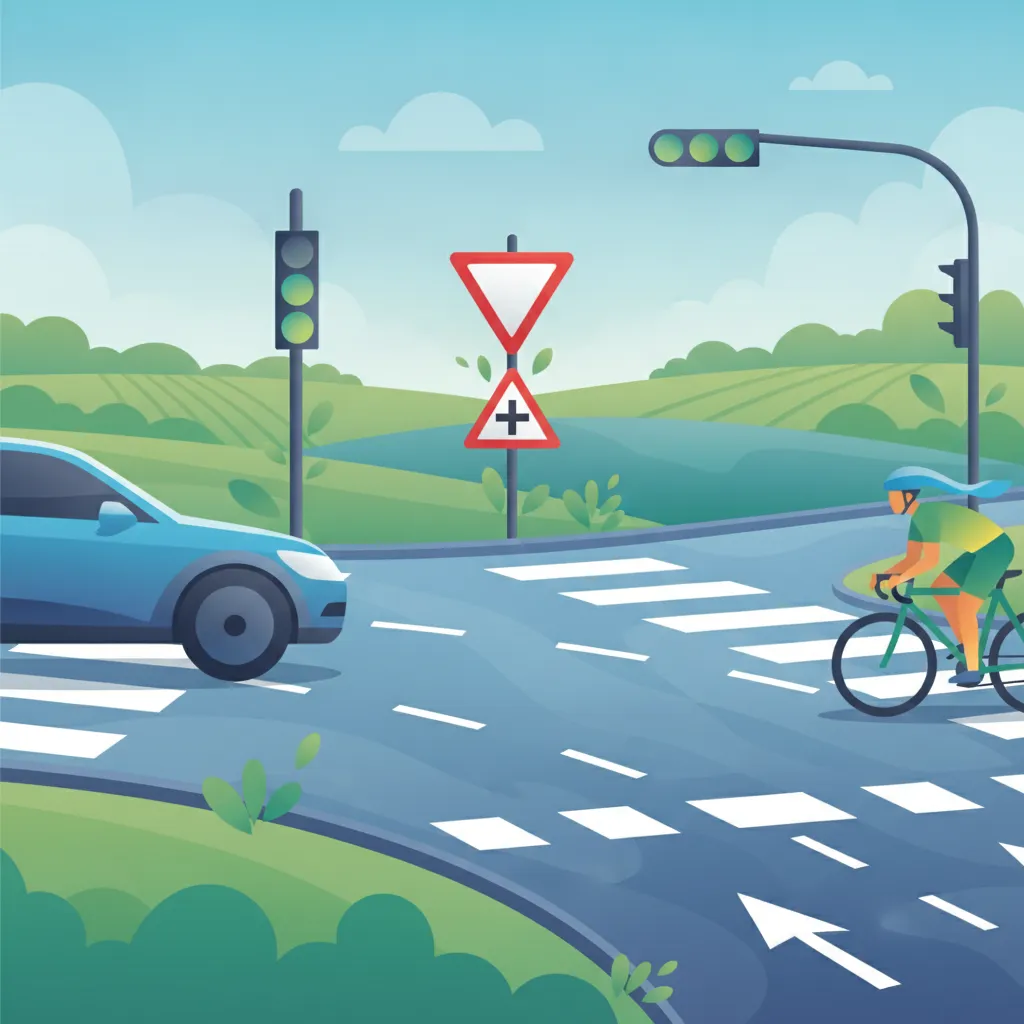
Browse all lessons that make up Belgian Road Signs, Markings, Lights and Priority Basics. Each lesson focuses on specific topics, learning objectives, and core concepts, helping you build essential knowledge and follow a clear, structured progression toward your study goals in Belgium.
This lesson focuses on regulatory signs, which impose legal obligations and restrictions on road users. It explains the meaning of common signs such as speed limits, stop, yield, and no-entry, detailing how they apply to Category AM vehicles. Understanding these signs is fundamental for legal compliance and safe interaction with traffic, as they dictate required actions and prohibitions.
This lesson is dedicated to warning signs, which are designed to alert drivers to potential dangers ahead. It covers the interpretation of signs indicating sharp curves, steep gradients, slippery surfaces, and the presence of pedestrians or animals. By understanding these warnings, riders can anticipate potential hazards and adjust their speed and position proactively for safer travel.
This lesson explains the role of information signs and road markings in guiding road users. It covers directional signs that help with navigation and markings that delineate lanes, pedestrian crossings, and zones for specific users like cyclists. Learners will understand how to use this information to maintain correct lane positioning and navigate their route efficiently and safely.
This lesson provides a detailed explanation of traffic light systems and the correct response to each signal. It covers the standard red, amber, and green light sequence, as well as specific signals for pedestrians and cyclists that AM riders must also obey. The meaning of flashing amber and red lights is also clarified to ensure correct and safe behavior at signalized intersections.
This lesson introduces the core principles of priority that govern traffic flow in Belgium, with a primary focus on the 'priority from the right' rule. It explains how to identify priority roads indicated by signs and how to act at uncontrolled intersections where the default rule applies. Understanding these rules is critical for AM riders to navigate junctions, intersections, and roundabouts safely and without conflict.
Explore high-intent keywords and long-tail search topics learners use when researching Belgian Road Signs, Markings, Lights and Priority Basics. These terms reflect how people search for reliable study materials, structured explanations, and unit-level theory preparation support in Belgium.
Find clear answers to the most common questions learners ask about Belgian Road Signs, Markings, Lights and Priority Basics. Understand how the unit is organized, what learning goals it supports, and how it contributes to your study progression with structured explanations and practical guidance tailored for learners in Belgium.
Belgian road signs are typically divided into three main categories: regulatory signs (e.g., speed limits, no entry), warning signs (e.g., sharp bend, pedestrian crossing ahead), and informational signs (e.g., hospital, parking). Each category serves a distinct purpose in guiding and alerting drivers.
'Priority from the right' is a fundamental rule in Belgium. At unmarked intersections or where signs do not indicate otherwise, vehicles approaching from the right have priority. Mastering this rule is essential for safe navigation and is a key topic in the AM theory exam.
Standard traffic lights in Belgium follow international conventions: green means go if safe, red means stop, and amber means stop if you can do so safely before the intersection; otherwise, proceed with caution. Flashing amber lights often indicate a specific warning or that the lights are not fully operational, requiring extra vigilance.
Road markings, such as solid and broken white lines, give instructions about lane usage, stopping positions, and pedestrian crossings. They work in conjunction with road signs to provide a complete picture of traffic regulations and guidance, reinforcing or clarifying the information conveyed by signs.
While general rules apply, AM license holders must be particularly aware of signs and rules relevant to smaller vehicles and their position on the road. Understanding priority at junctions where mopeds interact with cars, bikes, and pedestrians is critical. This unit covers these specific applications.
In most cases, road signs take precedence over road markings when there is a direct conflict. However, always assess the situation for safety. If unsure, proceed with caution and observe the actions of other road users. This unit clarifies how to interpret such scenarios.
All included lessons
Lessons in Belgian Road Signs, Markings, Lights and Priority Basics
See who benefits most from studying Belgian Road Signs, Markings, Lights and Priority Basics. This overview explains how the unit supports different learning needs, what level of knowledge is helpful before starting, and how it fits into the overall study path in Belgium.
This unit is designed for all prospective Category AM license holders in Belgium preparing for their theory exam. It's particularly beneficial for beginners who need a solid understanding of road signs and priority rules, as well as for riders who want to reinforce their knowledge of Belgian traffic communication systems.

Explore our structured curriculum and choose the courses tailored to your Belgian driving licence. Master official traffic rules, road signs, and critical driving procedures. Our guided paths are designed to prepare you comprehensively for success on your theory exam.
Browse Driving Theory CoursesExplore all units and lessons included in this driving theory course.
Explore our structured curriculum and choose the courses tailored to your Belgian driving licence. Master official traffic rules, road signs, and critical driving procedures. Our guided paths are designed to prepare you comprehensively for success on your theory exam.
Browse Driving Theory Courses