
Navigate Belgium's bustling cities with confidence. This unit dives deep into the unique challenges of urban motorcycle riding, covering safe techniques for intersections, roundabouts, and crossings. You'll learn to anticipate hazards and interact safely with mixed traffic, preparing you thoroughly for your theory exam and everyday city riding.
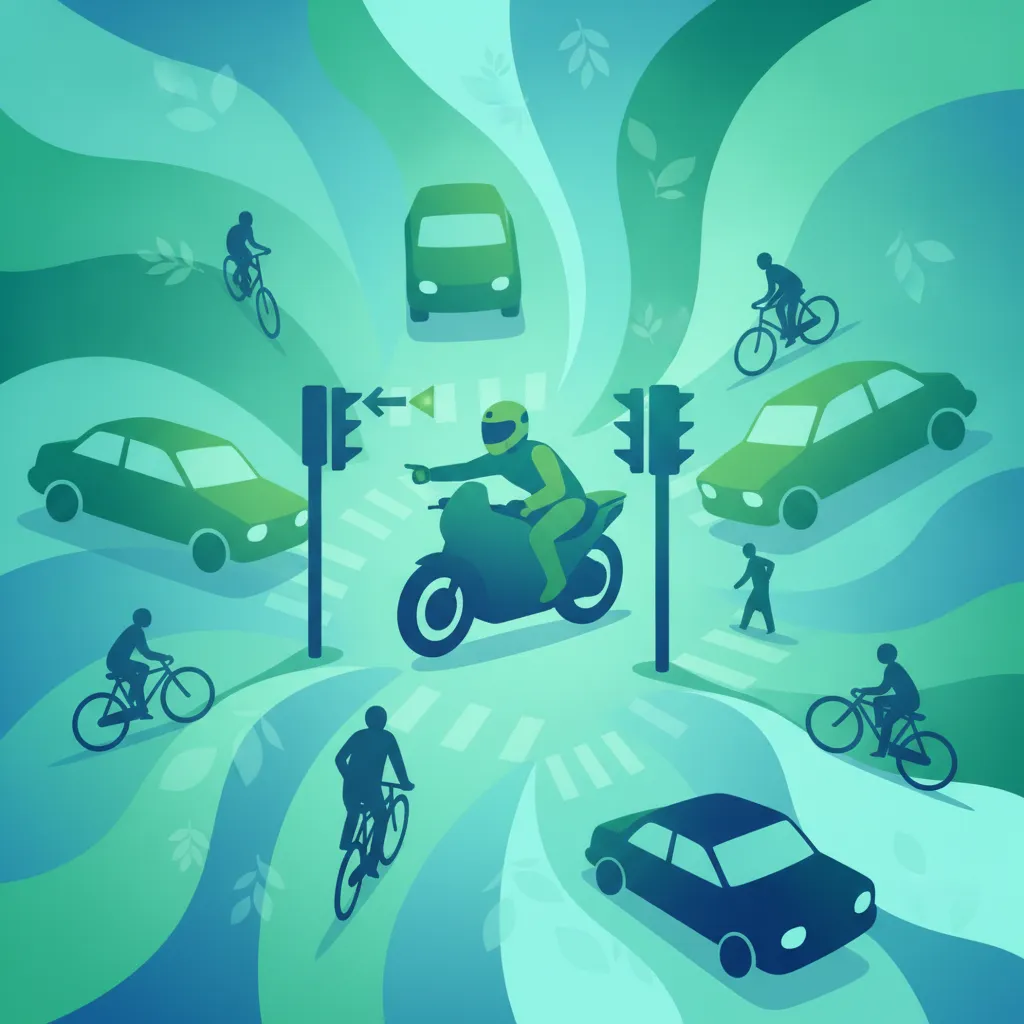
Browse all lessons that make up Intersections, Roundabouts, Crossings and Urban Riding. Each lesson focuses on specific topics, learning objectives, and core concepts, helping you build essential knowledge and follow a clear, structured progression toward your study goals in Belgium.
This lesson provides a systematic approach to navigating intersections, emphasizing the importance of observation, speed control, and correct positioning. It reinforces the application of priority-from-the-right and other right-of-way rules in real-world junction scenarios. You will learn effective visual scanning techniques to anticipate the actions of other road users and ensure a safe passage.
This lesson offers specific strategies for motorcyclists navigating roundabouts in Belgium. It covers the rules for entering the roundabout, including yielding to circulating traffic, and how to choose the correct lane for your intended exit. The content stresses the importance of clear signaling and maintaining awareness of other vehicles during entry and exit maneuvers.
This lesson details a motorcyclist's obligations when approaching various types of crossings, including marked pedestrian and bicycle lanes. It emphasizes the legal requirement to yield to vulnerable road users and the importance of thorough visual checks before proceeding. You will learn how to maintain a safe distance and anticipate the movements of pedestrians and cyclists in urban areas.
This lesson explores the unique challenges presented by dense urban environments, including riding in heavy traffic and navigating narrow streets. It provides strategies for positioning your motorcycle to avoid the 'dooring zone' of parked cars and to maintain visibility. You will learn defensive riding techniques to anticipate sudden actions from other drivers in congested conditions.
This lesson teaches motorcyclists how to safely navigate mixed traffic environments that include cars, buses, and trams. It highlights the significant blind spots of larger vehicles and explains the absolute priority of trams on their tracks. You will learn the rules for sharing space with public transport and how to maintain safe distances when following or overtaking buses.
Explore high-intent keywords and long-tail search topics learners use when researching Intersections, Roundabouts, Crossings and Urban Riding. These terms reflect how people search for reliable study materials, structured explanations, and unit-level theory preparation support in Belgium.
Find clear answers to the most common questions learners ask about Intersections, Roundabouts, Crossings and Urban Riding. Understand how the unit is organized, what learning goals it supports, and how it contributes to your study progression with structured explanations and practical guidance tailored for learners in Belgium.
Roundabouts in Belgium present unique challenges for motorcyclists due to their smaller size and visibility compared to cars. You need to be aware of drivers potentially not seeing you, especially in multi-lane roundabouts. It's crucial to position yourself correctly, signal clearly, and anticipate that other drivers might misjudge your speed or presence. Understanding the priority rules within the roundabout is also key.
In Belgium, the 'priority from the right' rule is fundamental at uncontrolled intersections. This means vehicles approaching from the right generally have priority. For motorcyclists, this requires constant vigilance, especially when approaching intersections where this rule applies. Always be prepared to yield to traffic entering from your right, even if it seems counter-intuitive, as this is a common exam topic.
Optimal lane positioning in urban intersections depends on your intended path. For going straight, positioning yourself in the middle of your lane ensures visibility and prevents being squeezed. If turning, position yourself appropriately in advance. Always scan for traffic from all directions, including pedestrians and cyclists, and be prepared to adjust your position based on immediate hazards.
Parked cars on urban streets pose a significant hazard, as drivers or passengers might open doors suddenly, or cars may pull out without warning. Maintain a safe distance from parked vehicles, typically at least one car's width. Look for indicators of potential movement, such as reversing lights or wheels turned. Be prepared to react quickly by slowing down or moving slightly to avoid collision.
Yes, Belgian cities often have trams and buses, which require extra caution. Trams generally have priority and operate on fixed tracks, so anticipate their movements. Buses may stop frequently or change lanes abruptly. Always give buses ample space when they are moving or preparing to stop, and be aware of passengers boarding or alighting, especially at designated stops. Avoid riding in blind spots.
Urban riding involves significantly more complexity: higher traffic density, frequent intersections and roundabouts, mixed traffic with pedestrians and cyclists, and more potential hazards like parked cars and congestion. Rural roads typically have higher speeds but less frequent decision points. Urban riding demands heightened situational awareness, defensive riding techniques, and constant anticipation of unpredictable events.
All included lessons
Lessons in Intersections, Roundabouts, Crossings and Urban Riding
See who benefits most from studying Intersections, Roundabouts, Crossings and Urban Riding. This overview explains how the unit supports different learning needs, what level of knowledge is helpful before starting, and how it fits into the overall study path in Belgium.
This unit is ideal for aspiring Belgian motorcyclists (A1, A2, A licence candidates) who need to master urban riding environments. It's particularly beneficial for learners who find city traffic, complex intersections, or multi-modal interactions challenging for their theory exam preparation.

Explore our structured curriculum and choose the courses tailored to your Belgian driving licence. Master official traffic rules, road signs, and critical driving procedures. Our guided paths are designed to prepare you comprehensively for success on your theory exam.
Browse Driving Theory CoursesExplore all units and lessons included in this driving theory course.
Explore our structured curriculum and choose the courses tailored to your Belgian driving licence. Master official traffic rules, road signs, and critical driving procedures. Our guided paths are designed to prepare you comprehensively for success on your theory exam.
Browse Driving Theory Courses