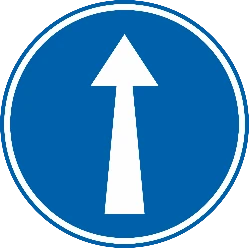
The Belgian D1a road sign clearly indicates that you must proceed in the direction shown. This is a mandatory sign, meaning you have no choice but to follow the designated path. Always observe lane markings, supplementary panels, and traffic lights, as they can refine the sign's instruction. Proper positioning before the sign takes effect ensures you can comply safely without sudden manoeuvres.
This section focuses on Belgian road sign D1a, crucial for understanding mandatory "Ahead only" rules on your theory test revision. Learn to recognise this sign and its implications for your driving choices to ensure compliance with Belgian traffic legislation.
Belgian road sign D1a, titled "Ahead only", belongs to the belgian mandatory signs group. It is used to communicate ahead only in a form that drivers can recognise quickly during Belgian theory study and real traffic. The practical task is to position the vehicle early so the mandatory movement can be made without sudden braking or conflict, because the legal effect of a road sign starts from its placement and can be refined by panels, lane markings, traffic lights, or zone signs. For learners, the safest approach is to identify the sign early, say what road users or manoeuvres it affects, and then choose speed, position, and priority behaviour that match the displayed instruction.
Belgian road sign D1a means "Ahead only". In practice, it tells drivers to follow the required direction, facility, or user route shown by the sign, while checking the exact road layout, markings, and any supplementary panels before acting.
Get clear, practical answers to the most common questions about the D1a - Ahead only road sign. Learn how the sign works, what rules it represents, and how it affects real driving situations. This FAQ strengthens your understanding and supports accurate decision making for the Belgian driving theory exam in Belgium.
The D1a sign mandates that you must proceed straight ahead. You are not permitted to turn left, right, or make a U-turn at the location where this sign is displayed. It's crucial to identify this sign early and position your vehicle correctly to follow the indicated direction.
The legal effect of the D1a sign begins from the point where it is placed. However, the actual road layout, lane markings, or additional supplementary panels can further specify or modify its instruction. Always read any accompanying panels for details on distance, specific vehicle types, or exemptions before deciding your manoeuvre.
A common mistake is to ignore the sign's instruction and turn incorrectly, especially if it seems like a shorter route. Another error is attempting to manoeuvre into the correct lane at the last moment, which can lead to dangerous situations. Always plan your route and prepare for mandatory directions well in advance.
The D1a sign itself does not grant priority. It only dictates your mandatory direction of travel. You must still yield to other traffic or pedestrians if your chosen mandatory route requires it, for example, at junctions or crossings, unless other signs or rules indicate otherwise.
The primary way the D1a rule can be modified is through supplementary panels. These panels might exempt certain vehicle categories or specify that the rule only applies during certain hours. Always check for these panels below the main D1a sign to understand if any exceptions apply to you.
A clear reference image of the D1a - Ahead only road sign used in Belgium.
The D1a - Ahead only road sign may also be known by these alternative names or terms.
The D1a - Ahead only road sign is part of the Belgian Mandatory Signs category, which groups together signs with similar rules and functions.
Master Belgian road signs by comparing similar ones, aiding recognition and reducing theory test mistakes. Effective sign recognition through traffic sign comparison is key for your driving licence revision.
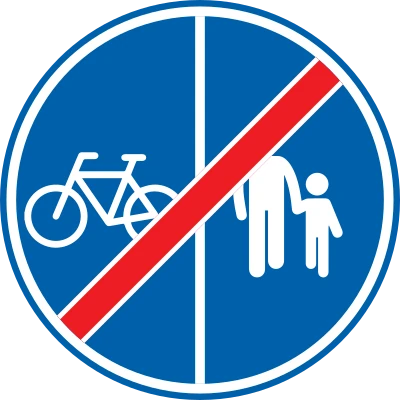
The D10 Sign: Navigating Shared Paths for Pedestrians and Cyclists
Belgium's D13 Sign: Follow the Mandatory Bridlepath Direction
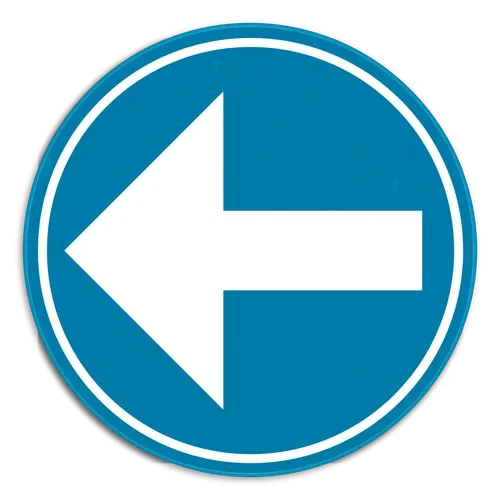
D1b Mandatory 'Turn Left' Sign: Follow the Required Direction
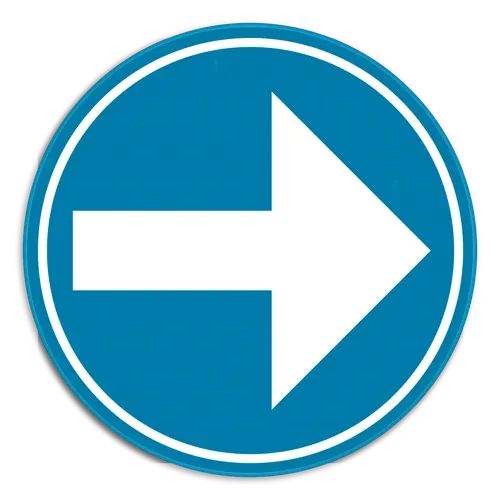
Understand the 'Turn Right' Mandatory Direction Sign (D1b)
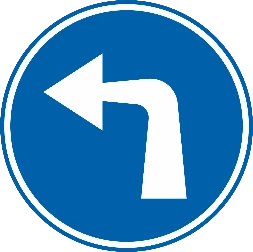
Mandatory Sign D1c: You Must Pass on the Left
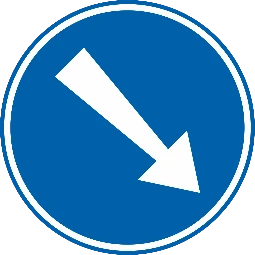
Understand the D1d 'Pass on Right' Mandatory Direction Sign
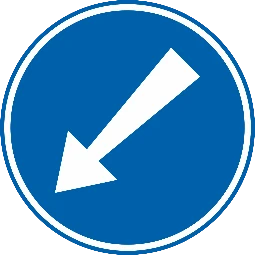
Mandatory Turn Left Ahead Sign (D1e) in Belgium
Deepen your understanding by exploring how specific road signs dictate right-of-way, speed limits, and safety obligations across Belgian roads. Review these related theory modules to ensure you can confidently identify and apply each sign correctly.
Belgian turbo roundabouts, known as 'turborotondes', have a distinct design that enhances safety. This article will guide you through the essential rules, emphasizing the non-negotiable need to select your lane upon approach. Understanding this concept is crucial for both safe driving in Belgium and for passing your theory test.
Master Belgian End-of-Restriction Signs for a Confident Drive and Exam Success
Be prepared for unexpected breakdowns on Belgian roads.
This article provides a clear, text-only overview of the Belgian motorcycle licence system, detailing the progression from A1 to A2 and finally to the unrestricted A licence. You will learn about the minimum age requirements for each category, the concept of progressive access requiring a two-year experience period, and the exceptions for direct access. Understanding these licensing steps is vital for your motorcycle theory exam preparation in Belgium.
Belgian road sign A41, titled "Railroad crossing ahead with gates or barriers", belongs to the belgian warning signs group. It is used to communicate railroad crossing ahead with gates or barriers in a form that drivers can recognise quickly during Belgian theory study and real traffic. The practical task is to look farther ahead, reduce speed smoothly, and leave more space for errors by other road users, because the legal effect of a road sign starts from its placement and can be refined by panels, lane markings, traffic lights, or zone signs. For learners, the safest approach is to identify the sign early, say what road users or manoeuvres it affects, and then choose speed, position, and priority behaviour that match the displayed instruction.
Belgian road sign A43, titled "Railroad crossing ahead without gates or barriers", belongs to the belgian warning signs group. It is used to communicate railroad crossing ahead without gates or barriers in a form that drivers can recognise quickly during Belgian theory study and real traffic. The practical task is to look farther ahead, reduce speed smoothly, and leave more space for errors by other road users, because the legal effect of a road sign starts from its placement and can be refined by panels, lane markings, traffic lights, or zone signs. For learners, the safest approach is to identify the sign early, say what road users or manoeuvres it affects, and then choose speed, position, and priority behaviour that match the displayed instruction.
After reviewing all Belgian road signs, deepen your understanding by exploring specific categories such as warning, regulatory, or prohibitory signs. Practice recognition with targeted quizzes to reinforce learning for a successful theory test.
All Belgian Road Signs List