
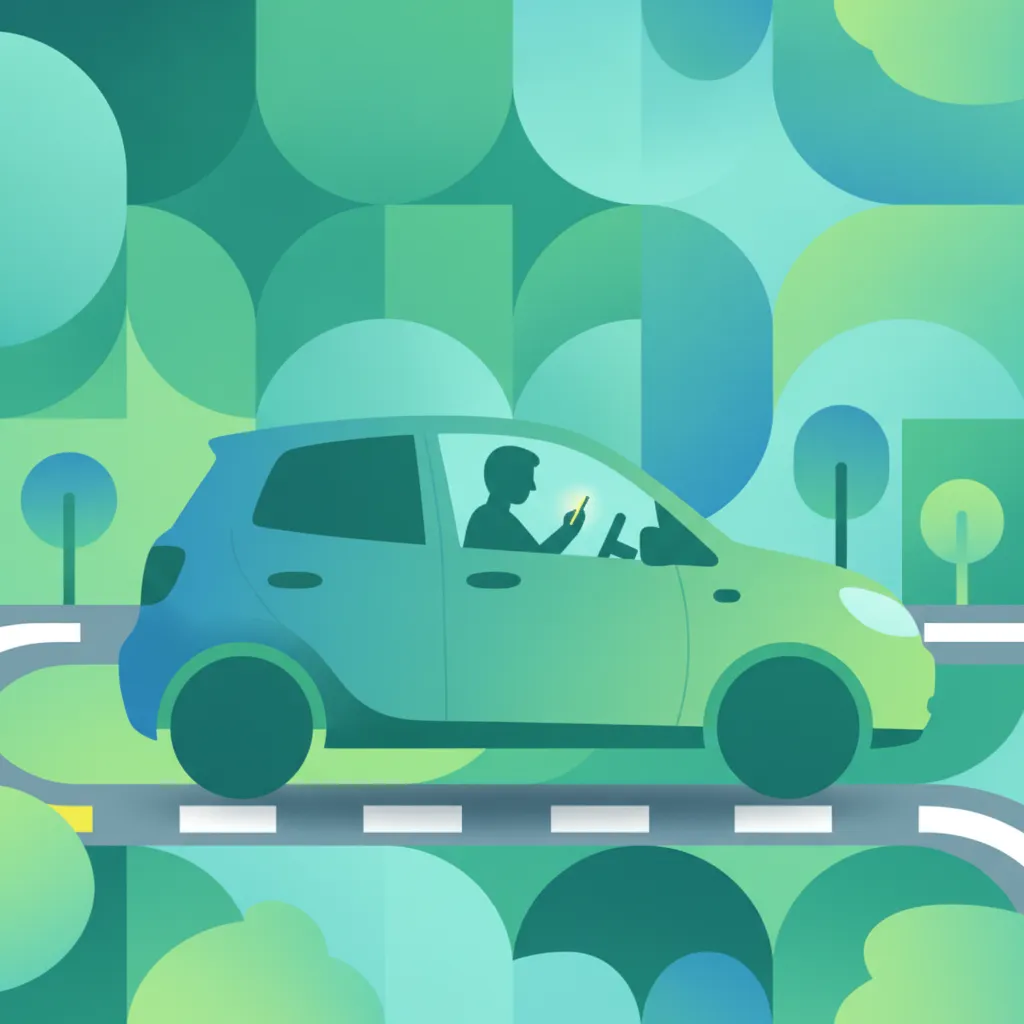
Driver distraction, especially from mobile phones, is a leading cause of road incidents in Belgium. This page explains how phone use divides your attention into visual, manual, and cognitive tasks, severely compromising your reaction time and awareness on the road. Understanding these risks is crucial for passing your Belgian driving theory test and ensuring safe journeys.
Theory topic content overview
Read the full theory topic guide for Mobile Phone Distraction with structured, easy-to-scan content built for learners in Belgium. This detailed section explains the exact rule, meaning, traffic context, comparison points, and exam logic behind this Belgian driving theory topic so you can study faster, understand the concept more clearly, and avoid common interpretation mistakes on the theory test.
Driving is a complex task that demands your full and undivided attention. When you use a mobile phone while driving, you are attempting to multitask, which is an illusion. Your brain cannot effectively process the demands of driving and engage with a phone simultaneously. This split attention, often referred to as driver distraction, is a leading cause of road incidents and fatalities in Belgium and worldwide. It severely compromises your ability to react, control your vehicle, and perceive hazards.
The impact of mobile phone use on road safety in Belgium is a significant concern for traffic authorities like VIAS and AWSR (Agence Wallonne pour la Sécurité Routière). Research from these Belgian institutes consistently highlights that distraction plays a role in a substantial percentage of road accidents – estimates range from 5% to 25%. For drivers in Belgium, understanding these dangers is not only crucial for safety but also for successfully passing the driving theory test, which frequently assesses knowledge of distracted driving risks.
Misunderstanding the risks associated with phone use can lead to:
Mobile phone use behind the wheel typically involves a combination of different types of distraction, making it particularly dangerous:
This occurs when you take your eyes off the road.
This involves taking one or both hands off the steering wheel.
This happens when your mind is preoccupied with something other than driving, even if your eyes are on the road and hands are on the wheel.
Many activities involving a mobile phone, such as texting, combine all three types of distraction simultaneously, creating an extremely high-risk scenario.
A common misconception among drivers, including many in Belgium, is that using a hands-free device for phone calls is safe because it eliminates visual and manual distraction. However, Belgian research from VIAS explicitly warns that cognitive distraction remains just as high when using a hands-free system for calls.
While your hands stay on the wheel and your eyes on the road, your brain is still heavily engaged in the conversation, diverting critical attention away from the primary task of driving. This can lead to:
Therefore, for optimal safety and to meet the high standards of the Belgian driving theory test, drivers should avoid any form of mobile phone interaction that diverts cognitive attention, even when hands-free.
Consider these common scenarios on Belgian roads:
Belgian studies indicate that drivers using phones are more prone to drifting within their lane, maintaining shorter distances to the vehicle in front, and showing inconsistent speed patterns.
Learners and experienced drivers alike frequently make these mistakes regarding mobile phone use while driving in Belgium:
To avoid these mistakes, adopt a "zero-tolerance" policy for mobile phone interaction behind the wheel. Place your phone out of reach, on silent, or use a "do not disturb" driving mode.
In Belgium, the use of a handheld mobile phone while driving is strictly prohibited. This rule applies to any device with a screen, regardless of its function. Even holding the phone to check the time or change music is considered an offense if it is not secured in a holder.
Violating this rule is considered a serious second-degree infraction in Belgium. Penalties include:
These penalties underscore the seriousness with which Belgian authorities view distracted driving. Police conduct regular checks across Flanders, Wallonia, and Brussels to enforce these rules.
The most important lesson for any driver in Belgium is that driving requires your full and continuous attention. Your mobile phone, while an essential part of modern life, has no place in your hand or actively engaging your mind while your vehicle is in motion. Prioritise road safety above all else. Put your phone away, silence notifications, and focus entirely on the driving task to keep yourself and others safe on Belgian roads.
Mobile phone use while driving impairs safety through three distinct types of distraction—visual, manual, and cognitive—each independently compromising a driver's ability to react, control the vehicle, and perceive hazards on Belgian roads. Belgian traffic law strictly prohibits handheld phone use, with significant fines for violations, and research from VIAS and AWSR confirms that distraction contributes substantially to road accidents across Flanders, Wallonia, and Brussels. A critical misconception is that hands-free devices eliminate danger; while they remove visual and manual distraction, cognitive distraction remains equally high during phone conversations, meaning the conversation itself diverts critical brain resources from driving. The practical solution is a zero-tolerance approach: activate do-not-disturb, secure your phone out of reach, set navigation before departure, and give driving your full undivided attention.
A short set of high-value points that capture the most important ideas from this theory explanation.
Mobile phone use creates three simultaneous distractions: visual, manual, and cognitive, making it especially dangerous compared to single-type distractions
At 50 km/h, a 2-second glance away from the road means traveling nearly 28 meters blind; at 120 km/h on a motorway, that blind distance reaches 67 meters
Hands-free devices eliminate only visual and manual distraction; cognitive distraction remains just as high during phone conversations
Belgian research estimates that distraction contributes to 5-25% of road accidents, with some studies showing crash risk can multiply up to 23 times for certain phone activities
In Belgium, holding a mobile phone for any purpose while driving, including checking the time, is a second-degree traffic offense unless the device is secured in a holder
In Belgium, handheld mobile phone use while driving is prohibited for any screen device, regardless of function, with immediate fines of €116 or €160 if not paid on the spot
Cognitive distraction means your brain may see a hazard but fail to register or react to it, even with eyes on the road and hands on the wheel
Texting combines all three distraction types simultaneously, creating the highest-risk phone use scenario
Set your GPS destination before driving; manipulating a handheld navigation device while driving is equally illegal and dangerous
Adopt a zero-tolerance policy: place your phone out of reach, on silent, or activate driving mode to avoid temptation
Underestimating brief glances, thinking 'just a second' is harmless when even 2 seconds at city speed means driving blind for almost 30 meters
Believing hands-free calls are completely safe and eliminate all distraction risk, ignoring the persistent cognitive load from conversation
Keeping the phone within easy reach, such as on the passenger seat or cup holder, which tempts drivers to use it during the journey
Feeling pressured to respond immediately to calls or messages rather than waiting until safely stopped
Manipulating a handheld GPS or navigation app while driving instead of setting the route beforehand
Start with a short, direct summary of Mobile Phone Distraction before reading the full explanation below.
Using a mobile phone while driving severely compromises road safety by causing visual, manual, and cognitive distractions. This split attention leads to slower reaction times, reduced vehicle control, and a diminished ability to perceive changes in traffic. Even hands-free phone calls create significant cognitive distraction, making any phone interaction behind the wheel a serious risk that drivers in Belgium must avoid.
Review the most important terms, rule signals, and traffic concepts linked to Mobile Phone Distraction.
Explore related theory topic pages connected to Mobile Phone Distraction and continue with the next useful rule explanation.
See the common search queries learners use when trying to understand Mobile Phone Distraction in Belgium.

Start your comprehensive preparation for the Belgian driving licence theory exam. Dive into our expertly curated topics, master the road rules and concepts, and build the confidence you need to pass your test and drive safely on Belgian roads. Begin mastering theory today.
Explore Belgian Theory TopicsTheory topic content overview
A short set of high-value points that capture the most important ideas from this theory explanation.
Mobile phone use creates three simultaneous distractions: visual, manual, and cognitive, making it especially dangerous compared to single-type distractions
At 50 km/h, a 2-second glance away from the road means traveling nearly 28 meters blind; at 120 km/h on a motorway, that blind distance reaches 67 meters
Hands-free devices eliminate only visual and manual distraction; cognitive distraction remains just as high during phone conversations
Belgian research estimates that distraction contributes to 5-25% of road accidents, with some studies showing crash risk can multiply up to 23 times for certain phone activities
In Belgium, holding a mobile phone for any purpose while driving, including checking the time, is a second-degree traffic offense unless the device is secured in a holder
In Belgium, handheld mobile phone use while driving is prohibited for any screen device, regardless of function, with immediate fines of €116 or €160 if not paid on the spot
Cognitive distraction means your brain may see a hazard but fail to register or react to it, even with eyes on the road and hands on the wheel
Texting combines all three distraction types simultaneously, creating the highest-risk phone use scenario
Set your GPS destination before driving; manipulating a handheld navigation device while driving is equally illegal and dangerous
Adopt a zero-tolerance policy: place your phone out of reach, on silent, or activate driving mode to avoid temptation
Underestimating brief glances, thinking 'just a second' is harmless when even 2 seconds at city speed means driving blind for almost 30 meters
Believing hands-free calls are completely safe and eliminate all distraction risk, ignoring the persistent cognitive load from conversation
Keeping the phone within easy reach, such as on the passenger seat or cup holder, which tempts drivers to use it during the journey
Feeling pressured to respond immediately to calls or messages rather than waiting until safely stopped
Manipulating a handheld GPS or navigation app while driving instead of setting the route beforehand
Start with a short, direct summary of Mobile Phone Distraction before reading the full explanation below.
Using a mobile phone while driving severely compromises road safety by causing visual, manual, and cognitive distractions. This split attention leads to slower reaction times, reduced vehicle control, and a diminished ability to perceive changes in traffic. Even hands-free phone calls create significant cognitive distraction, making any phone interaction behind the wheel a serious risk that drivers in Belgium must avoid.
Review the most important terms, rule signals, and traffic concepts linked to Mobile Phone Distraction.
Explore related theory topic pages connected to Mobile Phone Distraction and continue with the next useful rule explanation.
See the common search queries learners use when trying to understand Mobile Phone Distraction in Belgium.
Start your comprehensive preparation for the Belgian driving licence theory exam. Dive into our expertly curated topics, master the road rules and concepts, and build the confidence you need to pass your test and drive safely on Belgian roads. Begin mastering theory today.
Explore Belgian Theory TopicsUse this exam-focused revision tip to understand how Mobile Phone Distraction is likely to appear in theory questions for learners in Belgium. This section helps you identify the most testable part of the rule, avoid common traps, and remember the concept more effectively during Belgian driving theory exam preparation.
The Belgian theory test frequently includes scenarios about distracted driving and mobile phone use. Remember that even hands-free calls still cause cognitive distraction, and any activity that takes your eyes off the road or your mind off driving drastically increases accident risk. Focus on understanding the *types* of distraction and their impact on safety.
Read direct answers to the most common learner questions about Mobile Phone Distraction in Belgium. This FAQ focuses on rule confusion, practical meaning, comparison with similar concepts, and the exact uncertainties that appear most often in Belgian driving theory revision and exam preparation.
Mobile phone use causes visual (looking away), manual (hands off wheel), and cognitive (mind focused on conversation) distractions, all of which reduce your ability to drive safely.
While hands-free calls reduce visual and manual distraction, they still cause significant cognitive distraction. Your mind is less focused on driving, increasing accident risk, even though it's legally permitted.
Using a phone while driving significantly slows down your reaction time to hazards, traffic changes, and other road users because your brain is processing information unrelated to driving.
Using a handheld mobile phone while driving is a second-degree infraction in Belgium, punishable by fines. Police conduct regular checks to enforce this rule.
Texting requires sustained visual attention away from the road and complex manual input, leading to longer periods of 'blind driving' and a much higher risk of accidents compared to a phone call.
Yes, being distracted by a phone reduces your awareness of the traffic situation, making you less likely to notice changes, road signs, or vulnerable road users quickly.
Ready to focus your Belgian driving theory revision? Utilize our powerful search tool to pinpoint exact topics, road signs, or difficulty levels. Engage with practice questions that directly address your learning needs and solidify your understanding of Belgian traffic laws for your upcoming exam.