
Traffic lights are vital for regulating traffic flow and ensuring safety at intersections across Belgium. This guide details the specific meanings of red, fixed yellow-orange, and green lights as per the Belgian Highway Code (Wegcode/Code de la route), explaining how drivers, pedestrians, and cyclists must react to each signal. Pay close attention to the particular rule regarding the fixed yellow-orange light, which is often a source of confusion.
Theory topic content overview
Read the full theory topic guide for Belgian Traffic Lights with structured, easy-to-scan content built for learners in Belgium. This detailed section explains the exact rule, meaning, traffic context, comparison points, and exam logic behind this Belgian driving theory topic so you can study faster, understand the concept more clearly, and avoid common interpretation mistakes on the theory test.
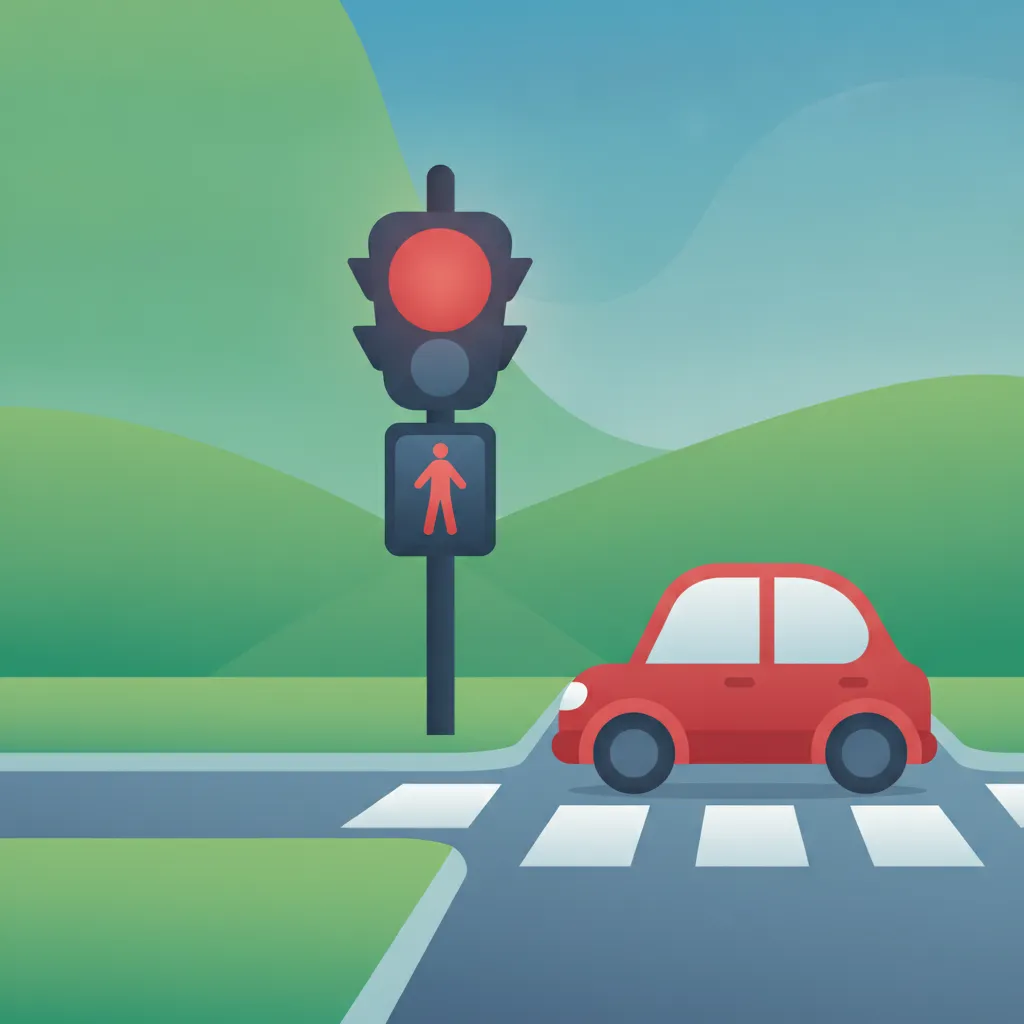
Traffic lights are essential control devices that manage the flow of vehicles, pedestrians, and cyclists at intersections, pedestrian crossings, and other critical points on Belgian roads. They are fundamental to road safety and maintaining orderly traffic, preventing collisions by assigning distinct rights of way. Mastering the rules for traffic lights is paramount for any driver in Belgium, and these rules are a frequent focus of the Belgian driving theory exam.
The official regulations for traffic lights are detailed in the Belgian Highway Code (Wegcode / Code de la route), specifying how road users must interpret and react to each signal.
Understanding where traffic lights fit within the overall system of traffic control is crucial in Belgium. The hierarchy generally dictates:
Verkeerslichten / Feux de circulation): Generally take precedence over road signs and road markings related to priority.Verkeersborden / Signaux routiers): Override road markings and general priority rules.Wegmarkeringen / Marques routières): Provide guidance and override general priority rules.voorrang van rechts / priorité de droite), apply when no other signals are present.Important Note: While traffic lights typically override priority signs (like a give way or stop sign), there's a critical exception for flashing yellow-orange lights, as explained below.
Belgian traffic lights primarily use three circular colours: red, fixed yellow-orange, and green. Each has a precise meaning:
Rood licht / Feu rouge)A red light signifies an absolute prohibition:
stopstreep / ligne d'arrêt). If there is no stop line, you must stop before the traffic light itself. Do not cross into the intersection or block any pedestrian crossing.Vast oranje-geel licht / Feu jaune-orange fixe)This is arguably the most critical and often misunderstood traffic light rule in Belgium, frequently appearing in theory exams due to its specific conditions.
op voldoende veilige wijze) without harsh braking or endangering following traffic.andere weggebruikers niet in gevaar te brengen). This implies extreme caution and yielding if necessary.Groen licht / Feu vert)A green light indicates permission to proceed, but always with caution:
Beyond the basic circular signals, Belgium uses several specialised traffic lights:
Pijlvormige verkeerslichten / Feux en forme de flèche)These lights display an arrow instead of a full circle.
Dedicated signals control pedestrian and cyclist movements.
Knipperend oranje-geel licht / Feu jaune-orange clignotant)This signal is fundamentally different from a fixed yellow-orange light.
Verkeerslichten boven de rijstroken / Feux de voies)Found above specific lanes, often on motorways, in tunnels, or at complex intersections.
Rood kruis): The lane below is closed to you. You must not enter or remain in it.Groene pijl naar beneden): The lane below is open for use.The stop line (stopstreep / ligne d'arrêt) is a critical road marking associated with traffic lights. It is a thick white line painted across the lane before an intersection or crossing.
Consider these common Belgian driving situations:
Learners often make these mistakes with Belgian traffic lights:
To ace your Belgian driving theory exam regarding traffic lights:
By understanding these nuances of Belgian traffic light rules, you’ll be well-prepared for both your exam and safe driving on Belgian roads.
Belgian traffic lights are governed by the Highway Code and follow a clear hierarchy with police instructions at the top, followed by traffic lights, road signs, road markings, and general priority rules. The fixed yellow-orange light is a strict stop signal—proceeding is only allowed if you are so close that braking safely is impossible—and you must still clear the intersection without endangering others. Flashing yellow-orange lights indicate an uncontrolled intersection where standard priority rules apply. Beyond basic signals, Belgium uses arrow lights, pedestrian and cyclist signals, lane control lights overhead, and special B22/B23 signs that allow cyclists to proceed on red in specific directions. Mastering the distinction between fixed and flashing yellow-orange lights and understanding stop line compliance are critical for both safe driving and passing the Belgian theory exam.
A short set of high-value points that capture the most important ideas from this theory explanation.
Red light means absolute stop before the stop line or traffic light itself, with no exceptions
Fixed yellow-orange light is a STOP command first; you may only proceed if you cannot stop safely without harsh braking or endangering following traffic
Traffic lights generally override road signs and markings, but flashing yellow-orange is the critical exception requiring priority rule application
Green light grants permission to proceed only when the intersection is clear and it is safe to do so; it is never a guarantee of a clear path
Flashing yellow-orange light means treat the intersection as uncontrolled and apply standard priority rules like priority from the right
The fixed yellow-orange light is not a 'speed up' signal; it is a stop signal unless safety prevents stopping
When crossing on yellow-orange, you must clear the intersection without endangering other road users
Flashing yellow-orange = uncontrolled intersection, not a malfunction to ignore
Lane control lights: red cross closes the lane, green downward arrow opens it
B22 and B23 signs allow cyclists and two-wheeled mopeds to proceed on red or fixed yellow-orange in the indicated direction only if they yield to all others
Treating the fixed yellow-orange light as a signal to accelerate through the intersection instead of stopping
Stopping past the stop line, which can block pedestrian crossings and reduce visibility for cross-traffic
Assuming a green light means the path is clear, especially when turning left or entering an intersection with pedestrians
Ignoring flashing yellow-orange lights and driving through without applying priority from the right or observing yield signs
Failing to check blind spots for cyclists when turning, even with a green arrow signal
Start with a short, direct summary of Belgian Traffic Lights before reading the full explanation below.
In Belgium, traffic lights regulate vehicle and pedestrian flow. A red light means a complete stop before the stop line or the light itself. A green light allows you to proceed if safe. A fixed yellow-orange light means you must stop, unless you are so close that you cannot do so safely. These rules are crucial for maintaining order and preventing collisions at intersections.
Review the most important terms, rule signals, and traffic concepts linked to Belgian Traffic Lights.
Explore related theory topic pages connected to Belgian Traffic Lights and continue with the next useful rule explanation.
See the common search queries learners use when trying to understand Belgian Traffic Lights in Belgium.

Start your comprehensive preparation for the Belgian driving licence theory exam. Dive into our expertly curated topics, master the road rules and concepts, and build the confidence you need to pass your test and drive safely on Belgian roads. Begin mastering theory today.
Explore Belgian Theory TopicsTheory topic content overview
A short set of high-value points that capture the most important ideas from this theory explanation.
Red light means absolute stop before the stop line or traffic light itself, with no exceptions
Fixed yellow-orange light is a STOP command first; you may only proceed if you cannot stop safely without harsh braking or endangering following traffic
Traffic lights generally override road signs and markings, but flashing yellow-orange is the critical exception requiring priority rule application
Green light grants permission to proceed only when the intersection is clear and it is safe to do so; it is never a guarantee of a clear path
Flashing yellow-orange light means treat the intersection as uncontrolled and apply standard priority rules like priority from the right
The fixed yellow-orange light is not a 'speed up' signal; it is a stop signal unless safety prevents stopping
When crossing on yellow-orange, you must clear the intersection without endangering other road users
Flashing yellow-orange = uncontrolled intersection, not a malfunction to ignore
Lane control lights: red cross closes the lane, green downward arrow opens it
B22 and B23 signs allow cyclists and two-wheeled mopeds to proceed on red or fixed yellow-orange in the indicated direction only if they yield to all others
Treating the fixed yellow-orange light as a signal to accelerate through the intersection instead of stopping
Stopping past the stop line, which can block pedestrian crossings and reduce visibility for cross-traffic
Assuming a green light means the path is clear, especially when turning left or entering an intersection with pedestrians
Ignoring flashing yellow-orange lights and driving through without applying priority from the right or observing yield signs
Failing to check blind spots for cyclists when turning, even with a green arrow signal
Start with a short, direct summary of Belgian Traffic Lights before reading the full explanation below.
In Belgium, traffic lights regulate vehicle and pedestrian flow. A red light means a complete stop before the stop line or the light itself. A green light allows you to proceed if safe. A fixed yellow-orange light means you must stop, unless you are so close that you cannot do so safely. These rules are crucial for maintaining order and preventing collisions at intersections.
Review the most important terms, rule signals, and traffic concepts linked to Belgian Traffic Lights.
Explore related theory topic pages connected to Belgian Traffic Lights and continue with the next useful rule explanation.
See the common search queries learners use when trying to understand Belgian Traffic Lights in Belgium.
Start your comprehensive preparation for the Belgian driving licence theory exam. Dive into our expertly curated topics, master the road rules and concepts, and build the confidence you need to pass your test and drive safely on Belgian roads. Begin mastering theory today.
Explore Belgian Theory TopicsUse this exam-focused revision tip to understand how Belgian Traffic Lights is likely to appear in theory questions for learners in Belgium. This section helps you identify the most testable part of the rule, avoid common traps, and remember the concept more effectively during Belgian driving theory exam preparation.
Pay close attention to the specific Belgian rule for the fixed yellow-orange light in your theory exam. It's a common trap: you must stop unless it's truly unsafe to do so, not just 'if you can'. Be aware of the consequences of crossing on a fixed yellow-orange or red light, especially regarding endangering other traffic.
Read direct answers to the most common learner questions about Belgian Traffic Lights in Belgium. This FAQ focuses on rule confusion, practical meaning, comparison with similar concepts, and the exact uncertainties that appear most often in Belgian driving theory revision and exam preparation.
A red light means it is forbidden to cross the stop line or, if there is no stop line, the traffic light itself. You must remain stopped until the light changes to green.
A fixed yellow-orange light means you must stop before the stop line or the light, unless you are so close at the moment it turns on that you cannot stop safely. If you cross, you must do so without endangering other road users.
Generally, no, unless there is a specific green arrow signal that illuminates with the red light, or a specific sign (like B22 or B23 for cyclists/mopeds) permitting it under certain conditions.
The stop line (stopstreep/ligne d'arrêt) indicates the exact point where you must stop when faced with a red or fixed yellow-orange light. Crossing it prematurely is an offense and can be dangerous.
Yes, instructions given by traffic lights (light signals) always take precedence over general road signs, especially those related to priority.
Pedestrian lights show a red (standing figure) or green (walking figure) signal. A flashing green light indicates the signal is about to change to red. Pedestrians must obey these signals or the vehicle traffic lights if no pedestrian signals are present.
Ready to focus your Belgian driving theory revision? Utilize our powerful search tool to pinpoint exact topics, road signs, or difficulty levels. Engage with practice questions that directly address your learning needs and solidify your understanding of Belgian traffic laws for your upcoming exam.