Belgian road sign F101b signifies the end of a road or a section of road that was exclusively reserved for pedestrians, cyclists, horse riders, and drivers of speed pedelecs. As this is an information and indicatory sign, it serves to inform you that the previous segregation is no longer in effect. Pay close attention to road markings and any supplementary panels to understand how the road layout changes and what users you might now encounter.
This explanation clarifies Belgian road sign F101b, marking the end of a segregated path for pedestrians, cyclists, horse riders, and speed pedelecs. Essential for your theory test revision, grasping this sign's meaning helps you navigate intersections and specific zones correctly, ensuring safe interaction with all road users.
Belgian road sign F101b, titled "End of a road or part of a road reserved for pedestrians, cyclists horse riders and drivers of speed pedelecs with segregation", belongs to the belgian information and indicatory signs group. It is used to communicate end of a road or part of a road reserved for pedestrians, cyclists horse riders and drivers of speed pedelecs with segregation in a form that drivers can recognise quickly during Belgian theory study and real traffic. The practical task is to connect the sign with road markings, lanes, crossings, services, zones, or route directions in the immediate environment, because the legal effect of a road sign starts from its placement and can be refined by panels, lane markings, traffic lights, or zone signs. For learners, the safest approach is to identify the sign early, say what road users or manoeuvres it affects, and then choose speed, position, and priority behaviour that match the displayed instruction.
Belgian road sign F101b means "End of a road or part of a road reserved for pedestrians, cyclists horse riders and drivers of speed pedelecs with segregation". In practice, it tells drivers to use the information before choosing speed, lane position, route, or next manoeuvre, while checking the exact road layout, markings, and any supplementary panels before acting.
Get clear, practical answers to the most common questions about the F101b - End of a road or part of a road reserved for pedestrians, cyclists horse riders and drivers of speed pedelecs with segregation road sign. Learn how the sign works, what rules it represents, and how it affects real driving situations. This FAQ strengthens your understanding and supports accurate decision making for the Belgian driving theory exam in Belgium.
The F101b sign in Belgium indicates the end of a road or a part of a road that was specially segregated for pedestrians, cyclists, horse riders, and drivers of speed pedelecs. It signals that these segregated conditions are no longer in place.
Upon seeing the F101b sign, you should be aware that the previous segregation for specific road users has ended. It's crucial to observe the road markings, any directional panels, and be prepared for interactions with other road users, such as pedestrians or cyclists, who may now be sharing the carriageway or using adjacent facilities.
Yes, you should not ignore the information this sign provides when deciding on your lane position or route. It's also important not to assume it grants you priority beyond what it states, nor should you wait until the last moment to react to changes in road layout or user presence. Finally, avoid blocking other road users if you missed the information and need to correct your path.
A common trap is assuming that because the segregated path has ended, those users have completely disappeared. In reality, they may still be present in adjacent lanes or crossing areas. Another trap is neglecting to read supplementary panels which might indicate specific distances or conditions related to the end of the segregation.
No, the F101b sign does not grant you priority over pedestrians, cyclists, or horse riders. It simply indicates the end of a specially designated and segregated area for them. You must continue to share the road safely and be aware of these users and their potential presence.
A clear reference image of the F101b - End of a road or part of a road reserved for pedestrians, cyclists horse riders and drivers of speed pedelecs with segregation road sign used in Belgium.
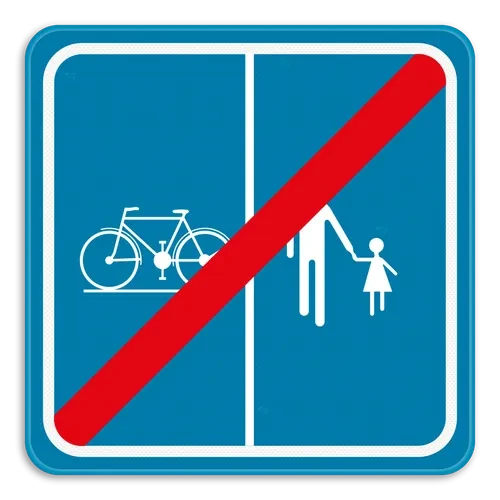
The F101b - End of a road or part of a road reserved for pedestrians, cyclists horse riders and drivers of speed pedelecs with segregation road sign may also be known by these alternative names or terms.
The F101b - End of a road or part of a road reserved for pedestrians, cyclists horse riders and drivers of speed pedelecs with segregation road sign is part of the Belgian Information and Indicatory Signs category, which groups together signs with similar rules and functions.
Understanding the distinctions between similar Belgian road signs like F101b is crucial for effective theory test revision and accurate sign recognition. Comparing these signs directly helps solidify your learning, reduce errors, and improve overall driving knowledge for the Belgian licence process.
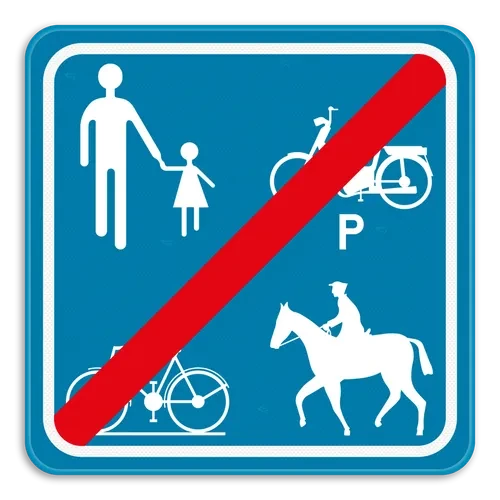
You've reached the end of a special zone for pedestrians, cyclists, horse riders, and speed pedelecs.
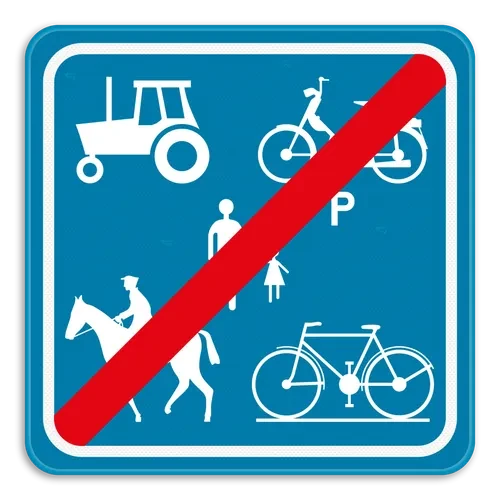
F101c: Signalling the End of a Restricted Road Zone
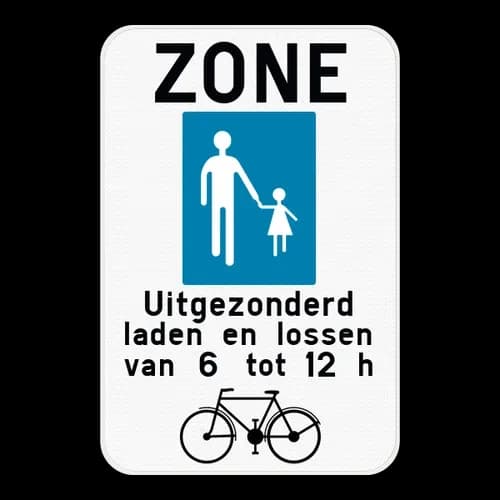
F103: You are entering a pedestrian zone – adjust your approach.
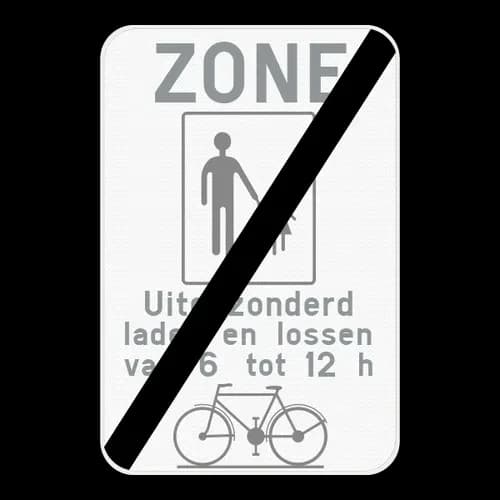
You're leaving the pedestrian zone with the F105 sign
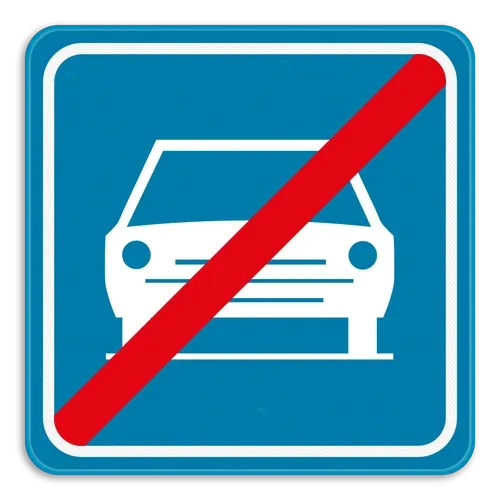
The F11 sign signals the end of a motorroad – know how to react safely.
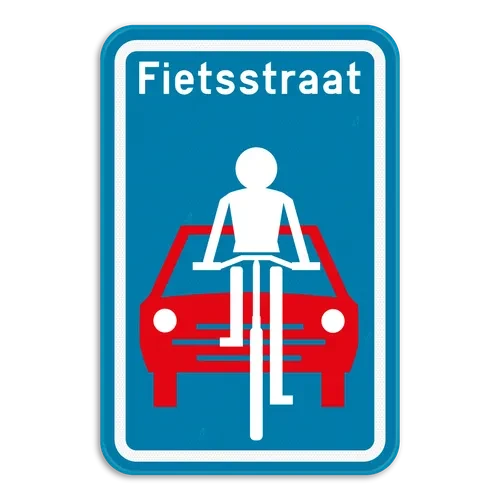
F111 'Cycle street' sign: know when cyclists have priority.
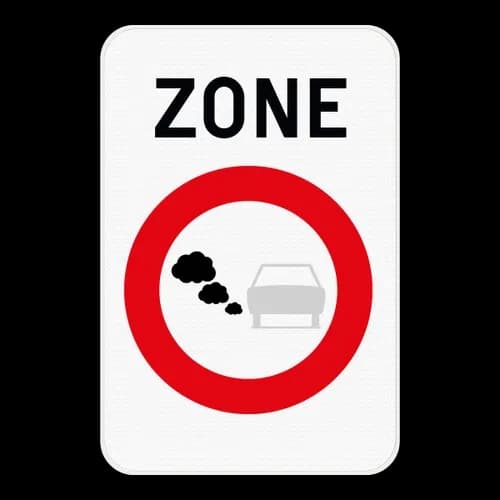
Understand Belgium's 'Start of a Low Emission Zone' F117 Road Sign
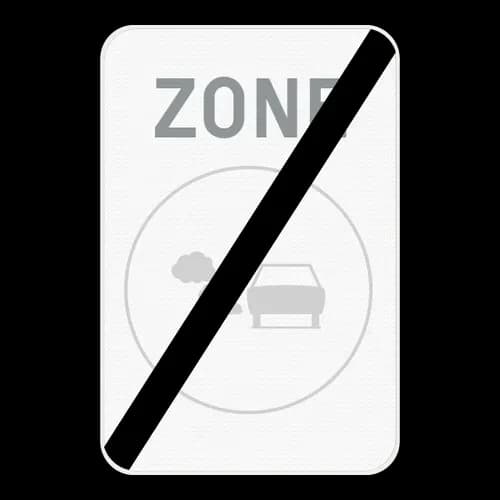
F118: You are now leaving a low emission zone.
After reviewing all Belgian road signs, deepen your understanding by exploring specific categories such as warning, regulatory, or prohibitory signs. Practice recognition with targeted quizzes to reinforce learning for a successful theory test.
All Belgian Road Signs List