
Emergency braking refers to the rapid and forceful application of your vehicle's brakes when an immediate hazard demands an instant stop. In Belgian traffic, situations requiring emergency braking can arise without warning, such as a sudden pedestrian, an unexpected obstacle, or another vehicle braking sharply. This page clarifies the correct technique, how modern systems like ABS assist, and why a quick, decisive reaction is paramount for safety and passing your theory exam.
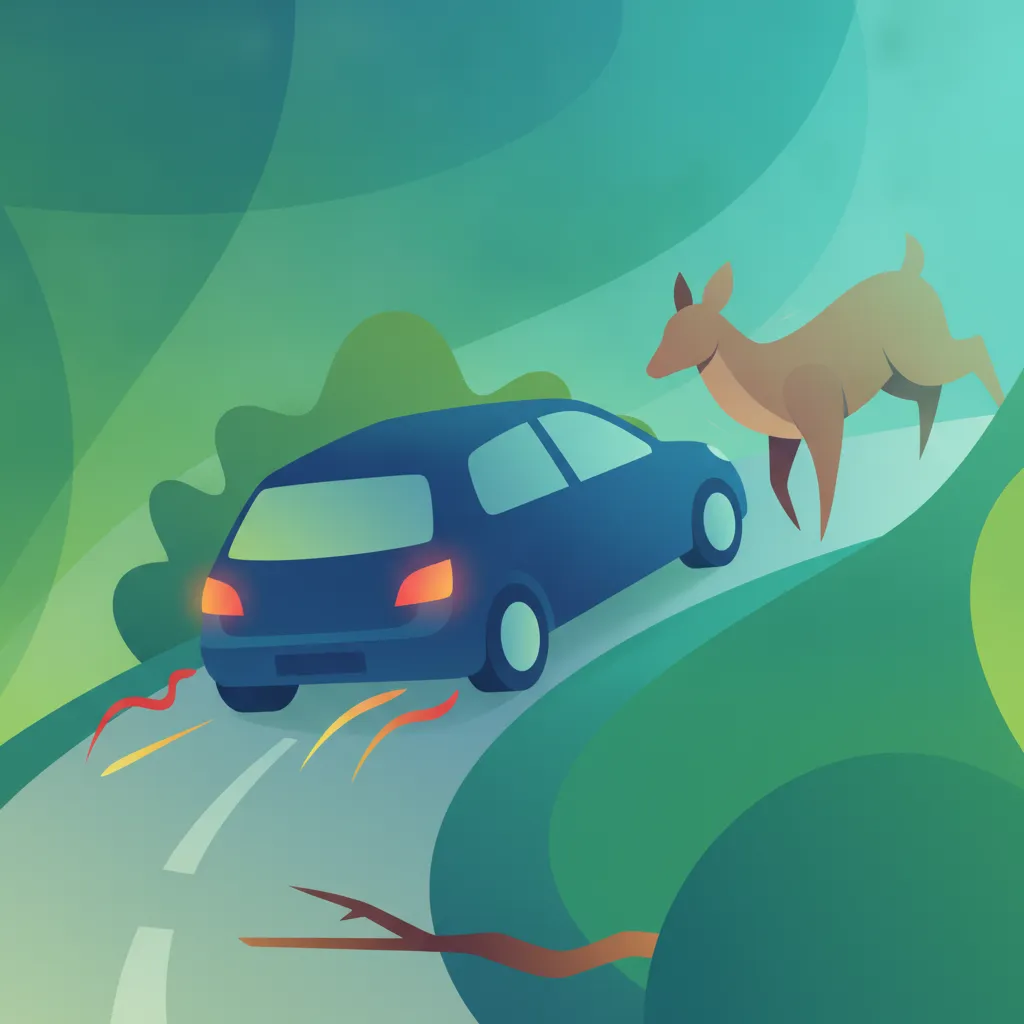
Theory topic content overview
Read the full theory topic guide for Emergency Braking with structured, easy-to-scan content built for learners in Belgium. This detailed section explains the exact rule, meaning, traffic context, comparison points, and exam logic behind this Belgian driving theory topic so you can study faster, understand the concept more clearly, and avoid common interpretation mistakes on the theory test.
Emergency braking is the critical action of applying maximum stopping force to your vehicle's brakes in an instant, typically to prevent an imminent collision with a sudden, unexpected hazard. On Belgian roads, where traffic can be dense and situations change rapidly, mastering this technique is crucial for driver safety and is a key concept tested in the Belgian driving theory exam. It's about reacting decisively when every millisecond and metre of stopping distance counts.
Understanding and being prepared for emergency braking, or noodstop as it's known in Dutch, is non-negotiable for anyone driving in Belgium.
Performing an emergency brake is not merely pressing the brake pedal; it's a specific technique that maximises your vehicle's stopping power while maintaining as much control as possible.
Most modern cars on Belgian roads are equipped with ABS, which is designed to prevent the wheels from locking up during heavy braking.
If you drive an older vehicle without ABS, the technique differs significantly to prevent wheel lock-up and loss of control.
Several factors critically influence how quickly and safely your vehicle can stop in an emergency:
It's vital to differentiate between emergency braking and normal braking, and to understand the true function of ABS.
A common misconception among learners for the Belgian driving theory exam is that ABS always shortens stopping distance.
Emergency braking is a skill you hope never to use, but must be ready for. For your Belgian driving licence, remember that:
By internalising these principles, you not only improve your chances of passing the Belgian theory exam but, more importantly, become a safer and more competent driver on Belgian roads.
Emergency braking is the immediate application of maximum brake force to prevent a collision with a sudden, unexpected hazard, and is a critical skill tested in the Belgian driving theory exam. In vehicles with ABS, drivers should press the brake pedal firmly and continuously while steering around the hazard if safe, as ABS prevents wheel lock-up and maintains directional control. In older vehicles without ABS, cadence braking (applying pressure until wheels almost lock, then releasing slightly) is required to prevent skidding and maintain some steering ability. Key factors affecting stopping distance include reaction time, vehicle speed, road surface conditions, tyre condition, and brake system maintenance. Common mistakes include hesitation, insufficient brake pressure, incorrectly pumping ABS brakes, and failing to understand that ABS primarily aids steering control rather than guaranteeing shorter stopping distances.
A short set of high-value points that capture the most important ideas from this theory explanation.
Emergency braking requires immediate, maximum brake pressure to prevent imminent collisions, not gradual or hesitant braking
ABS prevents wheel lock-up and maintains steering control during heavy braking, allowing you to steer around hazards while stopping
Stopping distance increases exponentially with speed, making defensive driving and adequate following distance essential
ABS primarily provides directional stability and steering capability rather than guaranteed shorter stopping distances on all surfaces
In non-ABS vehicles, cadence braking (stomp and release) prevents wheel lock-up and maintains some steering control
In Dutch, emergency braking is called 'noodstop' – a last-resort action when hazard avoidance through steering is impossible
With ABS: press brake firmly and continuously; never pump the brakes
Without ABS: apply brake until wheels almost lock, then release slightly before reapplying (cadence technique)
Road surface dramatically affects stopping distance: dry < wet < loose surfaces < ice/snow
Tyre condition and brake system maintenance are critical factors in emergency braking effectiveness
Hesitating before applying brakes, which dramatically increases stopping distance and collision risk
Pumping the brakes in an ABS-equipped vehicle instead of maintaining continuous firm pressure
Assuming ABS always shortens stopping distance – it primarily maintains steering control, not guaranteed stopping improvement
Failing to steer while emergency braking with ABS, missing the opportunity to avoid the hazard
Not maintaining adequate following distance, leaving insufficient reaction time and space to emergency brake safely
Start with a short, direct summary of Emergency Braking before reading the full explanation below.
Emergency braking is the act of applying maximum brake pressure to stop your vehicle as quickly as possible, usually to prevent a collision with a sudden hazard. Drivers must react swiftly and firmly press the brake pedal. In vehicles with ABS (Anti-lock Braking System), maintaining continuous firm pressure while steering is crucial, as ABS helps prevent wheel lock-up and maintains steering control on Belgian roads.
Review the most important terms, rule signals, and traffic concepts linked to Emergency Braking.
Explore related theory topic pages connected to Emergency Braking and continue with the next useful rule explanation.
See the common search queries learners use when trying to understand Emergency Braking in Belgium.

Start your comprehensive preparation for the Belgian driving licence theory exam. Dive into our expertly curated topics, master the road rules and concepts, and build the confidence you need to pass your test and drive safely on Belgian roads. Begin mastering theory today.
Explore Belgian Theory TopicsTheory topic content overview
A short set of high-value points that capture the most important ideas from this theory explanation.
Emergency braking requires immediate, maximum brake pressure to prevent imminent collisions, not gradual or hesitant braking
ABS prevents wheel lock-up and maintains steering control during heavy braking, allowing you to steer around hazards while stopping
Stopping distance increases exponentially with speed, making defensive driving and adequate following distance essential
ABS primarily provides directional stability and steering capability rather than guaranteed shorter stopping distances on all surfaces
In non-ABS vehicles, cadence braking (stomp and release) prevents wheel lock-up and maintains some steering control
In Dutch, emergency braking is called 'noodstop' – a last-resort action when hazard avoidance through steering is impossible
With ABS: press brake firmly and continuously; never pump the brakes
Without ABS: apply brake until wheels almost lock, then release slightly before reapplying (cadence technique)
Road surface dramatically affects stopping distance: dry < wet < loose surfaces < ice/snow
Tyre condition and brake system maintenance are critical factors in emergency braking effectiveness
Hesitating before applying brakes, which dramatically increases stopping distance and collision risk
Pumping the brakes in an ABS-equipped vehicle instead of maintaining continuous firm pressure
Assuming ABS always shortens stopping distance – it primarily maintains steering control, not guaranteed stopping improvement
Failing to steer while emergency braking with ABS, missing the opportunity to avoid the hazard
Not maintaining adequate following distance, leaving insufficient reaction time and space to emergency brake safely
Start with a short, direct summary of Emergency Braking before reading the full explanation below.
Emergency braking is the act of applying maximum brake pressure to stop your vehicle as quickly as possible, usually to prevent a collision with a sudden hazard. Drivers must react swiftly and firmly press the brake pedal. In vehicles with ABS (Anti-lock Braking System), maintaining continuous firm pressure while steering is crucial, as ABS helps prevent wheel lock-up and maintains steering control on Belgian roads.
Review the most important terms, rule signals, and traffic concepts linked to Emergency Braking.
Explore related theory topic pages connected to Emergency Braking and continue with the next useful rule explanation.
See the common search queries learners use when trying to understand Emergency Braking in Belgium.
Start your comprehensive preparation for the Belgian driving licence theory exam. Dive into our expertly curated topics, master the road rules and concepts, and build the confidence you need to pass your test and drive safely on Belgian roads. Begin mastering theory today.
Explore Belgian Theory TopicsUse this exam-focused revision tip to understand how Emergency Braking is likely to appear in theory questions for learners in Belgium. This section helps you identify the most testable part of the rule, avoid common traps, and remember the concept more effectively during Belgian driving theory exam preparation.
The Belgian theory exam often presents scenarios where you need to react to sudden hazards. Remember that hesitation is dangerous; emergency braking requires an immediate and decisive response. Understand that while ABS helps maintain steering control, it does not guarantee a shorter stopping distance on all surfaces, particularly loose ones. Prioritize quick reaction and control.
Read direct answers to the most common learner questions about Emergency Braking in Belgium. This FAQ focuses on rule confusion, practical meaning, comparison with similar concepts, and the exact uncertainties that appear most often in Belgian driving theory revision and exam preparation.
Emergency braking is the immediate and forceful application of the brakes to bring a vehicle to a stop as quickly as possible, typically to avoid an imminent collision or respond to a sudden, unexpected hazard.
Normal braking involves gradual, controlled pressure to slow down or stop smoothly, whereas emergency braking requires applying maximum, sustained pressure to the brake pedal instantly to achieve the shortest possible stopping distance.
ABS stands for Anti-lock Braking System. During emergency braking, ABS prevents the wheels from locking up, allowing the driver to maintain steering control while braking hard. This helps avoid skidding and enhances vehicle stability, especially on slippery surfaces.
While ABS significantly improves control and steering ability during hard braking, it does not always shorten stopping distance. On loose surfaces like gravel or snow, a vehicle without ABS might stop marginally faster if its wheels lock and plough through the material, though with a loss of steering control.
Emergency braking should only be performed when absolutely necessary to prevent a collision. This includes situations like a pedestrian suddenly stepping into the road, an animal running across, or another vehicle making an unexpected, abrupt stop in front of you.
If your vehicle has ABS, firmly press the brake pedal with maximum force and hold it down. Do not pump the brakes. Steer around the obstacle if possible while maintaining brake pressure.
Without ABS, applying maximum brake pressure can lock the wheels and cause a skid. In older vehicles, you might need to use 'cadence braking' by pumping the brakes rapidly, but the primary goal is still to apply maximum safe pressure without losing control.
Ready to focus your Belgian driving theory revision? Utilize our powerful search tool to pinpoint exact topics, road signs, or difficulty levels. Engage with practice questions that directly address your learning needs and solidify your understanding of Belgian traffic laws for your upcoming exam.