
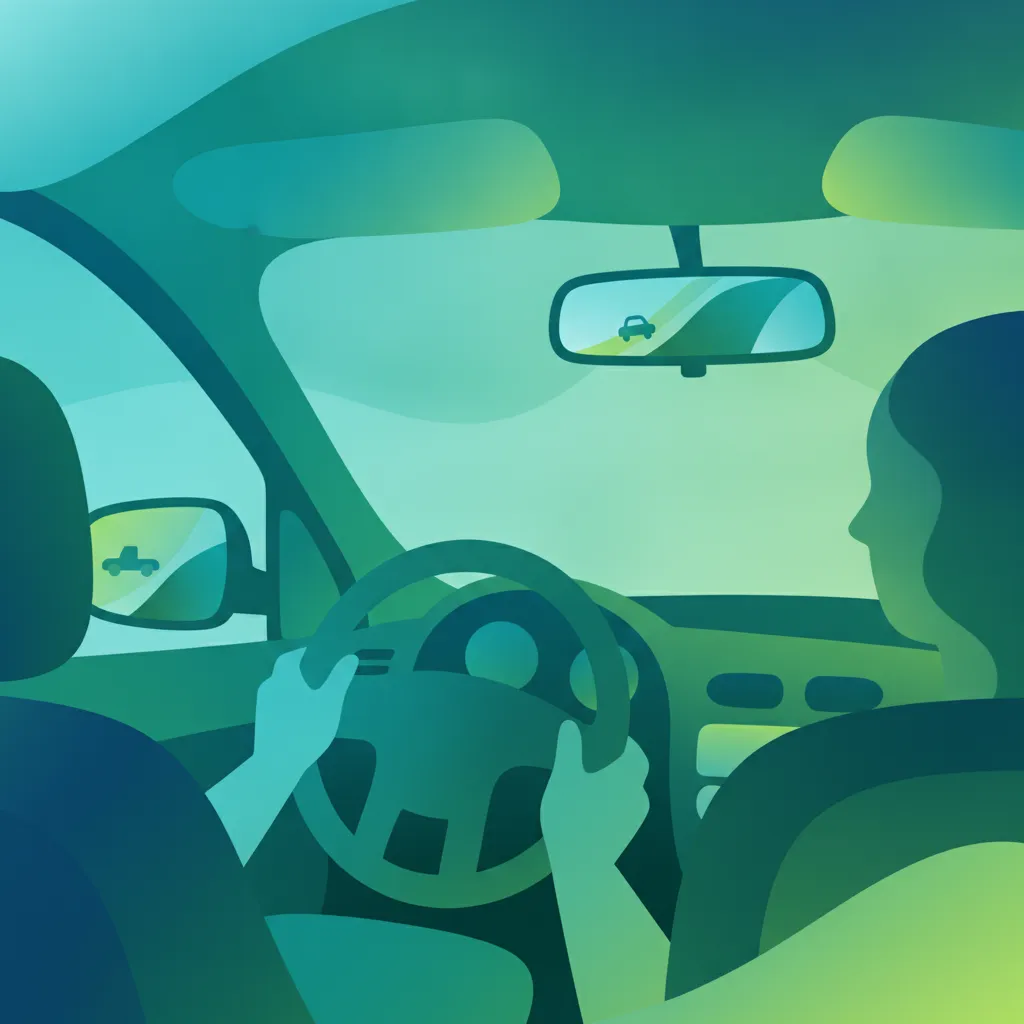
Mirror checks are a cornerstone of defensive driving in Belgium, enabling you to maintain a comprehensive understanding of traffic behind and beside your vehicle. Proper and frequent use of your interior rear-view mirror and exterior side mirrors allows you to anticipate hazards, execute maneuvers safely, and react appropriately to changing road conditions. This skill is heavily emphasized in Belgian driving education and tests.
Theory topic content overview
Read the full theory topic guide for Mirror Checks with structured, easy-to-scan content built for learners in Belgium. This detailed section explains the exact rule, meaning, traffic context, comparison points, and exam logic behind this Belgian driving theory topic so you can study faster, understand the concept more clearly, and avoid common interpretation mistakes on the theory test.
Mirror checks are a foundational driving skill in Belgium, crucial for maintaining full situational awareness of traffic around your vehicle. Far beyond simple glances, they are a continuous observation technique that allows you to monitor other road users, anticipate their actions, and execute manoeuvres safely. This skill is not only central to safe driving but is also rigorously assessed in both the Belgian driving theory and practical tests.
Mirror checks involve regularly using your vehicle's mirrors to observe traffic behind and to the sides. This encompasses:
The objective is to gather real-time information about your surroundings, ensuring you are always aware of other vehicles, cyclists, and pedestrians who may be approaching or positioned in your path.
Effective mirror use is not just good practice; it's a legal and practical necessity on Belgian roads:
Mastering mirror checks involves more than just glancing; it requires a systematic approach:
Before you even set off, ensure your mirrors are correctly adjusted:
Mirror checks are not random; they are integral to specific driving actions and continuous awareness:
Mirrors, no matter how well adjusted, have limitations. They cannot show you everything, especially vehicles or vulnerable road users (like cyclists or motorbikes) positioned directly beside your car – these are your blind spots (angles morts / dode hoek).
While mirrors are invaluable, they are a tool, not a replacement for direct observation.
Learners often make predictable errors regarding mirror checks that examiners quickly identify:
Mastering mirror checks is about developing a continuous cycle of observation that integrates seamlessly with your driving. It's not a separate task, but a fundamental part of scanning the road, anticipating hazards, and making informed decisions. By consistently applying effective mirror checks and shoulder checks, you will significantly enhance your safety on Belgian roads and demonstrate the high level of awareness required to pass your driving exams with confidence. Make proactive observation your second nature.
Mirror checks in Belgian driving are a continuous observation practice legally required under Article 34 of the Belgian Road Code, essential for monitoring traffic behind and beside your vehicle. The MSM (Mirror - Signal - Maneuver) procedure, supplemented by mandatory shoulder checks to eliminate blind spots, must be applied before any change in direction or speed, including lane changes, turns, braking, and merging. With Belgium's high volume of cyclists and tram traffic, proper mirror use combined with direct observation is critical for safety and is rigorously assessed in both the theory and practical driving examinations.
A short set of high-value points that capture the most important ideas from this theory explanation.
Mirror checks are a continuous observation technique, not just quick glances performed just before maneuvers
The MSM rule (Mirror - Signal - Maneuver) with an additional blind spot shoulder check is the standard sequence before any lateral movement
Belgian Road Code Article 34 legally obligates drivers to use mirrors to monitor traffic behind, especially vehicles initiating overtaking
Convex side mirrors make objects appear further away than they actually are, requiring careful distance judgment during merging and overtaking
In Belgium's cycling-intensive environment, mirrors alone are insufficient; shoulder checks are mandatory to eliminate blind spots
Check mirrors approximately every 5-8 seconds even when driving straight to maintain continuous traffic awareness
After being overtaken, wait until you can see the vehicle's entire front in your interior mirror before considering any lateral movement
Always check mirrors and perform a shoulder check before opening your car door, particularly in Belgian urban areas with cyclists
For accompanied driving (filière libre), vehicles must display an 'L' sign and have a second interior mirror for the accompanying guide
Exterior mirrors should be adjusted so you can just barely see the side of your own vehicle to minimize blind spots
Checking mirrors only at the last moment when already beginning a maneuver instead of checking before signalling
Skipping the shoulder check entirely, relying only on mirrors to cover blind spots
Spending too long staring at mirrors, causing temporary loss of attention on the road ahead
Having mirrors incorrectly adjusted, creating larger blind spots or poor rearward visibility
Over-relying on parking sensors or cameras instead of combining them with manual mirror and shoulder checks
Start with a short, direct summary of Mirror Checks before reading the full explanation below.
Mirror checks are continuous observations using your vehicle's mirrors to monitor surrounding traffic. In Belgium, drivers must regularly check their rear-view and side mirrors, especially before changing lanes, turning, or braking, to ensure safety and predict other road users' actions. This essential skill forms a core part of the Belgian driving theory curriculum and is rigorously assessed in the practical driving test.
Review the most important terms, rule signals, and traffic concepts linked to Mirror Checks.
Explore related theory topic pages connected to Mirror Checks and continue with the next useful rule explanation.
See the common search queries learners use when trying to understand Mirror Checks in Belgium.

Start your comprehensive preparation for the Belgian driving licence theory exam. Dive into our expertly curated topics, master the road rules and concepts, and build the confidence you need to pass your test and drive safely on Belgian roads. Begin mastering theory today.
Explore Belgian Theory TopicsTheory topic content overview
A short set of high-value points that capture the most important ideas from this theory explanation.
Mirror checks are a continuous observation technique, not just quick glances performed just before maneuvers
The MSM rule (Mirror - Signal - Maneuver) with an additional blind spot shoulder check is the standard sequence before any lateral movement
Belgian Road Code Article 34 legally obligates drivers to use mirrors to monitor traffic behind, especially vehicles initiating overtaking
Convex side mirrors make objects appear further away than they actually are, requiring careful distance judgment during merging and overtaking
In Belgium's cycling-intensive environment, mirrors alone are insufficient; shoulder checks are mandatory to eliminate blind spots
Check mirrors approximately every 5-8 seconds even when driving straight to maintain continuous traffic awareness
After being overtaken, wait until you can see the vehicle's entire front in your interior mirror before considering any lateral movement
Always check mirrors and perform a shoulder check before opening your car door, particularly in Belgian urban areas with cyclists
For accompanied driving (filière libre), vehicles must display an 'L' sign and have a second interior mirror for the accompanying guide
Exterior mirrors should be adjusted so you can just barely see the side of your own vehicle to minimize blind spots
Checking mirrors only at the last moment when already beginning a maneuver instead of checking before signalling
Skipping the shoulder check entirely, relying only on mirrors to cover blind spots
Spending too long staring at mirrors, causing temporary loss of attention on the road ahead
Having mirrors incorrectly adjusted, creating larger blind spots or poor rearward visibility
Over-relying on parking sensors or cameras instead of combining them with manual mirror and shoulder checks
Start with a short, direct summary of Mirror Checks before reading the full explanation below.
Mirror checks are continuous observations using your vehicle's mirrors to monitor surrounding traffic. In Belgium, drivers must regularly check their rear-view and side mirrors, especially before changing lanes, turning, or braking, to ensure safety and predict other road users' actions. This essential skill forms a core part of the Belgian driving theory curriculum and is rigorously assessed in the practical driving test.
Review the most important terms, rule signals, and traffic concepts linked to Mirror Checks.
Explore related theory topic pages connected to Mirror Checks and continue with the next useful rule explanation.
See the common search queries learners use when trying to understand Mirror Checks in Belgium.
Start your comprehensive preparation for the Belgian driving licence theory exam. Dive into our expertly curated topics, master the road rules and concepts, and build the confidence you need to pass your test and drive safely on Belgian roads. Begin mastering theory today.
Explore Belgian Theory TopicsUse this exam-focused revision tip to understand how Mirror Checks is likely to appear in theory questions for learners in Belgium. This section helps you identify the most testable part of the rule, avoid common traps, and remember the concept more effectively during Belgian driving theory exam preparation.
In the Belgian theory and practical exams, examiners pay close attention to consistent and effective mirror use. A common mistake is only checking mirrors immediately before a maneuver, instead of maintaining continuous awareness. Remember to integrate mirror checks into your overall scanning routine and always perform a 'shoulder check' to eliminate blind spots before making lateral movements.
Read direct answers to the most common learner questions about Mirror Checks in Belgium. This FAQ focuses on rule confusion, practical meaning, comparison with similar concepts, and the exact uncertainties that appear most often in Belgian driving theory revision and exam preparation.
Mirror checks are crucial in Belgium to maintain continuous awareness of traffic around you, especially on busy roads and during complex maneuvers. They help you anticipate other road users' actions, prevent collisions, and comply with Article 34 of the Belgian Road Code regarding mirror use.
The 'Mirror-Signal-Maneuver' (MSM) routine is a fundamental observation technique in Belgium. It means you must first check your mirrors (Mirror), then indicate your intentions (Signal), and only then perform the action (Maneuver) like changing lanes or turning. This ensures your actions are safe and predictable.
You should check your mirrors regularly, approximately every 5-8 seconds, even when driving straight. This continuous observation helps you stay aware of your surroundings. Specific checks are also mandatory before any change in speed or direction.
Adjust your interior rear-view mirror to see as much of the rear window as possible. Adjust your side mirrors so you can barely see the side of your own vehicle, maximizing your view of adjacent lanes and minimizing blind spots. This setup is essential for your Belgian driving test.
Blind spots are areas around your vehicle that cannot be seen in your mirrors. In Belgium, to check blind spots, you must perform a quick head turn (shoulder check) to the left or right, depending on your direction of travel, immediately before changing lanes or turning.
Yes, for the practical driving test in Belgium, your vehicle must be equipped with a second interior mirror adjusted for the instructor. This allows the examiner to monitor traffic behind the vehicle independently during your test.
Ready to focus your Belgian driving theory revision? Utilize our powerful search tool to pinpoint exact topics, road signs, or difficulty levels. Engage with practice questions that directly address your learning needs and solidify your understanding of Belgian traffic laws for your upcoming exam.