
This lesson focuses on identifying and responding to warning signs, a critical skill for any motorcyclist in Great Britain. By learning to interpret these triangular signs, you will be able to adjust your speed and lane position proactively before reaching hazards like junctions, bends, or slippery road surfaces.
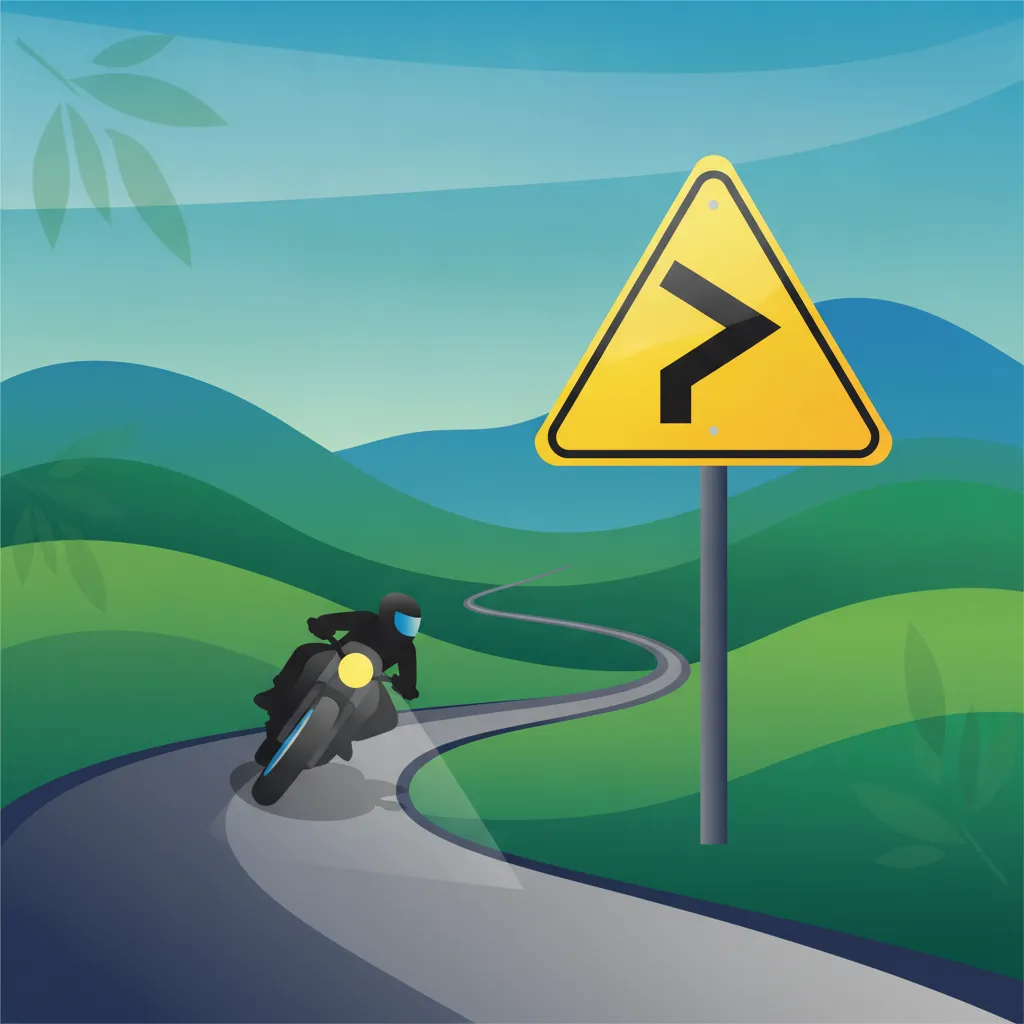
Lesson content overview
Road safety is paramount for every driver, but for motorcyclists, anticipating hazards is even more critical due to their increased vulnerability. In the Great Britain Motorcycle Theory Course, a deep understanding of warning signs is fundamental to becoming a safe and confident rider. These signs serve as vital advance notice, allowing you to prepare for changing road conditions, potential dangers, and specific hazards ahead.
This lesson will explain the function of warning signs, which are predominantly triangular in shape and are designed to alert road users to potential dangers. We will explore how to identify signs indicating bends, junctions, slippery surfaces, animal crossings, and other specific hazards, with a particular focus on their implications for motorcyclists. Learning to react proactively to these warnings by adjusting your speed, position, and overall approach will significantly enhance your safety and riding proficiency.
Warning signs are crucial elements of the road infrastructure, designed to prevent accidents by giving drivers and riders sufficient time to react to upcoming hazards. In Great Britain, these signs follow a distinct visual code, making them easily identifiable at a glance. They act as a proactive safety tool, informing road users of conditions that may necessitate a change in speed, an alteration of lane positioning, or heightened alertness.
A triangular road sign with a white background and a red border, containing a black symbol that graphically represents a potential hazard ahead.
The standard design of a warning sign features a white background, a bold red border, and a black pictorial symbol or text. This consistent design helps ensure quick recognition, even when visibility is less than ideal. These signs are always positioned at a sufficient distance before the actual hazard. This advance placement is critical for motorcyclists, as it provides precious seconds to evaluate the situation, plan a response, and smoothly adjust braking, throttle, and steering inputs. Ignoring or misinterpreting these signs can lead to inappropriate speeds or stances, potentially resulting in a loss of control, especially given the inherent physics of motorcycle stability and lean dynamics.
Effective interaction with warning signs involves several core principles that directly impact rider safety and compliance:
Warning signs cover a wide array of potential hazards. For motorcyclists, understanding the nuances of each type is crucial for adapting riding techniques and ensuring safety.
Bends and curves are common features on most roads, and warning signs provide vital information about their nature. These signs depict a curved arrow, indicating the direction and often the severity of the bend.
When approaching a bend, use the "Look, Assess, Decide, Act" (LADA) principle. Look well ahead for the sign, assess the bend's severity and potential hazards, decide on your entry speed and line, then act by smoothly braking and steering.
Junctions are points where roads meet, and they represent a significant proportion of collision risks. Warning signs for junctions indicate the type of intersection ahead, prompting riders to anticipate possible turning movements and crossing traffic.
Motorcyclists are particularly susceptible to changes in road surface conditions. Signs warning of slippery surfaces are critical for adjusting your riding technique to maintain traction.
Bridges, shaded areas, and certain road markings (like white lines and manhole covers) are often the first to become slippery in damp or icy conditions. Always approach them with extreme caution.
In rural areas, warning signs alert riders to the potential presence of animals on the road. These can range from farm animals to wild deer.
Roadworks introduce temporary changes to the road environment that can significantly impact a motorcyclist's safety. These signs usually have a yellow background to denote their temporary nature.
Several other warning signs alert riders to specific, less common but equally dangerous, hazards.
Adhering to warning signs is not merely a suggestion for safe riding; it is a legal requirement. The Highway Code, which governs all road users in Great Britain, explicitly states the mandatory nature of road signs.
The Highway Code and the Road Traffic Act 1988 are the primary legal frameworks dictating obedience to road signs.
Sharp Bend sign but maintains excessive speed, leading to a loss of control, they have violated this rule.Compliance with these regulations is crucial not only for safety but also to avoid penalty points, fines, or even more serious legal consequences. Ignorance of a sign is rarely accepted as a valid excuse in court.
For motorcyclists, acting on warning signs is a multi-faceted process that combines visual perception, mental processing, and precise physical control.
Human reaction time for visual stimuli averages between 0.5 to 1.0 seconds. This means from the moment you see a warning sign to the moment you begin to react, a significant distance can be covered, especially at higher speeds. This perceptual delay must be factored into your riding. Experienced riders develop excellent hazard perception, which reduces the effective reaction time by anticipating dangers, rather than just reacting to them.
Even experienced riders can make mistakes regarding warning signs. Awareness of these pitfalls can help you avoid them.
Uneven Junction as uncontrolled. Slow down, check thoroughly for crossing traffic, and be prepared to yield, even if it appears clear.The appropriate response to a warning sign is rarely static. It must be adapted based on prevailing conditions and other contextual factors.
Bend to the left require even earlier deceleration.Pedestrian Crossing) become even more critical. Anticipate sudden movements and be prepared to give way, as these users have less ability to avoid collisions.Understanding the direct links between your actions and their outcomes reinforces the importance of warning signs:
Sharp Bend sign correctly → Reduced speed before the curve → Proper lean angle and smooth throttle control → Maintaining tyre traction → Safe navigation through the curve.Slippery when Wet sign → High speed on a wet surface → Loss of traction during braking or cornering → Possible skidding, loss of control, or collision.Uneven Junction sign → Failure to yield to priority traffic → Collision with crossing traffic → Legal consequences, injury, or fatality.Road Works sign → Adhering to temporary speed limits, avoiding filtering → Staying out of construction zones, avoiding debris or equipment → Reduced accident risk and smoother passage.Pedestrian Crossing warning → Not yielding to pedestrians → Collision with a pedestrian → Severe injury or fatality, and significant legal penalties.Explore all units and lessons included in this driving theory course.
Lesson content overview
Explore all units and lessons included in this driving theory course.
Explore search topics learners often look for when studying Warning Signs and Their Rider Implications. These topics reflect common questions about road rules, driving situations, safety guidance, and lesson level theory preparation for learners in Great Britain.
Browse additional driving theory lessons that cover connected traffic rules, road signs, and common driving situations related to this topic. Improve your understanding of how different rules interact across everyday traffic scenarios.
Learn to interpret triangular warning signs in Great Britain, understanding their direct implications for road surface conditions like slippery roads, ice, and loose chippings. Enhance rider safety by linking sign recognition to proactive speed and control adjustments for UK theory.
This lesson teaches you to interpret warning signs, which are typically triangular and designed to alert you to potential hazards ahead. You will learn the meanings of common signs indicating sharp curves, slippery surfaces, roadworks, or areas with frequent pedestrian or animal crossings. Understanding these signs is crucial for anticipating dangers and adjusting your speed and position defensively, which is especially important for vulnerable riders of AM vehicles.

This lesson focuses on regulatory signs, which are legally enforceable and typically circular in shape. You will learn the meaning of signs with red borders that prohibit actions and blue signs that give a mandatory instruction. Understanding these signs, such as speed limits and 'no entry', is essential for lawful and safe riding.

A motorcyclist is particularly vulnerable to imperfections in the road surface. This lesson teaches you how to actively scan the road ahead to spot hazards like potholes, patches of gravel, or slippery diesel spills. You will learn safe techniques for either avoiding these hazards or crossing them with minimal risk if avoidance is not possible.

This lesson teaches you to interpret warning signs, which are typically triangular with a red border. These signs are crucial for anticipating potential dangers, from changes in road layout to the presence of pedestrians or animals. By understanding these warnings, you can adjust your driving to safely navigate upcoming hazards.

This lesson decodes the language of road markings painted on the road surface. You will learn the rules associated with solid and broken white lines, double white lines that restrict overtaking, and yellow lines controlling parking. Proper understanding of these markings is crucial for maintaining correct lane discipline and riding legally.

Riding in the rain requires significant adjustments to your technique. This lesson covers how to ride smoothly to maintain traction, the importance of increasing your following distance, and how to deal with reduced visibility from spray and fogged visors. You will also learn what aquaplaning is and how to avoid or manage it.

This lesson highlights why motorcyclists are considered vulnerable road users. It covers the increased risk of serious injury in a collision due to lack of physical protection compared to car occupants. You will learn about common visibility challenges and how to adopt proactive, defensive strategies to mitigate risks and anticipate potential hazards on the road.
This lesson provides essential advice for riding safely in adverse weather conditions that reduce tyre grip. You will learn how rain, ice, and wet leaves dramatically increase braking distances and affect handling. Key strategies covered include reducing speed, increasing following distances, making smooth control inputs, and anticipating slippery areas to maintain control and avoid skidding on compromised road surfaces.
This lesson focuses on regulatory road signs, which convey legally enforceable instructions that all road users must follow. You will learn to identify and understand signs dictating speed limits, prohibited actions like 'no entry' or 'no overtaking', and mandatory directions at junctions. The content explains the distinct shapes and colours used for these signs, ensuring you can comply with their instructions correctly and avoid penalties while riding your AM vehicle.

Fog dramatically reduces how far you can see and be seen. This lesson explains why you must reduce your speed and increase your following distance in foggy conditions. It also covers the legal requirements and best practices for using your headlights and fog lights to maximize your visibility to others without dazzling them.
Explore UK driving theory lessons on interpreting warning signs for junctions, bends, and intersections. Learn how these signs inform rider decisions on speed, positioning, and priority to safely navigate complex road layouts across Great Britain.
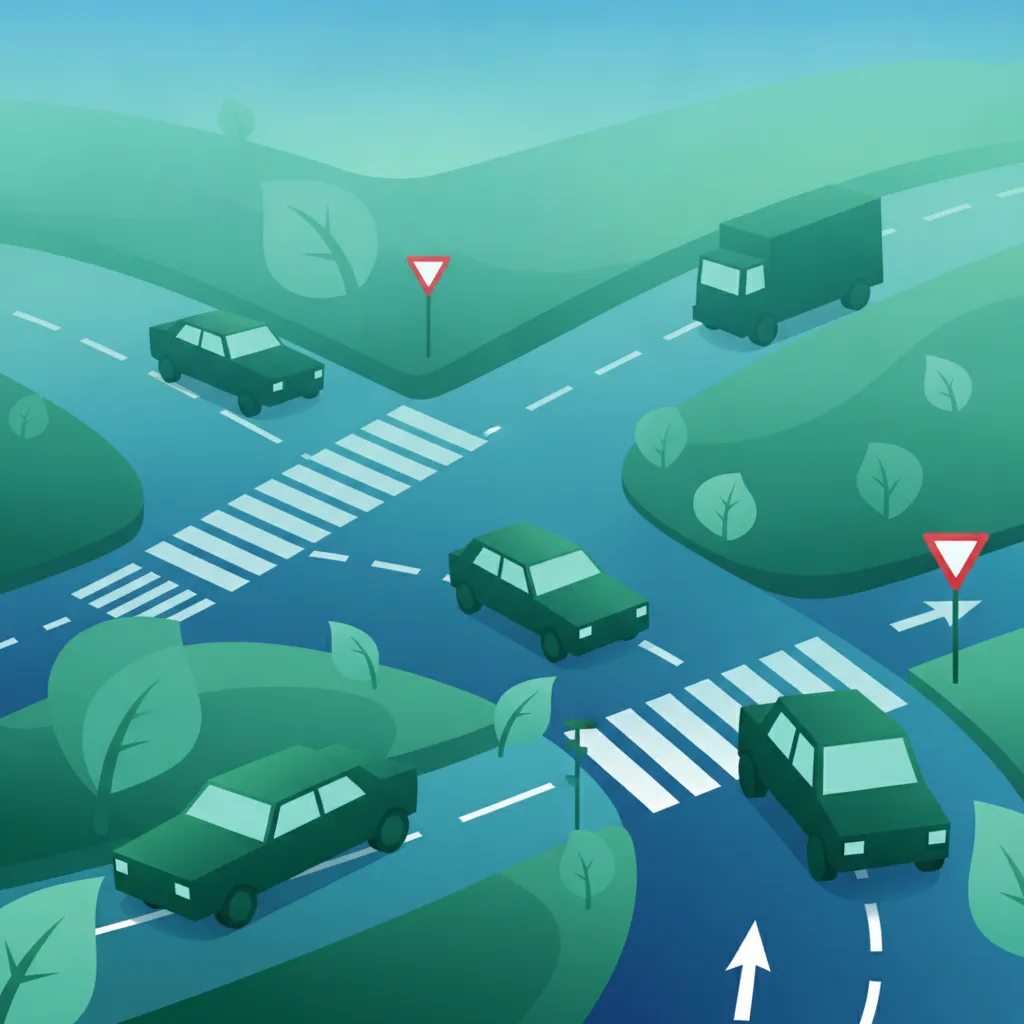
This lesson teaches the systematic approach to safely navigating junctions, emphasizing the importance of adjusting your speed and position well in advance. You will learn the 'Mirror-Signal-Manoeuvre' routine, how to perform effective all-round observation checks, and when to give way to other traffic. The content focuses on making safe judgments about gaps in traffic, a crucial skill for vulnerable AM riders when turning or emerging from a junction.
This lesson teaches you to interpret warning signs, which are typically triangular and designed to alert you to potential hazards ahead. You will learn the meanings of common signs indicating sharp curves, slippery surfaces, roadworks, or areas with frequent pedestrian or animal crossings. Understanding these signs is crucial for anticipating dangers and adjusting your speed and position defensively, which is especially important for vulnerable riders of AM vehicles.

This lesson breaks down the process of navigating basic junctions. It emphasizes the importance of the Mirror-Signal-Manoeuvre (MSM) and Position-Speed-Look (PSL) routines. You will learn how to position your motorcycle correctly for turning, perform effective observation checks for traffic, and judge safe gaps before emerging.

This lesson provides a step-by-step guide to dealing with roundabouts. It covers how to choose the correct lane on approach based on your destination, when and how to signal your intentions, and how to safely enter and exit the roundabout. Emphasis is placed on maintaining good observation and anticipating the actions of other drivers.

This lesson clarifies who has priority at junctions, whether they are marked with signs and lines or are unmarked. It covers the fundamental rule for roundabouts in the UK: give priority to traffic approaching from your right. You will learn the correct procedures for approaching, signalling, and choosing the appropriate lane on roundabouts and at other junctions.

This lesson addresses the unique challenges of mini-roundabouts and large, multi-lane or spiral roundabouts. You will learn the subtle differences in rules and approach for mini-roundabouts and the importance of strict lane discipline on larger ones. The lesson stresses the need for advanced planning and awareness when navigating these complex junctions.
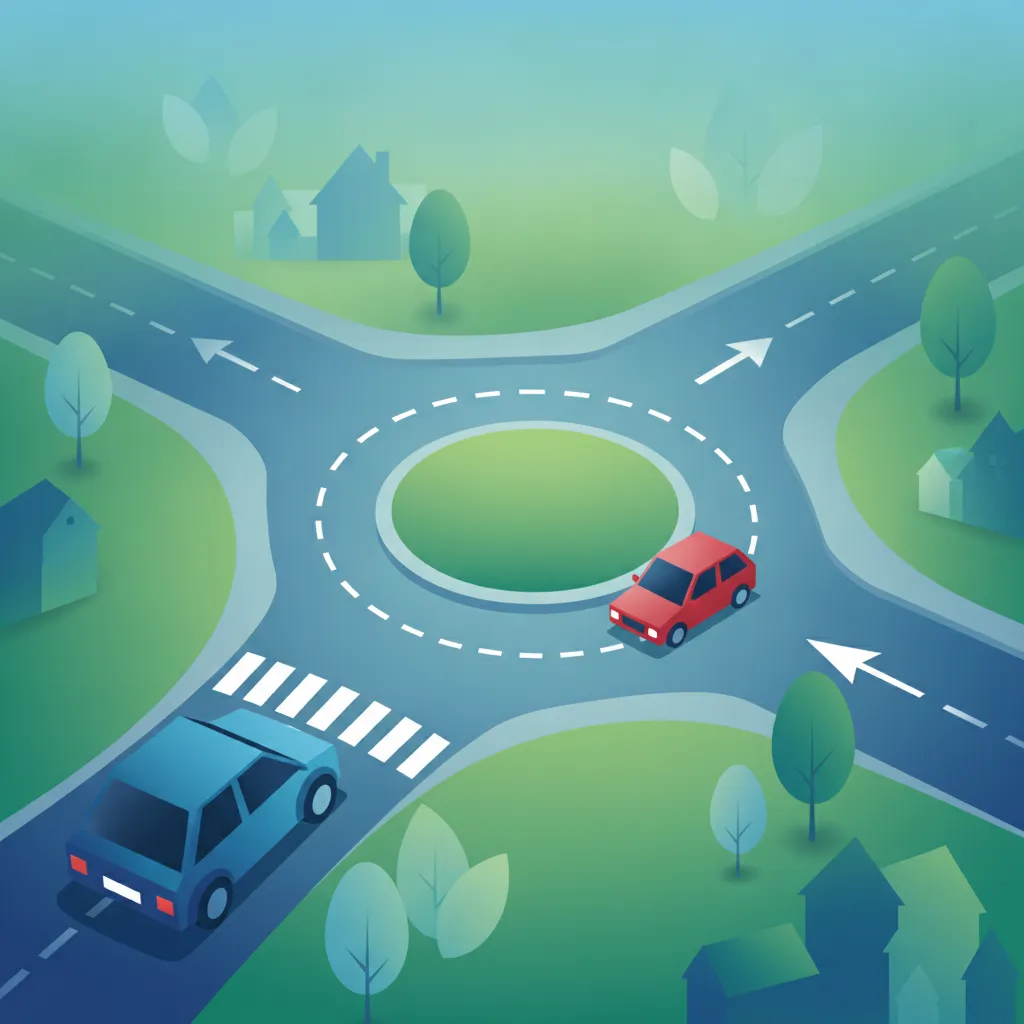
This lesson explains how to handle mini-roundabouts, which are common in urban and residential areas. The primary rule is to approach with caution and give priority to any traffic approaching from your right. You will also learn about correct signalling and the importance of being aware of cyclists and motorcyclists who may be harder to see.
This lesson teaches you to interpret warning signs, which are typically triangular with a red border. These signs are crucial for anticipating potential dangers, from changes in road layout to the presence of pedestrians or animals. By understanding these warnings, you can adjust your driving to safely navigate upcoming hazards.
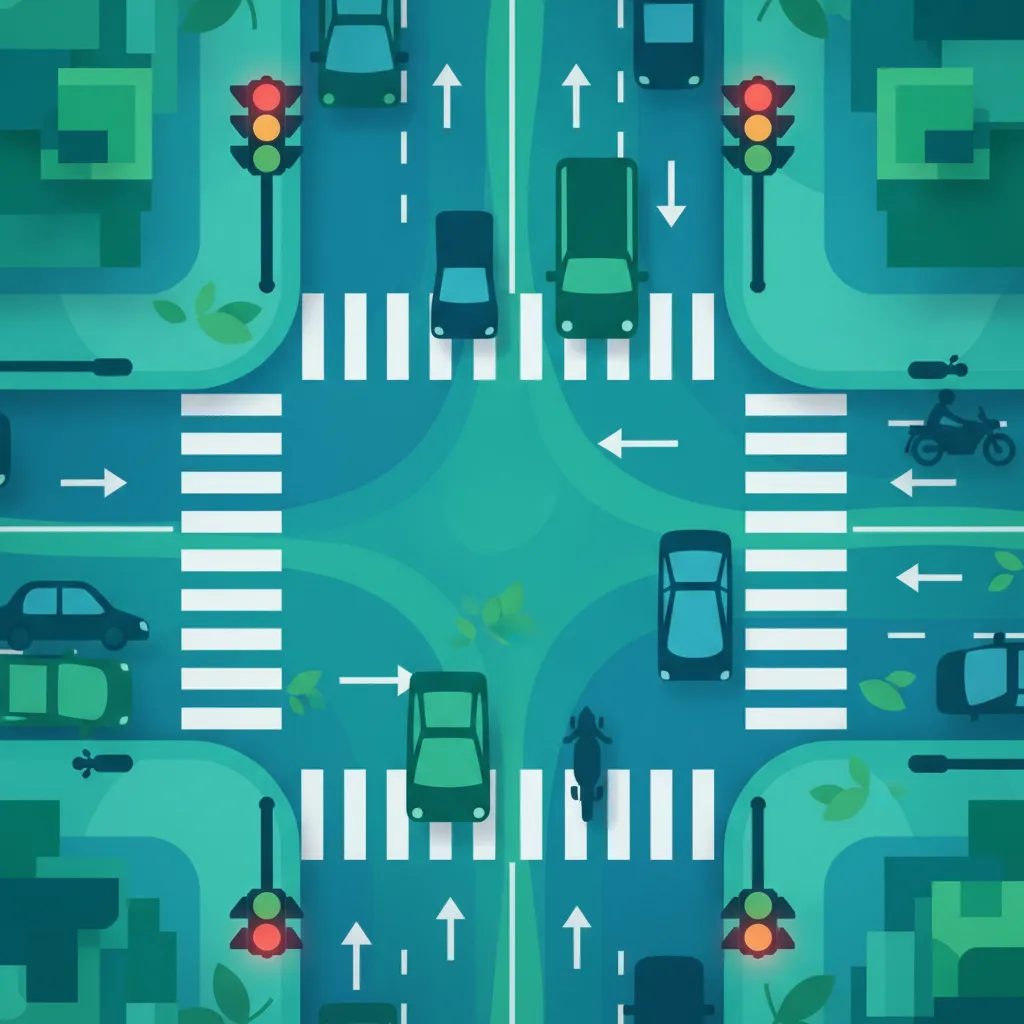
This lesson details how to safely navigate junctions controlled by traffic signals. It explains the meaning of filter arrows, which allow you to proceed in a specific direction even if the main light is red. You will also learn about respecting advanced stop lines for cyclists and how to approach a junction when the traffic lights are not working.

This lesson contrasts the challenges of different road types. It covers how to handle the hidden bends, poor surfaces, and unexpected hazards of rural roads. It then details the specific procedures for using dual carriageways and motorways, including using slip roads, adhering to strict lane discipline, and safely overtaking at high speeds.
Find clear answers to common questions learners have about Warning Signs and Their Rider Implications. Learn how the lesson is structured, which driving theory objectives it supports, and how it fits into the overall learning path of units and curriculum progression in Great Britain. These explanations help you understand key concepts, lesson flow, and exam focused study goals.
In the UK, warning signs are predominantly triangular with a red border to draw the rider's attention to a potential hazard ahead. The specific shape helps you instantly categorize the sign as advisory, distinguishing it from circular regulatory signs which provide mandatory instructions.
While you do not need to perform an emergency stop, a warning sign indicates that you must be prepared to adjust your speed. Assess the severity of the hazard shown and adapt your riding to ensure you have full control, especially if the sign warns of a bend or slippery surface.
The meaning of the sign remains the same for all road users, but the implications are often greater for riders. A 'slippery road' sign, for example, is a much higher risk for a motorcyclist than a car driver, necessitating earlier and more careful speed reduction.
Not always. Some signs have a supplementary plate below them indicating the distance to the hazard or the length of the hazard (e.g., 'for 2 miles'). If no plate is present, assume the hazard is a short distance ahead and prepare to react immediately.
Dive into our comprehensive question bank to find exactly what you need for your Great Britain theory test. Use our advanced filters to pinpoint specific subjects or test your knowledge on challenging areas, ensuring you're fully prepared for success.