This lesson focuses on the critical safety requirements for operating a Category C goods vehicle near vulnerable road users. You will learn to mitigate the dangers of large vehicle blind spots and master best practices for turning and maneuvering in urban environments.
Lesson content overview
Operating a professional goods vehicle for a Category C licence involves significant responsibility, particularly when sharing the road with the most vulnerable road users: pedestrians and cyclists. The sheer size, weight, and limited visibility of large goods vehicles mean that interactions with these unprotected road users carry a much higher risk of severe or fatal injury. This lesson provides a comprehensive understanding of the challenges and best practices for safe interaction, helping you meet the high standards required by the DVSA for professional goods vehicle theory in Great Britain.
Vulnerable Road Users (VRUs) are defined as road users who are not protected by a vehicle structure. This group primarily includes pedestrians and cyclists, but also encompasses motorcyclists and scooter riders. Due to their lack of physical protection, they are inherently more susceptible to serious injury in the event of a collision with any vehicle, and especially with a heavy goods vehicle (HGV).
Category C vehicles possess unique characteristics that amplify the risks to VRUs:
Mastering safe interaction with VRUs is not just a legal obligation; it is a critical skill for preventing tragic accidents and is a cornerstone of professional goods vehicle theory.
Blind spots are areas around a vehicle that cannot be seen by the driver using mirrors or direct vision. For large goods vehicles, these areas are significantly larger and more dangerous than those of a car, posing a critical threat to vulnerable road users.
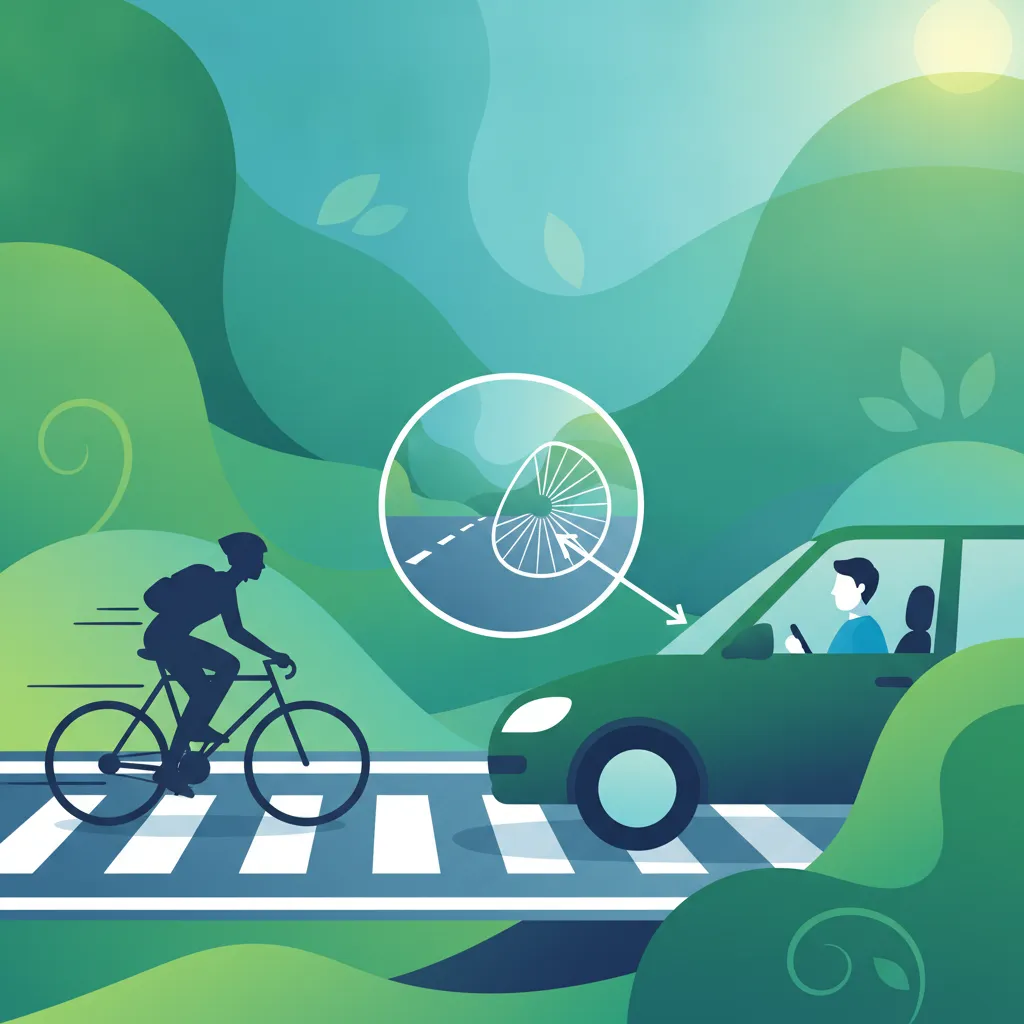
The Nearest-Side Blind Spot (NBS) is arguably the most hazardous blind spot for Category C drivers, especially in urban environments. This is the area immediately adjacent to the driver's left (nearside) of a large vehicle that cannot be seen using the side mirrors alone.
The NBS can extend several metres along the side of the vehicle and a considerable distance directly in front. Cyclists can easily enter and remain within this zone, particularly when riding close to the kerb or attempting to pass the vehicle on its left side.
There are different types of nearside blind spots:
Relying exclusively on mirrors is a common and dangerous mistake. Even advanced mirror systems may not eliminate all blind spots. Professional drivers must develop robust strategies to actively mitigate these risks.
Junctions, particularly left turns, are high-risk scenarios for interactions with cyclists due to the NBS. A cyclist approaching a junction on your nearside may become entirely hidden as your vehicle begins to turn.
To mitigate blind spot risks:
Never assume the nearside is clear simply because your mirrors show no traffic. Cyclists can appear quickly and silently.
Pedestrians are the most exposed road users. Their unpredictable movements and assumption of visibility require Category C drivers to exercise extreme caution and always be prepared to yield.
Different types of pedestrian crossings have specific rules governing right-of-way:
Pedestrians do not always use designated crossings. In built-up areas, especially residential streets, people may cross the road at any point, often assuming drivers will see them and yield.
Proactive observation of the road and its surroundings to identify potential hazards, such as vulnerable road users, well in advance of reaching them. For pedestrian crossings, a 12-second scanning window is recommended.
Cyclists are often less visible than larger vehicles and can be challenging to predict. Category C drivers must be especially mindful of their presence, particularly when turning, overtaking, or driving near cycle lanes.
When overtaking cyclists, providing ample space is paramount to their safety. Cyclists may swerve to avoid potholes, drains, or sudden gusts of wind. A large goods vehicle can also create significant air turbulence that can destabilise a cyclist.
When overtaking a cyclist, think of them as another vehicle, not an obstruction. Give them the same respect and space you would another car.
Dedicated cycle lanes are designed to provide cyclists with a safer space on the road.
Clear communication and proactive anticipation are vital skills for Category C drivers interacting with vulnerable road users. They help to manage expectations, reduce uncertainty, and prevent sudden, dangerous situations.
Your vehicle's signals are your primary means of communicating with other road users, including pedestrians and cyclists.
Anticipatory scanning means actively observing the road and its surroundings to identify potential hazards before they become immediate threats. For VRUs, this involves looking beyond the immediate vicinity of your vehicle.
Understanding the psychology of VRUs is important: they often assume they are visible to drivers. As a Category C driver, you must compensate for this by actively seeking them out.
Compliance with the Highway Code and relevant regulations is non-negotiable for Category C licence holders. These rules form the backbone of safe interaction with pedestrians and cyclists.
The following rules are particularly pertinent:
Adhering to these rules is not merely about avoiding fines and penalty points; it is about upholding your professional responsibility and ensuring the safety of all road users.
Safe interaction with vulnerable road users requires adapting your driving to various environmental and vehicle-specific conditions. What is safe in clear daylight may be perilous in fog or with a heavy load.
Poor visibility due to darkness, rain, fog, or snow significantly increases the risk to pedestrians and cyclists, who are already less visible.
The nature of your cargo directly impacts your vehicle's handling and safety performance.
Urban delivery zones and areas with roadworks present unique challenges for Category C drivers.
Being aware of common mistakes can significantly improve your safety record when interacting with pedestrians and cyclists.
| Common Violation/Mistake | Why It's Dangerous | Correct Behaviour |
|---|---|---|
| Late signalling before a left turn | Gives hidden cyclists insufficient time to react or clear the blind spot. | Signal at least 3 seconds prior; perform a thorough head-turn check to the nearside. |
| Failing to leave sufficient space when overtaking VRUs | Risks sideswiping, causing loss of balance, or startling pedestrians/cyclists. | Slow down, if possible move into an adjacent lane, and maintain a minimum 1.5m lateral clearance. |
| Relying solely on mirrors for blind spot checks | Mirrors do not show the entire nearside blind spot; cyclists can be completely hidden. | Always perform a physical head-turn (turn-check) of the nearside blind spot before any left manoeuvre. |
| Proceeding through an unmarked pedestrian crossing at speed | Assumes pedestrians will wait for you; pedestrians may cross unexpectedly. | Reduce speed, actively scan pavements, and be prepared to stop if pedestrians appear ready to cross. |
| Using the horn excessively | Can startle cyclists or pedestrians, causing them to lose control or react unpredictably. | Use the horn judiciously and only to prevent an immediate danger. |
| Driving with an unbalanced load | Can exacerbate blind spot sizes and negatively affect vehicle handling and braking. | Ensure the load is evenly distributed and securely fastened before starting your journey. |
| Misinterpreting flashing amber at Pelican crossings | Assuming it means 'clear to proceed' when a pedestrian is present or waiting. | Prepare to stop; only proceed if the crossing is completely clear of pedestrians. |
Safe interaction with pedestrians and cyclists is a cornerstone of professional driving for a Category C licence. It demands a proactive, defensive, and highly responsible approach from every driver. By consistently applying the principles discussed—mastering blind spot detection, respecting right-of-way, providing generous space, communicating clearly, and adapting to diverse conditions—you not only protect the most vulnerable road users but also uphold the highest standards of professional conduct. The continuous development of these skills is crucial for preventing accidents and ensuring road safety for everyone in Great Britain.
Explore all units and lessons included in this driving theory course.
Lesson content overview
Explore all units and lessons included in this driving theory course.
Explore search topics learners often look for when studying Interaction with Pedestrians and Cyclists. These topics reflect common questions about road rules, driving situations, safety guidance, and lesson level theory preparation for learners in Great Britain.
Browse additional driving theory lessons that cover connected traffic rules, road signs, and common driving situations related to this topic. Improve your understanding of how different rules interact across everyday traffic scenarios.
Explore complex scenarios and advanced risks when operating heavy goods vehicles around pedestrians and cyclists. Understand how vehicle dynamics and road conditions amplify dangers for vulnerable road users in Great Britain driving theory.
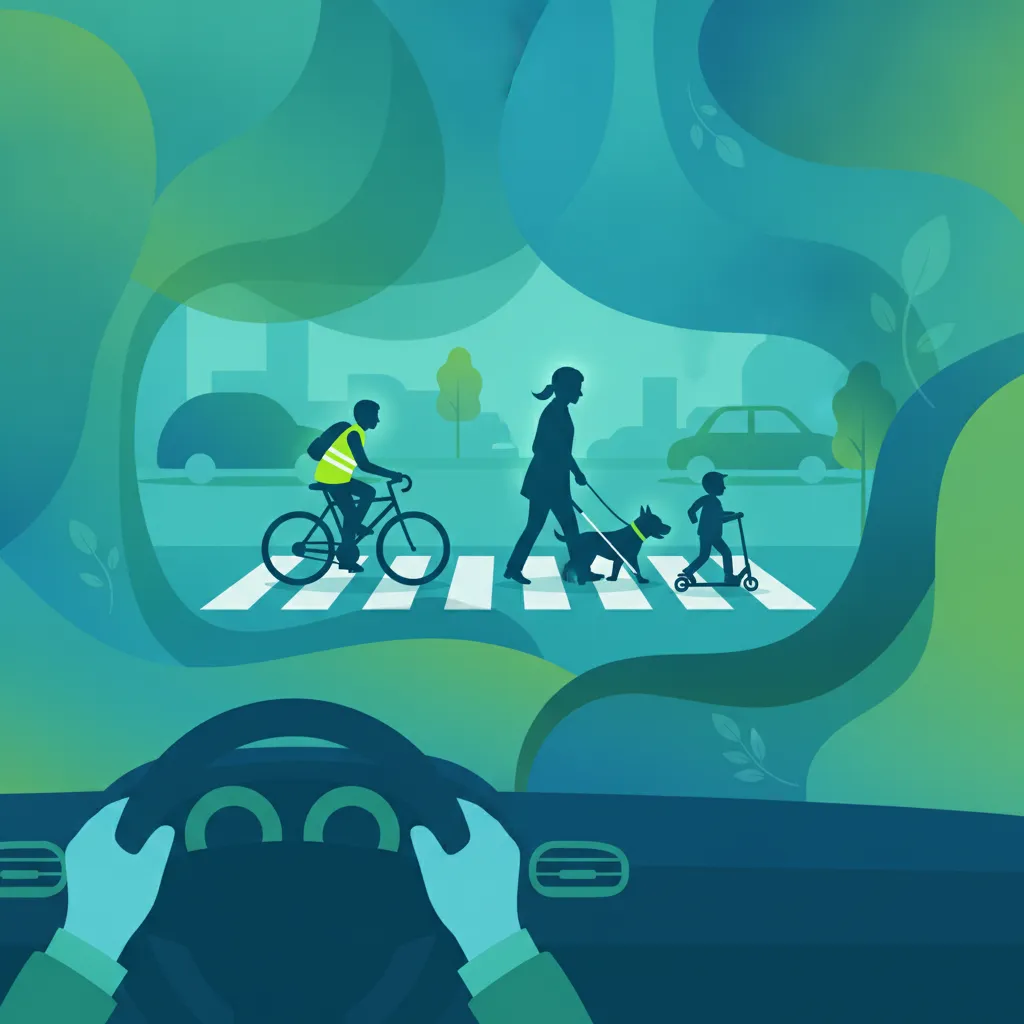
This lesson teaches drivers how to identify various types of vulnerable road users and anticipate their potential actions to prevent conflicts. It covers the specific risks associated with pedestrians, cyclists, motorcyclists, children, and elderly or disabled individuals. Emphasis is placed on heightened awareness and defensive driving techniques required to share the road safely. Understanding their perspectives and typical behaviours is key to protecting them and maintaining safety for everyone.
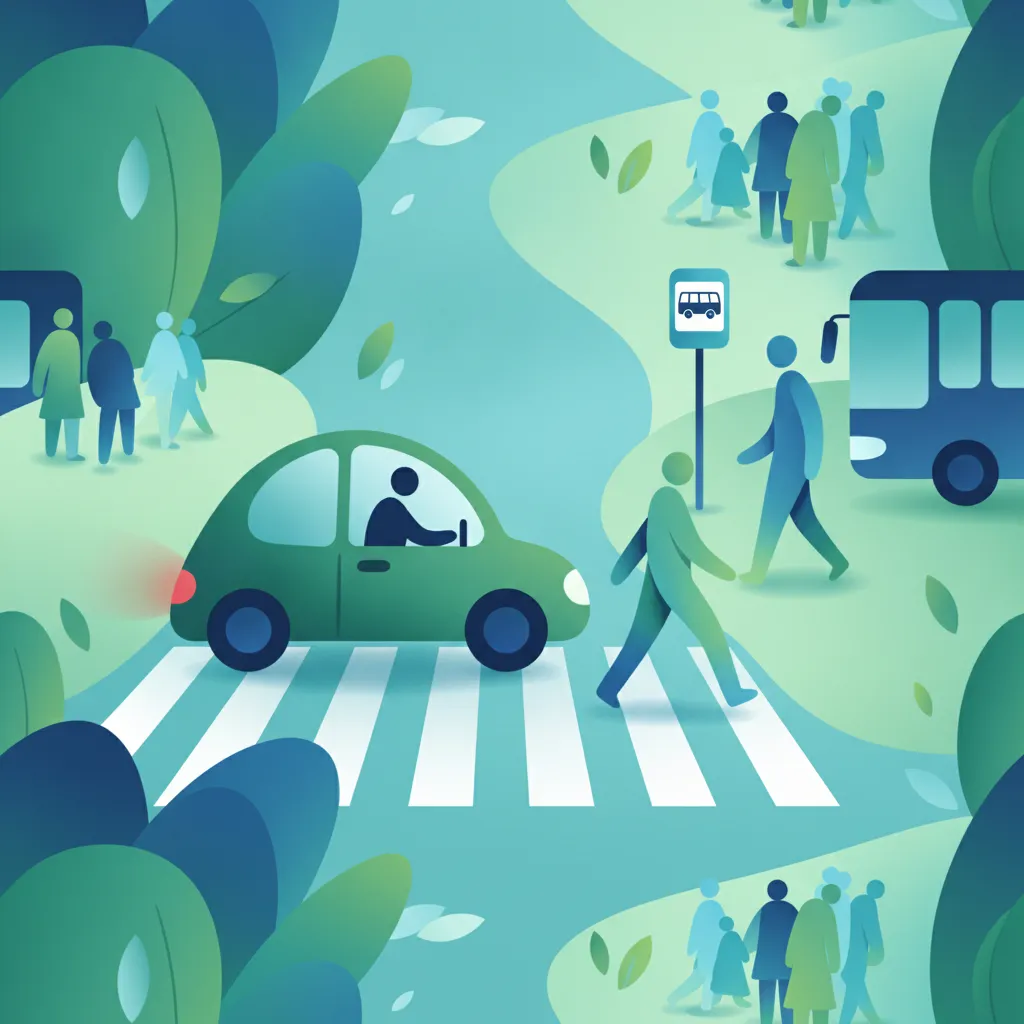
This lesson provides detailed guidance on protecting pedestrians in high-risk areas like bus stops and formal crossings. It covers the specific rules and driver obligations at zebra, pelican, toucan, and puffin crossings, as well as when approaching a school crossing patrol. The content emphasizes the importance of vigilance, anticipating pedestrian movements, especially those who may be distracted or emerge from behind the bus, and always being prepared to stop to prevent accidents.
This lesson focuses on safe interaction with cyclists, a key aspect of urban driving for PCV operators. It details the rules for cycle lanes and advanced stop lines, and the correct procedure for overtaking cyclists, emphasizing the need to provide ample space. The content stresses the importance of frequent mirror checks to manage blind spots where cyclists can be hidden, especially when turning at junctions, to ensure their safety and comply with the Highway Code's road user hierarchy.
This lesson focuses on developing a proactive and patient approach towards elderly and disabled road users. It explains how to recognize and provide additional time and space for individuals with slower movement, mobility scooters, or sensory impairments. The content emphasizes the importance of driver attitude, patience at crossings, and anticipating the needs of these vulnerable individuals. Understanding these factors is crucial for preventing accidents and demonstrating a high level of professional care and responsibility.
This lesson focuses on the dynamic and often unpredictable nature of urban traffic. It covers how to safely negotiate various pedestrian crossings, anticipate the movement of cyclists and pedestrians, and be aware of hazards like bus stops and car doors opening. You will also learn about the considerations for safe and legal filtering in slow-moving traffic.
This lesson explains how to adapt your driving around different vehicles. You will learn to look out for motorcyclists, who are often hard to see, especially at junctions. It also covers the challenges of sharing the road with large vehicles, such as their extended blind spots, wider turning circles, and the wind turbulence they can create.
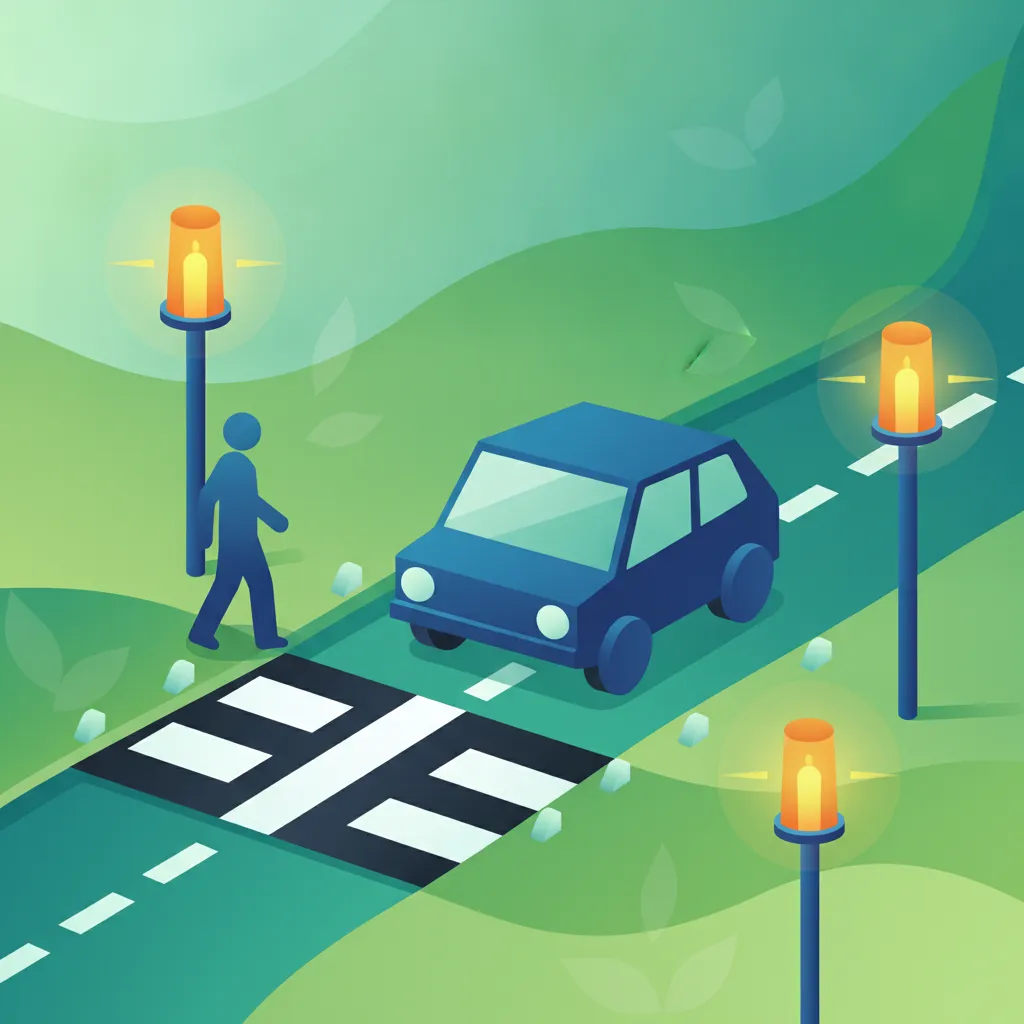
This lesson focuses on the markings and rules at designated pedestrian crossing points. It details the legal requirement to give way to pedestrians on a zebra crossing and explains the light sequences at signal-controlled crossings. You will also learn the meaning of the white zig-zag lines on the approach to all crossings.
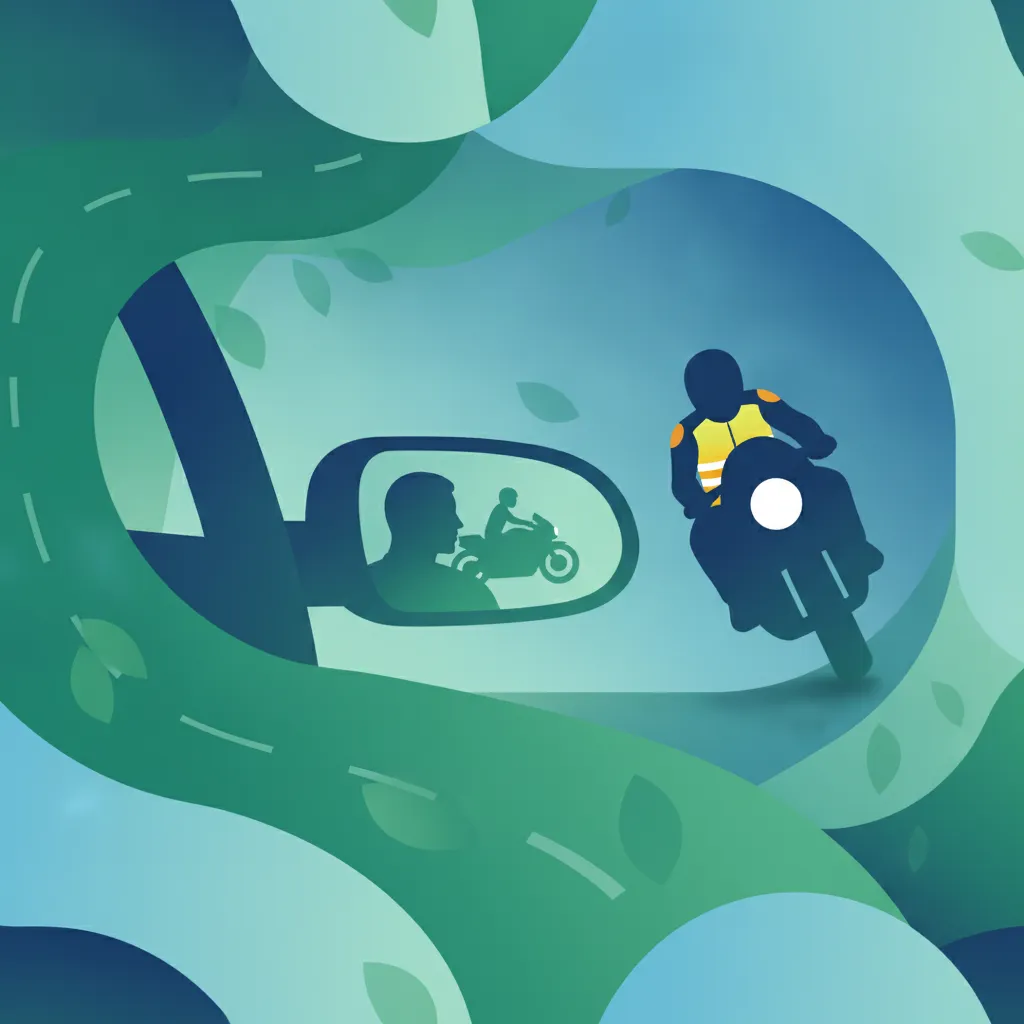
This lesson focuses on the unique risks faced by motorcyclists and scooter riders when sharing the road with HGVs. It explains how their small size and rapid acceleration can make them difficult to see, especially when they are filtering through traffic. Drivers will learn the importance of making extra mirror checks—'look twice'—before any maneuver and giving motorcyclists extra space, as they can be more affected by wind buffeting and road surface imperfections.

This lesson highlights why motorcyclists are considered vulnerable road users. It covers the increased risk of serious injury in a collision due to lack of physical protection compared to car occupants. You will learn about common visibility challenges and how to adopt proactive, defensive strategies to mitigate risks and anticipate potential hazards on the road.
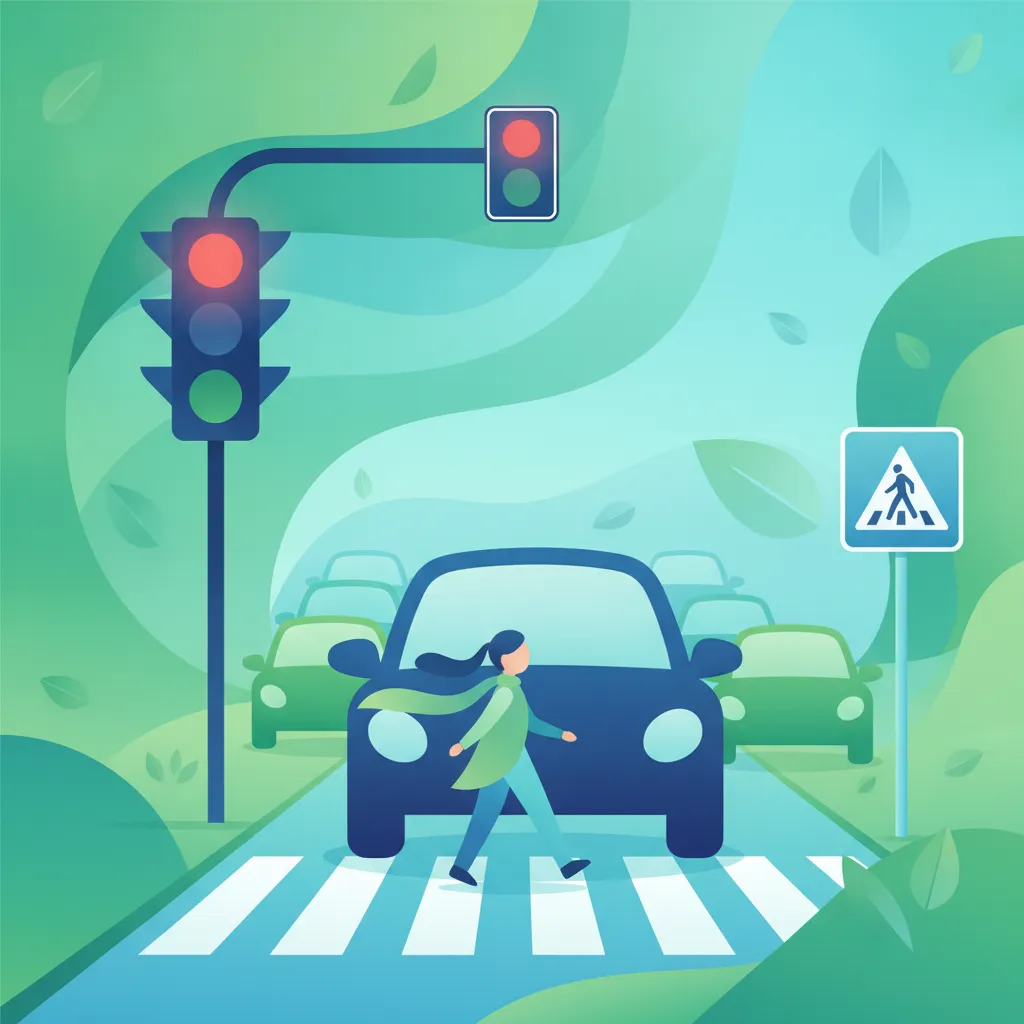
This lesson covers the operation of traffic light signals and the rules for approaching them safely. It also provides a detailed explanation of different pedestrian crossings, such as zebra, pelican, and toucan crossings, clarifying the specific rules and priority for each. You will learn to anticipate the actions of pedestrians and other vulnerable road users at these locations.
Detailed explanation of heavy goods vehicle blind spots, focusing on critical safety measures needed when navigating junctions and making turns. Learn UK driving theory to prevent collisions with vulnerable road users.
This lesson provides a detailed map of the significant blind spots located to the front, sides, and rear of a typical heavy goods vehicle. It explains the purpose of the different classes of mirrors and how to adjust them correctly for maximum visibility. Learners will be taught effective scanning techniques—'mirror-signal-manoeuvre'—to actively check these zones before changing position, ensuring they are aware of any hidden hazards or other road users.
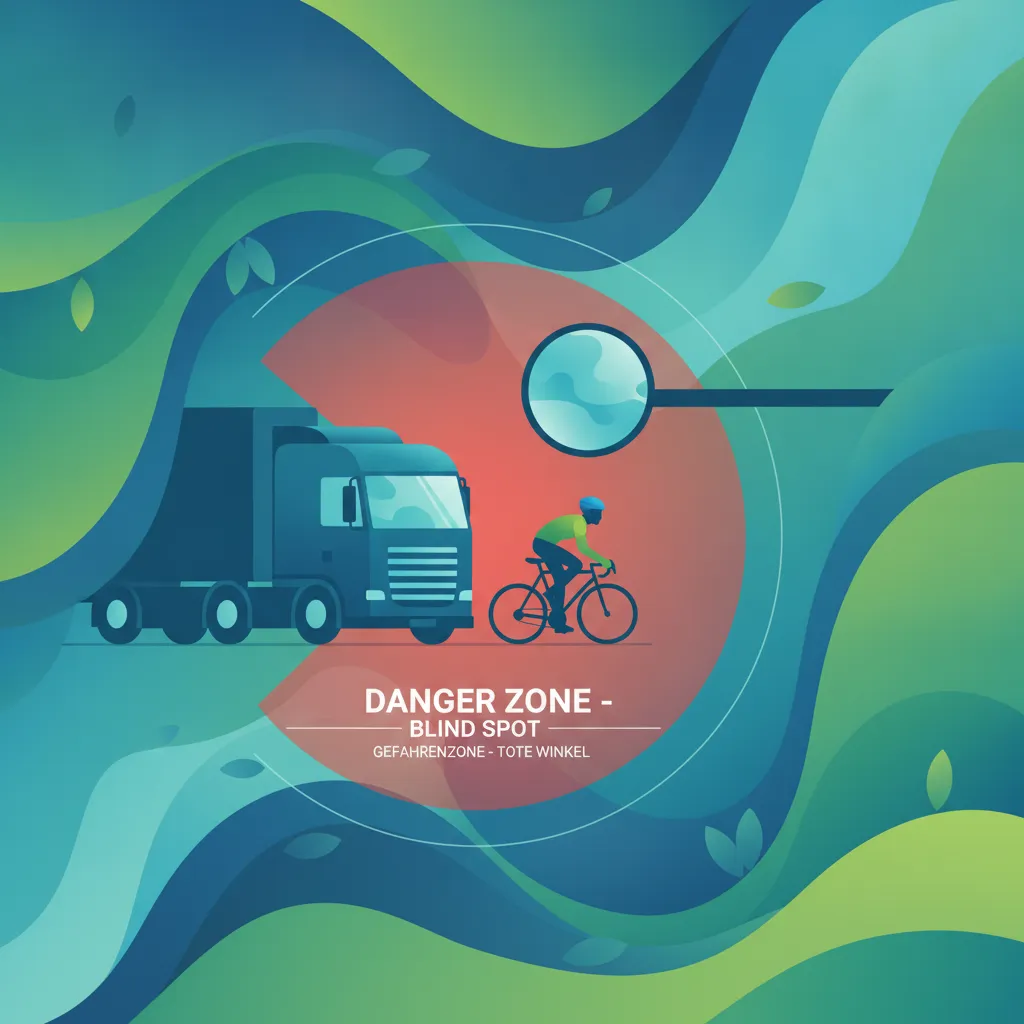
This lesson highlights the significant danger posed by the large blind spots of HGVs and buses. You will learn to identify these hazardous areas around a vehicle where the driver cannot see you. The lesson provides practical strategies for staying out of these zones, especially at junctions and when overtaking, to prevent serious accidents.
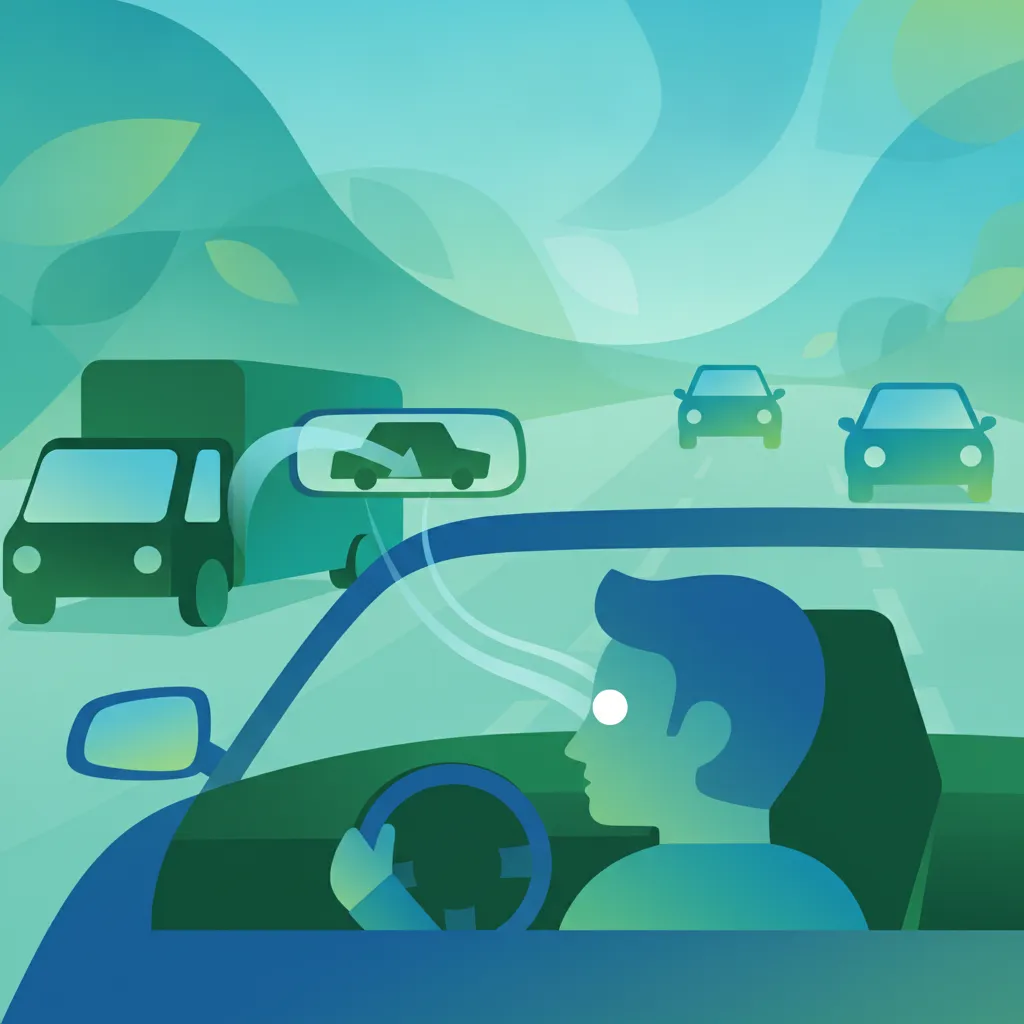
This lesson focuses on the critical skill of managing the large blind spots inherent to buses and coaches. It details the purpose of different mirror classes (e.g., wide-angle and kerb-view) and how to use them effectively. Learners will develop a systematic scanning and mirror-checking routine to maintain constant awareness of their surroundings, particularly looking for cyclists and pedestrians who may be hidden from direct view, thereby minimizing the risk of a collision.
This lesson addresses the unique challenges of operating a large goods vehicle in congested urban and city environments. It focuses on techniques for navigating narrow streets, making tight turns, and safely accessing delivery points while being highly aware of vulnerable road users like pedestrians and cyclists. The importance of exceptional observation, low-speed control, and clear communication with other road users is heavily emphasized to minimize risk in these complex settings.
This lesson focuses on the critical skill of positioning your AM vehicle safely in relation to larger vehicles and roadside hazards like parked cars. You will learn to identify and stay out of the extensive blind spots of lorries and buses, especially at junctions. The content also provides strategies for maintaining a safe 'space cushion' around your vehicle and navigating narrow gaps or filtering in traffic without compromising your safety.
This lesson explains how to adapt your driving around different vehicles. You will learn to look out for motorcyclists, who are often hard to see, especially at junctions. It also covers the challenges of sharing the road with large vehicles, such as their extended blind spots, wider turning circles, and the wind turbulence they can create.
This lesson examines the physical space a goods vehicle occupies on the road and its impact on maneuvering at junctions, roundabouts, and in tight spaces. Learners will understand the concepts of tail swing and off-tracking, and how to calculate the necessary clearance for safe turns. The content emphasizes maintaining safe distances from other road users and infrastructure, which is a key component of professional spatial awareness and accident prevention.
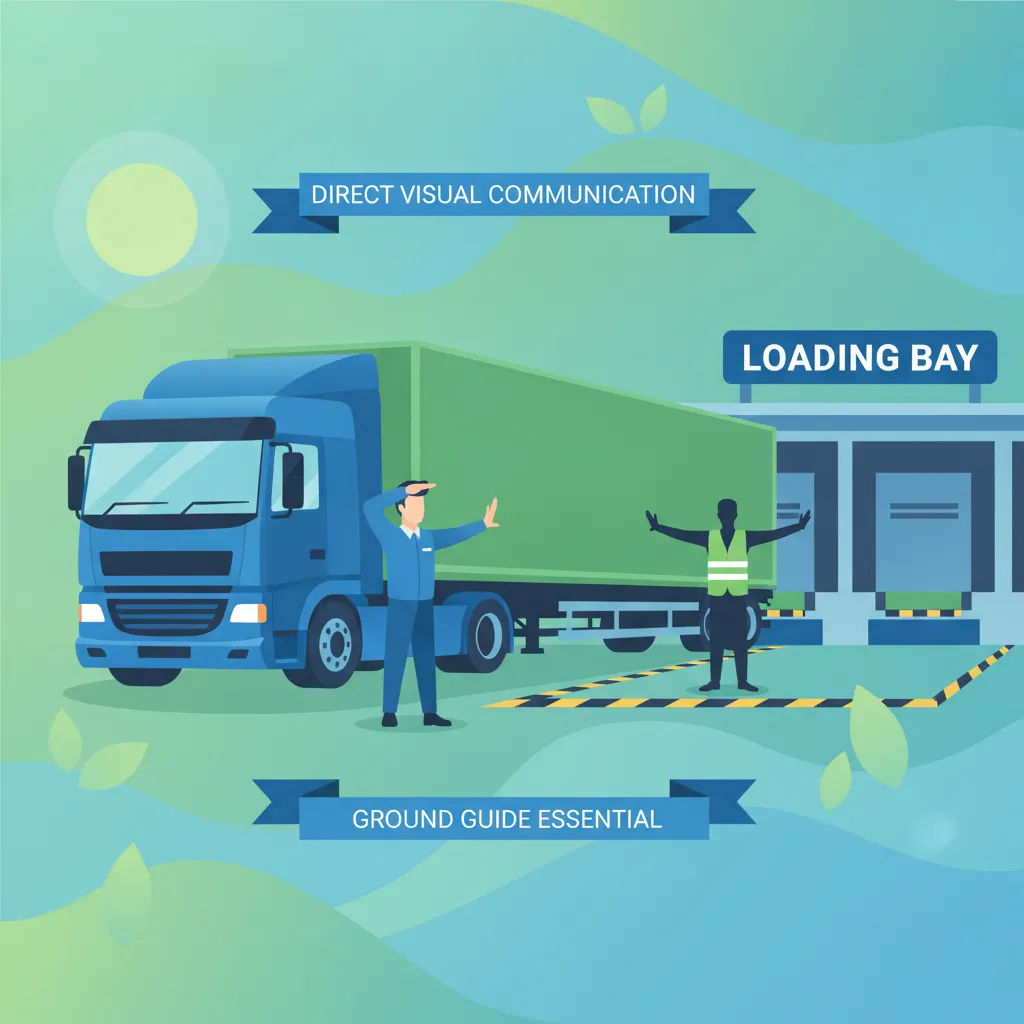
Reversing is one ofthe highest-risk maneuvers for an HGV driver. This lesson provides a structured guide to reversing safely, covering the 'get out and look' principle, effective use of all mirrors, and the use of reversing cameras and alarms. It stresses the importance of using a trained banksman (signaller) whenever possible, using agreed signals, and maintaining a slow, controlled speed throughout the maneuver to prevent accidents.

This lesson reinforces the vital safety rule of maintaining an adequate following distance from the vehicle ahead. It explains why the standard 'two-second rule' must be extended for heavy vehicles, especially in poor weather or when heavily laden, to account for longer stopping distances. You will learn practical methods for judging a safe gap in various traffic situations, creating a crucial safety buffer to react to unforeseen hazards.

This lesson addresses the unique challenges of driving a large vehicle on rural roads. It provides techniques for positioning the vehicle through sharp bends and on narrow lanes, and for safely navigating unmarked or uncontrolled junctions. Learners will be taught to anticipate hidden hazards common in the countryside, such as slow-moving farm vehicles, animals on the road, and concealed entrances. The correct use of passing places and strategies for meeting oncoming traffic are also covered.
Find clear answers to common questions learners have about Interaction with Pedestrians and Cyclists. Learn how the lesson is structured, which driving theory objectives it supports, and how it fits into the overall learning path of units and curriculum progression in Great Britain. These explanations help you understand key concepts, lesson flow, and exam focused study goals.
Because large vehicles have significant areas where the driver cannot see, cyclists often get caught in the space between the vehicle and the curb when the driver is turning. Constant mirror scanning is essential to prevent these collisions.
You must provide as much space as you would for a car, and ideally more due to the width of a goods vehicle. Aim for at least 1.5 meters when passing at lower speeds, and more at higher speeds to account for air turbulence.
The test often uses situational images or hazard perception clips to see if you anticipate a cyclist in a blind spot. You will be expected to identify the correct defensive action, such as holding back or checking mirrors before signaling.
Yes, you must not drive in or through mandatory cycle lanes unless unavoidable. You should never cut across a cycle lane when turning; always ensure it is clear of cyclists before initiating your maneuver.
Dive into our comprehensive question bank to find exactly what you need for your Great Britain theory test. Use our advanced filters to pinpoint specific subjects or test your knowledge on challenging areas, ensuring you're fully prepared for success.