
This lesson teaches proactive collision avoidance techniques, a vital skill for every HGV driver. You will explore defensive driving principles, situational awareness, and how to maintain appropriate safety margins to protect yourself and other road users.

Lesson content overview
Operating a heavy goods vehicle (HGV) on the roads of Great Britain demands a superior level of skill, vigilance, and foresight. Due to their significant size, weight, and momentum, HGVs require longer stopping distances and present unique manoeuvring challenges. This lesson provides an in-depth exploration of advanced defensive driving techniques, offering a proactive framework for professional drivers to anticipate, avoid, and mitigate potential collision risks. Mastering these strategies is not just about compliance with legal obligations; it is fundamental to protecting lives, valuable cargo, and the integrity of your vehicle and company.
Defensive driving is more than just adhering to traffic laws; it's a systematic and anticipatory approach to navigating the roads. For professional Category C goods vehicle drivers, this involves continuously assessing risks, predicting potential hazards, and making pre-emptive adjustments to avoid collisions. The sheer mass and kinetic energy of an HGV mean that even minor incidents can have severe consequences, making proactive risk management an absolute cornerstone of safe operation.
This approach acknowledges the inherent physics of heavy vehicles, where momentum (mass multiplied by velocity) and kinetic energy (half of mass times velocity squared) directly translate into substantially longer braking distances and increased force upon impact. It also considers the complex dynamics of loaded trailers, which can introduce stability challenges like trailer sway. Legally, the Highway Code and DVSA guidance mandate that all drivers, especially professionals, exercise "reasonable care" to prevent accidents, reinforcing the necessity of a defensive mindset.
This lesson builds upon foundational knowledge from earlier modules, including understanding vehicle dimensions, load security, blind spots, interactions with vulnerable road users, and fundamental speed and braking principles. By integrating these concepts, drivers can develop a holistic strategy for road safety.
Effective collision avoidance relies on a set of interconnected principles. These principles empower drivers to maintain control, anticipate dangers, and respond effectively to unpredictable road conditions and behaviours of other road users.
Situational awareness is the continuous process of perceiving elements in the driving environment, understanding their meaning, and projecting their future status. For HGV drivers, this means maintaining a constant, comprehensive mental model of everything happening around their vehicle.
Continuously scan your mirrors (main, wide-angle, and blind spot mirrors), look ahead for developing situations, and regularly check your blind spots before any change in direction or speed.
This cognitive process can be broken down into three stages:
Failing to maintain situational awareness, often due to "tunnel vision" (focusing only on the vehicle immediately ahead), can lead to missed hazards and delayed reactions. Professional drivers must constantly update their mental model of the road, especially given the HGV's limited visibility zones.
A safety margin is an additional distance or time buffer that you maintain beyond the minimum legal safe following distance. This buffer is crucial for HGV drivers, compensating for the heavy vehicle's dynamics, slower reaction times for complex situations, and environmental variability.
Safety margins can be categorised as:
The longitudinal gap between two vehicles, typically measured in seconds, to provide adequate reaction and braking time. For HGVs, this should be extended significantly beyond the minimum.
Misinterpreting safety margins as merely "keeping up with traffic" can be a dangerous mistake, leading drivers to maintain unsafe speeds and distances when conditions dictate caution. The professional driver's role is to ensure that there is always sufficient space to react, brake, or steer safely.
Escape route planning is the proactive identification and preservation of at least one unobstructed path that can be used to avoid a collision if a hazard suddenly materialises. This strategy is vital for HGVs, as their size and weight limit rapid, last-minute evasive actions.
Drivers should aim to:
Maintaining an escape route requires thoughtful lane positioning and speed control. For instance, on a multi-lane road, positioning your vehicle so that a lane to your left or right remains free provides a crucial option for a quick swerve if needed. Highway Code Rule 169 (keeping to the right unless you need to go left on a dual carriageway or motorway) helps preserve escape lanes, particularly the left lane for slower traffic or emergency use. Regularly checking mirrors and scanning ahead for potential blockages in escape routes is also critical.
Never rely on a single clear lane. Always anticipate that your chosen escape route could become blocked and have a backup plan.
Distractions are a significant cause of collisions, diverting a driver's attention from the primary task of driving. For HGV drivers, the consequences of distraction can be catastrophic. Effective distraction management involves actively implementing techniques to prevent, minimise, or eliminate secondary tasks while driving.
Distractions can be categorised into:
Even hands-free devices can pose a cognitive distraction, as the mental load of a conversation can reduce hazard detection rates by up to 50%. Professional drivers must adopt strict policies:
The way cargo is loaded, secured, and distributed has a profound impact on the stability and control of an HGV, directly influencing collision risk. Proactive load management involves systematic securing, even distribution, and compliance checking of cargo throughout the journey.
Key aspects include:
Drivers must conduct thorough load checks before departure and at regular intervals during long journeys, especially after hard braking or severe manoeuvres, to ensure all securing mechanisms remain tight.
Hazard perception is the ability to identify, assess, and respond appropriately to developing, potential, or hidden dangers in the traffic environment. This skill is critical for defensive driving and is formally tested in the DVSA hazard perception test.
Developing strong hazard perception involves:
For example, spotting a ball rolling into the road should immediately trigger an alert for a child possibly following it. Recognising a bus indicating to pull away from a stop should lead to anticipating a change in traffic flow or potential passenger movements.
The mental process of observing the driving environment, identifying potential dangers, predicting their development, and preparing a response to avoid an incident.
Professional HGV drivers operate under a stringent set of regulations designed to ensure safety for all road users. Adherence to these rules is not merely about avoiding penalties but forms the bedrock of a safe, defensive driving strategy.
Highway Code Rule 2 establishes a broad duty of care, stating that all drivers must "exercise reasonable care" and anticipate hazards to avoid collisions. This overarching principle underpins all defensive driving strategies. It means taking proactive steps like reducing speed when approaching a school zone where children might cross.
Highway Code Rule 168 specifically addresses following distance: "Keep a safe distance between vehicles." While this is a minimum requirement, professional HGV drivers must interpret this as a directive to maintain an even greater safety margin, particularly given their vehicle's longer stopping distances. This is further reinforced by Highway Code Rule 213, which advises drivers to "maintain a reasonable distance when following a vehicle, especially when towing." A 4-second gap in wet conditions is a professional standard for HGVs.
The Road Vehicles (Construction and Use) Regulations 1986 – Regulation 5 is critical, mandating that "Vehicles must be loaded within the manufacturer's maximum permissible weight." Overloading an HGV severely compromises its braking efficiency, handling characteristics, and stability, exponentially increasing collision risk.
Complementing this, the Cargo Transport Code – Chapter 8 specifies that "Cargo must be secured against displacement in all three axes." This prevents dangerous load shifts that can lead to loss of control, especially during braking, cornering, or evasive manoeuvres. Regular checks of load security are a mandatory professional practice.
Highway Code Rule 6 is explicit: "Never use a handheld mobile phone while driving." This rule is legally enforceable and is designed to combat cognitive distraction. While hands-free devices are permitted, professional drivers are advised to minimise their use, as even a hands-free conversation can significantly impair attention to the road. The safest approach is often to pull over in a safe location before responding to calls or messages.
These regulations, combined with DVSA guidance, establish a clear framework for professional conduct and serve as a constant reminder of the legal and ethical responsibilities of HGV drivers.
Even with robust training, certain situations present elevated risks for HGV drivers. Recognising these common pitfalls and adopting correct behaviours is essential for collision prevention.
Tailgating a Heavy Goods Vehicle on a Wet Motorway:
Failing to Scan Blind Spots Before a Lane Change:
Ignoring a Stationary Vehicle Displaying Hazard Lights on a Motorway:
Overloading the Vehicle Beyond its Gross Vehicle Weight (GVW):
Misjudging Curve Speed Due to Load Shift:
Collision risk is not static; it changes dramatically with varying road, weather, and traffic conditions. Professional HGV drivers must constantly adjust their defensive driving strategies to maintain safety.
Wet or Icy Weather:
Nighttime or Foggy Visibility:
Urban Delivery Zones:
Motorways:
Fully Loaded Trailer:
Interaction with Vulnerable Road Users (VRUs):
Understanding the scientific principles behind collision risks enhances a driver's ability to implement effective mitigation strategies.
The fundamental physics governing HGV dynamics is crucial. A vehicle's momentum (mass × velocity) and kinetic energy (½ × mass × velocity²) directly dictate the force of impact in a collision and the distance required to stop. A 44-tonne HGV travelling at 70 mph possesses an enormous amount of kinetic energy, requiring significantly longer distances to stop compared to a lighter vehicle.
Even on dry pavement, a fully loaded HGV travelling at 50 mph can take approximately 55 metres to brake to a complete stop after the driver has reacted. This does not include the reaction time.
This inherent property of heavy vehicles means that simply matching the following distance of a car is grossly insufficient. Safety margins must be substantially larger to account for these physical realities.
Human factors also play a critical role. The average perception-reaction time for an attentive HGV driver is approximately 2.5 seconds. This includes the time taken to visually identify a hazard, process the information, decide on a course of action, and initiate a response (e.g., applying brakes).
Distraction, whether cognitive (e.g., phone conversation), visual (e.g., looking at a screen), or manual (e.g., reaching for an item), significantly extends this reaction time. Research indicates that even hands-free phone use can reduce hazard detection rates by up to 50% for HGV drivers. Fatigue further exacerbates this, slowing cognitive processing and decision-making, increasing accident probability.
Proactive strategies like distraction management, regular breaks, and maintaining high situational awareness directly combat these psychological vulnerabilities, allowing drivers to maintain optimal reaction times and make timely, safe decisions.
Minimising collision risks for Category C goods vehicle drivers is a continuous, multifaceted effort rooted in defensive driving principles. It demands a proactive mindset that constantly anticipates hazards, maintains generous safety margins, and plans clear escape routes. Integrating superior situational awareness, disciplined distraction management, and meticulous load control creates a robust safety framework. By adhering to the Highway Code and specific HGV regulations, and by adapting driving behaviour to dynamic conditions, professional drivers protect themselves, their cargo, other road users, and their professional standing. The ultimate goal is to ensure every journey is completed safely and efficiently, upholding the highest standards of professional road safety in Great Britain.
Explore all units and lessons included in this driving theory course.
Lesson content overview
Explore all units and lessons included in this driving theory course.
Explore search topics learners often look for when studying Strategies for Minimising Collision Risks. These topics reflect common questions about road rules, driving situations, safety guidance, and lesson level theory preparation for learners in Great Britain.
Browse additional driving theory lessons that cover connected traffic rules, road signs, and common driving situations related to this topic. Improve your understanding of how different rules interact across everyday traffic scenarios.
Explore advanced defensive driving techniques for Category C drivers. Learn to anticipate hazards, manage distractions, and maintain critical safety margins to proactively avoid collisions on Great Britain's roads.

This lesson is dedicated to the safe interaction between large vehicles and the most vulnerable road users: pedestrians and cyclists. It highlights high-risk scenarios, such as left turns at junctions, where cyclists can be hidden in nearside blind spots. The content stresses the importance of anticipation, using signals clearly, and providing generous space at crossings, in cycle lanes, and within pedestrianized zones to prevent tragic accidents.

This lesson equips drivers with strategies for maintaining control of a heavy vehicle during adverse weather conditions like heavy rain, ice, snow, and strong crosswinds. It covers the physics of traction loss, aquaplaning, and skidding, and explains how to use smooth inputs for steering, acceleration, and braking. The function of electronic stability control systems and other driver aids is also discussed as part of a proactive approach to safety in challenging environments.

This lesson addresses the unique challenges of operating a large goods vehicle in congested urban and city environments. It focuses on techniques for navigating narrow streets, making tight turns, and safely accessing delivery points while being highly aware of vulnerable road users like pedestrians and cyclists. The importance of exceptional observation, low-speed control, and clear communication with other road users is heavily emphasized to minimize risk in these complex settings.

This lesson reinforces the vital safety rule of maintaining an adequate following distance from the vehicle ahead. It explains why the standard 'two-second rule' must be extended for heavy vehicles, especially in poor weather or when heavily laden, to account for longer stopping distances. You will learn practical methods for judging a safe gap in various traffic situations, creating a crucial safety buffer to react to unforeseen hazards.

This lesson provides a detailed map of the significant blind spots located to the front, sides, and rear of a typical heavy goods vehicle. It explains the purpose of the different classes of mirrors and how to adjust them correctly for maximum visibility. Learners will be taught effective scanning techniques—'mirror-signal-manoeuvre'—to actively check these zones before changing position, ensuring they are aware of any hidden hazards or other road users.

This lesson focuses on developing a proactive and patient approach towards elderly and disabled road users. It explains how to recognize and provide additional time and space for individuals with slower movement, mobility scooters, or sensory impairments. The content emphasizes the importance of driver attitude, patience at crossings, and anticipating the needs of these vulnerable individuals. Understanding these factors is crucial for preventing accidents and demonstrating a high level of professional care and responsibility.

This lesson details how different adverse weather conditions uniquely affect the handling and stability of a heavy goods vehicle. It covers the increased stopping distances in rain, reduced visibility in fog, severe traction loss on ice, and the dangerous effect of strong crosswinds on high-sided vehicles. You will learn specific techniques for adjusting speed, increasing following distances, and using vehicle controls smoothly to maintain safety in challenging weather.

This lesson explores the effective use of modern digital navigation tools, including GPS systems and mobile apps tailored for HGVs. It explains how to leverage real-time traffic data, congestion alerts, and dynamic re-routing to adapt to changing road conditions. Importantly, it also emphasizes the need to use this technology safely, cross-referencing information with road signs and maintaining situational awareness to avoid distractions while driving.

This lesson equips drivers with the knowledge to manage on-road emergencies effectively and safely. It provides clear, step-by-step procedures for vehicle breakdowns, including where to stop and how to use warning devices. It also covers initial actions at the scene of an accident, fire safety protocols including the use of an extinguisher, and the correct way to report incidents to emergency services and the transport office.

This lesson addresses the serious danger of driver fatigue, a major cause of incidents involving commercial vehicles. It details the complex EU and GB domestic rules on drivers' hours, including driving limits and required rest periods. Learners will be taught to recognize the physical and mental signs of fatigue and understand the importance of taking quality rest to maintain alertness and ensure their own safety and that of others.
Learn how vehicle physics, including momentum and kinetic energy, affect HGV control and braking. Understand the critical role of load distribution and stability in minimising collision risks for professional drivers.
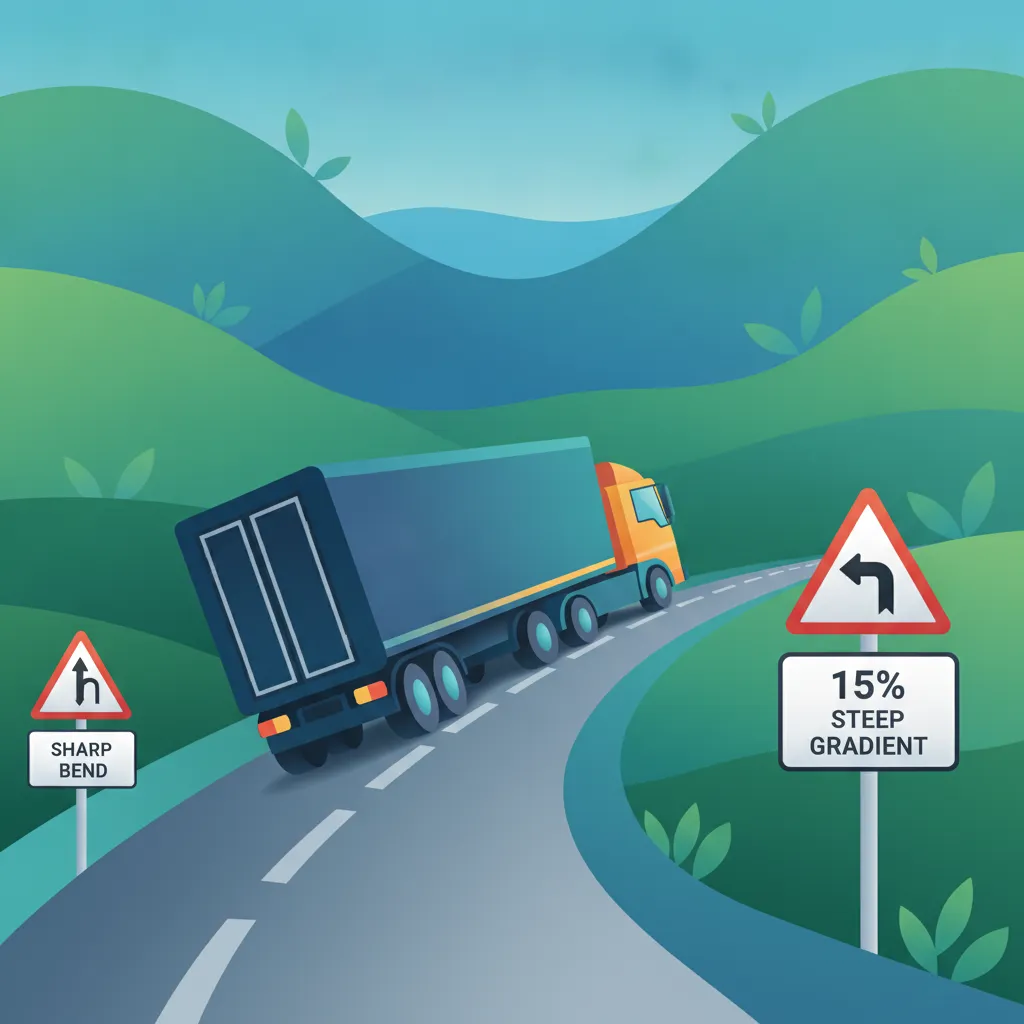
This lesson focuses on the principles of effective speed management for heavy goods vehicles, which extends beyond simply obeying the statutory speed limits. It covers how to adapt speed based on vehicle weight, load stability, road gradients, and prevailing traffic and weather conditions. You will also learn about the function of mandatory speed limiters and how intelligent use of speed and cruise control can significantly improve fuel efficiency and safety.

This lesson delves into the core principles of correct weight distribution within a goods vehicle to ensure safety and stability. It explains how to balance a load evenly across the axles to prevent overloading and maintain optimal braking and steering performance. Learners will understand how incorrect load placement can dangerously affect vehicle dynamics, reinforcing the importance of careful planning before every journey to ensure stability on the road.

This lesson covers the principles of safe loading to prevent items from shifting or falling and causing a hazard. It explains that any load must be securely fastened and must not obstruct your view. You will also learn how overloading or distributing weight incorrectly can dangerously affect the vehicle's steering, braking, and overall stability.
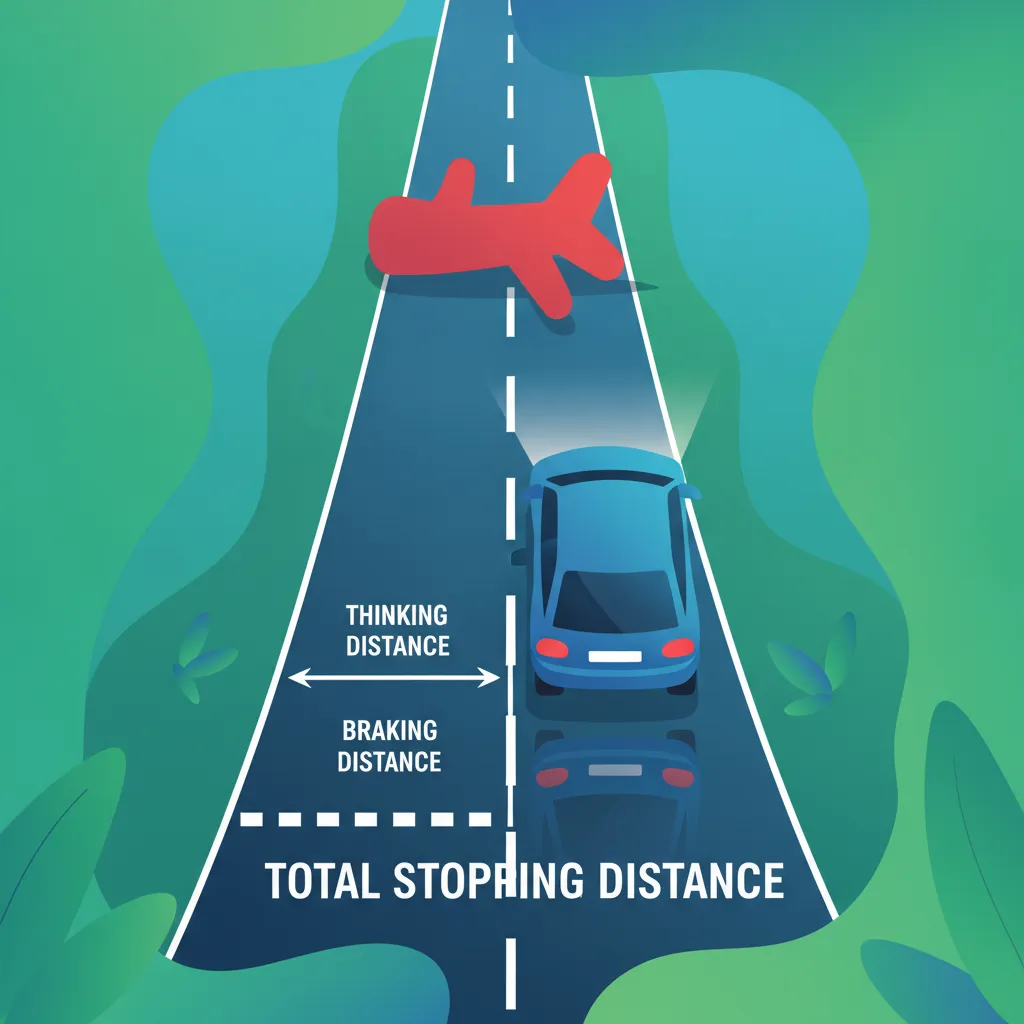
This lesson provides a detailed examination of the powerful air braking systems found on most heavy goods vehicles, including ABS and EBS. It explains the components of total stopping distance—thinking distance and braking distance—and how they are affected by speed, mass, and road conditions. The concept of brake fade, its causes, and prevention methods are also covered, along with the importance of regular brake inspections for maintaining safety.
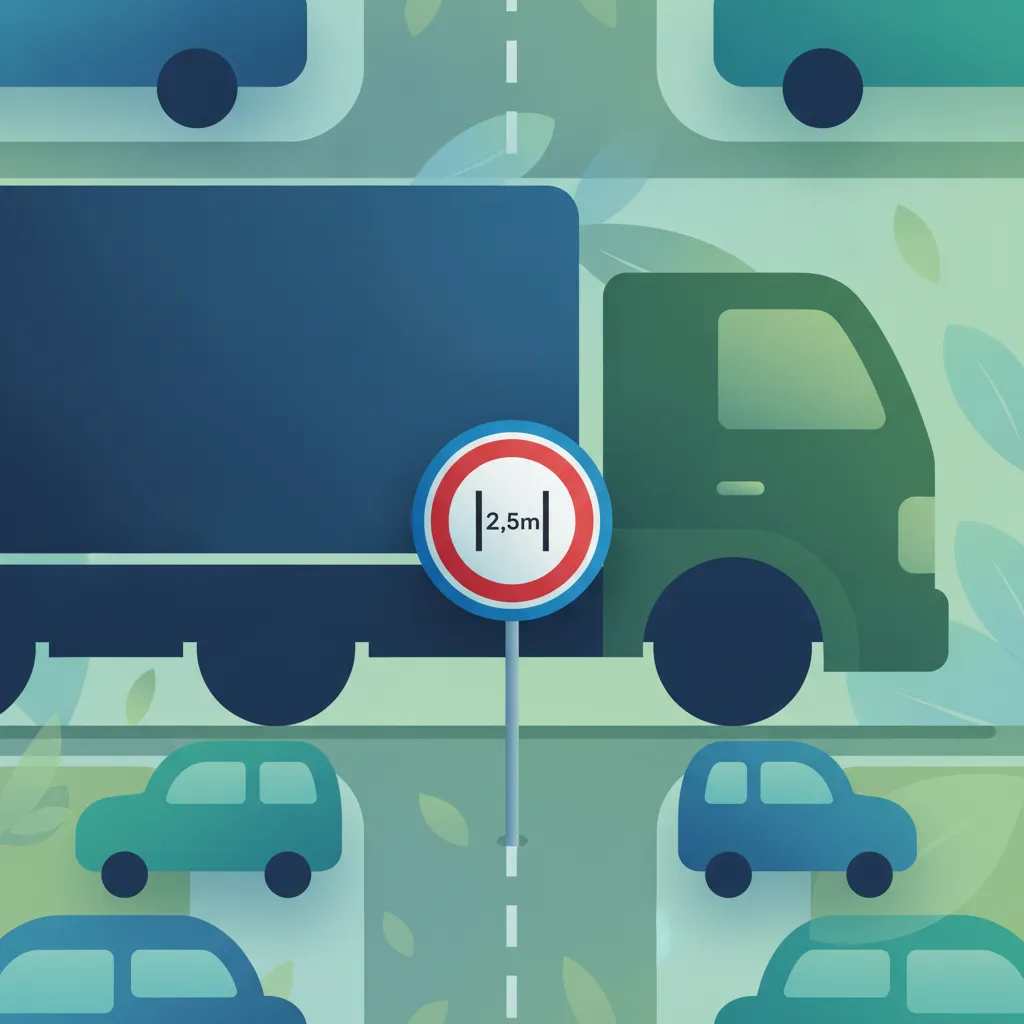
This lesson offers a deep dive into the specific regulations concerning weight, width, and axle load restrictions for goods vehicles. It covers how to read and comply with the associated road signs to avoid overloading weak bridges and entering restricted areas. Learners will understand the importance of correct load assessment and the serious penalties for non-compliance, which are enforced through DVSA roadside inspections and weighbridges.
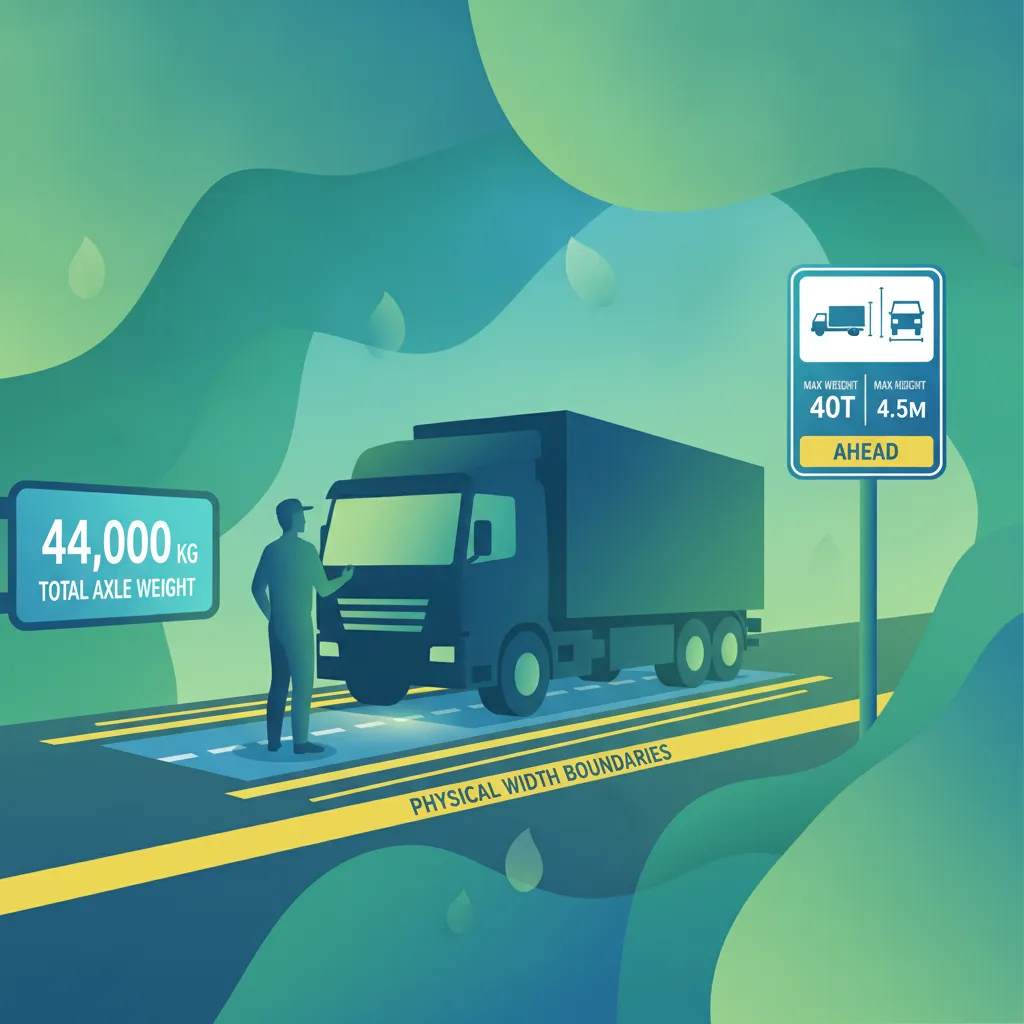
This lesson introduces the statutory limits governing the dimensions and mass of goods vehicles in Great Britain, including gross vehicle weight and individual axle loads. It explains how to calculate a vehicle's loaded weight to ensure it remains within legal parameters, preventing penalties and safety risks. Understanding these regulations is crucial for preventing damage to road infrastructure and ensuring the vehicle's stability and safe operation on every journey.

This lesson explains the critical concept of the centre of gravity (CG) and its direct impact on a vehicle's stability and rollover risk. It details how high or unstable loads raise the CG, making the vehicle more susceptible to tipping during cornering or sudden maneuvers. Learners will study techniques to assess and manage this risk, including adjusting speed and driving style, which is especially important for vehicles carrying liquid or hanging loads.

This lesson explores how a passenger vehicle’s physical dimensions and weight influence its dynamic stability, handling, and manoeuvring capabilities. It covers the impact of length, width, wheelbase, and turning radius on cornering and route choice. The content also examines centre of gravity, load distribution, and the effects of inertia that influence braking and acceleration, which are essential concepts for safe operation in confined urban environments and at tight junctions.
This lesson reinforces the vital safety rule of maintaining an adequate following distance from the vehicle ahead. It explains why the standard 'two-second rule' must be extended for heavy vehicles, especially in poor weather or when heavily laden, to account for longer stopping distances. You will learn practical methods for judging a safe gap in various traffic situations, creating a crucial safety buffer to react to unforeseen hazards.
This lesson details how different adverse weather conditions uniquely affect the handling and stability of a heavy goods vehicle. It covers the increased stopping distances in rain, reduced visibility in fog, severe traction loss on ice, and the dangerous effect of strong crosswinds on high-sided vehicles. You will learn specific techniques for adjusting speed, increasing following distances, and using vehicle controls smoothly to maintain safety in challenging weather.
Find clear answers to common questions learners have about Strategies for Minimising Collision Risks. Learn how the lesson is structured, which driving theory objectives it supports, and how it fits into the overall learning path of units and curriculum progression in Great Britain. These explanations help you understand key concepts, lesson flow, and exam focused study goals.
Category C vehicles have larger blind spots, longer stopping distances, and less manoeuvrability. Defensive driving ensures you compensate for these physical limitations, giving you more time to react to the unpredictable actions of other road users.
An escape route is a clear path you identify in advance in case a hazard develops suddenly. The theory exam highlights this because professional drivers must always have a plan B, which is essential for managing the momentum and size of an HGV safely.
Distractions, such as adjusting GPS or communication devices, significantly delay your reaction time. In an HGV, even a one-second delay can drastically increase your total stopping distance, making distraction management a key safety protocol.
If a vehicle cuts into your safety margin, you should immediately adjust your speed to drop back and restore your following distance. Prioritising this space is a core competency for your test and demonstrates professional hazard management.
Dive into our comprehensive question bank to find exactly what you need for your Great Britain theory test. Use our advanced filters to pinpoint specific subjects or test your knowledge on challenging areas, ensuring you're fully prepared for success.