
This lesson provides essential training for driving large goods vehicles on motorways across Great Britain. You will learn the specific regulations governing Category C vehicles, including speed limits, lane management, and how to navigate the modern smart motorway network safely.

Lesson content overview
Operating Heavy Goods Vehicles (HGVs) on motorways in Great Britain demands a specialised understanding of regulations, safety protocols, and advanced driving techniques. For professional drivers holding a Category C licence, mastering motorway driving is not merely about adhering to the Highway Code, but also about appreciating the unique challenges posed by a larger vehicle's mass, dimensions, and dynamic behaviour. This lesson provides an in-depth guide to ensure safe, efficient, and lawful HGV motorway operations, covering everything from mandatory speed limits and lane discipline to navigating smart motorways and managing emergencies.
Motorways are designed for high-speed, long-distance travel, making them a crucial part of the logistics network for goods vehicles. However, the higher speeds and greater traffic volumes amplify the consequences of errors. By diligently following the rules and best practices outlined in this guide, HGV drivers can significantly reduce risks, ensure cargo safety, and contribute to smoother traffic flow for all road users.
Speed management is paramount when driving a goods vehicle on motorways. Due to their greater mass and longer stopping distances, HGVs are subject to specific, often lower, speed limits compared to cars. Adhering to these limits is a legal requirement and a critical safety measure.
In Great Britain, the standard maximum speed limit for a Category C Heavy Goods Vehicle (those with a maximum authorised mass, MAM, exceeding 3,500 kg but not coupled to a trailer over 750 kg) on motorways is 50 mph. This limit applies unless a lower speed is signposted.
For articulated vehicles or those towing a trailer exceeding 750 kg (requiring a Category C+E licence), the maximum speed limit on motorways is generally 60 mph, where permitted by signage. It is crucial for Category C+E drivers to be aware that this 60 mph limit does not apply to all motorways or sections; they must always be vigilant for explicit signage indicating such a limit. If no specific sign indicates a higher limit for goods vehicles, the 50 mph rule for Category C vehicles should be assumed. These limits are absolute, meaning you must not exceed them, regardless of the speed of surrounding traffic.
Always verify the specific speed limit for your vehicle type and configuration (e.g., rigid HGV vs. articulated HGV) as these can vary. Never assume the national speed limit for cars applies to your HGV.
Many modern motorways, particularly around urban areas, are equipped with electronic variable speed limit (VSL) signs. These signs display dynamic speed limits that can change based on real-time traffic conditions, weather, incidents, or roadworks. For HGV drivers, these variable limits are mandatory and supersede any standard fixed limits.
When a variable speed limit is displayed, you must adjust your speed accordingly, even if it is lower than your vehicle's standard maximum motorway limit. For example, if a Category C HGV normally travels at 50 mph, but a VSL sign displays 40 mph due to congestion or adverse weather, the HGV driver must reduce their speed to no more than 40 mph. Failure to obey a variable speed limit is a moving offence and carries penalties.
A speed limit displayed on electronic signs that can change dynamically based on real-time traffic conditions, weather, or incidents. Compliance is mandatory for all vehicles.
Lane discipline on motorways is fundamental for efficient traffic flow and road safety. Due to their size and acceleration capabilities, HGVs have specific rules governing which lanes they may use. Understanding and adhering to these rules is crucial to prevent congestion and reduce collision risks.
The fundamental rule for HGVs on motorways is to keep to the left-hand lane unless overtaking. The left-hand lane is considered the primary lane for goods vehicles, allowing faster-moving traffic to use the middle and outer lanes freely.
When overtaking a slower vehicle, an HGV should only move into the adjacent lane to the right (typically the middle lane) if it is safe to do so. This involves checking mirrors, signaling well in advance, and ensuring there is ample space. Once the overtaking manoeuvre is completed safely, the driver must return to the left-hand lane as soon as it is clear to do so, without undue delay. This practice prevents HGVs from unnecessarily occupying middle or outer lanes, which can obstruct the flow of faster traffic.
Most motorways in Great Britain have a three-lane layout. Generally, HGVs with a maximum authorised mass (MAM) over 7.5 tonnes are prohibited from using the outer lane (the lane furthest to the right) of a three-or-more-lane motorway.
This restriction is in place to ensure that the fastest lane remains clear for vehicles that can maintain higher speeds, thereby improving traffic flow and reducing the potential for dangerous overtaking situations. HGV drivers must pay close attention to signs indicating lane restrictions, as they are legally binding. There might be exceptions on certain sections of motorways, such as those with four or more lanes, or during specific traffic management schemes, but these will always be clearly signed.
The hard shoulder is a lane specifically reserved for emergencies, breakdowns, and as directed by emergency services. Under normal circumstances, HGVs (or any vehicle) must not drive on the hard shoulder.
However, on Smart Motorways, the hard shoulder can sometimes be used as a running shoulder (also known as a live lane) during periods of peak traffic flow. This is indicated by specific electronic signs above the lane, typically showing a white arrow within a white rectangle.
When the hard shoulder is designated as a running shoulder, HGVs must treat it as a normal traffic lane and adhere to any displayed speed limits. It is still not to be used for stopping unless in a genuine emergency, and even then, moving to an Emergency Refuge Area is the priority. If a red 'X' is displayed above the hard shoulder or any lane, that lane is closed to traffic, and drivers must move out of it safely as soon as possible.
The hard shoulder operating as a live traffic lane during periods of high traffic flow on Smart Motorways, indicated by specific electronic signage.
Joining and leaving a motorway safely are critical manoeuvres for any driver, but especially for those operating HGVs. The considerable length and weight of these vehicles necessitate careful planning and execution to integrate smoothly with high-speed traffic.
When joining a motorway, HGVs must use the acceleration lane effectively. This dedicated lane is designed to allow vehicles to build up speed to match the flow of traffic on the main carriageway before merging.
Assess Motorway Traffic: Look well ahead and use mirrors to gauge the speed and volume of traffic on the main carriageway. Identify potential gaps.
Accelerate Smoothly: Increase your HGV's speed in the acceleration lane to match, as closely as possible, the prevailing speed of traffic in the left-hand lane of the motorway.
Signal and Merge Safely: Signal your intention to merge into the left-hand lane. Look for a safe gap, merge smoothly without forcing other vehicles to slow down, and maintain your speed. Avoid stopping on the acceleration lane unless absolutely necessary due to traffic.
A dedicated lane at a motorway entry point designed for vehicles to increase their speed to match that of motorway traffic before merging safely onto the main carriageway.
Merging at a significantly lower speed than the traffic flow is extremely dangerous for an HGV, as it forces other vehicles to brake sharply or swerve. HGVs, with their slower acceleration, require ample space and time to merge safely.
Equally important is the safe exit from a motorway, utilising the deceleration lane (also known as a slip road). This lane allows you to slow down without affecting the speed of traffic on the main carriageway.
Plan Ahead: As you approach your intended exit, ensure you are in the correct lane well in advance. Road signs will indicate upcoming exits.
Signal Early: Signal your intention to exit to give other drivers ample warning.
Enter Deceleration Lane: Move into the deceleration lane as early as possible. Do not wait until the last moment or brake sharply on the main carriageway.
Decelerate Safely: Once in the deceleration lane, gradually reduce your speed to suit the exit slip road and any subsequent roads, taking into account the HGV's weight and length.
A dedicated lane at a motorway exit point designed for vehicles to reduce their speed safely after leaving the main carriageway, before joining local roads.
Abrupt braking on the main carriageway before entering the deceleration lane can create a significant hazard, especially for other HGVs following behind, who also require long stopping distances.
Smart Motorways are increasingly common in Great Britain, designed to manage traffic flow and reduce congestion by using technology to monitor and respond to changing conditions. For HGV drivers, understanding their unique features and rules is vital.
Smart Motorways incorporate several key features that HGV drivers must be familiar with:
Never drive in a lane displaying a red 'X'. Move into an open lane as soon as it is safe to do so. This applies equally to the hard shoulder when it is closed.
On Smart Motorways where the hard shoulder can be a running lane, Emergency Refuge Areas (ERAs) are provided at regular intervals. These are safe stopping bays located off the main carriageway, designed for vehicles experiencing a breakdown or other emergency.
If your HGV experiences a breakdown or incident on a Smart Motorway, and the hard shoulder is operating as a live lane, you must try to reach the nearest Emergency Refuge Area.
Signal and Move: If possible, signal and steer your HGV into the ERA. It's often safer to continue driving a short distance to reach an ERA than to stop in a live lane or a running hard shoulder.
Position Vehicle: Park your HGV as far left as possible within the ERA.
Exit Safely: Put on your hazard warning lights, turn off your engine, and exit the vehicle via the left-hand door. Move to a safe location behind the safety barrier, away from the live lanes.
Contact Authorities: Use the emergency telephone located within the ERA. This connects directly to Highways England control and allows them to pinpoint your exact location for assistance.
Designated, clearly marked stopping bays located off the main carriageway on Smart Motorways, intended for breakdowns or other emergencies when the hard shoulder is in use as a live lane.
Stopping in a live lane or on a running hard shoulder on a Smart Motorway is extremely dangerous and can lead to severe penalties.
Safe stopping distance (SSD) is one of the most critical safety concepts for HGV drivers, particularly on motorways where speeds are higher. The sheer mass of a fully laden goods vehicle means it requires significantly more distance to stop than a car.
The safe stopping distance is the total distance your vehicle travels from the moment you perceive a hazard to the moment it comes to a complete stop. It comprises three components:
Several factors uniquely impact an HGV's stopping distance:
The Highway Code recommends a minimum following distance of at least a 3-second gap under normal, dry conditions for HGVs. This is a crucial rule for motorway driving. To measure this, choose a fixed point ahead (e.g., a bridge or sign) and count "one thousand and one, one thousand and two, one thousand and three" from when the vehicle in front passes it. If you reach the point before finishing your count, you are too close.
This 3-second rule is a minimum. In adverse conditions, such as:
A 3-second gap for an HGV travelling at 50 mph typically translates to approximately 75-80 metres in distance. This distance must be significantly increased in wet or icy conditions.
Maintaining an adequate safe stopping distance is your primary defence against rear-end collisions and allows you time to react to unexpected events on the motorway.
The way an HGV is loaded and how that load behaves significantly impacts its stability and handling, especially at motorway speeds. Proper load security and understanding vehicle dynamics are critical to preventing dangerous incidents.
The distribution of weight within your HGV is crucial for safe handling. An unevenly distributed load can lead to:
Drivers must ensure that the load is spread evenly across the vehicle's axles and that the centre of gravity (CoG) is as low and central as possible. This involves careful planning during loading and re-checking during the journey.
The hypothetical point where the total weight of the vehicle and its load is considered to be concentrated. A higher CoG increases the risk of rollover, especially during cornering or sudden manoeuvres.
Load shift occurs when cargo moves during transit, which can severely compromise vehicle stability. On motorways, a sudden load shift, for instance during emergency braking or a quick lane change, can cause the HGV to swerve out of control, potentially leading to a jack-knife, rollover, or collision.
Secure All Cargo: Use appropriate securing methods such as tie-downs, straps, chains, nets, shoring bars, or anti-slip mats to prevent any movement of the load.
Utilise Vehicle Structure: Where possible, pack cargo against the headboard, side-rails, or other structural components of the vehicle.
Regular Checks: Before commencing any motorway journey, and at regular intervals (e.g., during driver rest stops), visually inspect the load and its securing devices to ensure everything remains tight and secure.
Understand Load Type: Different types of cargo (e.g., liquids, loose materials, heavy machinery) require specific securing methods and may affect driving dynamics differently.
Failing to secure a load properly is a serious offence under the Road Traffic Act 1988 and DVSA regulations, carrying significant penalties. It also poses an extreme danger to other road users if debris falls onto the carriageway.
Despite best efforts, emergencies can occur. Knowing how to react effectively during a breakdown, accident, or other incident on a motorway is crucial for the safety of the HGV driver, cargo, and other road users.
If your HGV breaks down or is involved in an incident on a standard motorway (one without Smart Motorway features like running shoulders and ERAs), follow these steps:
Move to Hard Shoulder: If possible, try to steer your vehicle to the hard shoulder. Position it as far to the left as possible, away from the live lanes.
Activate Hazard Lights: Switch on your hazard warning lights immediately to alert other drivers.
Exit Safely: If it is safe to do so, exit the vehicle via the left-hand door and move to a safe location behind the safety barrier. Never remain in your vehicle on the hard shoulder, as it is vulnerable to being hit by passing traffic.
Call for Help: Use an emergency roadside telephone (often found at regular intervals along the hard shoulder) or your mobile phone to contact your breakdown service or the police. Emergency roadside phones connect directly to Highways England, allowing them to pinpoint your location.
Do Not Attempt Repairs: Do not attempt any repairs to your HGV on the hard shoulder. Wait for professional assistance.
Warning Triangle (if safe): If it is safe to do so and you have one, place a warning triangle a suitable distance (e.g., 45 metres) behind your vehicle, but only if you can do so without putting yourself in danger. This is rarely recommended on a busy motorway.
Amber flashing lights activated when a vehicle is stationary and poses a risk or obstruction to other road users, typically due to a breakdown or emergency.
On Smart Motorways, the emergency procedures differ due to the potential use of the hard shoulder as a live lane.
Prioritise Emergency Refuge Area (ERA): If your HGV experiences an issue, your primary goal is to reach an Emergency Refuge Area (ERA). Drive to the nearest ERA if at all possible.
If You Cannot Reach an ERA:
Within an ERA: Follow the steps outlined previously for using an ERA: park far left, exit safely, and use the emergency telephone.
Understanding these specific protocols for both standard and Smart Motorways is crucial for minimising risk during an emergency.
Adhering to motorway regulations is not just about safety; it's a legal obligation for HGV drivers in Great Britain. Failure to comply can result in significant penalties, including fines, penalty points, and even licence disqualification.
The rules governing HGV operation on motorways are enshrined in the Highway Code, the Road Traffic Act 1988, and various DVSA (Driver and Vehicle Standards Agency) regulations. Key requirements include:
Common violations by HGV drivers on motorways and their potential consequences include:
These penalties reflect the severe risks associated with large goods vehicles when rules are not followed, underlining the professional responsibility of HGV drivers.
Motorway conditions can change rapidly, and HGV drivers must be prepared to adapt their driving style to maintain safety and control.
Adverse weather significantly impacts HGV handling and visibility:
Long stretches of motorway driving can be monotonous and contribute to driver fatigue, which severely impairs judgment and reaction times. Fatigue is a major contributor to road accidents.
On long journeys, even a short 15-20 minute power nap can significantly improve alertness.
Maintaining alertness and adapting to changing conditions are hallmarks of a responsible and professional HGV driver.
Mastering motorway driving with a heavy goods vehicle is a cornerstone of professional goods vehicle theory for a Category C licence in Great Britain. It integrates a deep understanding of vehicle dynamics, legal obligations, and situational awareness.
The core principles to remember are:
By consistently applying these principles, Category C licence holders can operate heavy goods vehicles safely and efficiently on British motorways, protecting themselves and all other road users.
Explore all units and lessons included in this driving theory course.
Lesson content overview
Explore all units and lessons included in this driving theory course.
Explore search topics learners often look for when studying Driving on Motorways with Goods Vehicles. These topics reflect common questions about road rules, driving situations, safety guidance, and lesson level theory preparation for learners in Great Britain.
Browse additional driving theory lessons that cover connected traffic rules, road signs, and common driving situations related to this topic. Improve your understanding of how different rules interact across everyday traffic scenarios.
Understand the specific rules for driving HGVs on smart motorways. Covers variable speed limits, running shoulders, and emergency refuge areas for Category C licence holders in the UK.

This lesson covers the unique aspects of motorway driving, from joining and leaving the carriageway to the strict lane discipline of keeping to the left unless overtaking. It explains the features of smart motorways, such as variable speed limits and the meaning of a Red X symbol above a lane. The safe procedure for handling a breakdown is also a key topic.

This lesson focuses on the regulations and best practices for driving a bus or coach on motorways. It details the specific speed limits applicable to PCVs and reinforces strict lane discipline. The content covers the correct procedures for safely joining from a slip road, overtaking other vehicles, and exiting the motorway. It also explains the features of smart motorways and the correct safety procedures to follow in the event of a breakdown, including the use of the hard shoulder.
This lesson focuses on the principles of effective speed management for heavy goods vehicles, which extends beyond simply obeying the statutory speed limits. It covers how to adapt speed based on vehicle weight, load stability, road gradients, and prevailing traffic and weather conditions. You will also learn about the function of mandatory speed limiters and how intelligent use of speed and cruise control can significantly improve fuel efficiency and safety.

This lesson focuses on the importance of excellent lane discipline for drivers of large vehicles. It details the rules and best practices for lane selection on motorways and dual carriageways, emphasizing the need to stay in the appropriate lane and signal intentions early. Correct positioning within a lane to maximize safety margins and visibility, especially around vulnerable road users, is a key focus for maintaining professional driving standards.
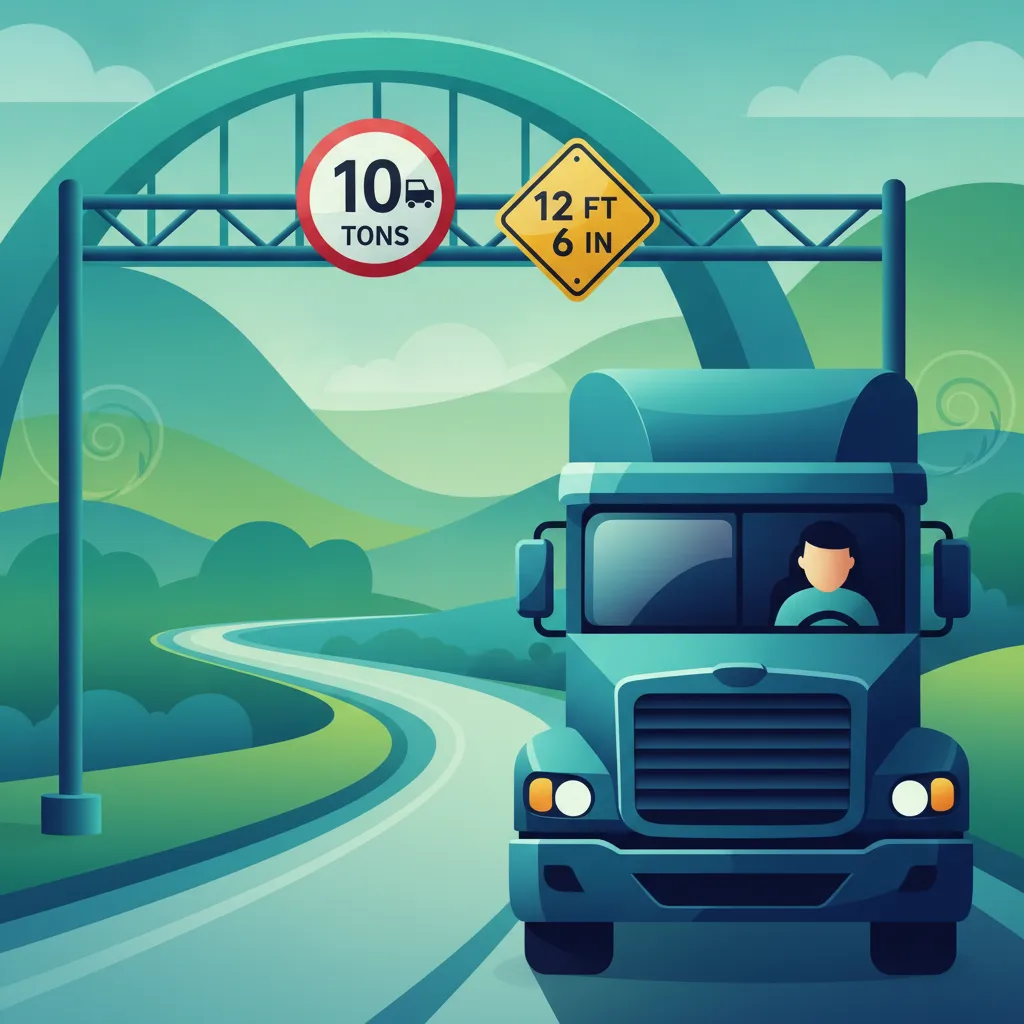
This lesson provides a detailed focus on the specific road signs that directly affect drivers of large goods vehicles. You will learn to accurately interpret mandatory signs for weight, height, and width restrictions, as well as signs indicating lane usage and prohibited routes. Understanding these signs is not optional; it is a legal requirement for avoiding fines, preventing accidents, and ensuring the safe passage of your vehicle through the road network.

This lesson provides guidance on how to safely and compliantly navigate through roadworks, which are a common feature of the road network. It covers the interpretation of temporary signs, strict adherence to reduced speed limits, and how to maneuver through narrow lanes and contraflow systems. The paramount importance of protecting road workers by driving with extra care and attention is a central theme of this lesson.

This lesson explores the effective use of modern digital navigation tools, including GPS systems and mobile apps tailored for HGVs. It explains how to leverage real-time traffic data, congestion alerts, and dynamic re-routing to adapt to changing road conditions. Importantly, it also emphasizes the need to use this technology safely, cross-referencing information with road signs and maintaining situational awareness to avoid distractions while driving.

This lesson teaches a structured approach to effective route planning, a critical skill for any professional driver. It covers the use of specialized HGV navigation software and traditional maps to account for vehicle dimensions, weight limits, low bridges, and delivery time constraints. The goal is to create routes that are not only the most efficient in terms of time and fuel but are also safe, legal, and responsive to potential disruptions like roadworks or traffic.
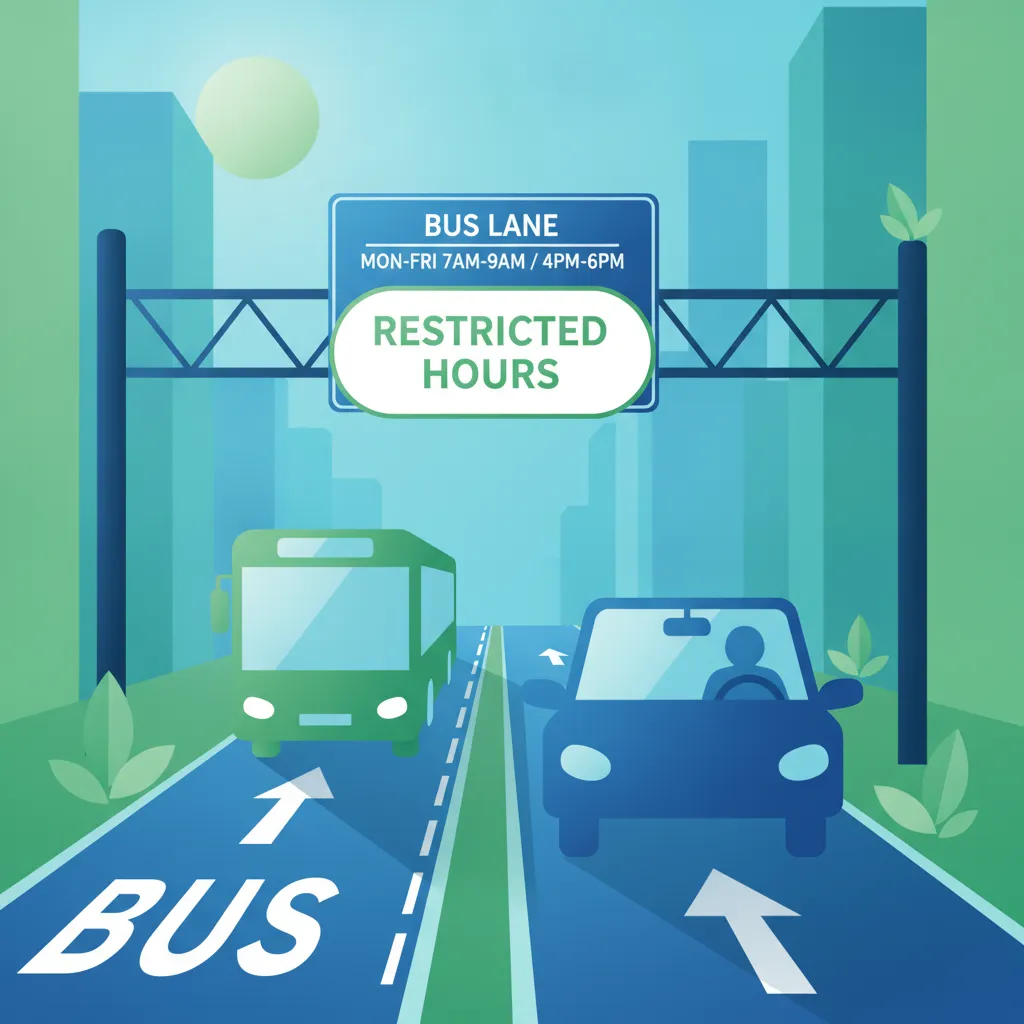
This lesson covers the importance of maintaining correct lane discipline when driving a large passenger vehicle. It details how to position your vehicle safely within a lane on various road types, including multi-lane carriageways and motorways. You will learn the specific rules governing bus lanes, including how to interpret markings, adhere to operating times, and understand the exemptions and penalties associated with their use to ensure legal and efficient driving.

This lesson addresses the growing number of environmental access restrictions in urban areas, such as Low Emission Zones (LEZ), Ultra Low Emission Zones (ULEZ), and congestion charging. Learners will understand the vehicle emission standards (Euro standards) required for entry and how to check their vehicle's compliance. It covers the practicalities of planning routes that account for these zones to avoid significant financial penalties and support cleaner air initiatives.
Explore critical control techniques for HGVs on motorways. Focuses on managing speed, maintaining safe stopping distances, and understanding vehicle dynamics for safe and efficient driving.

This lesson equips drivers with strategies for maintaining control of a heavy vehicle during adverse weather conditions like heavy rain, ice, snow, and strong crosswinds. It covers the physics of traction loss, aquaplaning, and skidding, and explains how to use smooth inputs for steering, acceleration, and braking. The function of electronic stability control systems and other driver aids is also discussed as part of a proactive approach to safety in challenging environments.
This lesson focuses on the principles of effective speed management for heavy goods vehicles, which extends beyond simply obeying the statutory speed limits. It covers how to adapt speed based on vehicle weight, load stability, road gradients, and prevailing traffic and weather conditions. You will also learn about the function of mandatory speed limiters and how intelligent use of speed and cruise control can significantly improve fuel efficiency and safety.

This lesson addresses the unique challenges of operating a large goods vehicle in congested urban and city environments. It focuses on techniques for navigating narrow streets, making tight turns, and safely accessing delivery points while being highly aware of vulnerable road users like pedestrians and cyclists. The importance of exceptional observation, low-speed control, and clear communication with other road users is heavily emphasized to minimize risk in these complex settings.

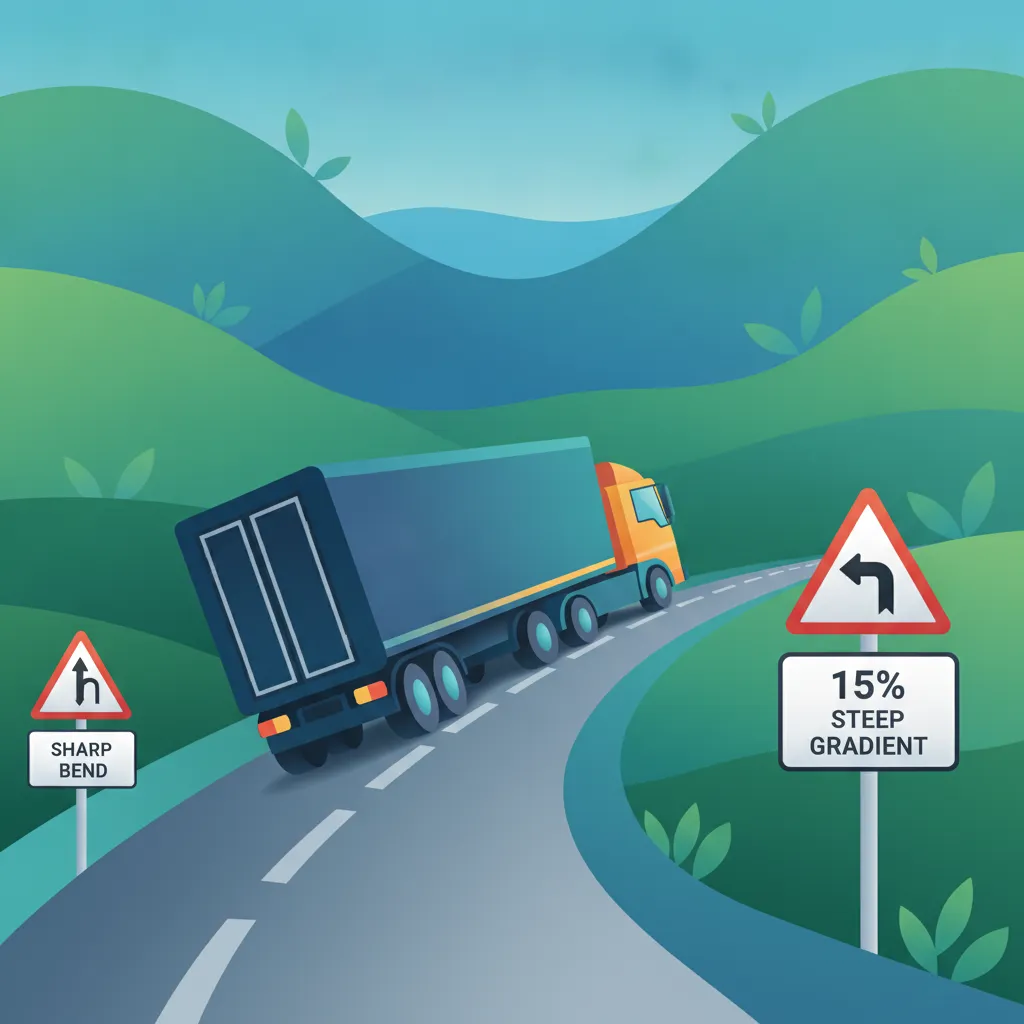
This lesson teaches essential techniques for safely navigating steep inclines and descents in a heavy vehicle. It focuses on the correct use of auxiliary braking systems, such as engine brakes and retarders, to control speed without overheating the service brakes. Proper gear selection for both ascending and descending gradients is explained in detail to ensure the driver maintains full control of the vehicle's momentum at all times, preventing dangerous situations.
This lesson explores the effective use of modern digital navigation tools, including GPS systems and mobile apps tailored for HGVs. It explains how to leverage real-time traffic data, congestion alerts, and dynamic re-routing to adapt to changing road conditions. Importantly, it also emphasizes the need to use this technology safely, cross-referencing information with road signs and maintaining situational awareness to avoid distractions while driving.

This lesson explains the dynamics of turning a long vehicle, focusing on the concepts of off-tracking, where the rear wheels follow a tighter path than the front wheels, and tail swing. You will learn the correct road positioning on approach to junctions and roundabouts to safely clear obstacles and avoid mounting kerbs or striking street furniture. Managing speed and using mirrors effectively throughout the turn are emphasized as crucial safety techniques.

This lesson reinforces the vital safety rule of maintaining an adequate following distance from the vehicle ahead. It explains why the standard 'two-second rule' must be extended for heavy vehicles, especially in poor weather or when heavily laden, to account for longer stopping distances. You will learn practical methods for judging a safe gap in various traffic situations, creating a crucial safety buffer to react to unforeseen hazards.
This lesson focuses on the regulations and best practices for driving a bus or coach on motorways. It details the specific speed limits applicable to PCVs and reinforces strict lane discipline. The content covers the correct procedures for safely joining from a slip road, overtaking other vehicles, and exiting the motorway. It also explains the features of smart motorways and the correct safety procedures to follow in the event of a breakdown, including the use of the hard shoulder.
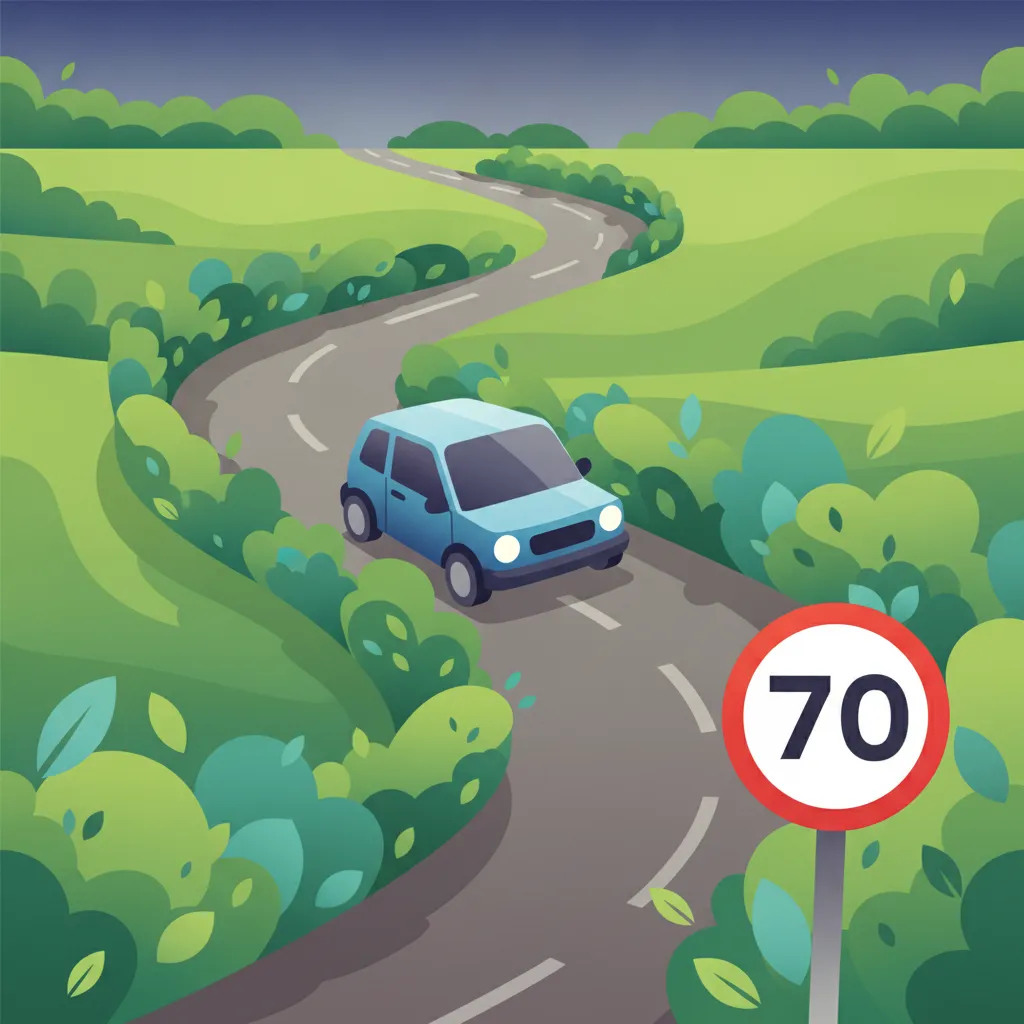
This lesson addresses the unique set of challenges that rural roads present to HGV drivers. It covers how to safely navigate narrow and winding lanes, the importance of anticipating hazards like slow-moving agricultural machinery, mud on the road, and wildlife. You will learn how the national speed limit applies to your vehicle on these roads and why it is often necessary to travel at a much lower speed to ensure safety.

This lesson details speed management techniques applicable to urban, rural, and motorway environments, focusing on compliance with legal speed limits and developing appropriate speed perception. It covers strategies for monitoring speed and adjusting for road conditions, traffic density, and overall passenger safety. The lesson also reviews enforcement mechanisms and emphasizes the importance of speed compliance for accident avoidance and regulatory adherence, a critical skill for all professional drivers.
Find clear answers to common questions learners have about Driving on Motorways with Goods Vehicles. Learn how the lesson is structured, which driving theory objectives it supports, and how it fits into the overall learning path of units and curriculum progression in Great Britain. These explanations help you understand key concepts, lesson flow, and exam focused study goals.
In Great Britain, if a motorway has three or more lanes, vehicles with a maximum permissible weight exceeding 7.5 tonnes are generally prohibited from using the right-hand (outside) lane, unless specific signage directs otherwise to bypass an obstruction.
The national speed limit for a goods vehicle exceeding 7.5 tonnes maximum laden weight is 60 mph on motorways, although most modern HGVs are restricted by a speed limiter to 56 mph (90 km/h).
If you experience a vehicle fault, you must attempt to reach an emergency refuge area (ERA). If you cannot reach one, stop in the hard shoulder or, if there is no hard shoulder, pull onto the nearside verge and use the emergency roadside telephone to alert control.
Yes, mandatory speed limits shown on overhead gantries apply to all vehicles, including HGVs. Failure to adhere to these limits is a road traffic offence and a common subject for questions in the theory test.
Dive into our comprehensive question bank to find exactly what you need for your Great Britain theory test. Use our advanced filters to pinpoint specific subjects or test your knowledge on challenging areas, ensuring you're fully prepared for success.