
This crucial final unit prepares you for handling emergencies on the road. Learn essential procedures for vehicle breakdowns, fires, passenger medical incidents, and safe evacuation, alongside basic first aid and accident scene management, all vital for your Danish Category D licence theory exam.
Browse all lessons that make up Breakdowns, Fire, Passenger Incidents, Evacuation, First Aid and Emergencies. Each lesson focuses on specific topics, learning objectives, and core concepts, helping you build essential knowledge and follow a clear, structured progression toward your study goals in Denmark.
This lesson provides a step-by-step guide for handling a vehicle breakdown on the road. It covers how to safely move the vehicle, secure the scene with warning devices, and notify the company and authorities. The content also details fire prevention measures and the correct procedure for using an on-board fire extinguisher for different types of fires.
This lesson focuses on the driver's role as a leader during an emergency evacuation. It covers how to assess a situation, make the decision to evacuate, and provide clear, calm instructions to passengers. The content details the location and operation of all emergency exits and procedures for assisting passengers with reduced mobility to a safe gathering point.
This lesson provides an overview of essential first aid principles relevant to a transport environment. It covers how to assess a casualty, perform basic life support, and manage common injuries until professional help arrives. The content also details the correct procedure for contacting emergency services, providing clear and accurate information, and completing required incident reports.
Explore high-intent keywords and long-tail search topics learners use when researching Breakdowns, Fire, Passenger Incidents, Evacuation, First Aid and Emergencies. These terms reflect how people search for reliable study materials, structured explanations, and unit-level theory preparation support in Denmark.
Find clear answers to the most common questions learners ask about Breakdowns, Fire, Passenger Incidents, Evacuation, First Aid and Emergencies. Understand how the unit is organized, what learning goals it supports, and how it contributes to your study progression with structured explanations and practical guidance tailored for learners in Denmark.
Your primary priority is the safety of yourself and your passengers. This involves safely moving the vehicle if possible, warning other road users, and ensuring passengers are in a secure location away from traffic. Then, you should contact breakdown assistance or emergency services as needed, providing clear information about your location and the situation.
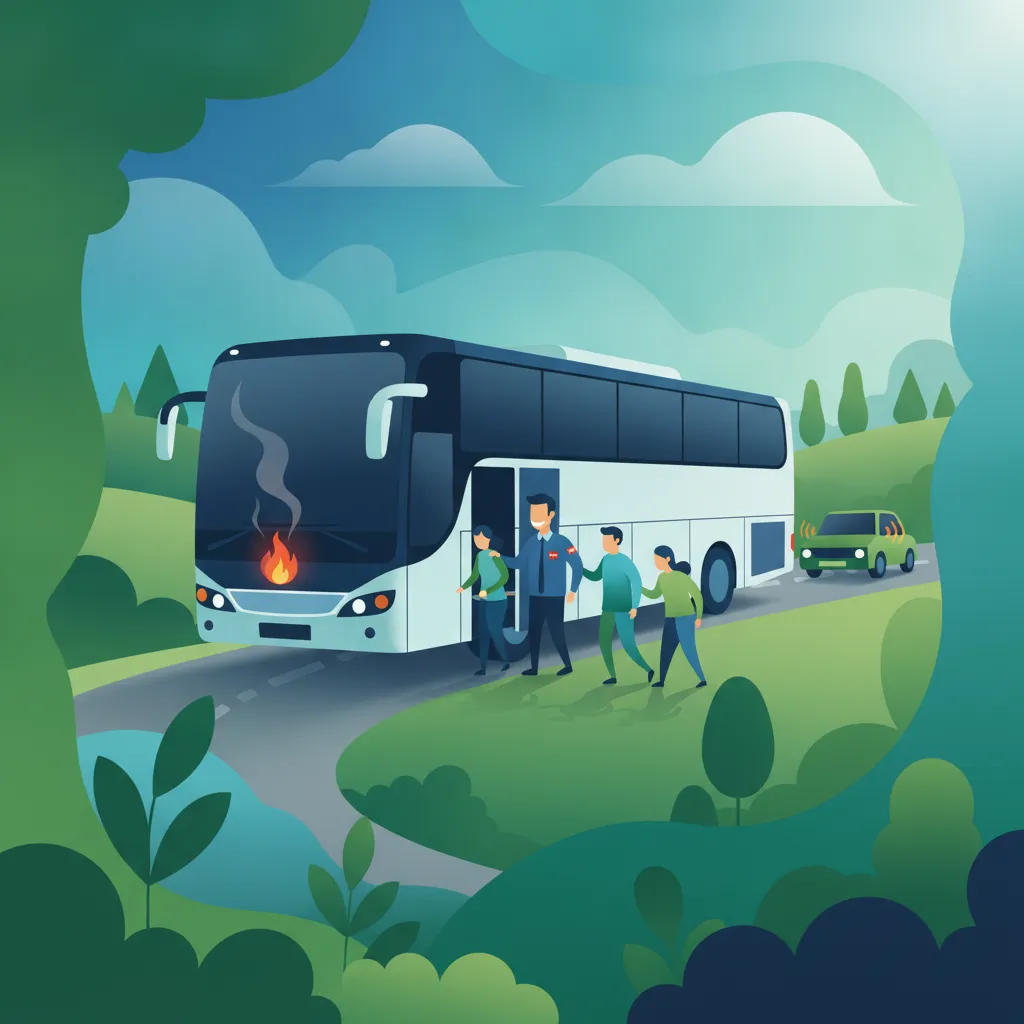
In case of a fire, your immediate action is to stop the bus safely, switch off the engine, and evacuate passengers immediately to a safe distance. Use the fire extinguisher to tackle small, contained fires if you are trained and it is safe to do so. Do not attempt to fight large fires. Alert emergency services (112) promptly.
Evacuation must be swift but orderly. Direct passengers to the nearest safe exit, instructing them to leave belongings behind. Ensure passengers move to a designated safe assembly point away from the bus and any hazards. Keep a headcount and report any missing persons to emergency services.
The theory test expects awareness of basic life support, such as how to check for responsiveness, perform CPR, and manage severe bleeding. You should also know how to position someone who is unconscious but breathing safely (recovery position) and when to call for professional medical help (112).
When calling 112, clearly state what has happened (e.g., breakdown, fire, accident), where you are (precise location including road name, nearest landmark, or GPS coordinates), how many people are involved or injured, and any immediate dangers. Stay on the line until the operator tells you to hang up.
After ensuring immediate safety, you should make the scene visible to prevent further accidents. Use warning triangles placed at an appropriate distance to alert oncoming traffic. If possible and safe, secure the area to prevent unauthorized access until authorities arrive.
All included lessons
Lessons in Breakdowns, Fire, Passenger Incidents, Evacuation, First Aid and Emergencies
See who benefits most from studying Breakdowns, Fire, Passenger Incidents, Evacuation, First Aid and Emergencies. This overview explains how the unit supports different learning needs, what level of knowledge is helpful before starting, and how it fits into the overall study path in Denmark.
This unit is essential for all aspiring Category D licence holders in Denmark preparing for their theory exam. It is particularly important for drivers who need to refresh their knowledge on emergency protocols, accident management, and the legal requirements for passenger safety during unforeseen events.

Begin your official Danish driving licence preparation today by exploring our comprehensive curriculum. Choose a structured course that suits your learning style and progress confidently through all traffic rules, road signs, and practical scenarios required for your exam.
Browse Driving Theory CoursesExplore all units and lessons included in this driving theory course.
Begin your official Danish driving licence preparation today by exploring our comprehensive curriculum. Choose a structured course that suits your learning style and progress confidently through all traffic rules, road signs, and practical scenarios required for your exam.
Browse Driving Theory Courses