
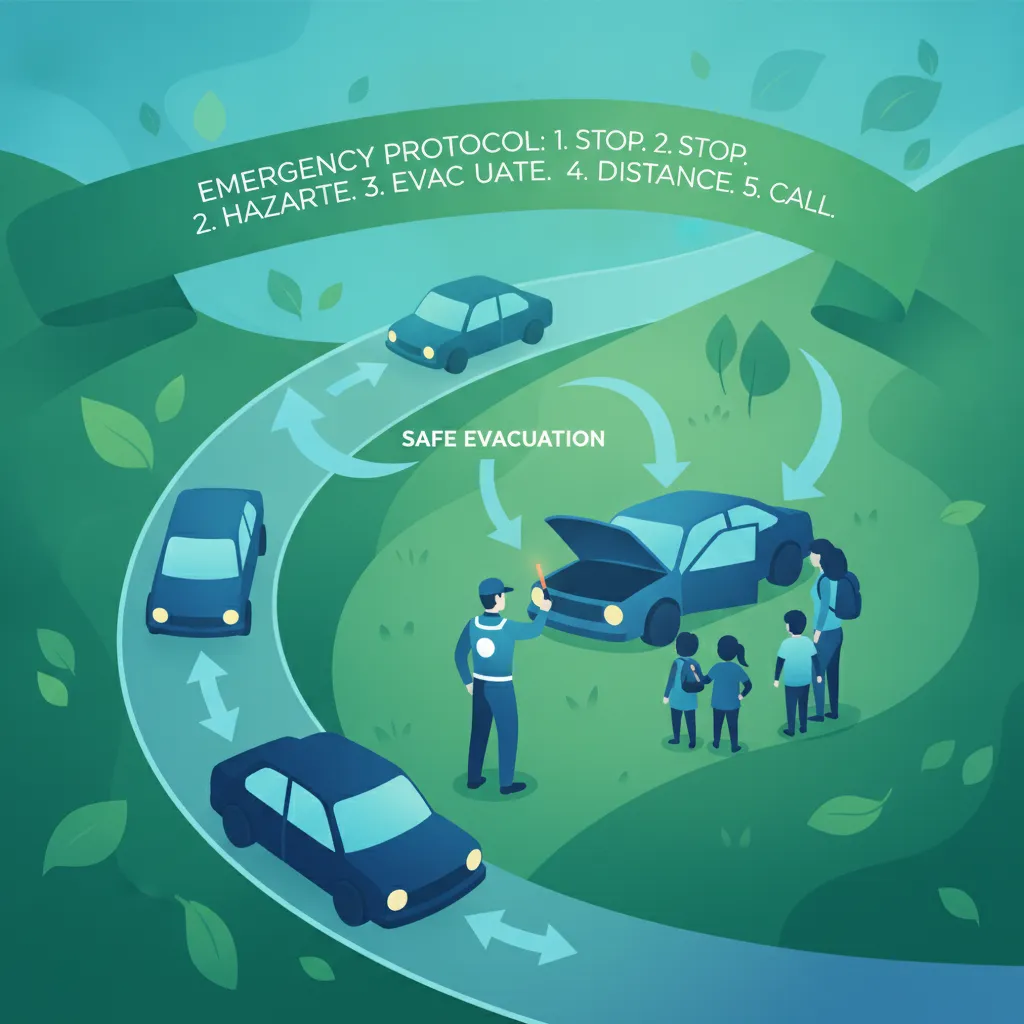
This lesson details the critical role of a bus driver during emergency scenarios, focusing on leadership and effective incident management. You will learn how to assess situations, safely evacuate passengers, and assist those with reduced mobility, which are essential competencies for your Danish Category D theory examination.
Lesson content overview
As a professional driver holding a Danish Category D Licence, your primary responsibility extends far beyond simply operating a vehicle. You are entrusted with the safety and well-being of all your passengers, a duty that becomes critically important during an emergency. This lesson focuses on the driver's pivotal role as a leader in managing passenger evacuations and incidents, ensuring decisive action, clear communication, and the safe egress of everyone on board.
In any emergency scenario aboard a passenger vehicle, the driver immediately assumes command. This leadership role demands a calm demeanor, rapid assessment, and decisive action to safeguard passengers. Your ability to act as a clear and authoritative leader directly influences the outcome of an emergency, minimizing panic and ensuring an orderly response. This responsibility encompasses not only vehicle operation but also a comprehensive understanding of emergency protocols and passenger needs.
Effective emergency management is built upon several core principles that guide a driver's actions:
The initial phase of any incident management is a quick and accurate situation assessment. This is the process of rapidly evaluating an emergency to determine its nature, severity, and the most appropriate immediate response. Your assessment dictates whether you need to stop immediately, move to a safer location, or initiate an evacuation.
Emergencies can range from those requiring immediate, drastic action to situations that allow for more controlled responses.
The practical meaning of this distinction is critical: A driver noticing smoke in the cabin must react instantly, pulling over to the side of the road and initiating evacuation. Conversely, an engine warning light may allow the driver to proceed to the next safe lay-by or service area before stopping to investigate.
In Denmark, as elsewhere, specific legal requirements govern a driver's actions during an emergency. The driver is legally obligated to ensure passenger safety. This includes the requirement to stop the vehicle at a safe location when an immediate danger necessitates evacuation.
Ignoring or delaying these obligations can lead to severe legal consequences and, more importantly, put lives at risk.
Delaying evacuation due to uncertainty about the nature of the emergency is a common and dangerous mistake. When in doubt, prioritize passenger safety and consider evacuation.
The decision to evacuate is a critical moment. It involves the driver's choice to halt the vehicle and initiate passenger egress. This decision is not taken lightly, as it can expose passengers to external hazards if not managed correctly.
The decision to evacuate is typically immediate when there is direct danger to the vehicle or its occupants, such as:
For less immediate threats, the decision might involve a more nuanced risk assessment. For example, a vehicle breakdown in a high-traffic area might make evacuation to the roadside more dangerous than keeping passengers inside until emergency services arrive, provided there is no immediate threat from the breakdown itself.
Once the decision to evacuate has been made or is under consideration, selecting a safe stopping location is paramount.
The minimum distance the vehicle must be from a hazard when stopping for evacuation. This distance depends on the vehicle's speed and road conditions, allowing enough space for passengers to exit safely and move away from the vehicle without being exposed to further danger.
A common mistake is evacuating in a dangerous location or without first stopping the vehicle completely. Always prioritize bringing the vehicle to a controlled stop in the safest possible spot before initiating an evacuation.
A professional bus driver must possess encyclopedic knowledge of their vehicle's layout, particularly the location and operation of all emergency exits and safety equipment. This knowledge allows for quick, efficient, and targeted evacuation instructions.
Primary exits are the main doors designated for passenger entry and exit under normal operating conditions. In an emergency, these doors are usually the first point of evacuation.
When primary exits are blocked, damaged, or otherwise unusable, secondary exits become crucial. These include:
Beyond exits, drivers must know the location and operation of other vital safety equipment:
Professional drivers have a heightened duty of care towards all passengers, especially those with reduced mobility. These passengers may require additional time, specific assistance, or the use of specialized equipment during an evacuation. Ignoring their needs can lead to panic, slower evacuation rates, and increased risk of injury.
Upon boarding, a proactive driver will mentally note the presence and location of passengers who might require extra help:
Planning for and executing an assisted evacuation requires thoughtfulness:
Regularly familiarize yourself with any specific evacuation procedures for accessible features on your vehicle, such as ramp override mechanisms or designated wheelchair evacuation routes.
The driver's communication during an evacuation is paramount. It must be designed to inform, instruct, and reassure passengers, counteracting the natural tendency towards panic.
A standardized set of instructions and methods used during an evacuation to ensure all passengers receive clear, concise, and consistent information and guidance from the driver.
In Denmark, specific regulations reinforce the driver's duty to manage emergencies effectively. These legal requirements are designed to ensure public safety and hold drivers accountable for their actions during incidents.
The Danish Road Traffic Act (Færdselsloven) and associated regulations mandate immediate action, including evacuation, under conditions of imminent danger. This typically applies when:
The driver must immediately stop the vehicle at the safest possible location and direct passengers to evacuate using the nearest safe exit. This is a mandatory and non-negotiable legal obligation.
Failing to comply with these mandatory evacuation procedures can lead to serious legal repercussions for the driver, including:
The rationale behind these strict rules is to prevent exposure to escalating hazards and ensure the swift and safe removal of all individuals from a dangerous environment.
Even with thorough training, real-life evacuations present unique challenges. Anticipating these and adopting best practices can significantly improve outcomes.
Emergency procedures are not one-size-fits-all. External factors must be considered:
To solidify understanding, consider how the principles apply in various real-world scenarios.
Situation: You are driving a city bus in Copenhagen during peak hour. Suddenly, you notice smoke emerging from the rear engine compartment, and a faint smell of burning starts to enter the cabin. Passengers begin to stir and look around.
Correct Response (Danish Category D Licence Theory):
Incorrect Response: Driver continues driving, hoping to reach the depot or a specific fire station, causing panic, increased smoke inhalation, and delaying evacuation, thereby escalating the danger significantly.
Situation: You are driving a long-distance coach on a rural Danish road. The engine suddenly loses power, and a warning light illuminates on the dashboard, indicating a serious mechanical fault, but there is no smoke or fire. You manage to safely pull over onto a wide, grassy shoulder.
Correct Response (Danish Category D Licence Theory):
Incorrect Response: Driver immediately orders an evacuation without assessing the immediate danger, potentially exposing passengers to traffic on the rural road or harsh weather unnecessarily, when remaining inside might have been safer.
The responsibility of a bus driver during an emergency evacuation is immense. It requires a blend of technical knowledge, leadership skills, and an unwavering commitment to passenger safety. You must be prepared to:
By mastering these principles, you ensure that you are fully prepared to act as the ultimate safety leader in any incident involving passenger evacuation.
This lesson covers the critical role of a Category D bus driver as evacuation leader during emergencies, including situation assessment to determine immediate versus non-immediate danger, the legal obligation to evacuate under Danish law (Færdselsloven) when passengers face imminent threat, and the specific procedures for operating primary and secondary emergency exits. Key emphasis is placed on calm, authoritative communication with passengers, identifying and assisting vulnerable passengers with reduced mobility, selecting a safe stopping location away from hazards, and adapting procedures based on context such as weather, road type, and vehicle load. The lesson includes practical scenarios demonstrating correct responses to onboard fire and mechanical breakdown situations.
A short set of high-value points that capture the most important learning from this lesson.
The driver automatically assumes command during any emergency and must act as the calm, authoritative leader directing passenger safety.
Immediate dangers like fire, smoke, or structural compromise require instant evacuation, while non-immediate threats like mechanical breakdown allow more controlled response.
Primary exits (main doors) are used first, but secondary exits like emergency windows and roof hatches become critical when primary routes are blocked.
Passengers with reduced mobility must be identified early and assisted through the nearest accessible exit, using helpers when necessary.
Danish law (Færdselsloven) mandates immediate evacuation when passengers face imminent danger, with serious legal consequences for non-compliance.
Explore all units and lessons included in this driving theory course.
Distinguish immediate danger (fire, smoke, gas leak, structural damage) requiring instant evacuation from non-immediate danger (breakdown, flat tyre) allowing deliberate response.
Safe stopping distance means pulling far enough from the hazard to protect passengers from heat, smoke, or fumes before initiating evacuation.
Communication during evacuation must be calm, concise, and repetitive: short commands repeated until the bus is clear.
When evacuating, prioritize able-bodied passengers through primary exits first to clear the way for those who need assistance.
After evacuation, guide all passengers to a designated safe gathering point well away from the vehicle and any hazard.
Delaying evacuation due to uncertainty about the emergency, when in doubt passenger safety should take priority.
Evacuating without first bringing the vehicle to a controlled stop in the safest possible location.
Allowing passengers to crowd a single exit while other exits remain available, creating dangerous bottlenecks.
Failing to scan the vehicle interior after evacuation, risking that vulnerable passengers are left behind.
Attempting to protect the vehicle or equipment rather than focusing solely on getting all passengers to safety.
Lesson content overview
A short set of high-value points that capture the most important learning from this lesson.
The driver automatically assumes command during any emergency and must act as the calm, authoritative leader directing passenger safety.
Immediate dangers like fire, smoke, or structural compromise require instant evacuation, while non-immediate threats like mechanical breakdown allow more controlled response.
Primary exits (main doors) are used first, but secondary exits like emergency windows and roof hatches become critical when primary routes are blocked.
Passengers with reduced mobility must be identified early and assisted through the nearest accessible exit, using helpers when necessary.
Danish law (Færdselsloven) mandates immediate evacuation when passengers face imminent danger, with serious legal consequences for non-compliance.
Explore all units and lessons included in this driving theory course.
Distinguish immediate danger (fire, smoke, gas leak, structural damage) requiring instant evacuation from non-immediate danger (breakdown, flat tyre) allowing deliberate response.
Safe stopping distance means pulling far enough from the hazard to protect passengers from heat, smoke, or fumes before initiating evacuation.
Communication during evacuation must be calm, concise, and repetitive: short commands repeated until the bus is clear.
When evacuating, prioritize able-bodied passengers through primary exits first to clear the way for those who need assistance.
After evacuation, guide all passengers to a designated safe gathering point well away from the vehicle and any hazard.
Delaying evacuation due to uncertainty about the emergency, when in doubt passenger safety should take priority.
Evacuating without first bringing the vehicle to a controlled stop in the safest possible location.
Allowing passengers to crowd a single exit while other exits remain available, creating dangerous bottlenecks.
Failing to scan the vehicle interior after evacuation, risking that vulnerable passengers are left behind.
Attempting to protect the vehicle or equipment rather than focusing solely on getting all passengers to safety.
Explore search topics learners often look for when studying Passenger Evacuation and Incident Management. These topics reflect common questions about road rules, driving situations, safety guidance, and lesson level theory preparation for learners in Denmark.
Browse additional driving theory lessons that cover connected traffic rules, road signs, and common driving situations related to this topic. Improve your understanding of how different rules interact across everyday traffic scenarios.
Understand the critical role of a bus driver as an emergency leader. This lesson details decisive action, clear communication, and managing passengers during critical incident evacuations based on Danish regulations.
This lesson provides drivers with tools to manage challenging interactions with passengers. It covers verbal and non-verbal de-escalation techniques to resolve conflicts peacefully and professionally. The content emphasizes maintaining a calm demeanor, setting clear boundaries, and knowing when and how to report incidents or request assistance while prioritizing everyone's safety.

This lesson covers strategies for safely managing passenger movement at bus stops. It provides guidance on directing passenger flow, encouraging the use of handrails, and providing assistance to those who need it. The content emphasizes the driver's observational role in preventing slips, trips, and falls, particularly during peak hours or in adverse weather.
Learn specific procedures for identifying and assisting passengers with reduced mobility during emergency evacuations. This lesson covers techniques and considerations vital for ensuring everyone's safety according to Danish theory.
This lesson covers strategies for safely managing passenger movement at bus stops. It provides guidance on directing passenger flow, encouraging the use of handrails, and providing assistance to those who need it. The content emphasizes the driver's observational role in preventing slips, trips, and falls, particularly during peak hours or in adverse weather.
Find clear answers to common questions learners have about Passenger Evacuation and Incident Management. Learn how the lesson is structured, which driving theory objectives it supports, and how it fits into the overall learning path of units and curriculum progression in Denmark. These explanations help you understand key concepts, lesson flow, and exam focused study goals.
Your primary responsibility is to maintain control of the situation and ensure the safe evacuation of all passengers. This involves providing clear instructions, remaining calm, and ensuring that no passenger is left behind.
Always prioritize their safety by assisting them first or ensuring they have a designated helper. Know the locations of accessible exits and always keep their specific needs in mind during your emergency plan.
Yes, the test may include questions regarding the identification and operation of various emergency exits, including manual override buttons and break-glass tools, as required by Danish safety standards.
If the vehicle is in a safe location away from traffic, such as a designated lay-by, it is often safer to keep passengers on board. Evacuating into live traffic is extremely hazardous and should only be done if the immediate threat, like fire, makes staying on board more dangerous.
Use our powerful search tool to pinpoint specific Danish driving theory topics, road signs, or traffic situations you need to review. Start exploring relevant practice sets now to reinforce your knowledge and build confidence for your upcoming driving licence exam.