
This lesson concludes our comprehensive Category D course by focusing on the critical responsibilities of a driver during medical emergencies and road incidents. You will learn the correct protocols for assessing casualties, delivering life-saving support, and accurately reporting accidents to the authorities in accordance with Danish regulations.

Lesson content overview
Operating a passenger transport vehicle, such as a bus or coach, in Denmark comes with significant responsibilities, particularly concerning the safety and well-being of passengers and other road users. As a professional driver holding a Danish Category D licence, you are entrusted with lives, and this duty extends to knowing how to react effectively in the face of an accident or medical emergency. This lesson provides a comprehensive guide to essential first aid principles and the correct procedures for emergency reporting, ensuring you are prepared to act decisively and professionally when it matters most.
In any emergency involving your vehicle or passengers, you are often the first responder. Your immediate actions can critically impact the outcome for injured individuals and the efficiency of the subsequent professional response. This lesson highlights your pivotal role in providing immediate assistance, ensuring passenger safety, and communicating effectively with emergency services and authorities. Understanding these protocols is not merely good practice; it is a fundamental aspect of your professional responsibility.
As a driver of a passenger transport vehicle, you have a clear duty of care towards your passengers and other road users. This legal and ethical obligation means you must act reasonably to prevent harm and provide assistance to injured persons when feasible. In Denmark, this duty is enshrined in law, emphasizing the importance of your actions in an emergency. Your preparedness reflects your professionalism and commitment to public safety.
The first step in any emergency involving injury is to quickly and accurately assess the casualty's condition. This process, known as casualty assessment, helps you determine the severity of injuries and prioritize your actions. Remember, your safety must always be paramount; ensure the scene is safe before approaching any casualty.
The primary survey is a rapid, systematic check for immediate life-threatening conditions. It follows the ABCs:
Never put yourself in danger when approaching a casualty. Assess the scene for hazards like ongoing traffic, fire, or spilled fuel before providing assistance.
Once any life-threatening conditions identified in the primary survey are addressed (e.g., clearing an airway or stopping severe bleeding), you can proceed with a secondary survey. This involves a more thorough check for specific injuries such as fractures, burns, or other trauma. Look for visible injuries, deformities, swelling, or signs of pain. During this survey, ask the casualty, if conscious, about their symptoms and medical history.
Basic Life Support (BLS) comprises emergency procedures to maintain circulation and breathing in a casualty until professional medical help arrives. The most common BLS technique is Cardiopulmonary Resuscitation (CPR).
If a casualty is unconscious, not breathing normally, and unresponsive, they are likely in cardiac arrest. In such cases, CPR (Cardiopulmonary Resuscitation) is vital.
If you are not trained in rescue breaths, or a barrier device is unavailable, focus solely on continuous, high-quality chest compressions until professional help arrives. "Hands-only CPR" is proven effective.
Many public transport vehicles and stations are now equipped with an Automated External Defibrillator (AED). An AED is a portable electronic device that automatically diagnoses life-threatening cardiac arrhythmias and is able to treat them by delivering an electrical shock. If an AED is available:
Turn on the AED and follow its verbal and visual instructions immediately.
Attach the electrode pads firmly to the casualty's bare chest as shown in the AED's diagrams (typically one above the right nipple, one below the left armpit).
Ensure no one is touching the casualty when the AED analyzes the heart rhythm and delivers a shock if advised.
Continue CPR immediately after the shock, or if no shock is advised, as instructed by the AED, until emergency services take over.
Beyond life-threatening situations, you may encounter various common injuries in your role. Knowing how to manage these until professional help arrives can significantly alleviate suffering and prevent complications. Always remember to administer first aid only within your competence level.
For external bleeding:
If a passenger has a suspected fracture (broken bone) or a severe sprain:
For burns:
After ensuring the immediate safety of the scene and providing any necessary first aid, your next critical action is to contact the professional emergency services. In Denmark, as in many European countries, the universal emergency number is 112.
When you call 112, the operator will need precise and accurate information to dispatch the correct services quickly. Be prepared to provide:
Do not hang up until the emergency operator tells you to. They may provide you with crucial instructions, guide you through further first aid steps, or ask additional questions while help is on its way. Listen carefully and follow their advice. Your calm and clear communication can significantly aid the emergency response.
Beyond immediate first aid and contacting 112, a significant part of your duty as a professional driver involves proper accident reporting and documentation. This formal process is crucial for legal, insurance, and company record-keeping purposes.
In Denmark, certain types of accidents must be reported to the police. This typically includes incidents causing personal injury or significant property damage. The official accident report form often referred to as Skema 4432, is used for this purpose. It collects vital details about the incident.
The official accident report form used by the Danish police for documenting road traffic accidents, particularly those involving injury or significant damage.
Date and time of the incident.
Exact location (street, city, specific address, or intersection).
Details of all vehicles involved (registration numbers, make, model).
Information about drivers (names, addresses, driving licence details).
Details of any injured parties (names, extent of injuries).
Witness contact information.
A clear and factual description of how the accident occurred.
In addition to police reports, your employer will require you to complete an internal company incident report. This document serves several purposes:
Be thorough and factual when completing these reports. Include all relevant details, even if they seem minor, and avoid speculation or assigning blame.
Accurate and timely incident reporting is paramount. It provides a factual basis for investigations, insurance claims, and legal proceedings. Delays or inaccuracies can lead to misunderstandings, disputes, and potentially severe legal or financial consequences for you and your employer. Your report should be objective, detailing only what you observed and experienced.
Danish law places specific obligations on drivers involved in or witnessing an accident. Familiarity with these regulations is essential for all holders of a Danish Category D licence.
The Danish Road Traffic Act (Færdselsloven) § 70 stipulates a legal requirement for drivers to provide reasonable assistance to injured persons at the scene of an accident if it is safe and feasible to do so. This underpins the duty of care principle. This means you cannot simply drive away from an accident where people are injured.
According to § 73 of the Danish Road Traffic Act, accidents causing personal injury or significant property damage must be reported to the police. This is where the use of Skema 4432 comes into play. Even if no one appears injured immediately, if there is a possibility of delayed symptoms or significant damage, it is prudent to report.
Leaving the scene of an accident without reporting it to the authorities, especially if it involves personal injury or substantial damage, is a serious criminal offense under § 68 of the Danish Road Traffic Act. This is often referred to as a "hit-and-run" and carries severe penalties, including fines, imprisonment, and loss of driving privileges.
Even with the best intentions, mistakes can happen in stressful emergency situations. Being aware of common pitfalls and how to adapt your response to varying conditions can improve your effectiveness.
Emergency situations are rarely textbook. Your actions may need to be adapted based on the specific context:
Being prepared for emergencies is a cornerstone of professional passenger transport. As a Danish Category D licence holder, your ability to handle first aid and emergency reporting effectively directly contributes to passenger safety and adherence to legal requirements.
This knowledge not only fulfils your legal and ethical obligations but also instils confidence in your passengers and reflects your professionalism as a public transport driver in Denmark.
This lesson covers the critical responsibilities of Danish Category D drivers in medical emergencies and accident reporting. You must master the DRABC/ABCs primary survey to prioritize life-saving actions, know how to perform CPR with correct compression depth and rate, and understand when and how to use an AED. Legally, you are required under §70 Færdselsloven to assist injured persons and under §73 to report accidents involving injury or significant damage using Skema 4432; failing to report under §68 is a criminal offense. Effective emergency communication with 112 requires precise location, incident type, casualty information, and hazards, while thorough documentation protects both you and your employer.
A short set of high-value points that capture the most important learning from this lesson.
The primary survey follows ABCs: Airway, Breathing, and Circulation—identify and address life-threatening conditions in this order before anything else.
CPR on an adult requires chest compressions 5–6 cm deep at 100–120 compressions per minute, combined with rescue breaths if trained and a barrier device is available.
Calling 112 requires your exact location (street, landmark, or motorway kilometer marker), incident type, casualty count and condition, and any ongoing hazards.
Skema 4432 is the official Danish police form for documenting accidents involving injury or significant damage—report under §73 Færdselsloven.
Your legal duty under §70 Færdselsloven requires you to provide reasonable assistance to injured persons when safe and feasible; leaving the scene without reporting under §68 is a criminal offense.
Explore all units and lessons included in this driving theory course.
Only approach a casualty after confirming the scene is safe from traffic, fire, fuel, or other hazards—never become a second casualty.
For suspected fractures or spinal injuries, do not move the casualty unnecessarily; support the injured area in the position found.
Cool burns with cool running water for 10–20 minutes; do not use ice, and remove jewelry before swelling begins unless stuck to the burn.
Stay on the line with 112 operators until instructed to hang up—they may provide critical instructions or need additional information while help is en route.
Complete both police reports (Skema 4432) and internal company incident reports accurately and promptly, including all details even minor ones.
Panicking and rushing without assessing scene safety first, potentially creating additional hazards for yourself and others.
Moving a casualty with suspected spinal injuries unnecessarily, which can worsen their condition.
Failing to provide precise location details to 112, such as motorway number and kilometer marker, which delays emergency response.
Neglecting to complete or delaying official accident reports, leading to legal complications and incomplete insurance documentation.
Overstepping competence by attempting advanced medical procedures beyond basic first aid training.
Lesson content overview
A short set of high-value points that capture the most important learning from this lesson.
The primary survey follows ABCs: Airway, Breathing, and Circulation—identify and address life-threatening conditions in this order before anything else.
CPR on an adult requires chest compressions 5–6 cm deep at 100–120 compressions per minute, combined with rescue breaths if trained and a barrier device is available.
Calling 112 requires your exact location (street, landmark, or motorway kilometer marker), incident type, casualty count and condition, and any ongoing hazards.
Skema 4432 is the official Danish police form for documenting accidents involving injury or significant damage—report under §73 Færdselsloven.
Your legal duty under §70 Færdselsloven requires you to provide reasonable assistance to injured persons when safe and feasible; leaving the scene without reporting under §68 is a criminal offense.
Explore all units and lessons included in this driving theory course.
Only approach a casualty after confirming the scene is safe from traffic, fire, fuel, or other hazards—never become a second casualty.
For suspected fractures or spinal injuries, do not move the casualty unnecessarily; support the injured area in the position found.
Cool burns with cool running water for 10–20 minutes; do not use ice, and remove jewelry before swelling begins unless stuck to the burn.
Stay on the line with 112 operators until instructed to hang up—they may provide critical instructions or need additional information while help is en route.
Complete both police reports (Skema 4432) and internal company incident reports accurately and promptly, including all details even minor ones.
Panicking and rushing without assessing scene safety first, potentially creating additional hazards for yourself and others.
Moving a casualty with suspected spinal injuries unnecessarily, which can worsen their condition.
Failing to provide precise location details to 112, such as motorway number and kilometer marker, which delays emergency response.
Neglecting to complete or delaying official accident reports, leading to legal complications and incomplete insurance documentation.
Overstepping competence by attempting advanced medical procedures beyond basic first aid training.
Explore search topics learners often look for when studying First Aid and Emergency Reporting. These topics reflect common questions about road rules, driving situations, safety guidance, and lesson level theory preparation for learners in Denmark.
Browse additional driving theory lessons that cover connected traffic rules, road signs, and common driving situations related to this topic. Improve your understanding of how different rules interact across everyday traffic scenarios.
Learn essential first aid principles and the correct procedures for contacting Danish emergency services and completing accident reports. This lesson covers casualty assessment, basic life support, and legal obligations for Category D drivers in Denmark.
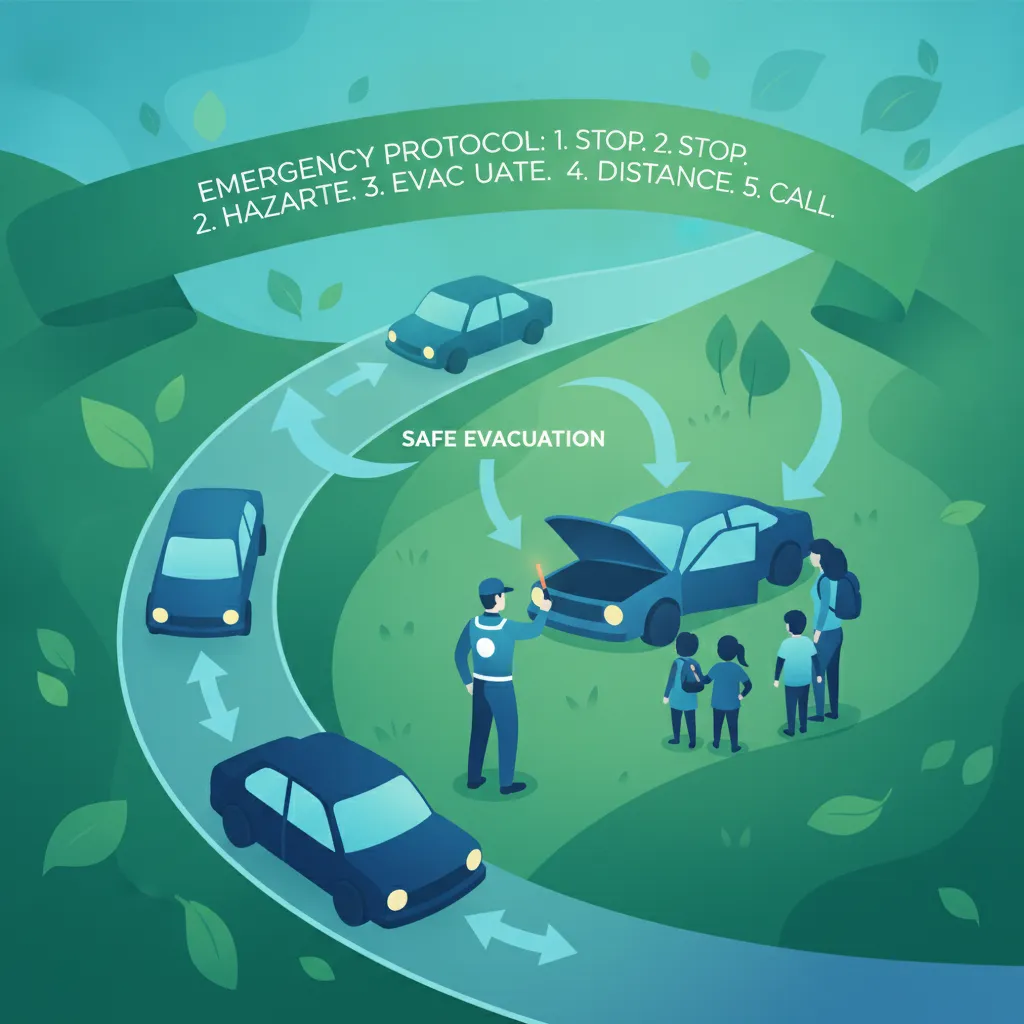
This lesson focuses on the driver's role as a leader during an emergency evacuation. It covers how to assess a situation, make the decision to evacuate, and provide clear, calm instructions to passengers. The content details the location and operation of all emergency exits and procedures for assisting passengers with reduced mobility to a safe gathering point.
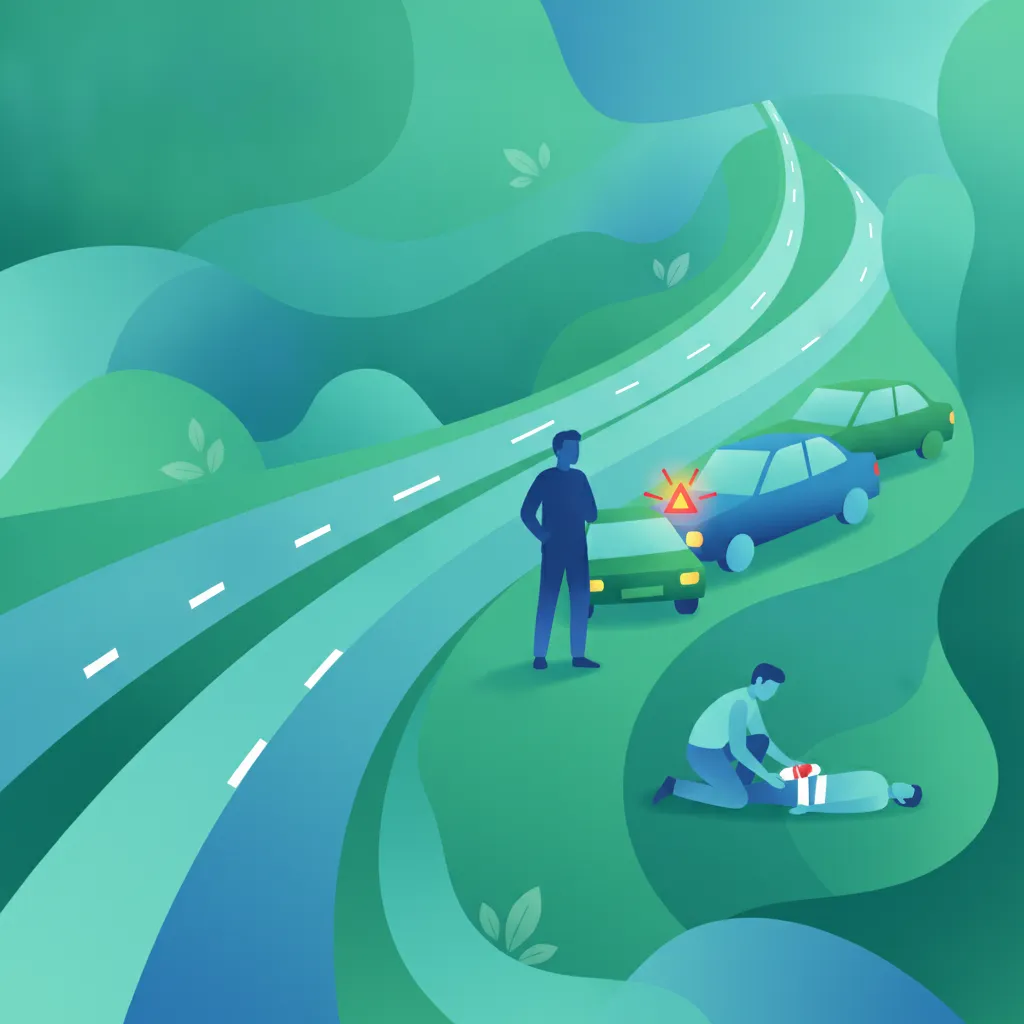
This lesson provides a clear action plan for handling emergencies on the road. It explains how to secure an accident scene using a warning triangle, when and how to call the emergency number 112, and the fundamentals of providing basic first aid. You will also learn the safe procedure for dealing with a vehicle breakdown to protect yourself and other road users.

This lesson provides a step-by-step guide for handling a vehicle breakdown on the road. It covers how to safely move the vehicle, secure the scene with warning devices, and notify the company and authorities. The content also details fire prevention measures and the correct procedure for using an on-board fire extinguisher for different types of fires.
This lesson covers the immediate actions to take at the scene of an accident. It explains how and when to call the Danish emergency number 112, and what information to provide to the operator. The content also includes the principles of securing an accident scene to prevent further incidents and basic first aid concepts.
This lesson details the procedures for safe door operation during passenger boarding. It explains the driver's responsibility to visually clear the doorway and surrounding area before opening or closing doors. The content covers the function of safety features like sensors and interlock systems, ensuring compliance with Danish vehicle regulations to prevent passenger injuries.

This lesson focuses on the safe and correct operation of passenger vehicle doors. It covers the different types of door mechanisms and the importance of monitoring the door area to prevent injury during boarding and alighting. The content details Danish regulations regarding door safety systems and the driver's responsibility to ensure doors are fully closed and secured before moving.
This lesson prepares drivers for critical incidents, including vehicle fires, significant load loss, and traffic collisions. It explains fire prevention measures and the proper use of an on-board fire extinguisher. The content also outlines the legal and safety procedures for responding to an accident scene, including securing the area, reporting the incident to emergency services, and providing basic first aid if necessary.

This lesson covers strategies for safely managing passenger movement at bus stops. It provides guidance on directing passenger flow, encouraging the use of handrails, and providing assistance to those who need it. The content emphasizes the driver's observational role in preventing slips, trips, and falls, particularly during peak hours or in adverse weather.
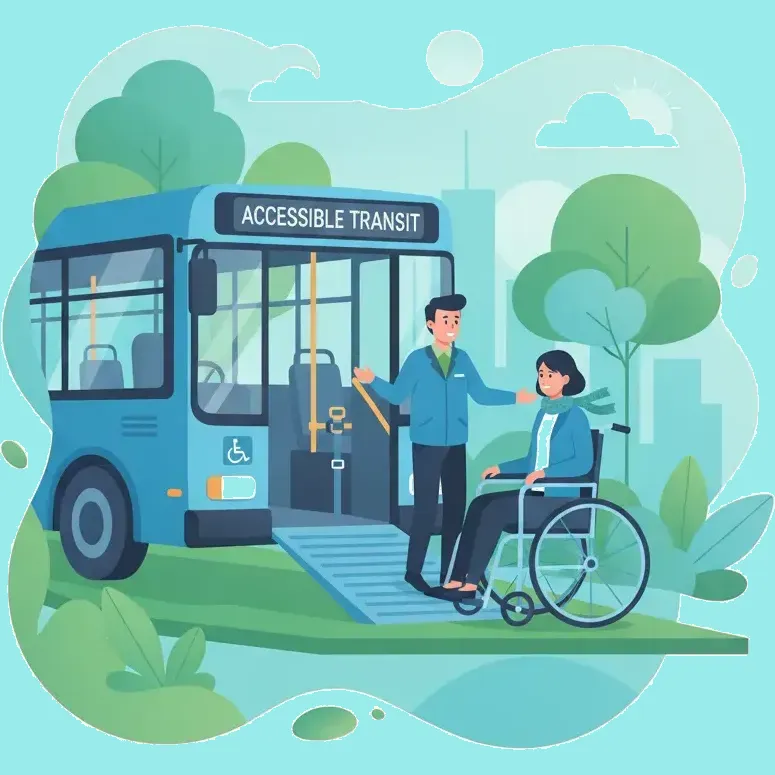
This lesson covers the driver's responsibilities in providing accessible transport for passengers with reduced mobility. It details the correct operation of wheelchair ramps and lifts, as well as the procedures for safely securing wheelchairs inside the vehicle. The content also emphasizes respectful communication and awareness of passenger needs, in line with Danish accessibility laws and standards.

This lesson details the specific rules related to bus lanes and bus stops. It clarifies when other vehicles may use bus lanes, the legal requirement to yield to buses pulling away from a stop, and the importance of being cautious around embarking or disembarking passengers. Adherence to these rules is vital for the efficient and safe operation of public transportation.
Understand the legal duties of passenger transport drivers in Denmark during accidents and emergencies. This lesson details Færdselsloven sections on assisting injured persons, mandatory reporting, and penalties for leaving accident scenes.
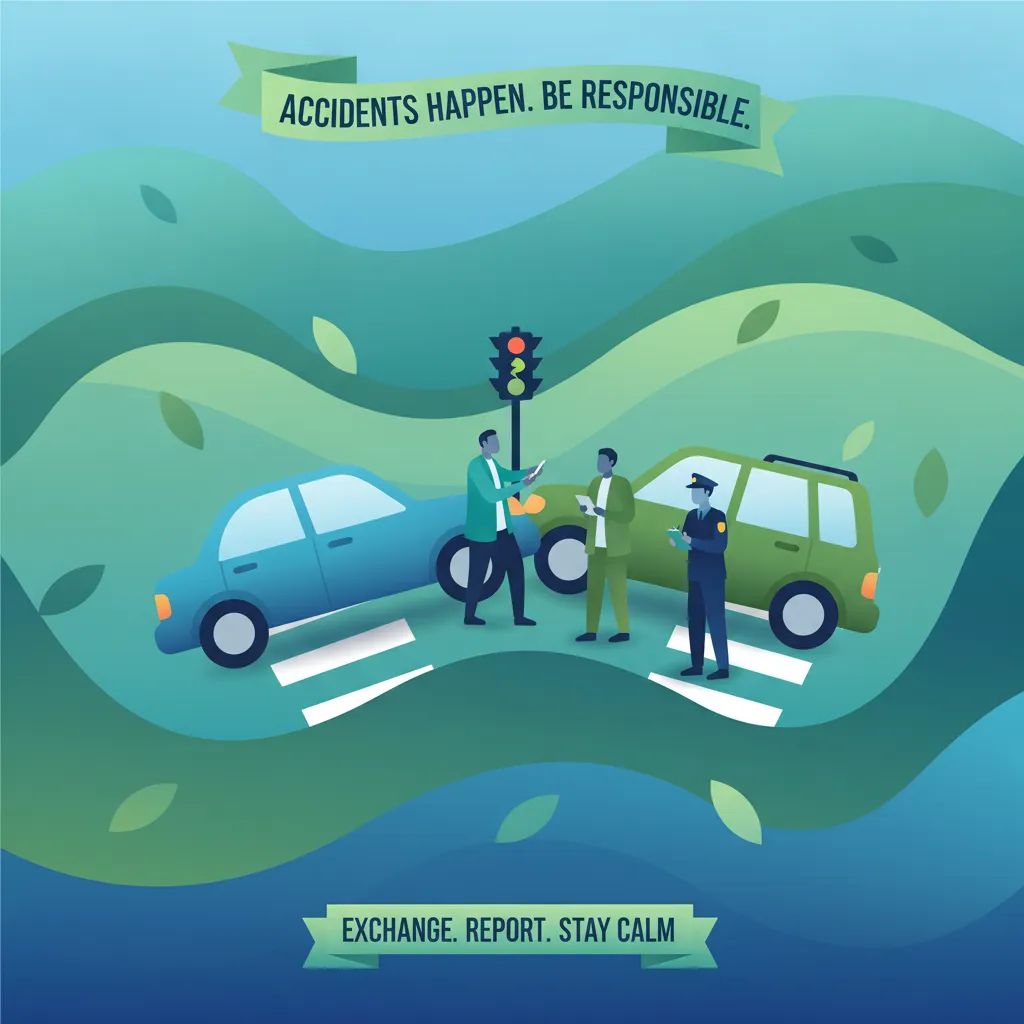
This lesson outlines the legal responsibilities of a rider involved in a traffic accident. It explains the legal duty to stop, render aid, and report the incident to the police and insurance providers. The content covers the concepts of liability and the potential legal consequences following an accident.
This lesson covers the immediate actions to take at the scene of an accident. It explains how and when to call the Danish emergency number 112, and what information to provide to the operator. The content also includes the principles of securing an accident scene to prevent further incidents and basic first aid concepts.
This lesson focuses on the principle of duty of care, a core responsibility for professional drivers. It examines the ethical and legal obligations to ensure passenger safety from boarding to alighting. The content explores how professional conduct builds a strong safety culture and reinforces public trust in the transport service, as mandated by Danish law.
This lesson details the specific rules related to bus lanes and bus stops. It clarifies when other vehicles may use bus lanes, the legal requirement to yield to buses pulling away from a stop, and the importance of being cautious around embarking or disembarking passengers. Adherence to these rules is vital for the efficient and safe operation of public transportation.
This lesson provides a step-by-step guide for handling a vehicle breakdown on the road. It covers how to safely move the vehicle, secure the scene with warning devices, and notify the company and authorities. The content also details fire prevention measures and the correct procedure for using an on-board fire extinguisher for different types of fires.
This lesson provides a clear action plan for handling emergencies on the road. It explains how to secure an accident scene using a warning triangle, when and how to call the emergency number 112, and the fundamentals of providing basic first aid. You will also learn the safe procedure for dealing with a vehicle breakdown to protect yourself and other road users.
This lesson prepares drivers for critical incidents, including vehicle fires, significant load loss, and traffic collisions. It explains fire prevention measures and the proper use of an on-board fire extinguisher. The content also outlines the legal and safety procedures for responding to an accident scene, including securing the area, reporting the incident to emergency services, and providing basic first aid if necessary.
This lesson details the procedures for safe door operation during passenger boarding. It explains the driver's responsibility to visually clear the doorway and surrounding area before opening or closing doors. The content covers the function of safety features like sensors and interlock systems, ensuring compliance with Danish vehicle regulations to prevent passenger injuries.
This lesson focuses on the driver's role as a leader during an emergency evacuation. It covers how to assess a situation, make the decision to evacuate, and provide clear, calm instructions to passengers. The content details the location and operation of all emergency exits and procedures for assisting passengers with reduced mobility to a safe gathering point.
This lesson focuses on the safe and correct operation of passenger vehicle doors. It covers the different types of door mechanisms and the importance of monitoring the door area to prevent injury during boarding and alighting. The content details Danish regulations regarding door safety systems and the driver's responsibility to ensure doors are fully closed and secured before moving.
Find clear answers to common questions learners have about First Aid and Emergency Reporting. Learn how the lesson is structured, which driving theory objectives it supports, and how it fits into the overall learning path of units and curriculum progression in Denmark. These explanations help you understand key concepts, lesson flow, and exam focused study goals.
Always ensure your own safety first, then the safety of other passengers. Use the DRABC approach: Danger, Response, Airway, Breathing, and Circulation, before calling 112.
Yes, in Denmark, all road users have a duty to assist if they are involved in or encounter an accident, provided it can be done without significant danger to oneself.
You must provide your exact location, the nature of the emergency, the number of injured persons, and any specific dangers like smoke or fire inside the bus.
The exam often uses scenario-based questions where you must select the correct sequence of actions, such as when to move a casualty or when to prioritize calling emergency services.
Use our powerful search tool to pinpoint specific Danish driving theory topics, road signs, or traffic situations you need to review. Start exploring relevant practice sets now to reinforce your knowledge and build confidence for your upcoming driving licence exam.