
This lesson explores the legal framework governing traffic violations for Category AM riders in Austria. Understanding these consequences is essential for maintaining your license and ensuring you act as a responsible rider on public roads.
Lesson content overview
Navigating the roads safely is a fundamental responsibility for every rider, especially for those operating mopeds, small scooters, and light quadricycles under an Austrian AM licence. Beyond the immediate safety implications, any deviation from established traffic laws carries concrete legal consequences. Understanding these penalties is not just about avoiding fines; it’s about reinforcing responsible riding behaviour and contributing to overall road safety.
This lesson provides a comprehensive overview of the Austrian legal framework for traffic violations, focusing specifically on the penalties applicable to AM-class licence holders. We will explore the system of monetary fines, the accumulation of demerit points, and the conditions that can lead to a temporary suspension or permanent revocation of your driving privileges. By grasping these consequences, you can make informed decisions and uphold your duties as a lawful and considerate road user.
The Austrian road traffic law, primarily defined by the Straßenverkehrsordnung (StVO), establishes a clear system of penalties designed to deter unsafe behaviour and ensure public safety. This system is built on core principles that guide how violations are identified, prosecuted, and sanctioned.
The enforcement of traffic laws is underpinned by several key principles that ensure fairness, effectiveness, and proportionality in the application of penalties.
Penalties are always designed to be proportionate to the severity and potential risk posed by the offence. Minor infractions, like a slight signalling error, typically incur a lower fine. In contrast, serious hazards such as driving under the influence or reckless speeding attract much higher sanctions, including substantial fines, demerit points, and even licence suspension. This ensures that the punishment fits the crime, maintaining a sense of justice within the legal framework.
Austria employs a point-based system, known as Verwarnungspunkte, to track repeated offending behaviour. Each traffic violation that carries points adds a specific number to a rider's record. This system quantitatively monitors a driver's history, allowing authorities to identify and address persistent unsafe habits. Accumulation of points serves as an escalating warning, leading to more serious administrative actions if thresholds are crossed.
Monetary fines are a direct and immediate financial deterrent. The fine structure in Austria outlines fixed amounts for common offences, with variable penalties often applied based on the specifics of the violation, such as the degree of speeding. These fines provide an immediate consequence for breaking traffic rules and are a fundamental part of the enforcement mechanism.
For serious or repeated offences, the ultimate penalties involve the temporary withdrawal (suspension) or permanent loss (revocation) of the driving licence. These measures are designed to remove unsafe drivers from the road until they can demonstrate compliance or, in cases of revocation, to ensure they meet current standards before regaining their driving privileges. These are critical tools for protecting public safety.
The entire penalty system relies on a well-defined process through which law enforcement agencies record violations, issue fines, and update driving records. This ensures uniform application of the law and provides a structured method for imposing and enforcing penalties, including avenues for appeal and due process for affected riders.
Monetary fines are the most common and immediate consequence of traffic violations in Austria. These direct financial penalties are defined in the Austrian traffic penalty schedule (Strafgesetz) and serve as a primary deterrent.
Fines are generally categorized based on the severity of the offence:
Upon being stopped by an officer or detected by automated systems (like speed cameras), the rider will receive a ticket detailing the fine amount. It is crucial to understand that these fines are not optional; they must be paid or formally contested within specified timeframes. Failing to do so can lead to escalated penalties, including higher fines or even administrative enforcement.
Beyond monetary fines, many traffic violations in Austria also result in the accumulation of Verwarnungspunkte (demerit points) on a rider’s driving record. This system is designed to track repeat offenders and incentivise long-term behavioural change.
Points are added to a driver's record for specific violations, with different offences carrying different point values:
These points are recorded by the central traffic authority and remain on the rider's record for a period of three years from the date of the offence. Unlike fines, points do not simply disappear once paid; they persist and contribute to your overall point total.
The accumulation of demerit points triggers escalating administrative actions:
Always be aware of your current point total. While points expire after three years, consistently safe riding is the best way to ensure you never approach the suspension or revocation thresholds.
A frequent misconception is that points are cleared from your record once you pay the associated fine. In Austria, fine payment and point accumulation are distinct processes. Points persist for three years regardless of when the fine is settled. Another common misunderfallacy is that points only count if you are stopped by the police; automated systems also contribute to point accumulation.
The most significant legal consequences for traffic violations are the temporary suspension or permanent revocation of your driving licence. These measures are designed to protect public safety by removing unsafe drivers from the road.
Temporary withdrawal of the right to drive for a defined period, based on accumulated demerit points or specific severe offences.
Licence suspension means you are legally prohibited from operating any vehicle for which your licence category is valid during the specified period.
If your licence is suspended, you must surrender it to the authorities. It is illegal to ride any AM-class vehicle (or any other vehicle for which you hold a licence) during this period. To regain your licence, you must usually wait until the suspension period expires and comply with any reinstatement requirements, such as completing mandatory driver improvement courses or undergoing medical verification. Assuming the licence automatically reactivates or is re-issued without fulfilling these steps is a common error.
Surrender Licence: You will be instructed to surrender your physical driving licence to the issuing authority.
Observe Suspension Period: You must not ride any vehicle during the entire suspension period.
Complete Requirements: Attend any mandated driver improvement courses or medical assessments.
Reinstatement: Apply for your licence to be reinstated after the suspension period and all conditions are met.
Permanent loss of the driving licence, necessitating a full re-examination (both theoretical and practical) to regain driving privileges.
Licence revocation is the most severe penalty and means your licence is permanently withdrawn. It is not merely a temporary ban; you effectively lose your driving qualification entirely.
Verwarnungspunkte within the statutory timeframe.Following revocation, you are no longer licensed to drive any vehicle covered by your previous licence. To regain your driving privileges, you must:
While often perceived as permanent, revocation is not irreversible. However, the path to regaining a licence after revocation is rigorous and designed to ensure the rider has demonstrably reformed their behaviour and re-learned essential road safety principles.
Austria's traffic laws detail specific penalties for various common violations, often combining monetary fines with demerit points, and potentially leading to suspension or revocation for serious or repeated offences.
Speed limits are crucial for safety, especially for AM-class vehicles. Penalties for speeding increase significantly with the degree of excess speed:
Operating a vehicle under the influence of alcohol or drugs is one of the most serious traffic offences.
There is zero tolerance for alcohol for riders under 21 or learner drivers in Austria. Even a small amount of alcohol can lead to severe penalties. Always avoid alcohol completely if you plan to ride.
Using a handheld mobile phone while riding an AM-class vehicle is prohibited as it causes significant distraction.
For mopeds and scooters, wearing an approved helmet is mandatory at all times.
Communicating your intentions to other road users is vital for safety.
Understanding how traffic violations are processed is important for every rider. The Austrian system follows clear administrative procedures, from the initial ticket to potential appeals.
When a traffic violation occurs, you may receive a ticket in one of two ways:
The ticket will specify the nature of the offence, the fine amount, and instructions on how to pay or contest the violation. It is crucial to respond to a ticket within the defined timeframes to avoid additional charges or escalated penalties.
Your Verwarnungspunkte are managed in a centralised database (Verwarnungsregister) by the Ministry of Transport.
If you believe a fine or point allocation is unjust or incorrect, you have the right to contest it.
Review the Ticket: Carefully read all information on the ticket, including the specified timeframe for appeal.
Gather Evidence: Collect any evidence supporting your case (e.g., dashcam footage, witness statements, parking permits).
Submit Formal Objection: Within the designated period, submit a formal objection or appeal to the administrative authority or court indicated on the ticket. This often involves a written statement outlining your reasons.
Attend Hearing (if required): For more complex cases, you may be required to attend an administrative hearing to present your evidence.
Await Decision: The authority will review your appeal and issue a decision, which may result in the fine or points being reduced, dismissed, or upheld.
The appeals process is a fundamental right, but it must be followed correctly and within strict deadlines.
A solid understanding of key Austrian traffic rules is paramount for AM riders to avoid penalties and ensure safety. Here, we outline some critical regulations and their associated consequences.
The severity of penalties can sometimes be influenced by the specific context in which a violation occurs. While the core rules remain constant, certain conditions can aggravate an offence.
Driving in adverse weather (rain, fog, snow) or at night requires heightened caution. While speed limits don't change, the enforcement of safe following distances and appropriate speed for conditions becomes stricter. A violation that might be minor in clear daylight could carry higher penalties, including more demerit points, if it occurs during heavy rain or low visibility, especially if it endangers other traffic participants. For example, failing to use mandatory low-beam headlights at night or in tunnels could result in a fine (e.g., 20 €) and 1 demerit point.
The environment significantly impacts risk. Urban roads typically have lower speed limits, higher pedestrian density, and more complex intersections. Violations in urban settings, particularly those endangering pedestrians or cyclists, may attract higher fines and more demerit points due to the increased potential for severe consequences. Conversely, on rural roads, high-speed violations can be particularly dangerous due to reduced visibility and higher impact forces.
Operating an AM-class vehicle that is not roadworthy can also lead to penalties. This includes:
Pickerl): Failure to have a valid and current vehicle safety inspection label.Operating such a vehicle may result in heavier fines and demerit points, even if no other specific traffic rule is broken, as it inherently poses a safety risk.
Offences that specifically endanger vulnerable road users (pedestrians, cyclists, other mopeds) often carry more severe penalties. For example, overtaking a cyclist without sufficient lateral clearance in a designated bike lane is considered a serious offence and could result in 3 demerit points and a substantial fine.
Ignoring restrictions in special zones carries immediate consequences:
Gehzone): Entering these areas on a moped is generally prohibited and results in an immediate fine and demerit points, regardless of your speed.Paketbahn-Gleis): Riding on or stopping on tram tracks, where prohibited, can lead to fines (e.g., 70 €) and demerit points, and can cause significant traffic disruption.These conditional variations underscore the principle of proportionality, where penalties are adjusted based on the increased risk a violation poses in specific circumstances.
Understanding the direct and indirect cause-and-effect relationships within the Austrian traffic law system helps to illustrate the broader impact of rider behaviour.
The Austrian legal system for traffic violations aims to maintain order and safety on the roads through a structured penalty system. For AM-class riders, understanding this framework is not merely about avoiding punishment, but about internalizing the gravity of responsible riding.
Straßenverkehrsordnung (StVO) defines specific mandatory actions and prohibited behaviours for all road users, including AM licence holders.Verwarnungspunkte): Points ranging from 1 to 3 per offence, recorded centrally and active for three years.Entzug der Fahrerlaubnis): The permanent loss of a driving licence, automatically triggered at 10 points or by extremely severe offences (e.g., causing injury under influence), requiring re-examination and rehabilitation.This lesson covers Austria's structured penalty system for AM-class riders, including a three-tier demerit point framework where 1-5 points serve as a warning, 6-8 points trigger suspension with mandatory courses, and 10 points lead to revocation requiring full re-examination. The content details specific monetary fines ranging from 30€ for helmet violations to 150€+ for serious speeding, explains strict alcohol limits with zero tolerance for under-21 riders, and outlines procedural requirements for appeals, licence surrender during suspension, and the lengthy process of regaining driving privileges after revocation. Understanding these legal consequences reinforces responsible riding behaviour and helps learners anticipate the real-world impact of traffic violations beyond exam preparation.
A short set of high-value points that capture the most important learning from this lesson.
The Austrian demerit point system (Verwarnungspunkte) accumulates points for 3 years, with 10 points triggering automatic licence revocation for AM riders.
Demerit point thresholds escalate: 1-5 points serve as a warning, 6-8 points lead to suspension and mandatory driver improvement courses, and 10 points result in revocation requiring full re-examination.
Monetary fines range significantly based on severity: minor infractions like helmet violations cost 30€, while serious offences like DUI carry minimum 600€ fines plus immediate suspension.
Alcohol limits are strict for AM riders: 0.05% BAC for riders 18+, but 0.00% (zero tolerance) for riders under 21 or learner permit holders.
Points and fines are separate consequences; paying a fine does not clear demerit points, and automated systems (speed cameras) also add points to your record.
Explore all units and lessons included in this driving theory course.
Demerit points persist for 3 years from the date of the offence regardless of when fines are paid.
Driving under the influence triggers immediate licence suspension (typically 6 months) and possible revocation, regardless of your current point total.
Contextual factors like adverse weather, urban environments, and interaction with vulnerable road users can increase penalty severity for equivalent violations.
To regain a licence after revocation, you must serve a waiting period, complete rehabilitation programs, and retake both theory and practical exams.
You have the right to appeal traffic violations within specified deadlines, but you must gather evidence and submit formal objection in writing.
Assuming that demerit points are automatically cleared once you pay the associated fine—points remain on your record for 3 years independently.
Believing that points only accumulate when stopped by police—automated systems like speed cameras also record and add points to your central traffic record.
Thinking licence suspension automatically ends without requirements—reinstatement typically requires completing driver improvement courses or medical assessments.
Confusing licence suspension (temporary withdrawal) with licence revocation (permanent loss requiring full re-qualification).
Underestimating alcohol limits by assuming a small drink is acceptable—under-21 riders face zero tolerance with 0.00% BAC limit.
Lesson content overview
A short set of high-value points that capture the most important learning from this lesson.
The Austrian demerit point system (Verwarnungspunkte) accumulates points for 3 years, with 10 points triggering automatic licence revocation for AM riders.
Demerit point thresholds escalate: 1-5 points serve as a warning, 6-8 points lead to suspension and mandatory driver improvement courses, and 10 points result in revocation requiring full re-examination.
Monetary fines range significantly based on severity: minor infractions like helmet violations cost 30€, while serious offences like DUI carry minimum 600€ fines plus immediate suspension.
Alcohol limits are strict for AM riders: 0.05% BAC for riders 18+, but 0.00% (zero tolerance) for riders under 21 or learner permit holders.
Points and fines are separate consequences; paying a fine does not clear demerit points, and automated systems (speed cameras) also add points to your record.
Explore all units and lessons included in this driving theory course.
Demerit points persist for 3 years from the date of the offence regardless of when fines are paid.
Driving under the influence triggers immediate licence suspension (typically 6 months) and possible revocation, regardless of your current point total.
Contextual factors like adverse weather, urban environments, and interaction with vulnerable road users can increase penalty severity for equivalent violations.
To regain a licence after revocation, you must serve a waiting period, complete rehabilitation programs, and retake both theory and practical exams.
You have the right to appeal traffic violations within specified deadlines, but you must gather evidence and submit formal objection in writing.
Assuming that demerit points are automatically cleared once you pay the associated fine—points remain on your record for 3 years independently.
Believing that points only accumulate when stopped by police—automated systems like speed cameras also record and add points to your central traffic record.
Thinking licence suspension automatically ends without requirements—reinstatement typically requires completing driver improvement courses or medical assessments.
Confusing licence suspension (temporary withdrawal) with licence revocation (permanent loss requiring full re-qualification).
Underestimating alcohol limits by assuming a small drink is acceptable—under-21 riders face zero tolerance with 0.00% BAC limit.
Explore search topics learners often look for when studying Legal Consequences of Traffic Violations. These topics reflect common questions about road rules, driving situations, safety guidance, and lesson level theory preparation for learners in Austria.
Browse additional driving theory lessons that cover connected traffic rules, road signs, and common driving situations related to this topic. Improve your understanding of how different rules interact across everyday traffic scenarios.
Understand the full range of legal consequences for traffic violations in Austria, covering fines, demerit points, and potential licence suspension or revocation for AM riders. Essential knowledge for safe and lawful riding.

This lesson provides an overview of the legal framework for traffic enforcement in Austria. It explains the structure of fines for common offenses, the demerit point system that can lead to licence suspension, and the more severe consequences for major violations. Understanding these penalties reinforces the importance of consistent adherence to all traffic laws.
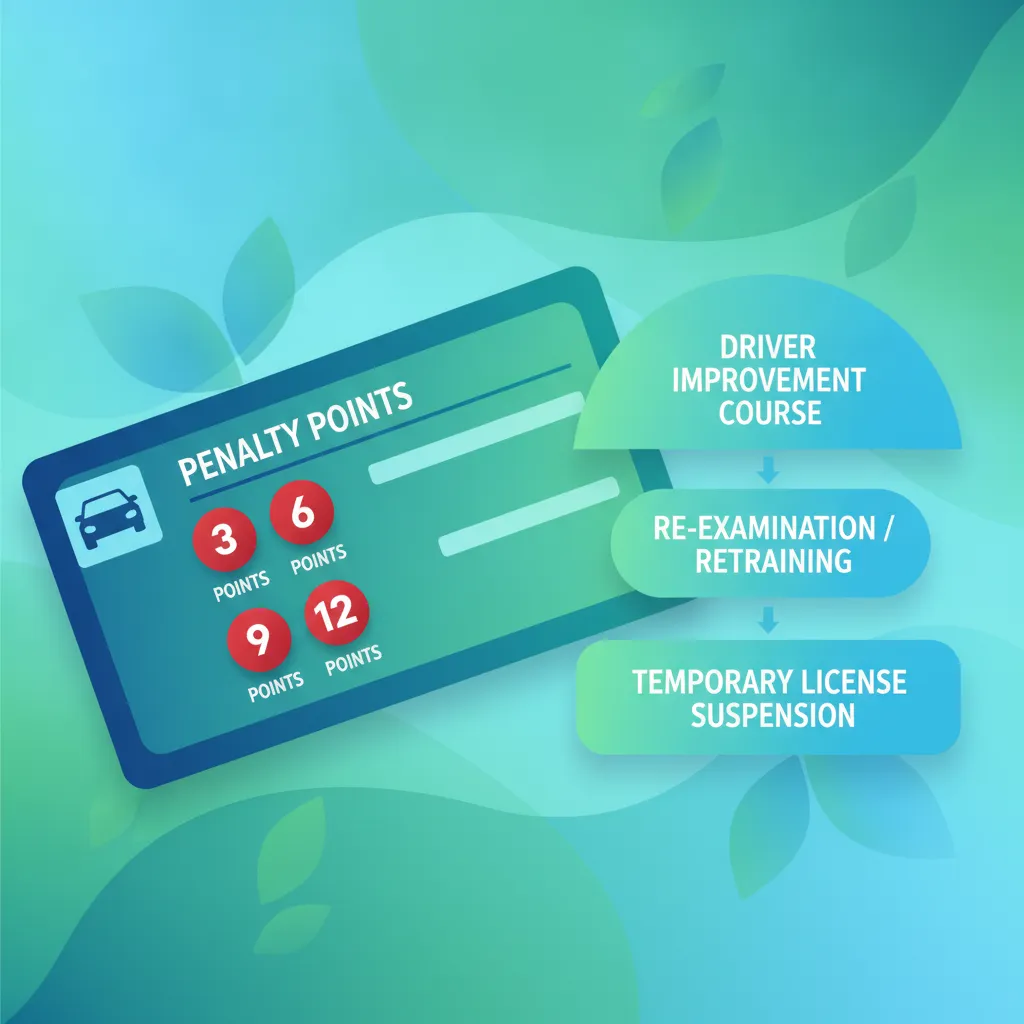
This lesson offers a clear explanation of the Austrian system of penalties for traffic offenses, including the demerit points system (Vormerksystem). It details which violations lead to points, the accumulation process, and the consequences at each stage, such as mandatory driver improvement courses and potential license suspension (Fahrverbot). Understanding this system provides a strong incentive for consistent compliance with all traffic regulations.

This lesson provides a comprehensive overview of a driver's legal responsibilities and the potential consequences of failing to adhere to traffic laws. Learners will explore the concept of liability in the event of an accident and the structure of the official penalty catalogue. The material covers the impact of fines, demerit points, and potential driving bans (Fahrverbot) on one's license, as well as the effects on insurance premiums.
This lesson provides an overview of the legal framework governing heavy vehicle drivers in Austria. It details the potential penalties for violations, including fines, penalty points, and the risk of licence suspension. A clear understanding of these consequences reinforces the importance of compliant and responsible driving.
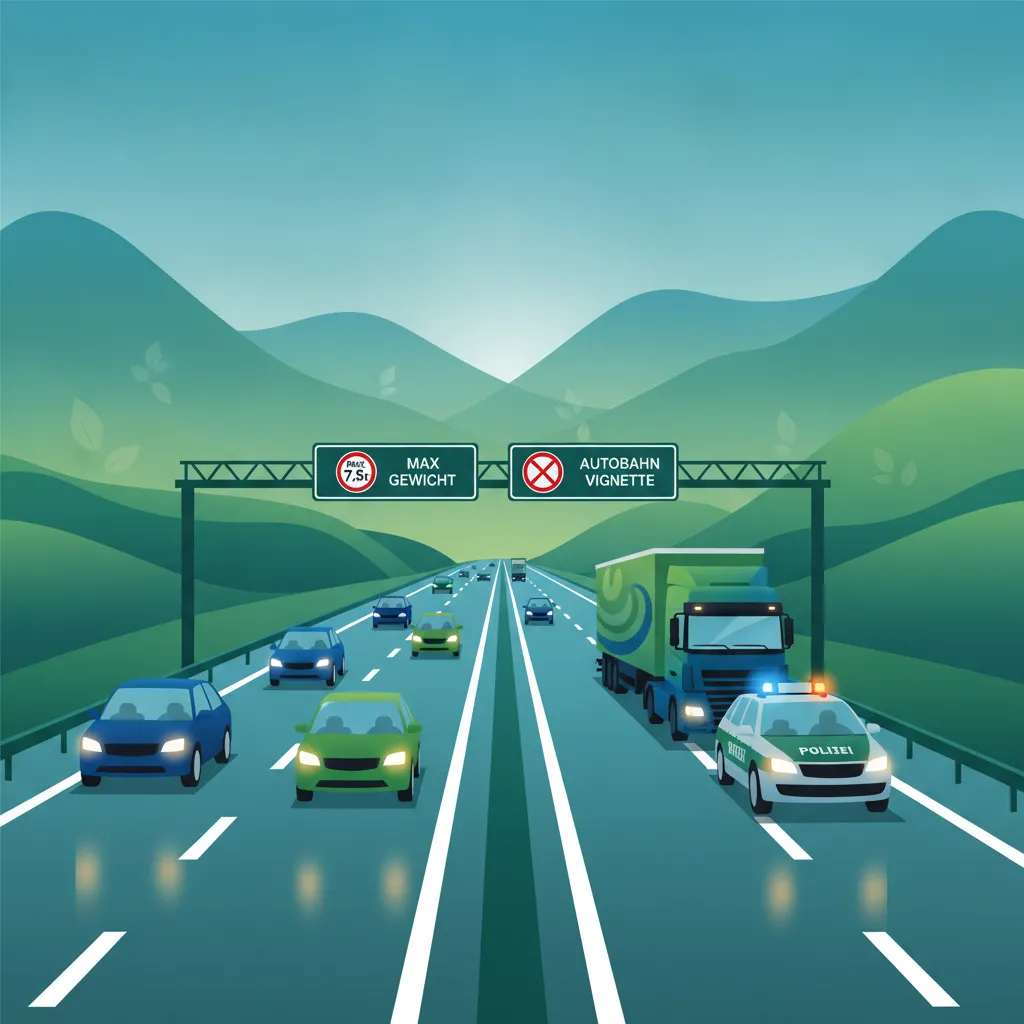
This lesson explains the system of penalties and enforcement for heavy vehicle operations in Austria. It covers the fines and penalty points associated with common traffic violations, such as overloading or insecure loads. Learners will understand the role of authorities in conducting roadside checks and inspections to ensure regulatory compliance.
This lesson details the essential legal and administrative requirements for operating an AM vehicle in Austria. It covers the processes for vehicle registration, the obligation for licence plates, and the necessity of third-party liability insurance. Furthermore, it explains the importance of regular technical inspections to ensure the vehicle remains roadworthy and compliant with national standards.

This lesson details the legal ramifications of operating an overloaded heavy vehicle in Austria, which include significant fines and penalty points. It also emphasizes the severe safety risks, such as compromised braking performance and increased mechanical stress on the vehicle. Understanding these consequences reinforces the importance of strict adherence to weight limits.

This lesson explains the critical Mehrphasenausbildung (multi-phase training) process that all new drivers in Austria must complete after obtaining their license. It focuses on the obligations during the probationary period, including the demerit points system and the consequences of traffic violations like a Fahrverbot (driving ban). The content details the mandatory driver improvement courses designed to enhance risk awareness and promote responsible driving habits.

This lesson outlines the legal speed limits for Category AM vehicles in Austria, covering urban, residential, and rural areas. It explains how to identify different speed zones through signage and the importance of adjusting speed based on traffic, weather, and road conditions. Adherence to these limits is a fundamental aspect of both legal compliance and safety.
Learn about the exact penalties associated with common traffic violations for AM licence holders in Austria, including speeding, drink-driving, and distracted riding. Detailed guidance on StVO enforcement.
This lesson offers a clear explanation of the Austrian system of penalties for traffic offenses, including the demerit points system (Vormerksystem). It details which violations lead to points, the accumulation process, and the consequences at each stage, such as mandatory driver improvement courses and potential license suspension (Fahrverbot). Understanding this system provides a strong incentive for consistent compliance with all traffic regulations.
This lesson provides an overview of the legal framework for traffic enforcement in Austria. It explains the structure of fines for common offenses, the demerit point system that can lead to licence suspension, and the more severe consequences for major violations. Understanding these penalties reinforces the importance of consistent adherence to all traffic laws.
This lesson explains the system of penalties and enforcement for heavy vehicle operations in Austria. It covers the fines and penalty points associated with common traffic violations, such as overloading or insecure loads. Learners will understand the role of authorities in conducting roadside checks and inspections to ensure regulatory compliance.
This lesson provides an overview of the legal framework governing heavy vehicle drivers in Austria. It details the potential penalties for violations, including fines, penalty points, and the risk of licence suspension. A clear understanding of these consequences reinforces the importance of compliant and responsible driving.
This lesson provides a comprehensive overview of a driver's legal responsibilities and the potential consequences of failing to adhere to traffic laws. Learners will explore the concept of liability in the event of an accident and the structure of the official penalty catalogue. The material covers the impact of fines, demerit points, and potential driving bans (Fahrverbot) on one's license, as well as the effects on insurance premiums.
This lesson outlines the legal speed limits for Category AM vehicles in Austria, covering urban, residential, and rural areas. It explains how to identify different speed zones through signage and the importance of adjusting speed based on traffic, weather, and road conditions. Adherence to these limits is a fundamental aspect of both legal compliance and safety.

This lesson explains how fatigue, alcohol, and drugs dangerously impair a rider's judgment, coordination, and reaction time. It specifies the legal blood alcohol concentration (BAC) limit for vehicle operators in Austria and describes the severe penalties for driving under the influence (DUI). The importance of being well-rested and completely sober before every ride is strongly emphasized.
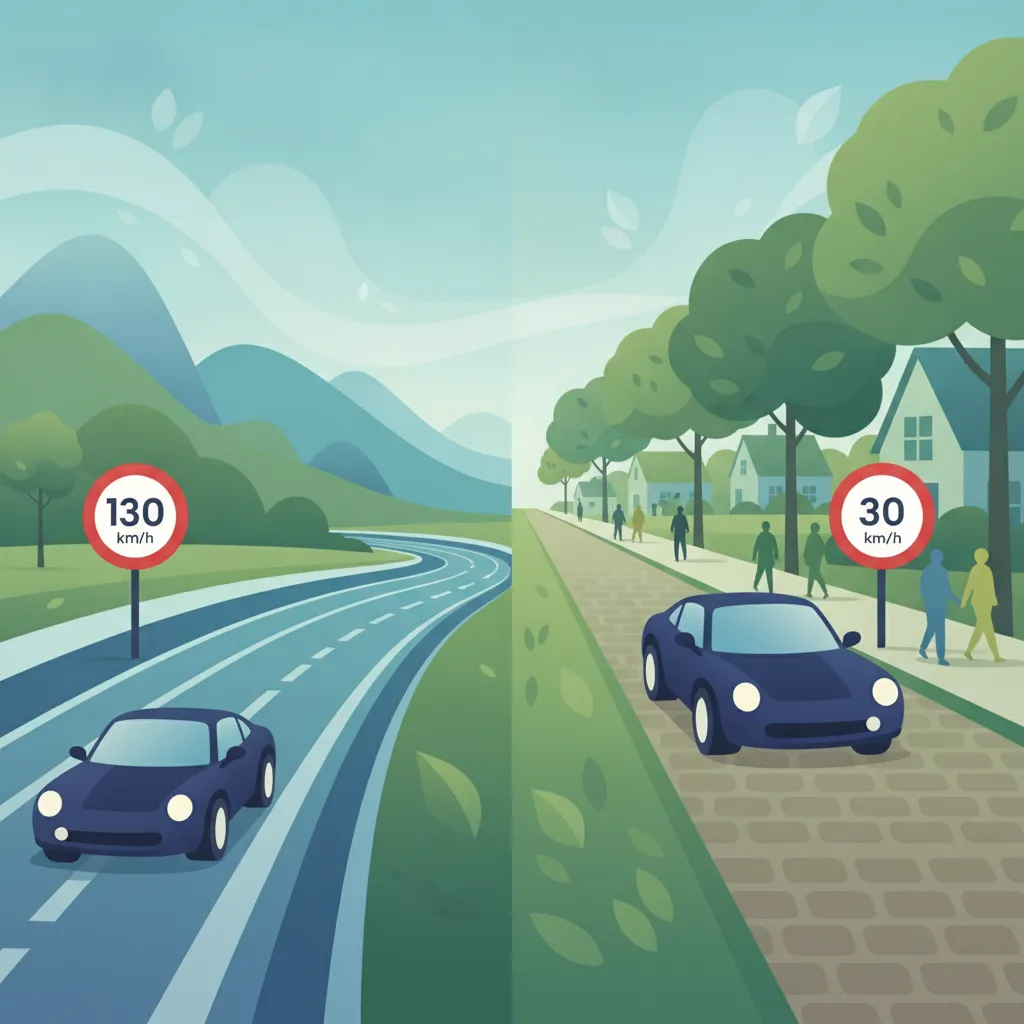
This lesson details the legally prescribed speed limits across Austria's road network, including the specific limits for urban areas (Ortsgebiet), rural roads (Landstraßen), motorways (Autobahnen), and expressways (Schnellstraßen). Learners will understand how to interpret speed limit signs, including those with supplementary conditions. Adherence to these legal requirements is a fundamental aspect of road safety and compliance with the Austrian road traffic act (StVO).

This lesson delves into the specific Austrian laws and regulations that professional passenger drivers must adhere to. It provides an overview of rules concerning driving and rest times, the use of the digital tachograph, and the essential documents that must be carried at all times. Understanding these legal obligations is crucial for compliance and avoiding penalties during roadside checks.
This lesson explains the critical Mehrphasenausbildung (multi-phase training) process that all new drivers in Austria must complete after obtaining their license. It focuses on the obligations during the probationary period, including the demerit points system and the consequences of traffic violations like a Fahrverbot (driving ban). The content details the mandatory driver improvement courses designed to enhance risk awareness and promote responsible driving habits.
Find clear answers to common questions learners have about Legal Consequences of Traffic Violations. Learn how the lesson is structured, which driving theory objectives it supports, and how it fits into the overall learning path of units and curriculum progression in Austria. These explanations help you understand key concepts, lesson flow, and exam focused study goals.
Accumulating penalty points serves as a formal record of your traffic offenses. If you reach a certain threshold within your probationary period, it can lead to mandatory follow-up training or, in severe cases, the suspension or revocation of your license.
Yes. Violations committed during your time with an AM license are often recorded in your central driving file. Serious offenses can complicate or delay your ability to obtain higher license categories in the future.
No. Fines vary significantly based on the severity of the offense. Minor administrative errors incur lower fines, whereas dangerous maneuvers or speeding pose higher financial penalties and can trigger stricter legal sanctions.
In extreme cases, such as repeated severe violations or operating a vehicle that has been illegally modified to exceed speed limits, authorities have the power to impound or confiscate the vehicle to prevent further danger to road users.
Refine your study plan by searching for specific Austrian driving theory practice sets. Pinpoint questions related to particular road rules, signs, or challenge levels, and begin practicing immediately to reinforce your knowledge and excel in your official exam with confidence. Get started with focused revision today.