
This lesson details the legal consequences of traffic violations within the Austrian system, specifically for Category B drivers. You will explore how the demerit points system works, the implications of repeat offences, and the steps involved in mandatory driver improvement measures. Understanding these regulations is vital for maintaining your licence and ensuring long-term safe driving habits.
Lesson content overview
Driving in Austria, like anywhere else, comes with significant responsibilities. Adhering to traffic laws is crucial not only for safety but also to avoid legal consequences. Austria employs a comprehensive system of penalties for traffic offenses, which includes monetary fines, a structured demerit points system known as the Vormerksystem, and mandatory driver improvement measures. Understanding this system is fundamental for every driver, especially those pursuing the Austrian Category B driver's license. It provides a clear incentive for consistent compliance with all traffic regulations, ensuring safer roads for everyone.
This lesson will provide a detailed explanation of how traffic offenses are classified, how demerit points accumulate, and what consequences drivers face at different stages, including mandatory educational courses and potential license suspension (Fahrverbot).
Austria's traffic penalty system is designed to promote road safety by directly linking behavioral consequences to the severity and frequency of traffic violations. It aims not only to punish infractions but also to educate drivers and modify unsafe behaviors. The system categorizes offenses and applies penalties accordingly, ranging from administrative fines for minor infractions to the accumulation of demerit points for more serious or repeated violations.
At its core, the system seeks to identify and correct high-risk driving behaviors before they lead to severe accidents. For new drivers, particularly those undergoing the Mehrphasenausbildung (multi-phase training), understanding these consequences is integrated into their learning process, reinforcing the importance of safe and responsible driving from the outset.
The Vormerksystem is Austria's formal demerit points system, a mechanism designed to record penalty points for specific traffic offenses on a driver's record. Unlike systems that lead to automatic license revocation after a certain number of points, the Austrian Vormerksystem focuses on progressive consequences, emphasizing driver improvement and education. Points accumulated remain on a driver's record for a statutory period, typically five years.
The primary purpose of the Vormerksystem is to encourage safe driving habits by introducing escalating actions as a driver accrues points. This graduated response ensures that drivers are given opportunities to correct their behavior through mandatory improvement courses before facing the more severe consequence of license suspension.
When a driver commits a point-attracting traffic offense, points are formally assigned to their driver's record. This initial assessment occurs at the time the offense is registered by the authorities. Each point represents a record of a specific severe or repeated violation.
Points typically remain active on a driver's record for a statutory period of five years from the date of the offense. However, the system also incorporates mechanisms for point reduction. Successful completion of a mandatory driver improvement course, for instance, can lead to a reduction in the current point total by one to two points, depending on the specific circumstances and the type of course. This reset mechanism incentivizes drivers to actively participate in corrective education.
The Austrian Vormerksystem operates with specific point thresholds that trigger mandatory actions. These thresholds provide a graduated response, ensuring that increasingly unsafe behavior leads to more significant interventions. The goal is to correct driving habits before they become a persistent danger on the road.
The point thresholds described apply generally. Novice drivers, particularly those under 30 within their first three years of holding a Category B license, often face stricter thresholds, as detailed later in this lesson.
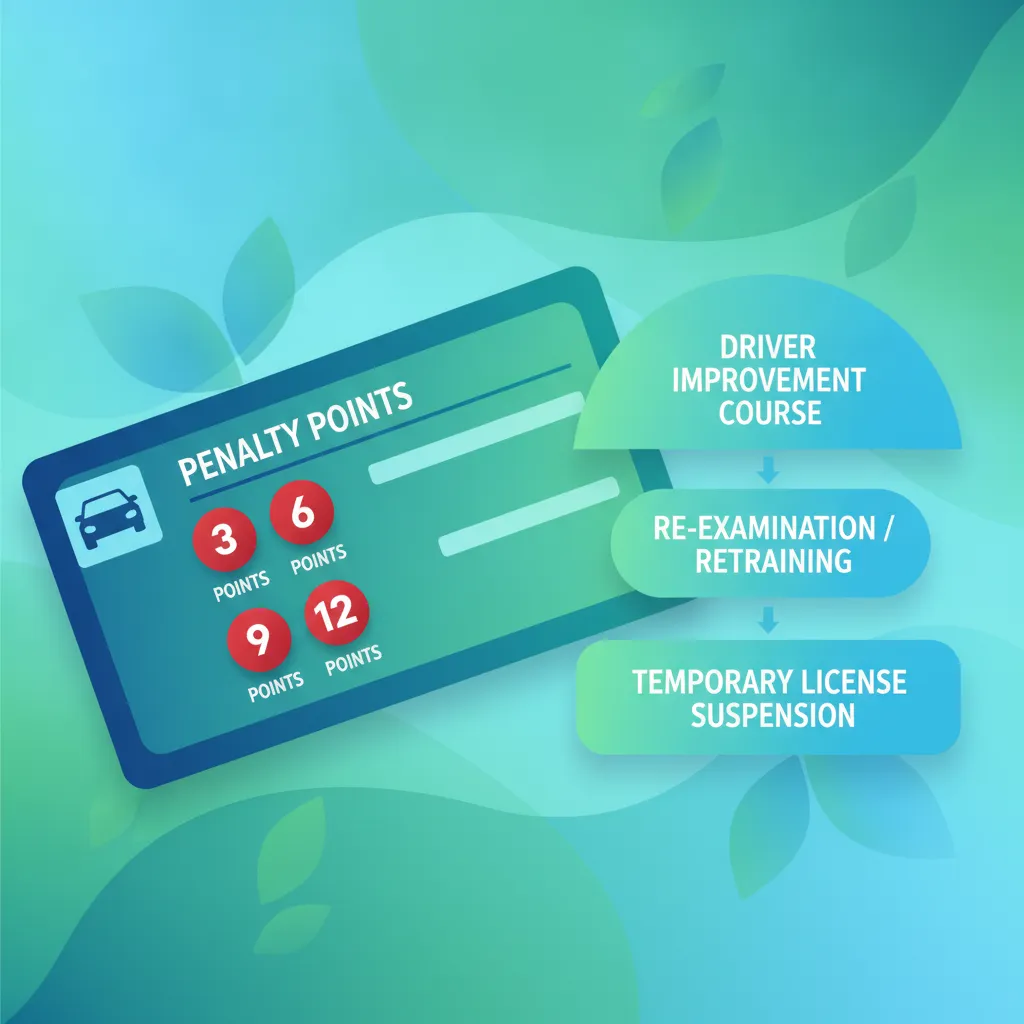
Upon accumulating 2 demerit points, a driver is required to attend a mandatory driver improvement course, known as a Fahrverbesserungsmaßnahme. This is the first step in the system's corrective approach. The purpose of this course is to provide educational intervention, helping drivers understand the risks associated with their actions and guiding them towards adopting safer driving practices.
Failure to complete this mandatory course within the stipulated timeframe can lead to further penalties, including potential license suspension. Successful completion is recorded and typically results in a reduction of points on the driver's record.
If a driver accrues a total of 4 demerit points (after having already completed or been required to complete the first course), a second driver improvement course becomes mandatory. This signifies a pattern of unsafe behavior that requires further intervention. The second course reinforces the lessons from the first and delves deeper into behavioral modification.
Ignoring the requirement for this second course can have severe consequences, often leading directly to a Fahrverbot (license suspension). The system is designed to escalate interventions to protect road users from persistently high-risk drivers.
Accumulating a total of 6 demerit points typically results in an immediate Fahrverbot, or temporary license suspension. This is the most serious consequence within the Vormerksystem and acts as a strong deterrent. The suspension period usually ranges from one to three months, depending on the specifics of the violations and the driver's history.
The imposition of a Fahrverbot signifies that the driver's behavior has reached a level deemed unacceptable, requiring their temporary removal from the road to prevent further risks. Reinstatement of the license often involves additional requirements beyond the suspension period, such as medical fitness tests or re-examinations.
Violation with Points: A traffic offense that carries demerit points is committed.
Initial Fine & Point Assignment: The driver receives an administrative fine and points are recorded on their driving record.
2 Points Reached: The driver is notified and mandated to complete a Fahrverbesserungsmaßnahme (driver improvement course).
Course Completion: Driver attends and successfully completes the course, potentially reducing points.
4 Points Reached (if applicable): If points accrue again, a second Fahrverbesserungsmaßnahme is mandated.
6 Points Reached (if applicable): The driver's license is suspended (Fahrverbot).
License Reinstatement: After the Fahrverbot period and fulfilling any additional conditions, the license can be reinstated.
The Fahrverbesserungsmaßnahme is a cornerstone of the Austrian demerit points system. These mandatory educational courses are specifically designed to address and correct unsafe driving behaviors. They are not merely punitive but aim to foster a deeper understanding of road safety and legal responsibilities.
The primary purpose of these courses is to help drivers:
Typically, a Fahrverbesserungsmaßnahme involves a structured program, often lasting between 4 to 6 hours. These sessions combine theoretical instruction with practical scenario analysis, sometimes including discussions of real-life incidents. The format encourages active participation and self-reflection.
Upon successful completion of a driver improvement course, the completion is officially recorded. This certification is crucial as it can lead to a reduction in the driver's current point total. The specific reduction, usually 1 to 2 points, serves as an incentive for compliance and a reward for engaging in corrective education. It demonstrates the system's focus on rehabilitation and proactive safety.
A Fahrverbot represents a temporary but significant consequence for drivers who accumulate too many demerit points or commit very serious individual offenses. It is the temporary revocation of driving privileges for a stipulated period, acting as both a deterrent and a measure to remove high-risk drivers from the road.
When a Fahrverbot is imposed, the driver is legally required to surrender their driver's license to the authorities. During the entire stipulated period, the individual is prohibited from driving any motor vehicle for which their license was suspended. The duration of a Fahrverbot typically ranges from one to three months, depending on the severity and nature of the underlying offenses.
Driving during a Fahrverbot is a serious criminal offense, leading to much harsher penalties, including extended suspension periods, substantial fines, and even imprisonment.
Reinstating a driver's license after a Fahrverbot often involves several requirements beyond simply waiting for the suspension period to end. These can include:
The stringent reinstatement requirements emphasize the gravity of a Fahrverbot and aim to ensure that drivers returning to the road are fully capable and committed to safe driving.
Austria's system acknowledges that novice drivers, especially those under a certain age and within their initial driving years, represent a higher risk category. Consequently, specific rules and enhanced monitoring apply to these drivers, particularly those undergoing the Mehrphasenausbildung (multi-phase training).
For drivers who are typically under 30 years old and within their first three years of holding a Category B license, the thresholds for triggering interventions within the Vormerksystem are stricter. For example, a Fahrverbot may be triggered with fewer points compared to experienced drivers. This accelerated progression of consequences is designed to encourage early development of safe driving habits and to swiftly address any risky behaviors.
The Mehrphasenausbildung itself is structured to provide progressive learning and assessment. Points received for violations during these initial years can directly affect a novice driver's progression through the training phases. This integration means that unsafe behaviors identified through the Vormerksystem are directly addressed within the ongoing driver training program, offering tailored interventions to correct deficiencies.
Novice drivers must be particularly diligent in adhering to traffic laws, as the consequences of violations are more immediate and impactful on their journey to becoming fully licensed, experienced drivers.
The Austrian system of traffic penalties and demerit points is firmly rooted in several key legal texts and regulations. These documents define offenses, specify penalties, and outline the procedures for enforcement and driver improvement.
Understanding that these legal frameworks underpin the entire system helps drivers appreciate the gravity of traffic violations and the structured approach taken by Austrian authorities to ensure road safety.
Many traffic offenses can lead to demerit points or substantial fines. Being aware of these common violations is crucial for prevention.
The consequences of traffic violations can also be influenced by surrounding conditions:
The Austrian penalty system is fundamentally built on cause-and-effect relationships. Every rule and its associated penalty serves a specific purpose in fostering road safety and compliance.
By understanding these cause-and-effect relationships, drivers are empowered to make informed decisions that prioritize safety and legal compliance, thereby avoiding the escalating consequences of the Vormerksystem.
Familiarizing yourself with key terms related to Austrian traffic penalties is crucial for understanding your responsibilities and the system's operations.
To solidify your understanding, consider these practical scenarios and the reasoning behind the system's responses.
A driver is caught driving at 130 km/h on an Austrian motorway with a posted speed limit of 100 km/h.
A novice driver, under 30 and in their second year of driving, runs a red light at a busy intersection. This is their first point-attracting offense.
A driver overtakes another vehicle on a rural road despite a solid white line indicating a no-overtaking zone. They maintain the speed limit but cross the solid line.
An experienced driver has accumulated 3 demerit points from various minor speeding offenses over a year and is now facing a mandatory Fahrverbesserungsmaßnahme.
The Austrian system of penalties, the Vormerksystem, and driver improvement measures is a comprehensive and structured approach to road safety. It records demerit points for specific traffic offenses, with these points triggering mandatory educational interventions or, in severe cases, license suspension.
Understanding these penalties and the points system is not just about avoiding legal repercussions; it's about actively contributing to road safety and maintaining your privilege to drive. Proactive compliance with all traffic regulations is the best strategy for a clean driving record and safe journeys.
The Austrian Vormerksystem is a graduated demerit points framework designed to identify, educate, and correct unsafe driving behaviors before they result in license suspension. Points remain on a driver's record for five years and trigger escalating mandatory interventions at specific thresholds: 2 points require a Fahrverbesserungsmaßnahme, 4 points a second course, and 6 points lead to Fahrverbot. Novice drivers within their first three years face stricter thresholds due to their higher risk profile. The system is enforced under the StVO and FVG, with severe violations potentially addressed under the StGB, and provides mechanisms for point reduction through successful course completion.
A short set of high-value points that capture the most important learning from this lesson.
The Vormerksystem is Austria's demerit points system where drivers accrue penalty points for specific traffic infractions, with points remaining on record for five years.
Accumulating 2 points triggers a mandatory Fahrverbesserungsmaßnahme (driver improvement course), 4 points triggers a second course, and 6 points results in Fahrverbot (license suspension).
Novice drivers under 30 in their first three years of holding a Category B license face stricter point thresholds and more immediate consequences for violations.
Successful completion of a mandatory driver improvement course can reduce a driver's current point total by 1 to 2 points, providing an incentive for corrective education.
The entire system is designed to progressively correct unsafe driving behavior through education before reaching the severe consequence of license suspension.
Explore all units and lessons included in this driving theory course.
Points thresholds escalate: 2 points → first mandatory course, 4 points → second course, 6 points → Fahrverbot (typically 1-3 months suspension).
Novice drivers are subject to reduced/threshold numbers of points before interventions are triggered compared to experienced drivers.
A Fahrverbot requires surrendering your license to authorities; driving during suspension is a criminal offense with extended penalties.
The statutory period for points remaining active is five years from the date of the offense.
Common point-attracting violations include running red lights (2 points), DUI (2+ points), illegal overtaking (2 points), and significant speeding.
Assuming points automatically expire without realizing they remain active for five years and affect subsequent course requirements.
Believing that completing a driver improvement course eliminates all points rather than reducing the current total by 1-2 points.
Confusing administrative fines (which alone do not add points) with demerit point violations that appear on the driving record.
Underestimating the stricter thresholds for novice drivers, who can face Fahrverbot with fewer accumulated points than experienced drivers.
Thinking that Fahrverbot ends simply by waiting, when reinstatement often requires additional conditions like medical fitness tests or re-examinations.
Lesson content overview
A short set of high-value points that capture the most important learning from this lesson.
The Vormerksystem is Austria's demerit points system where drivers accrue penalty points for specific traffic infractions, with points remaining on record for five years.
Accumulating 2 points triggers a mandatory Fahrverbesserungsmaßnahme (driver improvement course), 4 points triggers a second course, and 6 points results in Fahrverbot (license suspension).
Novice drivers under 30 in their first three years of holding a Category B license face stricter point thresholds and more immediate consequences for violations.
Successful completion of a mandatory driver improvement course can reduce a driver's current point total by 1 to 2 points, providing an incentive for corrective education.
The entire system is designed to progressively correct unsafe driving behavior through education before reaching the severe consequence of license suspension.
Explore all units and lessons included in this driving theory course.
Points thresholds escalate: 2 points → first mandatory course, 4 points → second course, 6 points → Fahrverbot (typically 1-3 months suspension).
Novice drivers are subject to reduced/threshold numbers of points before interventions are triggered compared to experienced drivers.
A Fahrverbot requires surrendering your license to authorities; driving during suspension is a criminal offense with extended penalties.
The statutory period for points remaining active is five years from the date of the offense.
Common point-attracting violations include running red lights (2 points), DUI (2+ points), illegal overtaking (2 points), and significant speeding.
Assuming points automatically expire without realizing they remain active for five years and affect subsequent course requirements.
Believing that completing a driver improvement course eliminates all points rather than reducing the current total by 1-2 points.
Confusing administrative fines (which alone do not add points) with demerit point violations that appear on the driving record.
Underestimating the stricter thresholds for novice drivers, who can face Fahrverbot with fewer accumulated points than experienced drivers.
Thinking that Fahrverbot ends simply by waiting, when reinstatement often requires additional conditions like medical fitness tests or re-examinations.
Explore search topics learners often look for when studying Penalties, Points System, and Driver Improvement Measures. These topics reflect common questions about road rules, driving situations, safety guidance, and lesson level theory preparation for learners in Austria.
Browse additional driving theory lessons that cover connected traffic rules, road signs, and common driving situations related to this topic. Improve your understanding of how different rules interact across everyday traffic scenarios.
Understand the Austrian system of traffic penalties, administrative fines, and consequences like license suspension (Fahrverbot). Learn about the legal framework and specific violations that lead to serious repercussions for drivers in Austria.
This lesson provides a clear overview of the legal penalties for traffic violations in Austria. It details the system of fines, demerit points, and the conditions that can lead to license suspension or revocation. Understanding these consequences reinforces the importance of lawful and responsible riding.

This lesson provides an overview of the legal framework for traffic enforcement in Austria. It explains the structure of fines for common offenses, the demerit point system that can lead to licence suspension, and the more severe consequences for major violations. Understanding these penalties reinforces the importance of consistent adherence to all traffic laws.

This lesson provides a comprehensive overview of a driver's legal responsibilities and the potential consequences of failing to adhere to traffic laws. Learners will explore the concept of liability in the event of an accident and the structure of the official penalty catalogue. The material covers the impact of fines, demerit points, and potential driving bans (Fahrverbot) on one's license, as well as the effects on insurance premiums.
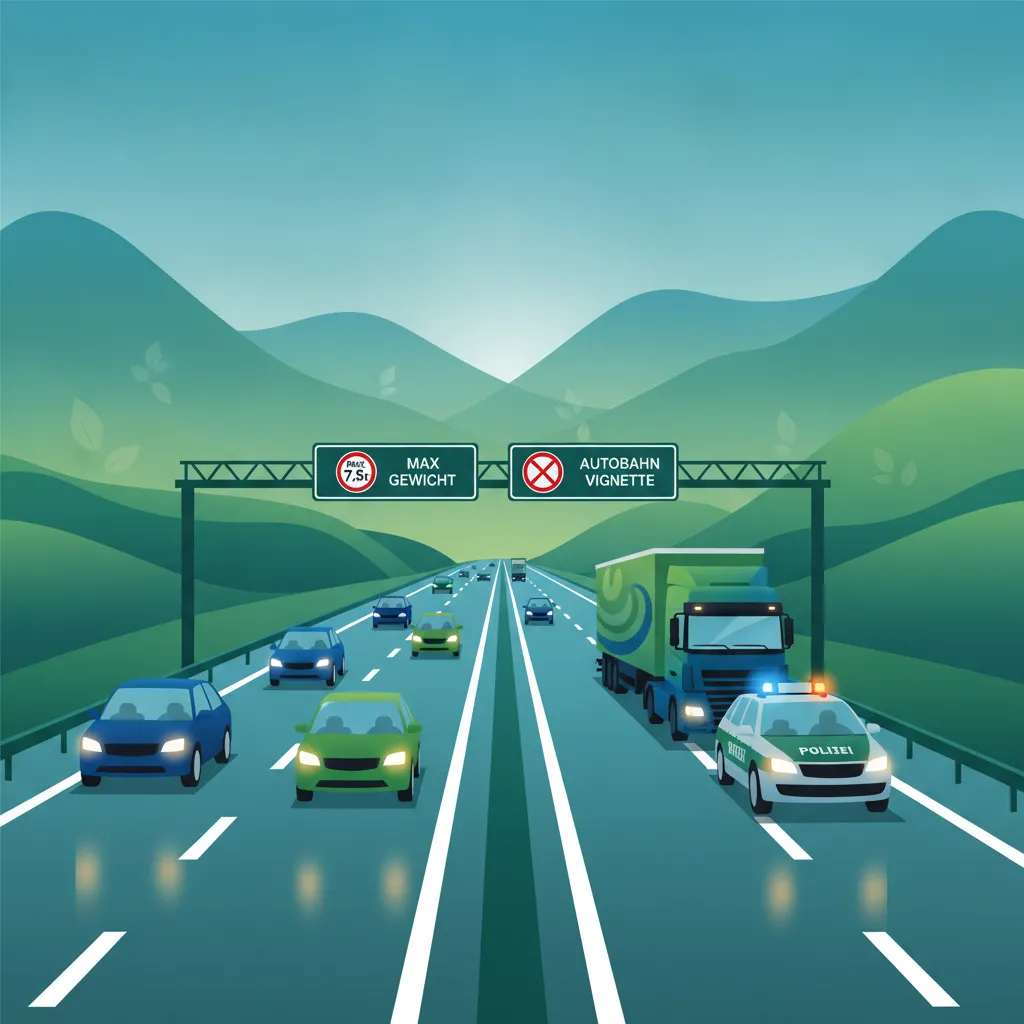
This lesson explains the system of penalties and enforcement for heavy vehicle operations in Austria. It covers the fines and penalty points associated with common traffic violations, such as overloading or insecure loads. Learners will understand the role of authorities in conducting roadside checks and inspections to ensure regulatory compliance.
This lesson provides an overview of the legal framework governing heavy vehicle drivers in Austria. It details the potential penalties for violations, including fines, penalty points, and the risk of licence suspension. A clear understanding of these consequences reinforces the importance of compliant and responsible driving.

This lesson explains the critical Mehrphasenausbildung (multi-phase training) process that all new drivers in Austria must complete after obtaining their license. It focuses on the obligations during the probationary period, including the demerit points system and the consequences of traffic violations like a Fahrverbot (driving ban). The content details the mandatory driver improvement courses designed to enhance risk awareness and promote responsible driving habits.
This lesson details the legally prescribed speed limits across Austria's road network, including the specific limits for urban areas (Ortsgebiet), rural roads (Landstraßen), motorways (Autobahnen), and expressways (Schnellstraßen). Learners will understand how to interpret speed limit signs, including those with supplementary conditions. Adherence to these legal requirements is a fundamental aspect of road safety and compliance with the Austrian road traffic act (StVO).

This lesson explains how fatigue, alcohol, and drugs dangerously impair a rider's judgment, coordination, and reaction time. It specifies the legal blood alcohol concentration (BAC) limit for vehicle operators in Austria and describes the severe penalties for driving under the influence (DUI). The importance of being well-rested and completely sober before every ride is strongly emphasized.
Learn about the stricter demerit points system (Vormerksystem) and mandatory driver improvement measures (Fahrverbesserungsmaßnahme) specifically applicable to novice drivers in Austria. Understand reduced thresholds and consequences.
This lesson explains the critical Mehrphasenausbildung (multi-phase training) process that all new drivers in Austria must complete after obtaining their license. It focuses on the obligations during the probationary period, including the demerit points system and the consequences of traffic violations like a Fahrverbot (driving ban). The content details the mandatory driver improvement courses designed to enhance risk awareness and promote responsible driving habits.

This lesson provides a detailed breakdown of the Mehrphasenausbildung (multi-phase training) program, a legal requirement for all new license holders in Austria. It explains the structure of the probationary period and the mandatory components, such as a perfection drive and a driver safety training course. Learners will understand the legal implications of failing to complete these stages and their purpose in reinforcing safe driving skills after the initial test.
This lesson provides a clear overview of the legal penalties for traffic violations in Austria. It details the system of fines, demerit points, and the conditions that can lead to license suspension or revocation. Understanding these consequences reinforces the importance of lawful and responsible riding.
This lesson provides an overview of the legal framework for traffic enforcement in Austria. It explains the structure of fines for common offenses, the demerit point system that can lead to licence suspension, and the more severe consequences for major violations. Understanding these penalties reinforces the importance of consistent adherence to all traffic laws.

This lesson provides essential knowledge for using Austria's high-speed road network. It covers the correct procedure for entering via acceleration lanes, maintaining strict lane discipline (keeping right, passing left), and understanding the digital or physical Vignette (toll sticker) requirement. The formation of the 'Rettungsgasse' (emergency corridor) during traffic jams is also a key topic.
This lesson details the legally prescribed speed limits across Austria's road network, including the specific limits for urban areas (Ortsgebiet), rural roads (Landstraßen), motorways (Autobahnen), and expressways (Schnellstraßen). Learners will understand how to interpret speed limit signs, including those with supplementary conditions. Adherence to these legal requirements is a fundamental aspect of road safety and compliance with the Austrian road traffic act (StVO).
This lesson provides a comprehensive overview of a driver's legal responsibilities and the potential consequences of failing to adhere to traffic laws. Learners will explore the concept of liability in the event of an accident and the structure of the official penalty catalogue. The material covers the impact of fines, demerit points, and potential driving bans (Fahrverbot) on one's license, as well as the effects on insurance premiums.

This lesson provides a comprehensive explanation of Austria's right-of-way laws, which are fundamental to intersection safety. It covers the meaning of different priority signs and clarifies the 'Rechts vor Links' (priority to the right) rule that applies at unmarked junctions. A clear understanding of these rules is essential to prevent conflicts and collisions in urban and rural settings.

This lesson explains the fundamental concepts of priority that govern traffic at Austrian junctions. It differentiates between having priority ('Vorfahrt') and the duty to yield ('Nachrang'), detailing the signs that establish these rules. Correct application of these principles is critical for preventing collisions at intersections and roundabouts.
This lesson explains the system of penalties and enforcement for heavy vehicle operations in Austria. It covers the fines and penalty points associated with common traffic violations, such as overloading or insecure loads. Learners will understand the role of authorities in conducting roadside checks and inspections to ensure regulatory compliance.
Find clear answers to common questions learners have about Penalties, Points System, and Driver Improvement Measures. Learn how the lesson is structured, which driving theory objectives it supports, and how it fits into the overall learning path of units and curriculum progression in Austria. These explanations help you understand key concepts, lesson flow, and exam focused study goals.
The Vormerksystem is an administrative register in Austria for specific, serious traffic offences. If a driver commits such an offence, they receive a 'Vormerkung' (entry/point). Accumulating multiple entries leads to mandatory follow-up measures.
No, a single point does not lead to immediate suspension. However, it signifies that you have committed a serious breach. Multiple points within a specific timeframe trigger mandatory driver improvement courses, and failing to comply or continuing to commit offences can lead to a licence suspension.
These courses are designed to address the specific behavioural issues that led to the traffic violations. They focus on re-educating the driver on traffic safety, risk perception, and legal responsibility to prevent future re-offences.
Yes, as a probationary driver in the Mehrphasenausbildung phase, you are subject to stricter oversight. Violations that result in points may require additional, more intensive training stages and could extend your probationary period.
Refine your study plan by searching for specific Austrian driving theory practice sets. Pinpoint questions related to particular road rules, signs, or challenge levels, and begin practicing immediately to reinforce your knowledge and excel in your official exam with confidence. Get started with focused revision today.