
This lesson focuses on the mindset of an adaptive rider, teaching you how to constantly scan your environment to manage risks proactively. You will learn how to adjust your speed, lane position, and control inputs in response to varying road surfaces, weather patterns, and traffic density, ensuring you are prepared for both the Austrian motorcycle theory exam and real-world riding.

Lesson content overview
Motorcycling is an inherently dynamic activity, demanding constant attention and flexible skills from the rider. The ability to adapt your riding technique to continuously changing conditions is not merely an advanced skill; it is a fundamental aspect of safe and responsible motorcycling, especially on Austria's diverse roads. This lesson synthesizes various core riding concepts, focusing on cultivating the mindset of an adaptive rider who prioritizes safety and control in every situation.
An adaptive rider maintains a proactive, flexible approach to riding, constantly assessing the environment and adjusting their speed, position, and control inputs. This continuous responsiveness is crucial for mitigating risks and maintaining control across a spectrum of scenarios, from varying road surfaces and weather conditions to different traffic densities. It underpins safe riding, fulfilling the legal duty of care stipulated in Austrian traffic law, particularly StVO § 30, which requires drivers to adapt their speed to prevailing conditions.
Mastery of adaptive riding is essential for navigating the varied terrain and traffic situations encountered in Austria. Whether you are riding through dense urban traffic, tackling challenging alpine passes, or cruising on rural roads, a flexible riding style is your primary tool for managing potential hazards. This approach allows you to anticipate problems and make preemptive adjustments, significantly reducing the necessity for sudden, emergency maneuvers that can lead to loss of control.
Developing an adaptive mindset builds upon foundational skills covered in earlier parts of the Austrian Motorcycle Theory course, such as understanding vehicle controls, mastering braking and steering, and developing strong hazard perception. By integrating these skills, you enhance your ability to maintain safety and control, no matter how complex or unpredictable the riding environment becomes.
Adaptive riding is built on a set of interconnected principles. Each principle contributes to a holistic approach where the rider is always in tune with their surroundings and their motorcycle's capabilities. Understanding and internalizing these principles is vital for developing a consistently safe and controlled riding style.
Continuous scanning is the bedrock of adaptive riding. It involves a systematic and ongoing visual sweep of your surroundings, encompassing your peripheral vision, your forward view, and regular checks of your rear-view mirrors and blind spots. This constant observation allows for early detection of potential hazards, such as potholes, sudden lane changes by other vehicles, or unexpected obstacles on the road.
Practical Meaning: By spotting a patch of fallen leaves on a damp road several metres ahead, you can gently reduce speed before reaching it, rather than reacting suddenly when you're already over it. This proactive approach prevents a potential loss of traction. Neglecting mirror checks or blind spot awareness are common misunderstandings that can have severe consequences, as a quick glance ahead is rarely sufficient. Austrian road safety regulations (StVO § 16) obligate drivers to adapt their speed to prevailing conditions, and anticipatory scanning is a core component of this.
Dynamic speed management means constantly adjusting your speed based on a variety of factors, rather than simply adhering to posted speed limits. This involves real-time changes as conditions evolve, such as reducing speed when visibility drops due to heavy rain, or matching your pace to surrounding traffic density. The goal is always to match your speed to available grip, ensure adequate stopping distance, and maintain clear visibility.
Practical Meaning: When approaching an intersection with poor visibility, or before entering a sharp bend on a slippery surface, you must reduce your speed significantly below the posted limit if conditions demand it. StVO § 30 explicitly obliges drivers to proceed at a speed that prevents danger to others, and lower speeds are mandatory in adverse conditions. A common misunderstanding is assuming that the posted speed limit is always safe, regardless of actual road or weather conditions.
Effective positioning involves strategic placement of your motorcycle within your lane and maintaining a safe distance from other road users. This includes riding in the middle third of your lane to maximize clearance from roadside hazards and oncoming traffic, or adjusting your position before a curve to allow for the smoothest, safest line. It also means staying out of the blind spots of larger vehicles like cars and trucks.
Practical Meaning: If you encounter oncoming traffic during rain, you might shift slightly towards the centre of your lane to increase your distance from the curb and potential standing water, which can increase scrub radius risk. StVO § 13 requires drivers to keep a safe distance, and StVO § 12 mandates staying out of blind spots where possible. Riding too close to the curb or hugging the lane edge, especially in wet conditions, can significantly compromise safety.
Control input modulation refers to the smooth and precise application of all your motorcycle's controls. This means gently applying throttle to avoid wheel spin, progressively increasing brake pressure to maintain stability, and initiating lean with subtle steering inputs rather than abrupt handlebar twists. The aim is to make inputs that are fast and effective without causing sudden weight transfers or loss of traction.
Practical Meaning: When exiting a corner on a wet surface, a smooth, gentle increase in throttle is crucial to prevent the rear wheel from spinning. Conversely, "clash braking"—sudden, hard braking—can easily destabilize the motorcycle, especially on low-traction surfaces. StVO § 31 demands that any movement should be performed with care and in a manner that doesn't endanger others, directly applying to how you operate your controls.
Proactive adaptation is about anticipating changes in conditions and adjusting your riding technique before you actually encounter a hazard. This means recognizing environmental cues, such as a darkening sky signaling impending rain, or a change in road colour indicating a shift from asphalt to gravel. By acting early, you minimize the need for reactive, emergency maneuvers.
Practical Meaning: If you see a road sign warning of potential black ice ahead, you should preemptively reduce your speed and prepare for extremely low grip, rather than waiting until you feel the ice under your tyres. This aligns with StVO § 30 (speed and safety) and indirectly with StVO § 9 (cleanliness of vehicle and equipment, which implies being prepared for conditions). The biggest misunderstanding here is delaying reactions until after a hazard is encountered, rather than anticipating it.
The risk assessment loop is a continuous mental process that occurs throughout your ride. It involves three key steps: identifying potential threats, matching those threats against your motorcycle's capabilities and your own riding skills, and then executing the safest possible maneuver. This constant loop guides real-time decision-making, helping you maintain a safe and controlled ride.
Practical Meaning: If you are considering overtaking a slow-moving vehicle on a wet rural road, your risk assessment loop might conclude that the reduced grip and limited visibility make the maneuver too risky, prompting you to wait for a safer opportunity. StVO § 3 obliges drivers to perform the driving task with the required level of vigilance, directly supporting this continuous assessment. Overconfidence, leading to a neglect of thorough risk assessment, is a common pitfall.
Austrian traffic regulations provide the legal framework for adaptive riding, reinforcing the rider's duty of care and responsibility to ensure safety in all conditions. Several sections of the Straßenverkehrsordnung (StVO) are particularly relevant to adjusting your riding technique.
The principles of adaptive riding come alive when applied to specific environmental and situational contexts. Understanding how to vary your technique for different conditions is key to consistent safety.
Weather significantly impacts tyre grip and visibility, demanding substantial adjustments to your riding.
Each road type presents its own set of challenges, requiring tailored adaptive techniques.
Reduced visibility at night requires a more cautious approach.
Additional weight profoundly impacts motorcycle dynamics.
Special consideration is needed for those less protected on the road.
Many motorcycle accidents stem from a failure to adapt to changing conditions. Recognizing and actively avoiding these common errors is critical for safety.
The relationships between your actions, the motorcycle's behavior, and the environment are governed by physics. Understanding these cause-and-effect relationships empowers you to make informed adaptive decisions.
Let's look at how adaptive riding principles apply in common scenarios:
Urban Riding in Heavy Rain:
Alpine Descent with Unexpected Gravel:
Riding with a Passenger and Luggage on a Rural Road:
Sudden Fog on a Motorway:
Mastering adaptive riding is not about memorizing a list of rules; it's about internalizing a fundamental mindset. As you prepare for your Austrian motorcycle theory test and hit the roads, remember these key principles:
These principles are enshrined in Austrian traffic law (StVO §§ 9, 12, 13, 30, 31, 3), underscoring your legal and ethical responsibility as a rider. By consistently applying these adaptive techniques, you will develop the confidence and competence needed to ride safely and enjoyably across the full spectrum of conditions encountered in Austria.
This lesson establishes the adaptive rider mindset as essential for Austrian motorcycle safety, emphasizing that riders must continuously scan their environment and dynamically adjust speed, position, and control inputs based on real-time conditions. Key principles include proactive adaptation before encountering hazards, maintaining optimal lane positioning to avoid blind spots, and using smooth, graduated control inputs to preserve traction. The lesson directly connects these practical techniques to Austrian traffic law, particularly StVO § 30 on speed adaptation, StVO § 13 on following distance, and StVO § 31 on careful vehicle operation. Practical applications cover adverse weather riding, alpine terrain, urban traffic, and load management, with specific scenarios demonstrating how these principles prevent accidents in real-world Austrian riding conditions.
A short set of high-value points that capture the most important learning from this lesson.
Adaptive riding requires constant 360-degree environmental scanning to detect hazards early and make preemptive adjustments.
Speed must be adjusted to actual conditions (road surface, weather, grip) rather than just posted limits, as required by StVO § 30.
Lane positioning should maximize visibility and clearance while avoiding blind spots of larger vehicles per StVO § 12.
All control inputs (throttle, brakes, steering) must be smooth and graduated to maintain traction stability.
Proactive adaptation means recognizing environmental cues and adjusting technique before encountering hazards, not reacting to them.
Explore all units and lessons included in this driving theory course.
StVO § 30 mandates adjusting speed to prevailing conditions; posted limits are not always safe.
Following distance must be significantly increased in low-traction conditions per StVO § 13.
Avoid remaining in blind spots of trucks and cars; position laterally to ensure visibility in mirrors.
Wet painted road markings (crosswalks, arrows) become extremely slippery when wet.
Additional load (passengers, luggage) increases momentum and braking distance, requiring reduced speed and increased following distance.
Assuming the posted speed limit is always safe regardless of actual road or weather conditions.
Delaying speed reduction until entering a low-traction zone instead of reducing speed proactively based on environmental cues.
Remaining directly beside large vehicles in their blind spots, making lane changes or turns extremely dangerous.
Applying abrupt or aggressive throttle inputs on wet, icy, or gravel surfaces, causing rear-wheel spin and traction loss.
Failing to account for altered handling and braking performance when carrying passengers or luggage.
Lesson content overview
A short set of high-value points that capture the most important learning from this lesson.
Adaptive riding requires constant 360-degree environmental scanning to detect hazards early and make preemptive adjustments.
Speed must be adjusted to actual conditions (road surface, weather, grip) rather than just posted limits, as required by StVO § 30.
Lane positioning should maximize visibility and clearance while avoiding blind spots of larger vehicles per StVO § 12.
All control inputs (throttle, brakes, steering) must be smooth and graduated to maintain traction stability.
Proactive adaptation means recognizing environmental cues and adjusting technique before encountering hazards, not reacting to them.
Explore all units and lessons included in this driving theory course.
StVO § 30 mandates adjusting speed to prevailing conditions; posted limits are not always safe.
Following distance must be significantly increased in low-traction conditions per StVO § 13.
Avoid remaining in blind spots of trucks and cars; position laterally to ensure visibility in mirrors.
Wet painted road markings (crosswalks, arrows) become extremely slippery when wet.
Additional load (passengers, luggage) increases momentum and braking distance, requiring reduced speed and increased following distance.
Assuming the posted speed limit is always safe regardless of actual road or weather conditions.
Delaying speed reduction until entering a low-traction zone instead of reducing speed proactively based on environmental cues.
Remaining directly beside large vehicles in their blind spots, making lane changes or turns extremely dangerous.
Applying abrupt or aggressive throttle inputs on wet, icy, or gravel surfaces, causing rear-wheel spin and traction loss.
Failing to account for altered handling and braking performance when carrying passengers or luggage.
Explore search topics learners often look for when studying Adjusting Riding Technique in Varying Conditions. These topics reflect common questions about road rules, driving situations, safety guidance, and lesson level theory preparation for learners in Austria.
Browse additional driving theory lessons that cover connected traffic rules, road signs, and common driving situations related to this topic. Improve your understanding of how different rules interact across everyday traffic scenarios.
Learn how to adapt your motorcycle riding technique to rain, snow, and ice for Austrian theory. Understand how weather impacts grip, visibility, and control, and master safe adjustments for varying conditions.

This lesson examines how adverse weather directly affects motorcycle safety. It explains how water on the road reduces tyre grip, increasing braking distances and the risk of aquaplaning. Strategies for riding in fog, dealing with reduced visibility from road spray, and identifying potential ice patches are covered to help riders manage weather-related risks.

This lesson focuses on strategies for riding safely in conditions of poor visibility, such as rain, fog, and low sun glare. It explains how to use lights effectively, increase following distances, and moderate speed to maintain control. The content also addresses braking techniques on wet surfaces to prevent skidding and hydroplaning.

This lesson provides guidance on tailoring riding practices to the season. For colder months, it emphasizes the importance of layered clothing and awareness of icy patches, especially in shaded areas. For spring, it highlights hazards like leftover road salt and gravel from winter maintenance, as well as slippery wet leaves, requiring heightened caution.

This lesson equips drivers with the knowledge to handle a range of adverse weather conditions safely. It explains the risks of hydroplaning in heavy rain, reduced visibility in fog, and loss of traction on snow and ice, including the hidden danger of black ice. The content provides practical strategies for speed adaptation, correct use of lighting, and maintaining vehicle control, as well as specific considerations for night driving.

This lesson prepares riders for the specific conditions of Austria's mountain passes. It highlights hazards such as tight hairpin turns, potential for sudden weather changes, rockfall, and variable road surfaces. Awareness of these unique challenges allows riders to anticipate risks and adapt their technique for safe and enjoyable alpine touring.

This lesson provides practical strategies for riding in windy conditions, a common occurrence on open roads and mountain passes. It explains how to anticipate wind gusts, use a relaxed but firm grip on the handlebars, and make subtle steering inputs to counteract side forces. Proper body positioning and lane choice can also significantly reduce the effect of wind and turbulence.

This lesson addresses the challenge of navigating terrain with changing elevation. It covers techniques for maintaining momentum and control on uphill climbs, including proper gear selection and throttle use. For descents, it emphasizes the use of engine braking to control speed and prevent brake overuse, a vital skill for long alpine descents.

This lesson highlights the specific hazards of riding on countryside roads in Austria. It teaches riders to be vigilant for wildlife crossing signs, especially at dawn and dusk, and how to safely approach and overtake slow-moving agricultural machinery. Awareness of potential surface hazards like mud, gravel, or manure from farm access points is also crucial for maintaining traction.

This lesson provides advice for navigating popular scenic routes, which often feature heavy traffic, cyclists, and distracted drivers. It emphasizes maintaining focus on the road despite beautiful scenery and anticipating unpredictable actions from other tourists who may stop suddenly. Adopting a patient and defensive mindset is key to safely enjoying these remarkable roads.

This lesson covers the significant risks associated with riding in winter conditions, particularly snow and ice. It teaches riders how to identify areas where black ice is likely to form and the techniques for gentle acceleration, braking, and steering to maintain traction. The importance of appropriate tires and other winter equipment is also highlighted.
Identify and prevent common riding errors in Austria by understanding real-world scenarios. This lesson focuses on recognizing hazards, analyzing mistakes, and developing proactive adaptive riding strategies for safety.
This lesson highlights the specific hazards of riding on countryside roads in Austria. It teaches riders to be vigilant for wildlife crossing signs, especially at dawn and dusk, and how to safely approach and overtake slow-moving agricultural machinery. Awareness of potential surface hazards like mud, gravel, or manure from farm access points is also crucial for maintaining traction.

This lesson addresses the heightened vulnerability of motorcyclists and outlines essential strategies for personal safety and risk mitigation. It covers the importance of wearing certified protective gear, maintaining situational awareness, and adopting a defensive riding posture. By understanding and anticipating potential hazards in the Austrian traffic environment, riders can actively reduce their risk of accidents.
This lesson provides advice for navigating popular scenic routes, which often feature heavy traffic, cyclists, and distracted drivers. It emphasizes maintaining focus on the road despite beautiful scenery and anticipating unpredictable actions from other tourists who may stop suddenly. Adopting a patient and defensive mindset is key to safely enjoying these remarkable roads.
This lesson prepares riders for the specific conditions of Austria's mountain passes. It highlights hazards such as tight hairpin turns, potential for sudden weather changes, rockfall, and variable road surfaces. Awareness of these unique challenges allows riders to anticipate risks and adapt their technique for safe and enjoyable alpine touring.

This lesson delves into the psychology of riding, exploring how mental states like stress, anger, or overconfidence can lead to poor decisions. It discusses common cognitive errors, such as tunnel vision and risk compensation, that can compromise a rider's safety. Developing self-awareness and maintaining a calm, focused mindset are presented as key defensive skills.

This lesson emphasizes the practical and ethical duties of motorcyclists on Austrian roads, focusing on proactive risk assessment and sound judgment. It teaches learners how to recognize potential hazards, anticipate the actions of other road users, and consistently adhere to traffic regulations. Cultivating this responsible mindset is crucial for personal safety and protecting others in traffic.

This lesson provides essential knowledge for using Austria's high-speed road network. It covers the correct procedure for entering via acceleration lanes, maintaining strict lane discipline (keeping right, passing left), and understanding the digital or physical Vignette (toll sticker) requirement. The formation of the 'Rettungsgasse' (emergency corridor) during traffic jams is also a key topic.
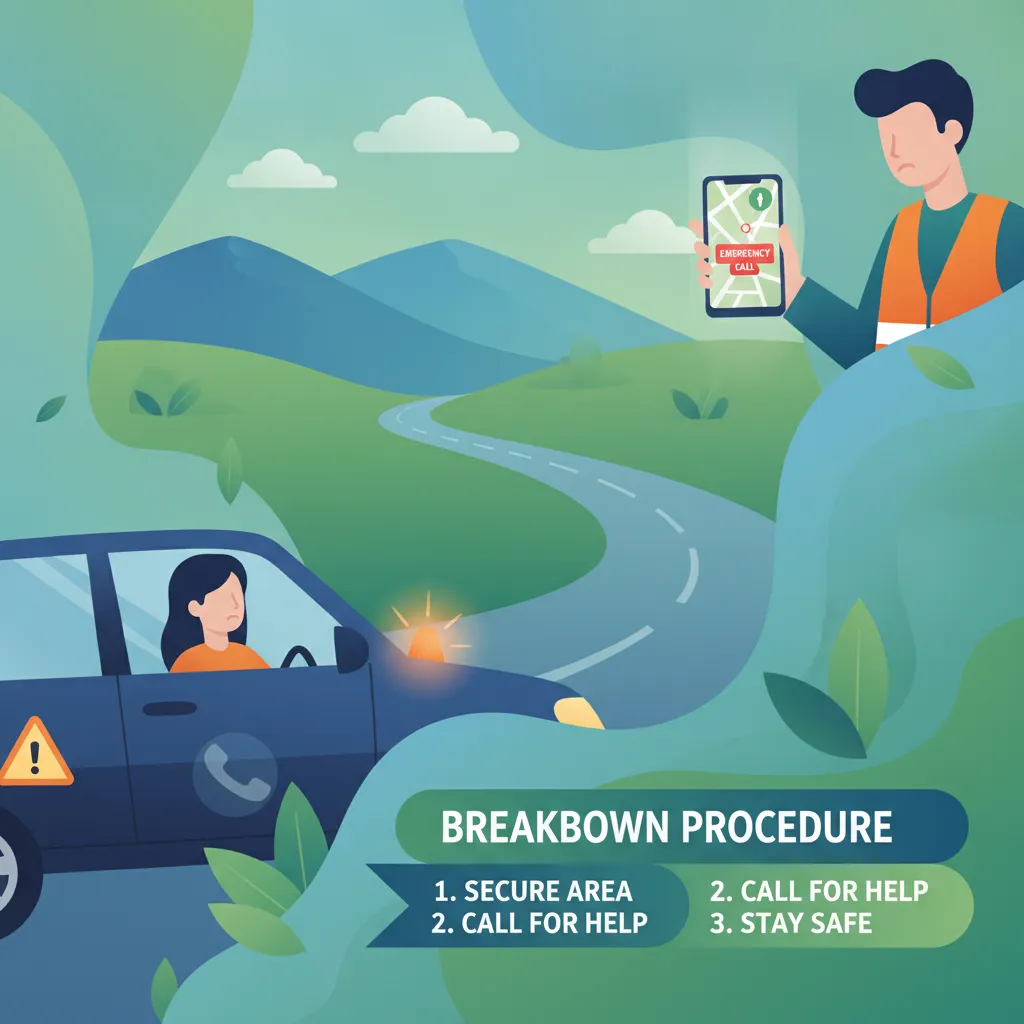
This lesson outlines the step-by-step safety protocol for a vehicle breakdown. It instructs the rider to move the motorcycle to the safest possible location, activate hazard lights, and put on a high-visibility vest. The proper placement of a warning triangle and the procedure for making an emergency call to 112 or a roadside assistance service are also detailed.
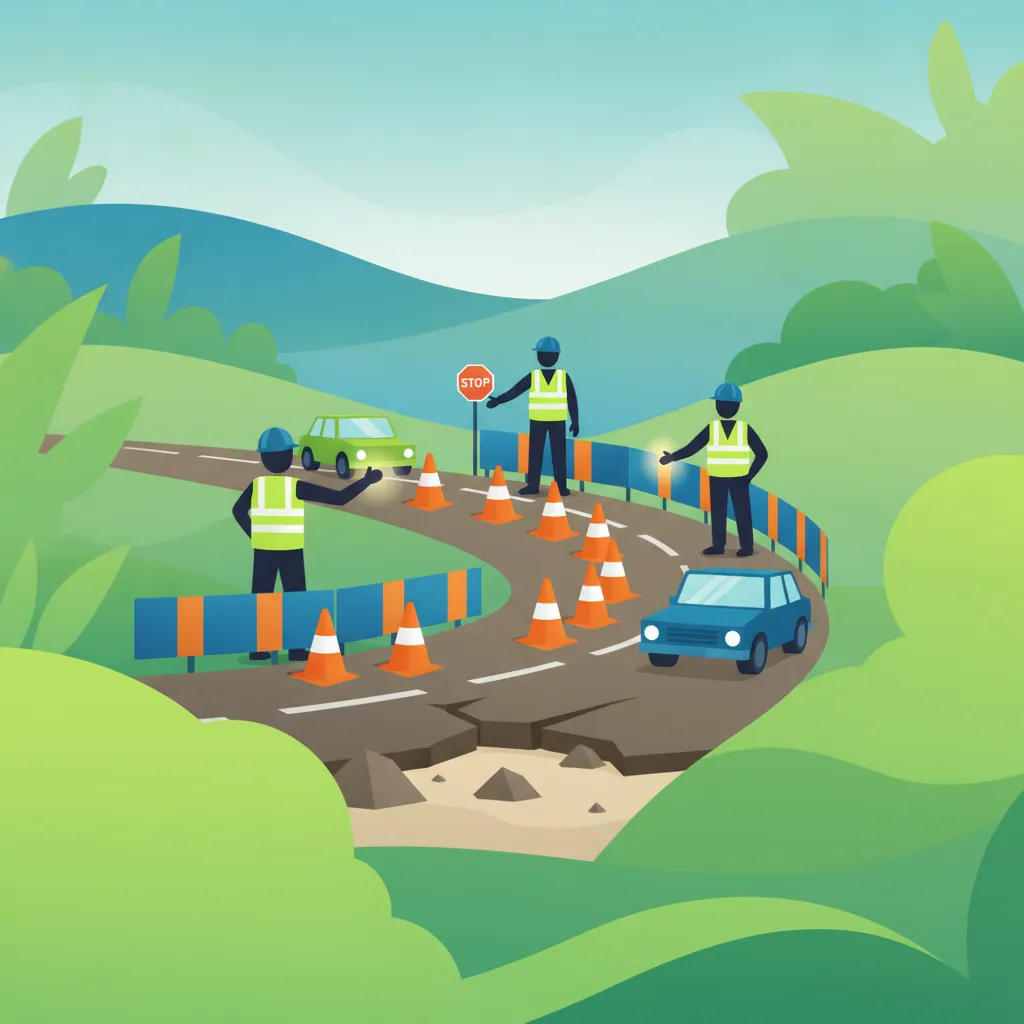
This lesson prepares riders for safely transiting through construction zones ('Baustellen'). It covers the interpretation of temporary signage, adherence to reduced speed limits, and awareness of hazards suchas altered lane markings, abrupt surface changes, and loose gravel. Respecting the safety of road workers and anticipating unpredictable traffic patterns are key themes.

This lesson explains how to use different positions within a lane to maximize visibility, create safety buffers, and plan escape routes. It introduces the concept of anticipative riding, which involves actively scanning for potential hazards and predicting the actions of other drivers. Strategic positioning is a dynamic skill that allows a rider to manage space and time effectively in changing traffic.
Find clear answers to common questions learners have about Adjusting Riding Technique in Varying Conditions. Learn how the lesson is structured, which driving theory objectives it supports, and how it fits into the overall learning path of units and curriculum progression in Austria. These explanations help you understand key concepts, lesson flow, and exam focused study goals.
Scanning allows you to identify changing conditions, such as debris on the road or slow-moving traffic, early enough to make smooth, controlled adjustments. In your theory exam, anticipating these hazards is key to choosing the correct defensive action.
In wet conditions, you should avoid the center of the lane where oil and fluid deposits accumulate from cars, as this becomes extremely slippery. Adjusting your lane position to the cleaner tracks left by car tyres helps maintain better grip.
When carrying a passenger, the extra weight significantly increases your braking distance and changes the motorcycle's handling in corners. You must leave larger following distances and initiate your braking and cornering maneuvers earlier and more gently.
Yes, many Austrian theory questions present a scenario—like a narrow road with oncoming traffic or a wet mountain pass—and ask you to identify the safest riding adjustment. Understanding these principles helps you answer those situational questions with confidence.
Refine your study plan by searching for specific Austrian driving theory practice sets. Pinpoint questions related to particular road rules, signs, or challenge levels, and begin practicing immediately to reinforce your knowledge and excel in your official exam with confidence. Get started with focused revision today.