
This lesson teaches you how to effectively utilize mirrors and camera systems to maintain full visibility around your heavy goods vehicle. Mastering these observation techniques is essential for safe maneuvering and identifying hazards, directly supporting your performance in the Austrian theory exam.

Lesson content overview
Operating heavy-goods vehicles (C-category vehicles) in Austria demands a heightened level of situational awareness, primarily due to their significant dimensions, extended blind spots, and the dynamic nature of professional driving. This comprehensive lesson provides professional drivers with an exhaustive guide on optimising the use of a vehicle's mirrors and modern camera systems. By integrating these tools into a continuous observation strategy, you can proactively identify potential hazards, anticipate the actions of other road users, and execute maneuvers safely and efficiently.
This knowledge is not merely a best practice; it forms a critical component of Austrian traffic regulations (StVO), requiring drivers to maintain constant situational awareness. Mastering these techniques is essential for the Austrian heavy-goods vehicle theory exam and, more importantly, for ensuring safety on the roads.
Mirrors and camera systems are indispensable tools for heavy-goods vehicle drivers, serving as crucial extensions of the driver's natural field of vision. For C-category vehicles, which inherently have larger blind zones and require more space for maneuvers, these systems become the primary visual source for detecting hazards that would otherwise be invisible. Effective use allows for early detection of other road users, maintenance of safe following distances, and precise execution of complex driving tasks such as lane changes, turning, and reversing.
This lesson builds upon foundational knowledge from earlier studies, particularly those concerning vehicle dimensions, load distribution, and the identification of blind spots. Understanding these prerequisites is vital, as the effectiveness of your observation tools directly relates to how well you comprehend the physical characteristics and limitations of your heavy vehicle and its load.
To achieve comprehensive situational awareness, heavy-goods vehicle drivers must adhere to several core principles that integrate mirrors and cameras into a seamless observation strategy. These principles are designed to proactively identify risks and minimise the chances of accidents.
Continuous scanning is the systematic and regular process of shifting your attention among the interior rear-view mirror, exterior side mirrors, and any camera displays while operating the vehicle. This ongoing observation prevents tunnel vision, ensures no visual source is neglected, and guarantees the early detection of hazards, significantly reducing reaction times. Developing this habit is especially crucial during city driving, complex lane changes, and navigating roundabouts, where situations can change rapidly.
Train yourself to perform quick, systematic glances at your mirrors and camera displays every few seconds, even when driving straight on an open road. This keeps you updated on the surrounding traffic flow.
Wide-angle mirrors, typically convex and found on the sides of heavy-goods vehicles and their trailers, offer a significantly larger field of view compared to standard mirrors. They are indispensable for C-category vehicles, as they compensate for the extensive blind zones created by the vehicle's length and height, particularly when towing a trailer. Correct adjustment and interpretation of the distorted perspective (objects appearing farther than they are) are essential for their effective use.
Modern heavy-goods vehicles are increasingly equipped with advanced camera systems, including rear-view monitors, side-view cameras, and even 360° surround-view systems. These video feeds should be actively incorporated into the driver’s observation pattern, treated as indispensable extensions of traditional mirrors. Cameras provide critical visual confirmation where physical mirrors are insufficient or impractical, such as monitoring trailer clearance during reversing or checking blind spots during lane changes. Drivers must be proficient in interpreting camera footage and understanding its limitations, such as performance in low light or adverse weather.
Proactive observation means anticipating potential hazards based on visual cues gathered through mirrors and cameras, rather than simply reacting to immediate threats. By constantly monitoring your surroundings, you can predict the behaviour of other road users, maintain appropriate safe distances, and execute maneuvers with optimal timing and smoothness. This approach significantly enhances safety margins, allowing you to adjust your speed, choose the safest lane, and time turns well in advance of a developing situation.
Layered redundancy involves combining multiple visual sources—mirrors, cameras, and electronic detection systems—to ensure that no single point of failure compromises your observation capabilities. This principle guarantees visibility even if one system is obstructed (e.g., a dirty mirror or a malfunctioning camera). By cross-referencing information from various sources, professional drivers can confirm observations and make more informed, safer decisions. Regular equipment checks are vital to ensure all systems are functional.
Heavy-goods vehicles utilise several types of mirrors, each designed to provide specific views and enhance situational awareness. Understanding the purpose and correct application of each is fundamental for safe operation.
The interior rear-view mirror is centrally mounted inside the vehicle, offering a direct view of the area immediately behind the vehicle. For heavy-goods vehicles, especially rigid trucks without trailers, it is a primary source for checking rear traffic while stationary or moving slowly. It is essential for checking before pulling away from a stop and during reversing maneuvers.
For combination vehicles (trucks with trailers), the interior rear-view mirror often provides a limited or non-existent view of the road behind the trailer. In such cases, its utility shifts to monitoring the load or the interior of the cab. Always adjust this mirror before moving to ensure the best possible view. It must never be covered while driving.
Exterior rear-view mirrors, commonly referred to as side mirrors, are mounted on the left and right sides of the vehicle. These mirrors are critical for monitoring traffic in adjacent lanes, making them indispensable for lane changes, overtaking maneuvers, and preparing for turns. Heavy-goods vehicles typically feature larger, more robust side mirrors than passenger cars.
These mirrors must be correctly positioned both horizontally and vertically to minimise blind zones. Adjustments are frequently required, especially after changes in load or vehicle configuration, as these factors can significantly alter the visible range. Neglecting to re-adjust mirrors after loading or unloading can lead to dangerous blind spots.
A convex mirror designed with a larger field of view to show more area, but which inherently distorts distance perception, making objects appear farther away than they actually are.
Wide-angle mirrors are specifically designed to address the extensive blind spots inherent to heavy-goods vehicles and combination vehicles. Their convex shape allows them to cover a much broader area than standard flat mirrors. They are particularly vital for monitoring vehicles approaching from behind and to the sides that would otherwise be hidden by the vehicle's long body or trailer.
According to Austrian traffic regulations (StVO), for combination vehicles (C-E, C-1E), at least one wide-angle mirror must be installed on the passenger side. This mirror must provide a clear view up to at least 30 metres behind the vehicle. A common misunderstanding among drivers is misjudging distances due to the convex distortion; objects in these mirrors always appear farther away than their actual distance. Professional drivers must learn to interpret this distortion correctly and adjust their judgments accordingly.
Beyond traditional mirrors, modern heavy-goods vehicles increasingly integrate camera systems, providing invaluable supplementary visual information. These systems further expand the driver's field of vision and enhance safety, particularly during complex maneuvers.
Camera systems on heavy-goods vehicles include:
These systems offer crucial visual confirmation for blind zones and greatly assist in parking, reversing, and making informed lane-change decisions. Austrian regulations stipulate that if a vehicle is equipped with a mandatory camera system, drivers must ensure it is functional and use its display when required, especially during reversing. However, it's a common mistake to rely entirely on camera views without cross-checking mirrors, as camera views can be obstructed by weather, dirt, or have their own specific blind spots.
An electronic system that uses radar or cameras to detect vehicles or objects in the driver's blind zones and provides an audible or visual alert to the driver.
Electronic blind-spot detection systems are advanced safety features that complement visual mirrors and cameras. These systems typically use radar or ultrasonic sensors to monitor the blind zones around the vehicle and alert the driver when another vehicle is detected there. This is particularly useful during lane changes on high-speed roads, where rapidly approaching vehicles can quickly enter a blind spot.
While these systems are highly beneficial, drivers must understand that they are supplementary aids. The alert from a blind-spot detection system is advisory; drivers are always required to visually verify the blind spot using mirrors and, if available, camera feeds before executing any maneuver. Over-reliance on the electronic alert, without visual confirmation, can lead to dangerous situations, as these systems can sometimes provide false positives or fail to detect certain objects.
A systematic scanning pattern is the cornerstone of continuous observation. It's a disciplined sequence of mirror and camera checks performed at regular intervals and, crucially, before every critical action. This routine ensures no visual source is overlooked, reduces reaction time, and fosters consistent hazard detection.
A typical scanning pattern for a heavy-goods vehicle driver might involve:
Interior Rear-View Mirror: A quick glance to assess traffic directly behind, especially useful for rigid vehicles.
Right Exterior Mirror (including wide-angle): Check for traffic in the right adjacent lane, approaching from behind, and the area along the right side of the vehicle/trailer.
Left Exterior Mirror (including wide-angle): Check for traffic in the left adjacent lane, approaching from behind, and the area along the left side of the vehicle/trailer.
Camera Feed (if present): Quickly check relevant camera displays (e.g., rear-view for clearance, side-view for blind spots).
Forward View: Return attention to the road ahead, assessing the immediate traffic situation and potential forward hazards.
This sequence should be executed as a fluid, habitual motion, typically taking only a second or two to complete. Drivers should glance to each mirror/display, absorbing the information, rather than lingering too long on any single point. This pattern must be repeated every few seconds, and critically, performed immediately before any major maneuver, such as signaling, braking, accelerating, changing lanes, or turning. A common mistake is performing only a single, quick glance before a maneuver, which can lead to missing quickly approaching vehicles or changes in traffic conditions.
The physical characteristics of a heavy-goods vehicle, particularly its rear-view geometry, can change significantly with different payloads or the attachment of a trailer. This makes the proper adjustment of mirrors and recalibration of camera angles (if possible) a critical safety procedure.
A loaded vehicle, especially one with a trailer, presents altered dimensions and can obscure views that were clear when the vehicle was empty or configured differently. Mirrors may need both vertical and horizontal adjustments to compensate for changes in vehicle pitch, height, or length. For instance, raising the left exterior mirror after adding a tall trailer ensures a clear view of the trailer's rear and the lanes beside it.
Never assume mirror settings remain optimal after varying the load. Driver must check and adjust all mirrors before proceeding with any manoeuvre after loading, unloading, or coupling/uncoupling a trailer. Neglecting this crucial step can lead to significantly increased blind zones and a higher risk of accidents.
This requirement is especially pertinent for C-category drivers who frequently operate with varying loads or combination vehicles. Regular pre-trip safety checks should always include verification and adjustment of all visual aids.
Adverse weather conditions and challenging lighting can severely impact the effectiveness of both mirrors and camera systems. Professional drivers must be aware of these limitations and adapt their observation techniques accordingly.
In adverse weather, don't solely rely on technological aids. Clean your mirrors and camera lenses regularly, and be prepared to use your mirrors as your primary observation tool if camera performance is degraded.
Austrian traffic regulations place specific obligations on drivers regarding the use and maintenance of mirrors and, increasingly, camera systems. Adhering to these rules is mandatory for all heavy-goods vehicle operators.
Rule: Drivers must check both side mirrors and, where available, camera feeds before changing lanes.
Rule: Mirrors must be positioned so that the driver has a clear and comprehensive view of the road behind and to the sides without excessive head movement.
Rule: For vehicles with a trailer (combination vehicles like C-E, C1-E), at least one wide-angle mirror must be installed on the passenger side.
Rule: If a vehicle is equipped with a mandatory rear-view camera or other camera system, the driver must ensure the system is functional and use it when required, such as during reversing maneuvers.
Rule: Mirrors may be cleaned only when the vehicle is stationary or moving at a very slow speed, and only if it can be done safely without causing distraction.
Even experienced drivers can fall into common traps regarding mirror and camera usage. Awareness of these pitfalls is key to avoiding dangerous situations.
The optimal use of mirrors and cameras varies significantly depending on the driving environment and conditions. Professional drivers must adapt their observation strategies accordingly.
The relationship between observation techniques and driving safety is a clear cause-and-effect chain:
Mastering the use of mirrors and cameras is non-negotiable for professional heavy-goods vehicle drivers. It is a skill that directly translates into enhanced safety, reduced risk of collisions, and a smoother driving experience.
By consistently applying these principles—integrating all visual aids into a disciplined scanning routine, understanding the nuances of different mirror types, wisely utilising camera systems, adapting to environmental conditions, and adhering to legal requirements—you will maintain comprehensive situational awareness. This mastery is crucial for ensuring safe and responsible operation of heavy-goods vehicles on Austria’s roads and beyond.
This lesson covers the essential observation techniques for operating heavy C-category vehicles in Austria, focusing on integrating mirrors and cameras into a continuous scanning routine. Key topics include the specific functions of interior, exterior, and wide-angle mirrors; the role of rear-view, side-view, and 360° camera systems; and the mandatory mirror checks required under Austrian traffic regulations (StVO). Professional drivers must master systematic observation patterns, understand convex mirror distortion, maintain layered redundancy across visual aids, and adjust all mirrors after any load or configuration change. These skills are critical for detecting hazards early, preventing collisions with vulnerable road users, and passing the Austrian heavy vehicle theory exam.
A short set of high-value points that capture the most important learning from this lesson.
Heavy goods vehicles require systematic, continuous scanning across all mirrors and cameras to manage their significantly larger blind spots compared to passenger vehicles.
Wide-angle convex mirrors extend visibility but distort distance perception, making objects appear farther away than they actually are—drivers must compensate accordingly.
Camera systems are supplementary aids that must be combined with traditional mirror checks, never used as the sole visual source during maneuvers.
Austrian StVO mandates specific mirror checks before lane changes and correct positioning to ensure comprehensive views without excessive head movement.
Layered redundancy—using mirrors, cameras, and electronic detection together—ensures observation capability even when one system is compromised.
Explore all units and lessons included in this driving theory course.
Interior rear-view mirrors provide limited or no view behind a trailer on combination vehicles; their utility shifts to monitoring the load or cab interior.
After loading, unloading, or coupling/uncoupling a trailer, all mirrors must be re-adjusted as vehicle geometry changes significantly.
At least one wide-angle mirror must be installed on the passenger side of combination vehicles (C-E, C1E) per Austrian regulations.
Electronic blind-spot detection systems are advisory only; drivers must always visually verify blind spots using mirrors and cameras before executing maneuvers.
In adverse weather, camera lenses can become obscured and mirrors must be cleaned regularly as primary observation tools.
Relying solely on camera feeds for reversing without cross-checking mirrors, ignoring that cameras have their own blind spots and can malfunction.
Failing to re-adjust mirrors after coupling a trailer or changing loads, which creates dangerous blind zones due to altered vehicle geometry.
Misinterpreting convex wide-angle mirror distortion and underestimating distances or following gaps, leading to unsafe lane changes or merges.
Performing only a single, quick mirror glance before lane changes instead of executing a complete systematic scanning pattern.
Assuming camera systems work flawlessly in all weather conditions and neglecting to clean lenses or increase mirror observation frequency in rain, fog, or snow.
Lesson content overview
A short set of high-value points that capture the most important learning from this lesson.
Heavy goods vehicles require systematic, continuous scanning across all mirrors and cameras to manage their significantly larger blind spots compared to passenger vehicles.
Wide-angle convex mirrors extend visibility but distort distance perception, making objects appear farther away than they actually are—drivers must compensate accordingly.
Camera systems are supplementary aids that must be combined with traditional mirror checks, never used as the sole visual source during maneuvers.
Austrian StVO mandates specific mirror checks before lane changes and correct positioning to ensure comprehensive views without excessive head movement.
Layered redundancy—using mirrors, cameras, and electronic detection together—ensures observation capability even when one system is compromised.
Explore all units and lessons included in this driving theory course.
Interior rear-view mirrors provide limited or no view behind a trailer on combination vehicles; their utility shifts to monitoring the load or cab interior.
After loading, unloading, or coupling/uncoupling a trailer, all mirrors must be re-adjusted as vehicle geometry changes significantly.
At least one wide-angle mirror must be installed on the passenger side of combination vehicles (C-E, C1E) per Austrian regulations.
Electronic blind-spot detection systems are advisory only; drivers must always visually verify blind spots using mirrors and cameras before executing maneuvers.
In adverse weather, camera lenses can become obscured and mirrors must be cleaned regularly as primary observation tools.
Relying solely on camera feeds for reversing without cross-checking mirrors, ignoring that cameras have their own blind spots and can malfunction.
Failing to re-adjust mirrors after coupling a trailer or changing loads, which creates dangerous blind zones due to altered vehicle geometry.
Misinterpreting convex wide-angle mirror distortion and underestimating distances or following gaps, leading to unsafe lane changes or merges.
Performing only a single, quick mirror glance before lane changes instead of executing a complete systematic scanning pattern.
Assuming camera systems work flawlessly in all weather conditions and neglecting to clean lenses or increase mirror observation frequency in rain, fog, or snow.
Explore search topics learners often look for when studying Use of Mirrors and Cameras for Enhanced Observation. These topics reflect common questions about road rules, driving situations, safety guidance, and lesson level theory preparation for learners in Austria.
Browse additional driving theory lessons that cover connected traffic rules, road signs, and common driving situations related to this topic. Improve your understanding of how different rules interact across everyday traffic scenarios.
Learn how to identify and mitigate blind spots specific to C-category heavy-goods vehicles. This lesson focuses on using mirrors and camera systems to achieve full situational awareness and avoid common observation errors in Austrian traffic.

This lesson focuses on the critical role of mirrors, cameras, and other electronic aids in minimizing blind spots around a large vehicle. It provides guidance on how to properly adjust mirrors to maximize visibility. Effective use of these systems is vital for detecting smaller vehicles, cyclists, and pedestrians, especially during manoeuvres.

Buses and coaches have significant blind spots that pose a major risk to pedestrians, cyclists, and other vehicles. This lesson teaches you how to correctly set up and systematically scan all mirrors, including wide-angle and kerb-view mirrors. It also covers the use of modern camera systems to gain a complete picture of the area surrounding the vehicle, especially before moving off.
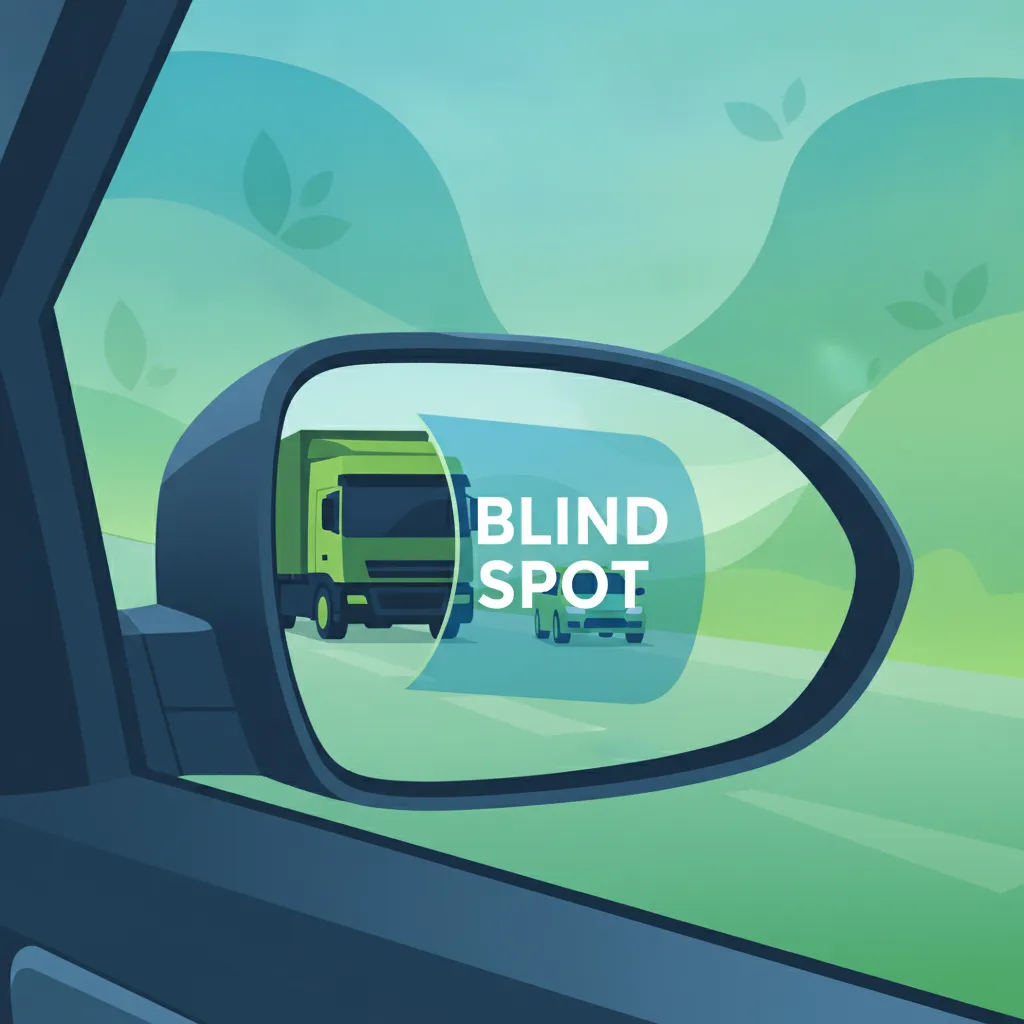
This lesson details the location and size of the significant blind spots to the front, sides, and rear of large vehicles. It explains how the vehicle's size and articulation create these 'no-zones' where other road users can disappear from view. Recognizing these areas is the first step toward developing safe observation habits.

Passive mirror use is not enough. This lesson teaches active, systematic scanning techniques, including moving your head to look around A-pillars and using all available mirrors and cameras in a set sequence. The focus is on building a constant mental map of the space around the vehicle, especially before any change of direction or speed, to account for unseen pedestrians or cyclists.

This lesson teaches the correct technique for setting and using motorcycle mirrors to maintain awareness of traffic behind and to the sides. It emphasizes that mirrors alone are not enough, detailing the necessity of the 'lifesaver' shoulder check to cover critical blind spots. A disciplined observation routine is crucial for safe lane changes, merging, and navigating dense traffic.

This lesson focuses on the safety-critical skill of reversing, emphasizing the importance of all-around observation before and during the manoeuvre. It covers the correct use of mirrors and the necessity of checking blind spots to ensure the path is clear of pedestrians, obstacles, and other vehicles. Learners will understand techniques for maintaining slow, controlled speed and making accurate steering adjustments while backing up in various situations.

This lesson addresses the specific danger of right-hand turns, where cyclists and pedestrians in the vehicle's right-side blind spot are at high risk. It covers the defensive driving techniques required, including careful observation, slow speed, and yielding the right-of-way. These procedures are critical for preventing serious accidents in urban areas.

This lesson focuses on developing comprehensive observation skills, which are the foundation of safe driving. It teaches systematic scanning techniques, including the correct sequence for mirror checks and the critical importance of the shoulder check (Schulterblick) to cover blind spots. Learners will understand how to look far ahead down the road while also maintaining awareness of their immediate surroundings to detect potential hazards as early as possible.

This lesson covers the various lighting and reflector systems required on heavy goods vehicles in Austria. It explains the function and legal requirements for headlights, taillights, brake lights, indicators, and reflective markings. Ensuring all lighting systems are operational is essential for visibility and communicating intentions to other road users.

This lesson provides practical strategies for safely reversing in challenging environments like narrow streets or busy loading zones. It emphasizes the 'get out and look' principle, the proper use of mirrors and cameras, and the critical safety role of a reliable spotter. Executing these manoeuvres slowly and cautiously is paramount to avoiding collisions.
Master a systematic scanning technique for integrating all mirrors and camera systems on heavy-goods vehicles. This lesson explains how to achieve continuous observation and proactive hazard detection crucial for safe driving in Austria.
This lesson focuses on the critical role of mirrors, cameras, and other electronic aids in minimizing blind spots around a large vehicle. It provides guidance on how to properly adjust mirrors to maximize visibility. Effective use of these systems is vital for detecting smaller vehicles, cyclists, and pedestrians, especially during manoeuvres.
This lesson focuses on developing comprehensive observation skills, which are the foundation of safe driving. It teaches systematic scanning techniques, including the correct sequence for mirror checks and the critical importance of the shoulder check (Schulterblick) to cover blind spots. Learners will understand how to look far ahead down the road while also maintaining awareness of their immediate surroundings to detect potential hazards as early as possible.
Buses and coaches have significant blind spots that pose a major risk to pedestrians, cyclists, and other vehicles. This lesson teaches you how to correctly set up and systematically scan all mirrors, including wide-angle and kerb-view mirrors. It also covers the use of modern camera systems to gain a complete picture of the area surrounding the vehicle, especially before moving off.
This lesson details the location and size of the significant blind spots to the front, sides, and rear of large vehicles. It explains how the vehicle's size and articulation create these 'no-zones' where other road users can disappear from view. Recognizing these areas is the first step toward developing safe observation habits.
Passive mirror use is not enough. This lesson teaches active, systematic scanning techniques, including moving your head to look around A-pillars and using all available mirrors and cameras in a set sequence. The focus is on building a constant mental map of the space around the vehicle, especially before any change of direction or speed, to account for unseen pedestrians or cyclists.
This lesson covers the various lighting and reflector systems required on heavy goods vehicles in Austria. It explains the function and legal requirements for headlights, taillights, brake lights, indicators, and reflective markings. Ensuring all lighting systems are operational is essential for visibility and communicating intentions to other road users.
This lesson teaches the correct technique for setting and using motorcycle mirrors to maintain awareness of traffic behind and to the sides. It emphasizes that mirrors alone are not enough, detailing the necessity of the 'lifesaver' shoulder check to cover critical blind spots. A disciplined observation routine is crucial for safe lane changes, merging, and navigating dense traffic.
This lesson provides practical strategies for safely reversing in challenging environments like narrow streets or busy loading zones. It emphasizes the 'get out and look' principle, the proper use of mirrors and cameras, and the critical safety role of a reliable spotter. Executing these manoeuvres slowly and cautiously is paramount to avoiding collisions.

This lesson focuses on the specific Austrian road signs and supplemental plates that apply to heavy goods vehicles. It explains how to interpret signage indicating weight limits, height and width restrictions, lane usage rules, and other critical regulatory information. Correctly understanding these signs is essential for legal compliance and safe navigation on Austria's roads.

This lesson covers the interaction with various forms of urban traffic control. It includes anticipating traffic light cycles to avoid stopping in an intersection and following the directions given by police or road work personnel. Smooth cooperation with these systems ensures better traffic flow and safety for everyone.
Find clear answers to common questions learners have about Use of Mirrors and Cameras for Enhanced Observation. Learn how the lesson is structured, which driving theory objectives it supports, and how it fits into the overall learning path of units and curriculum progression in Austria. These explanations help you understand key concepts, lesson flow, and exam focused study goals.
The wide-angle mirror covers a significantly larger area of the road directly next to the vehicle, allowing the driver to see objects that would otherwise be lost in the blind spot of a standard flat mirror.
No, under Austrian traffic regulations, camera systems are considered an additional observation aid and do not replace the legal requirement for properly adjusted mirrors.
You should maintain a continuous scanning pattern, checking your mirrors at the start, middle, and end of any maneuver to monitor the vehicle's position and the safety of nearby cyclists or pedestrians.
The primary risk is the blind spot directly behind the vehicle. If you do not have a reversing camera, you must use your mirrors constantly or, if necessary, have a guide assist you.
Refine your study plan by searching for specific Austrian driving theory practice sets. Pinpoint questions related to particular road rules, signs, or challenge levels, and begin practicing immediately to reinforce your knowledge and excel in your official exam with confidence. Get started with focused revision today.