
This lesson details the mandatory lighting and reflector systems required for all heavy goods vehicles operating in Austria. You will learn how to maintain visibility and communicate your intentions effectively to other road users, which is a critical component for safe operation and exam success in your C and CE licence course.
Lesson content overview
Driving a heavy goods vehicle (HGV) on Austria's roads demands a comprehensive understanding of its lighting and reflector systems. These components are not merely accessories; they are fundamental safety features that ensure your vehicle is visible to other road users and that your intentions are clearly communicated. This lesson, part of the Austrian Driving License Theory Course for Heavy Goods Vehicles (C, C1, C1E, CE), will delve into the specific requirements, functions, and correct usage of all mandatory and additional lighting for HGVs, as stipulated by the Austrian Straßenverkehrsordnung (StVO). Mastering this knowledge is crucial for safe driving, compliance with legal standards, and passing your theory examination.
Vehicle lighting and reflectors serve as vital communication tools on the road, essential for preventing collisions and facilitating smooth traffic flow. For heavy goods vehicles, which are significantly larger, heavier, and have longer stopping distances than passenger cars, the importance of effective lighting is amplified. These systems provide critical visual signals of a vehicle's presence, size, and intentions, such as braking, turning, or slowing down.
Active lighting systems, like headlamps and taillamps, generate light to illuminate the road or mark the vehicle's presence. Reflectors, on the other hand, are passive devices that retroreflect ambient light, significantly increasing visibility, especially in low-light conditions or during daylight hours when active lights might not be used. Adherence to the legal framework regarding these systems ensures standardization across the European Union, leading to predictable behavior and consistent interpretation of signals by all drivers, thereby reducing accident risks.
The front lighting systems of an HGV are primarily responsible for illuminating the road ahead and making the vehicle visible to oncoming traffic. Proper selection and use of these lights are crucial for both the driver's visibility and the safety of others.
Dipped beam headlights, also known as low beam headlights, are the primary lights used for normal night driving and during periods of reduced visibility. They provide adequate illumination of the road surface without dazzling oncoming drivers or those you are following. In Austria, dipped beam headlights are mandatory from sunset to sunrise, in tunnels, and whenever visibility is less than 200 meters due to adverse weather conditions like fog, heavy rain, or snow.
Their design focuses on a shorter, wider beam pattern that lights up the road immediately in front of the vehicle and slightly to the sides, ensuring the driver can react to immediate obstacles without causing discomfort to other road users. Always ensure your dipped beams are correctly aligned to prevent blinding others, even when properly switched on.
Main beam headlights, or high beam headlights, offer maximum illumination of the road ahead, reaching much further than dipped beams. They are designed for use on unlit rural roads or motorways where there is no oncoming traffic and no vehicles directly ahead. Their powerful light allows drivers to see potential hazards at a greater distance, providing more reaction time, which is particularly beneficial when driving a large HGV.
However, the use of main beams is strictly regulated to prevent dazzling other drivers. According to Austrian StVO §16 Abs 2, main beams must be dimmed to dipped beam whenever another vehicle approaches within 150 meters head-on or when you are following a vehicle within 300 meters. Failure to dim your main beams can create temporary blindness for other drivers, significantly increasing the risk of a collision.
Front fog lamps are specialized lights mounted low on the vehicle, designed to cut through fog, heavy rain, or snow more effectively than regular headlights. They emit a wide, flat beam that illuminates the road surface directly in front of the vehicle, reducing glare and improving short-range visibility in severely reduced conditions.
In Austria, front fog lamps may be used in conjunction with dipped beam headlights when visibility is significantly reduced, typically to less than 100 meters, due to fog, heavy precipitation, or dense dust. It is critical to switch them off when visibility improves beyond this threshold, as they can still cause glare for other drivers in clear conditions. They are not a substitute for dipped beams during normal night driving.
When using front fog lamps, ensure your dipped beam headlights are also active. Front fog lamps enhance near-field visibility but do not replace the broader illumination provided by dipped beams.
Some heavy goods vehicles are equipped with additional front lighting, such as light bars or spotlights, often using LED technology. These auxiliary lighting systems are intended to provide extra illumination in specific, challenging conditions beyond normal road driving.
In Austria, the use of light bars is permissible but comes with strict limitations under StVO §73 and Annex 5. They are typically allowed only for special circumstances, such as off-road driving, navigating remote unpaved routes, or for emergency services. They must not be active when regular headlamps are sufficient and must be capable of being switched off to prevent dazzling other road users. Using a light bar for normal road driving is illegal and can lead to fines and safety hazards due to excessive glare.
The rear lighting systems of an HGV are crucial for making the vehicle visible from behind and communicating vital information to following drivers. These lights inform others about your presence, deceleration, and sometimes even dangerous conditions.
Taillamps, also known as rear position lights, are red lights mounted at the rear of the vehicle that illuminate whenever the headlights are on. Their primary purpose is to indicate the vehicle's presence and width to drivers approaching from behind. They are a constant signal that your HGV is on the road, providing an essential baseline of visibility.
Always ensure your taillamps are clean and fully operational before every journey. A non-functional taillamp significantly compromises your vehicle's conspicuity, especially at night or in poor weather conditions, increasing the risk of a rear-end collision.
Brake lights are red rear lights that illuminate much brighter than the taillamps when the service brakes of the vehicle are applied. They serve a critical safety function by immediately alerting following drivers that your HGV is decelerating or coming to a stop. This early warning allows following vehicles to adjust their speed and maintain a safe stopping distance, which is particularly important given the longer stopping distances of HGVs.
According to Austrian regulations (StVO §18), brake lights must activate immediately upon depression of the brake pedal and must be clearly visible from a distance of at least 30 meters. Regular checks of all brake lights, including any additional high-mounted brake lights, are essential as part of your pre-trip inspection.
The rear fog lamp is a single, or sometimes dual, high-intensity red light located at the rear of the vehicle. Its intense brightness is designed to make your HGV highly conspicuous to following drivers in extremely poor visibility conditions.
In Austria (StVO §18 Abs 2), the rear fog lamp may only be used when visibility is severely reduced to less than 100 meters due to dense fog, heavy rain, heavy snowfall, or significant dust. It is critical to switch off the rear fog lamp as soon as visibility improves beyond 100 meters. Leaving it on in clear conditions can be extremely dazzling and distracting to following drivers, leading to confusion and potential hazards, and is subject to fines.
Reverse lights are white lights mounted at the rear of the vehicle that automatically illuminate when the driver engages reverse gear. Their purpose is twofold: to alert other road users and pedestrians that the HGV is about to move backward, and to provide some illumination of the area behind the vehicle during reversing maneuvers, especially in dark environments.
Drivers should never solely rely on reverse lights for comprehensive illumination when backing up in dark or complex areas. Always combine their use with proper mirror checks, camera systems, and if necessary, a spotter or additional manual lighting. Ensuring reverse lights function correctly is a mandatory part of safe reversing procedures.
Clear communication of your intentions is paramount in heavy goods vehicle operation. Direction indicators and hazard warning lights are specifically designed to convey these intentions to other road users, preventing misunderstandings and promoting safety.
Direction indicators, commonly known as turn signals, are amber flashing lights located at the front, sides, and rear of the vehicle. They are used to signal an intended change in direction, such as turning left or right, or changing lanes.
In Austria (StVO §15), turn signals must be activated for at least 3 seconds before initiating any maneuver that changes your vehicle's direction or position on the roadway. Both the front and rear indicators on the intended side must flash simultaneously. Forgetting to signal, or signaling too late, can lead to dangerous situations, particularly when driving a large HGV that requires more space and time for maneuvers. Always ensure all your indicators are working and visible, especially side repeaters on long vehicles.
Hazard warning lights cause all direction indicators on the vehicle to flash simultaneously. They are used to signal that your vehicle is stationary, moving unusually slowly, or otherwise poses a potential hazard to other road users.
According to Austrian StVO §16 Abs 3, hazard warning lights should primarily be used when the vehicle is stopped on the roadway (e.g., due to a breakdown), when it is moving at an exceptionally slow speed and creating a hazard, or to warn of an obstruction. It is illegal and highly misleading to use hazard lights while driving under normal conditions, as it can confuse other drivers about your intentions, especially regarding lane changes or turns.
Never use hazard warning lights as a substitute for turn signals. Each system has a distinct purpose to communicate specific information to other road users.
While active lighting systems depend on electrical power, reflectors and parking lights provide essential visibility through passive means or low-power consumption, ensuring your HGV remains conspicuous even when active systems are off or fail.
Side reflectors are passive retroreflective devices mounted along the sides of heavy goods vehicles. They are typically white or orange and are crucial for enhancing the vehicle's lateral visibility, particularly at night or in low-light conditions. These reflectors capture ambient light from other vehicles' headlights and reflect it directly back to the source, making the HGV's full length and presence discernible from the side.
Austrian regulations (StVO Annex 5) mandate that HGVs must have at least two side reflectors on each side: one near the front and one near the rear. These are vital for situations like crossing intersections or when the vehicle is parked on the roadside, as they help other drivers accurately gauge the HGV's dimensions. It is imperative to keep side reflectors clean and unobstructed by cargo or dirt, as their effectiveness relies on direct exposure to light.
Rear reflectors are red, passive retroreflective devices installed at the rear of the HGV. They supplement the taillamps by providing an additional layer of visibility from behind, especially when the vehicle is stationary or its active lights are off. Like side reflectors, they reflect light from following vehicles' headlights, making the HGV more conspicuous.
Rear reflectors are mandatory on all heavy goods vehicles and must be kept clean and visible at all times. They ensure that even if electrical systems fail, the rear of your vehicle still provides a warning signal to approaching traffic.
Position lamps, often referred to as parking lights, are low-intensity lights designed to indicate the presence and dimensions of a stationary vehicle. They typically consist of amber lights at the front and red lights at the rear.
In Austria, position lamps must be used when a vehicle is parked on a road outside a designated parking space, particularly in conditions where visibility is reduced, or at night. They serve to delineate the vehicle's outline, making it visible to passing traffic without consuming significant battery power or causing glare. Drivers should activate these when parking on unlit roadsides or in areas with limited ambient light.
Adherence to the specific rules and regulations governing vehicle lighting in Austria, as outlined in the Straßenverkehrsordnung (StVO) and its annexes, is not only a legal obligation but a cornerstone of road safety. Violations can lead to significant fines and penalties.
Prior to every journey, drivers are legally required to conduct a thorough pre-trip walk-around inspection, which includes verifying the functionality and cleanliness of all lighting and reflector systems (as detailed in Lesson 3.1: Pre-Trip Walk-Around Inspection Procedures). Failure to ensure all lights are operational can result in the vehicle being deemed unroadworthy and lead to fines.
Misuse or neglect of lighting systems is a frequent cause of traffic violations and accidents involving HGVs. Understanding common errors can help you avoid them.
The effective use of your HGV's lighting systems requires dynamic adaptation to varying driving conditions. Different environmental factors, road types, and vehicle states demand specific lighting configurations to maximize safety and compliance.
| Condition | Variation in Lighting Use | Reasoning |
|---|---|---|
| Night Driving in Urban Areas | Dipped beam headlights mandatory; main beam prohibited. | Prevents dazzling pedestrians and other drivers due to abundant street lighting. |
| Fog (Visibility <100m) | Front fog lamps on, rear fog lamps on, dipped beam on, main beam off. | Low-level, wide beams of fog lamps penetrate fog better, while the rear fog lamp ensures visibility from behind. Main beam would create excessive glare. |
| Daytime with Heavy Rain | Dipped beam headlights recommended; rear fog lamp optional if visibility <100m. | Increases visibility on wet surfaces and in reduced daylight. Rear fog lamp provides additional conspicuity in severe rain. |
| Tunnel Entry | Headlamps (dipped beam) mandatory. | Tunnel lighting can be insufficient, and vehicle exhaust may reduce visibility, necessitating active lighting for safety. |
| Mountainous Unpaved Terrain | Use of auxiliary light bar or spotlights permissible; fog lights if low visibility. | Extra illumination is crucial for off-road navigation, spotting uneven terrain, and highlighting obstacles not visible with standard lights. |
| Heavy Load, Elevated CG | Ensure all side reflectors are clean and unobstructed. | A larger vehicle profile, especially when loaded, increases blind spots and requires enhanced lateral visibility for other drivers to judge the HGV's dimensions accurately. |
| Reversing Maneuver | Reverse lights automatically activate; additional spotlights or spotter recommended if needed. | Adequate illumination is critical to prevent collisions with obstacles or pedestrians behind the vehicle. Automatic reverse lights are a minimum, not always sufficient. |
| Stationary on Road Shoulder (night) | Position lamps and hazard warning lights activated, plus reflective triangle. | Alerts other drivers to a stationary vehicle and potential obstruction, especially at night when vehicle conspicuity is naturally lower. |
| Driving in Snowy Alpine Regions | Front fog lamps + dipped beam (main beam if visibility allows and no oncoming traffic) + rear fog lamps. | Front fog lamps improve contrast on snowy surfaces. Rear fog lamps are essential for visibility in heavy snowfall, which often reduces visibility below 100 meters. |
The relationship between properly functioning and correctly used lighting systems and road safety is direct and undeniable. Ignoring these requirements carries significant risks and legal repercussions.
Compliance with lighting regulations is not just about avoiding fines; it is about actively contributing to a safer road environment for everyone. Violations of Austrian StVO lighting regulations can result in fines ranging from minor penalties for obscured lights to substantial fines and even points on your driving record for severe misuse or deliberate tampering.
Applying theoretical knowledge to real-world situations is crucial for developing safe driving habits. Here are a few scenarios illustrating correct and incorrect lighting use for heavy goods vehicles.
This lesson covers the mandatory and optional lighting systems required on heavy goods vehicles in Austria, including front lights (dipped beam, main beam, fog lamps), rear lights (taillamps, brake lights, rear fog lamps, reverse lights), and signaling systems (turn indicators, hazard lights). Austrian road law (StVO) specifies precise activation conditions—dipped beam from sunset to sunrise and when visibility is under 200 meters, fog lamps when visibility drops below 100 meters—and strict dimming distances for main beam. The content emphasizes pre-trip inspections, proper reflector maintenance, and distinguishes between hazard lights (stationary hazards only) and turn signals (active maneuvers). Common violations include using main beam in adverse weather, misusing rear fog lamps, and allowing cargo to obstruct lighting equipment.
A short set of high-value points that capture the most important learning from this lesson.
Dipped beam headlights are mandatory from sunset to sunrise, in tunnels, and whenever visibility drops below 200 meters due to weather conditions.
Main beam headlights must be dimmed to dipped beam when approaching oncoming traffic within 150 meters or following another vehicle within 300 meters.
Front fog lamps may only be used when visibility is severely reduced to less than 100 meters, and they must be used alongside dipped beam headlights, not main beam.
Rear fog lamps are permitted only when visibility falls below 100 meters and must be switched off immediately once conditions improve to avoid dazzling following drivers.
Hazard warning lights indicate a stationary vehicle or slow-moving hazard; they must never replace turn signals for lane changes or maneuvers.
Explore all units and lessons included in this driving theory course.
StVO §16 mandates headlamp use from sunset to sunrise and when visibility is below 200 meters; StVO §18 requires brake lights visible from at least 30 meters.
Rear fog lamps are restricted to visibility under 100 meters only; front fog lamps also require visibility under 100 meters and must be used with dipped beam only.
Turn signals must flash for a minimum of 3 seconds before any lane change or turning maneuver, with both front and rear indicators on the same side operating simultaneously.
Side reflectors must be mounted with at least two per side (front and rear), kept clean and unobstructed by cargo to ensure lateral visibility.
Light bars and auxiliary spotlights are permitted only for off-road or special circumstances and must be switched off when regular headlamps are sufficient.
Using main beam headlights in fog or heavy rain, which creates dangerous glare by reflecting off water particles and reduces visibility for all drivers.
Driving with hazard warning lights continuously active under normal conditions, causing confusion about the driver's intentions during lane changes or turns.
Neglecting to check brake light functionality during pre-trip inspections, leaving following drivers unaware of deceleration and increasing rear-end collision risk.
Activating the rear fog lamp in clear conditions, where its intense brightness can dazzle and distract following drivers.
Loading cargo in a way that obstructs side reflectors, taillamps, or indicators, significantly reducing the vehicle's conspicuity to other road users.
Lesson content overview
A short set of high-value points that capture the most important learning from this lesson.
Dipped beam headlights are mandatory from sunset to sunrise, in tunnels, and whenever visibility drops below 200 meters due to weather conditions.
Main beam headlights must be dimmed to dipped beam when approaching oncoming traffic within 150 meters or following another vehicle within 300 meters.
Front fog lamps may only be used when visibility is severely reduced to less than 100 meters, and they must be used alongside dipped beam headlights, not main beam.
Rear fog lamps are permitted only when visibility falls below 100 meters and must be switched off immediately once conditions improve to avoid dazzling following drivers.
Hazard warning lights indicate a stationary vehicle or slow-moving hazard; they must never replace turn signals for lane changes or maneuvers.
Explore all units and lessons included in this driving theory course.
StVO §16 mandates headlamp use from sunset to sunrise and when visibility is below 200 meters; StVO §18 requires brake lights visible from at least 30 meters.
Rear fog lamps are restricted to visibility under 100 meters only; front fog lamps also require visibility under 100 meters and must be used with dipped beam only.
Turn signals must flash for a minimum of 3 seconds before any lane change or turning maneuver, with both front and rear indicators on the same side operating simultaneously.
Side reflectors must be mounted with at least two per side (front and rear), kept clean and unobstructed by cargo to ensure lateral visibility.
Light bars and auxiliary spotlights are permitted only for off-road or special circumstances and must be switched off when regular headlamps are sufficient.
Using main beam headlights in fog or heavy rain, which creates dangerous glare by reflecting off water particles and reduces visibility for all drivers.
Driving with hazard warning lights continuously active under normal conditions, causing confusion about the driver's intentions during lane changes or turns.
Neglecting to check brake light functionality during pre-trip inspections, leaving following drivers unaware of deceleration and increasing rear-end collision risk.
Activating the rear fog lamp in clear conditions, where its intense brightness can dazzle and distract following drivers.
Loading cargo in a way that obstructs side reflectors, taillamps, or indicators, significantly reducing the vehicle's conspicuity to other road users.
Explore search topics learners often look for when studying Light Systems, Reflectors, and Additional Lighting Requirements. These topics reflect common questions about road rules, driving situations, safety guidance, and lesson level theory preparation for learners in Austria.
Browse additional driving theory lessons that cover connected traffic rules, road signs, and common driving situations related to this topic. Improve your understanding of how different rules interact across everyday traffic scenarios.
Understand the specific laws and regulations in Austria (StVO) regarding the mandatory and optional lighting and reflector systems on heavy goods vehicles. This lesson covers activation rules, usage conditions, and legal consequences for violations, ensuring compliance for C and CE license holders.

This lesson covers the proper and legal use of a vehicle's entire lighting system to see and be seen. It explains the regulations for using headlights, including daytime running lights, and the specific conditions under which fog lights and high beams are permitted. Correct use of turn signals and brake lights is also emphasized as essential for communicating intentions to other drivers and ensuring safety in all visibility conditions.

This lesson details the mandatory lighting and reflector requirements for Category AM vehicles in Austria. It explains the functions of different light settings, including daytime running lights, and their importance for being seen. Additionally, it covers the legal standards for protective helmets, a critical component of rider safety.

This lesson provides an overview of the legal framework governing heavy vehicle drivers in Austria. It details the potential penalties for violations, including fines, penalty points, and the risk of licence suspension. A clear understanding of these consequences reinforces the importance of compliant and responsible driving.
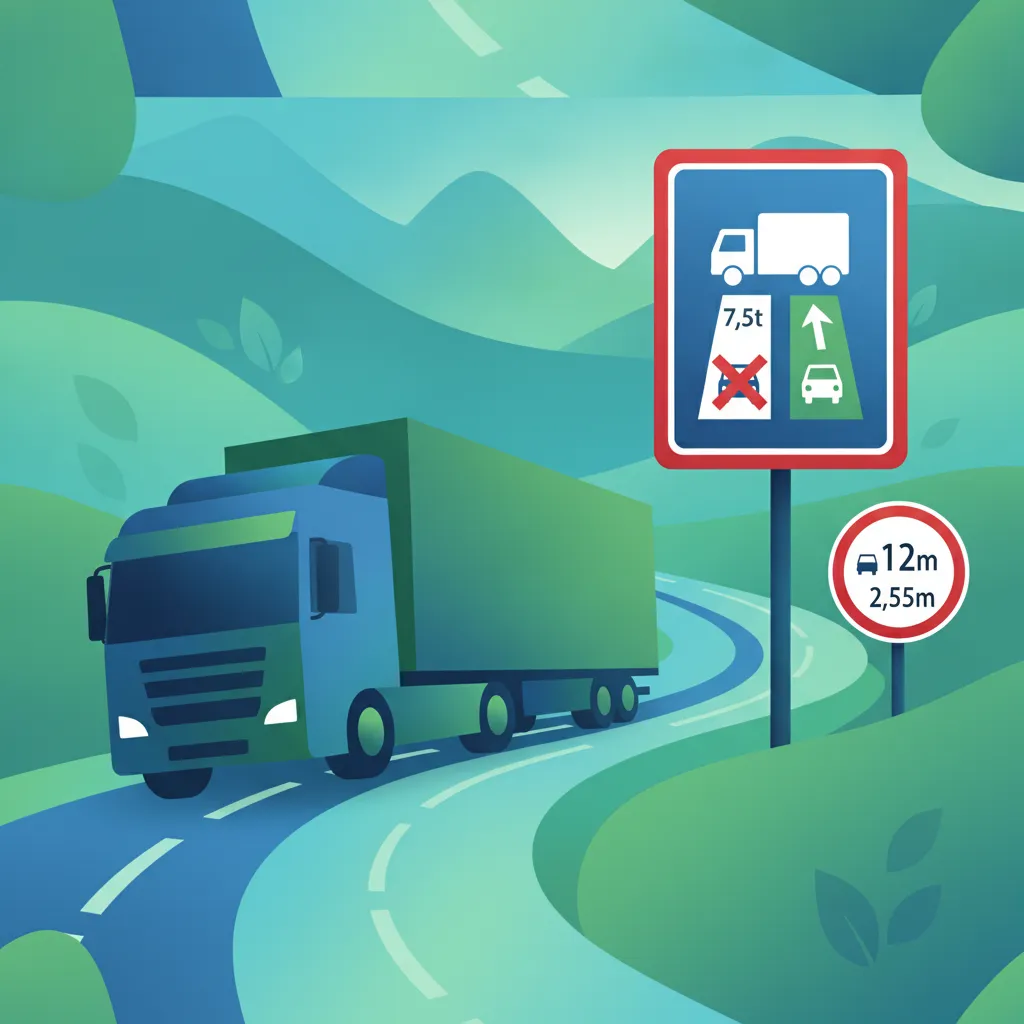
This lesson focuses on the specific Austrian road signs and supplemental plates that apply to heavy goods vehicles. It explains how to interpret signage indicating weight limits, height and width restrictions, lane usage rules, and other critical regulatory information. Correctly understanding these signs is essential for legal compliance and safe navigation on Austria's roads.

This lesson outlines the significant legal responsibilities placed on heavy-vehicle drivers under Austrian law, emphasizing a strong duty of care and professional conduct. It covers the obligation to perform thorough pre-trip inspections, comply with all load and weight regulations, and uphold safety standards to protect all road users. Adherence to these principles is crucial for professional and safe operation.

This lesson consolidates the legal restrictions on the maximum dimensions and weight for different vehicle combinations in Austria. It covers how to read signs indicating these limits and the importance of compliance for route planning. Adhering to these regulations is essential for legal operation and avoiding fines.

This lesson focuses on the critical role of mirrors, cameras, and other electronic aids in minimizing blind spots around a large vehicle. It provides guidance on how to properly adjust mirrors to maximize visibility. Effective use of these systems is vital for detecting smaller vehicles, cyclists, and pedestrians, especially during manoeuvres.
This lesson focuses on the legal restrictions concerning a heavy vehicle's dimensions, including maximum height, width, and length. It teaches drivers how to interpret road signs and supplemental plates that indicate these limits. This knowledge is crucial for route planning, especially when navigating under bridges, through tunnels, and on restricted roads.

This lesson details the general traffic rules applicable to heavy goods vehicles on Austrian roads, highlighting differences from passenger car regulations. It covers key topics such as right-of-way at intersections, specific rules for overtaking, maintaining proper lane discipline, and adhering to designated speed limits. Understanding these rules is critical for safe integration into mixed traffic.

This lesson details the legal ramifications of operating an overloaded heavy vehicle in Austria, which include significant fines and penalty points. It also emphasizes the severe safety risks, such as compromised braking performance and increased mechanical stress on the vehicle. Understanding these consequences reinforces the importance of strict adherence to weight limits.
Explore real-world driving scenarios demonstrating the correct application of lighting and reflector systems on heavy goods vehicles. Learn how to adapt lighting for night driving, fog, tunnels, and breakdowns to ensure maximum visibility and communicate intentions effectively according to Austrian road rules.
This lesson focuses on the critical role of mirrors, cameras, and other electronic aids in minimizing blind spots around a large vehicle. It provides guidance on how to properly adjust mirrors to maximize visibility. Effective use of these systems is vital for detecting smaller vehicles, cyclists, and pedestrians, especially during manoeuvres.
This lesson covers the proper and legal use of a vehicle's entire lighting system to see and be seen. It explains the regulations for using headlights, including daytime running lights, and the specific conditions under which fog lights and high beams are permitted. Correct use of turn signals and brake lights is also emphasized as essential for communicating intentions to other drivers and ensuring safety in all visibility conditions.

This lesson provides a detailed guide on how to use a vehicle's mirrors and camera systems to their full potential. It explains the purpose of different types of mirrors (e.g., wide-angle) and how to integrate them into a continuous scanning pattern. This proactive observation is essential for detecting hazards early.
This lesson covers the interaction with various forms of urban traffic control. It includes anticipating traffic light cycles to avoid stopping in an intersection and following the directions given by police or road work personnel. Smooth cooperation with these systems ensures better traffic flow and safety for everyone.
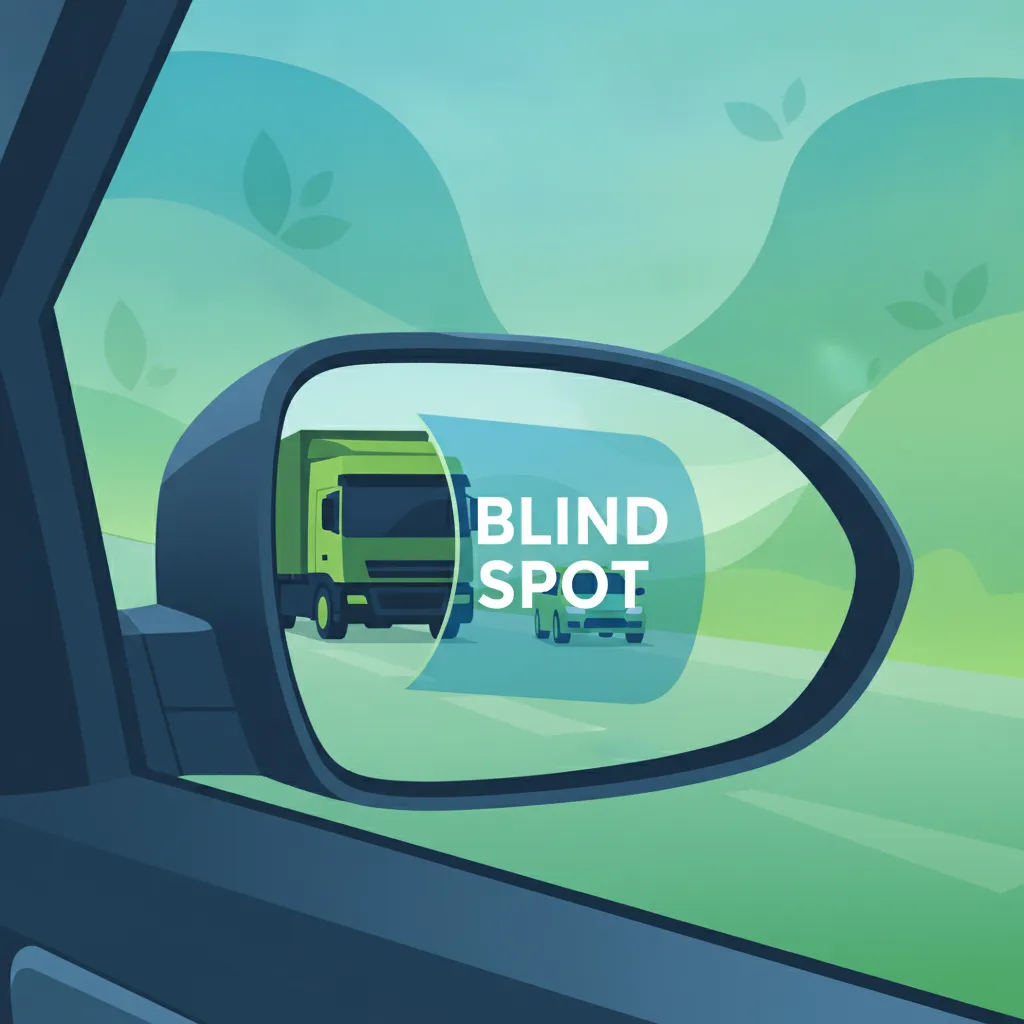
This lesson details the location and size of the significant blind spots to the front, sides, and rear of large vehicles. It explains how the vehicle's size and articulation create these 'no-zones' where other road users can disappear from view. Recognizing these areas is the first step toward developing safe observation habits.

This lesson addresses the challenge of manoeuvring a large vehicle through streets not designed for its size. It covers how to assess vertical and horizontal clearances, plan the vehicle's path through tight turns, and heed all restrictive signage. Careful planning and slow, precise control are essential for success.

This lesson reinforces the critical importance of protecting vulnerable road users in dense urban settings. It teaches drivers to be hyper-aware of pedestrians and cyclists, especially near intersections and crosswalks. Key techniques include reducing speed, making eye contact to confirm intentions, and giving ample space.
This lesson provides practical strategies for safely reversing in challenging environments like narrow streets or busy loading zones. It emphasizes the 'get out and look' principle, the proper use of mirrors and cameras, and the critical safety role of a reliable spotter. Executing these manoeuvres slowly and cautiously is paramount to avoiding collisions.
This lesson focuses on the specific Austrian road signs and supplemental plates that apply to heavy goods vehicles. It explains how to interpret signage indicating weight limits, height and width restrictions, lane usage rules, and other critical regulatory information. Correctly understanding these signs is essential for legal compliance and safe navigation on Austria's roads.

This lesson focuses on the strategic approach to navigating intersections and roundabouts in a large vehicle. It covers the importance of correct lane positioning well in advance of the turn to accommodate the vehicle's size and off-tracking. The lesson also reinforces right-of-way rules and how to safely merge with and cross traffic.
Find clear answers to common questions learners have about Light Systems, Reflectors, and Additional Lighting Requirements. Learn how the lesson is structured, which driving theory objectives it supports, and how it fits into the overall learning path of units and curriculum progression in Austria. These explanations help you understand key concepts, lesson flow, and exam focused study goals.
In Austria, operating a heavy vehicle with defective safety-critical lights is a serious violation. You may be prohibited from continuing your journey until the defect is corrected, and you risk significant fines or penalty points.
Yes, heavy trailers and semitrailers have strict legal requirements for side and rear reflective markings. These must be clean and clearly visible to ensure other drivers can judge the vehicle's length and width in low light.
Hazard lights are essential when your vehicle is stationary in a dangerous position, during an emergency stop, or when you are the last vehicle in a traffic jam on an Autobahn to warn those approaching behind you.
Yes, when entering tunnels in Austria, you must ensure your dipped headlights are switched on immediately. This ensures your vehicle is clearly visible to oncoming traffic and allows you to see the tunnel walls and potential obstacles more clearly.
Refine your study plan by searching for specific Austrian driving theory practice sets. Pinpoint questions related to particular road rules, signs, or challenge levels, and begin practicing immediately to reinforce your knowledge and excel in your official exam with confidence. Get started with focused revision today.