
This lesson explores the critical blind spots unique to large rigid and combination vehicles. You will learn to identify these dangerous no-zones and develop effective observation habits essential for passing your Austrian heavy goods vehicle theory exam and maintaining safety on the road.
Lesson content overview
Operating heavy goods vehicles (HGVs), whether rigid trucks or complex combination vehicles, demands an exceptional level of spatial awareness and observational skill. Unlike passenger cars, large commercial vehicles have inherent design characteristics that create significant areas around them where other road users can become entirely invisible to the driver. These areas are commonly known as "blind spots" or "no-zones." Recognizing and actively compensating for these blind spots is not merely a best practice; it is a fundamental requirement for the safe operation of C-category vehicles on Austrian roads, drastically reducing the risk of collisions with vulnerable road users and other traffic participants.
This lesson provides an exhaustive analysis of these critical blind spots. It delves into their location, typical size, and how factors such as vehicle dimensions, articulation points, and even load distribution influence their geometry. Mastering the identification and mitigation of these invisible zones is the first crucial step toward developing the safe observation habits necessary for professional heavy vehicle drivers.
The sheer size, height, and length of rigid trucks, and especially combination vehicles with trailers or semi-trailers, are the primary reasons for the existence of extensive blind spots. The driver's elevated seating position, while offering a commanding view forward, paradoxically creates large obscured areas directly in front of the cab. Furthermore, the extensive bodywork along the sides and the significant distance to the vehicle's rear, often exacerbated by the articulation points of trailers, block direct lines of sight and limit the effectiveness of standard mirrors. This combination of factors means that certain zones around the vehicle are simply not observable without specific, deliberate actions from the driver.
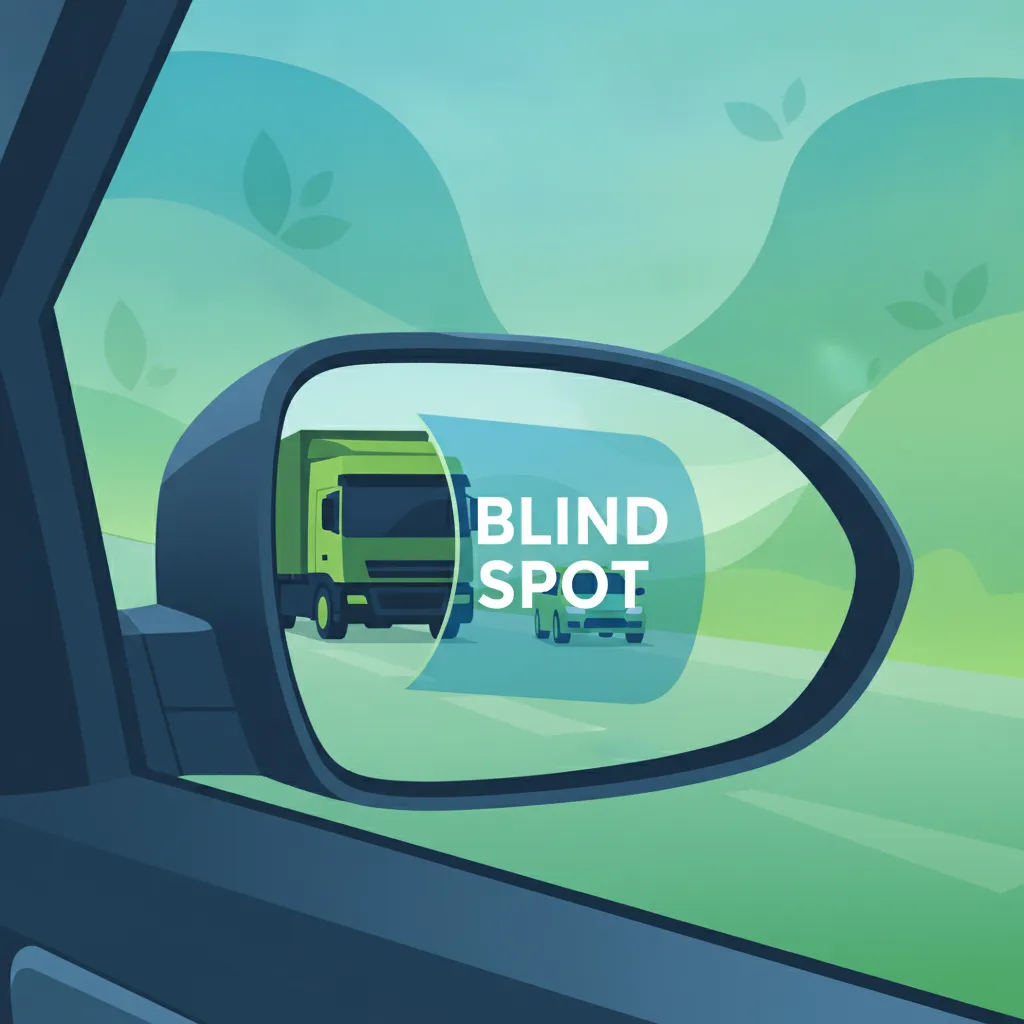
A blind spot, often referred to as a "no-zone," is an area around a vehicle that cannot be seen by the driver through direct line of sight or by using standard rearview and side mirrors. For heavy goods vehicles, these areas are considerably larger and more numerous than those found on passenger cars, posing a substantial safety challenge.
The size and shape of these invisible zones are fundamentally dictated by the vehicle's physical characteristics. Factors such as the overall length, width, height, and the presence of articulation points (hinges) on combination vehicles all contribute to the geometry and extent of blind spots. An understanding of these principles is foundational for any heavy vehicle driver.
The design of a heavy goods vehicle inherently creates areas that mirrors cannot fully cover. The long wheelbase and extended bodywork of rigid trucks contribute to large side and rear blind spots. For combination vehicles, the situation is compounded by the articulation point between the tractor unit and the trailer or semitrailer. This hinge creates an additional "dead zone" where the view from the cab is significantly restricted, making other road users invisible, especially during turning maneuvers. Each pivot point introduces a new complexity to the vehicle's observable perimeter.
The way cargo is distributed within or on a heavy vehicle can significantly affect the size and location of blind spots. A high or unevenly distributed load can effectively extend the vehicle's profile, thereby enlarging existing blind spots, particularly at the rear and sides. For example, a tall load might obscure the rear window of a rigid truck or block the view through certain mirrors. It is crucial that load securing practices not only focus on stability and weight limits but also consider how the cargo impacts driver visibility and potential blind zones. Properly secured and distributed loads help keep blind spots to a minimum.
Heavy goods vehicles present several distinct blind spot areas that demand constant driver vigilance. These zones are critical to understand, as other road users frequently find themselves unknowingly within them, creating dangerous situations.
The front blind spot is the area directly ahead of the vehicle's bumper and roofline that cannot be observed from the driver's seat. Due to the high seating position and the considerable length of the vehicle's front section (hood/bonnet), a significant area immediately in front of the truck is out of direct sight.
Specifically, there are two primary subcategories:
Small objects, children, pedestrians, or even smaller vehicles like bicycles can completely disappear within the hood/bonnet blind spot, especially when the vehicle is stationary or moving at low speeds. This poses an immense risk when pulling away from a stop or moving into a congested area. Austrian traffic regulations for C-category vehicles mandate that drivers must conduct a thorough forward visual check (often requiring a slight lean or head turn) before initiating any forward movement to ensure the path is clear. Over-reliance on forward-facing mirrors, which do not fully cover this zone, is a common and dangerous misunderstanding.
Side blind spots, also known as "side no-zones," are lateral areas along both sides of a heavy vehicle where other road users can be obscured from the driver's view. These zones typically extend from just behind the cab's side mirrors along the entire length of the vehicle.
The near-side blind spot is located on the side of the vehicle closest to the driver's position. Although the driver has closer proximity to this side, the vehicle's door line and the structure of the cab can still create a significant area where a passing vehicle or cyclist might be hidden, especially immediately adjacent to the driver's door.
The far-side blind spot, on the side opposite the driver, is often longer and more hazardous. This is due to the greater distance from the driver, which makes direct observation more difficult and limits the effectiveness of the passenger-side mirror.
During lane changes or overtaking maneuvers, a cyclist, motorcyclist, or even a smaller car can easily remain hidden within either of these side blind spots. This makes mandatory side-mirror checks, coupled with definitive head checks, absolutely essential before any lateral movement of the vehicle. Drivers must overcome the common misunderstanding that side mirrors alone provide complete coverage.
The rear blind spot is the area directly behind the vehicle that cannot be fully observed through the driver's rearview mirrors. This zone is significantly enlarged by the considerable length of rigid trucks and even more so by the presence of trailers in combination vehicles.
This includes the area immediately behind the rear bumper or the end of the trailer. For vehicles without a rear window or with a high load, this entire area can be completely invisible.
Vehicles, pedestrians, or cyclists approaching from behind can be entirely hidden within this rear blind spot. This poses a severe risk when reversing, pulling away from a loading bay, or attempting to maneuver in tight spaces. Drivers must perform a thorough rearward visual sweep, which includes head checks and the use of rear-view cameras if equipped, especially when backing up. Relying solely on mirrors without a comprehensive check is a common oversight.
For combination vehicles (e.g., tractor-trailer units, rigid truck with a drawbar trailer), a critical and unique blind spot is created by the articulation point – the hinge joint between the tractor and its trailer(s). This is often referred to as a "dead zone" because the vehicle's own structure blocks the line of sight from the cab, and mirrors provide only limited visibility into this area.
This articulation blind spot is particularly dangerous during lane changes, sharp turns, and merging maneuvers. Traffic participants, especially vulnerable road users like cyclists or motorcyclists, can easily disappear into this zone and remain undetected from both the tractor cab and any potential trailer-mounted cameras. Drivers must conduct a specific "dead-angle check" by quickly turning their head toward the articulation point before any lateral movement or turn to ensure this area is clear.
Compound blind spots are areas where multiple blind spots intersect, creating exceptionally large and hazardous invisible zones. These typically occur near the corners of trailers or where the side and articulation blind spots merge. For example, a cyclist riding alongside a semitrailer might simultaneously be in the side blind spot and the articulation blind spot, making them doubly difficult to detect. These zones are especially dangerous during overtaking or when merging onto multi-lane roads. A comprehensive visual sweep, covering all potential blind zones, is therefore essential before any lateral movement.
While blind spots can never be entirely eliminated, they can be significantly reduced and managed through disciplined observation techniques and the proper use of vehicle equipment.
Mirrors are a driver's primary tool for indirect observation. However, their effectiveness hinges on proper adjustment and a clear understanding of their limitations.
Before every journey, all external mirrors (left, right, and any specialized mirrors for the vehicle type) must be correctly adjusted. For heavy vehicles, side mirrors should generally be set to show a small sliver of the vehicle's side (or the trailer's side if present) and a broad view of the lane adjacent to it. This configuration maximizes the field of view without creating excessive overlap.
Always adjust your mirrors before setting off. Changes in load, passenger presence, or even minor bumps can alter mirror alignment and reduce their effectiveness. Re-adjusting ensures optimal visibility.
Despite proper adjustment, mirrors have inherent limitations. They cannot provide a complete 360-degree view around a large vehicle, and there will always be areas they cannot cover. Furthermore, mirrors can distort distances, making objects appear further away than they are. Over-reliance on mirrors alone, without supplementary checks, is a significant cause of accidents.
A head check is a quick, direct visual scan of a blind spot achieved by rapidly turning the head. This technique is mandatory for confirming that a blind spot is clear before initiating any maneuver, such as changing lanes, turning, or reversing. A head check provides a direct line of sight into areas that mirrors simply cannot reach, offering invaluable confirmation of safety. Even if mirrors appear clear, a head check can reveal a vehicle, cyclist, or pedestrian that was previously invisible.
Modern heavy goods vehicles are increasingly equipped with complementary technologies designed to enhance blind spot detection.
Blind spot sensors are electronic aids that use radar or ultrasonic waves to detect objects within blind zones, alerting the driver via visual or auditory signals. Camera systems, particularly rear-view and side-view cameras, provide a direct visual feed of obscured areas.
While these systems greatly enhance detection capabilities, it is critical to understand their limitations. Sensors can sometimes be unreliable in adverse weather conditions (heavy rain, snow, fog) or when obscured by dirt or cargo. Furthermore, technological aids are supplemental and, according to Austrian regulations, are not a substitute for manual observation. Drivers must still perform visual checks. Sole reliance on technology without manual verification is strictly prohibited and unsafe.
The safe management of blind spots is enshrined in Austrian traffic law, particularly concerning heavy goods vehicles. Drivers of C-category vehicles bear a significant legal responsibility for ensuring the safety of their maneuvers.
Under the Austrian Road Traffic Act (Straßenverkehrsordnung), drivers of heavy goods vehicles (C, C1, C1E, CE) have a legal duty to ensure that their vehicle's intended path is clear before undertaking any maneuver. This explicitly includes checking all blind spots before changing lanes, overtaking, turning, or reversing. This regulation is mandatory for all C-category vehicles on public roads, irrespective of traffic conditions. The primary rationale behind this legal requirement is to prevent collisions, especially those involving vulnerable road users like cyclists and pedestrians, who are frequently hidden within blind zones.
The legal obligation to ensure a clear path before maneuvering applies universally. For heavy vehicle drivers, this translates directly into a mandatory requirement for thorough blind spot checks.
Non-compliance with the duty to check blind spots constitutes a traffic violation under Austrian law. Beyond the immediate legal penalties, the consequences of neglecting blind spot checks are severe:
Understanding blind spots conceptually is one thing; applying this knowledge in diverse, real-world driving situations is another. Here are several scenarios illustrating correct and incorrect behavior regarding blind spot management.
Setting: A heavy rigid truck is traveling in the middle lane of an Austrian motorway. It's daylight, and traffic is moderate. The driver intends to move to the left lane to overtake a slower vehicle.
Correct Behavior:
Incorrect Behavior: The driver relies solely on the left-side mirror. Believing the lane is clear, they signal and begin to change lanes without performing a head check. Suddenly, a motorcyclist, who was hidden in the far-side blind spot, is forced to brake sharply or swerve, leading to a dangerous near-miss or a potential collision.
Setting: A combination vehicle (tractor-trailer) is approaching a left-turn intersection in a busy Austrian city. It's raining lightly, and traffic is heavy. The driver needs to turn left across the oncoming lane.
Correct Behavior:
Incorrect Behavior: The driver signals and turns left, checking only the left-side mirror for oncoming traffic. They neglect to check the articulation blind spot on the right side of the trailer. A motorcyclist, trying to filter through traffic from the right, is caught in the turning path, resulting in a severe collision.
Setting: A rigid truck has just been backed out of a loading dock at a warehouse, with its cargo loaded high and heavy. It's daylight, but the area behind the truck is obscured by the load. The driver must reverse into a traffic aisle.
Correct Behavior:
Incorrect Behavior: The driver uses only the interior rear-view mirror, assuming it provides sufficient coverage due to the camera system. They begin reversing at a normal speed without a full physical check. A warehouse worker, unseen, walks behind the truck, leading to a dangerous situation or impact.
Setting: A combination vehicle is accelerating on a slip road, preparing to merge onto a high-speed Austrian motorway during twilight conditions.
Correct Behavior:
Incorrect Behavior: The driver only checks the side mirrors, assumes the far-side and articulation blind spots are clear, and accelerates to merge. A faster-moving vehicle, previously in the far-side blind spot, is suddenly cut off, forcing it to brake or swerve violently to avoid a high-speed collision.
Blind spot risks are not constant; they can vary significantly based on environmental conditions and the specific context of driving. Drivers must be prepared to adjust their observation techniques accordingly.
Adverse weather such as rain, fog, or snow dramatically reduces overall visibility, making blind spot checks even more critical. Mirrors and camera systems may be compromised by precipitation or glare. In such conditions, drivers should increase their frequency of head checks, reduce their speed, and maintain larger safety distances. Night driving or low-light conditions also accentuate blind spot risks due to reduced depth perception and potential glare from other vehicle lights. Using appropriate lighting (e.g., dipped beam headlights) and anti-glare mirrors is essential.
The vehicle's state significantly impacts blind spot geometry.
Vulnerable road users are disproportionately affected by heavy vehicle blind spots due to their smaller size and often unpredictable movements.
Identifying and effectively managing blind spots is a cornerstone of safe heavy goods vehicle operation in Austria. This comprehensive understanding goes beyond merely knowing that blind spots exist; it involves:
Ultimately, correct blind spot management significantly reduces the risk of collisions, enhances overall traffic flow, and ensures compliance with critical Austrian road traffic regulations. This knowledge empowers heavy vehicle drivers to operate their vehicles with the highest degree of safety and responsibility, protecting both themselves and all other road users.
This lesson covers the critical blind spots inherent to rigid and combination heavy goods vehicles, including front, side (near and far), rear, articulation, and compound zones. It explains how vehicle design, articulation points, and load distribution create these invisible areas where vulnerable road users can disappear from view. Effective blind spot management requires properly adjusted mirrors, mandatory head checks, and appropriate use of technology such as cameras and sensors. Under Austrian traffic law, C-category drivers have a legal duty to verify their intended path is clear before any maneuver, and neglecting blind spot checks carries serious legal penalties and collision risks.
A short set of high-value points that capture the most important learning from this lesson.
Heavy vehicles have five distinct blind spot zones: front, near-side, far-side, rear, and articulation blind spots at trailer hinges
Mirrors alone cannot provide complete 360-degree visibility; head checks are mandatory for confirming blind spot clearance before any maneuver
Combination vehicles face unique articulation blind spots at the hinge joint between tractor and trailer that require specific dead-angle head checks
Load distribution directly affects blind spot geometry; mirrors must be re-adjusted whenever the vehicle's load or configuration changes
Austrian Road Traffic Act (Straßenverkehrsordnung) legally mandates that C-category drivers verify their path is clear before changing lanes, turning, or reversing
Explore all units and lessons included in this driving theory course.
Front blind spot extends several meters ahead of the cab hood/bonnet and is especially dangerous when pulling away from stops
Far-side blind spot is larger and more hazardous than near-side due to greater distance from the driver's position
A head check is a quick, direct visual scan by turning the head to see areas mirrors cannot reach—never just glancing at mirrors
Cameras and sensors are supplemental aids only; Austrian law does not permit sole reliance on technology without manual observation
Vulnerable road users (cyclists, pedestrians, motorcyclists) are most at risk in blind zones due to their smaller profile
Relying solely on mirrors without performing head checks before lane changes or turns, missing vehicles hidden in side blind spots
Failing to check the articulation blind spot at the trailer hinge when driving combination vehicles, especially during turns
Not re-adjusting mirrors after loading, allowing enlarged blind spots from high or uneven cargo to go undetected
Assuming camera systems or blind spot sensors eliminate the need for manual head checks—they supplement but cannot replace them
Neglecting to check compound blind spots at trailer corners where multiple blind zones overlap, making detection doubly difficult
Lesson content overview
A short set of high-value points that capture the most important learning from this lesson.
Heavy vehicles have five distinct blind spot zones: front, near-side, far-side, rear, and articulation blind spots at trailer hinges
Mirrors alone cannot provide complete 360-degree visibility; head checks are mandatory for confirming blind spot clearance before any maneuver
Combination vehicles face unique articulation blind spots at the hinge joint between tractor and trailer that require specific dead-angle head checks
Load distribution directly affects blind spot geometry; mirrors must be re-adjusted whenever the vehicle's load or configuration changes
Austrian Road Traffic Act (Straßenverkehrsordnung) legally mandates that C-category drivers verify their path is clear before changing lanes, turning, or reversing
Explore all units and lessons included in this driving theory course.
Front blind spot extends several meters ahead of the cab hood/bonnet and is especially dangerous when pulling away from stops
Far-side blind spot is larger and more hazardous than near-side due to greater distance from the driver's position
A head check is a quick, direct visual scan by turning the head to see areas mirrors cannot reach—never just glancing at mirrors
Cameras and sensors are supplemental aids only; Austrian law does not permit sole reliance on technology without manual observation
Vulnerable road users (cyclists, pedestrians, motorcyclists) are most at risk in blind zones due to their smaller profile
Relying solely on mirrors without performing head checks before lane changes or turns, missing vehicles hidden in side blind spots
Failing to check the articulation blind spot at the trailer hinge when driving combination vehicles, especially during turns
Not re-adjusting mirrors after loading, allowing enlarged blind spots from high or uneven cargo to go undetected
Assuming camera systems or blind spot sensors eliminate the need for manual head checks—they supplement but cannot replace them
Neglecting to check compound blind spots at trailer corners where multiple blind zones overlap, making detection doubly difficult
Explore search topics learners often look for when studying Identifying Blind Spots on Rigid and Combination Vehicles. These topics reflect common questions about road rules, driving situations, safety guidance, and lesson level theory preparation for learners in Austria.
Browse additional driving theory lessons that cover connected traffic rules, road signs, and common driving situations related to this topic. Improve your understanding of how different rules interact across everyday traffic scenarios.
Learn advanced techniques to mitigate blind spots on rigid and combination vehicles, including optimal mirror adjustment, effective head checks, and the use of modern camera systems. Essential for Austrian C category drivers to ensure safety.

This lesson focuses on the critical role of mirrors, cameras, and other electronic aids in minimizing blind spots around a large vehicle. It provides guidance on how to properly adjust mirrors to maximize visibility. Effective use of these systems is vital for detecting smaller vehicles, cyclists, and pedestrians, especially during manoeuvres.

This lesson provides a detailed guide on how to use a vehicle's mirrors and camera systems to their full potential. It explains the purpose of different types of mirrors (e.g., wide-angle) and how to integrate them into a continuous scanning pattern. This proactive observation is essential for detecting hazards early.

Buses and coaches have significant blind spots that pose a major risk to pedestrians, cyclists, and other vehicles. This lesson teaches you how to correctly set up and systematically scan all mirrors, including wide-angle and kerb-view mirrors. It also covers the use of modern camera systems to gain a complete picture of the area surrounding the vehicle, especially before moving off.

Passive mirror use is not enough. This lesson teaches active, systematic scanning techniques, including moving your head to look around A-pillars and using all available mirrors and cameras in a set sequence. The focus is on building a constant mental map of the space around the vehicle, especially before any change of direction or speed, to account for unseen pedestrians or cyclists.

This lesson reinforces the critical importance of protecting vulnerable road users in dense urban settings. It teaches drivers to be hyper-aware of pedestrians and cyclists, especially near intersections and crosswalks. Key techniques include reducing speed, making eye contact to confirm intentions, and giving ample space.

This lesson provides practical strategies for safely reversing in challenging environments like narrow streets or busy loading zones. It emphasizes the 'get out and look' principle, the proper use of mirrors and cameras, and the critical safety role of a reliable spotter. Executing these manoeuvres slowly and cautiously is paramount to avoiding collisions.

This lesson covers the various lighting and reflector systems required on heavy goods vehicles in Austria. It explains the function and legal requirements for headlights, taillights, brake lights, indicators, and reflective markings. Ensuring all lighting systems are operational is essential for visibility and communicating intentions to other road users.

This lesson teaches the correct technique for setting and using motorcycle mirrors to maintain awareness of traffic behind and to the sides. It emphasizes that mirrors alone are not enough, detailing the necessity of the 'lifesaver' shoulder check to cover critical blind spots. A disciplined observation routine is crucial for safe lane changes, merging, and navigating dense traffic.

This lesson focuses on the safety-critical skill of reversing, emphasizing the importance of all-around observation before and during the manoeuvre. It covers the correct use of mirrors and the necessity of checking blind spots to ensure the path is clear of pedestrians, obstacles, and other vehicles. Learners will understand techniques for maintaining slow, controlled speed and making accurate steering adjustments while backing up in various situations.

This lesson focuses on developing comprehensive observation skills, which are the foundation of safe driving. It teaches systematic scanning techniques, including the correct sequence for mirror checks and the critical importance of the shoulder check (Schulterblick) to cover blind spots. Learners will understand how to look far ahead down the road while also maintaining awareness of their immediate surroundings to detect potential hazards as early as possible.
Focus on the unique blind spots and maneuvering challenges presented by combination vehicles (trucks with trailers/semitrailers) in Austrian traffic. Understand articulation blind spots, turning dynamics, and safe reversing strategies for C and CE licence categories.
This lesson focuses on the critical role of mirrors, cameras, and other electronic aids in minimizing blind spots around a large vehicle. It provides guidance on how to properly adjust mirrors to maximize visibility. Effective use of these systems is vital for detecting smaller vehicles, cyclists, and pedestrians, especially during manoeuvres.
This lesson provides practical strategies for safely reversing in challenging environments like narrow streets or busy loading zones. It emphasizes the 'get out and look' principle, the proper use of mirrors and cameras, and the critical safety role of a reliable spotter. Executing these manoeuvres slowly and cautiously is paramount to avoiding collisions.
This lesson focuses on the safety-critical skill of reversing, emphasizing the importance of all-around observation before and during the manoeuvre. It covers the correct use of mirrors and the necessity of checking blind spots to ensure the path is clear of pedestrians, obstacles, and other vehicles. Learners will understand techniques for maintaining slow, controlled speed and making accurate steering adjustments while backing up in various situations.

This lesson addresses the complex task of reversing a combination vehicle. It explains the principles of reverse articulation and how steering inputs have an opposite effect on the trailer's direction. The lesson provides strategies for using mirrors and, if available, a spotter to safely and accurately back the trailer into a desired position.

Adding a trailer (Category DE/D1E) changes a vehicle's handling characteristics significantly. This lesson introduces key concepts, such as the increased turning circle, the effect of trailer swing, and the complexities of braking with the extra weight and length. It provides a theoretical foundation for understanding how to safely manage a combination vehicle, particularly during low-speed manoeuvres.

This lesson addresses the specific danger of right-hand turns, where cyclists and pedestrians in the vehicle's right-side blind spot are at high risk. It covers the defensive driving techniques required, including careful observation, slow speed, and yielding the right-of-way. These procedures are critical for preventing serious accidents in urban areas.

This lesson focuses on the phenomenon of off-tracking, where the rear wheels of a trailer follow a path inside that of the tractor's wheels during a turn. It explains how to anticipate this effect and allow extra space when cornering to avoid running over curbs, signs, or other roadside objects. Managing off-tracking is a key skill for navigating intersections and roundabouts.

This lesson teaches drivers how to develop spatial awareness regarding their vehicle's size. It covers how to judge the required space for making turns, considering the vehicle's turning radius and the effects of off-tracking. Planning ahead and positioning the vehicle correctly before a manoeuvre is key to navigating tight spaces successfully.
This lesson provides a detailed guide on how to use a vehicle's mirrors and camera systems to their full potential. It explains the purpose of different types of mirrors (e.g., wide-angle) and how to integrate them into a continuous scanning pattern. This proactive observation is essential for detecting hazards early.

This lesson explains the specific definitions and limitations of the C1, C1E, C, and CE heavy-goods vehicle licence categories in Austria. It details the permissible vehicle mass, axle configurations, and rules for trailer combinations associated with each category. Understanding these distinctions is fundamental for ensuring legal compliance and selecting the correct licence for specific vehicle configurations.
Find clear answers to common questions learners have about Identifying Blind Spots on Rigid and Combination Vehicles. Learn how the lesson is structured, which driving theory objectives it supports, and how it fits into the overall learning path of units and curriculum progression in Austria. These explanations help you understand key concepts, lesson flow, and exam focused study goals.
Combination vehicles have additional articulation points that create larger no-zones, especially when the trailer swings during a turn. This increased length and the hinge movement significantly shift the blind spot areas compared to a standard rigid vehicle.
The area immediately along the passenger-side doors is the most critical. Cyclists often enter this space thinking the truck is continuing straight, unaware that the rear of the vehicle will track inward toward the curb, potentially trapping them in the side blind spot.
No. While modern systems like cameras and sensors are supplementary tools for blind spot reduction, the theory exam emphasizes that mirrors and direct head checks are primary safety requirements. Never rely solely on electronic aids.
You must position your vehicle to discourage others from attempting to overtake on your turning side. Maintain a wide entry where permitted, constantly monitoring your wide-angle and curb-view mirrors to ensure no pedestrians or cyclists have entered your immediate danger zone.
Refine your study plan by searching for specific Austrian driving theory practice sets. Pinpoint questions related to particular road rules, signs, or challenge levels, and begin practicing immediately to reinforce your knowledge and excel in your official exam with confidence. Get started with focused revision today.