
This lesson is a critical part of your training for the Austrian C, C1, C1E, and CE categories, focusing on the high-risk manoeuvres involved in right-hand turns. You will learn to mitigate the severe dangers posed by the blind spots inherent in heavy goods vehicles to protect vulnerable road users. This preparation is essential for both your theory exam and for developing the high-level professional vigilance required on Austrian roads.
Lesson content overview
For professional drivers operating heavy goods vehicles (HGVs) in Austria, mastering the right-hand turn is a critical skill, especially when sharing the road with pedestrians and cyclists. This lesson delves into the specific challenges and defensive strategies required to prevent serious accidents in urban environments, focusing on the unique hazards posed by a vehicle's right-side blind spot. Understanding and applying these techniques are not merely good practice but are essential legal obligations for every driver of a C category vehicle.
Right-hand turns are statistically among the highest-risk maneuvers for heavy goods vehicles, including rigid trucks and combination vehicles. The sheer size, extended length, and unique blind spot characteristics of these vehicles significantly amplify the danger to vulnerable road users (VRUs) such as pedestrians and cyclists. A failure to correctly manage these turns can lead to severe injuries or even fatalities, resulting in substantial legal penalties and insurance liabilities for the driver and transport company.
The right-side blind spot (RBS) is a dangerous area alongside and slightly ahead of a heavy vehicle where pedestrians and cyclists can become completely invisible to the driver, even with properly adjusted mirrors. This "zone of invisibility" is particularly pronounced during a right turn as the vehicle's body, especially the cab and trailer, sweeps across an area that may be occupied by VRUs. For combination vehicles, the RBS extends along the entire length of the trailer, making detection even more complex.
Heavy goods vehicles possess significantly greater mass and inertia compared to passenger cars. This means they require substantially longer distances to come to a complete stop, particularly when fully loaded or on wet surfaces. Simultaneously, HGVs have a much larger turning radius, meaning they need more space to execute a turn. This often necessitates swinging wide to the left before turning right, creating an even larger swept path where VRUs can be endangered. The combination of extended stopping distances and expansive turning paths demands exceptional foresight and precise speed management from the driver.
To effectively manage the inherent risks of right turns, HGV drivers must adopt a set of core defensive driving principles. These principles form the foundation of safe operation and are paramount for preventing conflicts with vulnerable road users.
The all-round visibility principle dictates that a driver must achieve absolute visual confirmation of all traffic users, especially vulnerable road users, located within the vehicle's potential blind spots before commencing any turn or maneuver. This is not merely about checking mirrors; it requires a systematic, redundant approach to observation. For HGVs, this means going beyond the standard mirror check to include deliberate head checks (shoulder checks) and, where available, leveraging modern camera systems to cover every potential blind zone.
Defensive speed management involves adjusting the vehicle's speed to allow ample time to react to any sudden appearance or movement of pedestrians or cyclists, particularly those within blind spots. Due to the longer stopping distances of heavy vehicles, reducing speed well in advance of an intersection or turn is crucial. This proactive approach facilitates a smoother, more controlled turning motion, enabling the driver to brake effectively and safely if a vulnerable road user enters the intended path.
Always approach intersections at a speed that allows you to stop safely before the crossing if a vulnerable road user appears unexpectedly.
In Austria, traffic law places a strong emphasis on protecting vulnerable road users. The yield-to-vulnerable-road-user rule mandates that drivers must yield the right-of-way to pedestrians crossing at designated points and to cyclists when their intended path conflicts with the vehicle's turning trajectory. This obligation is non-negotiable and applies regardless of vehicle size or type. A driver must pause the turn until all vulnerable road users have safely cleared the intersection or crossing area.
The Controlled Turn Initiation Zone (CTIZ) is a defined spatial area directly ahead and to the front right side of the vehicle. Before initiating the yaw (the turning motion) of a right turn, the driver must confirm that this zone is entirely clear of vulnerable road users. The CTIZ boundary is approximately the length of the vehicle's front overhang plus an additional safety buffer (typically 2–3 meters beyond the vehicle's width) to account for the vehicle's sweeping motion. Establishing this clear zone is a critical planning step for HGV drivers.
Driving in urban environments, especially with an HGV, requires a continuous and rapid observation-decision loop. This process involves constantly observing the positions and movements of all road users, evaluating the legal and safety requirements based on these observations, deciding on the safest course of action (e.g., proceed, slow, stop, defer turn), and then executing that action. This dynamic process ensures the driver can respond effectively to the constantly changing conditions typical of city driving.
Effective conflict management during right turns hinges on a detailed understanding of specific zones and the application of systematic observation techniques.
The right-side blind spot (RBS) is the primary danger zone during right turns. It encompasses areas directly to the right of the vehicle, from the front wheels to the rear, where pedestrians and cyclists are easily hidden. This includes the "static RBS" when the vehicle is stationary, and the even more critical "dynamic RBS" which changes as the vehicle begins to move and turn. Drivers must actively scan and clear this area.
Never assume the right side is clear based on mirrors alone. A head check is essential to cover areas directly beside your vehicle that mirrors might miss.
Pedestrian Crossing Zones (PCZ) are specific areas where pedestrians have a legal right-of-way to cross the street. These are often clearly marked with zebra crossings (Fußgängerüberweg in Austria) or designated by signs. However, at many intersections, pedestrians may cross even without explicit markings. HGV drivers must be prepared to stop and yield to pedestrians in these zones, understanding that their larger vehicle requires more space and time to stop safely.
The Cyclist Interaction Zone (CIZ) describes the areas around intersections where cyclists may be traveling alongside, overtaking, or crossing the vehicle's path. Cyclists often utilize bike lanes, shared paths, or even filter through traffic on the right side of stationary vehicles. This creates a high-risk conflict zone, particularly when an HGV is preparing for a right turn. Drivers must specifically look for cyclists in their RBS and anticipate their movements, understanding that cyclists may not always follow predictable motor vehicle lane discipline.
Observation Technique (OT) refers to a systematic approach to detect vulnerable road users. This technique comprises several components:
Approach: Reduce speed and position the vehicle correctly in the rightmost lane.
Initial Scan: Perform a comprehensive mirror sweep to check for all traffic, including cyclists and pedestrians approaching from behind or the side.
Signal: Activate your right turn indicator well in advance.
First Head Check: Before reaching the intersection, perform a head turn to the right to scan the immediate right-side blind spot.
Controlled Approach: Enter the intersection slowly, maintaining your right-most position.
Final Observation: Just before initiating the turn, perform another thorough head check and quick mirror sweep, using camera systems if available, to confirm the entire CTIZ and CIZ are clear.
Yield: If any VRU is present in a conflicting path, stop and yield until they have cleared.
Execute Turn: Only proceed with the turn once it is absolutely safe and clear.
The Turn Planning Zone (TPZ) is the area ahead of the vehicle where the driver must evaluate the entire turning path and identify any potential conflicts with vulnerable road users. This involves both a "pre-turn assessment" (visualizing the vehicle's trajectory before entering the intersection) and a "dynamic assessment" (continuously monitoring VRU movements while the turn is in progress). A thorough TPZ assessment helps the driver decide whether to proceed with the turn, adjust speed, or delay the turn entirely.
The yielding dynamics for HGVs involve specific considerations due to their size and mass. The increased inertia of a heavy vehicle results in significantly longer braking distances, meaning anticipatory braking is essential. Furthermore, the limited maneuverability and larger turning radius of HGVs mean that once a turn is initiated, it is harder to quickly adjust or stop. Therefore, an HGV driver must initiate braking much earlier and be prepared to wait longer for vulnerable road users to clear the area, even if it feels counter-intuitive to the flow of traffic.
Adhering to Austrian traffic law (Straßenverkehrsordnung - StVO) is fundamental for safe heavy vehicle operation. Several key sections directly govern right turns and interactions with vulnerable road users.
According to Austrian traffic law, drivers are legally obliged to yield to pedestrians who are crossing or clearly intending to cross at a marked pedestrian crossing (crosswalk or Fußgängerüberweg). This applies irrespective of whether the driver is turning right or proceeding straight.
Austrian law also mandates that drivers must yield to cyclists when their path conflicts with the vehicle's intended trajectory, especially during a right turn. This is particularly relevant when cyclists are proceeding straight through an intersection while a vehicle is turning right into their path.
During a right turn, it is generally prohibited to overtake a cyclist on their right side. This maneuver drastically reduces the safety margin for the cyclist and is extremely dangerous.
Austrian law stipulates that drivers, particularly of heavy vehicles (C, C1, C1E, CE categories), must maintain a safe stopping distance. This means adjusting speed to ensure the vehicle can stop safely before any obstacle or conflict point, such as a pedestrian crossing or an intersection, if a vulnerable road user appears. The increased mass and payload of HGVs inherently require significantly longer stopping distances.
Despite clear regulations and safety guidelines, certain behaviors lead to common violations and accidents during right turns with HGVs. Understanding these pitfalls is the first step toward preventing them.
| Violation | Description | Correct Behavior | Consequence |
|---|---|---|---|
| Premature Turn without Full Observation | Initiating a right turn while the right blind spot, including the CTIZ, has not been thoroughly checked. | Before committing to the turn, perform comprehensive observation via mirrors, deliberate head turns, and camera checks to ensure the entire right side is clear. | Collision with unseen cyclists/pedestrians; severe legal liability. |
| Failure to Yield to Crossing Pedestrians | Continuing through an intersection or into a turn while a pedestrian is crossing at a marked crossing. | Stop completely before the crossing line. Allow the pedestrian to safely complete their crossing, then proceed only when the path is clear. | Traffic violation, significant fines, penalty points, high accident risk. |
| Overtaking Cyclist on the Right | Attempting to pass a cyclist on the right side while preparing for or executing a right turn. | Remain behind the cyclist. Overtake only from the left, maintaining a safe lateral clearance (minimum 1.5 meters), and only when safe to do so. | Fine, penalty points, highly dangerous reduced safety margin. |
| Insufficient Braking Distance | Entering the turn at a speed that exceeds the vehicle’s capability to stop safely if a VRU appears. | Reduce speed well before the intersection. Calculate safe stopping distance based on vehicle load and road conditions, ensuring you can stop within the visible distance. | Inability to stop, leading to collisions; severe legal penalties. |
| Ignoring Cyclist’s Intended Trajectory | Assuming a cyclist will stop or follow a different path when their trajectory conflicts with your turn. | Always yield to the cyclist if their intended path intersects with your turning trajectory, as per § 44 StVO. | Collision, fines, penalty points, potential injury/fatality. |
| Blind Spot Confirmation via Mirrors Only | Solely relying on side mirrors without performing a physical head turn (shoulder check). | Combine thorough mirror checks with deliberate head/shoulder checks to fully cover all blind zones, including areas directly beside the cab and trailer. | Missed detection of VRUs, leading to severe accidents. |
| Misinterpretation of Right-of-Way on Shared Paths | Assuming cyclists on shared bike lanes or paths must yield to turning vehicles. | Yield to cyclists when their path conflicts with the vehicle’s turn, regardless of specific lane markings or path designations. | Potential collision, legal liability. |
| Over-optimistic Load Distribution Assumption | Believing a well-distributed load magically eliminates all blind spot concerns or reduces turning risk. | Recognize that blind spots persist regardless of load. Maintain vigilance and adhere to the systematic observation routine for every turn. | False sense of security, increased accident risk. |
Safe HGV operation during right turns requires dynamic adaptation to various environmental and vehicle-specific factors.
Understanding the direct cause-and-effect relationships in right turn scenarios underscores the importance of strict adherence to safety protocols.
| Cause | Effect if Correctly Applied | Effect if Violated |
|---|---|---|
| Full Blind Spot Observation | Driver detects VRUs, yields, and avoids collision. | VRU remains hidden, leading to collision with severe consequences. |
| Reduced Speed before Turn | Adequate stopping distance, smoother turn, more reaction time. | Inadequate braking distance, higher collision risk, jerky maneuvers. |
| Yielding to VRUs | Legal compliance, enhanced safety for VRUs, avoids penalties. | Violation of StVO, possible fines, penalty points, increased accident risk. |
| Proper Use of Mirrors/Cameras | Redundancy in detection, higher confidence in safety decisions. | Over-reliance on a single mirror, leading to missed detection in blind zones. |
| Compliance with Load Distribution | Predictable vehicle behavior, safe turning radius, stability. | Unbalanced load causing vehicle sway or drift during turn, increasing accident risk. |
| Adherence to Turn Planning Zone (TPZ) | Sufficient time to assess and clear the path, safe turn execution. | Initiating turn before fully assessing the TPZ, leading to insufficient clearance. |
This lesson on right turn conflict management builds upon several foundational concepts covered in other parts of the Austrian Driving License Theory Course for Heavy Goods Vehicles.
Knowledge from this lesson is fundamental for future topics such as:
To solidify understanding, let's examine practical scenarios that professional HGV drivers may encounter.
Beyond the rules, a deeper understanding of the underlying principles reinforces the need for diligent right-turn practices for HGV drivers:
Effectively managing right turns with a heavy goods vehicle demands a multi-faceted approach, integrating rigorous observation, proactive speed control, strict adherence to legal obligations, and an understanding of vehicle dynamics.
This lesson addresses the critical safety challenges of right-hand turns for heavy goods vehicles (C, C1, CE categories) in Austrian urban environments. It emphasizes the dangers of the right-side blind spot, which is particularly hazardous for pedestrians and cyclists, and teaches systematic observation techniques combining mirrors, head checks, and cameras. Key legal obligations under Austrian StVO require yielding to pedestrians at crossings and cyclists in conflicting paths, with specific prohibitions on right-side overtaking of cyclists. The lesson covers essential concepts including the Controlled Turn Initiation Zone (CTIZ) and Turn Planning Zone (TPZ), while stressing that defensive speed management accounting for heavy vehicle braking distances is fundamental to preventing serious accidents.
A short set of high-value points that capture the most important learning from this lesson.
The right-side blind spot (RBS) is the primary danger zone during right turns, extending along the entire vehicle length for combination vehicles
A systematic observation sequence combining mirror sweeps, deliberate head checks, and camera reviews is mandatory before and during any right turn
In Austria, drivers must yield to pedestrians at marked crossings (§ 41 StVO) and to cyclists whose path conflicts with the turning trajectory (§ 44 StVO)
Heavy goods vehicles require significantly longer stopping distances; speed must be reduced well in advance of any intersection or turn
The Controlled Turn Initiation Zone (CTIZ) ahead of the vehicle's front right side must be completely clear before initiating the turning motion
Explore all units and lessons included in this driving theory course.
Never rely on mirrors alone; physical head checks are essential to cover blind spots directly beside the vehicle
Stopping distance increases quadratically with speed—modest speed reduction dramatically improves safety margins
Combination vehicles have extended blind spots along the entire trailer length, requiring observation of both tractor and trailer sections
Overtaking a cyclist on the right side when preparing for a right turn is prohibited under Austrian traffic law
The Turn Planning Zone (TPZ) assessment must be completed both before entering an intersection and continuously during the turn
Initiating a right turn based solely on mirror checks without performing a physical head/shoulder check into the blind spot
Proceeding through a turn while pedestrians are still on the marked crossing, assuming they will hurry or wait
Assuming cyclists will yield or change their trajectory when the driver's path conflicts with theirs
Approaching turns at speeds appropriate for passenger cars rather than accounting for the significantly longer braking distances of heavy vehicles
Only checking the blind spot near the cab on combination vehicles, neglecting the much larger blind spot along the trailer's length
Lesson content overview
A short set of high-value points that capture the most important learning from this lesson.
The right-side blind spot (RBS) is the primary danger zone during right turns, extending along the entire vehicle length for combination vehicles
A systematic observation sequence combining mirror sweeps, deliberate head checks, and camera reviews is mandatory before and during any right turn
In Austria, drivers must yield to pedestrians at marked crossings (§ 41 StVO) and to cyclists whose path conflicts with the turning trajectory (§ 44 StVO)
Heavy goods vehicles require significantly longer stopping distances; speed must be reduced well in advance of any intersection or turn
The Controlled Turn Initiation Zone (CTIZ) ahead of the vehicle's front right side must be completely clear before initiating the turning motion
Explore all units and lessons included in this driving theory course.
Never rely on mirrors alone; physical head checks are essential to cover blind spots directly beside the vehicle
Stopping distance increases quadratically with speed—modest speed reduction dramatically improves safety margins
Combination vehicles have extended blind spots along the entire trailer length, requiring observation of both tractor and trailer sections
Overtaking a cyclist on the right side when preparing for a right turn is prohibited under Austrian traffic law
The Turn Planning Zone (TPZ) assessment must be completed both before entering an intersection and continuously during the turn
Initiating a right turn based solely on mirror checks without performing a physical head/shoulder check into the blind spot
Proceeding through a turn while pedestrians are still on the marked crossing, assuming they will hurry or wait
Assuming cyclists will yield or change their trajectory when the driver's path conflicts with theirs
Approaching turns at speeds appropriate for passenger cars rather than accounting for the significantly longer braking distances of heavy vehicles
Only checking the blind spot near the cab on combination vehicles, neglecting the much larger blind spot along the trailer's length
Explore search topics learners often look for when studying Right Turn Conflict Management with Pedestrians and Cyclists. These topics reflect common questions about road rules, driving situations, safety guidance, and lesson level theory preparation for learners in Austria.
Browse additional driving theory lessons that cover connected traffic rules, road signs, and common driving situations related to this topic. Improve your understanding of how different rules interact across everyday traffic scenarios.
Understand the specific Austrian traffic regulations (StVO) governing right turns for heavy vehicles, focusing on mandatory yielding to pedestrians and cyclists, and avoiding common legal violations. Ensure compliance and safe operation.

This lesson focuses on the critical skill of sharing the road safely with vulnerable users, such as pedestrians, cyclists, and e-scooter riders. It details the legally required distance buffers for overtaking and emphasizes heightened awareness in sensitive areas like school zones and designated pedestrian crossings. The content provides guidelines for interacting with bicycle lanes and shared spaces to foster a protective and respectful driving attitude towards those most at risk.

This lesson provides a comprehensive explanation of Austria's right-of-way laws, which are fundamental to intersection safety. It covers the meaning of different priority signs and clarifies the 'Rechts vor Links' (priority to the right) rule that applies at unmarked junctions. A clear understanding of these rules is essential to prevent conflicts and collisions in urban and rural settings.

This lesson provides a detailed guide to executing turning manoeuvres safely and correctly at both intersections and roundabouts. It explains the importance of proper lane positioning well in advance of the turn, the correct timing for signaling, and the necessity of checking for pedestrians and cyclists. The content also reinforces priority rules that apply when turning, particularly when crossing the path of oncoming traffic during a left turn.
This lesson reinforces the critical importance of protecting vulnerable road users in dense urban settings. It teaches drivers to be hyper-aware of pedestrians and cyclists, especially near intersections and crosswalks. Key techniques include reducing speed, making eye contact to confirm intentions, and giving ample space.
This lesson provides specific guidance for sharing the road with different types of vehicles in Austria. It covers the dangers of large vehicle blind spots, the rules for navigating near buses and dedicated tram tracks, and common conflict points at intersections. Understanding the behavior and limitations of other vehicles is key to safely navigating complex urban environments.

This lesson details the general traffic rules applicable to heavy goods vehicles on Austrian roads, highlighting differences from passenger car regulations. It covers key topics such as right-of-way at intersections, specific rules for overtaking, maintaining proper lane discipline, and adhering to designated speed limits. Understanding these rules is critical for safe integration into mixed traffic.
This lesson provides advanced strategies for proactively managing interactions with vulnerable road users to prevent conflicts before they arise. It teaches drivers to predict the likely behavior of pedestrians, cyclists, and e-scooter riders, especially at intersections and in congested areas. Key techniques include maintaining larger safety distances, covering the brake, and making eye contact to ensure mutual awareness and avoid accidents.

This lesson focuses on the strategic approach to navigating intersections and roundabouts in a large vehicle. It covers the importance of correct lane positioning well in advance of the turn to accommodate the vehicle's size and off-tracking. The lesson also reinforces right-of-way rules and how to safely merge with and cross traffic.
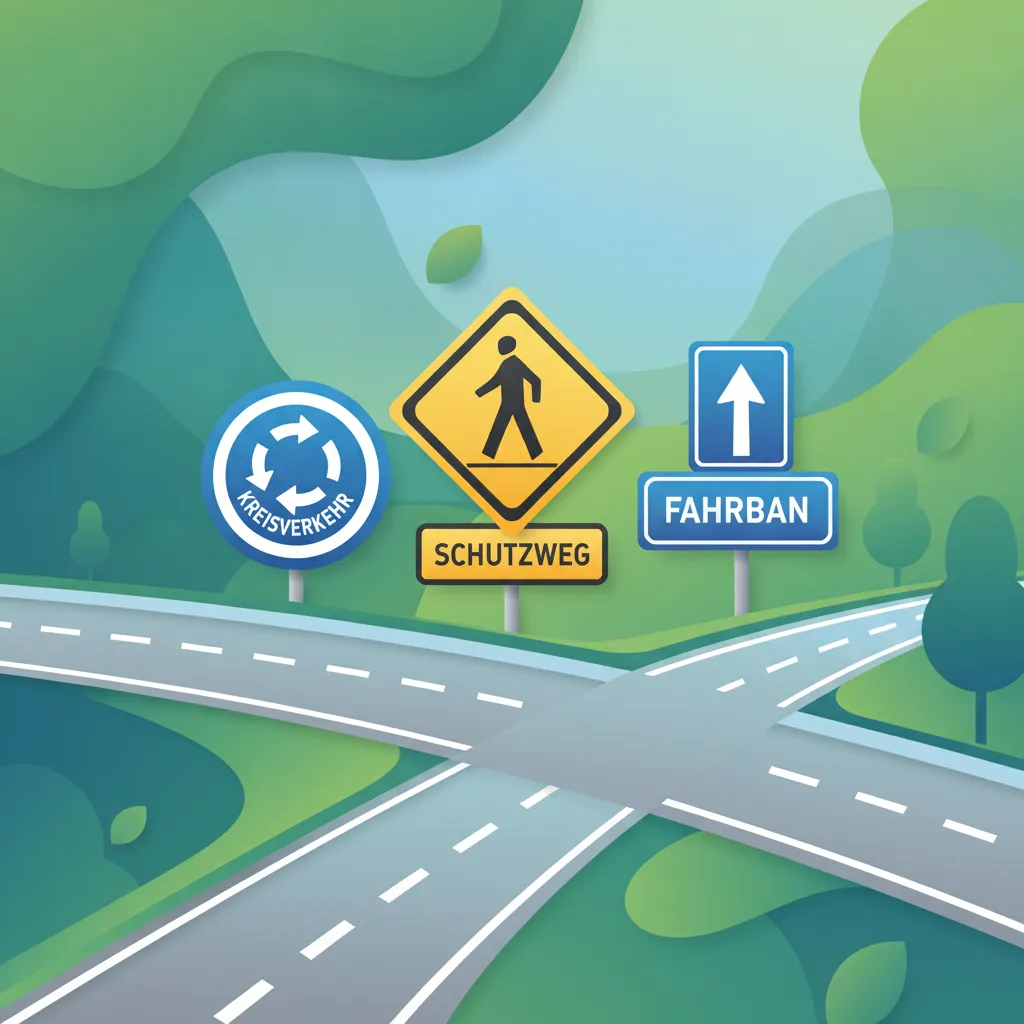
This lesson covers the specific regulations associated with special Austrian road signs and areas. It details the rules for 'Schutzweg' (protected pedestrian crossings), 'Kreisverkehr' (roundabouts), and the distinction between 'Fahrbahn' (road) and 'Fahrstreifen' (lane). Understanding these specific contexts is essential for safe navigation in urban and suburban environments.

This lesson addresses the unique challenges and priority rules that apply when interacting with public transport and cyclists at intersections. It clarifies the specific right-of-way regulations for trams, which often have priority over other traffic, and the procedures for navigating around bus stops. The content also covers how to safely manage crossings with dedicated bicycle lanes, ensuring the protection of all road users.
Explore realistic scenarios of right-turn conflicts involving heavy vehicles, pedestrians, and cyclists in Austria. Understand how to apply defensive driving and yielding rules to prevent accidents and ensure safety for all road users.
This lesson provides a detailed guide to executing turning manoeuvres safely and correctly at both intersections and roundabouts. It explains the importance of proper lane positioning well in advance of the turn, the correct timing for signaling, and the necessity of checking for pedestrians and cyclists. The content also reinforces priority rules that apply when turning, particularly when crossing the path of oncoming traffic during a left turn.
This lesson provides advanced strategies for proactively managing interactions with vulnerable road users to prevent conflicts before they arise. It teaches drivers to predict the likely behavior of pedestrians, cyclists, and e-scooter riders, especially at intersections and in congested areas. Key techniques include maintaining larger safety distances, covering the brake, and making eye contact to ensure mutual awareness and avoid accidents.
This lesson focuses on the critical skill of sharing the road safely with vulnerable users, such as pedestrians, cyclists, and e-scooter riders. It details the legally required distance buffers for overtaking and emphasizes heightened awareness in sensitive areas like school zones and designated pedestrian crossings. The content provides guidelines for interacting with bicycle lanes and shared spaces to foster a protective and respectful driving attitude towards those most at risk.
This lesson reinforces the critical importance of protecting vulnerable road users in dense urban settings. It teaches drivers to be hyper-aware of pedestrians and cyclists, especially near intersections and crosswalks. Key techniques include reducing speed, making eye contact to confirm intentions, and giving ample space.
This lesson focuses on the strategic approach to navigating intersections and roundabouts in a large vehicle. It covers the importance of correct lane positioning well in advance of the turn to accommodate the vehicle's size and off-tracking. The lesson also reinforces right-of-way rules and how to safely merge with and cross traffic.
This lesson provides specific guidance for sharing the road with different types of vehicles in Austria. It covers the dangers of large vehicle blind spots, the rules for navigating near buses and dedicated tram tracks, and common conflict points at intersections. Understanding the behavior and limitations of other vehicles is key to safely navigating complex urban environments.
This lesson provides a comprehensive explanation of Austria's right-of-way laws, which are fundamental to intersection safety. It covers the meaning of different priority signs and clarifies the 'Rechts vor Links' (priority to the right) rule that applies at unmarked junctions. A clear understanding of these rules is essential to prevent conflicts and collisions in urban and rural settings.

This lesson teaches drivers how to develop spatial awareness regarding their vehicle's size. It covers how to judge the required space for making turns, considering the vehicle's turning radius and the effects of off-tracking. Planning ahead and positioning the vehicle correctly before a manoeuvre is key to navigating tight spaces successfully.
This lesson provides practical strategies for safely reversing in challenging environments like narrow streets or busy loading zones. It emphasizes the 'get out and look' principle, the proper use of mirrors and cameras, and the critical safety role of a reliable spotter. Executing these manoeuvres slowly and cautiously is paramount to avoiding collisions.
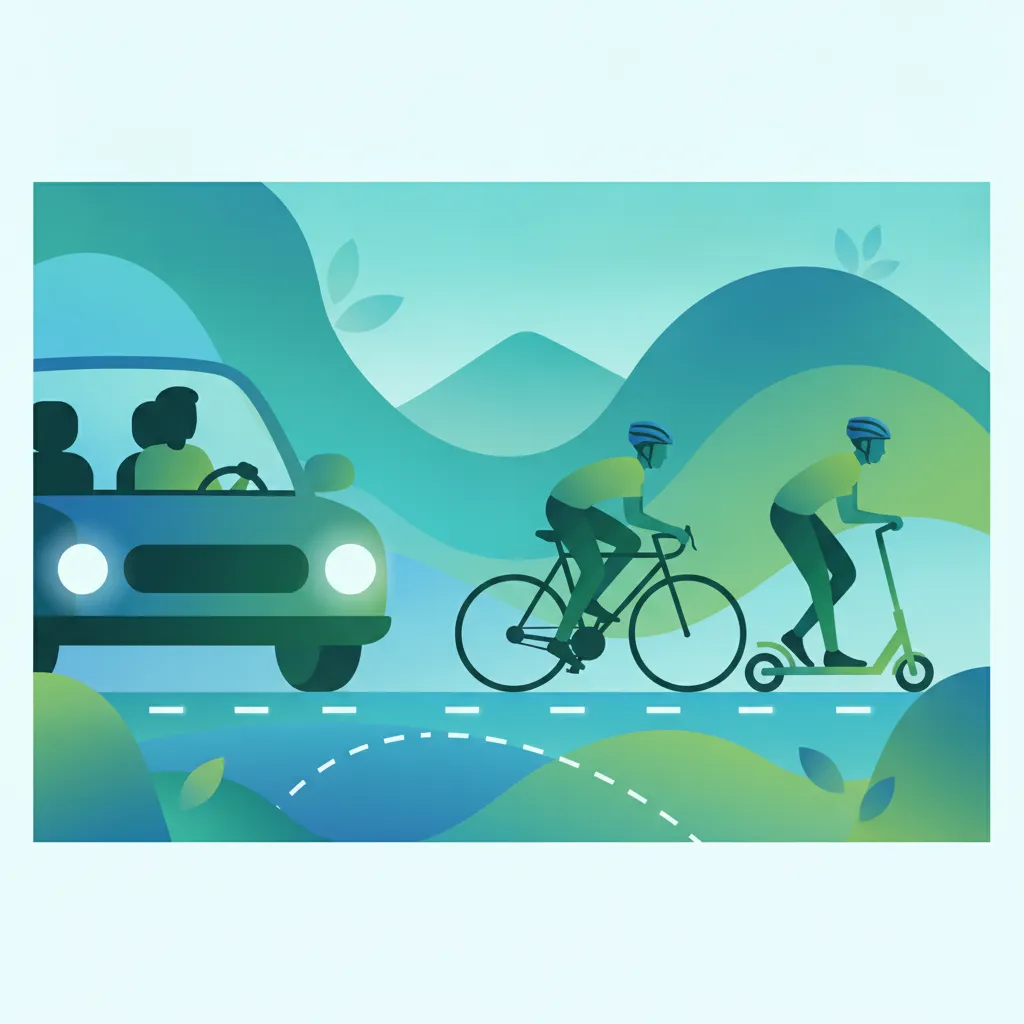
Cyclists and e-scooter riders are highly vulnerable and can be hard to see from a high driving position. This lesson focuses on the critical danger points, such as making right turns across cycle lanes and checking blind spots before pulling away from a stop. It teaches the importance of giving ample space when overtaking and anticipating their movements in busy city traffic.
Find clear answers to common questions learners have about Right Turn Conflict Management with Pedestrians and Cyclists. Learn how the lesson is structured, which driving theory objectives it supports, and how it fits into the overall learning path of units and curriculum progression in Austria. These explanations help you understand key concepts, lesson flow, and exam focused study goals.
Heavy vehicles have larger blind spots that can completely obscure a cyclist or pedestrian, especially when the vehicle is positioned to turn right. Austrian law places a high responsibility on professional drivers to ensure these areas are clear before and during the turn.
You must wait until the cyclist has safely cleared the intersection before moving. Never initiate a right turn if there is any possibility of a cyclist being in your blind spot, as they may continue straight while you are turning.
The theory exam often tests your knowledge of the correct mirror adjustment and sequence of observations. You must demonstrate that you can effectively utilize the front, kerb, and side wide-angle mirrors to maintain a 360-degree awareness of vulnerable road users.
Yes, the principles of right-turn conflict management apply to all C1, C1E, C, and CE licence categories. The larger the vehicle, the more critical these defensive observation techniques become for road safety.
Refine your study plan by searching for specific Austrian driving theory practice sets. Pinpoint questions related to particular road rules, signs, or challenge levels, and begin practicing immediately to reinforce your knowledge and excel in your official exam with confidence. Get started with focused revision today.