
This lesson focuses on the critical skill of managing the extensive blind spots inherent in large passenger vehicles. You will learn to correctly configure and systematically scan all mirror systems, including wide-angle and kerb-view mirrors, while integrating modern camera technology to maintain full situational awareness.

Lesson content overview
Operating a bus or coach, particularly within the dense urban and diverse road conditions of Austria, demands an exceptionally high level of situational awareness. These large vehicles possess inherent limitations in driver visibility, creating what are known as "blind spots" – areas around the vehicle that cannot be seen directly from the driver's seat. This lesson is essential for all aspiring bus and coach drivers seeking an Austrian Driving Theory Course for Bus & Coach Licence (Category D), as it focuses on the systematic use of all available mirrors and advanced camera systems to effectively eliminate these blind zones, ensuring the safety of passengers and all other road users.
Blind spots are critical areas surrounding a bus or coach where objects, vehicles, pedestrians, or cyclists can become completely hidden from the driver's direct line of sight. Due to their considerable length, width, and height, buses and coaches naturally have more extensive and complex blind spots compared to smaller vehicles. These hidden zones pose a significant risk, especially to vulnerable road users such as pedestrians, cyclists, and motorcyclists, as well as smaller cars.
Failure to properly manage these blind spots can lead to severe accidents during maneuvers like lane changes, turning, pulling away from a stop, or reversing. The primary goal of visibility management is to transform these unseen areas into observable zones, thereby reducing the risk of collisions and upholding the professional duty of care towards passengers and other road users. This proactive approach to visibility is not merely a best practice; it is a fundamental requirement of safe and responsible bus and coach operation under Austrian traffic law.
Modern buses and coaches are equipped with a comprehensive array of mirrors and, increasingly, advanced camera systems designed to provide drivers with a complete picture of their surroundings. These tools are indispensable for detecting hazards that would otherwise remain hidden. Mirrors operate on the principle of light reflection, with different curvatures (e.g., convex in wide-angle mirrors) designed to expand the field of view. Camera systems, on the other hand, provide a live video feed, often capable of eliminating blind zones caused by vehicle structure or overhangs that mirrors might still miss.
The integration of these systems allows drivers to overcome the physical limitations of direct visibility. A professional bus driver must develop a systematic routine for checking all mirrors and camera displays continually. This routine ensures that all relevant zones around the vehicle are consistently monitored, significantly enhancing safety. Adhering to these principles is crucial for meeting legal obligations and ensuring passenger safety, forming a core part of the Austrian Driving Theory Course for Bus & Coach Licence (Category D).
Buses and coaches are equipped with several types of mirrors, each serving a specific purpose in providing comprehensive visibility. Understanding the function and correct adjustment of each mirror type is fundamental for safe operation.
Definition: Standard side mirrors are mounted on the exterior left and right sides of the vehicle, providing a primary view of the adjacent traffic lanes directly alongside and to the rear of the bus. They are similar in concept to car side mirrors but are often larger to accommodate the dimensions of the bus.
Practical Meaning: These mirrors are crucial for observing traffic approaching from behind, monitoring the position of other vehicles in adjacent lanes, and detecting obstacles or road users near the vehicle's immediate sides. They are your first line of defense against side-impact collisions during lane changes or turns.
Associated Rules: Before every journey, these mirrors must be correctly adjusted to provide a clear and unobstructed view of the road behind and to the side. They should minimize distortion and allow the driver to quickly assess distances and speeds of other vehicles.
When adjusting standard side mirrors, aim to see a small sliver of your own vehicle's side in the innermost part of the mirror. This helps with spatial awareness relative to your bus.
Definition: Wide-angle mirrors, also known as convex mirrors, have a curved surface that expands the field of view compared to standard flat mirrors. They are typically positioned below or alongside the standard side mirrors.
Practical Meaning: These mirrors are specifically designed to show more of the adjacent lane and, crucially, the blind zones close to the vehicle's sides that are not visible in standard mirrors. They help in detecting vehicles, especially motorcycles and cyclists, that might be hidden directly alongside the bus's rear wheels, particularly during lane changes.
Associated Rules: For optimal coverage, wide-angle mirrors must be adjusted such that the far side wheel of the vehicle is just visible on the inner edge of the mirror's view. This precise adjustment ensures maximum coverage of the critical blind spot area.
Definition: Kerb-view mirrors are specialized mirrors positioned to provide a clear view of the curb side of the bus. They are often mounted low on the driver’s side, specifically angled downwards and outwards.
Practical Meaning: These mirrors are indispensable for detecting pedestrians, cyclists, and obstacles (such as bollards, parked vehicles, or street furniture) very close to the curb, especially when pulling away from a bus stop, turning at low speeds, or maneuvering in tight urban environments. They are vital for preventing accidents with vulnerable road users who might be alongside the bus's front or rear wheels.
Associated Rules: Kerb-view mirrors must be precisely angled towards the curb edge, showing the area immediately adjacent to the side of the bus and extending a few metres backwards. This ensures that the driver can see any activity or obstructions along the bus's immediate path on the curb side.
Definition: The interior mirror is located inside the cabin, typically above the windscreen. In modern buses, it might also integrate a display for a rear-view camera feed.
Practical Meaning: While primarily used for observing passengers and ensuring their well-being, the interior mirror also provides a quick overview of traffic directly behind the bus. It helps in assessing the overall traffic situation to the rear and serves as a cross-reference with exterior mirrors for overtaking awareness.
Associated Rules: This mirror should be adjusted to provide a clear view of the entire passenger compartment and, if designed for it, the rear window for traffic observation. It should be checked regularly, especially before any backward movement or during straight-ahead driving to monitor traffic flow behind.
Beyond conventional mirrors, many modern buses and coaches are equipped with camera systems that offer significant advantages in overcoming blind spots, particularly those caused by the vehicle's size and structure. These systems provide crucial supplementary visual information.
Definition: A rear-view camera is a video camera mounted at the very rear of the bus, displaying a live feed on a dedicated screen on the dashboard.
Practical Meaning: The rear-view camera provides a comprehensive, unobstructed view of the area directly behind the bus, covering its full width and extending several metres backwards. This is invaluable during reversing maneuvers, as it eliminates the massive blind spot that naturally exists behind such a long vehicle, allowing the driver to detect pedestrians, cyclists, or obstacles that would be invisible in mirrors alone.
Associated Rules: The rear-view camera system must be activated whenever the bus is put into reverse gear or when a backing maneuver is initiated. The driver is legally obligated to check the camera feed continuously before and during reversal, always prioritizing safety and stopping immediately if an obstruction is detected.
Never rely solely on the rear-view camera. Always combine camera checks with physical observation and, if necessary, seek assistance from a spotter, especially in complex or confined spaces.
Definition: Side-view cameras are cameras mounted on the sides of the vehicle, often near the front wheels or mid-section, providing video feeds of the lateral surroundings, particularly in traditionally problematic blind spot areas.
Practical Meaning: These cameras act as an extra pair of "eyes" for the driver, helping to detect cyclists, motorcyclists, or obstacles that might not be fully covered by mirrors, especially in critical blind zones near the wheels. They are exceptionally useful during lane changes, turning at intersections, or when pulling away from stops in congested urban areas.
Associated Rules: Side-view cameras should be used in conjunction with side mirrors during any maneuver that involves lateral movement. Before initiating a lane change or turn, the driver must verify the side-view camera feed to ensure the intended path is clear of any hidden hazards.
Effective blind spot management is not about occasionally glancing at a mirror; it requires a structured and consistent approach. Professional bus drivers must adopt a systematic scanning procedure that integrates all available mirrors and camera systems.
Pre-Trip and Pre-Start Scan: Before even starting the engine, perform an initial walk-around check, then once seated, adjust all mirrors and mentally scan the entire perimeter of the vehicle. Verify the proper functioning of all camera systems.
Scan Before Moving Off from a Stop: This is a critical moment for bus drivers. Before initiating any forward movement, whether from a bus stop, a parking bay, or an intersection, perform a comprehensive scan:
Safe Lane Change Procedure Using Mirrors and Cameras: Before every lane change:
Continuous Monitoring While Driving: Visibility management is an ongoing process. Maintain awareness by regularly scanning mirrors and camera displays even when driving straight. Hazards can appear unexpectedly, and continuous monitoring allows for early detection and safe reaction. This includes quick glances during acceleration, deceleration, and while navigating curves.
Austrian traffic law places clear and stringent obligations on drivers of all vehicles, especially large public transport vehicles like buses and coaches, regarding visibility and blind spot management. These regulations underscore the importance of safety and the duty of care towards other road users.
Drivers in Austria are legally required to continually monitor the complete surrounding area of their vehicle before and during any maneuver that could affect other road users. This explicit obligation mandates the active use of all installed mirrors and, where fitted, camera systems. This applies to every maneuver, including starting from a standstill, changing lanes, turning, and reversing. Failing to do so can result in legal penalties and is considered a serious breach of road safety.
Beyond merely having mirrors, Austrian regulations also stipulate that mirrors must be correctly adjusted before each journey. This ensures they provide optimal visibility of adjacent lanes and the curb sides, maximizing the driver's field of view and minimizing blind spots. This adjustment should be performed every time the vehicle is started, or if the mirrors have been moved or disturbed. Specific requirements also extend to wide-angle and kerb-view mirrors:
Even experienced drivers can fall into habits that compromise blind spot management. Awareness of these common pitfalls is the first step towards correcting them.
Effective blind spot management is dynamic; it must adapt to varying environmental and operational conditions.
Rain, Fog, or Snow: These conditions drastically reduce visibility. Mirrors may be obscured by water droplets or fogged up, and camera images might be less clear. Drivers should:
Night Driving: Reduced ambient light means less contrast, making objects harder to spot.
Dense City Traffic: Urban environments are characterized by high volumes of vulnerable road users (pedestrians, cyclists, motorcyclists) and frequent stops.
Rural Roads and Motorways: While vulnerable road users might be less frequent, higher speeds mean rapidly approaching vehicles.
Vehicle Load: A fully loaded bus has a different dynamic. The vehicle might lean more into turns, subtly altering mirror angles.
Vulnerable Road Users (VRUs): When pedestrians, cyclists, or motorcyclists are present near bus stops, intersections, or pedestrian crossings, exercise extreme caution.
Applying theoretical knowledge to real-world scenarios is crucial for mastering blind spot management.
You are at a bus stop in Vienna, having just dropped off passengers. Before pulling back into traffic, you engage in a thorough systematic scan.
You are driving your coach on an Austrian motorway at night, and light rain has reduced visibility. You need to change lanes to the right.
You need to reverse your bus into a narrow parking bay at a city terminal. It's raining, and the rear window is somewhat obscured.
The comprehensive use of mirrors and camera systems is not just a technical skill; it is a fundamental pillar of professional bus and coach driving in Austria. Blind spots are an undeniable reality of operating large vehicles, but with diligent adjustment, systematic scanning, and the intelligent integration of modern technology, they can be effectively managed.
Mastering these visibility strategies directly supports your primary professional responsibility: the Passenger Duty of Care. By anticipating and avoiding hazards, you ensure not only the safety of your passengers but also the well-being of all other road users, particularly vulnerable pedestrians and cyclists. As you progress through the Austrian Driving Theory Course for Bus & Coach Licence (Category D), remember that continuous vigilance and a methodical approach to checking your surroundings are paramount to safe, responsible, and professional driving.
This lesson covers the essential skill of managing blind spots in Category D vehicles through proper mirror and camera use. Buses and coaches have extensive hidden zones that pose risks to vulnerable road users, requiring a comprehensive visibility strategy. Four types of mirrors—standard side, wide-angle, kerb-view, and interior—each serve specific functions and must be correctly adjusted before every journey. Modern rear-view and side-view cameras provide crucial supplementary views, particularly for reversing and detecting cyclists in lateral blind zones. Professional drivers must adopt systematic scanning procedures that integrate all available systems, performing thorough checks before and during every maneuver while maintaining continuous awareness of changing traffic conditions.
A short set of high-value points that capture the most important learning from this lesson.
Large buses and coaches have extensive blind spots that pose serious risks to vulnerable road users including cyclists and pedestrians.
Standard side mirrors, wide-angle mirrors, kerb-view mirrors, and interior mirrors each serve distinct purposes and must be used together for complete situational awareness.
Wide-angle mirrors must be adjusted so the far wheel is just visible on the inner edge to maximize blind spot coverage.
Modern camera systems supplement but never replace traditional mirrors, providing additional views especially during reversing and in critical lateral blind zones.
A systematic scanning routine must be performed before every maneuver, not just a single glance.
Explore all units and lessons included in this driving theory course.
Wide-angle (convex) mirrors expand your field of view to reveal vehicles hidden alongside the bus's rear wheels.
Kerb-view mirrors must be angled downward toward the curb edge to detect pedestrians and cyclists in the immediate roadside zone.
Before moving off from any stop, scan all mirrors in sequence: outside, wide-angle, kerb-view, interior, and camera feeds.
Rear-view cameras must be activated and continuously monitored whenever reversing, though they supplement rather than replace physical observation.
Hazard detection requires continuous monitoring throughout maneuvers, not just before initiating them.
Over-relying on the interior mirror alone, which provides very limited peripheral vision and misses critical side blind spots.
Assuming camera systems can replace mirrors; cameras supplement mirrors and both must be checked together.
Failing to correctly adjust wide-angle and kerb-view mirrors, leaving significant blind zones unmonitored.
Performing only a single glance at mirrors or cameras before a maneuver, when hazards can appear suddenly.
Neglecting to continue monitoring mirrors and cameras once a maneuver has begun, allowing unexpected hazards to go undetected.
Lesson content overview
A short set of high-value points that capture the most important learning from this lesson.
Large buses and coaches have extensive blind spots that pose serious risks to vulnerable road users including cyclists and pedestrians.
Standard side mirrors, wide-angle mirrors, kerb-view mirrors, and interior mirrors each serve distinct purposes and must be used together for complete situational awareness.
Wide-angle mirrors must be adjusted so the far wheel is just visible on the inner edge to maximize blind spot coverage.
Modern camera systems supplement but never replace traditional mirrors, providing additional views especially during reversing and in critical lateral blind zones.
A systematic scanning routine must be performed before every maneuver, not just a single glance.
Explore all units and lessons included in this driving theory course.
Wide-angle (convex) mirrors expand your field of view to reveal vehicles hidden alongside the bus's rear wheels.
Kerb-view mirrors must be angled downward toward the curb edge to detect pedestrians and cyclists in the immediate roadside zone.
Before moving off from any stop, scan all mirrors in sequence: outside, wide-angle, kerb-view, interior, and camera feeds.
Rear-view cameras must be activated and continuously monitored whenever reversing, though they supplement rather than replace physical observation.
Hazard detection requires continuous monitoring throughout maneuvers, not just before initiating them.
Over-relying on the interior mirror alone, which provides very limited peripheral vision and misses critical side blind spots.
Assuming camera systems can replace mirrors; cameras supplement mirrors and both must be checked together.
Failing to correctly adjust wide-angle and kerb-view mirrors, leaving significant blind zones unmonitored.
Performing only a single glance at mirrors or cameras before a maneuver, when hazards can appear suddenly.
Neglecting to continue monitoring mirrors and cameras once a maneuver has begun, allowing unexpected hazards to go undetected.
Explore search topics learners often look for when studying Using Mirrors and Cameras to Manage Blind Spots. These topics reflect common questions about road rules, driving situations, safety guidance, and lesson level theory preparation for learners in Austria.
Browse additional driving theory lessons that cover connected traffic rules, road signs, and common driving situations related to this topic. Improve your understanding of how different rules interact across everyday traffic scenarios.
Deepen your understanding of large vehicle blind spots. Learn advanced techniques for adjusting and using mirrors and camera systems to ensure complete visibility around your bus, crucial for Austrian Category D theory.

This lesson provides a detailed guide on how to use a vehicle's mirrors and camera systems to their full potential. It explains the purpose of different types of mirrors (e.g., wide-angle) and how to integrate them into a continuous scanning pattern. This proactive observation is essential for detecting hazards early.

This lesson focuses on the critical role of mirrors, cameras, and other electronic aids in minimizing blind spots around a large vehicle. It provides guidance on how to properly adjust mirrors to maximize visibility. Effective use of these systems is vital for detecting smaller vehicles, cyclists, and pedestrians, especially during manoeuvres.

Passive mirror use is not enough. This lesson teaches active, systematic scanning techniques, including moving your head to look around A-pillars and using all available mirrors and cameras in a set sequence. The focus is on building a constant mental map of the space around the vehicle, especially before any change of direction or speed, to account for unseen pedestrians or cyclists.
This lesson teaches the correct technique for setting and using motorcycle mirrors to maintain awareness of traffic behind and to the sides. It emphasizes that mirrors alone are not enough, detailing the necessity of the 'lifesaver' shoulder check to cover critical blind spots. A disciplined observation routine is crucial for safe lane changes, merging, and navigating dense traffic.
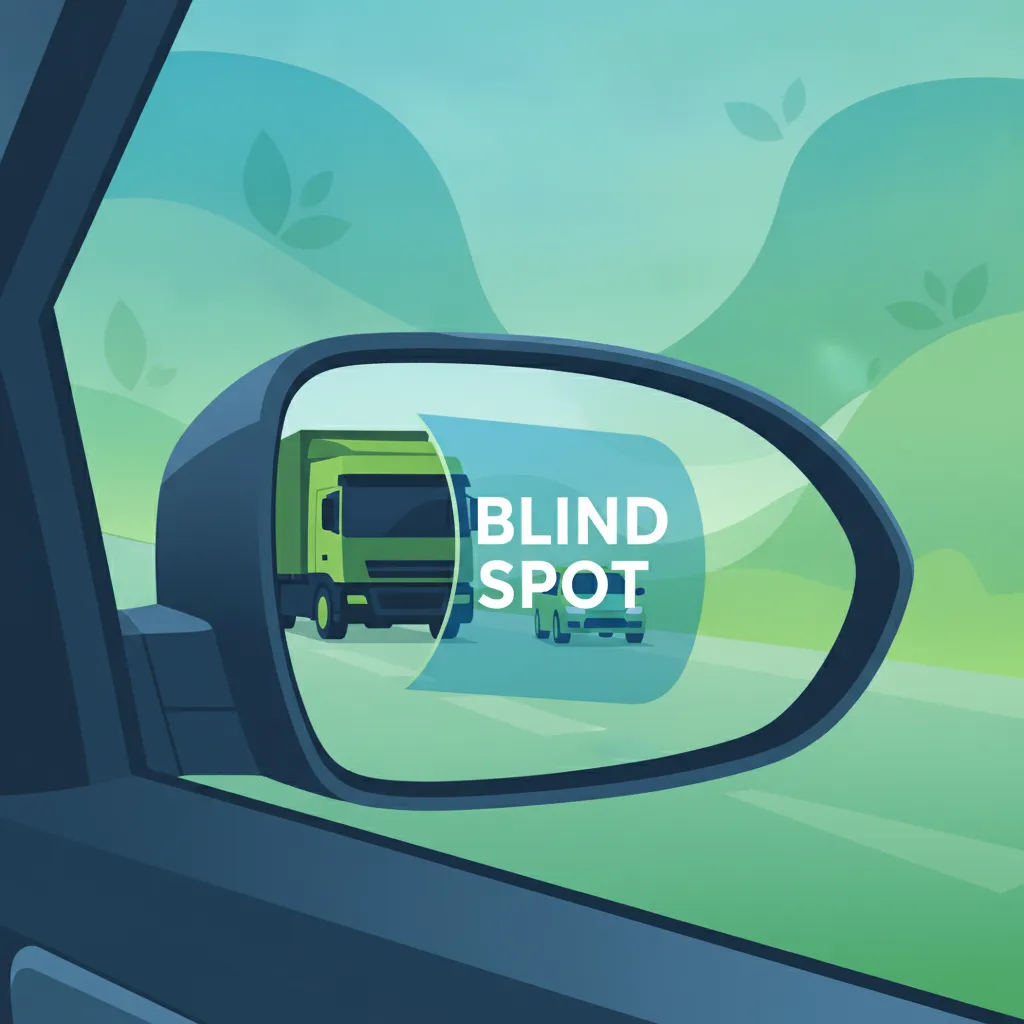
This lesson details the location and size of the significant blind spots to the front, sides, and rear of large vehicles. It explains how the vehicle's size and articulation create these 'no-zones' where other road users can disappear from view. Recognizing these areas is the first step toward developing safe observation habits.
This lesson focuses on developing comprehensive observation skills, which are the foundation of safe driving. It teaches systematic scanning techniques, including the correct sequence for mirror checks and the critical importance of the shoulder check (Schulterblick) to cover blind spots. Learners will understand how to look far ahead down the road while also maintaining awareness of their immediate surroundings to detect potential hazards as early as possible.

This lesson focuses on the safety-critical skill of reversing, emphasizing the importance of all-around observation before and during the manoeuvre. It covers the correct use of mirrors and the necessity of checking blind spots to ensure the path is clear of pedestrians, obstacles, and other vehicles. Learners will understand techniques for maintaining slow, controlled speed and making accurate steering adjustments while backing up in various situations.

This lesson explains the correct techniques for using mirrors to maintain awareness of surrounding traffic and for checking blind spots. It details the proper timing and use of indicators to signal turns and lane changes effectively. The content reinforces that clear, early communication is key to preventing misunderstandings with other drivers.

This lesson provides practical strategies for safely reversing in challenging environments like narrow streets or busy loading zones. It emphasizes the 'get out and look' principle, the proper use of mirrors and cameras, and the critical safety role of a reliable spotter. Executing these manoeuvres slowly and cautiously is paramount to avoiding collisions.
Reversing is statistically one of the most dangerous manoeuvres. This lesson outlines a strict safety protocol: get out and check the area first, use a competent banksman (marshal) whenever possible, and proceed at a slow walking pace. It also covers the use of reversing cameras and alarms as aids, but stresses they are no substitute for a thorough physical check and direct assistance.
Understand the specific legal requirements in Austria regarding the adjustment and use of mirrors and camera systems on buses. Ensure compliance with traffic laws to fulfill passenger duty of care.
This lesson provides a detailed guide on how to use a vehicle's mirrors and camera systems to their full potential. It explains the purpose of different types of mirrors (e.g., wide-angle) and how to integrate them into a continuous scanning pattern. This proactive observation is essential for detecting hazards early.
Passive mirror use is not enough. This lesson teaches active, systematic scanning techniques, including moving your head to look around A-pillars and using all available mirrors and cameras in a set sequence. The focus is on building a constant mental map of the space around the vehicle, especially before any change of direction or speed, to account for unseen pedestrians or cyclists.
This lesson focuses on the critical role of mirrors, cameras, and other electronic aids in minimizing blind spots around a large vehicle. It provides guidance on how to properly adjust mirrors to maximize visibility. Effective use of these systems is vital for detecting smaller vehicles, cyclists, and pedestrians, especially during manoeuvres.

The most critical moment at a stop is the final check before pulling away. This lesson teaches a non-negotiable safety routine: ensure all passengers are clear, close the doors, check all relevant mirrors and blind spots one last time, signal, and only then move off when safe. This systematic process is designed to prevent incidents with late-running passengers, pedestrians, or cyclists.
This lesson covers the various lighting and reflector systems required on heavy goods vehicles in Austria. It explains the function and legal requirements for headlights, taillights, brake lights, indicators, and reflective markings. Ensuring all lighting systems are operational is essential for visibility and communicating intentions to other road users.

This lesson delves into the specific Austrian laws and regulations that professional passenger drivers must adhere to. It provides an overview of rules concerning driving and rest times, the use of the digital tachograph, and the essential documents that must be carried at all times. Understanding these legal obligations is crucial for compliance and avoiding penalties during roadside checks.

Rural Austrian roads present unique challenges, including lack of markings, tight spaces, and slow-moving agricultural vehicles. This lesson teaches how to read the road ahead, anticipate hazards around blind bends, and use passing places effectively when meeting other large vehicles. It emphasizes adjusting speed to suit the limited visibility and variable road conditions.
This lesson outlines the essential daily checks that form the foundation of safe passenger transport. It provides a step-by-step guide to inspecting key components such as tyres, brakes, lights, steering, and emergency equipment. You will learn how to identify potential defects and understand the procedures for reporting issues to ensure the vehicle is roadworthy.

Transporting children carries the highest level of responsibility. This lesson covers the specific Austrian rules for school buses, including the use of warning signs and lights. It focuses on developing a mindset of extreme caution, anticipating that children may run into the road unexpectedly, and managing the chaotic traffic environment often found around schools during drop-off and pick-up times.
This lesson teaches the correct technique for setting and using motorcycle mirrors to maintain awareness of traffic behind and to the sides. It emphasizes that mirrors alone are not enough, detailing the necessity of the 'lifesaver' shoulder check to cover critical blind spots. A disciplined observation routine is crucial for safe lane changes, merging, and navigating dense traffic.
Find clear answers to common questions learners have about Using Mirrors and Cameras to Manage Blind Spots. Learn how the lesson is structured, which driving theory objectives it supports, and how it fits into the overall learning path of units and curriculum progression in Austria. These explanations help you understand key concepts, lesson flow, and exam focused study goals.
The kerb-view mirror allows you to monitor the area immediately alongside the passenger doors. This is critical for preventing accidents involving pedestrians or cyclists who might be standing close to the bus while you are pulling away from a stop.
Yes. While mirrors are essential, they have inherent blind spots. Cameras provide an additional, often wider-angle perspective that can help identify hazards closer to the vehicle that mirrors might miss, especially when reversing or in tight city spaces.
Professional drivers must employ a constant, systematic scanning routine. You should check your mirrors every 5-8 seconds, ensuring you rotate your view through all main, wide-angle, and internal mirrors to maintain a comprehensive 360-degree awareness of the traffic environment.
Refine your study plan by searching for specific Austrian driving theory practice sets. Pinpoint questions related to particular road rules, signs, or challenge levels, and begin practicing immediately to reinforce your knowledge and excel in your official exam with confidence. Get started with focused revision today.