
This lesson focuses on the unique challenges of driving a bus or coach on rural and narrow roads in Austria. You will learn to navigate routes with limited markings, manage tight spaces, and safely interact with agricultural traffic to ensure passenger safety.

Lesson content overview
Operating a bus or coach on Austria's rural and narrow roads presents a distinct set of challenges. These routes often lack the clear markings and consistent width of urban or motorway environments. Instead, drivers encounter winding paths, limited visibility, slow-moving agricultural vehicles, and varying road surfaces. For Category D licence holders, mastering these conditions is paramount, as passenger safety and comfort are always the highest priorities. This lesson delves into the specific techniques, principles, and Austrian regulations necessary for safe and efficient driving on these unique roads.
Austrian rural roads, especially those in alpine and agricultural regions, form a significant part of the road network. They are characterized by their varied nature, which demands heightened awareness and adaptable driving skills. Unlike predictable city streets or motorways, these roads often hide their complexities until the last moment.
Rural roads in Austria can range significantly in width. Some may have clear lane markings, while others are single carriageways designed for one vehicle at a time, with no central line or edge markings. Roads known as Sagenstraße, for instance, are typically very narrow country roads that require extreme caution. The absence of markings does not imply infinite space; rather, it demands that drivers continuously assess the available width and position their large vehicles safely.
When lane markings are absent, bus and coach drivers must position their vehicles towards the right side of the roadway, leaving as much space as possible for potential oncoming traffic. This mindful positioning helps to maximize safety margins and ensure that the vehicle does not inadvertently encroach upon the path of others, which can be a common misunderstanding on unmarked sections.
Blind bends are sections of road where a driver's view of the path ahead is obstructed by curves, hills, or roadside features like dense foliage or buildings. These can be particularly hazardous for large vehicles like coaches due to their longer stopping distances and wider turning circles.
Approaching a blind bend, especially a sharp or hilltop one, significantly limits a driver's ability to see oncoming traffic or unexpected obstacles. This reduction in visibility distance means the driver has less time to react. The principle of adjusting speed to visibility is critical here, ensuring that the driver can always stop within the distance they can see to be clear. Failure to anticipate what might be around the bend is a common cause of serious incidents on rural roads.
Safe operation of a bus or coach on rural Austrian roads is built upon several core principles that guide driver behavior and decision-making. These principles are interconnected and, when applied consistently, significantly reduce risk.
One of the most fundamental safety principles is that your speed must always be set so that you can stop your vehicle within the visible distance ahead. This is not just a recommendation but a mandatory rule, especially critical on rural and unmarked roads where conditions can change rapidly. This principle, enshrined in Austrian law (§ 30 StVO), accounts for factors such as road curvature, surface condition, and weather.
For a bus or coach, which has a longer stopping distance than a passenger car, applying this principle requires even greater caution. Drivers must constantly scan the road, assess their sight distance, and be prepared to reduce speed significantly before entering sections with limited visibility. This proactive approach prevents situations where an obstacle or oncoming vehicle suddenly appears, leaving insufficient time to react.
On roads without clear lane markings, correct road positioning is vital. It means guiding your vehicle within the available space to maximize safety margins for yourself and other road users. As a bus or coach driver, your larger vehicle dimensions require precise positioning, especially when encountering oncoming traffic or navigating narrow sections.
Always aim to keep your vehicle positioned towards the right side of the road, particularly on winding or cresting sections where visibility is limited. This creates a wider safety buffer between your vehicle and potential oncoming traffic. It also helps to prevent unintended encroachment onto the opposing lane, which can happen easily if you misjudge the road's width, especially in corners.
When passing or being passed by other vehicles, especially agricultural machinery or other large vehicles, maintaining sufficient lateral clearance is critical. A coach is a wide vehicle, and any additional width from an opposing vehicle significantly reduces the available space. Misjudging this clearance can lead to side-swipe accidents or forcing a vehicle off the road.
Drivers must develop a keen sense of their vehicle's width and its "envelope" in relation to other objects and vehicles. This involves not only judging the width of the road but also anticipating the movements of other drivers, particularly those operating exceptionally wide equipment. When in doubt, it is always safer to slow down, stop, or use a passing place to ensure adequate clearance.
When encountering exceptionally wide vehicles like combine harvesters, remember that they may temporarily occupy more than a single lane. Be prepared to stop and yield, ensuring they have ample space to pass safely.
While safety is paramount, maintaining passenger comfort is also a significant responsibility for bus and coach drivers. Rural roads often feature winding sections, uneven surfaces, and sudden gradients. Abrupt braking, sharp steering, or rapid acceleration can cause discomfort, motion sickness, or even injury to passengers, especially those standing or moving within the vehicle.
Smooth driving inputs are essential. Anticipate bends and speed changes well in advance, applying gentle braking and acceleration. Maintain a steady speed through curves, avoiding excessive lateral forces that can sway passengers. This focus on smooth operation enhances the passenger experience and minimizes the risk of incidents inside the vehicle.
Narrow roads inevitably lead to close encounters with other vehicles. How these situations are managed—especially when space is limited—can be the difference between a smooth passage and a dangerous confrontation.
On many narrow Austrian rural roads, passing places (Überholstreifen) are provided to facilitate two-way traffic flow where the road itself is too narrow for simultaneous passage. These are often marked with specific signage. As a bus or coach driver, you must be proficient in identifying and using these places correctly.
The rule is clear: if you encounter oncoming traffic on a narrow road and there is a passing place ahead that you can safely reach, you should pull into it and allow the oncoming vehicle to pass. This applies even if the oncoming vehicle is smaller. It is a common misunderstanding that larger vehicles must always be given priority to use the main road; often, the driver closer to a passing place or who can stop more safely should yield.
Scan ahead for approaching vehicles and available passing places.
Assess whether you or the oncoming vehicle can reach a passing place more safely or easily.
Signal your intent early by slowing down and, if necessary, using your indicator.
Pull fully into the passing place, ensuring your vehicle is clear of the main carriageway.
Briefly activate hazard warning lights to indicate you are stationary and yielding, especially if you are partially obstructing.
Wait for the oncoming vehicle to pass safely before rejoining the road.
Beyond specific passing places, general right-of-way rules (e.g., § 57 and § 60 StVO) apply on narrow roads. Often, the principle of "giving way to oncoming vehicles" prevails when road width is insufficient for both to pass simultaneously. This means that if you are approaching a narrow section, such as a bridge or a constriction, and an oncoming vehicle is already within or about to enter that section, you must yield.
This is particularly true for larger vehicles, as their maneuverability is limited. Always be prepared to stop and wait. Courtesy and safety should always take precedence over strict adherence to right-of-way if there is any doubt about safe passage.
Overtaking on rural and narrow Austrian roads is a maneuver that demands extreme caution and should only be undertaken when absolutely safe and necessary. Due to the dimensions of a bus or coach, a considerable amount of clear road ahead and sufficient road width are required.
Overtaking is strictly prohibited in blind bends, at intersections with limited visibility, and on narrow sections where a safe passing place is not available.
Before attempting to overtake, drivers must:
In many rural situations, especially with slow-moving agricultural vehicles, it may be safer and more practical to simply follow the vehicle until a wider section or a designated passing place allows for a truly safe overtake. Patience is a virtue on these roads.
Rural Austria is home to a significant agricultural sector, meaning encounters with farm machinery are common. These vehicles present unique challenges due to their size, speed, and sometimes unpredictable movements.
Tractors, combine harvesters, self-propelled sprayers, and large trailers are often much slower than other road users. Their maximum speeds can be as low as 25 km/h, and they may be hauling heavy or oversized loads. They are also significantly wider than standard vehicles, often extending beyond typical lane widths.
When driving a bus or coach, always anticipate slower speeds and be prepared to reduce your own speed considerably upon seeing an agricultural vehicle. Look for signs of farms, fields, or agricultural activity that might indicate the presence of such vehicles. They may emerge from unmarked field entrances or driveways without warning.
Following distance is always important, but it is critical when behind agricultural vehicles. Their slower speeds, uneven loads, and potentially abrupt braking mean you need more time to react. The general rule of maintaining at least a two-second gap should be increased, especially on bumpy or gravel roads where braking distances are longer.
A longer following distance also provides a better view of the road ahead, allowing you to spot potential passing places or hazards more effectively. Avoid tailgating, as this not only increases the risk of a rear-end collision but also creates discomfort for your passengers and puts pressure on the driver of the vehicle ahead.
Rural roads are often more exposed to the elements and may not be maintained to the same standard as primary routes. This necessitates a highly adaptable driving style.
The surface of rural roads can vary greatly, from smooth asphalt to rough gravel, compacted dirt, or uneven, patched asphalt. Each surface type has a different friction coefficient, directly impacting your vehicle's grip, steering, and braking performance.
Regular vehicle checks, especially of tyres, brakes, and suspension, are even more crucial when frequently driving on varied rural road surfaces.
Weather conditions can dramatically alter the safety of rural roads. Rain, fog, snow, or ice demand immediate and significant adjustments to your driving strategy.
Driving on rural roads at night adds another layer of complexity. Reduced light significantly impacts visibility distance, and roadside features may be harder to distinguish.
Adherence to the Austrian Road Traffic Act (Straßenverkehrsordnung, StVO) is mandatory. Several sections are particularly relevant to driving on rural and narrow roads.
Understanding and applying these legal frameworks is essential for safe and compliant operation of a bus or coach:
Many incidents on rural roads stem from common mistakes or violations. Being aware of these helps in actively preventing them.
High-Speed Approach to Blind Bends:
Improper Overtaking:
Failure to Use Passing Places:
Inadequate Following Distance:
Misjudging Vehicle Width:
Neglecting Weather and Surface Conditions:
Improper Use of Hazard Lights:
Mastering the complexities of driving on rural and narrow Austrian roads is an ongoing process. Continued study and practical application of these principles will enhance your safety and proficiency as a Category D driver.
Driving a bus or coach on Austrian rural roads requires mastering visibility-based speed control under § 30 StVO, strategic right-side positioning on unmarked roads, and proficient use of passing places (Überholstreifen) when meeting oncoming traffic. You must anticipate slow-moving and wide agricultural vehicles, maintain extended following distances, and adapt your speed and technique to surface conditions (gravel, wet, uneven) and weather (rain, fog, snow, night). Overtaking is forbidden in blind bends and narrow sections; patience and defensive positioning are essential for passenger safety and exam success.
A short set of high-value points that capture the most important learning from this lesson.
Your speed must always allow you to stop within the visible distance ahead—this is mandated by § 30 StVO and is critical on blind bends and cresting sections.
Position your vehicle towards the right side of unmarked roads to maximize clearance for oncoming traffic, especially through curves.
Passing places (Überholstreifen) must be used proactively—pull in safely even if the oncoming vehicle is smaller when you can reach the lay-by more easily.
Agricultural vehicles like tractors and combine harvesters are much slower and wider than your coach; reduce speed significantly and maintain generous following distances.
Overtaking is strictly prohibited in blind bends, at intersections with limited visibility, and on narrow sections without a safe passing place available.
Explore all units and lessons included in this driving theory course.
§ 57 StVO: When two vehicles meet on a narrow road with insufficient width, the vehicle that can yield more easily should do so—not necessarily the larger one.
On gravel or uneven surfaces, braking distances are longer and steering feels less responsive; reduce speed and avoid sudden inputs.
In fog, use dipped beams only; main beams reflect off the fog and worsen visibility.
Hazard warning lights are reserved for stationary vehicles posing an obstruction, not for signaling while moving.
Sagenstraße are very narrow country roads requiring extreme caution—often with no markings at all.
Approaching blind bends at speeds that prevent stopping within visible distance, risking head-on collisions with hidden oncoming traffic.
Attempting to force past oncoming vehicles on narrow roads instead of using available passing places, causing road blockages or side-swipe collisions.
Tailgating agricultural machinery on winding or bumpy roads, reducing reaction time when the slower vehicle brakes suddenly.
Underestimating the total width of two large vehicles passing each other, leading to insufficient lateral clearance.
Driving at normal speeds on wet gravel or icy surfaces without adjusting for reduced traction and longer braking distances.
Lesson content overview
A short set of high-value points that capture the most important learning from this lesson.
Your speed must always allow you to stop within the visible distance ahead—this is mandated by § 30 StVO and is critical on blind bends and cresting sections.
Position your vehicle towards the right side of unmarked roads to maximize clearance for oncoming traffic, especially through curves.
Passing places (Überholstreifen) must be used proactively—pull in safely even if the oncoming vehicle is smaller when you can reach the lay-by more easily.
Agricultural vehicles like tractors and combine harvesters are much slower and wider than your coach; reduce speed significantly and maintain generous following distances.
Overtaking is strictly prohibited in blind bends, at intersections with limited visibility, and on narrow sections without a safe passing place available.
Explore all units and lessons included in this driving theory course.
§ 57 StVO: When two vehicles meet on a narrow road with insufficient width, the vehicle that can yield more easily should do so—not necessarily the larger one.
On gravel or uneven surfaces, braking distances are longer and steering feels less responsive; reduce speed and avoid sudden inputs.
In fog, use dipped beams only; main beams reflect off the fog and worsen visibility.
Hazard warning lights are reserved for stationary vehicles posing an obstruction, not for signaling while moving.
Sagenstraße are very narrow country roads requiring extreme caution—often with no markings at all.
Approaching blind bends at speeds that prevent stopping within visible distance, risking head-on collisions with hidden oncoming traffic.
Attempting to force past oncoming vehicles on narrow roads instead of using available passing places, causing road blockages or side-swipe collisions.
Tailgating agricultural machinery on winding or bumpy roads, reducing reaction time when the slower vehicle brakes suddenly.
Underestimating the total width of two large vehicles passing each other, leading to insufficient lateral clearance.
Driving at normal speeds on wet gravel or icy surfaces without adjusting for reduced traction and longer braking distances.
Explore search topics learners often look for when studying Driving on Rural and Narrow Austrian Roads. These topics reflect common questions about road rules, driving situations, safety guidance, and lesson level theory preparation for learners in Austria.
Browse additional driving theory lessons that cover connected traffic rules, road signs, and common driving situations related to this topic. Improve your understanding of how different rules interact across everyday traffic scenarios.
Understand the unique difficulties of rural Austrian roads for Category D drivers. Learn about narrow lanes, limited visibility on blind bends, and how to safely interact with slow-moving agricultural machinery and other large vehicles.

This lesson explores the specific characteristics and hazards of rural roads (Landstraßen). It emphasizes the need for careful speed adjustment due to factors like narrow lanes, poor road surfaces, and hidden entrances. Learners will understand how to safely navigate blind curves, use passing places, and anticipate the presence of slow-moving agricultural vehicles or livestock on the road.

Many Austrian towns and city centres feature narrow roads not designed for large vehicles. This lesson provides strategies for assessing tight spaces, positioning the vehicle to maximize clearance, and navigating complex, non-standard junctions. It emphasizes the importance of slow speeds, constant observation, and understanding the vehicle's swept path to avoid contact with buildings, street furniture, and other vehicles.

Driving a bus in a busy city like Vienna or Salzburg requires constant forward planning and anticipation. This lesson teaches techniques for maintaining adequate space around the vehicle, positioning correctly for upcoming junctions, and reading the flow of traffic. Adopting a defensive mindset is key to navigating complex urban environments without incident.

This lesson addresses the challenge of manoeuvring a large vehicle through streets not designed for its size. It covers how to assess vertical and horizontal clearances, plan the vehicle's path through tight turns, and heed all restrictive signage. Careful planning and slow, precise control are essential for success.

Driving a heavy vehicle in the Alps requires specific skills to manage its energy and momentum. This lesson focuses on using lower gears and auxiliary braking systems (retarder/engine brake) to control speed on long descents and prevent brake overheating. It also covers the correct line and technique for navigating tight hairpin turns safely and efficiently.
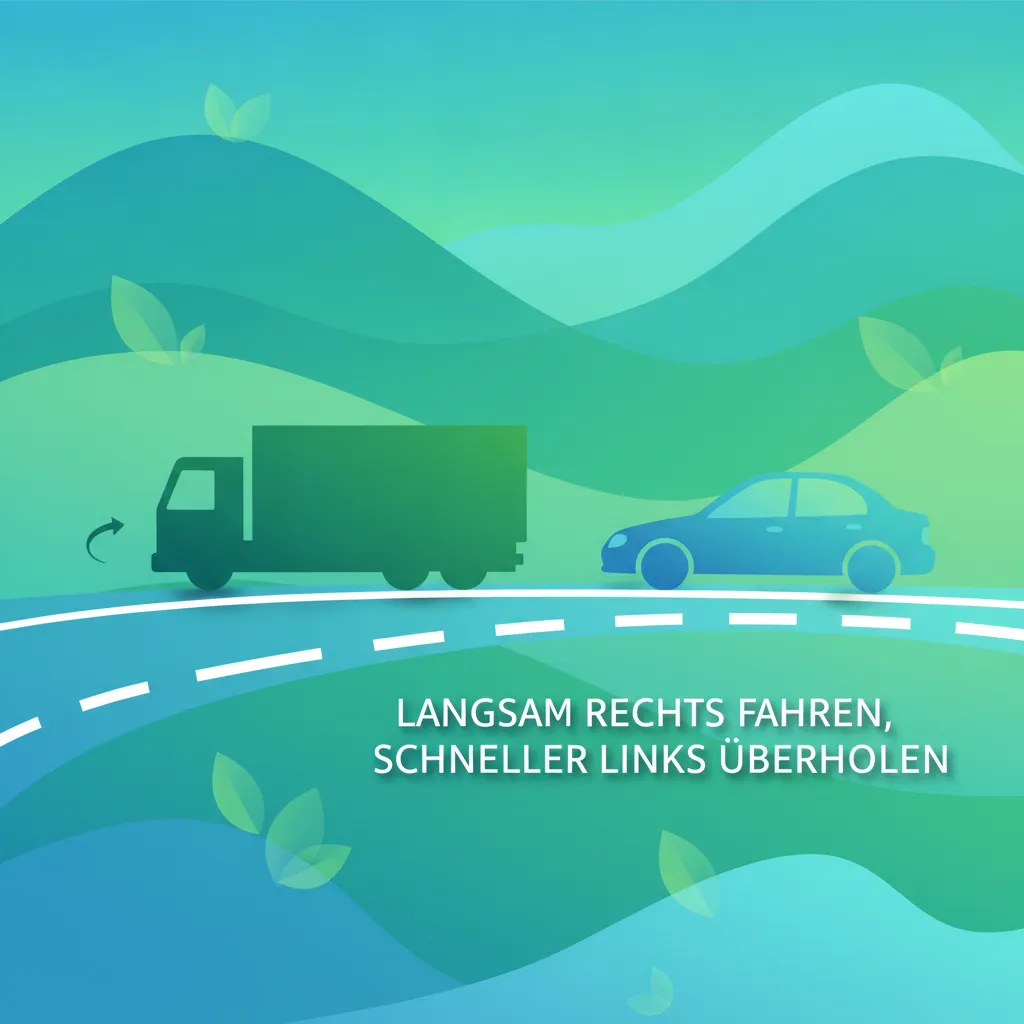
High-speed driving in a large vehicle requires excellent lane discipline and forward planning. This lesson covers Austrian speed limits for buses, rules for joining and leaving the motorway, safe overtaking procedures, and maintaining appropriate following distances. The critical importance of forming an emergency corridor ('Rettungsgasse') in traffic jams is also a key topic.
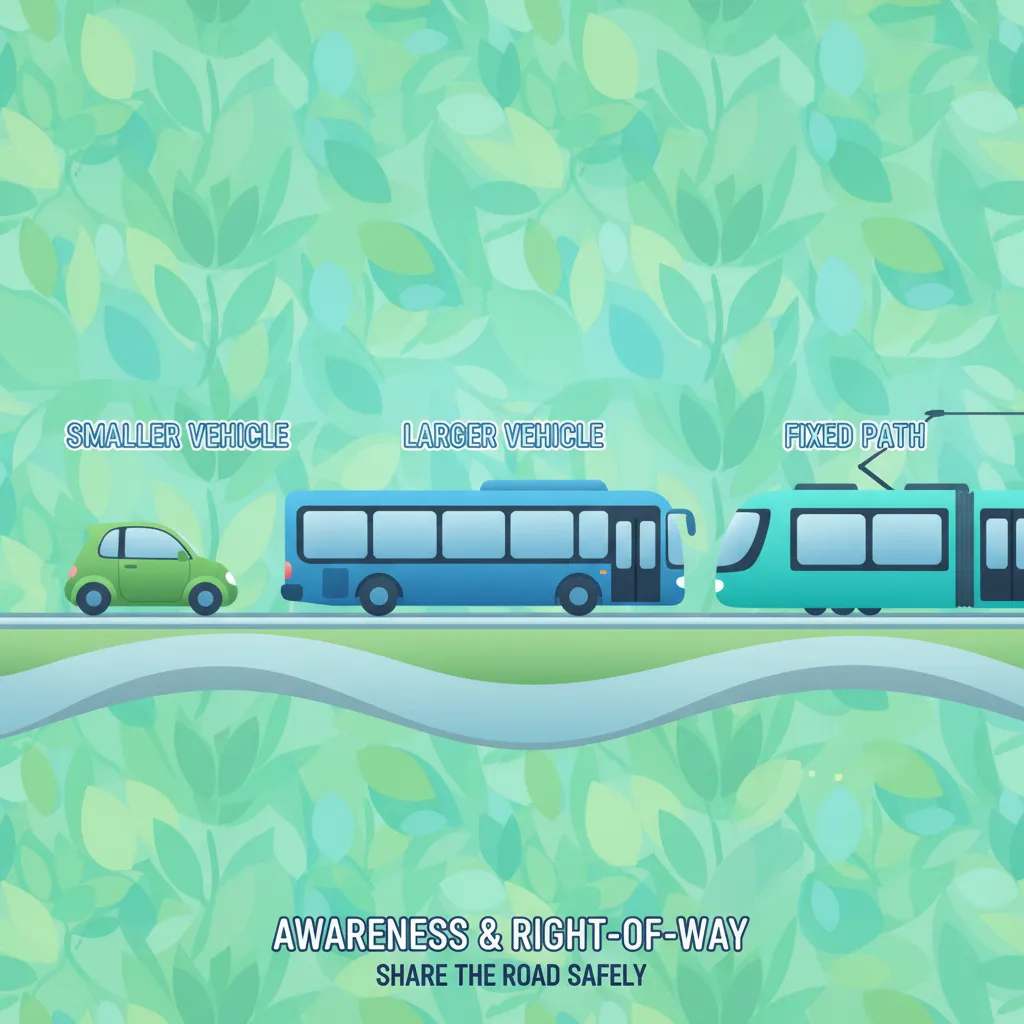
This lesson provides specific guidance for sharing the road with different types of vehicles in Austria. It covers the dangers of large vehicle blind spots, the rules for navigating near buses and dedicated tram tracks, and common conflict points at intersections. Understanding the behavior and limitations of other vehicles is key to safely navigating complex urban environments.

Buses and coaches have significant blind spots that pose a major risk to pedestrians, cyclists, and other vehicles. This lesson teaches you how to correctly set up and systematically scan all mirrors, including wide-angle and kerb-view mirrors. It also covers the use of modern camera systems to gain a complete picture of the area surrounding the vehicle, especially before moving off.

Driving in tourist hotspots in cities like Salzburg or alpine resorts requires extra patience and vigilance. This lesson explores common unpredictable behaviours, such as pedestrians stepping into the road to take photos or groups of tourists being unaware of traffic. It teaches drivers to slow down, be prepared for anything, and use communication tools like the horn sparingly and appropriately.

This lesson highlights the specific hazards of riding on countryside roads in Austria. It teaches riders to be vigilant for wildlife crossing signs, especially at dawn and dusk, and how to safely approach and overtake slow-moving agricultural machinery. Awareness of potential surface hazards like mud, gravel, or manure from farm access points is also crucial for maintaining traction.
Master the specific Austrian traffic regulations (StVO) relevant to rural and narrow roads. This includes understanding speed limits based on visibility, correct usage of passing places, and priority rules when meeting other vehicles.
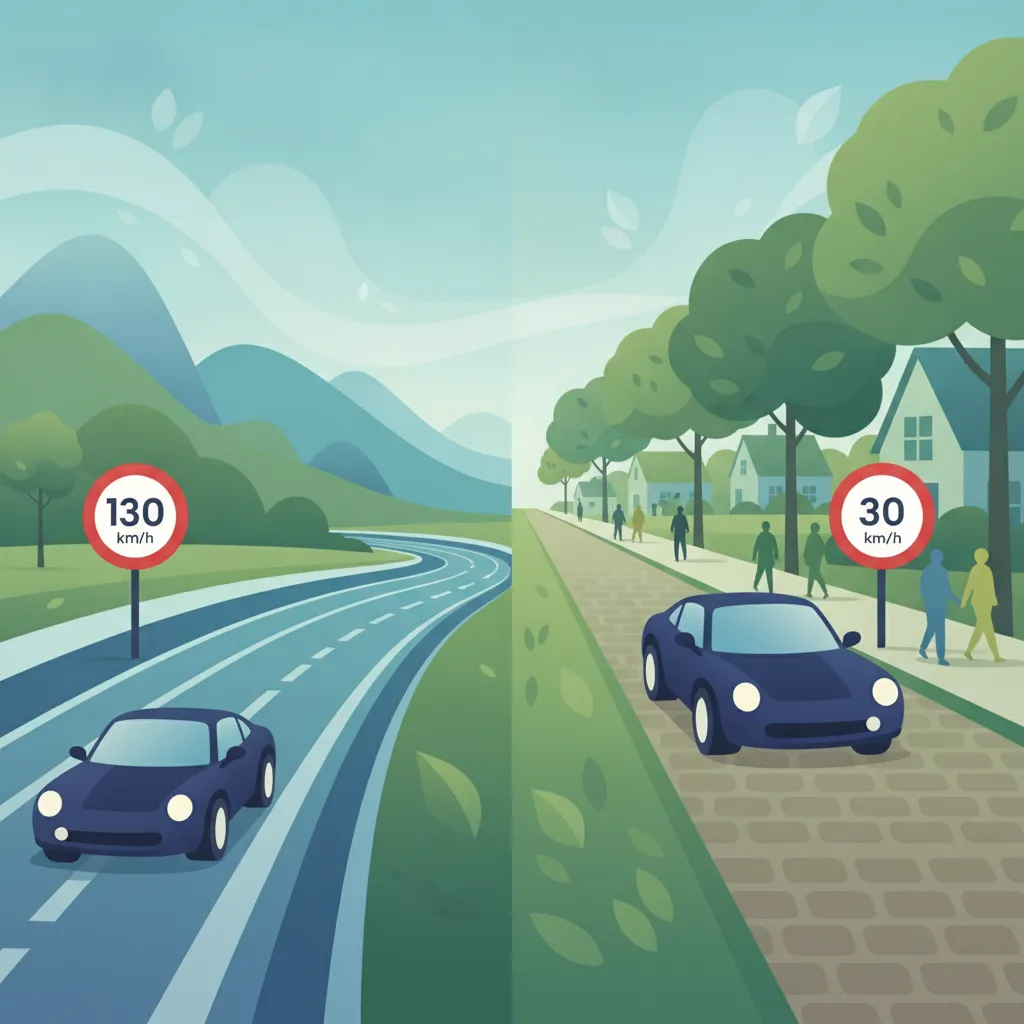
This lesson details the legally prescribed speed limits across Austria's road network, including the specific limits for urban areas (Ortsgebiet), rural roads (Landstraßen), motorways (Autobahnen), and expressways (Schnellstraßen). Learners will understand how to interpret speed limit signs, including those with supplementary conditions. Adherence to these legal requirements is a fundamental aspect of road safety and compliance with the Austrian road traffic act (StVO).

This lesson outlines the legal speed limits for Category AM vehicles in Austria, covering urban, residential, and rural areas. It explains how to identify different speed zones through signage and the importance of adjusting speed based on traffic, weather, and road conditions. Adherence to these limits is a fundamental aspect of both legal compliance and safety.
This lesson provides an overview of the Austrian Road Traffic Act (StVO) as it applies to AM riders. It introduces the hierarchy of road users and explains the fundamental principles of right-of-way, including the concepts of 'Vorfahrt' and 'Nachrang'. Learners will understand the meaning of basic road markings and priority signs to navigate traffic lawfully and safely.

This lesson provides a comprehensive explanation of Austria's right-of-way laws, which are fundamental to intersection safety. It covers the meaning of different priority signs and clarifies the 'Rechts vor Links' (priority to the right) rule that applies at unmarked junctions. A clear understanding of these rules is essential to prevent conflicts and collisions in urban and rural settings.
This lesson explores the specific characteristics and hazards of rural roads (Landstraßen). It emphasizes the need for careful speed adjustment due to factors like narrow lanes, poor road surfaces, and hidden entrances. Learners will understand how to safely navigate blind curves, use passing places, and anticipate the presence of slow-moving agricultural vehicles or livestock on the road.

This lesson provides essential knowledge for using Austria's high-speed road network. It covers the correct procedure for entering via acceleration lanes, maintaining strict lane discipline (keeping right, passing left), and understanding the digital or physical Vignette (toll sticker) requirement. The formation of the 'Rettungsgasse' (emergency corridor) during traffic jams is also a key topic.
This lesson covers the specific regulations associated with special Austrian road signs and areas. It details the rules for 'Schutzweg' (protected pedestrian crossings), 'Kreisverkehr' (roundabouts), and the distinction between 'Fahrbahn' (road) and 'Fahrstreifen' (lane). Understanding these specific contexts is essential for safe navigation in urban and suburban environments.

This lesson details the general traffic rules applicable to heavy goods vehicles on Austrian roads, highlighting differences from passenger car regulations. It covers key topics such as right-of-way at intersections, specific rules for overtaking, maintaining proper lane discipline, and adhering to designated speed limits. Understanding these rules is critical for safe integration into mixed traffic.

This lesson details the regulations for heavy goods vehicles on Austria's high-speed road network. It covers the specific speed limits, rules on lane usage (e.g., when overtaking is permitted), and procedures for entering and exiting the motorway. Adherence to these rules is crucial for safety in a fast-paced environment.

This lesson provides a clear overview of the legal penalties for traffic violations in Austria. It details the system of fines, demerit points, and the conditions that can lead to license suspension or revocation. Understanding these consequences reinforces the importance of lawful and responsible riding.
Find clear answers to common questions learners have about Driving on Rural and Narrow Austrian Roads. Learn how the lesson is structured, which driving theory objectives it supports, and how it fits into the overall learning path of units and curriculum progression in Austria. These explanations help you understand key concepts, lesson flow, and exam focused study goals.
You must significantly reduce your speed and move slightly towards the right of your lane to maximize visibility and create a buffer. Always be prepared to stop if a large vehicle is approaching from the opposite direction.
The driver who has the easier passing point or is closer to a designated passing place should yield. If the road is too narrow for two buses, communicate clearly and prioritize safety over speed.
Yes, standard rural speed limits apply, but as a professional driver, you must adjust your speed according to road conditions, width, and visibility, regardless of the maximum legal limit.
Maintain a safe following distance until you have a clear, safe section of road to overtake. Never attempt to overtake on blind bends or sections where you cannot see clearly ahead.
Refine your study plan by searching for specific Austrian driving theory practice sets. Pinpoint questions related to particular road rules, signs, or challenge levels, and begin practicing immediately to reinforce your knowledge and excel in your official exam with confidence. Get started with focused revision today.