
This lesson focuses on the critical responsibilities of transporting children, a central pillar of professional passenger care. You will learn the specific Austrian traffic rules, warning signs, and light systems required when operating school buses, helping you navigate the high-risk environments common at schools.
Lesson content overview
Transporting children in a bus or coach is one of the most demanding and responsible tasks for a professional driver. For holders of the Austrian Driving Theory Course for Bus & Coach Licence (Category D), the duty of care for young passengers is paramount, requiring an elevated level of vigilance, strict adherence to specific regulations, and a proactive mindset to ensure safety. This lesson explores the unique rules, hazards, and best practices associated with school transport in Austria, focusing on how to mitigate risks and protect vulnerable road users.
The core principle underpinning all school transport operations is the Duty of Care for Children. This is a legal and moral obligation to ensure the highest possible level of safety for school-aged passengers during their journey. Children often lack mature traffic awareness, making them highly vulnerable in traffic situations. This heightened duty reduces the potential for accidents and mandates strict compliance with specific procedures, warning systems, and driving behaviors. Drivers must always remember that their actions directly impact the safety of their young passengers and other road users.
Children are inherently unpredictable road users. Their smaller stature makes them less visible to drivers, especially in complex traffic environments or from larger vehicles like buses. They may act impulsively, run into the road unexpectedly, or misjudge the speed and distance of approaching vehicles. These factors necessitate a driver mindset of Pre-emptive Vigilance, where constant anticipation of sudden movements and potential hazards is critical. Drivers must always assume that children may not adhere to traffic signals or established safety protocols, requiring them to maintain reduced speeds and increased observation, especially near schools and designated stops.
Austrian traffic regulations mandate specific warning systems for school buses when children are boarding or alighting. These systems are designed to enhance the bus's visibility to other road users, signaling a heightened risk zone and demanding immediate attention and appropriate action from surrounding traffic.
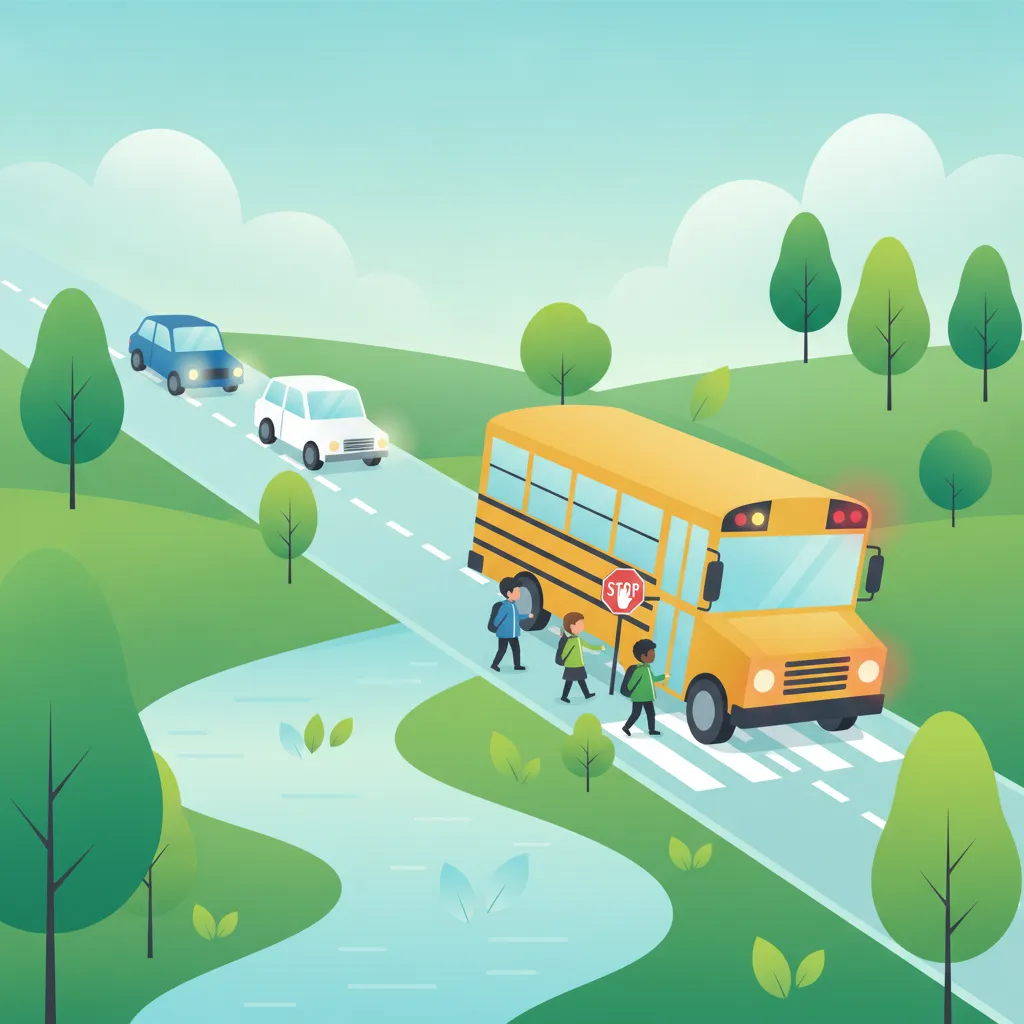
Flashing amber (orange) warning lights are external lights mounted on the bus that must be activated whenever the bus stops for children to board or alight. These lights are typically located on the front (often on the roof), rear, and sometimes the sides of the vehicle.
According to the Austrian Federal Law on Road Traffic (StVO), the activation of these lights is mandatory at any location where the bus stops for boarding or alighting, irrespective of whether it's a dedicated bus stop. This universal requirement ensures that other drivers are always warned when children might be crossing the road or moving around the bus. A common misunderstanding is that these lights are optional in low-traffic areas; however, activation is always mandatory whenever children are present for boarding or alighting.
In conjunction with the flashing amber warning lights, school buses must also deploy an external stop sign. This is typically a fold-out sign, often mounted on the side of the bus, prominently displaying "STOP" or a specific school bus stop symbol.
The external stop sign must be extended outwards when the bus stops for children to board or alight. Its purpose is to provide an additional, unmistakable visual cue to other drivers, clearly indicating that the bus is stationary and children may be present on or near the roadway. The deployment of this sign is mandatory unless the bus is stopped at a fixed, officially designated school bus stop that already features its own permanent signage. Even at informal pick-up points or along road shoulders, the stop sign must be displayed.
When a school bus activates its warning lights and deploys its stop sign, it establishes a crucial Protective Zone around it. This zone is an area where other road users must exercise extreme caution, reduce speed, and be prepared to stop.
Drivers must keep a safe distance, typically at least 30 meters, reduce their speed significantly, and be ready to stop immediately if children cross the road. This protective zone applies regardless of the bus's position on the road, including when it is pulled over to the shoulder. The relevant section of the Austrian StVO emphasizes drivers' obligations when approaching hazard warning signs and stationary vehicles involved in child transport.
A critical rule in school transport safety is the requirement for all other vehicles to yield to a school bus that has its warning lights and stop sign activated. This means that when a school bus is stationary with its signals active, other vehicles must stop and wait. This rule ensures that children can board or alight safely without interference from surrounding traffic, minimizing the risk of collisions. Ignoring this rule is not only a serious traffic offense but also poses a direct threat to children's lives.
Overtaking a stopped school bus with active warning signals is strictly prohibited under Austrian traffic law. This prohibition is one of the most vital safety measures, directly preventing accidents involving children who may be crossing the road in front of or behind the bus after alighting.
Never attempt to overtake a school bus that has its flashing amber lights and external stop sign activated. This action is illegal and extremely dangerous for children.
Drivers must remain stopped until all children have safely cleared the roadway and the bus's warning signals have been deactivated, indicating it is about to resume motion. Patience and strict adherence to this rule are non-negotiable for child safety.
The driver's direct supervision during boarding and alighting is fundamental to ensuring child safety. These procedures encompass a series of actions designed to manage passenger movement, operate doors safely, and monitor the surrounding environment.
Full Stop and Warning Activation: Bring the bus to a complete stop at the designated or safe informal location. Immediately activate the flashing amber warning lights and deploy the external stop sign (if applicable).
Environmental Check: Before opening doors, use all mirrors (internal, external, CCTV) to check for approaching traffic, pedestrians, and children who might be running towards or away from the bus.
Door Operation: Open doors only when it is safe to do so. Supervise children as they board or alight, ensuring they use handrails and proceed cautiously.
Passenger Verification: Before moving, confirm that all boarding children are safely seated, and any required child restraint systems (seat belts) are correctly fastened. For alighting children, verify that they have safely cleared the bus and the immediate vicinity, preferably reaching a safe spot on the sidewalk.
Door Closure and Signal Deactivation: Close and lock all doors securely. Only then deactivate the flashing amber warning lights and retract the external stop sign.
Final Clearance Check: Perform a final check of all mirrors for any lingering children or unexpected movements before gently pulling away from the stop.
The driver must verify that all children are seated safely and that doors are closed and locked before the bus moves. The use of internal and external mirrors, along with any CCTV systems, is crucial for monitoring sidewalk activity and ensuring no child is in a hazardous position near the bus. Accidents can occur if a child is caught in a closing door or falls while the bus is in motion.
Where child restraint systems, such as seat belts, are required by law for specific age or weight groups, the driver has a mandatory duty to ensure these are correctly used before departure. This provides additional protection for children during travel, particularly in the event of sudden braking or a collision. Drivers should be familiar with the types of restraints required for their passengers and ensure compliance.
School zones are areas specifically designated around educational institutions to enhance safety for children. These zones typically have reduced speed limits and require all drivers, including bus operators, to heighten their vigilance significantly.
Within designated school zones, reduced speed limits apply to all vehicles. The most common speed limit is 30 km/h, though this can vary locally. These limits are often enforced during specific school hours, but some may apply continuously.
Always adjust your speed to the posted limit (e.g., 30 km/h) well before entering a school zone. This extra time allows for crucial reaction to unpredictable child movements.
Adhering to these reduced speeds is mandatory for all vehicles and provides drivers with more reaction time to respond to sudden movements from child pedestrians. Failing to observe these speed limits increases the risk of accidents and can lead to legal penalties.
School zones are typically marked by specific Hazard Warning Signs. In Austria, this is commonly a yellow triangular sign depicting two children (roadKey "A12"). These signs are placed at the start and sometimes the end of a school zone, alerting drivers to the presence of children and the need to adjust their driving behavior. Drivers must immediately reduce speed and increase their observation skills upon seeing such signs, regardless of whether a school bus stop is present.
While fixed school stops offer certain advantages, bus drivers frequently encounter situations requiring stops at unmarked locations or must operate under challenging environmental conditions. Adapting driving behavior to these variations is crucial for maintaining safety.
In situations where a fixed, formally marked school bus stop is not available, the driver may need to stop at a suitable and safe location near the school premises. Even at these unmarked locations, the driver's obligation to safety remains absolute. This means the mandatory activation of flashing amber warning lights and the deployment of the external stop sign are still required. The chosen stop location should ensure maximum visibility for other traffic and sufficient space for children to board and alight safely without obstructing traffic unnecessarily.
Poor weather conditions such as rain, fog, or snow significantly reduce visibility, making children even harder to see. During these times, the mandatory use of low-beam headlights is crucial, alongside the flashing amber warning lights when stopped. Drivers must reduce their speed even further than typical school zone limits and maintain an increased following distance from other vehicles.
Nighttime operations present similar challenges. Children in dark clothing can blend into the background, making detection difficult. Headlights (low beam) must be used in conjunction with flashing amber lights when stopped. Extra caution and slower speeds are imperative due to the reduced visibility of child pedestrians.
Cyclists and e-scooter riders often share the road or use areas adjacent to bus stops. While the same yielding rules apply to these road users, drivers must be extra vigilant as cyclists may approach from blind spots or navigate closer to the bus. Before moving, drivers must meticulously check all mirrors and blind spots to ensure no cyclist or pedestrian is unexpectedly close to the bus. When a pedestrian crossing is adjacent to a school bus stop, drivers must stop before the crossing line, especially when the bus has active warning signals, and must not proceed until all pedestrians have cleared the crossing.
Non-compliance with school transport regulations carries significant legal penalties and severe consequences for child safety. The legal framework surrounding school transport is stringent precisely because of the high duty of care involved.
Common violations in school transport operations include:
Each of these violations carries legal penalties, including fines, points on the license, and in severe cases, even criminal charges, especially if injury or death occurs.
For Category D licence holders in the Austrian Driving Theory Course, the duty to safeguard boarding and alighting children is absolute. This mandate requires drivers to constantly check that doors are closed and secured, that all children are safely seated, and that any required child seat belts are fastened before departing. This diligence extends to monitoring children outside the bus who may still be in the protective zone. The driver's accountability for child safety is central to their professional identity and the safe operation of school transport.
Regularly review and refresh your knowledge of Austrian traffic laws, especially those pertaining to school transport. Regulations can change, and staying current is part of your professional duty.
By understanding, memorizing, and correctly applying these principles, rules, and procedures, bus and coach drivers ensure the safest possible environment for children, fulfilling their critical role in the Austrian school transport system.
This lesson covers the critical safety regulations for operating school transport in Austria under Category D, emphasizing the mandatory flashing amber warning lights and external stop sign systems that create a protective zone around stationary buses. Drivers must understand that all other vehicles are legally required to stop and yield when these signals are active, and overtaking is strictly prohibited. The detailed boarding and alighting procedures outline a step-by-step process including environmental checks, door management, and passenger verification before departure. School zone speed limits and hazard signs require heightened vigilance, while adverse weather and nighttime conditions demand even slower speeds and enhanced observation due to reduced visibility of child pedestrians.
A short set of high-value points that capture the most important learning from this lesson.
Flashing amber warning lights must be activated whenever a school bus stops for children to board or alight, regardless of whether the stop is at a designated bus stop.
An external stop sign must be deployed when stopped, except at fixed official school bus stops that already feature permanent signage.
A protective zone of at least 30 meters in front of and behind a stopped school bus requires all other road users to stop and yield to boarding or alighting children.
Overtaking a stopped school bus with active warning signals is strictly prohibited under Austrian law and carries severe penalties.
Drivers must perform mirror checks using all available mirrors before moving the bus to ensure no child is in a hazardous position near the vehicle.
Explore all units and lessons included in this driving theory course.
Activation of flashing amber lights is always mandatory when children are boarding or alighting, even at informal or unmarked stops.
The external stop sign deploys to create an unmistakable visual barrier; it is not optional even in low-traffic areas.
Children are unpredictable pedestrians who may run into the road or misjudge vehicle speed, requiring pre-emptive vigilance and reduced speeds.
School zones typically enforce a 30 km/h speed limit during school hours, marked by the yellow triangular A12 hazard warning sign.
Before departure, verify all children are seated safely, doors are locked, and any required seat belts or child restraints are correctly fastened.
Assuming flashing amber lights are optional in quiet or low-traffic areas; they are mandatory whenever children board or alight.
Moving the bus before confirming all children have safely cleared the roadway and the immediate vicinity.
Failing to check mirrors thoroughly for cyclists, e-scooter riders, or pedestrians approaching from blind spots before departure.
Not reducing speed sufficiently in school zones or failing to recognize A12 hazard warning signs that indicate school areas ahead.
Neglecting to verify child restraint systems are properly fastened before departing, which is a mandatory driver responsibility.
Lesson content overview
A short set of high-value points that capture the most important learning from this lesson.
Flashing amber warning lights must be activated whenever a school bus stops for children to board or alight, regardless of whether the stop is at a designated bus stop.
An external stop sign must be deployed when stopped, except at fixed official school bus stops that already feature permanent signage.
A protective zone of at least 30 meters in front of and behind a stopped school bus requires all other road users to stop and yield to boarding or alighting children.
Overtaking a stopped school bus with active warning signals is strictly prohibited under Austrian law and carries severe penalties.
Drivers must perform mirror checks using all available mirrors before moving the bus to ensure no child is in a hazardous position near the vehicle.
Explore all units and lessons included in this driving theory course.
Activation of flashing amber lights is always mandatory when children are boarding or alighting, even at informal or unmarked stops.
The external stop sign deploys to create an unmistakable visual barrier; it is not optional even in low-traffic areas.
Children are unpredictable pedestrians who may run into the road or misjudge vehicle speed, requiring pre-emptive vigilance and reduced speeds.
School zones typically enforce a 30 km/h speed limit during school hours, marked by the yellow triangular A12 hazard warning sign.
Before departure, verify all children are seated safely, doors are locked, and any required seat belts or child restraints are correctly fastened.
Assuming flashing amber lights are optional in quiet or low-traffic areas; they are mandatory whenever children board or alight.
Moving the bus before confirming all children have safely cleared the roadway and the immediate vicinity.
Failing to check mirrors thoroughly for cyclists, e-scooter riders, or pedestrians approaching from blind spots before departure.
Not reducing speed sufficiently in school zones or failing to recognize A12 hazard warning signs that indicate school areas ahead.
Neglecting to verify child restraint systems are properly fastened before departing, which is a mandatory driver responsibility.
Explore search topics learners often look for when studying Specific Rules and Hazards for School Transport. These topics reflect common questions about road rules, driving situations, safety guidance, and lesson level theory preparation for learners in Austria.
Browse additional driving theory lessons that cover connected traffic rules, road signs, and common driving situations related to this topic. Improve your understanding of how different rules interact across everyday traffic scenarios.
Learn about the unique dangers and strict regulations surrounding school transport in Austria. This lesson covers essential safety protocols, hazard perception for child pedestrians, and the correct use of warning systems for Category D drivers.
This lesson details the specific regulations and best practices for driving in areas with high pedestrian activity, such as bus stops and school zones. It explains the driver's obligation to stop for school buses with flashing lights and to yield to public buses pulling out from a stop. The content emphasizes the requirement to significantly reduce speed in marked school zones to ensure the safety of children.

Pedestrians have absolute priority on marked crossings in Austria, and a bus driver must always be ready to give way. This lesson covers the rules for approaching and stopping for pedestrians, and highlights the risk of pedestrians being hidden by the vehicle's structure. It also stresses the danger of passengers crossing the road after alighting from your bus.

This lesson explores the strict regulations governing pedestrian crossings in Austria, particularly marked zebra crossings known as Schutzweg. It emphasizes the absolute priority of pedestrians on these crossings and the driver's legal obligation to stop and allow them to cross safely. The content covers how to approach these areas with caution, the importance of visibility, and the rules at crossings controlled by traffic lights.

Cities like Vienna and Graz have extensive tram networks that require special attention from bus drivers. This lesson covers the rules of priority concerning trams, the dangers of crossing tracks, and the specific hazards at shared stops where passengers cross traffic lanes. It emphasizes the need for extreme caution and clear communication with other road users in these complex environments.
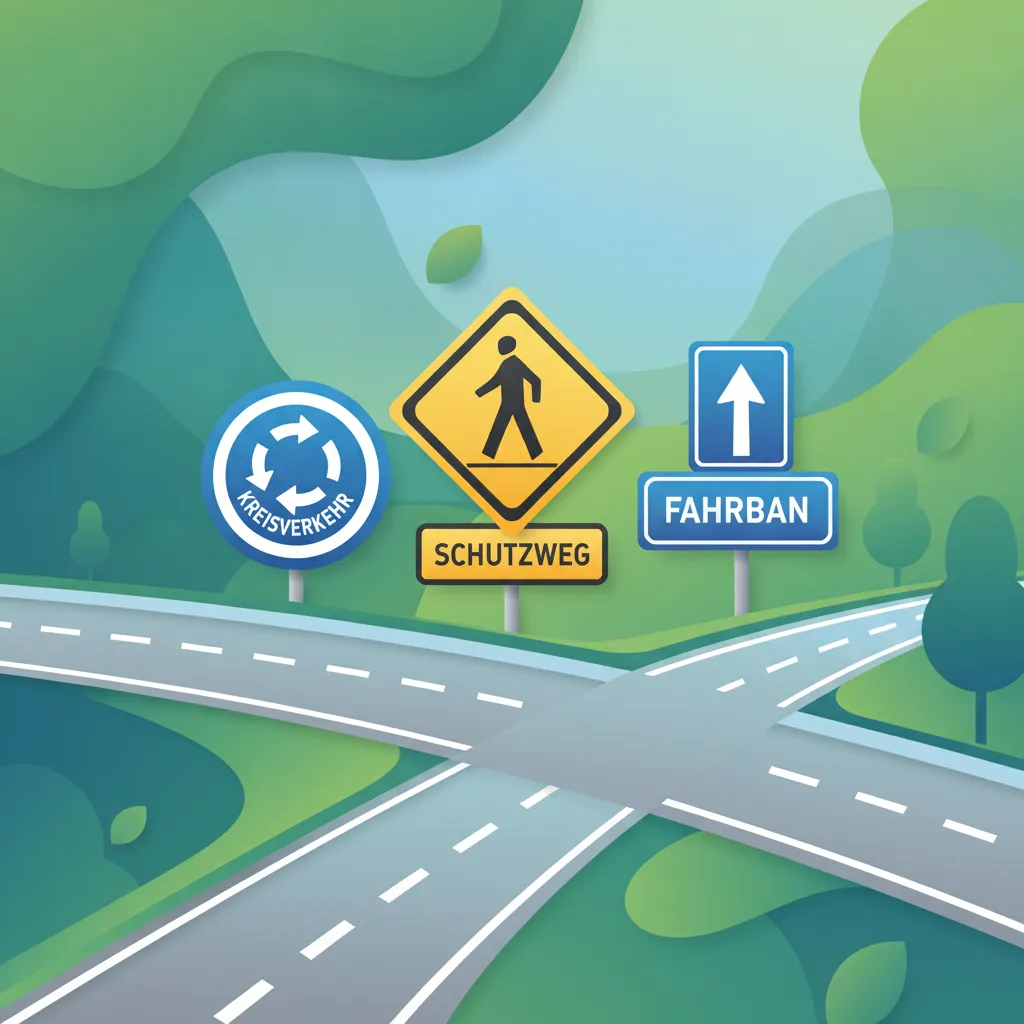
This lesson covers the specific regulations associated with special Austrian road signs and areas. It details the rules for 'Schutzweg' (protected pedestrian crossings), 'Kreisverkehr' (roundabouts), and the distinction between 'Fahrbahn' (road) and 'Fahrstreifen' (lane). Understanding these specific contexts is essential for safe navigation in urban and suburban environments.
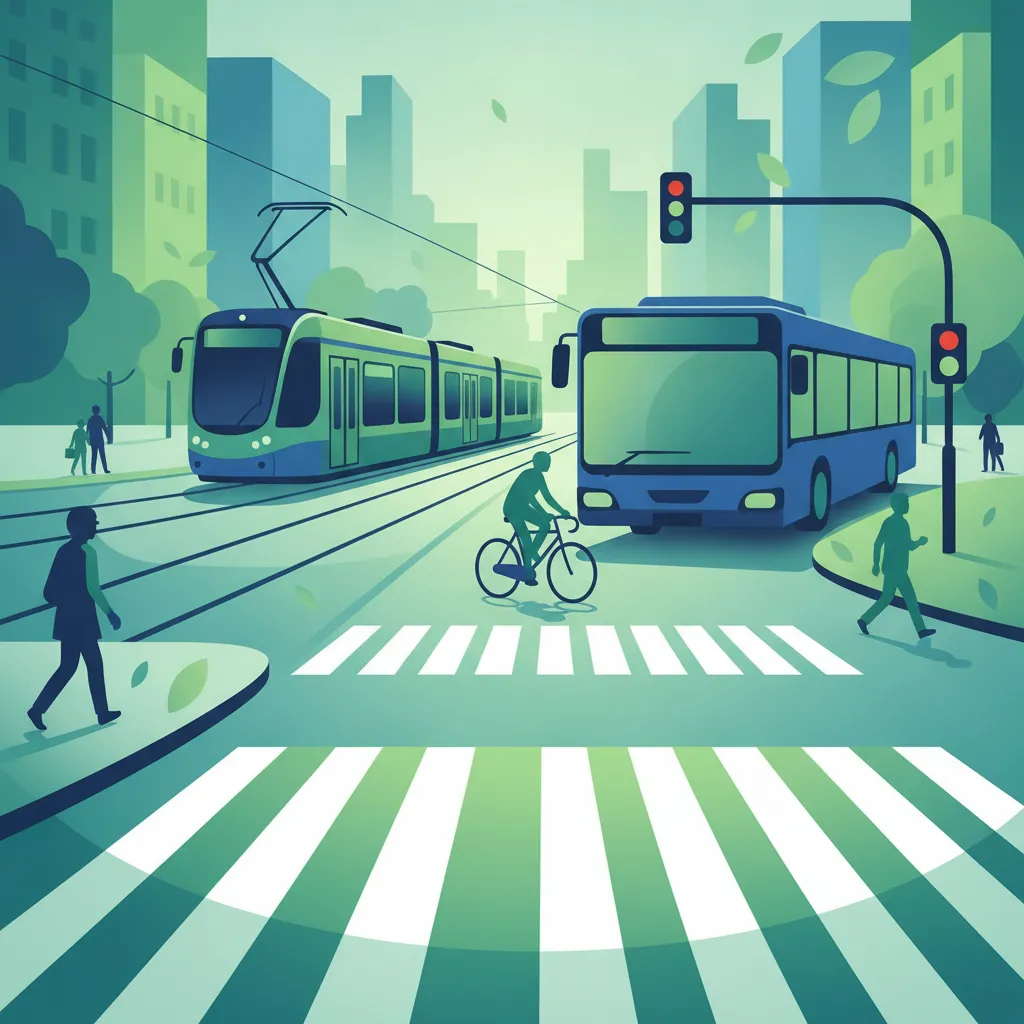
This lesson addresses the unique challenges and priority rules that apply when interacting with public transport and cyclists at intersections. It clarifies the specific right-of-way regulations for trams, which often have priority over other traffic, and the procedures for navigating around bus stops. The content also covers how to safely manage crossings with dedicated bicycle lanes, ensuring the protection of all road users.
High-speed driving in a large vehicle requires excellent lane discipline and forward planning. This lesson covers Austrian speed limits for buses, rules for joining and leaving the motorway, safe overtaking procedures, and maintaining appropriate following distances. The critical importance of forming an emergency corridor ('Rettungsgasse') in traffic jams is also a key topic.
This lesson provides specific guidance for sharing the road with different types of vehicles in Austria. It covers the dangers of large vehicle blind spots, the rules for navigating near buses and dedicated tram tracks, and common conflict points at intersections. Understanding the behavior and limitations of other vehicles is key to safely navigating complex urban environments.
This lesson addresses the specific challenges of interacting with larger vehicles like buses and trams in an urban environment. It explains how to signal intentions clearly and predictably to avoid conflicts in shared spaces. Key topics include safely crossing tram tracks and maintaining awareness around public transport stops.

Rural Austrian roads present unique challenges, including lack of markings, tight spaces, and slow-moving agricultural vehicles. This lesson teaches how to read the road ahead, anticipate hazards around blind bends, and use passing places effectively when meeting other large vehicles. It emphasizes adjusting speed to suit the limited visibility and variable road conditions.
Master the critical steps for safely picking up and dropping off children on school transport routes in Austria. Understand the mandatory use of warning lights and stop signs, and ensure passenger safety during these vulnerable moments.
This lesson details the specific regulations and best practices for driving in areas with high pedestrian activity, such as bus stops and school zones. It explains the driver's obligation to stop for school buses with flashing lights and to yield to public buses pulling out from a stop. The content emphasizes the requirement to significantly reduce speed in marked school zones to ensure the safety of children.

The driver is responsible for supervising the entire boarding process. This lesson covers techniques for encouraging orderly queues and ensuring passengers use handrails. It also details the driver's role in assisting passengers with mobility aids, prams, or heavy luggage, ensuring they are able to board without rushing and find a seat or safe standing position.
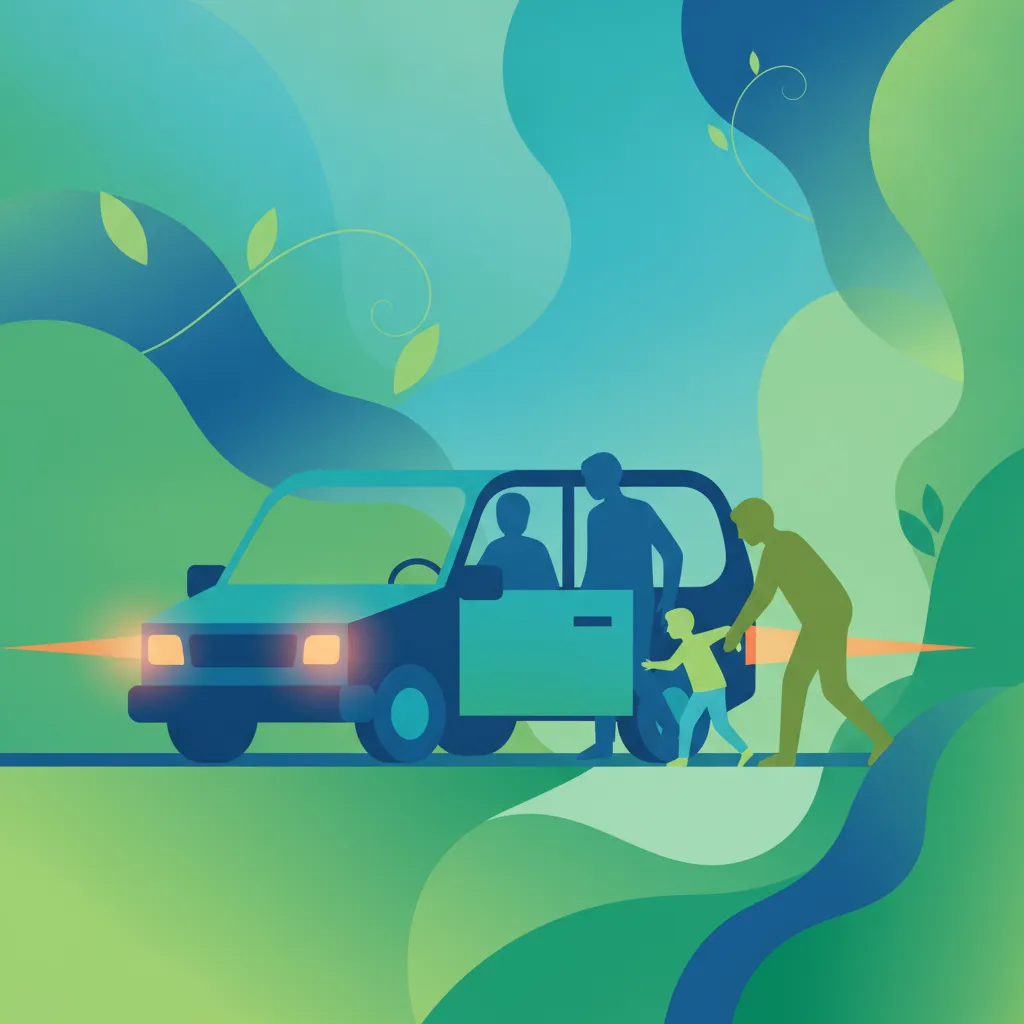
A driver's duty of care extends to passengers until they are safely away from the vehicle. This lesson stresses the importance of monitoring passengers as they step off, ensuring they have stable footing and are clear of the bus's path. It highlights the particular need for vigilance when children or elderly passengers are alighting, and the importance of checking mirrors before closing the doors.
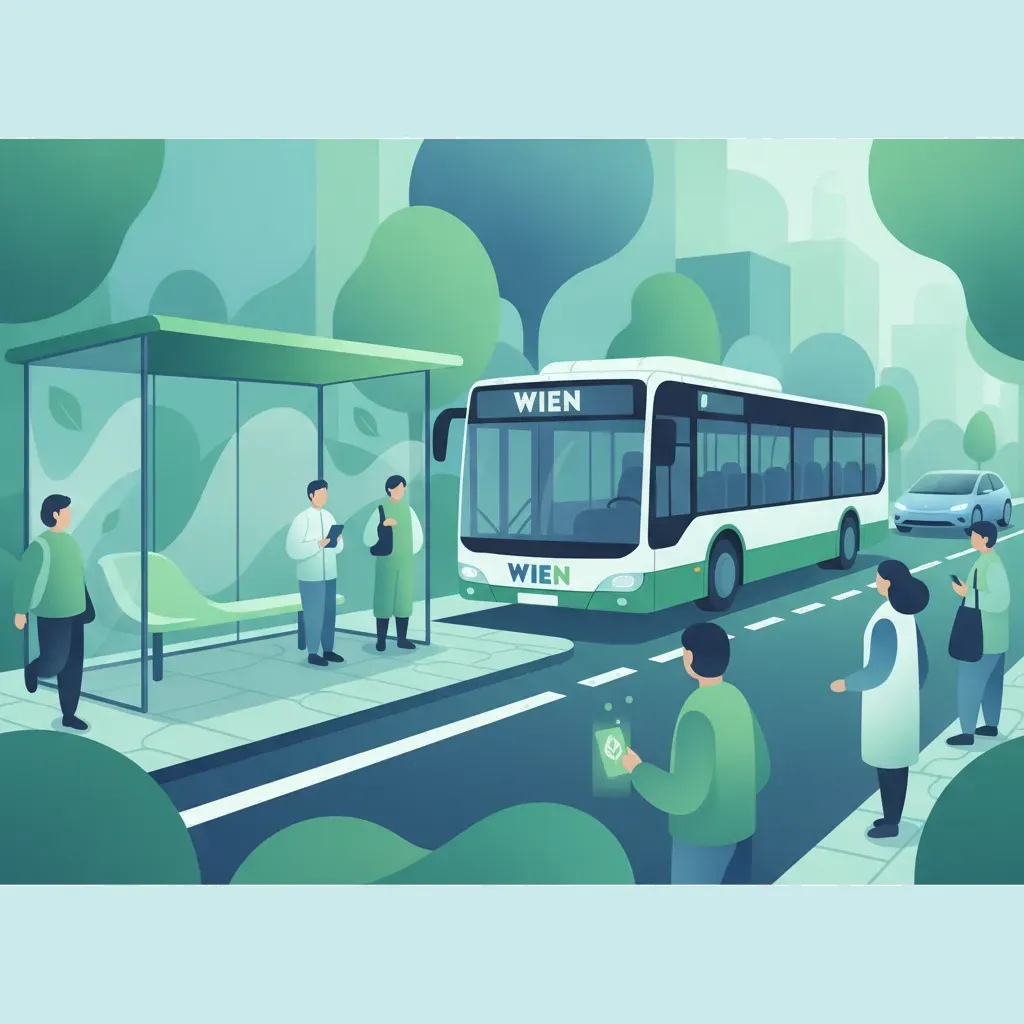
A safe stop begins with a planned approach. This lesson covers how to signal your intentions early, manage your speed, and scan for hazards like pedestrians and cyclists near the stop. It emphasizes the importance of aligning the bus parallel and close to the kerb to minimize the step for passengers, creating a safe platform for boarding and alighting.
Pedestrians have absolute priority on marked crossings in Austria, and a bus driver must always be ready to give way. This lesson covers the rules for approaching and stopping for pedestrians, and highlights the risk of pedestrians being hidden by the vehicle's structure. It also stresses the danger of passengers crossing the road after alighting from your bus.

The most critical moment at a stop is the final check before pulling away. This lesson teaches a non-negotiable safety routine: ensure all passengers are clear, close the doors, check all relevant mirrors and blind spots one last time, signal, and only then move off when safe. This systematic process is designed to prevent incidents with late-running passengers, pedestrians, or cyclists.

In an emergency, knowing the location and status of safety equipment is critical. This lesson details how to locate and inspect fire extinguishers, first aid kits, emergency hammers, and all designated emergency exits, including doors and roof hatches. It emphasizes the importance of ensuring these items are unobstructed and included in the daily pre-trip inspection.

Providing safe and respectful access for all passengers is a legal and professional duty. This lesson details the correct operation of accessibility features like ramps, lifts, and kneeling systems. It covers how to secure wheelchairs and mobility aids, and how to communicate effectively and respectfully with passengers who may require assistance with boarding or alighting.
High-speed driving in a large vehicle requires excellent lane discipline and forward planning. This lesson covers Austrian speed limits for buses, rules for joining and leaving the motorway, safe overtaking procedures, and maintaining appropriate following distances. The critical importance of forming an emergency corridor ('Rettungsgasse') in traffic jams is also a key topic.

Many Austrian cities use special signalling to give buses and trams priority at intersections. This lesson explains how to identify and understand these signals, which often use white bars or letters instead of standard colours. Learning to anticipate these signals allows for a smoother, more efficient driving style that takes full advantage of the public transport infrastructure.
Find clear answers to common questions learners have about Specific Rules and Hazards for School Transport. Learn how the lesson is structured, which driving theory objectives it supports, and how it fits into the overall learning path of units and curriculum progression in Austria. These explanations help you understand key concepts, lesson flow, and exam focused study goals.
These signs alert other road users that children are boarding or alighting. You must exercise extreme caution and be prepared to stop if children are nearby, as they are often unpredictable.
Always reduce your speed and maintain a significant distance. Assume that children may run into the road unexpectedly and prioritize full control of your vehicle over maintaining speed.
While general speed limits apply, you must always drive at a speed that allows for an immediate stop if a child enters the road. Local traffic signs around schools often mandate lower speed limits which must be strictly followed.
Many learners underestimate the distance and reaction time required. In the theory exam, always choose the answer that prioritizes the highest level of caution and defensive distance.
Refine your study plan by searching for specific Austrian driving theory practice sets. Pinpoint questions related to particular road rules, signs, or challenge levels, and begin practicing immediately to reinforce your knowledge and excel in your official exam with confidence. Get started with focused revision today.