
This lesson focuses on the communication standards required for professional bus and coach drivers in Austria. You will learn how to make effective announcements, handle passenger inquiries, and manage difficult situations to maintain a safe and calm environment on board.

Lesson content overview
For professional bus and coach drivers in Austria, effective and professional communication is far more than just a courtesy; it is a fundamental aspect of passenger safety, comfort, and legal compliance. As a holder of the Austrian Driving Theory Course for Bus & Coach Licence (Category D), mastering communication skills is essential for fulfilling your extensive duty of care towards passengers. This lesson delves into the critical communication methods and best practices that ensure every journey is safe, efficient, and pleasant for everyone on board.
Communication encompasses all the ways a driver conveys information and interacts with passengers. This includes clear verbal announcements, the correct use of visual information systems, providing essential accessibility support, and employing de-escalation techniques when faced with tense situations. Each of these elements contributes to a driver's professional identity and the overall atmosphere within the vehicle.
A legal and ethical obligation for professional drivers to ensure the safety, well-being, and comfort of all passengers, extending beyond mere driving skills to include communication and assistance.
The primary purpose of strong communication is multi-faceted. It prevents misunderstandings that could lead to safety hazards, such as passengers missing stops or alighting unsafely. It ensures legal compliance, particularly concerning the provision of information and assistance to passengers with special needs, as stipulated by Austrian law and EU directives. Moreover, consistent, courteous communication builds trust, reduces passenger anxiety, and reinforces the driver's professional authority, contributing to a calm and respectful environment inside the bus or coach.
Public announcements are verbal messages broadcast through the vehicle's public address (PA) system. They are the primary method for providing real-time information to all passengers, regardless of their visual acuity or literacy. For Austrian bus and coach drivers, these announcements are crucial for guiding passengers safely and efficiently through their journey.
Professional drivers utilise two main categories of announcements:
Passengers depend heavily on these auditory cues to prepare for alighting, secure their personal items, and understand any necessary safety instructions. Unclear or absent announcements can lead to confusion, missed connections, or unsafe boarding and alighting situations.
According to the Austrian Road Traffic Act (§ 31 StVO) and ÖNORM B 2890 (a specific Austrian standard for public transport vehicles), drivers have an obligation to provide necessary passenger information. This includes details about stops, changes in itinerary, and critical safety procedures. The PA system must be functional and used for all important communications.
Keep announcements concise and clear. Overly detailed messages can overwhelm passengers and dilute the impact of critical information. A simple "Next stop: Hauptbahnhof. Please prepare to alight." is generally more effective than a lengthy explanation.
Visual information systems complement auditory announcements, providing critical information through on-board signage, electronic displays, and LED indicators. These systems are especially valuable for passengers with hearing impairments, those who do not speak German, or simply as a reinforcement of spoken messages.
Visual systems provide redundancy, ensuring that essential information is conveyed even if auditory messages are missed or misunderstood. This is crucial for inclusivity and legal compliance. ÖNORM B 2890 guidelines specify requirements for the placement and visibility of on-board signage and displays, ensuring they are easily readable from all seating positions and adequately illuminated, especially at night.
Regular maintenance of visual displays is paramount. Faded, flickering, or inoperative screens can cause confusion and undermine safety messages. Always ensure these systems are functional before commencing your route.
Providing specific assistance and clear information to passengers with reduced mobility, hearing impairments, or visual impairments is not merely a courtesy; it is a legal and ethical obligation under Austrian law and EU directives. This commitment to accessibility ensures that public transport remains an inclusive service for all.
EU Directive 2006/126/EC, as implemented into Austrian law, mandates that drivers must assist passengers with reduced mobility when feasible and safe to do so. This includes ensuring access to appropriate information. ÖNORM B 2890 further specifies design and operational requirements for public transport vehicles to ensure accessibility.
Never assume a passenger's needs. Always politely ask if assistance is required, and respect their autonomy if they decline. Being proactive and empathetic significantly enhances the passenger experience.
Despite best efforts, conflicts or tense situations can arise with passengers. As a professional driver, it is critical to manage these situations calmly and effectively to prevent escalation, protect passengers and yourself, and maintain the safety and integrity of the service. De-escalation techniques are verbal and non-verbal strategies designed to reduce tension and encourage cooperation.
Never physically confront a disruptive passenger unless it is absolutely necessary for self-defense or the defense of others. Physical intervention can escalate the situation dramatically and carry significant legal repercussions.
While no specific Austrian law mandates de-escalation training, the general duty of care and safety requirements in transport regulations imply the need for drivers to manage conflicts effectively. Proper de-escalation reduces the risk of violence and maintains service continuity.
The language and tone a driver uses significantly impact passenger perception, fostering trust, reducing misunderstandings, and reinforcing the driver's professional image. A professional tone is consistently courteous, clear, and neutral, free from bias or personal opinions.
The use of courteous, clear, and neutral language that respects all passengers, maintains the driver's authority without aggression, and upholds the public service ethos.
A consistent professional tone projects confidence and competence, influencing how passengers perceive the safety and reliability of the service. Over-informality, even with regular commuters, can sometimes lead to a perceived lack of respect or authority, making it harder to manage challenging situations.
Adhering to specific rules and regulations is not optional; it's a cornerstone of professional driving in Austria. These laws ensure passenger safety, accessibility, and the overall quality of public transport services.
| Rule | Statement | Applicability | Legal Status | Rationale | Example (Correct) | Example (Incorrect) |
|---|---|---|---|---|---|---|
| Passenger Information Obligation | Drivers must provide passengers with necessary information about stops, route changes, safety procedures, and any relevant service disruptions. | All public transport vehicles on scheduled routes. | Mandatory per Austrian Road Traffic Act § 31 and ÖNORM B 2890. | Ensures passengers can safely alight, stay informed, and respond to emergencies. | Announcing “Next stop: Stephansplatz, please prepare to alight.” | Failing to announce a detour, causing passengers to miss their intended stop. |
| Accessibility Assistance Requirement | Drivers must assist passengers with reduced mobility, hearing or visual impairments when boarding/alighting, and provide necessary information. | Anytime a passenger with reduced mobility is on board. | Mandatory (EU Directive 2006/126/EC, Austrian law). | Guarantees equal access and safety for all passengers. | Proactively offering assistance to a wheelchair user to board the vehicle safely. | Ignoring a passenger's visible need for assistance with a mobility aid. |
| Use of PA System | The public address system must be functional and used for important passenger communications. | All scheduled and unscheduled announcements. | Mandatory per ÖNORM B 2890. | Provides clear auditory information to all passengers, especially crucial for safety. | Testing the PA system for functionality before starting the route each day. | Relying solely on visual signs for safety instructions without using the PA system. |
| Emergency Procedure Announcements | In case of an emergency, the driver must calmly announce the situation, evacuation route, and required passenger actions. | During fire, breakdown, or other emergencies. | Mandatory for public safety. | Enables orderly evacuation, reduces panic, and guides passengers to safety. | "Attention, ladies and gentlemen, we are experiencing an emergency. Please remain calm and evacuate the vehicle using the nearest marked exit." | Providing no announcement during an emergency, leading to confusion and potential chaos. |
| Professional Conduct | Drivers must conduct themselves courteously and avoid abusive, confrontational, or unprofessional language. | All interactions with passengers. | Implied requirement under transport service regulations. | Maintains passenger trust, ensures a pleasant environment, and upholds the public service image. | Using polite phrasing and a neutral tone when addressing a passenger's complaint. | Responding to a demanding passenger with sarcasm or anger. |
Failing to communicate effectively can lead to significant problems, from passenger complaints to serious safety incidents and legal liabilities. Understanding common pitfalls helps drivers avoid them.
Effective communication is dynamic; it must be adapted to changing environmental, operational, and social conditions. Professional drivers adjust their communication strategy to maintain optimal safety and passenger comfort.
The principles and practices of effective passenger communication are deeply integrated with other critical aspects of the Austrian Driving Theory Course for Bus & Coach Licence (Category D).
Prerequisite Lessons:
Future Lessons:
Think of communication as a continuous process, not isolated events. Every interaction, every announcement, and every visual cue contributes to the overall safety and comfort of your passengers.
Effective and professional passenger communication is a cornerstone for any bus or coach driver operating in Austria. It integrates various methods—auditory announcements, visual displays, and direct interpersonal assistance—to ensure passenger safety, comfort, and compliance with the law.
Key takeaways for professional drivers include:
By consistently applying these principles, you will not only meet your legal obligations but also enhance your professional standing, ensuring a safe and positive experience for all passengers.
This lesson covers the legal and practical dimensions of professional passenger communication for Austrian Category D drivers, emphasizing that communication is a duty of care obligation under § 31 StVO and ÖNORM B 2890. Drivers must master clear, timely PA announcements distinguishing between routine updates and event-driven communications, while maintaining functional visual displays for redundancy. Accessibility support is mandatory under EU Directive 2006/126/EC, requiring proactive assistance for passengers with reduced mobility through adapted communication and proper use of boarding equipment. De-escalation techniques—remaining calm, active listening, empathetic language, and clear boundaries—form the primary conflict management strategy, with physical intervention reserved only for imminent danger.
A short set of high-value points that capture the most important learning from this lesson.
Professional passenger communication is a legal duty under Austrian law, not merely a courtesy, requiring active information provision about stops, safety, and service changes.
Public Address (PA) announcements must be clear, timely, and concise, distinguishing between routine messages and event-driven communications like detours or emergencies.
Drivers are legally obligated under EU Directive 2006/126/EC and Austrian law to assist passengers with reduced mobility, including deploying ramps, securing wheelchairs, and providing adapted information.
De-escalation requires staying calm, active listening, empathetic language without agreement, and maintaining non-threatening body language before considering escalation to authorities.
Visual information systems provide essential redundancy for auditory announcements and must be maintained functional per ÖNORM B 2890 requirements.
Explore all units and lessons included in this driving theory course.
§ 31 StVO mandates passenger information obligations; ÖNORM B 2890 specifies vehicle communication equipment standards.
Two announcement types: Routine (standard stops, safety reminders) and Event-Driven (detours, emergencies, delays).
Accessibility assistance must be proactive—ask passengers if help is needed rather than assuming needs.
De-escalation sequence: Stay calm → Active listening → Show empathy → Set clear professional boundaries → Offer solutions → Know when to escalate.
Never physically intervene with disruptive passengers unless necessary for self-defense; always contact dispatcher or police instead.
Skipping stop announcements, causing passengers to miss destinations and violating the passenger information obligation.
Failing to secure wheelchair spaces or deploy ramps before moving the vehicle, violating accessibility laws.
Using aggressive, sarcastic, or informal language when responding to upset passengers, which typically escalates conflicts.
Overloading the PA system with excessive non-essential information, causing passengers to tune out critical safety messages.
Continuing a route with non-functional PA systems or broken visual displays, compromising safety communication for all passengers.
Lesson content overview
A short set of high-value points that capture the most important learning from this lesson.
Professional passenger communication is a legal duty under Austrian law, not merely a courtesy, requiring active information provision about stops, safety, and service changes.
Public Address (PA) announcements must be clear, timely, and concise, distinguishing between routine messages and event-driven communications like detours or emergencies.
Drivers are legally obligated under EU Directive 2006/126/EC and Austrian law to assist passengers with reduced mobility, including deploying ramps, securing wheelchairs, and providing adapted information.
De-escalation requires staying calm, active listening, empathetic language without agreement, and maintaining non-threatening body language before considering escalation to authorities.
Visual information systems provide essential redundancy for auditory announcements and must be maintained functional per ÖNORM B 2890 requirements.
Explore all units and lessons included in this driving theory course.
§ 31 StVO mandates passenger information obligations; ÖNORM B 2890 specifies vehicle communication equipment standards.
Two announcement types: Routine (standard stops, safety reminders) and Event-Driven (detours, emergencies, delays).
Accessibility assistance must be proactive—ask passengers if help is needed rather than assuming needs.
De-escalation sequence: Stay calm → Active listening → Show empathy → Set clear professional boundaries → Offer solutions → Know when to escalate.
Never physically intervene with disruptive passengers unless necessary for self-defense; always contact dispatcher or police instead.
Skipping stop announcements, causing passengers to miss destinations and violating the passenger information obligation.
Failing to secure wheelchair spaces or deploy ramps before moving the vehicle, violating accessibility laws.
Using aggressive, sarcastic, or informal language when responding to upset passengers, which typically escalates conflicts.
Overloading the PA system with excessive non-essential information, causing passengers to tune out critical safety messages.
Continuing a route with non-functional PA systems or broken visual displays, compromising safety communication for all passengers.
Explore search topics learners often look for when studying Effective and Professional Passenger Communication. These topics reflect common questions about road rules, driving situations, safety guidance, and lesson level theory preparation for learners in Austria.
Browse additional driving theory lessons that cover connected traffic rules, road signs, and common driving situations related to this topic. Improve your understanding of how different rules interact across everyday traffic scenarios.
Explore in-depth strategies for de-escalating tense passenger situations. Learn advanced verbal and non-verbal techniques to manage conflict professionally, ensuring a safe and calm environment on Austrian public transport.

While rare, passenger conflict can be a source of significant stress and distraction. This lesson offers simple, effective techniques for remaining calm and professional when faced with a difficult passenger. It covers active listening, using non-confrontational language, and knowing when and how to request assistance according to your operator's policy, always prioritizing the safety of the vehicle.

Driving a bus in a busy city like Vienna or Salzburg requires constant forward planning and anticipation. This lesson teaches techniques for maintaining adequate space around the vehicle, positioning correctly for upcoming junctions, and reading the flow of traffic. Adopting a defensive mindset is key to navigating complex urban environments without incident.

Cities like Vienna and Graz have extensive tram networks that require special attention from bus drivers. This lesson covers the rules of priority concerning trams, the dangers of crossing tracks, and the specific hazards at shared stops where passengers cross traffic lanes. It emphasizes the need for extreme caution and clear communication with other road users in these complex environments.

The driver is responsible for supervising the entire boarding process. This lesson covers techniques for encouraging orderly queues and ensuring passengers use handrails. It also details the driver's role in assisting passengers with mobility aids, prams, or heavy luggage, ensuring they are able to board without rushing and find a seat or safe standing position.

Proactive communication reduces passenger anxiety and builds trust. This lesson covers when and how to provide important journey information using the vehicle's public address system or information displays. It provides guidance on delivering clear, calm, and concise messages regarding the route, upcoming stops, unexpected delays, or diversions, ensuring passengers feel informed and looked after.

Many Austrian towns and city centres feature narrow roads not designed for large vehicles. This lesson provides strategies for assessing tight spaces, positioning the vehicle to maximize clearance, and navigating complex, non-standard junctions. It emphasizes the importance of slow speeds, constant observation, and understanding the vehicle's swept path to avoid contact with buildings, street furniture, and other vehicles.
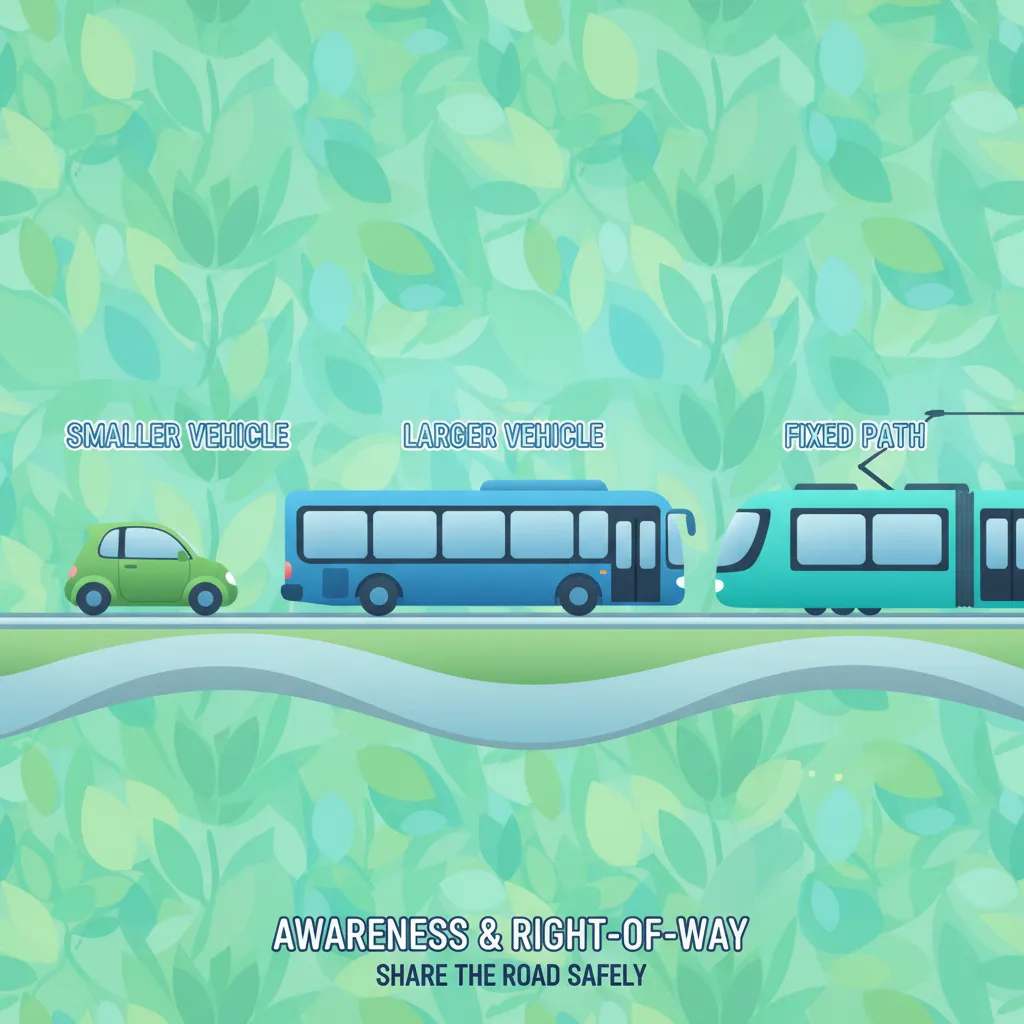
This lesson provides specific guidance for sharing the road with different types of vehicles in Austria. It covers the dangers of large vehicle blind spots, the rules for navigating near buses and dedicated tram tracks, and common conflict points at intersections. Understanding the behavior and limitations of other vehicles is key to safely navigating complex urban environments.

Carrying standing passengers significantly increases a driver's responsibility for smooth control. This lesson details the specific adjustments required, such as reducing speed before turns to minimize sideways forces and increasing following distances to avoid sudden braking. It emphasizes the importance of awareness and observation of passengers' stability before accelerating from a stop.

The driver sets the tone for the entire journey. This lesson explores how a driver's calm demeanor and smooth driving style create a reassuring atmosphere for passengers. It also covers responsibilities for maintaining a comfortable onboard environment, such as appropriate heating or cooling, and the importance of a clean and well-presented vehicle in promoting passenger confidence and positive behaviour.
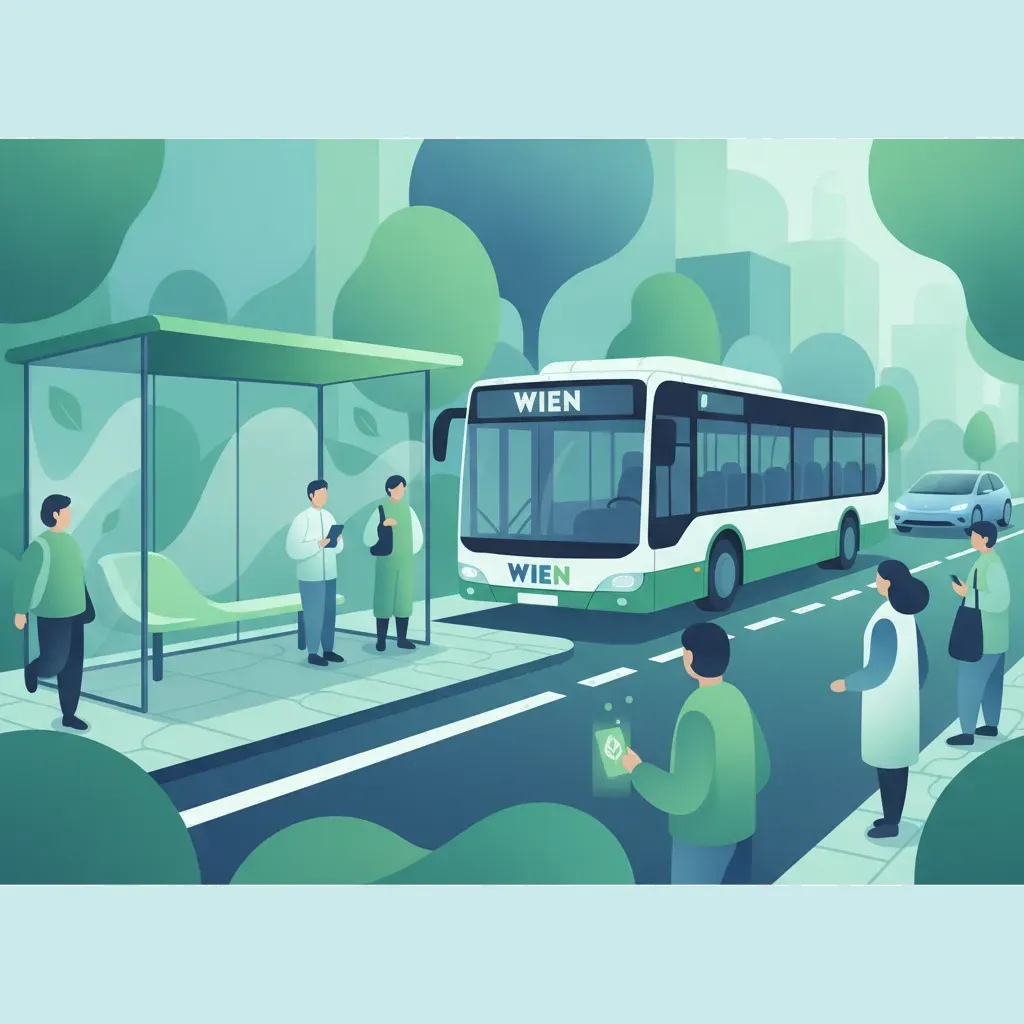
A safe stop begins with a planned approach. This lesson covers how to signal your intentions early, manage your speed, and scan for hazards like pedestrians and cyclists near the stop. It emphasizes the importance of aligning the bus parallel and close to the kerb to minimize the step for passengers, creating a safe platform for boarding and alighting.
Understand legal obligations and best practices for assisting passengers with reduced mobility, sensory impairments, or special needs. Learn how to provide clear information and ensure inclusive journeys on Austrian public transport.

Providing safe and respectful access for all passengers is a legal and professional duty. This lesson details the correct operation of accessibility features like ramps, lifts, and kneeling systems. It covers how to secure wheelchairs and mobility aids, and how to communicate effectively and respectfully with passengers who may require assistance with boarding or alighting.
The driver is responsible for supervising the entire boarding process. This lesson covers techniques for encouraging orderly queues and ensuring passengers use handrails. It also details the driver's role in assisting passengers with mobility aids, prams, or heavy luggage, ensuring they are able to board without rushing and find a seat or safe standing position.

A driver's duty of care extends to passengers until they are safely away from the vehicle. This lesson stresses the importance of monitoring passengers as they step off, ensuring they have stable footing and are clear of the bus's path. It highlights the particular need for vigilance when children or elderly passengers are alighting, and the importance of checking mirrors before closing the doors.

This lesson defines the role of a professional driver beyond simply operating a vehicle. It covers the expectations of public trust, professional image, and the responsibilities inherent in transporting people. Key topics include ethical conduct, communication with the public, and understanding your position as a representative of a transport service within the Austrian legal framework.
Carrying standing passengers significantly increases a driver's responsibility for smooth control. This lesson details the specific adjustments required, such as reducing speed before turns to minimize sideways forces and increasing following distances to avoid sudden braking. It emphasizes the importance of awareness and observation of passengers' stability before accelerating from a stop.

Pedestrians have absolute priority on marked crossings in Austria, and a bus driver must always be ready to give way. This lesson covers the rules for approaching and stopping for pedestrians, and highlights the risk of pedestrians being hidden by the vehicle's structure. It also stresses the danger of passengers crossing the road after alighting from your bus.

Transporting children carries the highest level of responsibility. This lesson covers the specific Austrian rules for school buses, including the use of warning signs and lights. It focuses on developing a mindset of extreme caution, anticipating that children may run into the road unexpectedly, and managing the chaotic traffic environment often found around schools during drop-off and pick-up times.

When a passenger becomes ill, the driver's role is to facilitate professional medical help as quickly as possible. This lesson covers how to safely stop the vehicle, make an emergency call to 112 with clear location and patient information, and provide basic comfort and reassurance. It clarifies that the driver's role is not to diagnose but to manage the scene and get help.
The driver sets the tone for the entire journey. This lesson explores how a driver's calm demeanor and smooth driving style create a reassuring atmosphere for passengers. It also covers responsibilities for maintaining a comfortable onboard environment, such as appropriate heating or cooling, and the importance of a clean and well-presented vehicle in promoting passenger confidence and positive behaviour.
Find clear answers to common questions learners have about Effective and Professional Passenger Communication. Learn how the lesson is structured, which driving theory objectives it supports, and how it fits into the overall learning path of units and curriculum progression in Austria. These explanations help you understand key concepts, lesson flow, and exam focused study goals.
The most important aspect is clarity and consistency. Providing clear information about stops, delays, or emergency procedures helps manage passenger expectations and keeps the vehicle environment calm.
Stay calm, remain professional, and avoid escalating the tone. Use clear, firm, but respectful language to explain the rules or safety requirements without engaging in a personal argument.
It involves clearly communicating with passengers who have mobility issues, informing them of the vehicle's kneeling features, ramp operation, and ensuring they are settled safely before moving off.
Yes, professional conduct and passenger management are essential components of the Category D licence curriculum, as they are directly linked to passenger safety and the duty of care.
Refine your study plan by searching for specific Austrian driving theory practice sets. Pinpoint questions related to particular road rules, signs, or challenge levels, and begin practicing immediately to reinforce your knowledge and excel in your official exam with confidence. Get started with focused revision today.