
Changing lanes is a routine but complex maneuver that demands full attention and precise execution to prevent collisions. In Danish traffic, this involves a systematic approach to observation, clear communication of your intentions, and accurate judgment of space and speed to ensure you don't create a hazard or inconvenience other road users, especially on busy motorways or urban multi-lane roads.
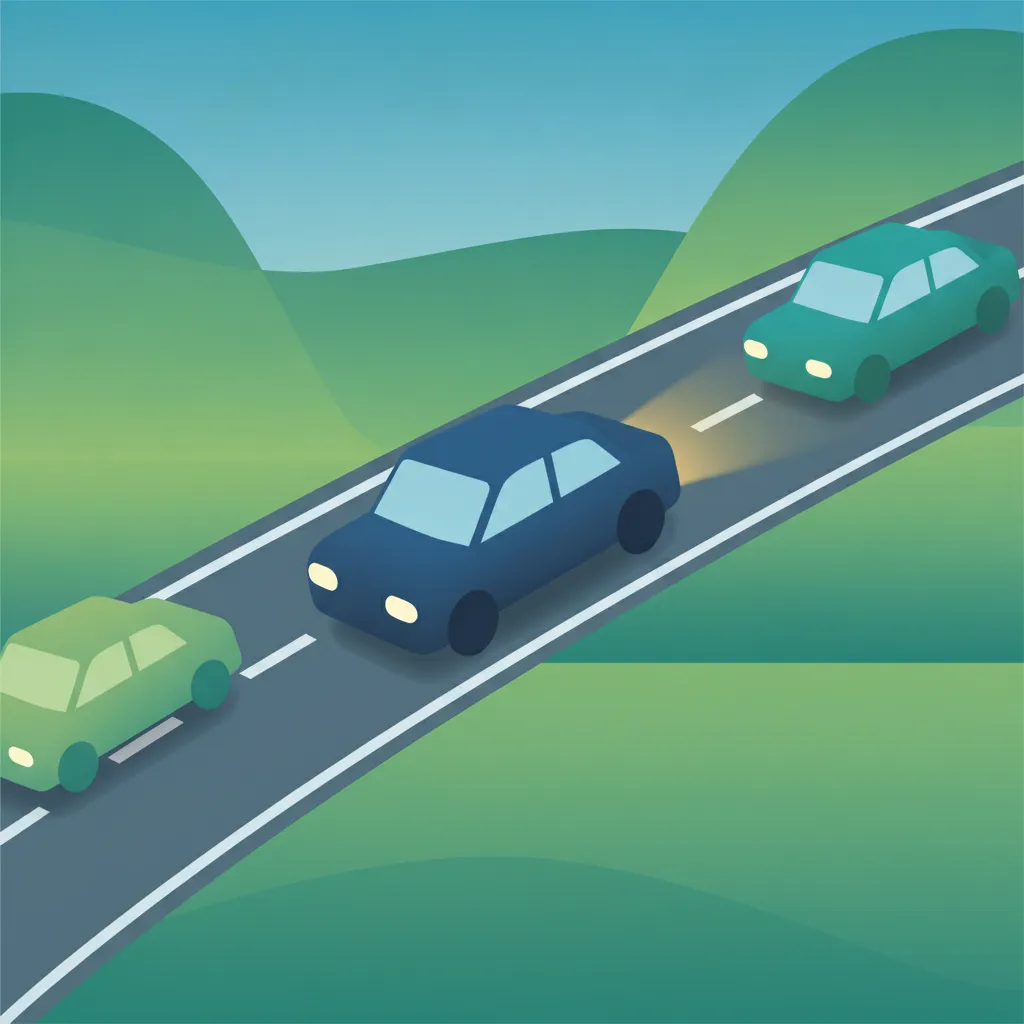
Theory topic content overview
Read the full theory topic guide for Safe Lane Changing with structured, easy-to-scan content built for learners in Denmark. This detailed section explains the exact rule, meaning, traffic context, comparison points, and exam logic behind this Danish driving theory topic so you can study faster, understand the concept more clearly, and avoid common interpretation mistakes on the theory test.
Lane changing, known as vognbaneskift in Danish, is the controlled movement of your vehicle from one traffic lane to an adjacent one on a multi-lane road. While seemingly straightforward, it's a dynamic maneuver that requires high levels of awareness, precise observation, and clear communication to be performed safely and efficiently in Denmark. It's not just about moving your car; it's about coordinating with all surrounding traffic and anticipating their movements.
Understanding and correctly executing safe lane changes is paramount for several reasons, particularly within the Danish road environment:
To ensure a safe vognbaneskift, Danish driving theory emphasizes a systematic approach, often summarized as a variant of the "Mirror, Signal, Blind Spot, Maneuver" (MSBM) routine. This process ensures you have a comprehensive understanding of your surroundings before committing to the move.
Before even thinking about changing lanes, begin your observation well in advance. This "orientering" helps you assess the overall traffic situation and identify a suitable gap.
Once you've identified a potential safe gap, activate your turn signal (blinklys) in good time.
After signalling, and immediately before steering, perform a quick but thorough over-the-shoulder check (hoveddrejning) of your blind spot.
Only when you are absolutely certain the lane is clear, and you will not cause danger or inconvenience, should you proceed.
Several factors can affect the difficulty and safety of a lane change:
While both involve moving between lanes, lane changing and merging (sammenfletning) are distinct concepts with different rules, particularly regarding priority.
Understanding this distinction is vital for Danish traffic.
Many learner drivers and even experienced drivers make mistakes when changing lanes. These are frequently targeted in the Danish theory test:
Safe lane changing in Denmark, or vognbaneskift, is fundamentally about systematic observation, clear communication, and responsible decision-making. Always prioritize the safety of all road users, especially cyclists. Practice the "Mirror, Signal, Blind Spot, Maneuver" routine until it becomes second nature, and remember that patience and anticipation are your greatest allies on Danish roads. Ensure you can perform this maneuver "uden at være til fare eller unødig ulempe" for anyone.
Safe lane changing in Denmark requires the systematic MSBM routine: comprehensive mirror observation to assess traffic, timely signaling to communicate intentions, a crucial blind spot check to detect hidden cyclists and motorcycles, and only then a smooth, controlled steering maneuver. Danish traffic law specifically requires that you never be 'til fare eller unødig ulempe' (a danger or unnecessary inconvenience) to others, meaning you must always yield to traffic already in your target lane. This skill is particularly important in Denmark due to the high prevalence of cyclists who can easily occupy your blind spot. The procedure applies across motorways, urban multi-lane roads, and all scenarios where lane discipline is required.
A short set of high-value points that capture the most important ideas from this theory explanation.
The MSBM routine (Mirror, Signal, Blind Spot, Maneuver) is the required systematic approach for safe lane changes in Denmark
Blind spot checks are essential because cyclists and motorcycles can be hidden from mirrors, especially in Denmark's cycle-heavy traffic environment
You must not cause danger or unnecessary inconvenience to any road user when changing lanes
Lane changing requires yielding to traffic already in the target lane; you cannot force your way in
Always cancel your turn signal once fully settled in the new lane to avoid confusing other drivers
Observation begins with interior mirror, then side mirrors, then blind spot check before any maneuver
The Danish traffic law concept 'til fare eller unødig ulempe' (danger or unnecessary inconvenience) governs all lane changes
Lane changing and merging (sammenfletning) are different—lane changes require yielding, while merging may involve zipper principles
Signal early enough for others to react, but not so early it suggests a turn at an intersection
Solid lane markings typically prohibit lane changes near intersections or hazardous areas
Skipping the blind spot check and failing to see cyclists, motorcycles, or vehicles in the mirror's blind zone
Signaling too late or not at all, giving other road users insufficient time to react
Attempting to force a lane change into a gap that is too small, forcing others to brake or swerve
Making abrupt or sudden steering movements that can destabilize the vehicle or surprise other drivers
Forgetting to cancel the turn signal after completing the lane change, misleading other road users about intentions
Start with a short, direct summary of Safe Lane Changing before reading the full explanation below.
To change lanes safely, first check your interior and side mirrors, then signal your intention clearly and in good time. Crucially, perform a brief over-the-shoulder blind spot check to confirm the lane is clear. Only then, and only if there is sufficient space and no disruption to traffic, should you smoothly steer into the new lane, maintaining your speed and cancelling your signal once settled.
Review the most important terms, rule signals, and traffic concepts linked to Safe Lane Changing.
Explore related theory topic pages connected to Safe Lane Changing and continue with the next useful rule explanation.
See the common search queries learners use when trying to understand Safe Lane Changing in Denmark.

Dive into detailed explanations of Danish traffic legislation, road signs, and driving conventions. Solidify your understanding of key theory topics and prepare confidently for all sections of your official Danish driving license theory exam.
Explore Driving Theory TopicsTheory topic content overview
A short set of high-value points that capture the most important ideas from this theory explanation.
The MSBM routine (Mirror, Signal, Blind Spot, Maneuver) is the required systematic approach for safe lane changes in Denmark
Blind spot checks are essential because cyclists and motorcycles can be hidden from mirrors, especially in Denmark's cycle-heavy traffic environment
You must not cause danger or unnecessary inconvenience to any road user when changing lanes
Lane changing requires yielding to traffic already in the target lane; you cannot force your way in
Always cancel your turn signal once fully settled in the new lane to avoid confusing other drivers
Observation begins with interior mirror, then side mirrors, then blind spot check before any maneuver
The Danish traffic law concept 'til fare eller unødig ulempe' (danger or unnecessary inconvenience) governs all lane changes
Lane changing and merging (sammenfletning) are different—lane changes require yielding, while merging may involve zipper principles
Signal early enough for others to react, but not so early it suggests a turn at an intersection
Solid lane markings typically prohibit lane changes near intersections or hazardous areas
Skipping the blind spot check and failing to see cyclists, motorcycles, or vehicles in the mirror's blind zone
Signaling too late or not at all, giving other road users insufficient time to react
Attempting to force a lane change into a gap that is too small, forcing others to brake or swerve
Making abrupt or sudden steering movements that can destabilize the vehicle or surprise other drivers
Forgetting to cancel the turn signal after completing the lane change, misleading other road users about intentions
Start with a short, direct summary of Safe Lane Changing before reading the full explanation below.
To change lanes safely, first check your interior and side mirrors, then signal your intention clearly and in good time. Crucially, perform a brief over-the-shoulder blind spot check to confirm the lane is clear. Only then, and only if there is sufficient space and no disruption to traffic, should you smoothly steer into the new lane, maintaining your speed and cancelling your signal once settled.
Review the most important terms, rule signals, and traffic concepts linked to Safe Lane Changing.
Explore related theory topic pages connected to Safe Lane Changing and continue with the next useful rule explanation.
See the common search queries learners use when trying to understand Safe Lane Changing in Denmark.
Dive into detailed explanations of Danish traffic legislation, road signs, and driving conventions. Solidify your understanding of key theory topics and prepare confidently for all sections of your official Danish driving license theory exam.
Explore Driving Theory TopicsUse this exam-focused revision tip to understand how Safe Lane Changing is likely to appear in theory questions for learners in Denmark. This section helps you identify the most testable part of the rule, avoid common traps, and remember the concept more effectively during Danish driving theory exam preparation.
In the Danish theory test, questions about lane changing often focus on the correct order of observation and the importance of checking blind spots. Remember the 'mirror, signal, blind spot, maneuver' routine, and always confirm you won't endanger or inconvenience other road users, including cyclists.
Read direct answers to the most common learner questions about Safe Lane Changing in Denmark. This FAQ focuses on rule confusion, practical meaning, comparison with similar concepts, and the exact uncertainties that appear most often in Danish driving theory revision and exam preparation.
The correct sequence involves checking mirrors, signaling, checking your blind spot, and then, if safe and clear, smoothly steering into the new lane. This systematic approach ensures you are aware of surrounding traffic and communicate your intentions clearly.
The blind spot is an area around your vehicle that isn't visible in your mirrors. Checking it with a quick over-the-shoulder glance is crucial to ensure no other vehicle, motorcycle, or cyclist is hidden there before you begin your lane change, preventing potential collisions.
You should activate your turn signal well in advance of your intended lane change. This gives other road users sufficient time to register your intention and adjust their speed or position accordingly, contributing to safer traffic flow.
'Vognbaneskift' is the Danish term for changing lanes. It refers to the maneuver of moving your vehicle from one traffic lane to another on a multi-lane road, requiring specific observation and communication rules.
No, according to Danish traffic rules and safe driving practice, you must only change lanes when it is safe to do so and will not cause danger or undue inconvenience to other traffic, including forcing them to brake or swerve suddenly.
You must assess the speed and distance of vehicles in the target lane. There should be a gap large enough for your vehicle to enter without forcing others to take evasive action, maintaining a safe following distance both in front and behind you.
Use our powerful search tool to pinpoint specific Danish driving theory topics, road signs, or traffic situations you need to review. Start exploring relevant practice sets now to reinforce your knowledge and build confidence for your upcoming driving licence exam.