
Warning signs are a vital part of Danish road safety, designed to give drivers advance notice of potential dangers or changes in road conditions ahead. They are not prohibitions but rather crucial alerts that require you to prepare for what's coming, allowing you to adapt your speed, position, and attention to avoid hazards. This page will guide you through understanding their purpose and common types in the Danish traffic environment.
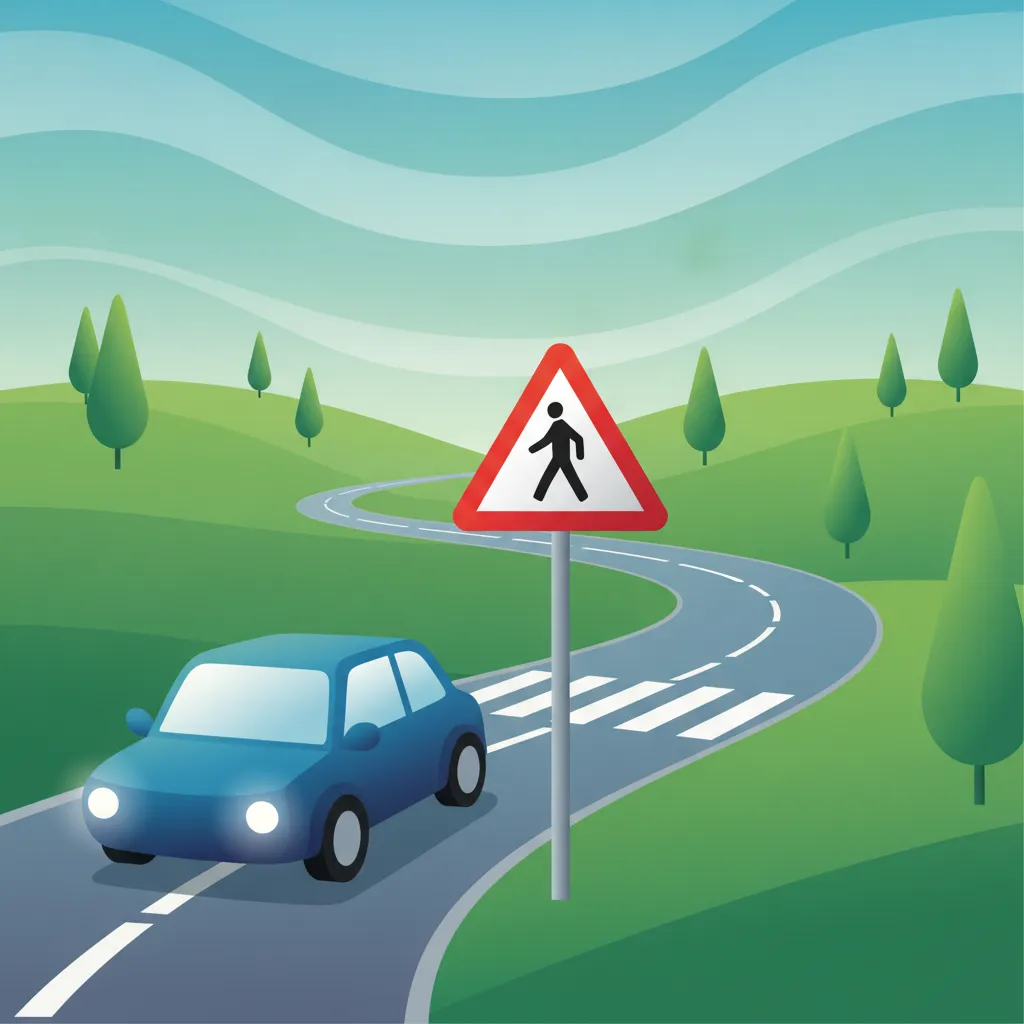
Theory topic content overview
Read the full theory topic guide for Warning Signs with structured, easy-to-scan content built for learners in Denmark. This detailed section explains the exact rule, meaning, traffic context, comparison points, and exam logic behind this Danish driving theory topic so you can study faster, understand the concept more clearly, and avoid common interpretation mistakes on the theory test.
Warning signs are fundamental to road safety in Denmark, serving as crucial alerts that give drivers advance notice of potential dangers or changes in road conditions ahead. Unlike prohibitory signs that tell you what not to do, or mandatory signs that tell you what you must do, warning signs prompt you to prepare and adjust your driving behaviour before you encounter a hazard. Mastering their interpretation is vital for safe driving and a key component of the Danish driving theory test.
In Danish traffic, warning signs are easily recognisable. They typically feature a triangular shape with a red border, a black symbol, and a white or (for older signs) yellow background. This distinct design allows drivers to quickly identify them as warnings, even before clearly deciphering the specific symbol.
Their core purpose is anticipation. They are placed strategically in advance of a hazard, providing drivers with enough time to:
Essentially, a warning sign is a visual heads-up, encouraging proactive driving rather than reactive panic.
Understanding and reacting correctly to warning signs is critical for several reasons relevant to drivers in Denmark:
The effectiveness of Danish warning signs lies in the driver's ability to act upon the information they convey. The process generally follows these steps:
This "prepare and adjust" mindset is the cornerstone of safe driving and what the Danish driving theory curriculum aims to instill.
All warning signs in Denmark adhere to the same basic design, but the internal symbol varies to depict the specific hazard. Here are common categories you will encounter:
Give Way sign.It's vital for Danish drivers to differentiate warning signs from other traffic signs, as their meaning and the required driver action differ significantly.
Confusing these can lead to incorrect actions, safety risks, and failure on the Danish theory test.
To illustrate the practical application of warning signs in Denmark, consider these scenarios:
Learners and even experienced drivers in Denmark sometimes make mistakes when interpreting warning signs:
Warning signs are your earliest indicators of upcoming challenges on Danish roads. They are a call to action for proactive driving and comprehensive risk assessment (risikovurdering). By recognising the distinctive triangular shape and understanding the specific hazard symbol, you gain precious moments to adjust your speed, positioning, and attention. This preparation is not just about passing your driving theory test; it's about making every journey safer for yourself and everyone else on Danish roads. Always drive with anticipation, respecting the information these vital Danish traffic signs provide.
Warning signs are fundamental safety features in Danish traffic, distinguished by their triangular red-bordered shape with black symbols on white or yellow backgrounds. Their core purpose is anticipation: giving drivers advance notice to adjust speed, positioning, and attention before encountering hazards. Common categories include road geometry signs (sharp bends, narrow roads), intersection signs, signs for vulnerable road users (pedestrians, cyclists, children), and hazard signs (slippery roads, roadworks, level crossings). Unlike prohibitory or mandatory signs, warning signs don't command or forbid actions but require proactive preparation. Understanding these signs is essential for both safe driving in Denmark and passing the Danish theory test, which emphasises hazard perception and anticipatory decision-making.
A short set of high-value points that capture the most important ideas from this theory explanation.
Warning signs in Denmark are triangular with a red border, black symbol on white or yellow background, and their purpose is anticipation rather than prohibition
You must adjust speed, position, and attention BEFORE reaching the hazard, not react when you see the danger itself
Warning signs differ fundamentally from prohibitory signs (red circle) and mandatory signs (blue circle) in both appearance and required action
Common warning sign categories include road geometry, intersections, vulnerable road users, and hazardous road conditions
Danish conditions such as cyclists, high pedestrian traffic, and variable weather amplify the importance of responding correctly to warning signs
The distinct triangular shape with red border is your cue to prepare and adjust driving behaviour proactively
Key vulnerable user signs to remember: Fodgængerfelt (pedestrians), Børn (children), Cyklister (cyclists)
Slippery Road (Glat vej) and Crosswinds (Sidevind) signs require significant speed reduction and gentle vehicle control
Warning signs are placed in advance of hazards to allow pre-emptive action, not reactive braking at the point of danger
The Danish theory test expects you to demonstrate anticipation and safe decision-making, not just sign identification
Reacting too late by waiting until the hazard is fully visible before adjusting speed or position
Misinterpreting what a specific symbol represents, leading to an incorrect or absent driving response
Treating warning signs as mere suggestions rather than critical alerts demanding immediate preparation
Not factoring in how Danish weather conditions amplify the danger indicated by signs like Slippery Road
Overlooking vulnerable road user signs (cyclists, children, pedestrians) which are highly prevalent in Danish traffic
Start with a short, direct summary of Warning Signs before reading the full explanation below.
Warning signs are distinctive traffic signs in Denmark that alert drivers to potential hazards, obstacles, or unusual road conditions ahead, giving them time to react safely. They typically feature a triangular shape with a red border and black symbol on a white or yellow background. Their primary purpose is to promote anticipation, ensuring drivers adjust their speed and behavior *before* encountering the danger, which is a fundamental aspect of safe driving and vital for the Danish theory test.
Review the most important terms, rule signals, and traffic concepts linked to Warning Signs.
Explore related theory topic pages connected to Warning Signs and continue with the next useful rule explanation.
See the common search queries learners use when trying to understand Warning Signs in Denmark.

Dive into detailed explanations of Danish traffic legislation, road signs, and driving conventions. Solidify your understanding of key theory topics and prepare confidently for all sections of your official Danish driving license theory exam.
Explore Driving Theory TopicsTheory topic content overview
A short set of high-value points that capture the most important ideas from this theory explanation.
Warning signs in Denmark are triangular with a red border, black symbol on white or yellow background, and their purpose is anticipation rather than prohibition
You must adjust speed, position, and attention BEFORE reaching the hazard, not react when you see the danger itself
Warning signs differ fundamentally from prohibitory signs (red circle) and mandatory signs (blue circle) in both appearance and required action
Common warning sign categories include road geometry, intersections, vulnerable road users, and hazardous road conditions
Danish conditions such as cyclists, high pedestrian traffic, and variable weather amplify the importance of responding correctly to warning signs
The distinct triangular shape with red border is your cue to prepare and adjust driving behaviour proactively
Key vulnerable user signs to remember: Fodgængerfelt (pedestrians), Børn (children), Cyklister (cyclists)
Slippery Road (Glat vej) and Crosswinds (Sidevind) signs require significant speed reduction and gentle vehicle control
Warning signs are placed in advance of hazards to allow pre-emptive action, not reactive braking at the point of danger
The Danish theory test expects you to demonstrate anticipation and safe decision-making, not just sign identification
Reacting too late by waiting until the hazard is fully visible before adjusting speed or position
Misinterpreting what a specific symbol represents, leading to an incorrect or absent driving response
Treating warning signs as mere suggestions rather than critical alerts demanding immediate preparation
Not factoring in how Danish weather conditions amplify the danger indicated by signs like Slippery Road
Overlooking vulnerable road user signs (cyclists, children, pedestrians) which are highly prevalent in Danish traffic
Start with a short, direct summary of Warning Signs before reading the full explanation below.
Warning signs are distinctive traffic signs in Denmark that alert drivers to potential hazards, obstacles, or unusual road conditions ahead, giving them time to react safely. They typically feature a triangular shape with a red border and black symbol on a white or yellow background. Their primary purpose is to promote anticipation, ensuring drivers adjust their speed and behavior *before* encountering the danger, which is a fundamental aspect of safe driving and vital for the Danish theory test.
Review the most important terms, rule signals, and traffic concepts linked to Warning Signs.
Explore related theory topic pages connected to Warning Signs and continue with the next useful rule explanation.
See the common search queries learners use when trying to understand Warning Signs in Denmark.
Dive into detailed explanations of Danish traffic legislation, road signs, and driving conventions. Solidify your understanding of key theory topics and prepare confidently for all sections of your official Danish driving license theory exam.
Explore Driving Theory TopicsUse this exam-focused revision tip to understand how Warning Signs is likely to appear in theory questions for learners in Denmark. This section helps you identify the most testable part of the rule, avoid common traps, and remember the concept more effectively during Danish driving theory exam preparation.
In the Danish theory test, questions about warning signs often focus on identifying the specific hazard they represent and what action a driver should take *before* reaching the hazard. Pay close attention to the symbols and always choose the answer that demonstrates early anticipation and safe adjustment of driving behavior.
Read direct answers to the most common learner questions about Warning Signs in Denmark. This FAQ focuses on rule confusion, practical meaning, comparison with similar concepts, and the exact uncertainties that appear most often in Danish driving theory revision and exam preparation.
The main purpose of warning signs in Denmark is to alert drivers to potential hazards or changes in road conditions *in advance*, giving them sufficient time to react safely by adjusting their speed, position, or attention.
Most Danish warning signs are triangular with a red border, a white or yellow background, and a black symbol depicting the specific hazard. This distinctive shape helps drivers quickly identify them as warnings.
In Denmark, warning signs are typically placed at a distance that allows drivers enough time to safely react. The exact distance can vary depending on the expected speed and type of hazard, but they are always positioned to provide ample warning.
Upon seeing a warning sign, you should interpret the symbol to understand the upcoming hazard and immediately begin to anticipate. This often means reducing your speed, increasing your observation, or preparing to take specific actions like yielding or changing lanes.
Most common warning signs are triangular, but there are exceptions. For example, some temporary warning signs for roadworks or specific hazards might have a different shape or color, such as yellow or orange for temporary situations, but the primary principle remains the same.
No, warning signs do not indicate restrictions or prohibitions directly. They *warn* of a situation that *may* require a specific action or caution, such as reducing speed due to a sharp curve, rather than prohibiting an action.
Use our powerful search tool to pinpoint specific Danish driving theory topics, road signs, or traffic situations you need to review. Start exploring relevant practice sets now to reinforce your knowledge and build confidence for your upcoming driving licence exam.