
This lesson explores the critical dangers of substance use while operating a light vehicle under the AM licence. You will learn the strict French legal limits, the physiological effects on your riding performance, and the consequences of testing positive during a police check.

Lesson content overview
Operating a small motorized vehicle under the Category AM licence demands undivided attention, rapid reflexes, and precise physical coordination. Because mopeds, scooters, and light quadricycles offer minimal structural protection compared to cars, riders are exceptionally vulnerable to the physical consequences of a collision.
Consuming alcohol, illicit drugs, or certain medications severely impairs the cognitive and motor skills required to navigate the road safely. This lesson explores how these substances affect your body, the strict legal limits enforced by the French Code de la route, testing procedures, and the severe penalties associated with riding under the influence.
In France, the concentration of alcohol in a rider's body is referred to as l’alcoolémie. It can be measured in two different ways depending on the testing method used by law enforcement: through a blood sample or through exhaled air.
The concentration of pure ethyl alcohol (ethanol) present in a person's system. It is measured either in grams per litre of blood (g/L) or in milligrams per litre of exhaled air (mg/L).
When you consume an alcoholic beverage, the alcohol is absorbed through your digestive system directly into your bloodstream, which carries it to your brain and throughout your body. The rate at which your body metabolizes alcohol varies based on weight, biological sex, fatigue, and whether you have eaten.
The relationship between blood measurements and breath measurements is standardized under French law:
A standard drink served in a commercial establishment (such as 25 cl of beer at 5%, 10 cl of wine at 12%, or 3 cl of spirits at 40%) contains approximately 10 grams of pure alcohol. For an average healthy adult, a single standard drink increases the BAC by roughly 0.20 to 0.25 g/L. However, home-poured drinks are frequently larger, making it very easy to underestimate your actual alcohol level.
To maintain safety on public roads, the French Code de la route establishes strict limits on alcohol consumption. These limits vary significantly depending on your license status and experience.
If you are a young rider operating under a provisional licence, or if you are participating in supervised driving programs such as conduite accompagnée (accompanied driving) or conduite supervisée, the law applies a zero-tolerance policy.
Any detectable amount of alcohol in a provisional rider's system constitutes a major legal infraction. Believing that a "trace" amount or "just one sip" is legally safe is a dangerous misunderstanding that can lead to immediate prosecution and loss of driving privileges.
For experienced riders who are 22 years of age or older and hold a fully non-probationary Category AM licence, the legal thresholds are slightly different but still highly restrictive.
While alcohol remains a primary cause of road accidents, riding under the influence of narcotics (conduite après usage de stupéfiants) or impairing medications carries equal danger and similarly harsh legal penalties.
French law enforces a strict zero-tolerance policy for riding under the influence of any illicit psychoactive substances. This includes cannabis, cocaine, ecstasy, amphetamines, and opiates.
Many legally prescribed and over-the-counter medications can severely impair your ability to safely control a moped or scooter. In France, packaging for medications that affect driving performance must display a specific colored warning triangle:
Medications such as tranquilizers, sleeping pills, antihistamines (for allergies), and strong painkillers frequently induce drowsiness, impair physical balance, and slow reaction times. The law focuses entirely on the physical state of impairment; having a valid prescription does not exempt you from penalties if your riding abilities are compromised.
To enforce these safety standards, French law enforcement officers (National Police and Gendarmerie) routinely conduct roadside checks.
Initial Screening (Alcootest): Officers request that you breathe into a screening device (commonly known as a breathalyzer or alcootest). If the light turns red or indicates a positive result, further testing is required.
Quantitative Verification (Éthylomètre): If the screening is positive, you are required to blow into a calibrated electronic device called an éthylomètre to obtain a precise numerical measurement of your BAC in mg/L of exhaled air. Alternatively, a medical blood test may be ordered.
Narcotics Saliva Test (Test Salivaire): To check for drugs, officers use a swab to collect saliva from your mouth. This test detects THC, opiates, cocaine, and amphetamines within minutes.
Confirmatory Blood Test: If the saliva test is positive, or if you contest the result, a medical professional will draw blood to determine the exact concentration of the drug in your system.
Refusal is an Offense: Refusing to submit to a breathalyzer, saliva test, or blood draw is treated by French courts as a major criminal offense. The penalties for refusal are identical to, or sometimes more severe than, those applied for testing positive at the highest criminal threshold.
Violating substance laws in France results in severe, immediate administrative sanctions and long-term criminal penalties. These consequences are designed to deter riders from endangering themselves and others.
| Infraction Type | Legal Threshold | Primary Sanctions |
|---|---|---|
| Alcohol Infraction (Experienced) | 0.25 to 0.39 mg/L exhaled air | Fine up to 135 €, loss of 6 points on the licence, and possible vehicle immobilization. |
| Alcohol Offense (Criminal) | 0.40 mg/L exhaled air | Fine up to 4,500 €, loss of 6 points, up to 3 years licence suspension, possible vehicle confiscation, and up to 2 years imprisonment. |
| Provisional Rider Infraction | g/L blood | Same penalties as above depending on the exact concentration; high risk of immediate licence invalidation. |
| Riding Under Drug Influence | Any detectable illicit substance | Fine up to 4,500 €, loss of 6 points, up to 3 years licence suspension, potential vehicle confiscation, and up to 2 years imprisonment. |
| Combined Alcohol & Drugs | Any positive detection of both | Fine up to 9,000 €, loss of 6 points, up to 3 years imprisonment, and vehicle confiscation. |
If you cause an accident resulting in physical injury or fatality while under the influence of substances, the penalties escalate drastically to include massive fines (up to 150,000 €) and lengthy prison sentences. Furthermore, insurance companies routinely refuse to cover material or physical damages incurred during an accident if the rider was operating under the influence, leaving the rider personally liable for millions of euros in damages.
To understand why these laws are so strict, let us examine how the consumption of alcohol, drugs, or sedative medications alters your physical capabilities in real-world scenarios.
A 23-year-old rider with an experienced Category AM licence decides to ride home at 23:00 after consuming two standard glasses of wine.
An 18-year-old learner rider under supervision has a single beer at dinner and decides to ride a scooter home, assuming that a small amount of alcohol is harmless.
A rider takes a prescribed muscle relaxant marked with a Level 3 Red Warning Triangle to treat back pain and decides to commute to school on their moped.
Riding under the influence does not occur in a vacuum; its dangers are exponentially multiplied by environmental conditions and the presence of other road users.
Why does your body react this way to chemical substances?
Before you start your engine, always ask yourself if you are fully sober and capable of protecting your life and the lives of those sharing the road with you. Sobriety is not merely a legal obligation; it is your primary safety gear.
This lesson covers the strict French regulations governing substance use for Category AM riders, including detailed legal BAC limits that differ between provisional (zero tolerance) and experienced riders. It explains how alcohol, illicit drugs, and certain medications impair critical riding skills such as reaction time, coordination, and judgment. The content outlines the four-step police testing procedure, from initial breathalyzer screening to confirmatory blood tests, and emphasizes that refusal to submit constitutes a serious offense. Learners also study the three-tier medication warning system (yellow, orange, red), practical scenarios demonstrating real-world impairment, and the graduated penalty structure ranging from fines and point loss to imprisonment for criminal-level offenses.
A short set of high-value points that capture the most important learning from this lesson.
French law applies zero tolerance (0.0 g/L) for provisional AM riders, while experienced riders face a 0.25 mg/L exhaled air limit (equivalent to 0.50 g/L blood).
Any detectable amount of an illicit drug in your system constitutes a criminal offense under French law, regardless of perceived impairment level.
Medications affecting driving are classified into three warning levels: Yellow (caution), Orange (consult professional), and Red (absolute prohibition).
Refusing a police breathalyzer, saliva test, or blood draw carries identical or worse penalties than testing positive.
Alcohol and drugs exponentially increase collision risk by degrading reaction time, coordination, and judgment—skills critical for vulnerable moped riders.
Explore all units and lessons included in this driving theory course.
Conversion formula: 0.50 g/L blood ≈ 0.25 mg/L exhaled air.
Provisional and supervised riders (conduite accompagnée/surveillée) must maintain 0.0 g/L with no exceptions.
Level 3 (red triangle) medications prohibit riding entirely, regardless of prescription validity.
A standard commercial drink (10g alcohol) raises BAC by approximately 0.20–0.25 g/L.
Combined alcohol and drug offenses double maximum fines to €9,000 and can result in vehicle confiscation.
Assuming that a single sip or trace amount is legally harmless for experienced riders—the threshold is strict and measurable.
Believing cannabis is safe if consumed hours before riding or that the 'high' has faded—THC remains detectable and impairs depth perception long after intoxication.
Thinking a valid prescription exempts you from medication-related penalties if your riding abilities are visibly compromised.
Mistaking the initial roadside breathalyzer screening for the final legal measurement—the calibrated éthélomètre provides the official result.
Assuming home-poured drinks match standard serving sizes, leading to underestimating actual BAC.
Lesson content overview
A short set of high-value points that capture the most important learning from this lesson.
French law applies zero tolerance (0.0 g/L) for provisional AM riders, while experienced riders face a 0.25 mg/L exhaled air limit (equivalent to 0.50 g/L blood).
Any detectable amount of an illicit drug in your system constitutes a criminal offense under French law, regardless of perceived impairment level.
Medications affecting driving are classified into three warning levels: Yellow (caution), Orange (consult professional), and Red (absolute prohibition).
Refusing a police breathalyzer, saliva test, or blood draw carries identical or worse penalties than testing positive.
Alcohol and drugs exponentially increase collision risk by degrading reaction time, coordination, and judgment—skills critical for vulnerable moped riders.
Explore all units and lessons included in this driving theory course.
Conversion formula: 0.50 g/L blood ≈ 0.25 mg/L exhaled air.
Provisional and supervised riders (conduite accompagnée/surveillée) must maintain 0.0 g/L with no exceptions.
Level 3 (red triangle) medications prohibit riding entirely, regardless of prescription validity.
A standard commercial drink (10g alcohol) raises BAC by approximately 0.20–0.25 g/L.
Combined alcohol and drug offenses double maximum fines to €9,000 and can result in vehicle confiscation.
Assuming that a single sip or trace amount is legally harmless for experienced riders—the threshold is strict and measurable.
Believing cannabis is safe if consumed hours before riding or that the 'high' has faded—THC remains detectable and impairs depth perception long after intoxication.
Thinking a valid prescription exempts you from medication-related penalties if your riding abilities are visibly compromised.
Mistaking the initial roadside breathalyzer screening for the final legal measurement—the calibrated éthélomètre provides the official result.
Assuming home-poured drinks match standard serving sizes, leading to underestimating actual BAC.
Explore search topics learners often look for when studying Alcohol, Drugs, and Substance Influence on Riding. These topics reflect common questions about road rules, driving situations, safety guidance, and lesson level theory preparation for learners in France.
Browse additional driving theory lessons that cover connected traffic rules, road signs, and common driving situations related to this topic. Improve your understanding of how different rules interact across everyday traffic scenarios.
Learn to identify and react to potential road hazards effectively. This guide explains how to adapt your riding style to changing weather, visibility, and traffic conditions, ensuring you can maintain control of your small vehicle and navigate complex urban environments safely within the French road safety framework.
This lesson focuses on adapting your riding behavior to sudden environmental shifts, such as heavy fog or strong crosswinds on exposed bridges. You will learn specific technical adjustments, including leaning slightly into crosswinds and widening your safety margins during low-visibility fog. The lesson also highlights how seasonal temperature drops affect your tires' ability to warm up and achieve reliable, safe levels of road adhesion.

Learners will develop the ability to anticipate potential hazards on the road, enhancing reaction times and defensive riding strategies. The lesson emphasizes constant scanning, early identification of threats such as sudden stops, pedestrian crossings, or unexpected lane changes, and appropriate response measures. By cultivating proactive risk assessment, AM riders can significantly reduce accident likelihood.

Adverse weather reduces tyre traction and limits visibility, dramatically raising the risk of multi-car accidents on highways. This lesson details speed reductions required during rainfall, techniques for avoiding aquaplaning, and demisting windshields for visibility. You will learn how to maintain extra stopping distance on snow-covered roads and the correct headlight adjustments to make during fog.
Learners will explore techniques for maintaining control and safety while riding in rain, focusing on reduced braking efficiency, hydroplaning prevention, and visibility challenges. The lesson emphasizes appropriate speed reduction, tire condition checks, and the use of rain gear to enhance rider comfort and protection. By mastering these adaptations, riders can navigate wet French conditions with confidence.
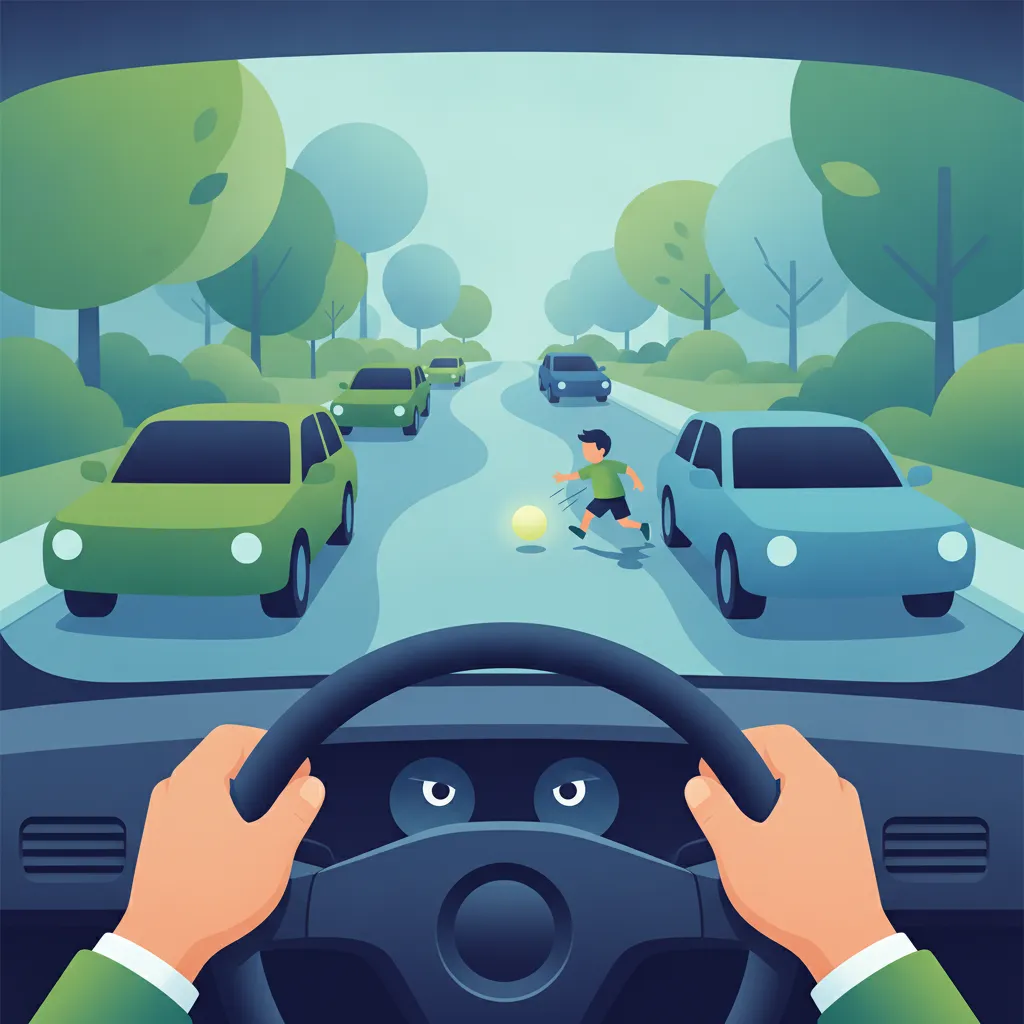
Proactive drivers scan the road constantly, detecting potential dangers before they turn into real-world emergency situations. This lesson teaches scanning techniques, the use of rear-view mirrors, and the interpretation of visual cues from other road users. You will learn to anticipate hazards like child play near roads, merging vehicles, and sudden lane changes, helping you drive defensively.

This lesson focuses on French warning signs that alert drivers to potential hazards ahead, such as curves, animal crossings, or slippery surfaces, with particular attention to signs relevant to AM riders. Learners will examine how to interpret these signs, understand the associated risks, and adapt riding behavior accordingly. By mastering warning sign recognition, riders can proactively manage safety risks in diverse road conditions.
This lesson focuses on the skill of adjusting speed according to real-time road conditions, visibility, and traffic density. Learners will learn to assess factors such as weather, road surface quality, and pedestrian activity to determine a safe riding speed under French regulatory expectations. By mastering adaptive speed control, riders can enhance safety and reduce the likelihood of accidents caused by inappropriate speed.
This lesson covers the mechanical and physical adaptations required to drive a passenger coach in rain, heavy fog, snow, and crosswinds. Drivers will learn to recognize signs of aquaplaning and understand the dramatic traction loss associated with wet or icy roads. It also details French winter equipment regulations (Loi Montagne) requiring snow tires or chains in designated mountainous regions.
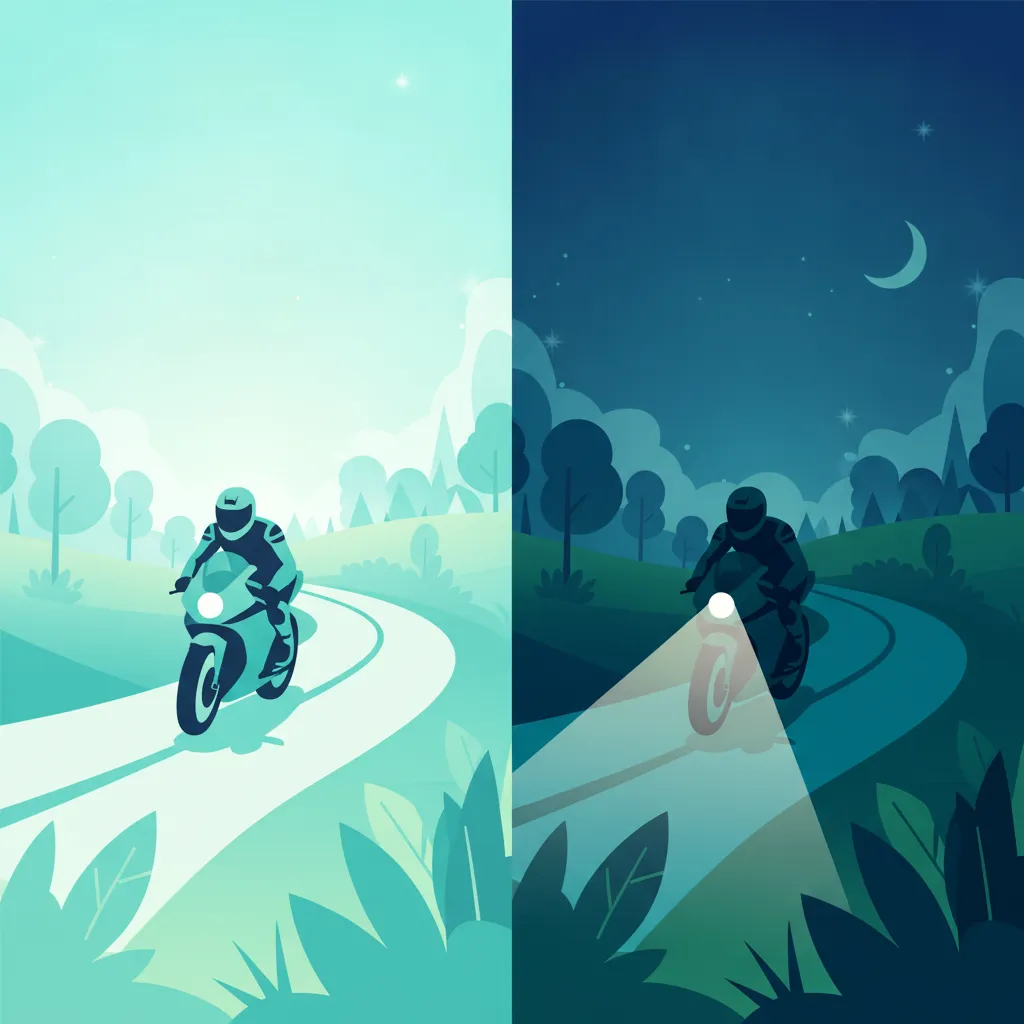
This lesson addresses the distinct safety considerations for riding during daylight hours versus nighttime, covering topics such as managing glare from the sun and ensuring adequate lighting after dark. Learners will learn strategies to maintain visibility, stay alert, and adapt riding techniques to varying light conditions, including the use of reflective gear. Emphasis is placed on proactive planning to mitigate risks associated with reduced visibility, thereby fostering safe riding practices.
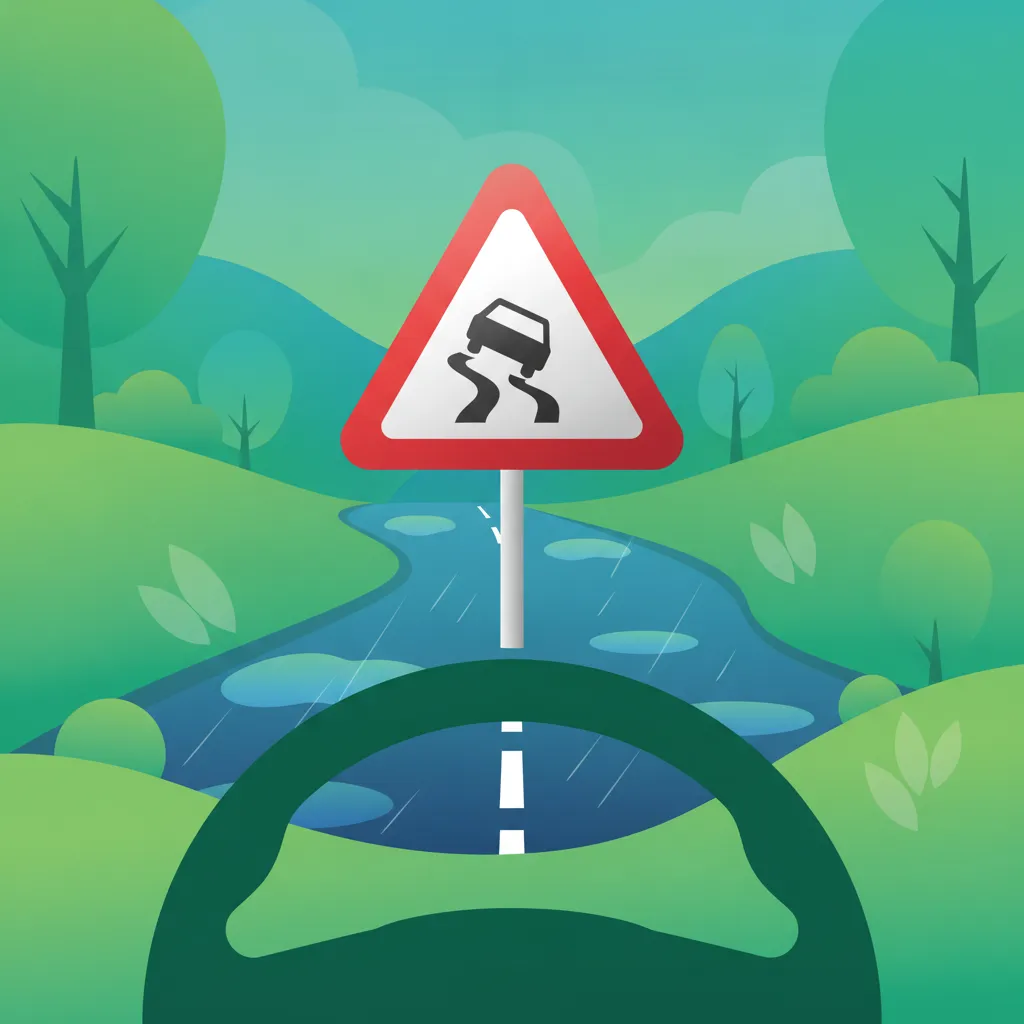
Warning signs on French roads are triangular with a red border, designed to alert drivers to upcoming dangers. This lesson teaches you how to interpret warnings for sharp curves, slippery surfaces, narrowing lanes, and wildlife or animal crossing hazards. You will understand the safety adjustments needed when approaching school zones, active roadworks, or crossings where vulnerable pedestrians are present.
Explore the inherent risks faced by AM licence holders due to the lack of protective vehicle structure. This lesson covers proper road positioning when interacting with larger vehicles, cyclists, and pedestrians, focusing on increasing your visibility and maintaining a safe space in accordance with the French Code de la route.
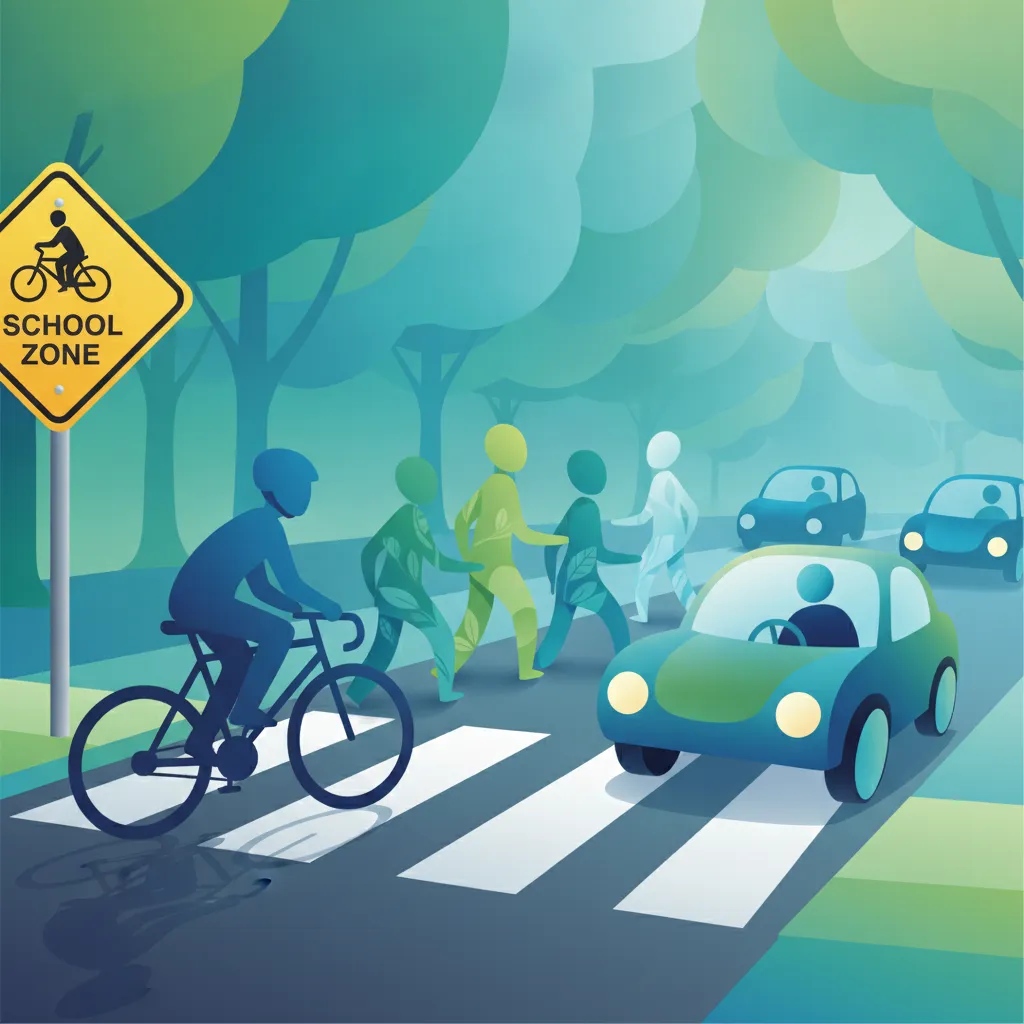
This lesson focuses on the legal requirement to yield to pedestrians on or about to step onto zebra crossings, a major focus of French road safety. You will learn how to approach school zones and pedestrian islands with heightened vigilance and reduced speed. Additionally, the lesson explores shared urban spaces, explaining how to maintain safe lateral distances when overtaking cyclists or personal electric scooters.

Certain groups of road users require heightened defensive attention from drivers due to physical limitations or unpredictable behaviors. This lesson covers how to recognize signs of visual impairment (white canes), mobility challenges, and the unpredictability of young children. You will learn to reduce your speed, extend yielding patience, and proactively secure extra space to protect these vulnerable users.
This lesson addresses the challenges of positioning near larger vehicles such as cars, vans, buses, and lorries on French roads. Learners will learn to identify blind spots (angles morts), maintain a safe distance, and position themselves to maximize visibility and predictability. Understanding these dynamics is crucial for AM riders to avoid dangerous situations and ensure safe overtaking and lane sharing.
Learners will learn the critical steps for safely approaching and traversing intersections, emphasizing speed reduction, priority assessment, and adherence to right-of-way rules, including priorité à droite. The lesson covers recognizing stop lines, interpreting road markings, and maintaining a safe distance from other vehicles. By mastering these practices, AM riders can confidently navigate intersections while minimizing collision risk.
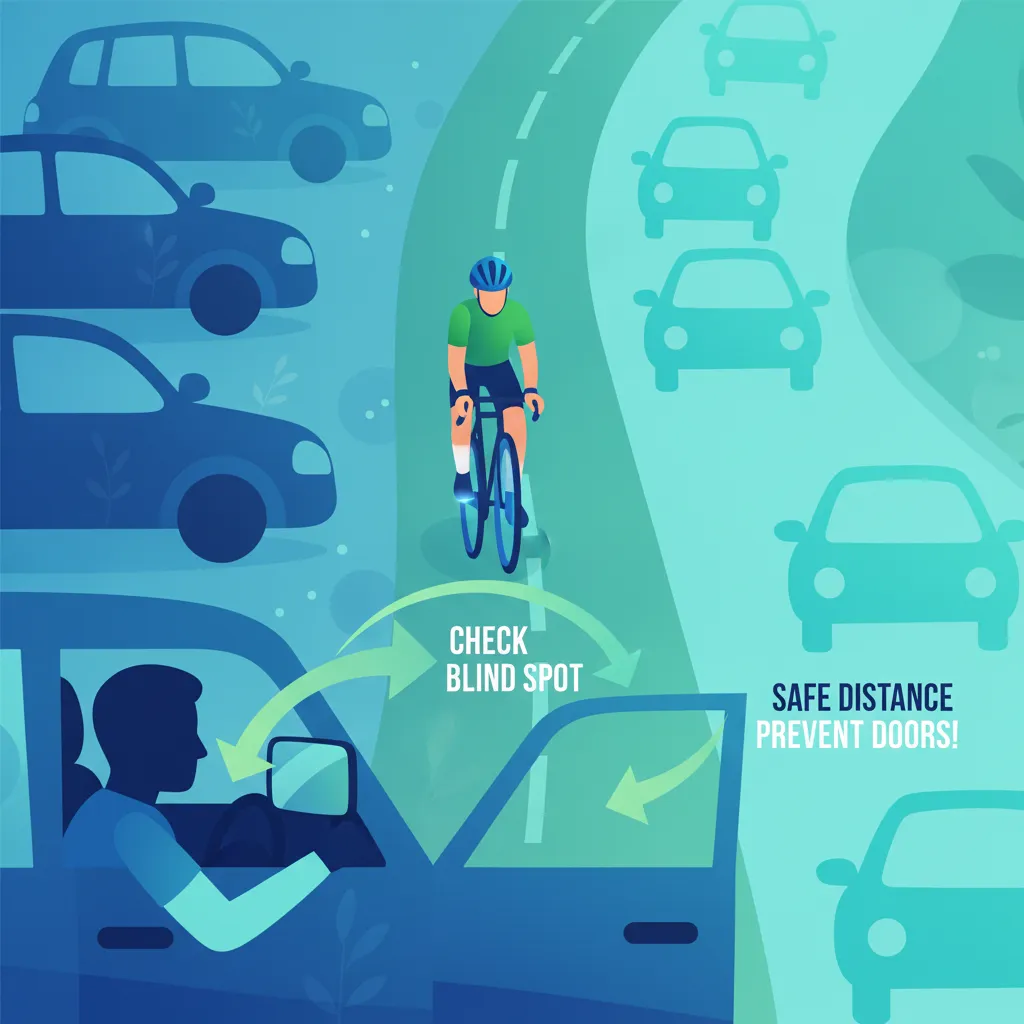
This lesson explains how to share the road safely with cyclists in both urban and rural environments. Drivers will study the legal minimum passing distances when overtaking cyclists, which is one meter in cities and one and a half meters outside urban areas. It also covers recognizing specialized cycling infrastructure, bike boxes at intersections, and preventing blind-spot collisions during right turns.

This lesson explores how dividing your travel lane into three distinct vertical zones allows you to adjust your positioning for optimal safety. You will learn to shift your line to avoid oil slicks in the lane center, road debris at the edges, and wind blasts from passing trucks. Crucially, the lesson covers how to adapt your lane position on blind bends to widen your field of vision and stay clear of oncoming traffic.
This lesson focuses on the inherent vulnerability of AM vehicles due to their limited mass, exposure, and visibility within mixed traffic flows on French roads. Learners will examine how blind spots, sudden lane changes by larger vehicles, and higher impact severity affect small vehicle safety. The content underscores the necessity for riders to adopt proactive safety measures, maintain safe distances, and be constantly aware of surrounding traffic dynamics.
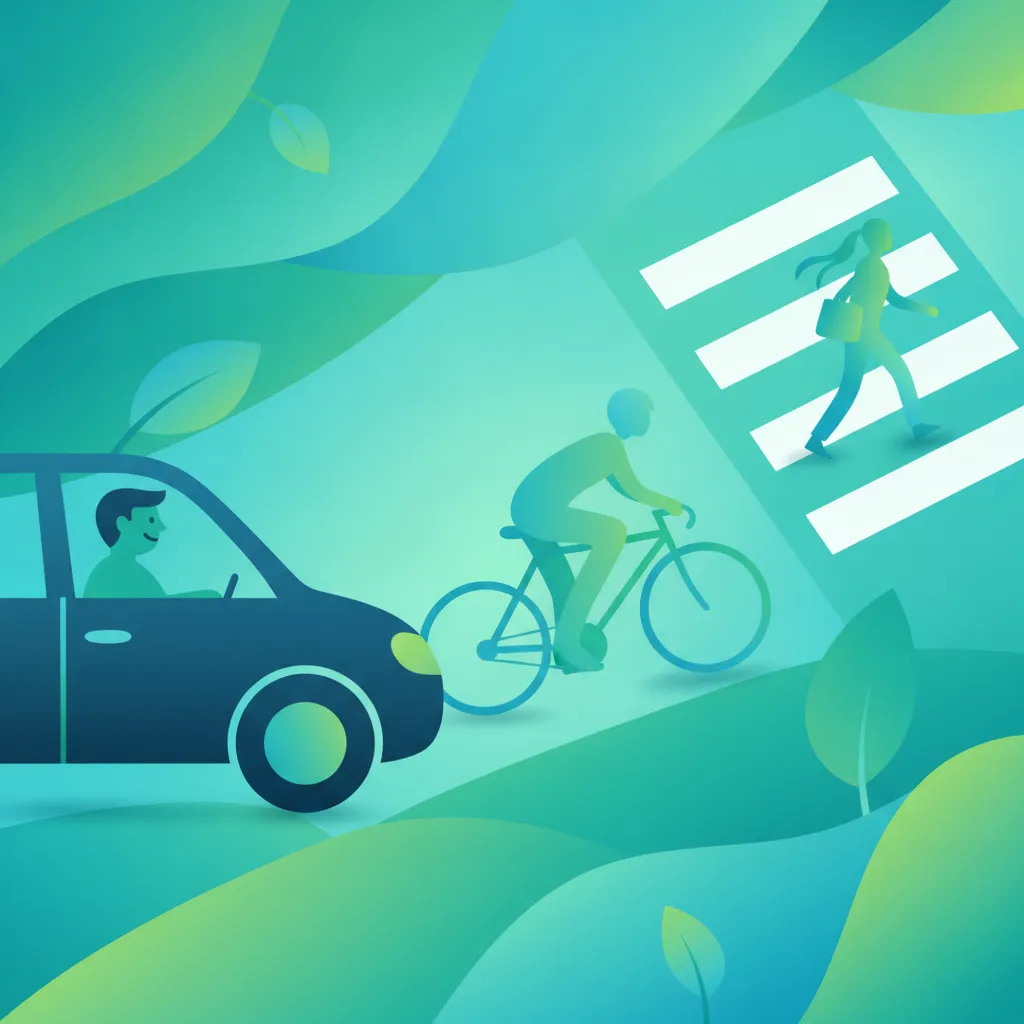
Learners will focus on the best practices for interacting safely with cyclists and pedestrians in mixed traffic environments. The lesson covers proper lane usage, overtaking protocols, maintaining adequate safety gaps, and non-verbal communication techniques in the French urban landscape. By applying these principles, AM riders can coexist harmoniously with vulnerable road users, reducing the likelihood of accidents.
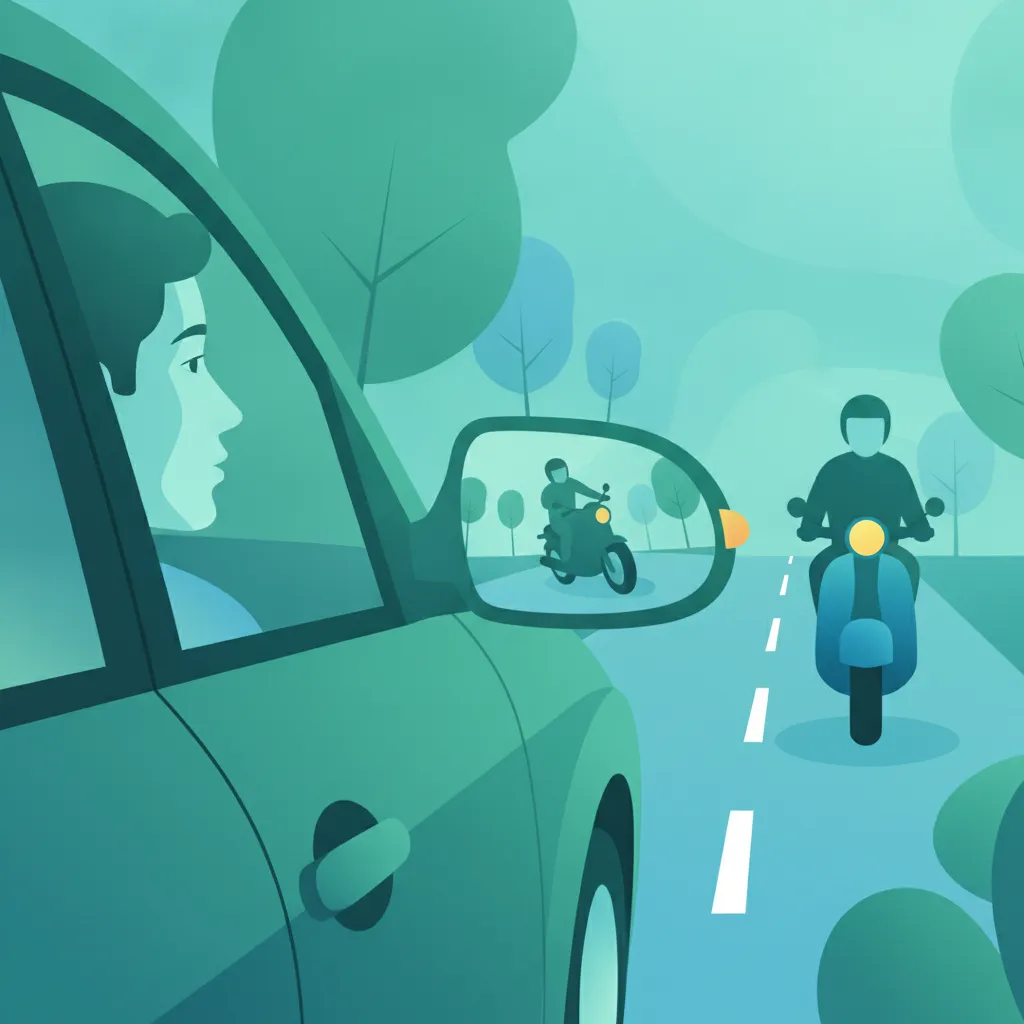
In this lesson, drivers will learn how to safely share the road with motorcycles and scooters, focusing on the specific blind spots and speed differentials that create risk. The content highlights proper lane positioning, caution when overtaking, and strategies for predicting motorcycle trajectories. Learners will also be introduced to the importance of being aware of scooter movements, especially in narrow streets.
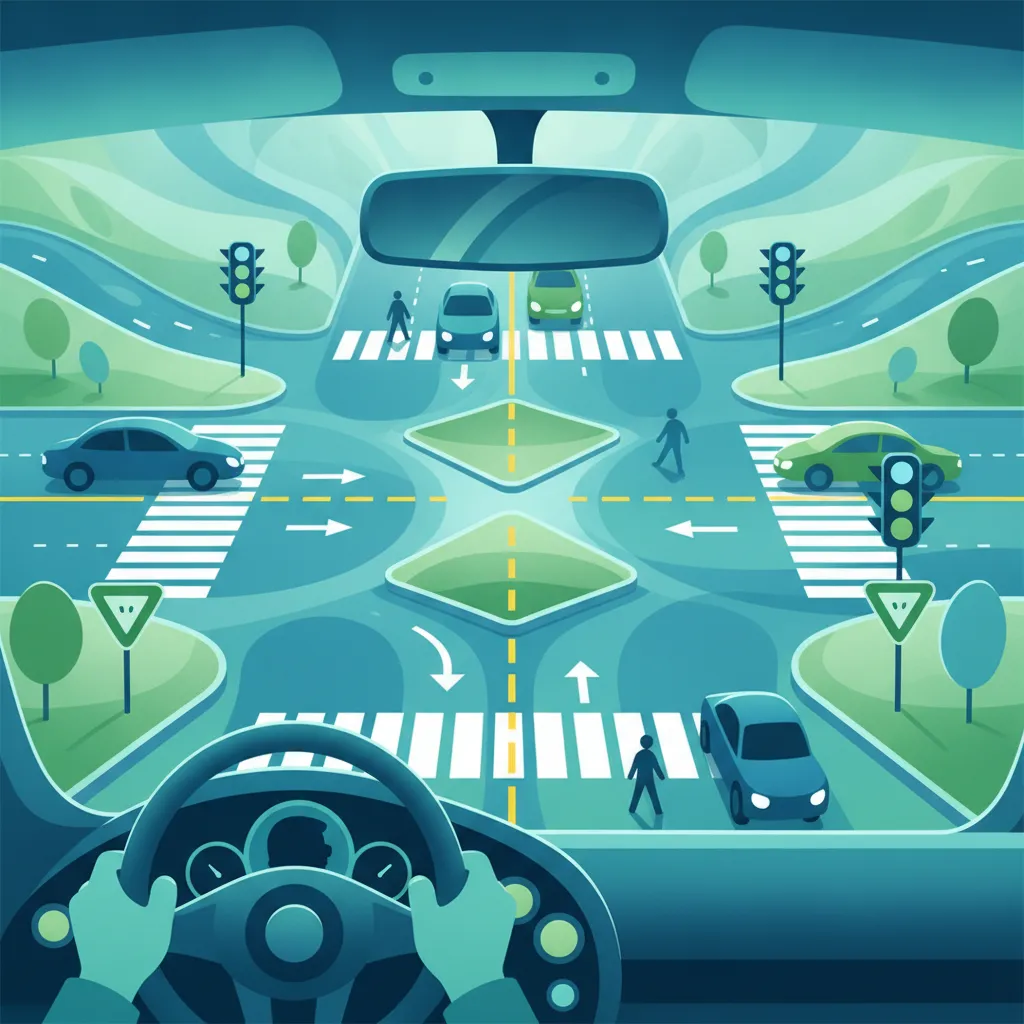
This lesson teaches riders how to approach and cross both controlled and uncontrolled intersections in urban settings. You will practice the 'scanning cycle' technique to identify cross-traffic hazards and manage your defensive line of sight around physical obstructions. The lesson also highlights the critical importance of early signaling and positioning to ensure that turning passenger cars do not violate your safety zone.
Find clear answers to common questions learners have about Alcohol, Drugs, and Substance Influence on Riding. Learn how the lesson is structured, which driving theory objectives it supports, and how it fits into the overall learning path of units and curriculum progression in France. These explanations help you understand key concepts, lesson flow, and exam focused study goals.
For all drivers in their probationary period, including those with an AM licence, the legal blood alcohol limit is 0.20 grams per litre of blood, which essentially equates to a zero-tolerance policy.
Yes, both involve severe penalties under the Code de la route. Driving under the influence of drugs leads to immediate administrative sanctions, potential loss of the licence, and heavy fines, all of which are common topics in the theory exam.
Yes, French law enforcement can perform random alcohol and drug testing. The exam emphasizes that refusal to submit to testing carries penalties equivalent to or exceeding those of testing positive.
Ready to focus your study? Use the practice search to find exactly the French driving theory questions you need for the Code de la route and permis de conduire ETG. Refine your knowledge on specific topics or challenging rules to boost your confidence and exam readiness.