
This lesson completes your Category AM theory course by preparing you for critical roadside emergencies. You will learn the exact legal and safety protocols required by the French Code de la route to protect yourself and others if you are involved in an accident or breakdown.
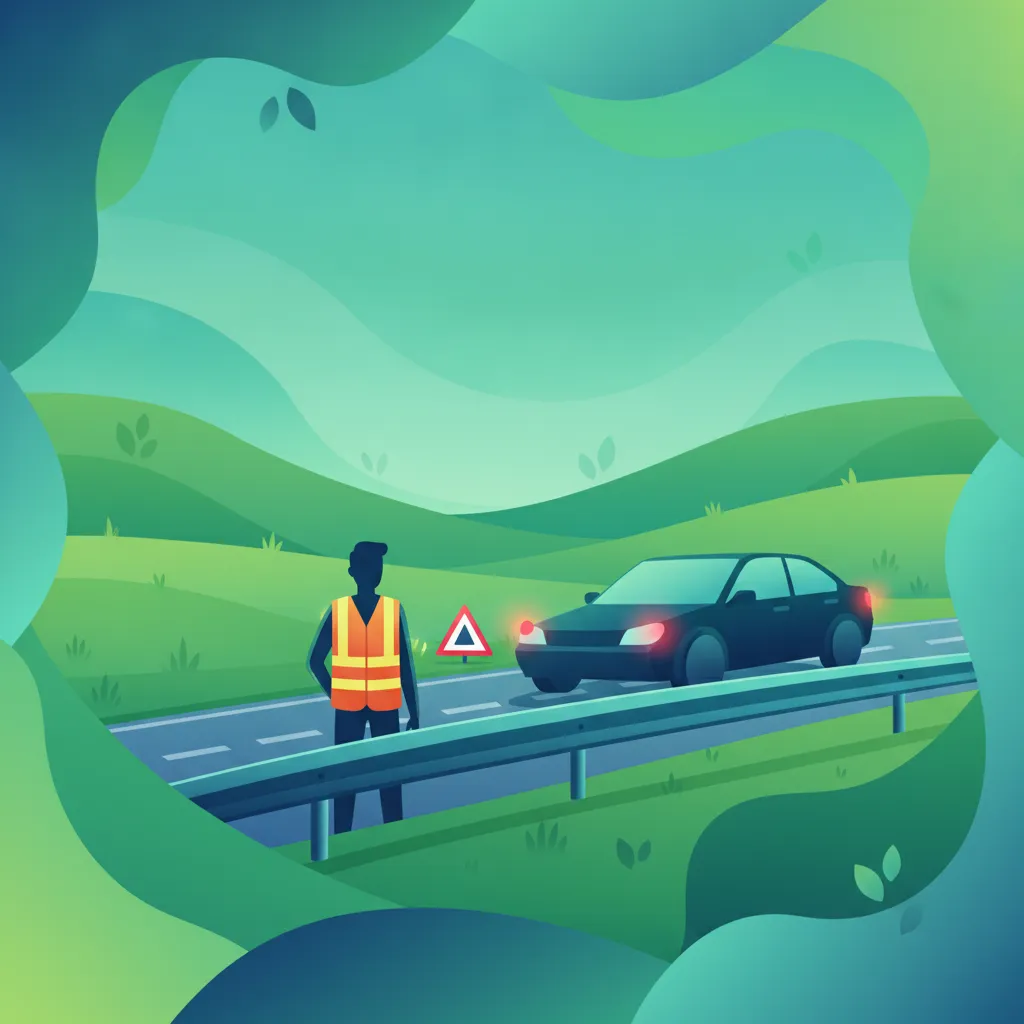
Lesson content overview
No matter how defensively you ride, an unexpected mechanical failure or traffic collision can happen to any road user. For riders of Category AM vehicles—such as mopeds, light scooters (under 50cc), and light quadricycles (commonly called voitures sans permis or voiturettes in France)—knowing how to react instantly and legally is vital.
The French Code de la route (Highway Code) and the French Penal Code dictate strict procedures immediately following a road incident. Mishandling these situations can lead to secondary accidents, severe criminal penalties, or the rejection of insurance claims. This lesson details the exact physical, medical, and administrative steps you must take to secure the scene, provide aid, and legally document a road incident in France.
In France, emergency responders and driving schools teach a simple, life-saving three-step protocol known as PAS: Protéger (Protect), Alerter (Alert), and Secourir (Rescue). This sequence must always be performed in this exact order. Attempting to rescue someone before protecting the scene, for example, risks causing a pileup and putting your own life in immediate danger.
P - Protéger (Protect): Secure the area immediately to prevent a secondary accident. This involves making yourself visible, switching on hazard lights, and marking the obstruction.
A - Alerter (Alert): Contact the appropriate emergency services with precise, objective information regarding the location, nature of the incident, and number of victims.
S - Secourir (Rescue): Provide basic, non-intrusive first aid to injured individuals while waiting for professional medical teams to arrive.
Your immediate priority is to ensure that other road users do not crash into the stationary vehicles or the people at the scene. This is especially critical for AM license holders, whose small vehicles can easily be hidden by bends, crests, or larger vehicles.
Under French law, the safety equipment requirements vary slightly depending on whether you are riding a two-wheeled moped or driving a light quadricycle:
If you are driving a light quadricycle, you must place your warning triangle on the road at least 30 metres before the vehicle, or even further if visibility is poor (e.g., around a blind curve or at the top of a hill). However, you must never put yourself in danger to place the triangle.
Once the scene is secured, you must assess whether there are any injuries. If anyone is injured, feels unwell, or if there is a hazardous situation (such as a fuel leak or blocked road), you must alert emergency services immediately.
In France, you can call several dedicated emergency numbers free of charge from any phone (even without a SIM card or with a locked screen):
When you call emergency services, remain calm and speak clearly. The operator will need:
Do not hang up until the operator instructs you to do so.
In France, failing to assist a person in danger when you can do so without risk to yourself is a serious criminal offense known as non-assistance à personne en danger (Article 223-6 of the French Penal Code). While you are not expected to perform complex medical procedures, you must provide basic, life-saving aid if you are capable.
The official French introductory first-aid certificate. It teaches the fundamental physical maneuvers to assist victims of cardiac arrest, choking, severe bleeding, and unconsciousness before professional medical help arrives.
A breakdown can be highly stressful, especially on fast-moving rural roads or in dense urban traffic. If your Category AM vehicle suffers a mechanical failure, follow these rules to ensure your safety:
If the accident results only in property damage (no bodily injuries) and the parties involved agree on the circumstances, there is no legal requirement to call the police. Instead, you must complete the Constat Amiable (European Accident Statement).
The constat amiable is a highly standardized document used across Europe. It acts as a joint factual declaration for insurance companies to determine civil liability.
Separate the copies: The form consists of carbon-copy sheets. Give one copy to the other driver and keep the original for yourself.
Fill out the back page: On the back of your copy, complete the individual declaration (this can be done later at home).
Submit to your insurer: You must send the completed and signed document to your insurance provider within 5 working days (jours ouvrés) of the incident.
Violating safety or administrative laws after an accident can carry severe criminal penalties under the French Code de la route and Penal Code.
If you are involved in an accident (even as a witness whose actions may have caused it) and you deliberately drive away to evade liability, you commit a délit de fuite (Article 434-10 of the French Penal Code).
Even if the damage is extremely minor—such as scratching a moped bumper or knocking over a wing mirror—fleeing the scene constitutes a criminal offense. You must stop, identify yourself, and exchange contact/insurance information.
You must contact the National Police (Police Nationale) or Gendarmerie immediately if:
Your response to an emergency must adapt to environmental conditions.
| Phase | Core Actions | Key French Term / Detail |
|---|---|---|
| P - Protéger | Hazard lights on, put on gilet jaune, secure scene (use triangle for quadricycles). | Sécurisation des lieux |
| A - Alerter | Call emergency services immediately if injuries or hazards exist. | 112 (Euro), 15 (SAMU), 18 (Pompiers) |
| S - Secourir | Reassure victims, protect them from cold, do not remove helmets, do not move them. | Premiers secours (PSC1) |
| Administrative | Complete the constat amiable jointly, sign, and send to insurer within 5 days. | Déclaration d'accident |
| Legal | Never flee the scene (délit de fuite is a severe crime). | Délit de fuite (Up to €75,000 fine) |
This lesson teaches Category AM riders the essential French emergency procedures following a road incident, centered on the three-step PAS Protocol (Protect, Alert, Rescue). Riders must secure the scene using hazard lights and high-visibility vests, contact emergency services with precise information, and provide basic first aid without removing helmets or moving victims. The administrative section covers the Constat Amiable form, which must be completed jointly, signed without modification to the front page, and submitted to insurers within 5 working days. Critical legal obligations include never fleeing the scene, as hit-and-run carries penalties of up to 3 years imprisonment and €75,000 fine, and assisting injured persons when safe under Article 223-6 of the French Penal Code.
A short set of high-value points that capture the most important learning from this lesson.
The PAS Protocol (Protéger, Alerter, Secourir) must always be followed in exactly this order during any road emergency.
The warning triangle is mandatory for light quadricycles but not for two-wheeled mopeds due to practical safety limitations.
The European emergency number 112 works across France and is especially useful if you are unsure which specific service to call.
Never remove a motorcyclist's helmet after an accident unless they are not breathing and you cannot perform rescue breathing with it on.
The Constat Amiable must be submitted to your insurer within 5 working days of the incident.
Explore all units and lessons included in this driving theory course.
For two-wheeled vehicles, you must put on your high-visibility vest before stepping onto the road, not after.
Call 15 (SAMU) for medical emergencies, 18 (Pompiers) for fires and extractions, and 17 (Police) only when law enforcement is specifically required.
You cannot modify the front page of the Constat Amiale once both parties have signed it.
Hit-and-run (délit de fuite) is a criminal offense even for extremely minor damage such as a scratched bumper.
Non-assistance à personne en danger (Article 223-6) is a criminal offense if you fail to provide basic aid when safe to do so.
Moving an injured person from their position unless there is immediate danger like fire, which can cause irreversible spinal damage.
Giving food or drink to an accident victim, even if they ask for water, due to choking and anesthesia risks.
Assuming the warning triangle is required for all vehicles; it is only mandatory for light quadricycles, not mopeds.
Forgetting that once signed, the front page of the Constat Amiable cannot be altered; disagreement should be noted in the Observations section before signing.
Attempting to push a broken-down moped along a busy rural road instead of getting off the roadway immediately and calling for assistance.
Lesson content overview
A short set of high-value points that capture the most important learning from this lesson.
The PAS Protocol (Protéger, Alerter, Secourir) must always be followed in exactly this order during any road emergency.
The warning triangle is mandatory for light quadricycles but not for two-wheeled mopeds due to practical safety limitations.
The European emergency number 112 works across France and is especially useful if you are unsure which specific service to call.
Never remove a motorcyclist's helmet after an accident unless they are not breathing and you cannot perform rescue breathing with it on.
The Constat Amiable must be submitted to your insurer within 5 working days of the incident.
Explore all units and lessons included in this driving theory course.
For two-wheeled vehicles, you must put on your high-visibility vest before stepping onto the road, not after.
Call 15 (SAMU) for medical emergencies, 18 (Pompiers) for fires and extractions, and 17 (Police) only when law enforcement is specifically required.
You cannot modify the front page of the Constat Amiale once both parties have signed it.
Hit-and-run (délit de fuite) is a criminal offense even for extremely minor damage such as a scratched bumper.
Non-assistance à personne en danger (Article 223-6) is a criminal offense if you fail to provide basic aid when safe to do so.
Moving an injured person from their position unless there is immediate danger like fire, which can cause irreversible spinal damage.
Giving food or drink to an accident victim, even if they ask for water, due to choking and anesthesia risks.
Assuming the warning triangle is required for all vehicles; it is only mandatory for light quadricycles, not mopeds.
Forgetting that once signed, the front page of the Constat Amiable cannot be altered; disagreement should be noted in the Observations section before signing.
Attempting to push a broken-down moped along a busy rural road instead of getting off the roadway immediately and calling for assistance.
Explore search topics learners often look for when studying Procedures After an Accident or Breakdown. These topics reflect common questions about road rules, driving situations, safety guidance, and lesson level theory preparation for learners in France.
Browse additional driving theory lessons that cover connected traffic rules, road signs, and common driving situations related to this topic. Improve your understanding of how different rules interact across everyday traffic scenarios.
Understand the legal obligations for providing first aid after a road traffic accident in France. Learn about the PAS protocol and the mandatory safety steps to assist injured road users safely while adhering to the French Code de la route and Penal Code requirements.
When encountering or participating in a road accident, following a strict safety protocol protects lives and prevents secondary crashes. This lesson covers the essential 'Protect, Alert, Rescue' (PAS) protocol, which involves wearing a yellow high-visibility vest, placing a warning triangle, and calling 112. You will also learn basic first-aid practices, how to secure victims, and the correct way to fill out an accident report.
This lesson provides a clear, step-by-step procedure to follow if you witness or are involved in a traffic accident in France. You will learn how to secure the scene using your mandatory hazard triangle and yellow vest to prevent secondary collisions. Crucially, it explains how to contact emergency services via 112 and covers basic first-aid rules, including the absolute ban on removing an injured rider's helmet unless necessary.
This lesson covers immediate response steps for critical on-board events, including passenger medical emergencies and engine compartment fires. Learners will study the location and proper application of fire extinguishers, safety hammers, and first aid kits. It also explains how to coordinate effectively with French emergency services (SAMU, Fire Brigade) and reassure passengers to maintain calm during an incident.
This lesson details the emergency protocols for handling mechanical breakdowns or tire blowouts on public highways and motorways. Drivers will learn how to park the vehicle in the safest possible location, activate hazard warning lights, and deploy the reflective warning triangle. It teaches precise commands and steps for evacuating passengers quickly through safety exits, positioning them behind protective guardrails.
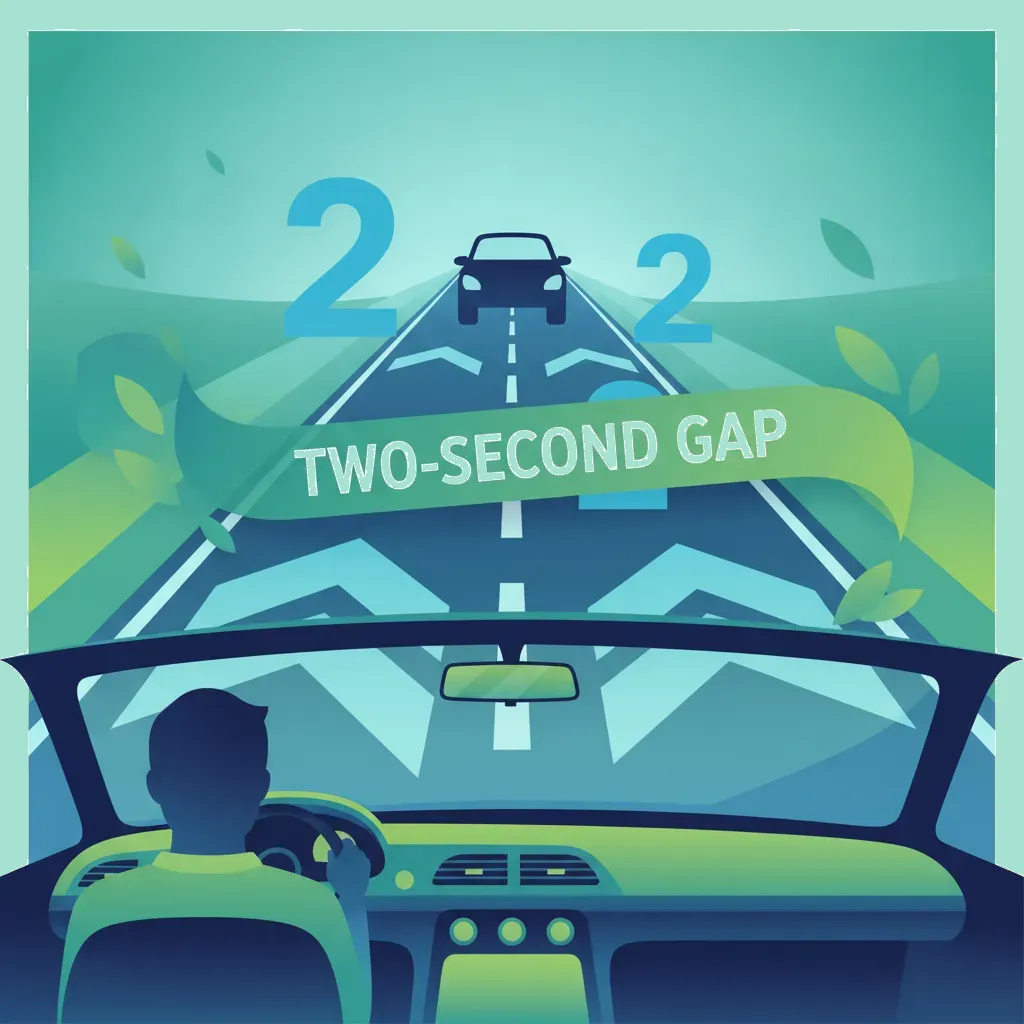
Maintaining a safe distance behind the lead vehicle is essential to prevent rear-end collisions during sudden braking maneuvers. This lesson teaches you the two-second safety rule and how to calculate this gap at different highway speeds. You will also study unique safety margin requirements, such as maintaining minimum distance intervals in road tunnels or doubling your following distance on wet roads.
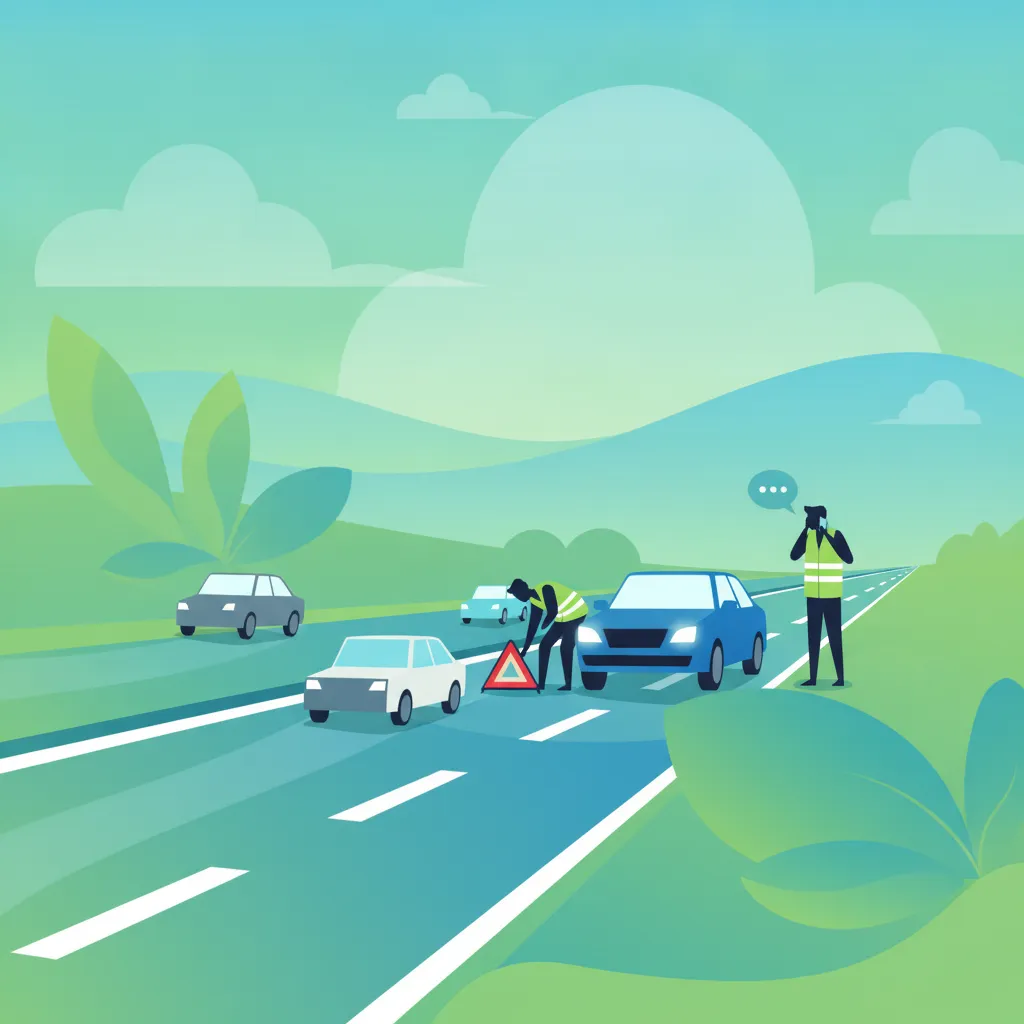
In this lesson, drivers will learn the essential steps to take following an accident involving a goods vehicle. The content covers contacting emergency services via 112, providing first aid, and safely positioning the vehicle to protect other road users. Learners will be instructed on documenting the incident, notifying insurance providers, and fulfilling legal obligations for accident reporting, including gathering witness statements.

French motorways (autoroutes) are fast, controlled-access roads with unique laws regulating lane discipline and emergencies. This lesson teaches standard lane-use: cruising in the right lane and reserving the middle or left lanes exclusively for passing. You will study emergency procedures, the use of orange emergency call boxes, safety barrier rules, and navigating toll booths (peages) safely.
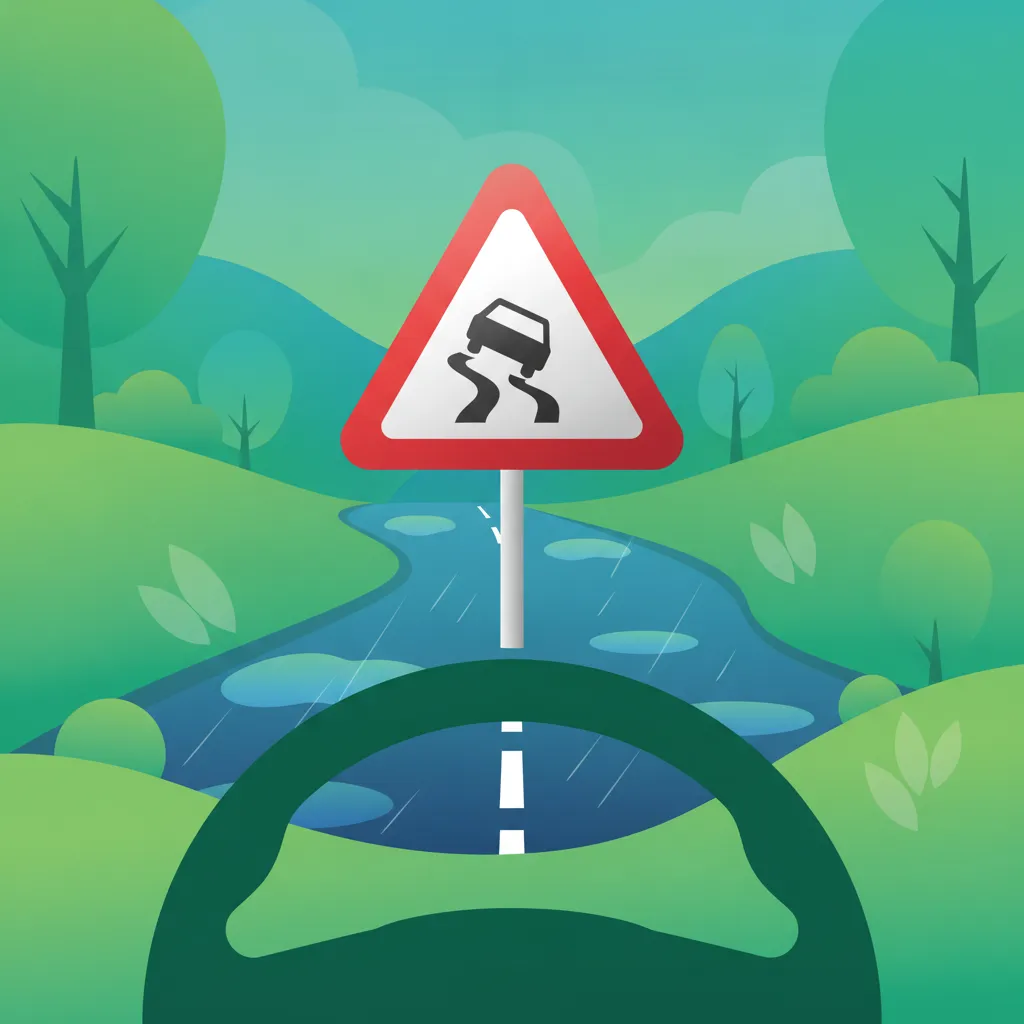
Warning signs on French roads are triangular with a red border, designed to alert drivers to upcoming dangers. This lesson teaches you how to interpret warnings for sharp curves, slippery surfaces, narrowing lanes, and wildlife or animal crossing hazards. You will understand the safety adjustments needed when approaching school zones, active roadworks, or crossings where vulnerable pedestrians are present.
Driving safely involves a mutual social contract based on courtesy, safety awareness, and active risk mitigation. This lesson discusses the principles of defensive driving, prioritizing vulnerable road users like cyclists and pedestrians, and managing driver stress. It also highlights eco-driving strategies that help reduce fuel consumption and environmental emissions, fostering safer and cleaner shared roads.
In this lesson, learners will be equipped with the essential steps to take in the event of an emergency involving their goods vehicle, such as accidents, spills, or fires. The content covers the correct usage of the European emergency number 112, immediate safety measures to protect the scene, and the required use of driver emergency equipment like fire extinguishers and spill kits. Additionally, the lesson details the obligatory reporting processes, documentation of incidents, and cooperation with emergency services and law enforcement.
Find clear answers to common questions learners have about Procedures After an Accident or Breakdown. Learn how the lesson is structured, which driving theory objectives it supports, and how it fits into the overall learning path of units and curriculum progression in France. These explanations help you understand key concepts, lesson flow, and exam focused study goals.
Your absolute priority is safety. You must secure the scene to prevent further accidents, move yourself and your vehicle to a safe place if possible, and wear your high-visibility vest. Only then should you assess injuries and call 112 if necessary.
Yes, in France, it is strongly recommended to fill out the constat amiable at the scene for all accidents, even minor ones. It serves as the primary document for insurance companies to determine liability and coverage.
Do not force them. Note their license plate number, try to get witness information, and take photos of the scene and damages. You can still submit your side of the story to your insurance company, but your evidence will be crucial.
The general rules of the Code de la route apply to all AM vehicles. You must have a warning triangle and a high-visibility vest in your vehicle. In a breakdown, ensure your hazard lights are on and you are positioned safely away from traffic while waiting for assistance.
Ready to focus your study? Use the practice search to find exactly the French driving theory questions you need for the Code de la route and permis de conduire ETG. Refine your knowledge on specific topics or challenging rules to boost your confidence and exam readiness.