
This lesson guides you through the technical steps of performing parallel, angled, and perpendicular parking maneuvers. You will also learn to navigate municipal regulations like blue zones and paid parking schemes to ensure you park legally and safely across France.
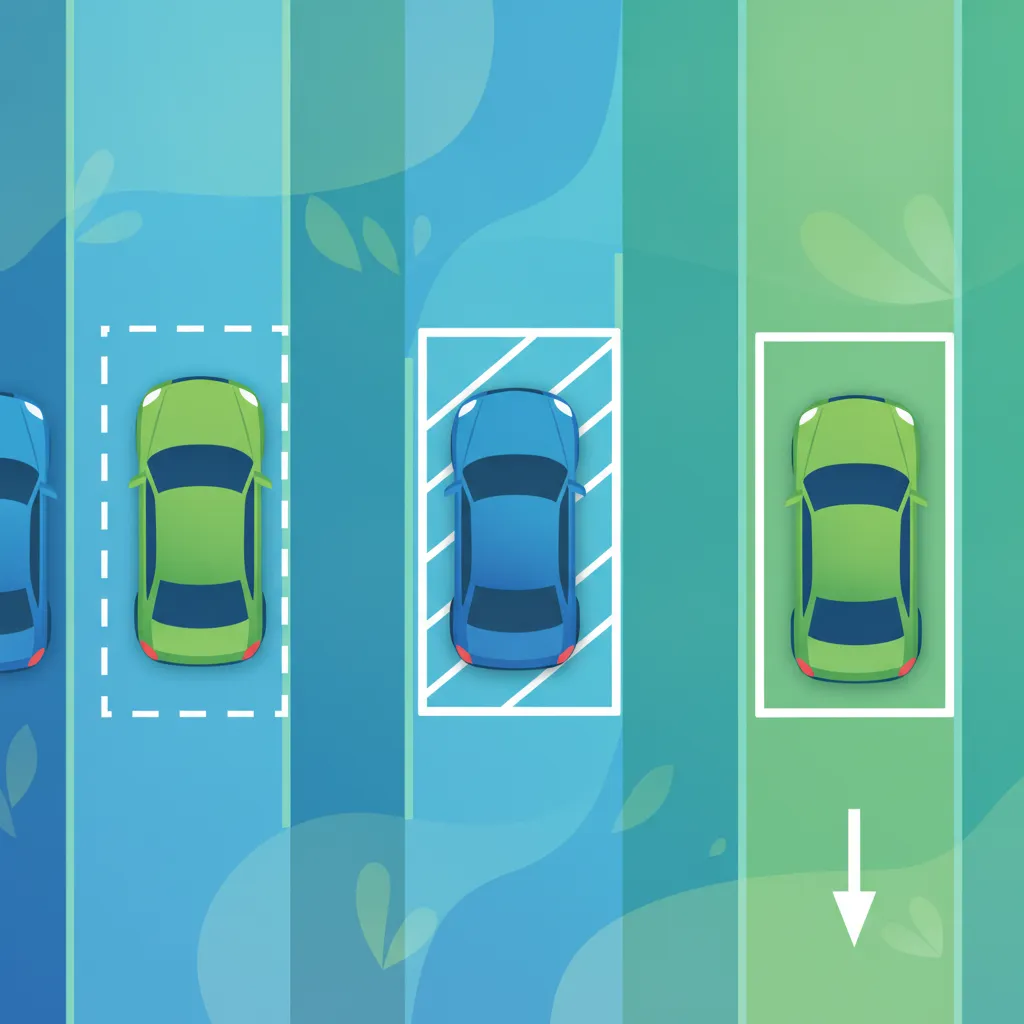
Lesson content overview
Parking is one of the most critical practical and theoretical components of obtaining your French Category B driving licence. It requires a combination of precise vehicle control, acute spatial awareness, and a thorough understanding of the Code de la route (French highway code).
Whether you are navigating the tight historic streets of a French city or finding a space in a busy commercial parking lot, knowing how to position your vehicle safely and legally is essential. This lesson covers the three fundamental parking maneuvers—parallel, perpendicular, and angled parking—alongside municipal regulations, payment schemes, and driver responsibilities.
Before attempting any parking maneuver, a driver must understand how a vehicle behaves at low speeds. Unlike driving at cruising speeds, parking requires micro-adjustments, intensive use of mirrors, and highly controlled power delivery.
Because only the front wheels of a standard Category B passenger vehicle steer, the rear wheels act as a pivot. When you turn the steering wheel while moving forward, the rear of the car cuts the corner. When reversing, the front of the car swings out wide in the opposite direction of your turn.
Failing to account for this front-end swing is a primary cause of collisions with adjacent vehicles during parking maneuvers. Accurate spatial awareness allows you to judge whether your vehicle's physical dimensions (including side mirrors) can safely clear surrounding obstacles.
You cannot rely solely on your eyes looking forward. Safe parking requires a continuous, systematic scanning pattern:
All parking maneuvers must be executed at walking pace (allure du pas). In manual transmission vehicles, this is achieved through precise clutch control—often referred to as "slipping the clutch" or le patinage—combined with gentle braking. In automatic vehicles, you will control the speed almost entirely by modulating the brake pedal as the engine creeps forward or backward. Keeping the vehicle slow gives you more time to process visual cues and adjust your steering inputs.
Parallel parking involves positioning your vehicle parallel to the curb, typically between two other parked vehicles. This is the most common parking setup on French urban streets and is frequently tested during the practical driving exam.
To parallel park safely and accurately, drivers use established reference points on their own vehicle relative to the stationary "target" vehicle (the car parked in front of the empty space):
Signal and Position: Check your mirrors for trailing traffic, activate your turn signal (indicator) toward the side of the space, and pull up parallel to the front vehicle. Leave a lateral distance of approximately 0.5 to 0.7 metres. Stop when your rear bumper is aligned with the rear bumper of the parked vehicle.
Angle the Entry: Engage reverse gear. Check your surroundings, including your blind spots. Begin reversing slowly in a straight line. As soon as your rear wheels clear the rear bumper of the adjacent vehicle (or when your rear passenger-side window aligns with their rear bumper), turn the steering wheel sharply all the way toward the curb.
Establish the 45-Degree Angle: Maintain a slow, steady speed. As your vehicle enters the space at approximately a 45-degree angle, look in your left side mirror. When you can see the entire front end (both headlights) of the vehicle parked behind your space, or when your front passenger door pillar aligns with the rear corner of the front car, straighten your wheels.
Swing the Front End: Continue reversing in a straight line. Once your front bumper clears the rear bumper of the vehicle in front, turn the steering wheel fully in the opposite direction (away from the curb) to swing the front of your vehicle into the space.
Straighten and Center: Once your vehicle is parallel to the curb, straighten your wheels and drive forward slightly to center your vehicle between the cars in front and behind. This ensures both drivers have enough room to exit their spaces.
According to the general interpretation of the Code de la route, a vehicle must be parked parallel to the curb and must not obstruct the flow of traffic.
In France, your vehicle should be parked within 0.5 metres of the curb. Parking further into the roadway reduces the lane width for passing traffic and can result in a fine for improper parking (stationnement gênant).
Perpendicular parking involves positioning your vehicle at a 90-degree angle to the curb or the edge of the roadway. These spaces are typically organized in side-by-side bays within parking lots, supermarkets, and wider city streets.
Perpendicular parking can be executed by driving forward into the space or by reversing into it.
Position the Vehicle: Signal your intention. Drive slowly past your target parking bay, keeping a lateral distance of about 1 to 1.5 metres from the parked cars. Stop when your rear bumper is aligned with the far line of the third parking bay past your target space (or use your vehicle's reference points, such as aligning your shoulder with the center of the bay two spaces past your target).
Initiate the Turn: Engage reverse gear and check all mirrors and blind spots. Turn the steering wheel fully toward the parking space as you begin to slowly back up.
Monitor and Adjust: Look at your left and right side mirrors. Check that your rear fenders are clearing the vehicles or lines on both sides of the bay. If you are closer to one side, make minor steering corrections.
Straighten the Wheels: Once your vehicle is parallel to the white lines of the bay, quickly straighten your steering wheel. Reverse straight back until your vehicle is fully in the bay, ensuring your rear bumper does not hit any rear barrier or curb.
When perpendicular parking, you must park fully within the marked white lines. If your tires sit on or cross over the painted boundaries, you restrict the space available for adjacent drivers to open their doors, increasing the risk of property damage and violating general parking standards.
Angled parking spaces are laid out at an angle to the curb—typically 30, 45, or 60 degrees. These bays are highly efficient because they allow vehicles to enter and exit quickly without requiring sharp 90-degree turns.
Most angled parking systems are designed for forward entry. The entry path matches the natural turning radius of your vehicle:
In some French municipalities, reverse-angled parking is mandated by specific road signs. This layout requires you to drive past the space, signal, and reverse into the angled bay. While it requires more effort to enter, it provides maximum visibility when exiting back into the street. Always check local signs to determine which direction of entry is legally required.
Parking on public roads in France is heavily regulated by local authorities (arrêtés municipaux). Understanding the signs, ground markings, and payment structures is vital to avoid hefty fines (amendes) or having your vehicle impounded (mise en fourrière).
A Zone Bleue is a designated urban parking area where parking is free of charge but strictly limited in duration (usually to 1.5 or 2 hours). These zones are designed to prevent long-term parking and promote high turnover near commercial districts.
To park legally in a Blue Zone, you must:
Paid parking spaces are marked on the asphalt by the word "PAYANT" written in white paint along the boundary lines.
To park in these spots, you must pay using a nearby street parking meter (horodateur) or a certified municipal parking mobile application.
The Code de la route distinguishes between stopping (l'arrêt)—which is a temporary pause to let passengers in or out or to load goods while the driver remains at the wheel—and parking (le stationnement), which involves leaving the vehicle unattended.
Additionally, parking is strictly prohibited in the following locations, regardless of signs:
Your duties as a driver do not end when you engine turns off. Securing your vehicle is a legal obligation under the Code de la route to prevent theft, accidents, and hazards.
Before leaving your vehicle, you must complete the following safety checklist:
Apply the Parking Brake: Fully engage your manual handbrake or ensure your electronic parking brake is activated.
Select the Correct Gear: On manual vehicles, leave the car in 1st gear (if facing uphill or on flat ground) or in reverse gear (if facing downhill) to act as a secondary mechanical lock. On automatic vehicles, shift the selector to "P" (Park).
Turn off Auxiliary Systems: Ensure all cabin lights, headlights, and windscreen wipers are switched off to prevent battery drainage.
Secure Your Valuables: Remove high-value items or lock them completely out of sight in the trunk.
Lock the Vehicle: Ensure all windows are fully closed and all doors are locked. The physical steering wheel lock (antivol) should be engaged by turning the steering wheel slightly after removing the key until it clicks into place.
When parking on a steep hill, gravity can place immense stress on your parking brake. If the brake fails, your vehicle could roll into traffic. To prevent this, you must orient your front tires relative to the curb:
Many novice drivers mistakenly believe that turning on their hazard warning lights (les feux de détresse) allows them to park illegally on a sidewalk or double-park "just for a minute."
Using hazard warning lights does not make illegal parking legal. Hazard lights should only be used to warn other road users of an immediate danger, such as a vehicle breakdown, an unexpected obstacle ahead, or when your car is immobilized in a hazardous position.
Understanding the real-world consequences of poor parking decisions will help you protect your driver's licence and your wallet.
In France, parking offenses are categorized based on their severity:
Before opening your vehicle door to exit, you must ensure that doing so does not create a hazard for passing traffic, particularly cyclists and motorcyclists.
In France, the "Dutch Reach" method is highly encouraged: always open your car door with your far hand (your right hand if you are sitting in the driver's seat). This physical movement forces your torso to rotate, naturally directing your line of sight over your shoulder and into your side-mirror blind spot, preventing a dangerous dooring collision.
To master parking, focus on connecting visual references with precise speed control. Use your mirrors as extensions of your eyes, always respect local signage (Zone Bleue, Payant), and never compromise the safety of pedestrians or cyclists by parking on walkways or bike lanes.
Below are external resources and interactive practice modules where you can test your knowledge of French parking regulations, signs, and maneuver mechanics.
This lesson covers the three fundamental parking maneuvers required for the French Category B licence: parallel parking (stationnement en créneau), perpendicular parking (stationnement en bataille), and angled parking (stationnement en épi). Each maneuver relies on understanding vehicle physics—the pivot point created by rear wheels and the resulting front-end swing during reverse maneuvers—combined with systematic mirror scanning and blind spot checks executed at walking pace. Beyond mechanics, the lesson addresses French municipal parking regulations including Blue Zone requirements for a European Parking Disk, paid parking via horodateur machines, and prohibited zones such as sidewalks and disabled bays. Critical safety responsibilities include proper vehicle securing procedures, correct tire positioning on slopes, and understanding that hazard lights never permit illegal parking. Parking violations in France are classified by severity, with dangerous parking resulting in a €135 fine and loss of 3 licence points.
A short set of high-value points that capture the most important learning from this lesson.
The front wheels steer while rear wheels pivot; reversing causes the front to swing opposite to turn direction, requiring blind spot checks before the front-end swing during parallel parking.
Parallel parking (créneau) requires parking within 0.5 metres of the curb; exceeding this distance constitutes obstructive parking (stationnement gênant) and may result in fines.
Reversing into perpendicular parking bays is legally preferred and safer than driving forward in, because exiting with a clear forward view is significantly less hazardous.
Blue Zone parking requires displaying a properly set European Parking Disk with your arrival time; exceeding the time limit or manipulating the disk without moving your vehicle is illegal.
Using hazard warning lights (feux de détresse) does not make illegal parking legal; they must only indicate immediate danger or vehicle breakdown.
Explore all units and lessons included in this driving theory course.
Parallel parking steps: signal, align rear bumpers, reverse straight, turn sharply toward curb at 45°, straighten when front headlights visible, then swing front into space.
On downhill slopes, turn wheels toward the curb so rolling forward catches the tire against the curb; on uphill slopes, turn wheels away from the curb so rolling backward catches the rear tire.
In France, parking penalties range from obstructive parking (stationnement gênant) to dangerous parking (stationnement dangereux) which costs 3 licence points plus a €135 fine.
Sidewalks, pedestrian crossings, cycle paths, disabled parking, and in front of driveways are always prohibited parking locations regardless of signs.
Use the 'Dutch Reach' method (open door with far hand) to prevent dooring cyclists when exiting your vehicle.
Turning the wheel too early or too late during parallel parking, resulting in either curb strikes or excessive distance from the curb.
Failing to check blind spots for the front-end swing during reverse parallel parking, risking collision with passing cyclists or vehicles.
Not parking fully within white boundary lines in perpendicular bays, which restricts adjacent drivers' door space and violates parking standards.
In Blue Zones, failing to display the disk or setting the wrong arrival time, which results in fines even if the vehicle is moved before the time limit expires.
Parking on a slope without properly engaging the parking brake or selecting the correct gear (1st gear uphill, reverse downhill) as a secondary lock.
Lesson content overview
A short set of high-value points that capture the most important learning from this lesson.
The front wheels steer while rear wheels pivot; reversing causes the front to swing opposite to turn direction, requiring blind spot checks before the front-end swing during parallel parking.
Parallel parking (créneau) requires parking within 0.5 metres of the curb; exceeding this distance constitutes obstructive parking (stationnement gênant) and may result in fines.
Reversing into perpendicular parking bays is legally preferred and safer than driving forward in, because exiting with a clear forward view is significantly less hazardous.
Blue Zone parking requires displaying a properly set European Parking Disk with your arrival time; exceeding the time limit or manipulating the disk without moving your vehicle is illegal.
Using hazard warning lights (feux de détresse) does not make illegal parking legal; they must only indicate immediate danger or vehicle breakdown.
Explore all units and lessons included in this driving theory course.
Parallel parking steps: signal, align rear bumpers, reverse straight, turn sharply toward curb at 45°, straighten when front headlights visible, then swing front into space.
On downhill slopes, turn wheels toward the curb so rolling forward catches the tire against the curb; on uphill slopes, turn wheels away from the curb so rolling backward catches the rear tire.
In France, parking penalties range from obstructive parking (stationnement gênant) to dangerous parking (stationnement dangereux) which costs 3 licence points plus a €135 fine.
Sidewalks, pedestrian crossings, cycle paths, disabled parking, and in front of driveways are always prohibited parking locations regardless of signs.
Use the 'Dutch Reach' method (open door with far hand) to prevent dooring cyclists when exiting your vehicle.
Turning the wheel too early or too late during parallel parking, resulting in either curb strikes or excessive distance from the curb.
Failing to check blind spots for the front-end swing during reverse parallel parking, risking collision with passing cyclists or vehicles.
Not parking fully within white boundary lines in perpendicular bays, which restricts adjacent drivers' door space and violates parking standards.
In Blue Zones, failing to display the disk or setting the wrong arrival time, which results in fines even if the vehicle is moved before the time limit expires.
Parking on a slope without properly engaging the parking brake or selecting the correct gear (1st gear uphill, reverse downhill) as a secondary lock.
Explore search topics learners often look for when studying Parking Techniques: Parallel, Angled, and Perpendicular. These topics reflect common questions about road rules, driving situations, safety guidance, and lesson level theory preparation for learners in France.
Browse additional driving theory lessons that cover connected traffic rules, road signs, and common driving situations related to this topic. Improve your understanding of how different rules interact across everyday traffic scenarios.
Understand the official French road code regarding public parking zones, including how to interpret blue zone signs and paid parking requirements. Learn the legal distinctions between stopping and parking to avoid fines and vehicle impoundment during your driving theory studies.

Lateral road markings run across or along the sides of roadways, signaling limits such as stop lines, yield lines, and pedestrian zones. This lesson explains how painted curbs restrict parking, including continuous or broken yellow lines which signal stopping or parking prohibitions. You will learn how to identify pedestrian zone boundaries and ensure you never obstruct pedestrian or cyclist paths.
Urban roads in France feature specialized lanes reserved for public transit, micro-mobility, and distinct parking options. This lesson covers how to recognize bus lanes, cycling lanes, and the specific rules that prohibit general traffic from blocking them. You will also learn to interpret parking bay outlines, loading zones, and spots reserved for electric charging or drivers with disabilities.

This lesson detail the exact laws governing the use of reserved bus lanes, detailing who may enter them and during what hours of operation. Drivers will study the penalties for unauthorized passenger cars occupying these lanes and the safety protocols for lane sharing with taxi cabs or cyclists. The lesson also highlights safe lane-merging practices when exiting reserved spaces to merge back into general urban traffic.
French municipalities utilize distinct low-speed configurations to foster pedestrian safety in residential and educational neighborhoods. This lesson details speed restrictions in 'zone 30', pedestrian-only districts, and shared 'zones de rencontre' where speed is capped at 20 km/h. You will learn how priority hierarchies shift in these zones, giving pedestrians legal priority to use the entire roadway.
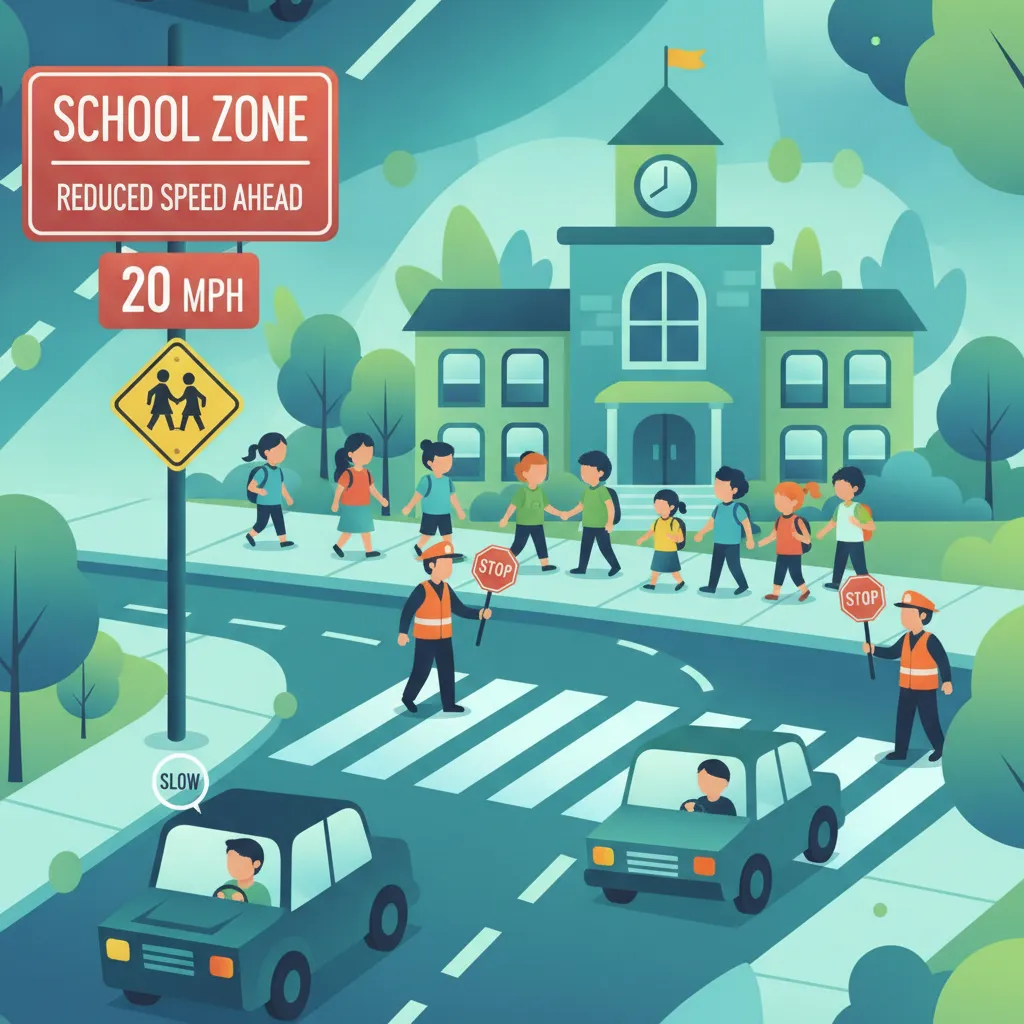
This lesson focuses on the legal rules and safety procedures required within school zones and during school transport (transport scolaire) services in France. Drivers will study strict speed limits, school bus warning sign applications, and mandatory stopping rules when children are boarding. It also details how to respond to official crossing guard signals and ensure students are safely clear before moving.
This lesson examines the regulatory limits and environmental controls applied to large passenger vehicles operating in dense French urban centers. Drivers will study the Crit'Air clean air sticker system and low-emission zones (ZFE) that restrict access for older, high-polluting vehicles. It also addresses navigating physical constraints, such as narrow streets, tight turning radii, and strict municipal weight limits.
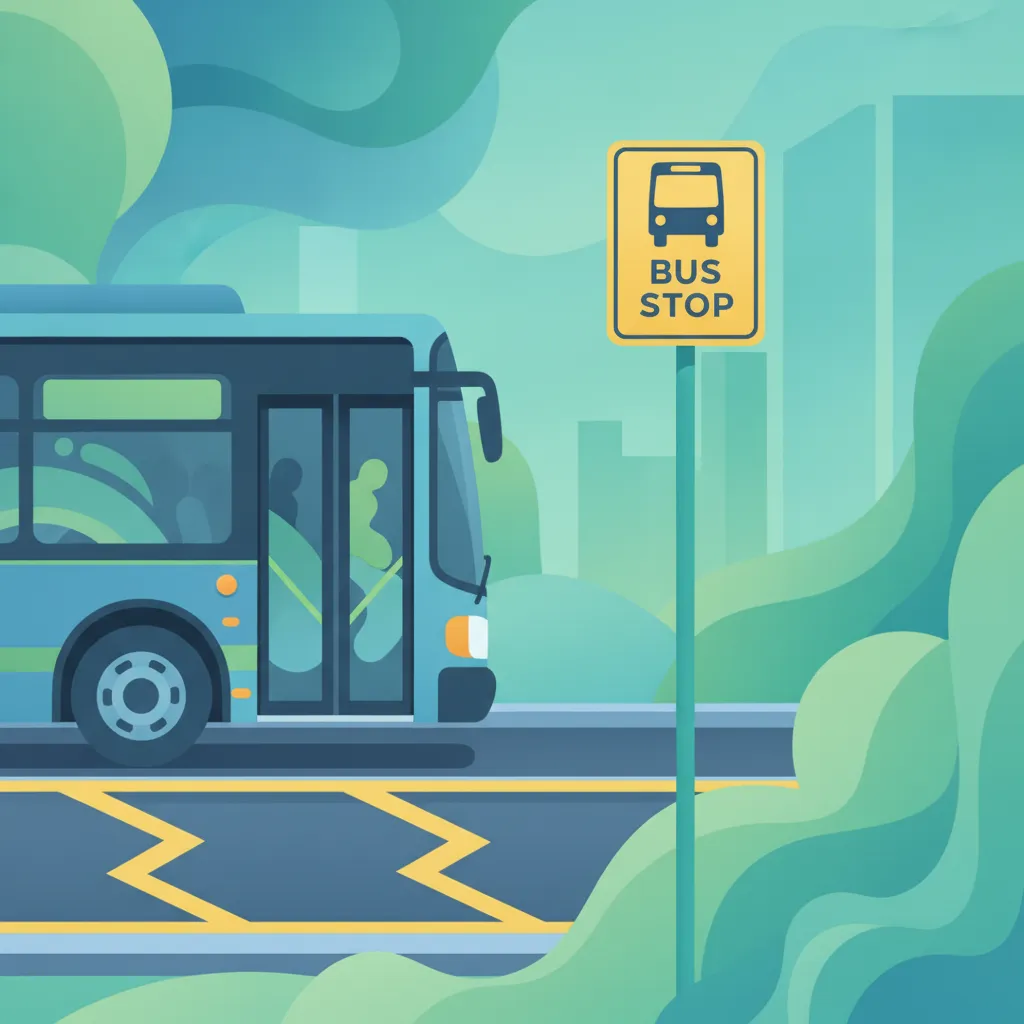
This lesson outlines the standardized physical markings and vertical signs that define official bus stop zones, such as yellow zig-zag road lines. Learners will understand the strict stopping and parking prohibitions that protect these areas from other motorists under the Code de la route. Implementing precise approach protocols ensures that the vehicle aligns correctly with the boarding platform for maximum passenger safety.

Regulatory signs are circular with red borders for prohibitions and blue backgrounds for mandatory instructions. This lesson details critical signs, such as speed limits, no-entry indicators, overtaking bans, and mandatory turning lanes. You will also learn about environmental zones restrictions, height limits for large vehicles, and the legal priority instructions conveyed by stop and yield signs.

This lesson examines the legal consequences, heavy monetary fines, and driver's licence point deductions resulting from traffic and transport safety violations. Learners will study specific infractions such as driving over legal hours, vehicle overloading, and ignoring passenger seatbelt laws. Understanding the strict enforcement systems in France ensures drivers actively avoid risky habits that could end their careers.
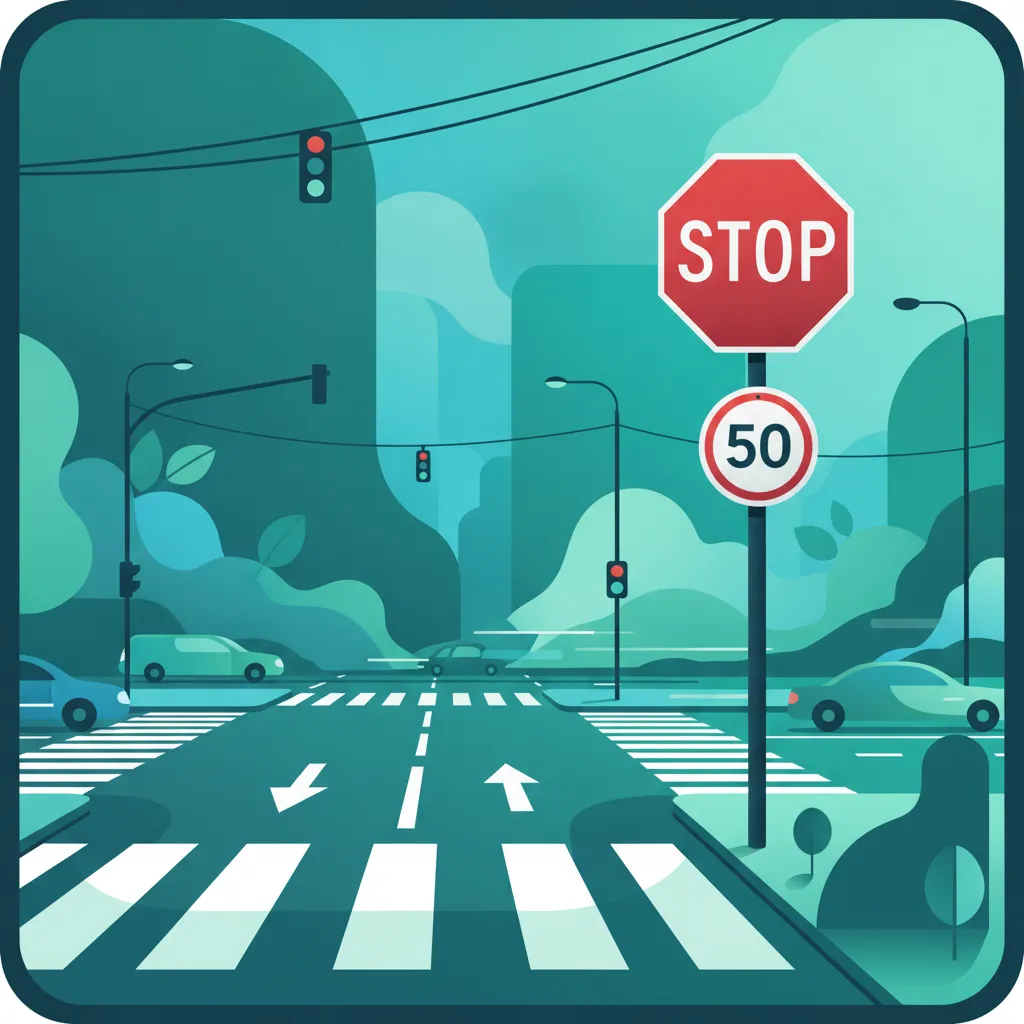
Learners will be introduced to the core set of French regulatory signs that dictate mandatory actions or prohibitions for all road users, including AM riders. The lesson explains the significance of signs such as stop, yield (cédez le passage), speed limit, and no entry, highlighting their specific implications for small vehicles. Understanding these signs is crucial for legal compliance and safe navigation through varied traffic environments.
Find clear answers to common questions learners have about Parking Techniques: Parallel, Angled, and Perpendicular. Learn how the lesson is structured, which driving theory objectives it supports, and how it fits into the overall learning path of units and curriculum progression in France. These explanations help you understand key concepts, lesson flow, and exam focused study goals.
A blue zone is a parking area where parking is free but limited in time. You must display an official parking disc on your dashboard indicating your arrival time to comply with the local time limit specified by nearby signage.
Yes. The exam often tests your ability to identify where parking is prohibited, such as near intersections, on pedestrian crossings, or in front of emergency exits, as defined by the Code de la route.
Perpendicular parking involves parking at a 90-degree angle to the curb, while angled parking involves parking at a diagonal, usually 45 or 60 degrees. Both require careful consideration of lane flow and visibility when reversing.
No, a solid yellow line indicates that both parking and stopping are strictly prohibited. You must always look for these markings on the curb or road surface as they override general parking permissions.
Ready to focus your study? Use the practice search to find exactly the French driving theory questions you need for the Code de la route and permis de conduire ETG. Refine your knowledge on specific topics or challenging rules to boost your confidence and exam readiness.