
This lesson guides you through the official French signage and road markings defining bus stop zones. It is a critical part of your professional training, helping you navigate urban environments while respecting the Code de la route and ensuring passenger safety.
Lesson content overview
Official bus stop zones in France are highly regulated environments. Under the Code de la route, these areas are designed to protect boarding and alighting passengers, ensure public transport efficiency, and maintain overall urban traffic flow. For professional passenger vehicle drivers—specifically those preparing for Category D, D1, D1E, or DE licenses—mastering the signage, ground markings, physical layout, and approach protocols of these zones is both a legal requirement and a fundamental safety obligation.
This lesson covers the standardized vertical signs, horizontal road surface markings, physical platform features, and strict legal prohibitions that govern bus stop zones across the French road network.
Public transport networks rely on predictable, safe, and efficient passenger exchanges. A designated bus stop zone acts as a sanctuary on the roadway where buses can pull in, align with the curb, and allow passengers—including persons with reduced mobility (PRM)—to transition safely between the pavement and the vehicle.
When non-authorized vehicles obstruct these zones, they force buses to stop in the middle of active traffic lanes. This dangerous situation obliges passengers to step directly onto the road surface, exposing them to passing traffic, and creates severe bottlenecks that delay transit schedules. Consequently, the French Code de la route strictly regulates these zones, imposing heavy penalties for any unauthorized intrusion, stopping, or parking.
Vertical road signs provide early visual warnings to all road users that a bus stop is present. For public transport drivers, they serve as the official marker of where a scheduled stop must occur.
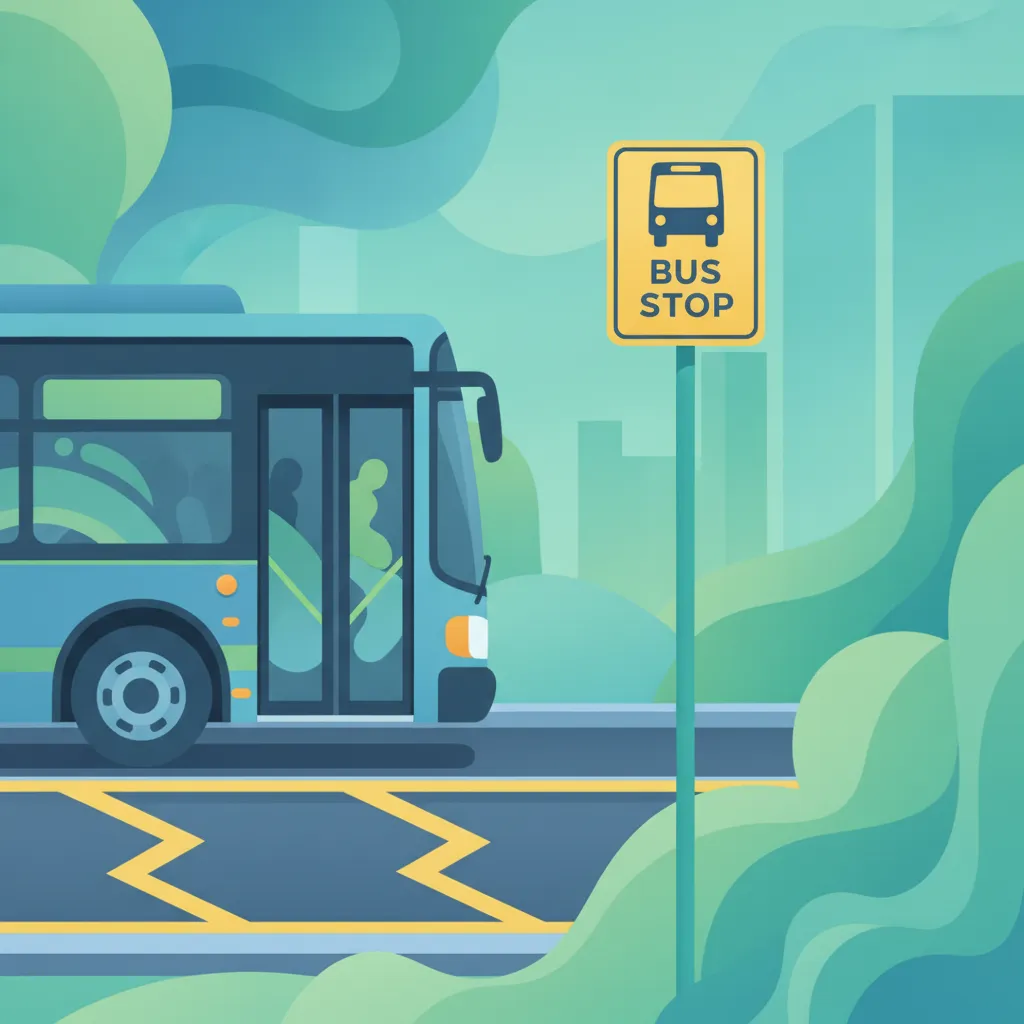
The most common vertical sign designating a bus stop in France is the Panneau C22.
The presence of the C22 sign immediately alerts all drivers that the adjoining road segment is subject to strict stopping and parking prohibitions. It also signals to following drivers that a passenger vehicle ahead may slow down or halt abruptly to perform its transit duties.
While vertical signage marks the point of the stop, horizontal (ground) markings delineate the exact boundaries of the restricted area. In France, these markings are standardized to ensure high visibility from a distance.
The yellow zig-zag pattern painted on the asphalt is the primary visual indicator of a bus stop's physical boundaries.
Some bus stops feature a solid or dashed white line perpendicular to the curb, indicating where the front of the bus should align when stopping.
For Category D drivers, interacting correctly with the physical infrastructure of the bus stop is vital for passenger safety and vehicle preservation.
Modern urban bus stops are equipped with specialized, highly engineered curbs designed to facilitate level boarding.
Tire and Suspension Damage
Attempting to align a heavy bus with a standard square concrete curb at an incorrect angle can cause severe damage to the tire sidewalls, wheel rims, and front suspension alignment. Always approach the platform using the correct steering angle and speed.
Under French accessibility laws (Loi Handicap), bus stops must feature tactile paving slabs (bandes d'éveil à la vigilance) running parallel to the curb, approximately 50 cm from the edge. These raised, textured yellow or white domes warn visually impaired passengers that they are approaching the edge of the boarding platform. As a professional driver, you must ensure your doors align perfectly with these designated boarding areas.
To maintain the safety of the public transport network, French traffic law strictly enforces the integrity of bus stop zones.
Under Article R417-11 of the French Code de la route, stopping or parking a non-authorized vehicle on a bus stop (including over the yellow zig-zag markings) is classified as an arrêt ou stationnement très gênant (highly disruptive stopping or parking).
Within built-up areas (agglomérations), drivers of other vehicles must slow down and, if necessary, stop to allow a public transport bus to leave its designated stop when the bus driver has indicated this intention using the left turn signal.
Properly maneuvering a heavy, multi-ton passenger vehicle into a confined bus stop zone requires a systematic approach. The docking maneuver must be smooth to ensure standing passengers do not lose their balance.
Anticipation and Observation: Scan the bus stop area from at least 50 metres away. Look for waiting passengers, pedestrians who might step off the curb, and any obstacles (such as parked delivery vehicles or trash bins).
Signaling: Activate your right turn indicator early to warn vehicles behind you of your intention to slow down and pull into the stop.
Speed Reduction: Slowly decelerate, utilizing your engine brake or retarder (ralentisseur) to ensure a smooth transition. Avoid sudden braking, which can cause injuries to passengers preparing to disembark.
The "S-Curve" Approach: Steer the front of the bus gently toward the curb, and then steer back out slightly to bring the rear of the bus parallel to the platform. This "S-curve" technique ensures that both front and rear doors align perfectly with the curb, minimizing the gap.
Final Positioning: Stop parallel to the platform, ideally within 5 to 10 cm of the curb. Ensure the bus is straight. Engage the parking brake or the station brake (frein de halte) before opening the doors.
Professional drivers must adapt to unexpected challenges that occur daily at urban bus stops.
If a car or delivery truck is illegally parked on the yellow zig-zags, you cannot perform a standard parallel alignment.
In heavy rain, snow, or fog, road markings like the yellow zig-zags may be completely obscured.
Pedestrians waiting at bus stops often focus entirely on the approaching bus, ignoring other traffic or the physical movement of the bus itself (such as the front overhang sweeping over the curb during a turn).
To consolidate your understanding, review the core elements that define a bus stop zone in France:
This lesson covers the standardized French bus stop infrastructure including the C22 vertical sign, yellow zig-zag ground markings, and Kassel curb platforms required for professional passenger vehicle operations. Drivers must understand that these zones impose absolute stopping prohibitions on unauthorized vehicles under Article R417-11, with penalties of €135 and potential impoundment. The docking procedure requires an S-curve approach to achieve precise alignment within 10 cm of the curb, while other motorists must yield to signaling buses within built-up areas under Article R415-3. Mastery of these rules is essential for safe passenger operations and exam success for Category D, D1, D1E, and DE licenses.
A short set of high-value points that capture the most important learning from this lesson.
The Panneau C22 is the square blue sign that officially marks a bus stop zone where stopping and parking are prohibited for unauthorized vehicles.
Yellow zig-zag markings indicate a strict no-stopping zone that must remain completely clear regardless of whether a bus is present.
Kassel curbs are specially designed platform edges that allow buses to dock within 5-10 cm of the curb for safe passenger boarding.
Within built-up areas, other drivers must yield to buses signaling departure from a stop under Article R415-3.
The S-curve approach maneuver is required to align all doors parallel to the platform for proper accessibility.
Explore all units and lessons included in this driving theory course.
Stopping or parking on yellow zig-zag markings is classified as arrêt très gênant under Article R417-11, resulting in a €135 fine and potential impoundment.
The prohibition applies at all times when a bus stop is signed, even if no bus is currently at the stop.
Priority for buses leaving stops only applies inside built-up areas and requires the bus driver to signal early.
Professional drivers must position buses within 5-10 cm of the curb using Kassel curbs to ensure safe level boarding for all passengers.
Tactile paving slabs warn visually impaired passengers of the platform edge and indicate where doors must align.
Believing it is acceptable to stop briefly on yellow zig-zags to drop off passengers if no bus is visible, which is illegal at all times.
Confusing the yellow zig-zag bus stop zone with standard yellow parking restrictions, which have different rules.
Approaching a bus stop at full speed without scanning for passengers, obstacles, or weather-obscured markings 50 metres ahead.
Forgetting that the priority rule for buses leaving stops requires the bus to signal first, and that cyclists and pedestrians still have rights.
Attempting a direct parallel approach instead of the S-curve, which causes misaligned door-to-platform positioning.
Lesson content overview
A short set of high-value points that capture the most important learning from this lesson.
The Panneau C22 is the square blue sign that officially marks a bus stop zone where stopping and parking are prohibited for unauthorized vehicles.
Yellow zig-zag markings indicate a strict no-stopping zone that must remain completely clear regardless of whether a bus is present.
Kassel curbs are specially designed platform edges that allow buses to dock within 5-10 cm of the curb for safe passenger boarding.
Within built-up areas, other drivers must yield to buses signaling departure from a stop under Article R415-3.
The S-curve approach maneuver is required to align all doors parallel to the platform for proper accessibility.
Explore all units and lessons included in this driving theory course.
Stopping or parking on yellow zig-zag markings is classified as arrêt très gênant under Article R417-11, resulting in a €135 fine and potential impoundment.
The prohibition applies at all times when a bus stop is signed, even if no bus is currently at the stop.
Priority for buses leaving stops only applies inside built-up areas and requires the bus driver to signal early.
Professional drivers must position buses within 5-10 cm of the curb using Kassel curbs to ensure safe level boarding for all passengers.
Tactile paving slabs warn visually impaired passengers of the platform edge and indicate where doors must align.
Believing it is acceptable to stop briefly on yellow zig-zags to drop off passengers if no bus is visible, which is illegal at all times.
Confusing the yellow zig-zag bus stop zone with standard yellow parking restrictions, which have different rules.
Approaching a bus stop at full speed without scanning for passengers, obstacles, or weather-obscured markings 50 metres ahead.
Forgetting that the priority rule for buses leaving stops requires the bus to signal first, and that cyclists and pedestrians still have rights.
Attempting a direct parallel approach instead of the S-curve, which causes misaligned door-to-platform positioning.
Explore search topics learners often look for when studying Understanding Bus Stop Signage and Markings. These topics reflect common questions about road rules, driving situations, safety guidance, and lesson level theory preparation for learners in France.
Browse additional driving theory lessons that cover connected traffic rules, road signs, and common driving situations related to this topic. Improve your understanding of how different rules interact across everyday traffic scenarios.
Learn how to navigate complex urban environments, manage interactions with other motorists in dense traffic, and apply professional driving standards for public transport vehicles in French cities according to the Code de la route.

This lesson analyzes the various traffic challenges unique to operating large passenger vehicles in historic and modern French urban areas. Drivers will learn to manage narrow street layouts, double-parked delivery trucks, and high-density multi-lane roundabouts safely. The lesson emphasizes defensive driving strategies, route adjustments, and maintaining mental focus under severe schedule and time pressures.
This lesson examines the regulatory limits and environmental controls applied to large passenger vehicles operating in dense French urban centers. Drivers will study the Crit'Air clean air sticker system and low-emission zones (ZFE) that restrict access for older, high-polluting vehicles. It also addresses navigating physical constraints, such as narrow streets, tight turning radii, and strict municipal weight limits.
This lesson covers the rules of driving passenger vehicles on high-speed French motorways (autoroutes). Learners will study entry-ramp merging protocols, lane restrictions for vehicles over 3.5 tonnes, and motorway-specific speed limits. The lesson also highlights the correct use of toll booths (péages), emergency hard-shoulder safety procedures, and accessing dedicated coach rest areas.

This lesson details the specific legal speed limits for passenger transport vehicles on motorways, rural trunk roads, and urban streets under French law. Drivers will learn how speed limits shift depending on overall vehicle weight, towing arrangements, and poor weather conditions like heavy rain. Developing a proactive approach to speed management helps maintain stable vehicle control and ensures full regulatory compliance.

This lesson focuses on maneuvering in extremely crowded areas, passenger terminals, or narrow streets blocked by parked vehicles and obstacles. Drivers will learn to assess clearance distances precisely before committing to narrow pathways. The content teaches steering techniques that maintain stability, optimize space usage, and prioritize public safety during slow-speed, high-difficulty maneuvers.

This lesson focuses on the unique challenges of performing deliveries in dense urban areas. Learners will explore best practices for loading and unloading safely, navigating traffic congestion, and minimizing risks to pedestrians and cyclists. The content also covers compliance with city regulations for delivery zones, scheduling considerations, and the importance of careful maneuvering to avoid accidents.

This lesson examines the legal consequences, heavy monetary fines, and driver's licence point deductions resulting from traffic and transport safety violations. Learners will study specific infractions such as driving over legal hours, vehicle overloading, and ignoring passenger seatbelt laws. Understanding the strict enforcement systems in France ensures drivers actively avoid risky habits that could end their careers.
This lesson analyzes the complex driving conditions found on French secondary and rural road networks (routes départementales). Drivers will learn steering and braking techniques to descend steep gradients safely using engine retarding systems without overheating the service brakes. Anticipating agricultural machinery, domestic livestock, unlit intersections, and narrow bridges is also taught in depth.

Public transit vehicles like city buses and streetcars (trams) have clear legal priorities and dedicated infrastructure in urban areas. This lesson teaches you to recognize reserved transit lanes and your legal obligation to yield to buses exiting their designated stops. You will also learn safe driving strategies near tram tracks, ensuring you never block public transit lines or risk passenger boarding areas.
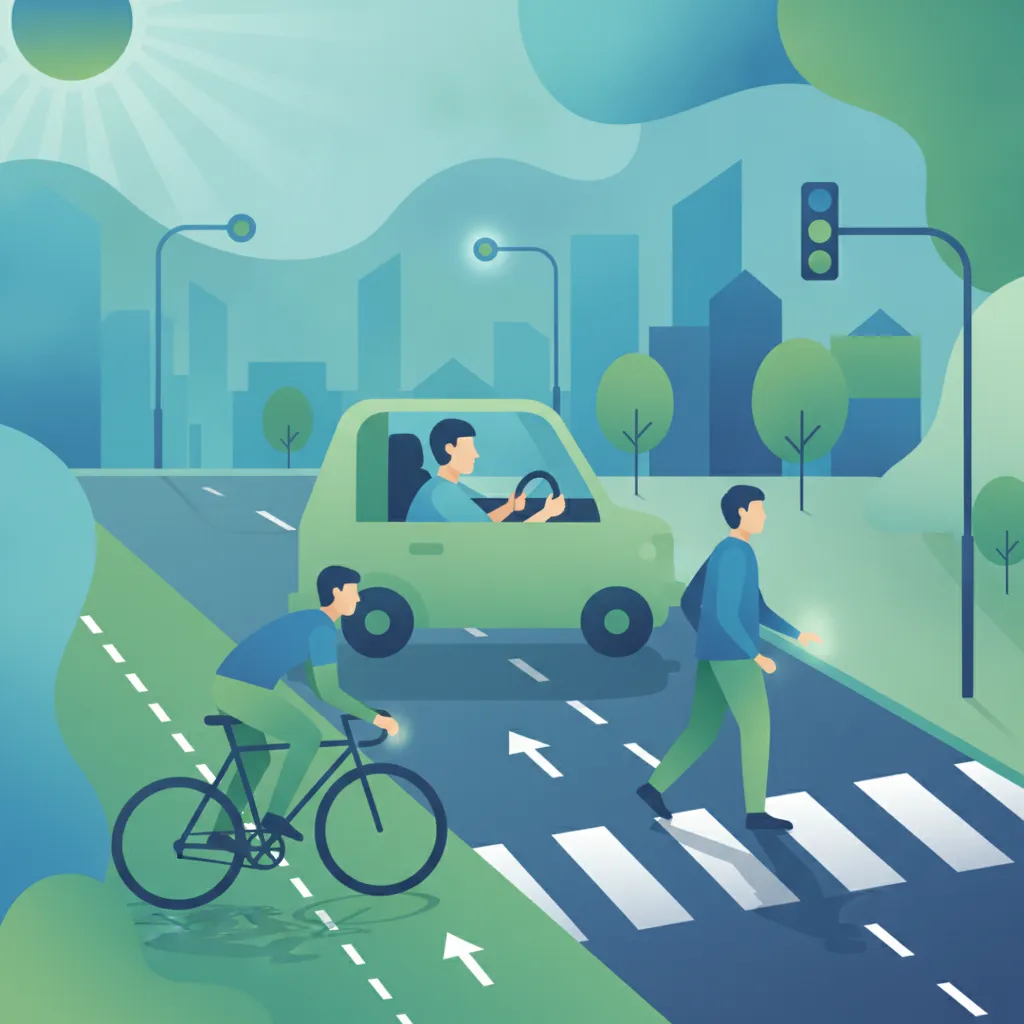
This lesson examines the specific challenges and responsibilities goods vehicle drivers face when interacting with pedestrians and cyclists in urban environments. Learners will understand right-of-way rules, the importance of yielding at pedestrian crossings, and safe turning practices that protect cyclists. The content emphasizes heightened driver vigilance, especially when navigating bike lanes and crowded sidewalks.
Understand the specific safety protocols for interacting with pedestrians, cyclists, and passengers near bus stops to prevent accidents, focusing on visibility and maneuvering around vulnerable road users in high-risk zones.
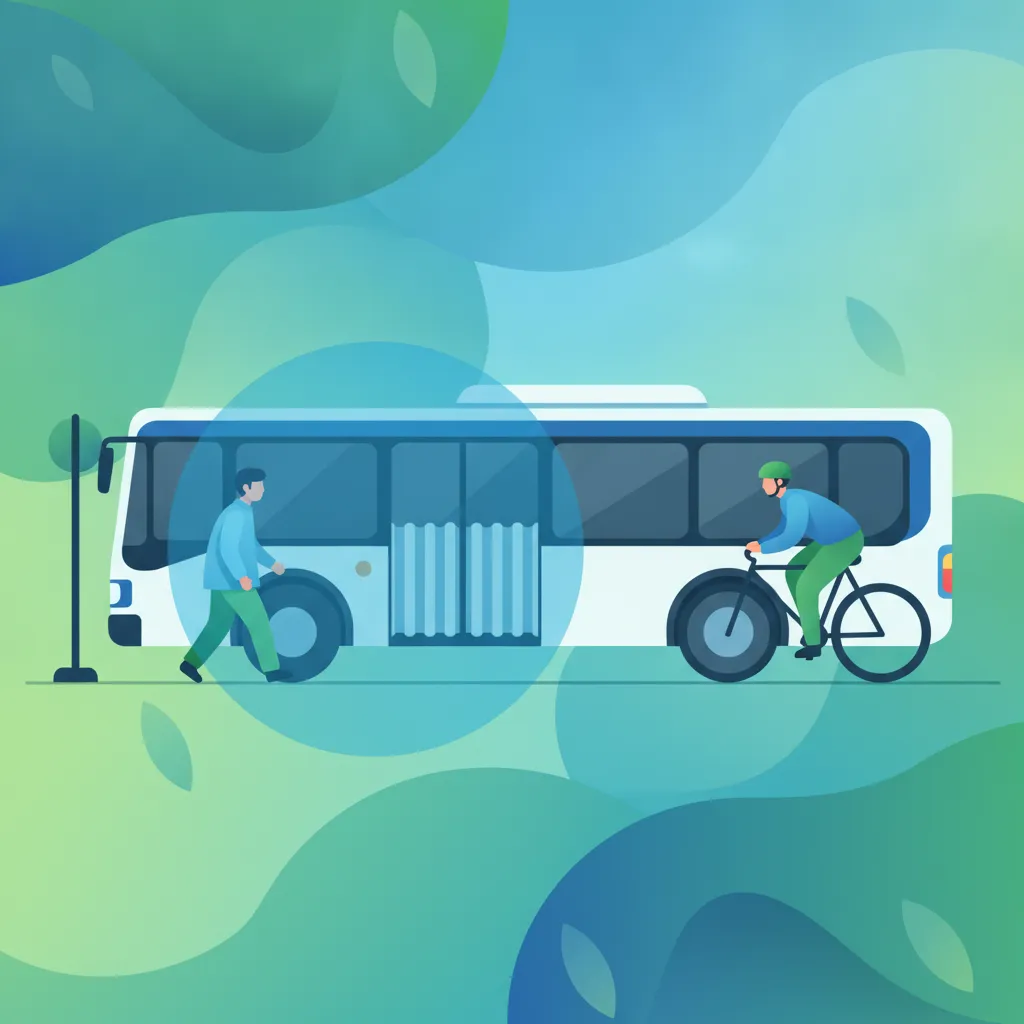
This lesson teaches specific visual scanning methods to detect vulnerable road users, such as children, elderly individuals, and cyclists near stops. Drivers will learn to anticipate sudden movements, like a passenger running to catch a bus or stepping off a sidewalk unexpectedly. Managing the massive blind spots around the front and right-hand sides of passenger vehicles is highlighted as a critical safety duty.

This lesson provides global defensive driving strategies to minimize collision risks for all non-motorized and vulnerable road users. Drivers will learn to systematically lower vehicle speed in dense pedestrian zones, even when no active hazards are visible. By cultivating an anticipatory mindset and maintaining generous safety margins, professional drivers establish a protective safety envelope around their vehicle.

This lesson details how to manage high-risk interactions with pedestrians who may step off curbs or cross the road near bus stops. Learners will study French Code de la route laws regarding pedestrian priority at crosswalks and near stopping transit vehicles. Developing heightened spatial awareness around blind zones near the front of the bus is emphasized to prevent tragic pedestrian collisions.
Find clear answers to common questions learners have about Understanding Bus Stop Signage and Markings. Learn how the lesson is structured, which driving theory objectives it supports, and how it fits into the overall learning path of units and curriculum progression in France. These explanations help you understand key concepts, lesson flow, and exam focused study goals.
No, under the French Code de la route, parking or stopping in a designated bus stop zone is strictly prohibited for non-authorized vehicles, regardless of whether a bus is currently there.
The yellow zig-zag road markings indicate a zone reserved for public transport vehicles. They reinforce the prohibition of stopping or parking to ensure buses have clear access to the curb.
You must position the vehicle parallel to the boarding platform, ensuring the doors align correctly with the curb to facilitate safe and accessible entry or exit for all passengers, especially those with reduced mobility.
While the core signage and prohibition principles remain the same, urban areas have higher density and more complex markings to manage passenger flow and traffic congestion. You must always prioritize compliance with the specific signs posted at each location.
Ready to focus your study? Use the practice search to find exactly the French driving theory questions you need for the Code de la route and permis de conduire ETG. Refine your knowledge on specific topics or challenging rules to boost your confidence and exam readiness.