
This lesson guides professional drivers through the specific speed regulations for passenger vehicles in France, covering categories D1, D, D1E, and DE. You will learn how legal speed limits change based on road types, vehicle weight, and adverse weather conditions to ensure safety and regulatory compliance. Mastering these rules is essential for both your theory exam and your professional career as a bus or coach driver.
Lesson content overview
Operating a passenger transport vehicle in France requires a deep understanding of the Code de la route (French Highway Code). Unlike standard passenger cars, heavier passenger vehicles—such as buses, coaches, and minibuses belonging to categories D1, D, D1E, and DE—are subject to stricter speed limits. These restrictions are designed to account for the increased vehicle mass, passenger carrying capacity, and altered braking dynamics of heavy transport.
Proper speed management is not merely a legal obligation; it is a fundamental pillar of defensive driving. Maintaining an appropriate speed ensures vehicle stability, optimizes fuel efficiency, reduces environmental impact, and provides a comfortable journey for passengers. This lesson details the legal speed limits across different French road networks, how vehicle weight and towing configurations modify these limits, and the mandatory adjustments required during adverse weather conditions.
In France, speed limits are established under the legal framework of the Code de la route. The regulations balance traffic flow with road safety and environmental preservation. For passenger transport vehicles, speed control is critical because these vehicles carry the public.
The maximum legal weight of the vehicle, including its empty weight, passengers, driver, fuel, and cargo. In French regulations, this is known as the PTAC. It dictates which speed limits apply to your vehicle configuration.
Speed limits are classified based on the vehicle's category, weight (GVW), whether it is towing a trailer, and the type of road being traversed. To avoid severe legal penalties and ensure passenger safety, professional drivers must understand that standard signposted limits for passenger cars often do not apply to passenger transport vehicles.
The French road network is divided into three primary categories: motorways (autoroutes), rural trunk roads (routes nationales and routes départementales), and urban streets inside built-up areas (agglomérations). Each has distinct default speed limits for passenger transport vehicles.
French motorways are high-speed, dual-carriageway networks designed for long-distance transit. However, passenger transport vehicles are strictly capped below the standard 130 km/h limit enforced for light passenger cars.
Rural trunk roads connect cities and towns. These roads may be single or dual carriageways and are characterized by intersections, varying road widths, and shared space with agricultural vehicles and cyclists.
Inside towns and cities, the risk of colliding with vulnerable road users—such as pedestrians, children, and cyclists—increases dramatically. Therefore, speed limits are uniform and highly restricted.
The table below outlines the legal speed limits for categories D1, D, D1E, and DE based on road type, vehicle weight, towing configuration, and weather conditions.
| Road Type | Vehicle Category / Weight | Standard Speed Limit | Towing Limit (Any Trailer Weight) | Weather Reduction (Heavy Rain / Low Visibility) |
|---|---|---|---|---|
| Motorway (Autoroute) | D, D1, D1E, DE (≤ 3.5 t GVW) | 90 km/h | 80 km/h | Reduce by 10 km/h (to 80 km/h) |
| Motorway (Autoroute) | D, D1, D1E, DE (> 3.5 t GVW) | 80 km/h | 80 km/h | Reduce by 10 km/h (to 70 km/h) |
| Rural Trunk Road (N, RN, RD) | D, D1, D1E, DE (≤ 3.5 t GVW) | 80 km/h | 70 km/h | Reduce by 10 km/h (to 70 km/h) |
| Rural Trunk Road (N, RN, RD) | D, D1, D1E, DE (> 3.5 t GVW) | 80 km/h | 70 km/h | Reduce by 10 km/h (to 70 km/h) |
| Urban Street (Agglomération) | All categories & weights | 50 km/h | 50 km/h | Reduce by 5 km/h (to 45 km/h) |
The "Most Restrictive Rule" Principle: When multiple rules apply simultaneously, you must always adhere to the lowest applicable limit. For example, if a motorway sign displays a temporary limit of 90 km/h, a heavy coach (> 3.5 t) must still maintain its statutory limit of 80 km/h.
Adverse weather conditions degrade tire grip, compromise vehicle stability, and reduce the driver’s sight distance. Under Article R.412-9 of the Code de la route, drivers must proactively reduce their speed during precipitation or reduced visibility.
When driving in heavy rain (defined broadly as precipitation exceeding 5 mm/h or whenever road surfaces are wet enough to cause water spray and reduced traction):
This reduction lowers the risk of hydroplaning (aquaplaning), where a layer of water builds up between the tires and the road surface, causing a complete loss of steering and braking control.
Visibility dictates safe stopping distances. If fog, snow, or heavy rain limits visibility to specific thresholds, speed must be systematically reduced:
For professional drivers operating vehicle combinations under categories D1E or DE, towing a trailer significantly alters the physical characteristics of the vehicle. The addition of a trailer increases the total kinetic energy of the vehicle combination and introduces lateral instability (such as trailer sway).
Verify the Combined Weight: Calculate the total actual weight of your bus/minibus and trailer to ensure it does not exceed the vehicle's Gross Combination Weight Rating (GCWR / Poids Total Roulant Autorisé - PTRA).
Apply Towing Limits Automatically: Once a trailer is attached, the maximum motorway speed drops to 80 km/h, and rural trunk road speed drops to 70 km/h, regardless of how light the trailer is.
Anticipate Lateral Wind: High-sided trailers and passenger coaches are highly susceptible to crosswinds, especially when crossing bridges or overtaking large vehicles. Reduce speed proactively below the legal limit in windy areas.
Extend Following Distances: Because a towed trailer increases stopping distance, double your following distance behind the vehicle ahead to allow safe deceleration.
Safe speed management relies on basic principles of physics. As a professional driver, understanding these principles helps you anticipate hazards and maintain a high standard of passenger comfort.
Kinetic energy () is the energy an object possesses due to its motion. It is calculated using the formula:
Where:
Because velocity is squared in this equation, any increase in speed exponentially increases the vehicle's kinetic energy. If you double your speed, your vehicle's kinetic energy increases fourfold.
For a fully loaded 12-tonne coach, the kinetic energy is immense. To bring this vehicle to a complete stop, the brakes must convert all of this kinetic energy into thermal energy (heat). High kinetic energy leads to:
The average human reaction time is approximately 1.5 seconds in real-world driving conditions (accounting for hazard perception and physical movement to apply the brake pedal). During this reaction time, the vehicle continues to travel at its initial speed.
By reducing your speed, you significantly decrease the distance your vehicle travels during this critical reaction window, potentially preventing a collision.
Professional passenger transport drivers must remain vigilant against common misconceptions that lead to traffic violations, fines, or accidents.
Many new drivers mistakenly assume they can follow the speed flow of regular passenger traffic on motorways (130 km/h) or rural roads (80/90 km/h). Operating a Category D vehicle at these speeds is highly dangerous and carries severe penalties, including heavy fines, licence point deductions, and immediate suspension of the professional driving permit.
Some drivers believe that if they are towing a small, lightweight baggage trailer (e.g., under 750 kg) behind a minibus, the standard speed limits still apply.
The Code de la route makes no distinction based on trailer weight for towing speed limits in these categories. If any trailer is attached to a Category D1 or D vehicle, the towing limits (80 km/h on motorways, 70 km/h on rural roads) must be strictly obeyed.
A vehicle's empty weight (curb weight) might place it just under a specific weight bracket, but when fully loaded with up to 50 passengers and their luggage, its actual weight can easily exceed the 3.5-tonne threshold. Drivers must always base their speed decisions on the active Gross Vehicle Weight (GVW) of the configuration.
Drivers often wait for heavy rain to accumulate on the windshield before slowing down. However, the first few minutes of rainfall are the most dangerous. Rain mixes with oil, dust, and rubber residues on the road surface to create an extremely slick film called "summer ice" (verglas d'été). Speed reductions must be applied immediately when rainfall begins.
The following real-world driving scenarios illustrate how to analyze and apply speed regulations under different variables.
Effective speed management is a continuous process of observation, calculation, and adjustment.
This lesson covers the legal speed limits for French D-category passenger vehicles (D1, D, D1E, DE) across motorways, rural roads, and urban streets, emphasizing how GVW, towing, and weather conditions modify baseline limits. It explains the physics of braking and kinetic energy to justify speed restrictions, details mandatory weather reductions under Article R.412-9, and provides practical scenarios for applying these rules. Key exam-relevant distinctions include weight-based motorway limits (90 vs 80 km/h), the no-exception towing caps (80/70 km/h), and the principle that drivers must always follow the most restrictive applicable limit.
A short set of high-value points that capture the most important learning from this lesson.
Speed limits for D-category vehicles are lower than standard passenger car limits and depend on GVW (≤3.5t or >3.5t), road type, and towing status.
On motorways, the limit is 90 km/h for vehicles ≤3.5t and 80 km/h for vehicles >3.5t; towing any trailer always caps motorway speed at 80 km/h.
On rural trunk roads, the standard limit is 80 km/h regardless of weight, but towing a trailer reduces this to 70 km/h.
In urban areas (agglomérations), all passenger transport vehicles are capped at 50 km/h, with local 30 km/h zones requiring additional adaptation.
Adverse weather mandates speed reductions of 10 km/h on motorways/rural roads and 5 km/h in urban areas; visibility below 50 metres requires a hard cap at 50 km/h.
Explore all units and lessons included in this driving theory course.
The 'most restrictive rule' principle always applies—use the lowest speed when multiple limits conflict.
Towing speed limits (80 km/h motorway, 70 km/h rural) apply regardless of trailer weight, even lightweight baggage trailers.
Vehicle weight classification must be based on actual GVW under load, not empty weight—a fully loaded coach can easily exceed the 3.5-tonne threshold.
Hydroplaning risk is highest in the first minutes of rainfall when rain mixes with road oils and residues ('summer ice').
Kinetic energy increases with the square of speed, meaning doubling speed quadruples braking distance—critical for heavy passenger vehicles.
Assuming standard passenger car speed limits (130 km/h motorway) apply to buses and coaches, leading to dangerous and illegal speeds.
Believing lightweight trailers do not trigger towing speed restrictions—any trailer attached mandates the lower towing limits.
Ignoring passenger load changes when calculating GVW, which can push a vehicle into a higher weight category with stricter limits.
Waiting until heavy rain accumulates before reducing speed, rather than reducing immediately when rainfall begins to avoid 'summer ice' conditions.
Forgetting that local traffic signs (Zone 30, pedestrian zones) can impose lower limits than the statutory defaults inside urban areas.
Lesson content overview
A short set of high-value points that capture the most important learning from this lesson.
Speed limits for D-category vehicles are lower than standard passenger car limits and depend on GVW (≤3.5t or >3.5t), road type, and towing status.
On motorways, the limit is 90 km/h for vehicles ≤3.5t and 80 km/h for vehicles >3.5t; towing any trailer always caps motorway speed at 80 km/h.
On rural trunk roads, the standard limit is 80 km/h regardless of weight, but towing a trailer reduces this to 70 km/h.
In urban areas (agglomérations), all passenger transport vehicles are capped at 50 km/h, with local 30 km/h zones requiring additional adaptation.
Adverse weather mandates speed reductions of 10 km/h on motorways/rural roads and 5 km/h in urban areas; visibility below 50 metres requires a hard cap at 50 km/h.
Explore all units and lessons included in this driving theory course.
The 'most restrictive rule' principle always applies—use the lowest speed when multiple limits conflict.
Towing speed limits (80 km/h motorway, 70 km/h rural) apply regardless of trailer weight, even lightweight baggage trailers.
Vehicle weight classification must be based on actual GVW under load, not empty weight—a fully loaded coach can easily exceed the 3.5-tonne threshold.
Hydroplaning risk is highest in the first minutes of rainfall when rain mixes with road oils and residues ('summer ice').
Kinetic energy increases with the square of speed, meaning doubling speed quadruples braking distance—critical for heavy passenger vehicles.
Assuming standard passenger car speed limits (130 km/h motorway) apply to buses and coaches, leading to dangerous and illegal speeds.
Believing lightweight trailers do not trigger towing speed restrictions—any trailer attached mandates the lower towing limits.
Ignoring passenger load changes when calculating GVW, which can push a vehicle into a higher weight category with stricter limits.
Waiting until heavy rain accumulates before reducing speed, rather than reducing immediately when rainfall begins to avoid 'summer ice' conditions.
Forgetting that local traffic signs (Zone 30, pedestrian zones) can impose lower limits than the statutory defaults inside urban areas.
Explore search topics learners often look for when studying Speed Management for Different Road Types. These topics reflect common questions about road rules, driving situations, safety guidance, and lesson level theory preparation for learners in France.
Browse additional driving theory lessons that cover connected traffic rules, road signs, and common driving situations related to this topic. Improve your understanding of how different rules interact across everyday traffic scenarios.
Understand the legal and safety requirements for maintaining distance between large passenger vehicles and other road users. This guide explains how to calculate reaction gaps and adjust braking distance based on vehicle weight and current road conditions to prevent collisions and ensure passenger safety during transit.

This lesson emphasizes the critical importance of maintaining a safe following distance when carrying dozens of passengers. Learners will study how vehicle weight and passenger load dynamically extend braking and total stopping distances compared to standard passenger cars. The lesson provides concrete spacing rules, such as adjusted safety gaps for highway driving and increased distances on slippery roads.
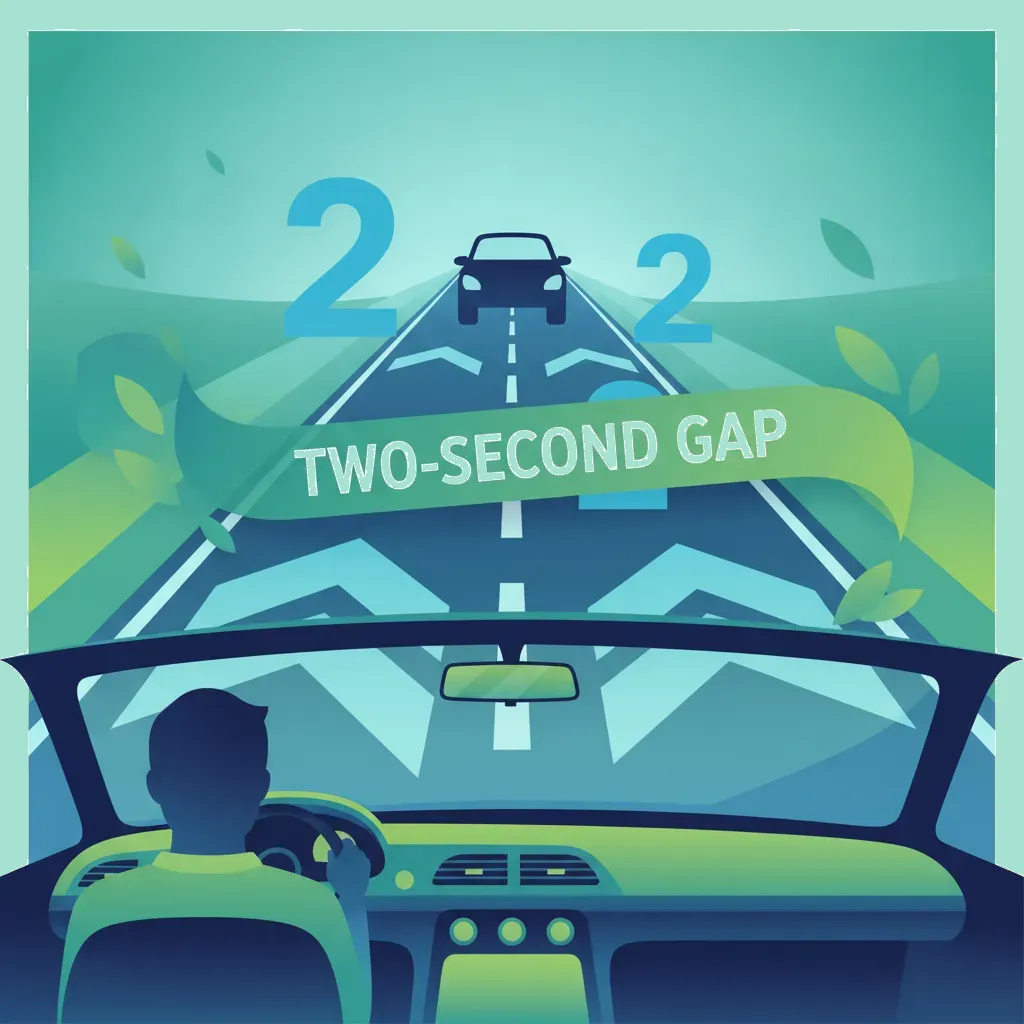
Maintaining a safe distance behind the lead vehicle is essential to prevent rear-end collisions during sudden braking maneuvers. This lesson teaches you the two-second safety rule and how to calculate this gap at different highway speeds. You will also study unique safety margin requirements, such as maintaining minimum distance intervals in road tunnels or doubling your following distance on wet roads.

In this lesson, drivers will learn how to calculate safe following distances based on vehicle speed, load, road conditions, and traffic density. The content explains the components of total stopping distance, including reaction time and braking distance, and how these are affected by factors such as wet road surfaces and heavy loads. Learners will also be introduced to French road safety guidelines for maintaining appropriate gaps to ensure sufficient time to react.
This lesson addresses the challenges of positioning near larger vehicles such as cars, vans, buses, and lorries on French roads. Learners will learn to identify blind spots (angles morts), maintain a safe distance, and position themselves to maximize visibility and predictability. Understanding these dynamics is crucial for AM riders to avoid dangerous situations and ensure safe overtaking and lane sharing.

Carrying heavy loads or pulling trailers significantly alters a passenger vehicle's braking distances and stability characteristics. This lesson covers how to read weight limits (like gross vehicle weight ratings), distribute cargo weight evenly, and secure items inside the boot or on roof racks. You will learn to use specialized cargo straps and understand the risks of overloading your suspension and tyres.
This lesson covers the rules of driving passenger vehicles on high-speed French motorways (autoroutes). Learners will study entry-ramp merging protocols, lane restrictions for vehicles over 3.5 tonnes, and motorway-specific speed limits. The lesson also highlights the correct use of toll booths (péages), emergency hard-shoulder safety procedures, and accessing dedicated coach rest areas.
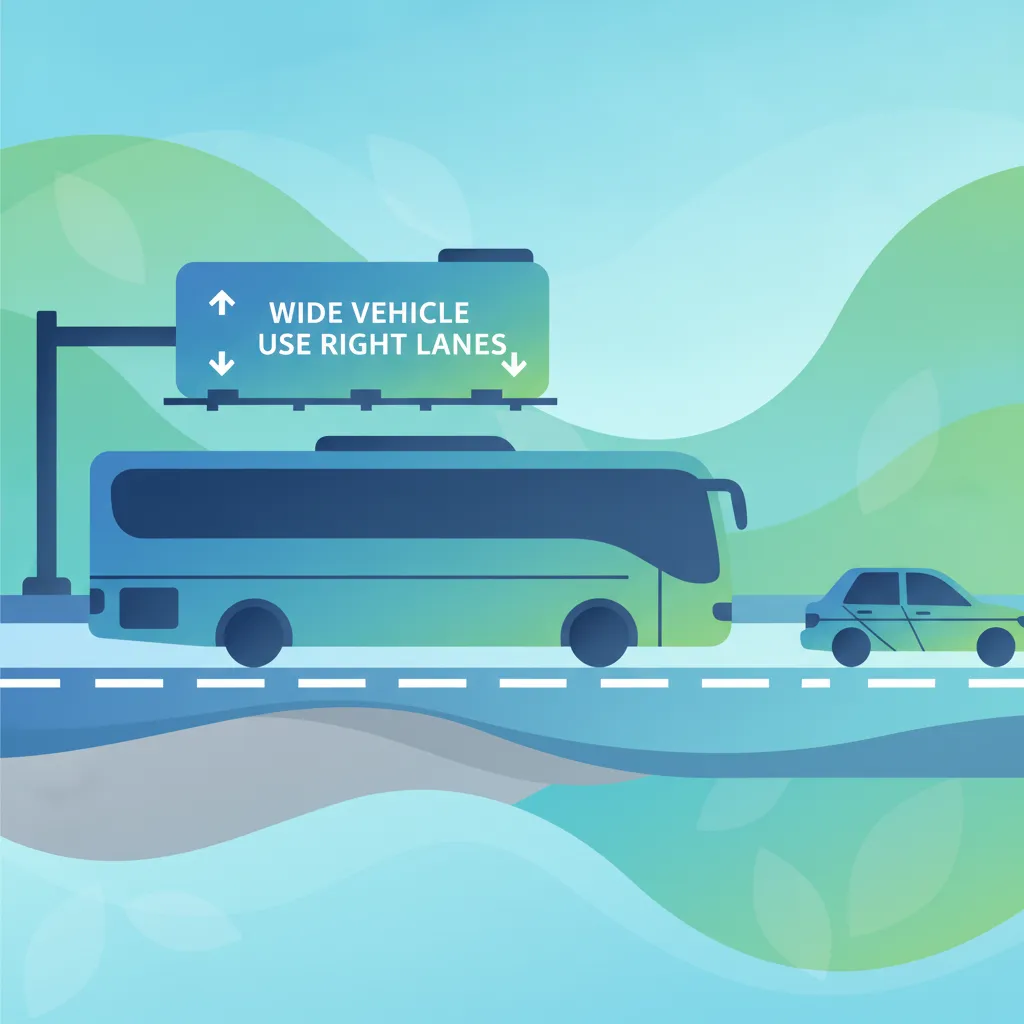
This lesson details the rules of lane discipline for operating wider and longer passenger transport vehicles on highway and city networks. Learners will explore proper lane positioning to prevent encroachment on adjacent lanes or sidewalks. It also covers the step-by-step visual and signaling sequence required to perform safe lane changes, avoiding sudden movements that could startle other drivers.
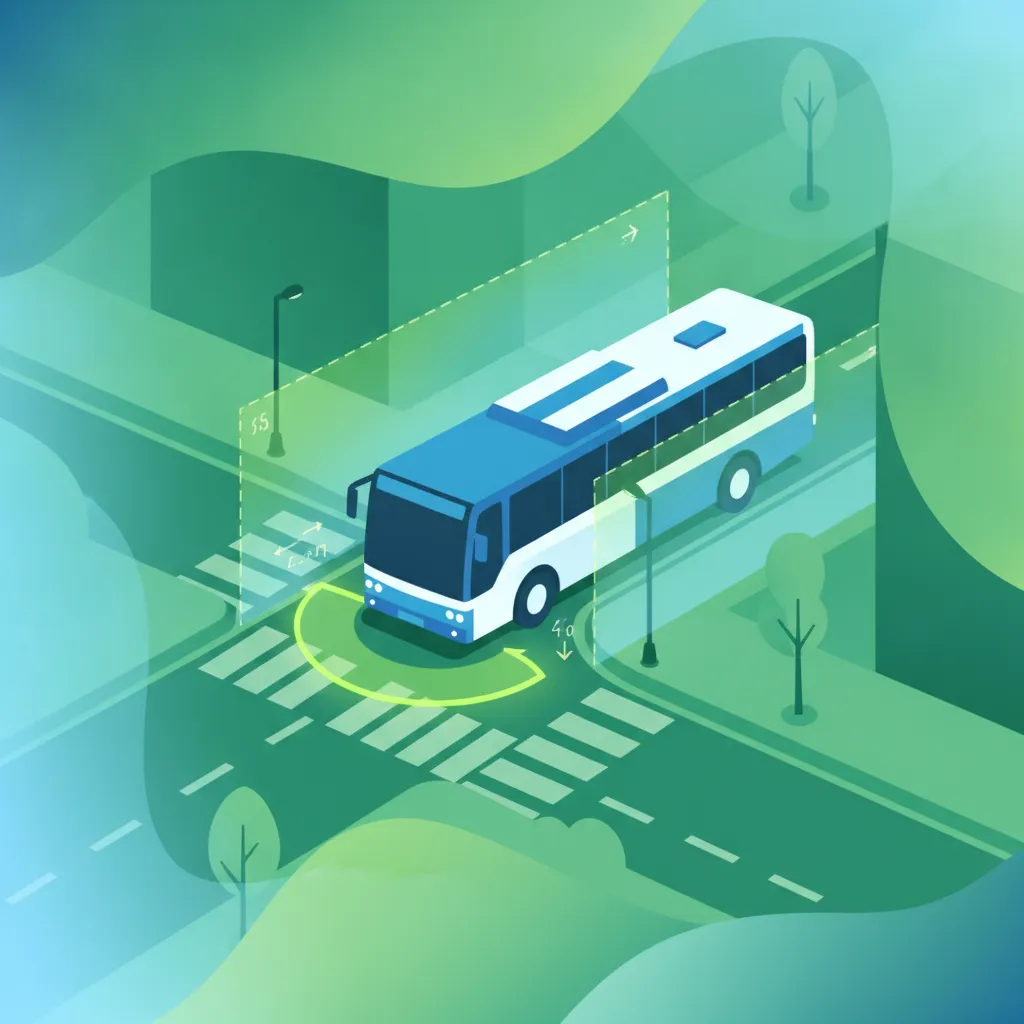
This lesson covers the physical dimensions of passenger vehicles and how their high profile, length, and width alter spatial awareness on the road. Learners will study tail-swing mechanics and track the path of the rear wheels during sharp turns to avoid hitting roadside obstacles. Accurate measurement of overhead structures, bridges, and underpass clearances is taught to prevent catastrophic structural collisions.
This lesson examines the regulatory limits and environmental controls applied to large passenger vehicles operating in dense French urban centers. Drivers will study the Crit'Air clean air sticker system and low-emission zones (ZFE) that restrict access for older, high-polluting vehicles. It also addresses navigating physical constraints, such as narrow streets, tight turning radii, and strict municipal weight limits.

In this lesson, drivers will learn strategies to avoid conflicts with smaller vehicles, such as cars and vans, which may not be as visible in large vehicle blind spots. The content emphasizes maintaining adequate spacing, using proper lane discipline, and being aware of small vehicles' behavior during lane changes and turns. Learners will also be introduced to communication techniques, such as signalling and eye contact.
Explore the specific driving theory requirements for navigating buses and coaches through busy city environments. Learn how to manage interaction with vulnerable road users, interpret urban signage and bus lane regulations, and apply defensive driving techniques at bus stops to ensure safe passenger boarding and alighting.

This lesson analyzes the various traffic challenges unique to operating large passenger vehicles in historic and modern French urban areas. Drivers will learn to manage narrow street layouts, double-parked delivery trucks, and high-density multi-lane roundabouts safely. The lesson emphasizes defensive driving strategies, route adjustments, and maintaining mental focus under severe schedule and time pressures.

This lesson details how to manage high-risk interactions with pedestrians who may step off curbs or cross the road near bus stops. Learners will study French Code de la route laws regarding pedestrian priority at crosswalks and near stopping transit vehicles. Developing heightened spatial awareness around blind zones near the front of the bus is emphasized to prevent tragic pedestrian collisions.

This lesson details the legal restrictions and appropriate use of acoustic horns and visual turn signals under the French Code de la route. Drivers will understand that in urban zones, the horn may only be used to warn of immediate, unavoidable danger to prevent accidents. It covers the correct timing of indicators and hazard lights to communicate intent clearly to surrounding traffic and pedestrians.

Public transit vehicles like city buses and streetcars (trams) have clear legal priorities and dedicated infrastructure in urban areas. This lesson teaches you to recognize reserved transit lanes and your legal obligation to yield to buses exiting their designated stops. You will also learn safe driving strategies near tram tracks, ensuring you never block public transit lines or risk passenger boarding areas.
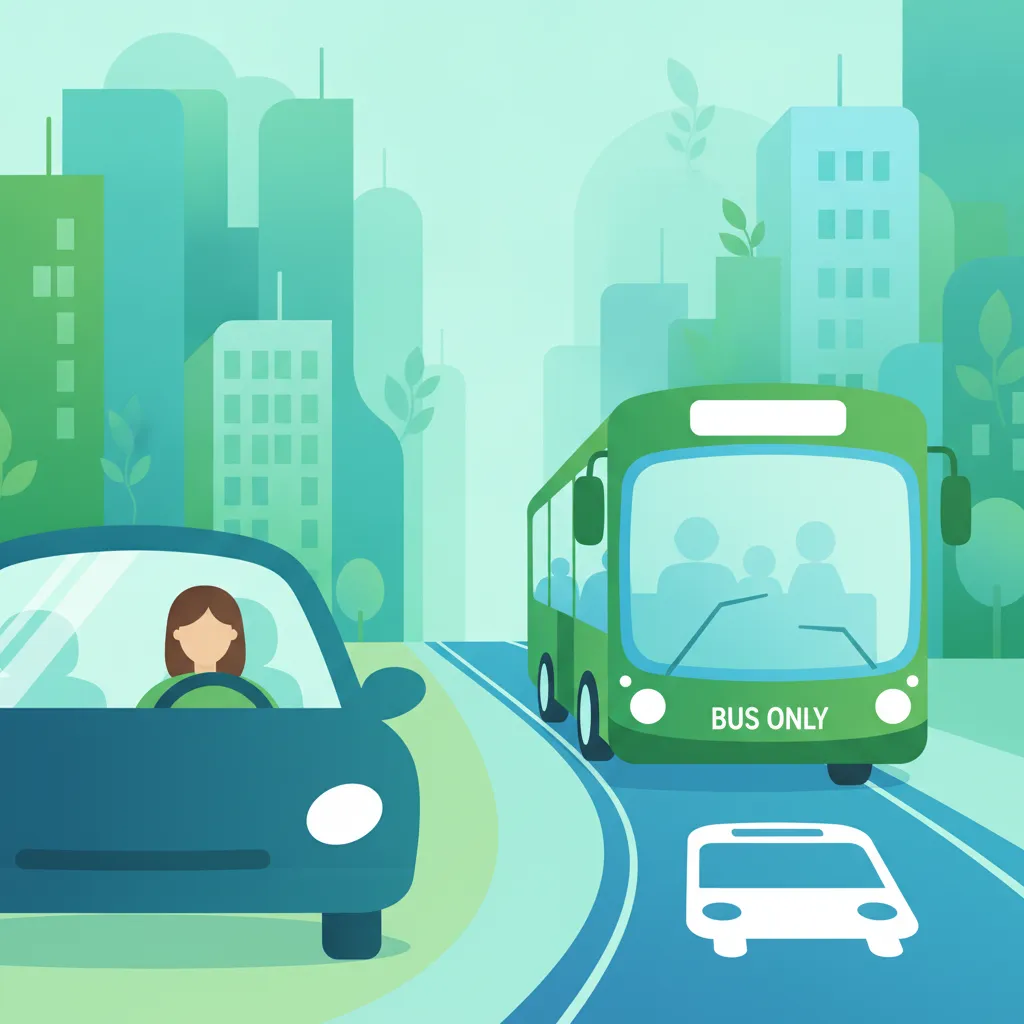
This lesson detail the exact laws governing the use of reserved bus lanes, detailing who may enter them and during what hours of operation. Drivers will study the penalties for unauthorized passenger cars occupying these lanes and the safety protocols for lane sharing with taxi cabs or cyclists. The lesson also highlights safe lane-merging practices when exiting reserved spaces to merge back into general urban traffic.

This lesson examines French Code de la route laws regarding pedestrian right-of-way, emphasizing the driver's legal duty to yield to any pedestrian engaged in crossing. It outlines proper approach speeds when approaching zebra crossings with obstructed views. Candidates will learn to maintain a safe physical buffer zone and verify that crosswalks are entirely clear of pedestrians before accelerating.
This lesson examines the regulatory limits and environmental controls applied to large passenger vehicles operating in dense French urban centers. Drivers will study the Crit'Air clean air sticker system and low-emission zones (ZFE) that restrict access for older, high-polluting vehicles. It also addresses navigating physical constraints, such as narrow streets, tight turning radii, and strict municipal weight limits.
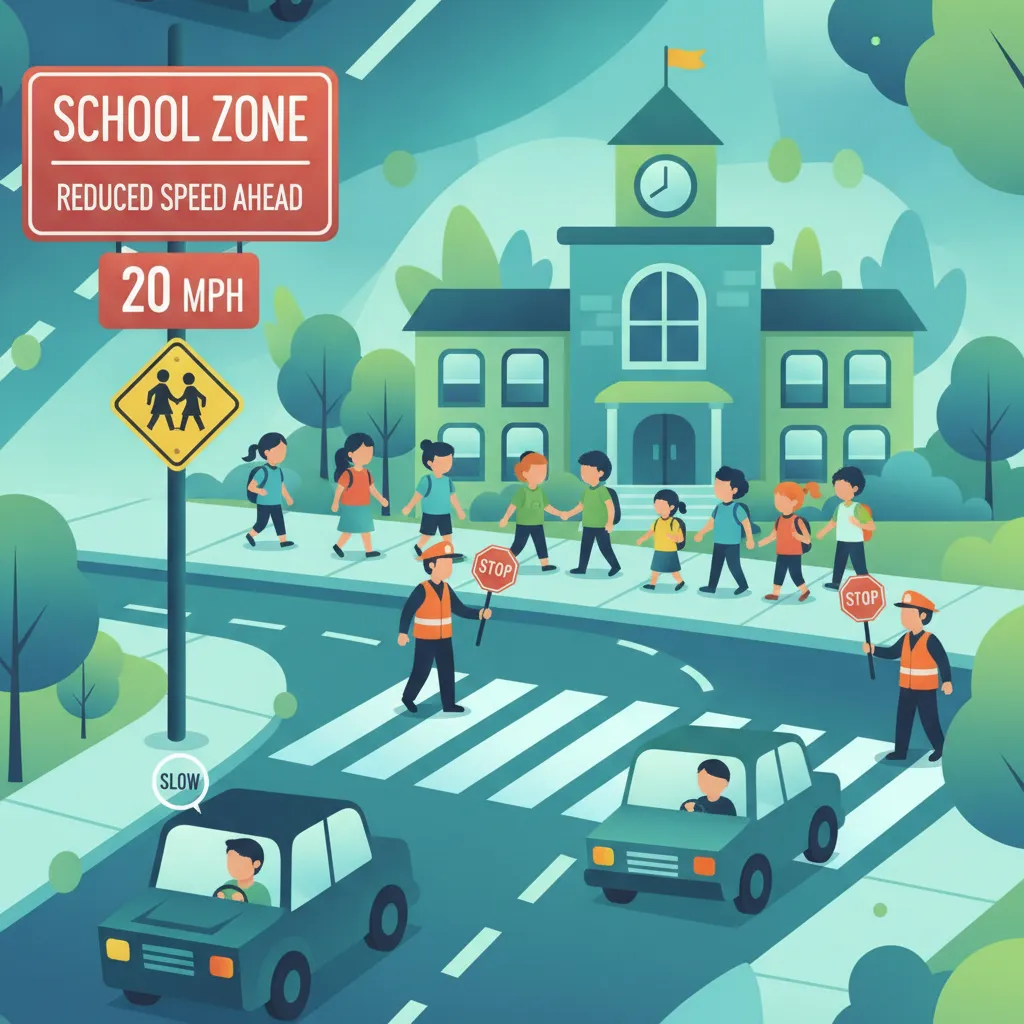
This lesson focuses on the legal rules and safety procedures required within school zones and during school transport (transport scolaire) services in France. Drivers will study strict speed limits, school bus warning sign applications, and mandatory stopping rules when children are boarding. It also details how to respond to official crossing guard signals and ensure students are safely clear before moving.

This lesson focuses on the technical skills required to position a large bus or coach parallel to the boarding curb. Drivers will learn to minimize the gap between the vehicle steps and the sidewalk, preventing tripping hazards for boarding passengers. The lesson also covers safe approach angles, mirror alignment, and positioning rules that avoid contact with curbside objects or waiting pedestrians.
This lesson covers the rules of driving passenger vehicles on high-speed French motorways (autoroutes). Learners will study entry-ramp merging protocols, lane restrictions for vehicles over 3.5 tonnes, and motorway-specific speed limits. The lesson also highlights the correct use of toll booths (péages), emergency hard-shoulder safety procedures, and accessing dedicated coach rest areas.
Find clear answers to common questions learners have about Speed Management for Different Road Types. Learn how the lesson is structured, which driving theory objectives it supports, and how it fits into the overall learning path of units and curriculum progression in France. These explanations help you understand key concepts, lesson flow, and exam focused study goals.
Yes, passenger vehicles in categories D1, D, D1E, and DE are subject to specific heavy-vehicle speed limits on French motorways, which are significantly lower than those for standard passenger cars. You must strictly follow these lower limits to remain compliant with the Code de la route.
In France, when weather conditions significantly reduce visibility or grip, such as during heavy rain, all drivers must reduce their speed below the standard maximum limits. As a professional, this is even more critical to maintain stability with passengers onboard.
Yes, towing an additional trailer often subjects the vehicle to stricter speed regulations depending on the combined weight (PTAC) of the assembly. You must verify the specific weight thresholds in your vehicle documentation and the applicable Code de la route section.
While the exam focuses on regulatory speed limits, it will certainly test your knowledge of how speed impacts braking distance, especially with a full load of passengers. You should understand that heavier vehicles require much longer distances to come to a complete stop.
Ready to focus your study? Use the practice search to find exactly the French driving theory questions you need for the Code de la route and permis de conduire ETG. Refine your knowledge on specific topics or challenging rules to boost your confidence and exam readiness.