
This lesson details the protocols professional drivers must follow when interacting with law enforcement or customs officials in France. As a key part of your professional responsibility, understanding these procedures helps you remain compliant and maintain safety during vehicle checks. You will learn the correct conduct, necessary documentation, and your rights as a commercial driver operating C1, C, C1E, and CE vehicles.
Lesson content overview
Operating a heavy goods vehicle (HGV) under Category C (rigid vehicles over 3.5 tonnes) or Category CE (articulated combinations) in France carries immense professional responsibility. Because of their size, weight, and the potential hazard of their payloads, large commercial vehicles are subject to intensive oversight. Roadside inspections—known locally as contrôles routiers—are highly structured legal interactions designed to verify safety compliance, transport legality, and infrastructure protection.
Understanding the legal framework, your precise obligations, and the boundaries of enforcement powers is essential for every professional driver in France. This lesson details the types of enforcement checks you will encounter, the mandatory documents you must carry, and the legal consequences of non-compliance.
Several specialized government agencies possess the authority to signal, stop, and inspect commercial vehicles on French public roads. Each agency has a distinct jurisdiction and focus.
The Police Nationale (operating primarily in urban, city, and suburban sectors) and the Gendarmerie Nationale (operating in rural areas, national routes, and the autoroute network) are the primary law enforcement bodies. They enforce the Code de la route (French Traffic Code) and have full authority to check:
The French Customs authority (la Douane) plays an active role in regulating commercial transport. Unlike general police forces, customs officers have unique, sweeping powers granted under Article 60 of the French Customs Code (Code des Douanes).
The Directions Régionales de l'Environnement, de l'Aménagement et du Logement (DREAL) employ specialized land transport inspectors (inspecteurs des transports terrestres). They work alongside the police or operate independent weight and safety checkpoints. Their checks focus heavily on:
The interaction between a professional driver and an enforcement officer is governed by several core legal principles established under French and European administrative laws.
The statutory requirement under the French Code de la route for a driver to comply with legitimate signals to stop, present all requested documents, and permit physical inspections of the vehicle and cargo.
At the start of an inspection, a driver has the right to be informed of the nature and reason for the stop, unless doing so would compromise an active criminal investigation. Officers must conduct the check with transparency and state whether it is a routine safety verification, a weight check, or a customs inspection.
Enforcement actions must be proportionate to the observed or suspected infraction. For example, a minor administrative administrative issue (such as a slightly worn document) should result in a warning or a minor fine, whereas major safety risks (such as a severely cracked brake disc or heavily overloaded axle) justify immediate vehicle immobilization (immobilisation du véhicule).
Drivers and transport operators are never stripped of their legal recourse. Any sanction, fine (amende), or penalty point deduction issued during an inspection can be formally appealed through administrative or judicial channels within strict legal timelines.
For Category C and CE drivers in France, "document readiness" is a critical part of pre-trip planning. Failing to present required original documents is itself a punishable offense, regardless of whether the vehicle is otherwise compliant.
During any stop, the driver must immediately present:
The following papers must correspond exactly to the tractor unit and any attached trailer (semi-trailer or drawbar trailer):
To prove the legality of the transport operation itself, the driver must carry:
In France, photocopying vehicle documents and carrying them in lieu of the originals is illegal unless explicitly authorized (e.g., in specific rental fleet lease contracts with certified copies). You must be prepared to present original physical documents or official, legally recognized electronic equivalents.
When signaled to stop by an enforcement officer, your immediate actions dictate the safety of the interaction. Heavy vehicles require significant stopping distance, and an improper stop can cause a secondary collision.
Acknowledge and Signal: As soon as you see the officer's hand signal, paddle (disque d'arrêt), or the patrol vehicle's matrix board displaying "SUIVEZ-MOI" (Follow Me) or "POLICE - ARRET", activate your right indicator to show you have seen them.
Select a Safe Location: Slow down progressively. Avoid sudden, hard braking. Pull over to the extreme right shoulder of the road or enter the designated inspection bay. Ensure the truck does not block active traffic lanes.
Secure the Vehicle: Once stationary, engage the parking brake, switch off the engine, and immediately turn on your hazard warning lights (feux de détresse) to maximize visibility for oncoming traffic.
Polite and Calm Demeanor: Roll down the window, keep your hands visible on the steering wheel, and wait for the officer to approach. Address the officer professionally.
Present Documents Promptly: Retrieve your documentation folder only when requested, explaining your movements if you need to reach across the cab or exit the driver's seat.
A common area of confusion is the exact scope of search authority during a stop. Drivers must understand where an officer's authority ends and where their own constitutional rights begin.
Any authorized officer can perform a visual inspection of the vehicle's exterior. This includes testing the tires (checking for tread depth and structural damage), verifying that the load is securely strapped, looking for fluid leaks, and ensuring all lights function.
The rules regarding searches of the closed areas of a truck vary significantly by agency:
If an officer requests to search your personal bags or sleeper compartment without a clear legal warrant or customs mandate, you have the right to ask for the legal basis of the search.
However, refusing a search when the officer has a valid legal basis (such as reasonable suspicion of a criminal offense or under customs authority) constitutes the serious criminal offense of Obstruction of Justice or Refusal to Comply.
The penalties for infractions during enforcement interactions are severe in France. They range from simple administrative fines to immediate imprisonment and the loss of your professional livelihood.
| Infraction | Type of Violation | Penalty / Consequences |
|---|---|---|
| Failure to Present Insurance (Attestation) | Contravention | Fine up to €750; potential temporary vehicle seizure. |
| Failure to Present Driving Licence (Category C/CE) | Contravention | Fine of €135; requirement to present it at a police station within 5 days. |
| Driving with Expired Technical Inspection (Contrôle Technique) | Contravention | €135 fine; immediate vehicle immobilization (immobilisation). |
| Refusal to Stop (Refus d'obtempérer) | Délit (Criminal Offense) | Fine of up to €15,000, 6 points deducted, up to 2 years imprisonment, and license suspension. |
| Overloading the Vehicle | Contravention (per excess tonne) | Fine of up to €1,500 per excess tonne; vehicle immobilized if overload exceeds 5% of GVW. |
| Providing Forged Documents (Load Sheet, Tachograph, or License) | Délit (Criminal Offense) | Heavy criminal fines (up to €45,000), immediate arrest, vehicle confiscation, and imprisonment. |
| Smuggling or Failing to Declare Goods | Délit Douanier | Confiscation of cargo and vehicle, fines equal to multiple times the value of the goods, and prison time. |
In France, a professional driver does not operate in a legal vacuum. Under the principle of co-responsibility (co-responsabilité des acteurs du transport), the transport company (employer) can be held jointly or primarily liable for violations discovered during roadside checks.
If a driver is caught driving an overloaded vehicle, using faulty tachograph equipment, or operating a vehicle with defective brakes, French courts will investigate whether the employer pressured the driver, failed to provide adequate maintenance resources, or organized work schedules in a way that made compliance impossible.
If you receive a fine (amende) or a notice of infraction during an enforcement stop and believe there has been a factual or procedural error, you have a legal right to challenge it.
[Infraction Issued] ──> [Do NOT pay if contesting] ──> [File 'Requête en Exonération' within 45 Days] ──> [Administrative Review or Tribunal de Police]
Enforcement checks are not static; officers adapt their inspection focus based on weather conditions, vehicle states, and geographical locations.
In heavy rain, snow, or thick fog, officers pay special attention to:
If you are operating a Category C or CE vehicle in designated mountainous zones during winter (typically November 1 to March 31), French law (Loi Montagne II) mandates specific winter equipment. Officers at checkpoints will verify that you carry appropriate snow chains or have certified winter tires fitted to the drive axles.
When entering major French cities (such as Paris, Lyon, or Marseille), municipal police inspect vehicles for compliance with the Crit'Air vignette system. Operating a heavy diesel vehicle without the correct environmental windshield sticker can result in an immediate fine and being turned away from the zone.
To ensure total compliance and a smooth interaction during any contrôle routier, always cross-verify your readiness before starting your journey. Use the quick-reference rules below:
Professional Category C and CE drivers in France must understand their obligations during contrôles routiers conducted by Police Nationale, Gendarmerie, Douane, or DREAL inspectors. Drivers must carry original physical documents including their Permis de conduire (with C or CE category), Carte de Qualification Conducteur, tachograph driver card, vehicle registration (Carte Grise for both tractor and trailer in CE combinations), current insurance certificate with the green windscreen decal, and valid technical inspection stamp. Customs officers have exceptional authority to search any part of the vehicle without a warrant under Article 60 of the Code des Douanes. Non-compliance carries serious consequences ranging from fines and immobilisation to criminal charges and imprisonment, and employers share legal responsibility under the co-responsibility framework. If contesting a ticket, file a Requête en Exonération within 45 days via ANTAI without paying the flat-rate fine.
A short set of high-value points that capture the most important learning from this lesson.
Three main enforcement agencies can stop you in France: Police Nationale, Gendarmerie Nationale (traffic and safety), and Douane Française (customs and cargo), plus DREAL transport inspectors.
You must always carry original physical documents; photocopies or unauthorized copies of your Permis de conduire, Carte Grise, or other required papers are illegal in France.
Customs officers (La Douane) have sweeping search authority under Article 60 of the Code des Douanes, including the power to search sealed cargo, cabs, and sleeper compartments anywhere in France without a warrant.
The co-responsibility principle means your employer can be held jointly liable for violations discovered during stops, not just you as the driver.
If you contest a fine, do not pay the forfaitaire amount within 30 days—paying it constitutes an admission of guilt and closes the case automatically.
Explore all units and lessons included in this driving theory course.
Police/Gendarmerie operate in urban and rural areas respectively; Douane operates nationally including at inland locations, not just borders.
The annual Contrôle Technique stamp on your Carte Grise must be current; expired inspection triggers immediate vehicle immobilisation.
For CE combinations, both the tractor unit and trailer must have their own separate, individual Cartes Grises.
Refus d'obtempérer (refusing to stop) is a criminal délit carrying up to €15,000 fine, 6 points, 2 years imprisonment, and license suspension.
Mountainous zones (Loi Montagne II) require winter equipment from November 1 to March 31; Crit'Air vignette is mandatory for Low Emission Zones in major cities.
Believing photocopies of documents are acceptable—only original physical documents or legally authorized electronic equivalents are valid in France.
Assuming all officers have the same search rights; customs officers have far broader cabin and cargo search authority than police without a warrant.
Paying a fine immediately when planning to contest it, which automatically admits guilt and triggers point deductions.
Forgetting that the trailer needs its own separate Carte Grise when operating a CE articulated combination.
Not keeping the Attestation d'assurance green windscreen decal (papillon vert) properly displayed, which is required evidence of valid insurance.
Lesson content overview
A short set of high-value points that capture the most important learning from this lesson.
Three main enforcement agencies can stop you in France: Police Nationale, Gendarmerie Nationale (traffic and safety), and Douane Française (customs and cargo), plus DREAL transport inspectors.
You must always carry original physical documents; photocopies or unauthorized copies of your Permis de conduire, Carte Grise, or other required papers are illegal in France.
Customs officers (La Douane) have sweeping search authority under Article 60 of the Code des Douanes, including the power to search sealed cargo, cabs, and sleeper compartments anywhere in France without a warrant.
The co-responsibility principle means your employer can be held jointly liable for violations discovered during stops, not just you as the driver.
If you contest a fine, do not pay the forfaitaire amount within 30 days—paying it constitutes an admission of guilt and closes the case automatically.
Explore all units and lessons included in this driving theory course.
Police/Gendarmerie operate in urban and rural areas respectively; Douane operates nationally including at inland locations, not just borders.
The annual Contrôle Technique stamp on your Carte Grise must be current; expired inspection triggers immediate vehicle immobilisation.
For CE combinations, both the tractor unit and trailer must have their own separate, individual Cartes Grises.
Refus d'obtempérer (refusing to stop) is a criminal délit carrying up to €15,000 fine, 6 points, 2 years imprisonment, and license suspension.
Mountainous zones (Loi Montagne II) require winter equipment from November 1 to March 31; Crit'Air vignette is mandatory for Low Emission Zones in major cities.
Believing photocopies of documents are acceptable—only original physical documents or legally authorized electronic equivalents are valid in France.
Assuming all officers have the same search rights; customs officers have far broader cabin and cargo search authority than police without a warrant.
Paying a fine immediately when planning to contest it, which automatically admits guilt and triggers point deductions.
Forgetting that the trailer needs its own separate Carte Grise when operating a CE articulated combination.
Not keeping the Attestation d'assurance green windscreen decal (papillon vert) properly displayed, which is required evidence of valid insurance.
Explore search topics learners often look for when studying Interactions with Enforcement Agencies. These topics reflect common questions about road rules, driving situations, safety guidance, and lesson level theory preparation for learners in France.
Browse additional driving theory lessons that cover connected traffic rules, road signs, and common driving situations related to this topic. Improve your understanding of how different rules interact across everyday traffic scenarios.
Learn the essential legal documents required for professional goods vehicle transport in France. This guide covers the licensing, insurance, and cargo paperwork needed to remain compliant during roadside inspections and internal audits for your C and CE licence.

In this lesson, drivers will learn about the mandatory documentation required for operating a goods vehicle in France. The content covers the NEPH number needed for licence applications, vehicle registration certificates (carte grise), and proof of insurance. Learners will also explore the technical inspection process, load and customs documentation for cross-border transport, and the importance of maintaining an up-to-date driver logbook.
This lesson explains the critical documentation required to be kept onboard every passenger vehicle under French and European transport regulations. Learners will explore requirements for passenger manifests, insurance policies, valid transport permits, and official logbooks like the chronotachygraphe. Crucially, the lesson covers proper procedures for presenting these documents during routine roadside inspections by French law enforcement agencies.
This lesson delves into the dual aspects of civil and criminal liability that professional goods vehicle drivers face in the event of traffic violations or accidents. Learners will explore the range of penalties, including fines, licence suspension, vehicle seizure, and potential imprisonment for severe offenses under French law. The discussion also covers the impact of negligence on insurance coverage, the accrual of penalty points, and the broader consequences for both the driver and their employer.

This lesson highlights the necessity for ongoing training and professional development for goods vehicle drivers. Learners will understand the legal requirements for periodic refresher courses, competency assessments, and staying updated with changes in legislation and technology. The content also discusses the benefits of continual skill enhancement, certification programs, and participation in safety initiatives to promote lifelong learning.

Every driver in France must be able to present official, up-to-date documentation during routine roadside police checks. This lesson details the certificat d'immatriculation (commonly known as the carte grise), valid insurance documents, and the Crit'Air environmental vignette required in low-emission zones. It explains how to complete transfers of ownership and update addresses using the official ANTS digital portal.

In this lesson, learners examine the heightened duty of care that applies to professional goods vehicle drivers, focusing on how legal obligations extend beyond basic road rules to include ethical considerations and public safety responsibilities. The content outlines expectations for compliance with French traffic laws, the importance of maintaining a professional image through courteous conduct, and the implications of negligent behavior. By integrating ethical decision-making with legal compliance, drivers are prepared to uphold the standards expected of professional operators.
In this lesson, drivers will learn the essential steps to take following an accident involving a goods vehicle. The content covers contacting emergency services via 112, providing first aid, and safely positioning the vehicle to protect other road users. Learners will be instructed on documenting the incident, notifying insurance providers, and fulfilling legal obligations for accident reporting, including gathering witness statements.
In this lesson, learners will explore the various access restrictions that apply to goods vehicles in France, such as low emission zones and weight-restricted areas. The focus is on understanding the process to obtain necessary access permits and authorisations, and how these restrictions influence route planning and operational decisions. Learners will also be introduced to specific regulations governing vehicle entry into city centres and environmentally sensitive zones.
This lesson provides a comprehensive overview of the four primary goods vehicle licence categories in France, distinguishing them by vehicle gross mass, length, and combination weight. Learners will understand the specific thresholds that define each category, such as C1 for vehicles up to 7.5 tonnes and C for vehicles over 3.5 tonnes, as well as CE for articulated combinations. The discussion includes the necessity of specific training, medical examinations, and professional driver status associated with each licence type under the Code de la route.
This lesson provides guidance on selecting preferred routes for heavy vehicles, taking into account freight corridors, toll roads, and restricted zones. Learners will be introduced to practical tools for route optimization, including GPS systems tailored for goods vehicles, and strategies for minimizing travel time while adhering to legal constraints. Emphasis is placed on balancing delivery efficiency with compliance to French transport policies.
Understand the legal obligations and professional responsibilities of HGV drivers under French law. Explore the consequences of non-compliance, the principle of co-responsibility between driver and employer, and the administrative appeal process for road traffic infractions.
This lesson delves into the dual aspects of civil and criminal liability that professional goods vehicle drivers face in the event of traffic violations or accidents. Learners will explore the range of penalties, including fines, licence suspension, vehicle seizure, and potential imprisonment for severe offenses under French law. The discussion also covers the impact of negligence on insurance coverage, the accrual of penalty points, and the broader consequences for both the driver and their employer.
This lesson outlines the range of penalties that can be imposed for violations of traffic laws and administrative requirements specific to goods vehicles. Learners will understand the financial implications of fines, the potential for licence suspension or revocation, and the circumstances under which a vehicle may be seized. The content also addresses demerit points accumulation, administrative sanctions, and the importance of compliance.
In this lesson, learners examine the heightened duty of care that applies to professional goods vehicle drivers, focusing on how legal obligations extend beyond basic road rules to include ethical considerations and public safety responsibilities. The content outlines expectations for compliance with French traffic laws, the importance of maintaining a professional image through courteous conduct, and the implications of negligent behavior. By integrating ethical decision-making with legal compliance, drivers are prepared to uphold the standards expected of professional operators.

In this lesson, drivers will explore the expectations for professional behavior and ethical decision-making while operating a goods vehicle. The content emphasizes the importance of a safety-first mindset, respectful interaction with other road users, and adherence to a code of conduct. Learners will also consider the environmental impact of their operations, strategies for effective communication, and the role of continuous professional development.
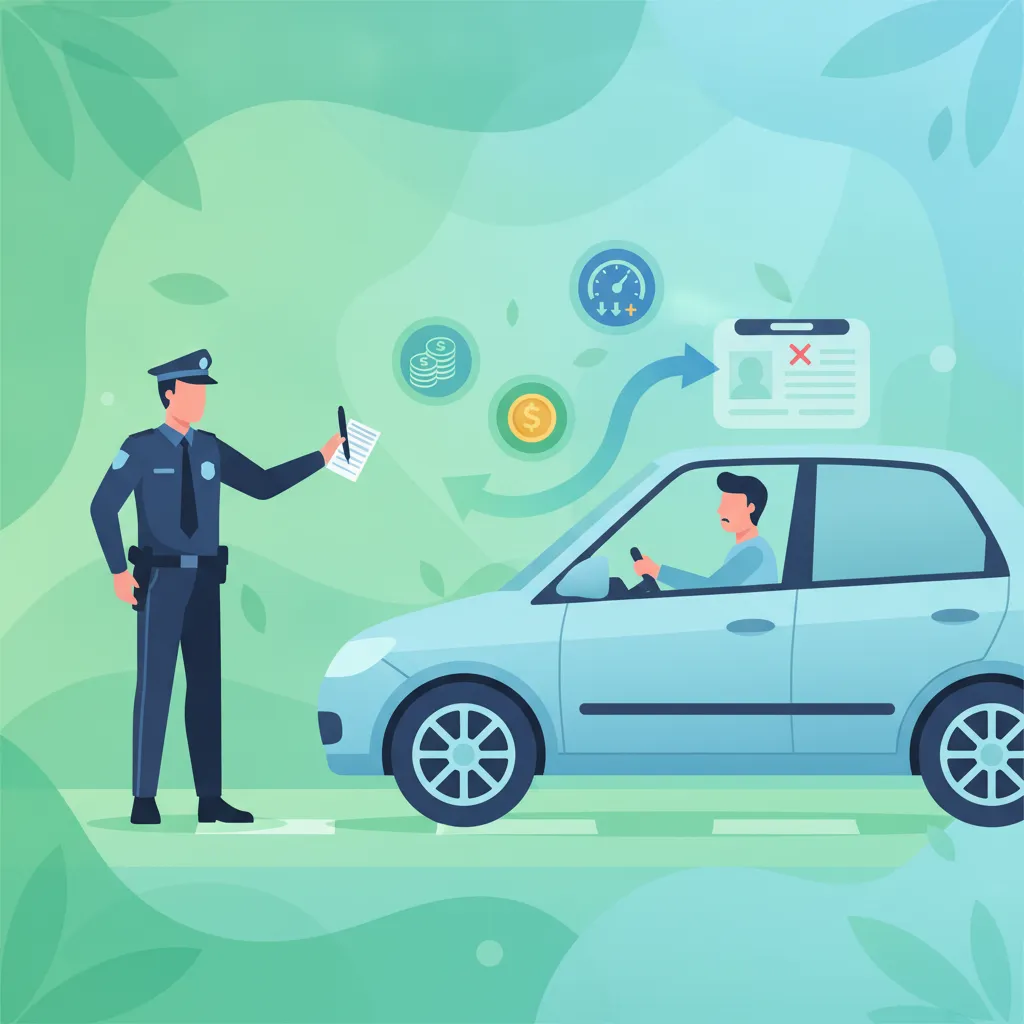
This lesson examines the legal consequences, heavy monetary fines, and driver's licence point deductions resulting from traffic and transport safety violations. Learners will study specific infractions such as driving over legal hours, vehicle overloading, and ignoring passenger seatbelt laws. Understanding the strict enforcement systems in France ensures drivers actively avoid risky habits that could end their careers.

This lesson focuses on identifying the signs of driver fatigue and understanding its impact on reaction times, decision-making, and overall safety. Learners will be introduced to legal limits on continuous driving and required rest periods as stipulated by French regulations. The content also provides practical strategies for managing fatigue, such as scheduling regular breaks, employing alertness techniques, and recognizing when to cease driving.
In this lesson, drivers will learn about the mandatory documentation required for operating a goods vehicle in France. The content covers the NEPH number needed for licence applications, vehicle registration certificates (carte grise), and proof of insurance. Learners will also explore the technical inspection process, load and customs documentation for cross-border transport, and the importance of maintaining an up-to-date driver logbook.
In this lesson, drivers will learn the essential steps to take following an accident involving a goods vehicle. The content covers contacting emergency services via 112, providing first aid, and safely positioning the vehicle to protect other road users. Learners will be instructed on documenting the incident, notifying insurance providers, and fulfilling legal obligations for accident reporting, including gathering witness statements.
Find clear answers to common questions learners have about Interactions with Enforcement Agencies. Learn how the lesson is structured, which driving theory objectives it supports, and how it fits into the overall learning path of units and curriculum progression in France. These explanations help you understand key concepts, lesson flow, and exam focused study goals.
You must be prepared to present your driving licence (category C or CE), the vehicle registration (carte grise), the certificate of insurance, and valid transport documents, including the transport permit and documentation related to the cargo being hauled.
Yes, if your vehicle is equipped with a digital tachograph, you must be able to present your personal driver card, which records your driving times and rest periods, as this is a mandatory check for all commercial vehicle drivers in France.
Failure to provide mandatory documents can lead to immediate fines, the immobilization of your vehicle until the documents are produced, and potential further legal action against both you and your employer depending on the severity of the non-compliance.
Always remain calm, polite, and cooperative. Follow the instructions of the official immediately. Transparency and professionalism are expected, and any obstruction or resistance during an official inspection can lead to serious legal consequences.
Ready to focus your study? Use the practice search to find exactly the French driving theory questions you need for the Code de la route and permis de conduire ETG. Refine your knowledge on specific topics or challenging rules to boost your confidence and exam readiness.