
This lesson guides you through the essential administrative documents required for legal driving in France. You will learn to manage your vehicle registration, insurance proofs, and environmental requirements, which are critical for both your theory exam and real-world compliance.
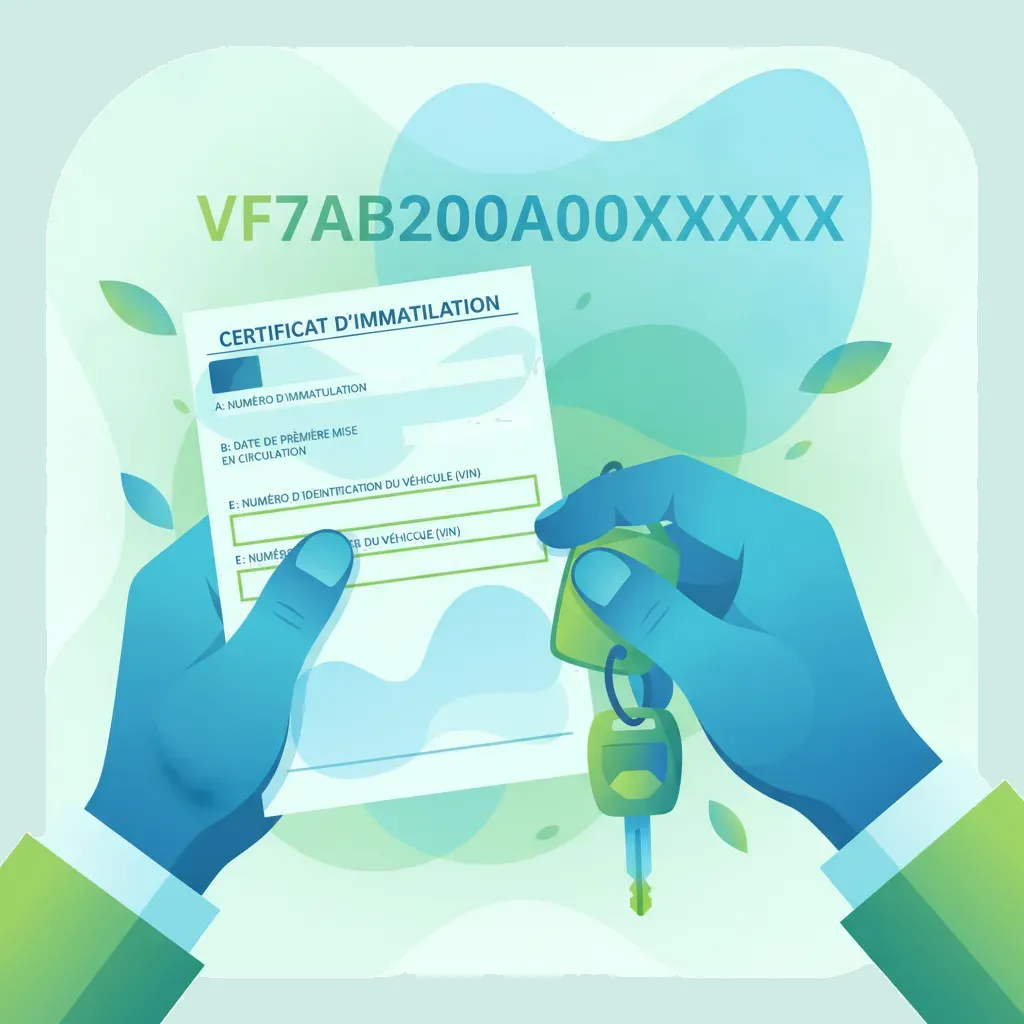
Lesson content overview
Operating a motor vehicle on French public roads is a privilege tied directly to strict administrative compliance. As a driver preparing for the French Category B driving theory exam (the Examen de l'Éthique Générale or ETG), you must master the legal framework governing vehicle registration, compulsory insurance, roadworthiness inspections, and environmental zoning.
Every driver in France must be able to present official, up-to-date documentation during routine roadside police checks (contrôles routiers). Neglecting these administrative duties not only leads to severe financial and legal penalties but can also result in the immediate impounding of your vehicle.
The French Code de la route dictates that any motor vehicle circulating on public roads must be legally registered, insured, and maintained in a safe operating condition. The primary rationale behind these strict guidelines is twofold: accountability and safety.
By maintaining centralized, highly accurate records of vehicle ownership, the government ensures that civil liability can be instantly established in the event of an accident, traffic violation, or environmental emergency. Routine police checks verify this "legal presence" by cross-referencing your physical documents with national digital databases.
Commonly referred to as the Carte Grise (grey card) due to its historical color, the Certificat d'Immatriculation is the official identity card of the vehicle. It is not a title of absolute ownership, but rather a permit to operate that specific vehicle on public roads under the authority of a designated registered keeper (titulaire).
The official, state-issued registration document that details a vehicle’s technical specifications (such as engine capacity, weight, and emissions), its Vehicle Identification Number (VIN), and the identity and residential address of the registered keeper.
Whenever you drive, you must carry the original, physical Certificat d'Immatriculation inside the vehicle. Presenting a photocopy, a digital scan on a smartphone, or an electronic copy during a police check is strictly illegal and constitutes a traffic violation.
Leaving your original Carte Grise permanently in your vehicle's glove box is highly discouraged. If your car is stolen with the registration document inside, it becomes significantly easier for thieves to transport or sell the vehicle, and insurance companies may reduce your theft compensation. Always keep the document on your person or in a secure wallet.
Your registration certificate must perfectly reflect your current personal situation and the technical state of the vehicle. You are legally required to update the document via the official government portal within one month of any of the following events:
In France, third-party liability insurance is strictly mandatory for any motorized vehicle, even if it is permanently parked in a private garage and not currently in use. This rule ensures that if your vehicle causes bodily injury or property damage to others, those victims are financially protected.
The legal minimum third-party liability insurance required by French law. It covers damages and injuries caused to third parties (pedestrians, passengers, other drivers, and public property) but does not cover the policyholder’s own injuries or vehicle damage.
While third-party liability is the legal baseline, drivers can opt for higher tiers of coverage depending on their budget and risk tolerance:
Historically, drivers in France were required to display a small green insurance vignette (papillon vert) on the bottom-right corner of their windshield and carry a green insurance card (carte verte).
As of April 1, 2024, the physical green insurance sticker and paper card system have been simplified for French-registered vehicles. Law enforcement officers now verify your insurance status digitally by scanning your vehicle's license plate against the centralized Fichier des Véhicules Assurés (FVA). However, you must still ensure your insurer has successfully uploaded your active contract details to this database.
To combat rising air pollution in metropolitan areas, the French government established low-emission zones, officially known as Zones à Faibles Émissions mobilités (ZFE-m). Within these designated sectors, vehicles must display a circular, color-coded sticker on their windshield called a Crit'Air vignette.
The Crit'Air system divides vehicles into six categories (numbered 0 to 5) based on their engine type, fuel source, and European emission standards (Euro standards):
The vignette must be ordered online via the official government portal and permanently affixed to the lower right-hand corner of the windshield (interior side, facing outward).
During high-pollution peaks, local prefectures can enforce emergency "differentiated traffic" rules (circulation différenciée), restricting access to certain urban centers to vehicles holding low Crit'Air numbers (e.g., only Crit'Air 0, 1, and 2 allowed).
When a vehicle changes hands in France, the seller and the buyer must follow a strict legal protocol to update the national registry. The entire process is digitized and managed exclusively through the government's official administrative portal.
The Technical Inspection (Contrôle Technique): If the vehicle is more than four years old, the seller must provide a valid Contrôle Technique certificate that is less than 6 months old (or less than 2 months old if a follow-up inspection/contre-visite is required).
Filling Out the Transfer Form (Cerfa 15776): Both buyer and seller must jointly complete and sign the official "declaration of transfer" (déclaration de cession) form. This serves as the legal contract of sale.
Declaring the Sale on ANTS: Within 15 days of the sale, the seller must log onto the ANTS portal to register the transfer. Upon completion, the system generates a secure "transfer code" (code de cession), which the seller must pass on to the buyer.
Securing the Registration (Carte Grise Barrée): At the time of the transaction, the seller must draw a clear diagonal line across the old physical Carte Grise, write "Vendu le [Date and Time]" (Sold on...) or "Cédé le..." (Donated on...), and sign it. This invalidates the old document while allowing the buyer to drive temporarily for up to one month.
The Buyer's Registration: The buyer has exactly 30 days from the purchase date to log onto ANTS, input the transfer code, pay the registration fees, and order a new Certificat d'Immatriculation in their name.
When you move to a new permanent residence, updating your driving licence address is optional, but updating the address on your vehicle's Carte Grise is strictly mandatory.
You have exactly one month from your move date to declare your change of address online.
Failure to perform this update means any automated speed camera fines or official legal notices will be sent to your old address, which can lead to rapid fine escalation and potential criminal prosecution for unpaid penalties.
The Contrôle Technique (CT) is a mandatory periodic inspection designed to keep unsafe or highly polluting vehicles off French roads.
The inspection assesses critical safety elements, including braking efficiency, steering responsiveness, structural integrity, tire wear, exhaust emissions, and lighting.
If the inspector detects severe defects, the vehicle is subject to a mandatory follow-up inspection (contre-visite) within two months. If critical, immediate safety risks are identified, the vehicle is immobilized, and driving is banned from midnight on the day of the test until repairs are carried out.
The Agence Nationale des Titres Sécurisés (ANTS) is the sole official governmental administrative portal responsible for processing driving licenses, national identity cards, passports, and vehicle registrations.
Physical prefectures no longer handle paper applications for vehicle registration. Every transaction—from ordering a duplicate registration certificate after a loss to changing your address or processing a sale—must be carried out online via the ANTS portal.
To access ANTS securely, users generally log in using FranceConnect, a centralized secure sign-on system connected to other official governmental accounts (such as your tax portal or health insurance login).
Violating documentation laws in France carries immediate, heavy penalties. Law enforcement officers have the authority to issue substantial fines and, in many cases, immediately immobilize your vehicle (immobilisation du véhicule) on the spot.
Below is an overview of the legal consequences for failing to adhere to the rules outlined in this lesson:
| Violation | Legal Severity & Fine Category | Immediate On-Road Consequences |
|---|---|---|
| Failure to Carry Physical Carte Grise | Class 1 Violation (Amende forfaitaire of €11, expandable to €38) | You must present the original document at a police station within 5 days. Failure to do so elevates the fine up to €135. |
| Outdated Address on Carte Grise | Class 4 Violation (Amende forfaitaire of €135) | Potential vehicle immobilization if the delay exceeds several months. |
| Driving Without Valid Insurance | Criminal Offense (Délit) with a flat fine of €3,750 (first offense can be resolved with a €750 flat penalty) | Immediate vehicle seizure, suspension of driving licence, and potential confiscation of the vehicle. |
| Missing or Incorrect Crit'Air Vignette | Class 3 Violation (Amende forfaitaire of €68) | Prohibition from entering or continuing to drive inside the active low-emission zone (ZFE). |
| Failure to Complete Ownership Transfer | Class 4 Violation (Amende forfaitaire of €135) | Vehicle registration is blocked, and the vehicle may be impounded upon detection. |
| Driving with an Expired Contrôle Technique | Class 4 Violation (Amende forfaitaire of €135) | Immediate immobilization of the vehicle. The police will confiscate your registration and issue a temporary 7-day permit valid only to drive directly to an inspection center. |
Why does the French highway code demand such absolute compliance with physical paperwork and online registries?
To pass your ETG theory exam and navigate the administrative landscape of French roads successfully, memorize these primary operational thresholds:
This lesson covers the mandatory administrative documents every French driver must carry and maintain: the Certificat d'Immatriculation (Carte Grise), compulsory third-party insurance (Responsabilité Civile), and the Crit'Air environmental vignette for low-emission zones. Key rules include the requirement to carry only original physical documents, a strict 30-day window for registration updates after address changes or vehicle purchases, and the digital verification of insurance via the FVA database. The ANTS portal handles all vehicle registration transactions, including ownership transfers with a 15-day declaration deadline. Violations range from €11 fines for missing documents to criminal penalties for uninsured driving, with immediate vehicle immobilization possible for serious breaches.
A short set of high-value points that capture the most important learning from this lesson.
The Certificat d'Immatriculation (Carte Grise) must be carried in original physical form; digital copies or photocopies are not legally valid during police checks.
You have exactly 30 days to update your Carte Grise after a change of address or vehicle purchase.
Third-party liability insurance (Responsabilité Civile) is legally mandatory for all vehicles in France, even if permanently parked.
The Crit'Air vignette must be affixed to the lower-right interior of your windshield to legally enter low-emission zones (ZFE-m).
All vehicle registration transactions—including ownership transfers and address changes—must be processed exclusively through the ANTS digital portal.
Explore all units and lessons included in this driving theory course.
Original Carte Grise only: no photocopies, no smartphone images, no electronic versions are accepted by law enforcement.
Insurance verification is now digital (Fichier des Véhicules Assurés/FVA) as of April 2024, but you must still maintain active coverage.
Crit'Air categories range from 0 (electric/hydrogen) to 5 (most polluting); higher numbers mean older, dirtier vehicles.
First Contrôle Technique is due before the vehicle's 4th anniversary, then renewed every 2 years.
For vehicle sales, the seller must declare the transfer on ANTS within 15 days and provide the buyer with a code de cession.
Believing that showing a photo or scan of the Carte Grise on a phone satisfies the document requirement during a roadside check.
Missing the 30-day deadline to update the registration after moving or buying a vehicle, which escalates to a €135 fine.
Assuming the green insurance sticker is still required; since April 2024, police verify coverage digitally via the vehicle's license plate.
Driving into a ZFE zone without a Crit'Air vignette or with an insufficient category, resulting in a €68 fine and prohibition from the restricted area.
Failing to complete the ANTS ownership transfer, which can result in the vehicle being impounded and registration blocked.
Lesson content overview
A short set of high-value points that capture the most important learning from this lesson.
The Certificat d'Immatriculation (Carte Grise) must be carried in original physical form; digital copies or photocopies are not legally valid during police checks.
You have exactly 30 days to update your Carte Grise after a change of address or vehicle purchase.
Third-party liability insurance (Responsabilité Civile) is legally mandatory for all vehicles in France, even if permanently parked.
The Crit'Air vignette must be affixed to the lower-right interior of your windshield to legally enter low-emission zones (ZFE-m).
All vehicle registration transactions—including ownership transfers and address changes—must be processed exclusively through the ANTS digital portal.
Explore all units and lessons included in this driving theory course.
Original Carte Grise only: no photocopies, no smartphone images, no electronic versions are accepted by law enforcement.
Insurance verification is now digital (Fichier des Véhicules Assurés/FVA) as of April 2024, but you must still maintain active coverage.
Crit'Air categories range from 0 (electric/hydrogen) to 5 (most polluting); higher numbers mean older, dirtier vehicles.
First Contrôle Technique is due before the vehicle's 4th anniversary, then renewed every 2 years.
For vehicle sales, the seller must declare the transfer on ANTS within 15 days and provide the buyer with a code de cession.
Believing that showing a photo or scan of the Carte Grise on a phone satisfies the document requirement during a roadside check.
Missing the 30-day deadline to update the registration after moving or buying a vehicle, which escalates to a €135 fine.
Assuming the green insurance sticker is still required; since April 2024, police verify coverage digitally via the vehicle's license plate.
Driving into a ZFE zone without a Crit'Air vignette or with an insufficient category, resulting in a €68 fine and prohibition from the restricted area.
Failing to complete the ANTS ownership transfer, which can result in the vehicle being impounded and registration blocked.
Explore search topics learners often look for when studying Documentation and Vehicle Registration. These topics reflect common questions about road rules, driving situations, safety guidance, and lesson level theory preparation for learners in France.
Browse additional driving theory lessons that cover connected traffic rules, road signs, and common driving situations related to this topic. Improve your understanding of how different rules interact across everyday traffic scenarios.
Understand the consequences of failing to meet vehicle documentation requirements and traffic safety laws. This lesson covers point reductions, fine structures, vehicle impoundment procedures, and the administrative enforcement of the French road code to ensure you maintain your Category B licence status.

Traffic violations in France entail direct points deductions, financial fines, and administrative actions managed online. This lesson explains how traffic offenses are classified and how points are deducted from your total allowance of twelve. You will learn the process for paying fines, how to formally contest a citation via official channels, and the rules for attending points-recovery training.

Violating traffic regulations in France triggers strict administrative penalties, including point deductions and financial fines. This lesson examines the structure of the French point-based licence, specifically noting how probationary licences start with fewer points. It outlines the differences between fine categories, vehicle impoundment procedures, and options for recovering points through voluntary safety awareness courses.

This lesson examines the legal consequences, heavy monetary fines, and driver's licence point deductions resulting from traffic and transport safety violations. Learners will study specific infractions such as driving over legal hours, vehicle overloading, and ignoring passenger seatbelt laws. Understanding the strict enforcement systems in France ensures drivers actively avoid risky habits that could end their careers.

This lesson details the structure of the French points-based licensing system, explaining how points are deducted for specific traffic violations. You will learn about the special probation rules for novice licenses and the process of recovering lost points through safety courses. It also covers the fine structures, warning that ignoring basic safety laws like speed limits can lead to immediate vehicle impoundment and license suspension.
This lesson outlines the range of penalties that can be imposed for violations of traffic laws and administrative requirements specific to goods vehicles. Learners will understand the financial implications of fines, the potential for licence suspension or revocation, and the circumstances under which a vehicle may be seized. The content also addresses demerit points accumulation, administrative sanctions, and the importance of compliance.

This lesson delves into the dual aspects of civil and criminal liability that professional goods vehicle drivers face in the event of traffic violations or accidents. Learners will explore the range of penalties, including fines, licence suspension, vehicle seizure, and potential imprisonment for severe offenses under French law. The discussion also covers the impact of negligence on insurance coverage, the accrual of penalty points, and the broader consequences for both the driver and their employer.

Illegal narcotics and certain over-the-counter or prescription medications severely affect a driver's focus and neurological coordination. This lesson details drug screen procedures (saliva tests) and the zero-tolerance policy for driving under the influence of narcotics. You will also learn to read the standardized warning triangles on French pharmaceutical boxes, which classify medications from level one to three.

Regulatory signs are circular with red borders for prohibitions and blue backgrounds for mandatory instructions. This lesson details critical signs, such as speed limits, no-entry indicators, overtaking bans, and mandatory turning lanes. You will also learn about environmental zones restrictions, height limits for large vehicles, and the legal priority instructions conveyed by stop and yield signs.
Learn the theory behind Crit'Air environmental vignettes and how they regulate access to urban low-emission zones in France. This guide explains the classification system for vehicles and the legal obligations for displaying mandatory environmental stickers during periods of differentiated traffic flow in metropolitan areas.

This lesson covers the environmental legalities that motorcyclists must follow in French urban areas, including low-emission zones designated as ZFE. You will understand how Euro emissions classifications affect your motorcycle and learn the process for acquiring and placing a Crit'Air vignette. The lesson also explores eco-driving techniques that help reduce fuel consumption, greenhouse gas emissions, and exhaust noise levels.

This lesson examines the regulatory limits and environmental controls applied to large passenger vehicles operating in dense French urban centers. Drivers will study the Crit'Air clean air sticker system and low-emission zones (ZFE) that restrict access for older, high-polluting vehicles. It also addresses navigating physical constraints, such as narrow streets, tight turning radii, and strict municipal weight limits.

In this lesson, the focus is on French environmental zones (ZFE) and low emission requirements that affect goods vehicle access to certain urban areas. Learners will explore how emissions criteria determine vehicle eligibility, the process for obtaining permits, and the consequences of non-compliance. The content also covers strategies for route planning that consider environmental restrictions while maintaining operational efficiency.

French municipalities utilize distinct low-speed configurations to foster pedestrian safety in residential and educational neighborhoods. This lesson details speed restrictions in 'zone 30', pedestrian-only districts, and shared 'zones de rencontre' where speed is capped at 20 km/h. You will learn how priority hierarchies shift in these zones, giving pedestrians legal priority to use the entire roadway.

Lateral road markings run across or along the sides of roadways, signaling limits such as stop lines, yield lines, and pedestrian zones. This lesson explains how painted curbs restrict parking, including continuous or broken yellow lines which signal stopping or parking prohibitions. You will learn how to identify pedestrian zone boundaries and ensure you never obstruct pedestrian or cyclist paths.

Urban roads in France feature specialized lanes reserved for public transit, micro-mobility, and distinct parking options. This lesson covers how to recognize bus lanes, cycling lanes, and the specific rules that prohibit general traffic from blocking them. You will also learn to interpret parking bay outlines, loading zones, and spots reserved for electric charging or drivers with disabilities.
Find clear answers to common questions learners have about Documentation and Vehicle Registration. Learn how the lesson is structured, which driving theory objectives it supports, and how it fits into the overall learning path of units and curriculum progression in France. These explanations help you understand key concepts, lesson flow, and exam focused study goals.
The carte grise, or certificat d'immatriculation, is the official registration document for your vehicle. It is mandatory to present it during police checks, and it contains vital information about your car's technical specifications and ownership status.
The Crit'Air vignette is mandatory if you plan to drive in low-emission zones (ZFE) in major French cities. It classifies vehicles based on their pollutant emissions, and failing to display it can result in fines in these specific zones.
All administrative procedures for your vehicle registration, including updating your address after a move, must be completed through the official French ANTS (Agence Nationale des Titres Sécurisés) digital portal.
In France, you must be able to present your valid insurance certificate (attestation d'assurance). While digital copies are increasingly accepted, it is safest to keep the original paper documents as required by current Code de la route regulations.
Ready to focus your study? Use the practice search to find exactly the French driving theory questions you need for the Code de la route and permis de conduire ETG. Refine your knowledge on specific topics or challenging rules to boost your confidence and exam readiness.