
This lesson explores the legal consequences of professional driving in France, specifically for holders of C1, C, C1E, and CE licences. You will examine the transition from standard traffic rules to professional accountability, ensuring you understand the severity of violations involving heavy goods vehicles.
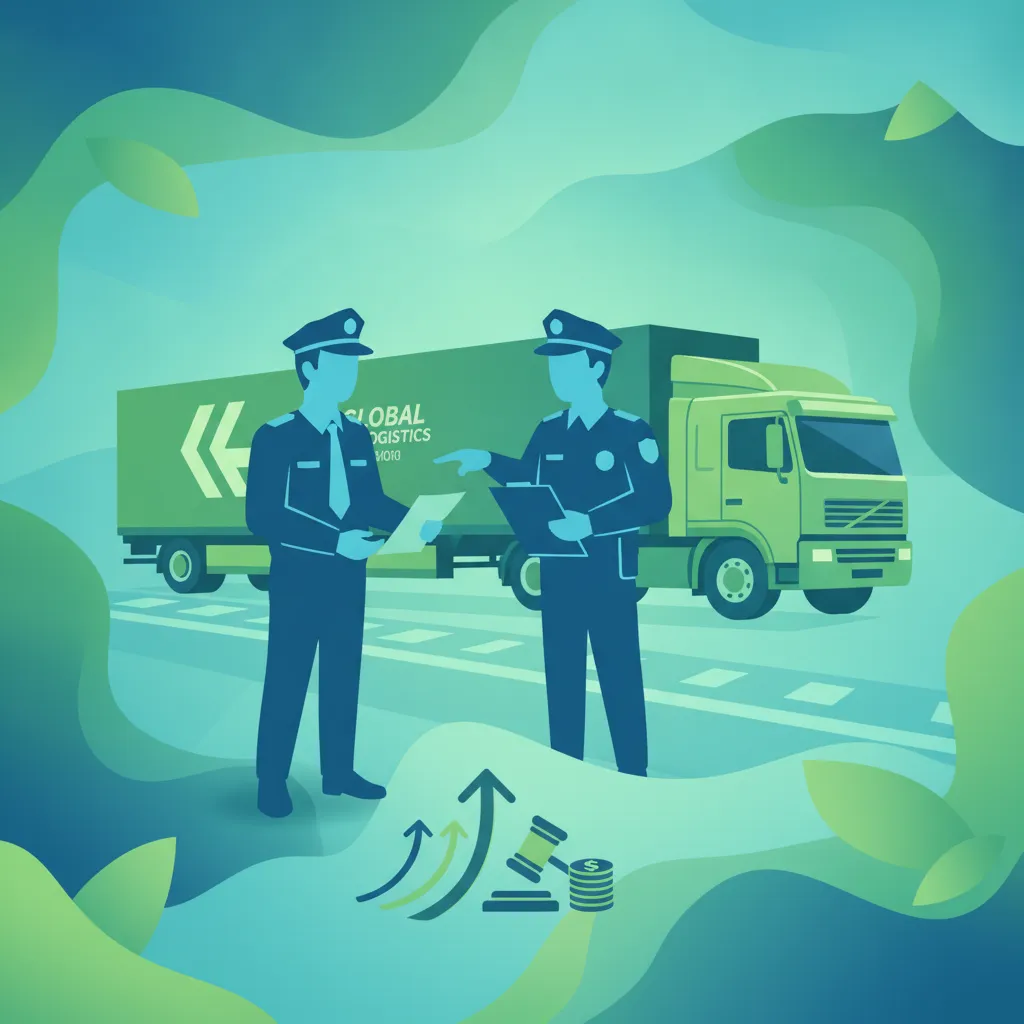
Lesson content overview
Operating a heavy goods vehicle (HGV) under Category C or CE in France is a highly regulated professional activity that carries immense legal weight. As a professional driver, you are not merely operating a large vehicle; you are acting as an accredited agent of public commerce on public roads.
Because of the massive scale, weight, and destructive potential of vehicles exceeding 3.5 tonnes, French jurisprudence holds professional drivers to an exceptionally high standard of care (obligation de vigilance accrue). A single traffic violation or safety oversight can instantly trigger a dual track of civil and criminal liabilities, threatening your livelihood, financial stability, and personal freedom.
This lesson explores the legal frameworks governing professional liability, the structural hierarchy of penalties under the French Code de la route and Code pénal, and the shared responsibilities between HGV drivers and their employers.
To safely navigate the legal landscape of professional road transport in France, you must understand the distinction between civil liability (responsabilité civile) and criminal liability (responsabilité pénale). These two legal pathways operate independently, meaning a driver can simultaneously face a civil lawsuit for financial compensation and a criminal prosecution for state-imposed punishment.
Civil liability is governed by the principle that any person who causes damage to another must repair it (derived from Article 1240 of the French Civil Code). In the context of heavy goods transport, civil liability centers entirely on compensating the victims of an accident for bodily injury, property damage, or economic loss.
The legal obligation to repair or financially compensate for harm, damage, or loss caused to third parties through one's fault, imprudence, or professional negligence.
While civil liability handles money and compensation, criminal liability handles punishment for breaking the law. It is personal and cannot be transferred to your employer or covered by an insurance policy. If you commit a traffic infraction or cause a fatal accident, you—and you alone—must stand in the criminal dock.
Crucial Legal Principle: Your employer cannot pay your criminal fines, serve your prison sentence, or absorb your penalty points. Any contract or agreement where an employer promises to pay a driver's personal traffic fines is legally null and void under French law.
In the eyes of French courts, "negligence" is defined as the failure to exercise the level of care, skill, and foresight expected of a reasonably prudent professional driver under similar circumstances. Because of your specialized professional training (FIMO/FCO), you are expected to possess superior hazard perception and technical execution compared to a standard passenger car driver.
The legal consequences of an error depend heavily on whether it is classified as simple negligence or gross negligence (faute lourde or faute inexcusable).
If you deliberately drive an overloaded 44-tonne articulated truck over a bridge clearly marked with a B13 sign restricting access to vehicles under 19 tonnes, and the bridge suffers structural damage, this is classified as gross negligence.
The consequences of such actions are severe:
The French driving licence operates on a point-deduction system (permis à points). A fully validated, non-probationary licence starts with a capital of 12 points.
For professional drivers, the points system is a direct threat to employment. If your point balance reaches zero, your licence is invalidated (notified via administrative letter 48SI), resulting in an immediate and mandatory termination of your ability to work.
Points are deducted automatically upon the payment of a fine, the execution of a court order, or a definitive conviction.
While the legal point system is identical for passenger car drivers and HGV drivers, the practical risk is vastly higher for professionals due to the extensive hours spent on the road and the stringent regulations governing heavy transport.
For instance, driving with a mobile phone in hand is a 3-point deduction. For an HGV driver, this is not just a fine; it represents 25% of their professional livelihood gone in an instant.
When a professional driver commits a serious safety violation, the state can withdraw their driving privileges through either administrative or judicial channels.
                  [ SERIOUS TRAFFIC OFFENSE ]
                              │
             ┌────────────────┴────────────────┐
             ▼                                 ▼
   ADMINISTRATIVE SANCTION             JUDICIAL SANCTION
   (Prefect / Immediate)               (Criminal Court Judge)
   • 72-hour Retention                 • Court Conviction
   • Prefectural Suspension            • Licence Revocation (Annulation)
   • Medical/Psychometric Exams        • Mandatory Retesting
Administrative sanctions are preventative measures taken by the state represented by the local Prefect (Préfet), designed to quickly remove dangerous drivers from the road before a formal court date.
Judicial sanctions are punitive measures ordered by a criminal court judge as part of a formal sentence.
Under the French Code de la route and Code pénal, severe violations of road safety laws can lead to custodial prison sentences and the permanent loss of the vehicle itself.
Vehicle confiscation is a penalty that directly impacts both owner-operators and standard transport companies. Under Article 131-51 of the French Penal Code, courts can order the seizure and permanent transfer of vehicle ownership to the state.
Professional drivers face prison sentences if their conduct on the road leads to injury, death, or severe endangerment.
| Criminal Charge | Maximum Prison Sentence | Maximum Financial Fine | Triggering Actions / Negligence |
|---|---|---|---|
| Involuntary Manslaughter (Homicide involontaire) | 5 years (Up to 7-10 years if multiple aggravating factors apply) | €75,000 (Up to €100,000 - €150,000) | Causing a fatal accident due to speed, distraction, or failure to follow heavy vehicle safety guidelines. |
| Involuntary Injuries (Blessures involontaires) | 3 years (Up to 5 years with aggravating factors) | €45,000 (Up to €75,000) | Causing permanent or temporary disability to a third party through negligence or traffic violations. |
| Deliberate Endangerment (Mise en danger de la vie d'autrui) | 1 year | €15,000 | Knowingly violating safety rules (e.g., bypassing a physical speed limiter, driving a dangerously overloaded HGV in poor weather). |
Aggravating Factors (Circonstances Aggravantes): Under the French Penal Code, penalties are multiplied if the offense is accompanied by factors such as:
A common misconception among new drivers is that they are immune to prosecution if they were "just following orders" from their dispatchers or employers. Under French law, this excuse is entirely invalid.
The legal reality is one of shared criminal liability. If an employer orders a driver to perform an illegal act, both the driver and the employer can be prosecuted under different sections of the Code de la route and the Code du travail (Labour Code).
Employers are legally obligated to organize transport runs in a manner that complies fully with safety laws, speed limits, and social regulations (driving and rest times).
If your employer instructs you to drive an overloaded vehicle, bypass a tachograph, or operate a vehicle with critical safety defects (such as bald tyres or faulty brakes), you have the legal right—and professional obligation—to refuse.
Under Article L4131-1 of the French Labour Code, this is known as the Droit de Retrait (Right of Withdrawal).
Identify the Imminent Danger: Evaluate the vehicle or cargo. If you notice a critical defect (e.g., severely worn steering components, unsecured hazardous cargo, or an axle load that far exceeds legal limits), identify this as a source of imminent danger to yourself and the public.
Document the Condition: Take clear, dated photographs of the defect, the overload scale ticket, or the vehicle condition.
Formally Notify Your Employer: Immediately inform your supervisor, dispatcher, or the company’s safety officer in writing (via email, SMS, or a physical document). Clearly state that you are exercising your droit de retrait due to a severe and imminent safety hazard.
Refuse to Drive the Compromised Vehicle: Remain at your employer's disposal for other duties or a compliant vehicle, but do not turn the ignition key of the defective truck. Under French law, your employer is strictly prohibited from penalizing you, withholding wages, or terminating your contract for legally exercising this right.
To protect your professional status, driving licence, and personal freedom, you must apply rigorous, systematic safety routines. Compliance is not a bureaucratic formality; it is your primary defense against legal liability.
Let's examine how a single, seemingly minor decision propagates through the legal systems of civil, criminal, and employer liabilities.
Imagine a scenario where a Category CE driver is transporting structural steel on a flatbed trailer. The driver is running late due to traffic and decides to skip checking the tension of the lashing straps during their scheduled rest stop, despite heavy rain and high winds. On a rural road, a passenger car suddenly pulls out. The truck driver brakes hard; the unsecured steel shifts, breaks the remaining straps, and slides off the bed, crushing the front end of the passenger car and severely injuring the occupant.
Professional HGV drivers operating under Category C or CE in France face dual civil and criminal liability tracks that operate independently. Civil liability under Article 1240 of the French Civil Code focuses on compensating victims through insurance, while criminal liability under the Code pénal and Code de la route carries personal punishments including fines, point deductions, licence suspension, and imprisonment for serious offenses. The 12-point permis à points system represents an immediate livelihood threat since licence invalidation triggers automatic unemployment, and drivers can lose up to 8 points in a single traffic stop. Severe violations such as driving under the influence, exceeding speed limits by more than 50 km/h, or negligence causing injury or death carry substantial prison sentences and financial penalties. The Droit de Retrait under Labour Code Article L4131-1 provides drivers with the legal right and obligation to refuse unsafe instructions, and employers cannot legally penalize drivers for exercising this right. The distinction between civil and criminal liability is critical: vicarious employer liability protects personal assets in civil compensation cases, but criminal penalties remain entirely personal regardless of employment circumstances.
A short set of high-value points that capture the most important learning from this lesson.
Civil liability focuses on victim compensation via insurance; criminal liability focuses on state punishment through fines, point loss, or imprisonment
Gross negligence (faute lourde) voids insurance coverage and exposes drivers to personal financial ruin and criminal prosecution
The 12-point permis à points system poses an immediate livelihood threat since licence invalidation results in automatic unemployment
Criminal liability is entirely personal and cannot be transferred to an employer or covered by any insurance policy
The Droit de Retrait allows drivers to legally refuse unsafe instructions without employer retaliation under Labour Code Article L4131-1
Explore all units and lessons included in this driving theory course.
Administrative sanctions (Prefect) can retain your licence for 72-120 hours; judicial sanctions (court) can suspend for up to 3-5 years or revoke entirely
Offenses are classified as contraventions (fines + points), délits (court trial + possible prison), and crimes (Assize Court trial + serious imprisonment)
Employers commit a criminal offense under Labour Code Article L1163-1 if they set impossible delivery schedules that encourage violations
Drivers can recover up to 4 points per year through voluntary road safety training; zero balance triggers immediate 48SI notification and licence invalidation
Criminal prosecution is personal: no employer can pay your fines, serve your sentence, or absorb your penalty points
Believing that employer vicarious liability extends to criminal matters; vicarious liability covers only civil compensation, not criminal punishment
Assuming criminal liability applies only in extreme cases; délits like DUI or severe speeding lead to court prosecution and potential imprisonment
Underestimating gross negligence as merely an insurance matter; it can trigger personal financial liability, criminal charges, and prison sentences
Ignoring the Droit de Retrait right; drivers can refuse unsafe instructions and employers cannot legally penalize them for doing so
Thinking multiple simultaneous infractions result in unlimited point loss; the maximum deduction at a single traffic stop is capped at 8 points
Lesson content overview
A short set of high-value points that capture the most important learning from this lesson.
Civil liability focuses on victim compensation via insurance; criminal liability focuses on state punishment through fines, point loss, or imprisonment
Gross negligence (faute lourde) voids insurance coverage and exposes drivers to personal financial ruin and criminal prosecution
The 12-point permis à points system poses an immediate livelihood threat since licence invalidation results in automatic unemployment
Criminal liability is entirely personal and cannot be transferred to an employer or covered by any insurance policy
The Droit de Retrait allows drivers to legally refuse unsafe instructions without employer retaliation under Labour Code Article L4131-1
Explore all units and lessons included in this driving theory course.
Administrative sanctions (Prefect) can retain your licence for 72-120 hours; judicial sanctions (court) can suspend for up to 3-5 years or revoke entirely
Offenses are classified as contraventions (fines + points), délits (court trial + possible prison), and crimes (Assize Court trial + serious imprisonment)
Employers commit a criminal offense under Labour Code Article L1163-1 if they set impossible delivery schedules that encourage violations
Drivers can recover up to 4 points per year through voluntary road safety training; zero balance triggers immediate 48SI notification and licence invalidation
Criminal prosecution is personal: no employer can pay your fines, serve your sentence, or absorb your penalty points
Believing that employer vicarious liability extends to criminal matters; vicarious liability covers only civil compensation, not criminal punishment
Assuming criminal liability applies only in extreme cases; délits like DUI or severe speeding lead to court prosecution and potential imprisonment
Underestimating gross negligence as merely an insurance matter; it can trigger personal financial liability, criminal charges, and prison sentences
Ignoring the Droit de Retrait right; drivers can refuse unsafe instructions and employers cannot legally penalize them for doing so
Thinking multiple simultaneous infractions result in unlimited point loss; the maximum deduction at a single traffic stop is capped at 8 points
Explore search topics learners often look for when studying Professional Liability and Penalties. These topics reflect common questions about road rules, driving situations, safety guidance, and lesson level theory preparation for learners in France.
Browse additional driving theory lessons that cover connected traffic rules, road signs, and common driving situations related to this topic. Improve your understanding of how different rules interact across everyday traffic scenarios.
Understand the mandatory documentation required for professional heavy goods vehicle operation under the French Code de la route. This guide covers vehicle papers, tachograph records, and driver logs necessary for legal compliance and interactions with transport enforcement agencies during routine road checks.

In this lesson, drivers will learn about the mandatory documentation required for operating a goods vehicle in France. The content covers the NEPH number needed for licence applications, vehicle registration certificates (carte grise), and proof of insurance. Learners will also explore the technical inspection process, load and customs documentation for cross-border transport, and the importance of maintaining an up-to-date driver logbook.
This lesson explains the critical documentation required to be kept onboard every passenger vehicle under French and European transport regulations. Learners will explore requirements for passenger manifests, insurance policies, valid transport permits, and official logbooks like the chronotachygraphe. Crucially, the lesson covers proper procedures for presenting these documents during routine roadside inspections by French law enforcement agencies.

Every driver in France must be able to present official, up-to-date documentation during routine roadside police checks. This lesson details the certificat d'immatriculation (commonly known as the carte grise), valid insurance documents, and the Crit'Air environmental vignette required in low-emission zones. It explains how to complete transfers of ownership and update addresses using the official ANTS digital portal.

This lesson addresses the procedures and expectations when professional drivers encounter law enforcement or customs officials in France. Topics include the types of checks that may be performed, required documentation, rights and obligations of drivers, and the consequences of non-compliance. Learners will be guided on best practices for interacting with authorities, emphasizing cooperation, transparency, and the importance of maintaining valid and up-to-date documents for both the vehicle and driver.
This lesson provides strategies for planning routes that accommodate oversized goods vehicles while complying with French road restrictions. Learners will learn how to identify prohibited routes, evaluate bridge and tunnel limitations, and obtain necessary access permits. The content also addresses the use of specialised GPS systems for heavy vehicle routing and the importance of contingency planning for detours, ensuring safe and efficient transport operations.
In this lesson, drivers will learn the specific speed limits that apply to goods vehicles across different road types in France, including urban areas, rural roads, and motorways. The content covers the differences between speed limit signs for heavy vehicles and standard passenger cars, the legal basis for these limits, and the importance of speed adaptation based on vehicle category and load. Learners will also be introduced to speed enforcement methods used in France, such as radar and speed cameras.

In this lesson, drivers will learn the essential steps to take following an accident involving a goods vehicle. The content covers contacting emergency services via 112, providing first aid, and safely positioning the vehicle to protect other road users. Learners will be instructed on documenting the incident, notifying insurance providers, and fulfilling legal obligations for accident reporting, including gathering witness statements.
This lesson provides guidance on selecting preferred routes for heavy vehicles, taking into account freight corridors, toll roads, and restricted zones. Learners will be introduced to practical tools for route optimization, including GPS systems tailored for goods vehicles, and strategies for minimizing travel time while adhering to legal constraints. Emphasis is placed on balancing delivery efficiency with compliance to French transport policies.
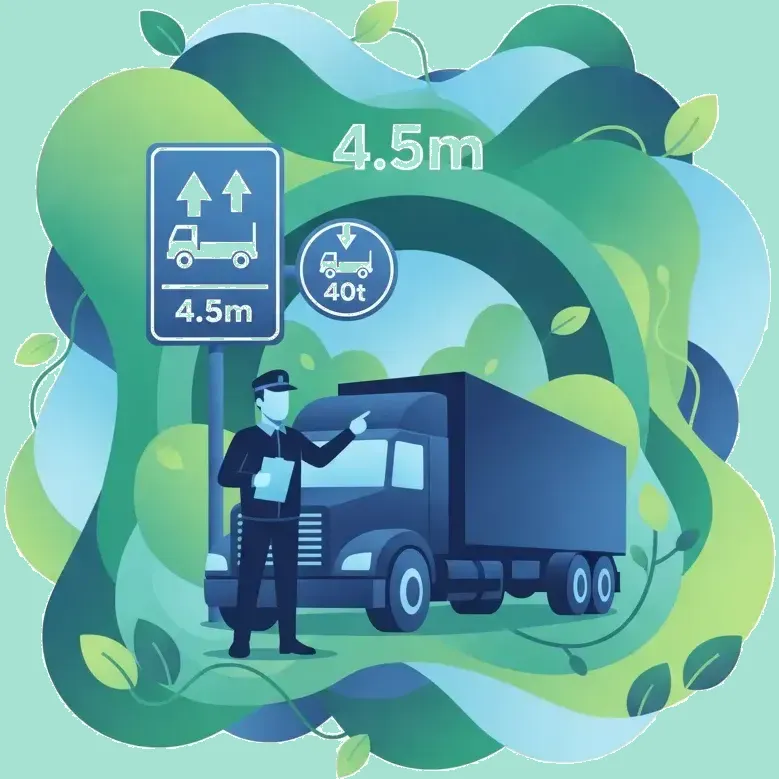
This lesson focuses on the weight and dimension restrictions that goods vehicles must adhere to while traveling on French roads. Learners will understand bridge caps, tunnel clearances, and other physical limitations imposed by infrastructure, and how these restrictions impact route planning and vehicle loading. The content also highlights legal load limits and the importance of compliance checks to avoid fines and roadblocks.

This lesson highlights the necessity for ongoing training and professional development for goods vehicle drivers. Learners will understand the legal requirements for periodic refresher courses, competency assessments, and staying updated with changes in legislation and technology. The content also discusses the benefits of continual skill enhancement, certification programs, and participation in safety initiatives to promote lifelong learning.
Learn about the consequences of professional negligence and how the French penalty points system specifically affects C and CE licence holders. This overview details the legal framework for driver penalties, employer-employee shared responsibility, and the standards of conduct required for professional transport in France.

This lesson outlines the range of penalties that can be imposed for violations of traffic laws and administrative requirements specific to goods vehicles. Learners will understand the financial implications of fines, the potential for licence suspension or revocation, and the circumstances under which a vehicle may be seized. The content also addresses demerit points accumulation, administrative sanctions, and the importance of compliance.

This lesson examines the legal consequences, heavy monetary fines, and driver's licence point deductions resulting from traffic and transport safety violations. Learners will study specific infractions such as driving over legal hours, vehicle overloading, and ignoring passenger seatbelt laws. Understanding the strict enforcement systems in France ensures drivers actively avoid risky habits that could end their careers.
This lesson addresses the procedures and expectations when professional drivers encounter law enforcement or customs officials in France. Topics include the types of checks that may be performed, required documentation, rights and obligations of drivers, and the consequences of non-compliance. Learners will be guided on best practices for interacting with authorities, emphasizing cooperation, transparency, and the importance of maintaining valid and up-to-date documents for both the vehicle and driver.

In this lesson, learners examine the heightened duty of care that applies to professional goods vehicle drivers, focusing on how legal obligations extend beyond basic road rules to include ethical considerations and public safety responsibilities. The content outlines expectations for compliance with French traffic laws, the importance of maintaining a professional image through courteous conduct, and the implications of negligent behavior. By integrating ethical decision-making with legal compliance, drivers are prepared to uphold the standards expected of professional operators.

In this lesson, drivers will explore the expectations for professional behavior and ethical decision-making while operating a goods vehicle. The content emphasizes the importance of a safety-first mindset, respectful interaction with other road users, and adherence to a code of conduct. Learners will also consider the environmental impact of their operations, strategies for effective communication, and the role of continuous professional development.
This lesson provides guidance on selecting preferred routes for heavy vehicles, taking into account freight corridors, toll roads, and restricted zones. Learners will be introduced to practical tools for route optimization, including GPS systems tailored for goods vehicles, and strategies for minimizing travel time while adhering to legal constraints. Emphasis is placed on balancing delivery efficiency with compliance to French transport policies.
In this lesson, drivers will learn the specific speed limits that apply to goods vehicles across different road types in France, including urban areas, rural roads, and motorways. The content covers the differences between speed limit signs for heavy vehicles and standard passenger cars, the legal basis for these limits, and the importance of speed adaptation based on vehicle category and load. Learners will also be introduced to speed enforcement methods used in France, such as radar and speed cameras.
Violating traffic regulations in France triggers strict administrative penalties, including point deductions and financial fines. This lesson examines the structure of the French point-based licence, specifically noting how probationary licences start with fewer points. It outlines the differences between fine categories, vehicle impoundment procedures, and options for recovering points through voluntary safety awareness courses.
Find clear answers to common questions learners have about Professional Liability and Penalties. Learn how the lesson is structured, which driving theory objectives it supports, and how it fits into the overall learning path of units and curriculum progression in France. These explanations help you understand key concepts, lesson flow, and exam focused study goals.
Yes, the general system of penalty points (permis à points) applies to all drivers in France regardless of the vehicle category. However, professional drivers often face stricter enforcement and higher expectations for compliance due to the potential risks associated with heavy goods vehicles.
Negligence can result in both civil and criminal liability. Beyond fines and point loss, you may face litigation for damages, and your insurance coverage may be voided if the incident resulted from a violation of professional driving standards or safety regulations.
While the driver is primarily responsible for their conduct on the road, employers in the transport sector may share liability if they imposed unrealistic deadlines or failed to maintain the vehicle properly. Both parties face significant regulatory scrutiny in the event of major infractions.
Yes, speeding violations in heavy goods vehicles are taken very seriously. Excessive speed can lead to immediate licence suspension, heavy fines, and in cases of severe accidents, criminal charges of involuntary homicide or injuries.
Ready to focus your study? Use the practice search to find exactly the French driving theory questions you need for the Code de la route and permis de conduire ETG. Refine your knowledge on specific topics or challenging rules to boost your confidence and exam readiness.