
This lesson guides you through the essential documentation and legal compliance required to operate passenger vehicles under French law. You will learn which specific documents must be present on board and how to present them during roadside inspections to ensure your professional transport service remains compliant.
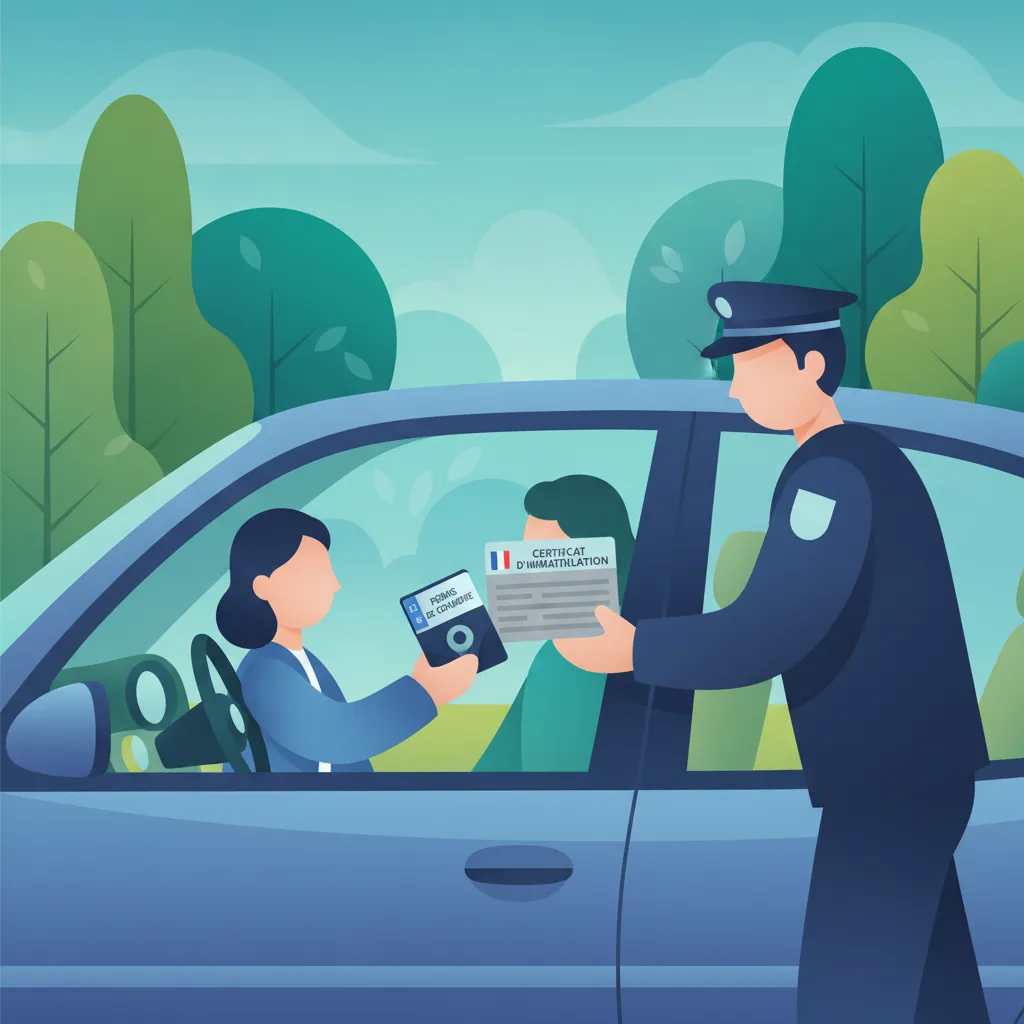
Lesson content overview
Operating passenger transport vehicles within the French and European road network carries significant professional and legal responsibility. As a professional driver holding a D-category licence (such as D1, D, D1E, or DE), you do not merely operate a heavy vehicle; you are the primary guarantor of regulatory compliance on every journey.
In France, heavy vehicle operations are governed by both the French Highway Code (Code de la route), the French Transport Code (Code des transports), and European Union regulations. During any journey, supervisory authorities—including the National Gendarmerie (Gendarmerie nationale), National Police (Police nationale), and inspectors from the Regional Directorate for Environment, Planning, and Housing (DREAL)—have the legal power to stop your vehicle and demand a comprehensive suite of documents. Failing to present these current, valid documents immediately can result in heavy administrative fines, points deduction, vehicle immobilization, and the suspension of your operating licence.
Every passenger vehicle must carry absolute proof of its identity, its administrative ownership, and its mechanical roadworthiness. Authorities require these documents to verify that the physical state of the vehicle matches French national safety and environmental baselines.
The Carte Grise (officially known as the Certificat d’immatriculation) is the official administrative identity card of the vehicle. It records the owner’s details, the license plate registration number, the Vehicle Identification Number (VIN) stamped on the chassis, and precise technical specifications such as the Maximum Authorized Mass (Poids Total Autorisé en Charge - PTAC) and seating capacity.
The official registration certificate issued by the French state, proving the vehicle's legal registration, technical limits, ownership, and conformity with safety standards.
When operating a passenger vehicle:
Passenger transport vehicles undergo extreme stress due to high mileage and heavy passenger loads. Consequently, French regulations mandate rigorous, periodic technical inspections to confirm that critical safety systems (such as brakes, steering, suspension, and emissions controls) are fully functional.
Operating a D-category vehicle with an expired technical inspection certificate is a severe safety breach. If you are involved in an accident with an expired certificate, your commercial insurance policy may be invalidated, making you and your operator personally liable for damages and injuries.
If a vehicle undergoes major structural repairs (for example, chassis welding after an accident or major modifications to the interior seating layout), an exceptional, additional technical inspection must be completed before returning the vehicle to passenger-carrying service.
To combat illegal transport operations and maintain standard market practices, the French state requires transport operators to possess explicit administrative permissions. These must be kept inside the passenger compartment at all times.
A transport permit proves that the transport company is registered on the official register of passenger transport operators (Registre des transporteurs publics de personnes). Depending on the scope of the operation, permits are divided into distinct categories:
Drivers must verify that the permit on board matches the geographic and commercial scope of the current trip. By law, a certified copy of the operator's community licence (Licence communautaire) or national transport permit must be displayed visibly on the lower right-hand side of the windshield.
For routes subsidized by public authorities (such as school bus routes or municipal shuttle networks), drivers must carry a copy of the official service contract. This document defines:
If authorities check your vehicle along a route, presenting the service contract proves your operational presence is legally authorized by the regional transit authority.
A passenger transport vehicle is only as safe as the driver operating it. You must be able to prove both your professional capacity to drive and your strict compliance with legally mandated rest periods.
+--------------------------------------------------------------------------+
|                     DRIVER COMPLIANCE DOCUMENTATION                      |
+------------------------------------+-------------------------------------+
|         QUALIFICATION              |            HOURS CONTROL            |
| - Valid Category D driving licence | - Chronotachygraphe Driver Card     |
| - Professional Card (FIMO/FCO)     | - Current day + 28 days of records  |
| - Valid medical fitness certificate| - Manual logs (in case of failure)  |
+------------------------------------+-------------------------------------+
To drive commercially in France, holding a D-category driving licence is not sufficient. Drivers must complete the Initial Minimum Compulsory Training (Formation Initiale Minimale Obligatoire - FIMO) and maintain it through regular Continuous Training (Formation Continue Obligatoire - FCO) every five years. The professional driver card acts as physical proof of this qualification.
The Chronotachygraphe is an electronic or digital recording device installed in all vehicles with more than nine seats or weighing over 3,500 kg. It records your precise driving speed, distance traveled, active driving time, other tasks, and rest intervals.
An onboard electronic monitoring device that registers the driver's work, drive, and rest periods to ensure compliance with European Union social regulations on driving hours.
Strict rules govern tachograph usage under EU Regulation (EC) No 561/2006:
Passenger accountability and financial liability are central to commercial operations. Two key documents manage these elements: the insurance certificate and the passenger manifest.
Vehicles carrying passengers for hire or reward must be backed by a specialized commercial insurance policy. Personal vehicle policies are strictly invalid for these operations.
The insurance policy must cover:
The valid green insurance certificate (papillon vert or official digital equivalent) must be affixed to the lower-right corner of the windshield, showing active dates that cover the current date of operation.
The passenger manifest is a complete logbook detailing every person on board during non-regular transport services (such as private charters, excursions, or international routes).
Identify the Journey: Record the date, point of origin, final destination, and estimated schedule.
Record Passenger Details: Document the full name of every passenger boarding the vehicle.
Register Specific Contact Data: For school transport (transport scolaire), include parent or guardian emergency contact numbers.
Keep Current: Complete the manifest before the wheels turn. If passenger counts change at intermediate stops, update the list immediately.
For regular urban transit routes, a passenger manifest is not required, as ticketing databases and route schedules serve as the official operational record.
If a French law enforcement officer or DREAL inspector signals you to pull over, executing the check systematically and professionally ensures safety and minimizes delays.
Follow this professional sequence during an inspection:
The French Highway Code imposes strict penalties for missing, expired, or falsified documentation. Because you are a professional driver, penalties can be double-layered: impacting both you as an individual and your employer.
| Document Violation | Legal Severity (French Law) | Standard Administrative Fine | Direct Operational Consequence |
|---|---|---|---|
| Missing Carte Grise | Class 4 Violation | €135 | Risk of immediate vehicle immobilization (immobilisation) |
| Expired Contrôle Technique | Class 4 Violation | €135 | Immediate vehicle immobilization; transport service suspended |
| No Active Transport Permit | Criminal Offence / Class 5 | Up to €750 | Impoundment of the vehicle; company faces operating ban |
| Failure to Present Tachograph Records | Criminal Offence | Up to €1,500 (or prison term) | Prosecution of driver and operator; suspension of commercial licence |
| Incomplete Passenger Manifest | Class 3/4 Violation | €45 to €135 per entry | Fine assessed per missing passenger registration on school trips |
Documentation requirements vary depending on operational conditions.
This lesson covers the comprehensive documentation framework required for operating D-category passenger vehicles in France under the Code des transports and EU regulations. Professional drivers must carry vehicle registration (Carte Grise), valid technical inspection certificates, appropriate transport permits (urban or interurban), commercial insurance with unlimited passenger coverage, and FIMO/FCO professional qualification cards. The chronotachygraphe must be activated with your personal driver card before work begins, and tachograph records for the current day plus 28 previous days must be available during roadside inspections by DREAL, Gendarmerie, or Police authorities. Passenger manifests are mandatory for charter and school services but not for regular scheduled transit, and penalties range from €45 fines for minor violations to up to €1,500 or imprisonment for missing tachograph records.
A short set of high-value points that capture the most important learning from this lesson.
The Carte Grise proves vehicle identity and must match the physical license plate and VIN exactly during inspections
Professional drivers must hold both a valid D-category licence AND complete FIMO/FCO training with a professional driver card as proof
The chronotachygraphe must have your personal driver card inserted before starting work; operating without it is a criminal offence
Passenger manifests are mandatory for charter, excursion, and school transport services but not required for regular scheduled urban transit
French authorities (Gendarmerie, Police, DREAL) can stop any passenger vehicle at any time and demand all documents immediately
Explore all units and lessons included in this driving theory course.
Transport permits are split into urban (within municipal zones) and interurban (crossing departmental boundaries) categories with different authorizations required
Tachograph records must cover the current day plus the preceding 28 days; if your card is lost or stolen, strict manual logging procedures apply for a maximum of 15 calendar days
Expired Contrôle Technique can invalidate your commercial insurance and result in immediate vehicle immobilization under French law
School transport requires detailed passenger manifests including parent/guardian emergency contacts, plus visible 'School Transport' signs on vehicle front and rear
The insurance certificate (papillon vert) must show active dates covering the current date of operation; personal vehicle policies do not cover commercial passenger transport
Assuming a valid driving licence alone is sufficient to operate commercially; FIMO/FCO professional qualification and medical certificate are also mandatory
Believing expired technical inspection only results in a fine; it also invalidates insurance coverage and can lead to vehicle immobilization
Forgetting that interurban routes require specific long-distance transport permits beyond the basic community licence displayed on the windshield
Leaving passenger manifest completion until after departure instead of before wheels turn, which creates non-compliance on school trips
Assuming manual logs are acceptable indefinitely when tachograph cards fail; strict time limits and documentation procedures apply
Lesson content overview
A short set of high-value points that capture the most important learning from this lesson.
The Carte Grise proves vehicle identity and must match the physical license plate and VIN exactly during inspections
Professional drivers must hold both a valid D-category licence AND complete FIMO/FCO training with a professional driver card as proof
The chronotachygraphe must have your personal driver card inserted before starting work; operating without it is a criminal offence
Passenger manifests are mandatory for charter, excursion, and school transport services but not required for regular scheduled urban transit
French authorities (Gendarmerie, Police, DREAL) can stop any passenger vehicle at any time and demand all documents immediately
Explore all units and lessons included in this driving theory course.
Transport permits are split into urban (within municipal zones) and interurban (crossing departmental boundaries) categories with different authorizations required
Tachograph records must cover the current day plus the preceding 28 days; if your card is lost or stolen, strict manual logging procedures apply for a maximum of 15 calendar days
Expired Contrôle Technique can invalidate your commercial insurance and result in immediate vehicle immobilization under French law
School transport requires detailed passenger manifests including parent/guardian emergency contacts, plus visible 'School Transport' signs on vehicle front and rear
The insurance certificate (papillon vert) must show active dates covering the current date of operation; personal vehicle policies do not cover commercial passenger transport
Assuming a valid driving licence alone is sufficient to operate commercially; FIMO/FCO professional qualification and medical certificate are also mandatory
Believing expired technical inspection only results in a fine; it also invalidates insurance coverage and can lead to vehicle immobilization
Forgetting that interurban routes require specific long-distance transport permits beyond the basic community licence displayed on the windshield
Leaving passenger manifest completion until after departure instead of before wheels turn, which creates non-compliance on school trips
Assuming manual logs are acceptable indefinitely when tachograph cards fail; strict time limits and documentation procedures apply
Explore search topics learners often look for when studying Documentation and Regulatory Compliance. These topics reflect common questions about road rules, driving situations, safety guidance, and lesson level theory preparation for learners in France.
Browse additional driving theory lessons that cover connected traffic rules, road signs, and common driving situations related to this topic. Improve your understanding of how different rules interact across everyday traffic scenarios.
Understand the critical regulations and best practices for managing driver fatigue in passenger vehicles. This guide explains how to balance driving hours with mandatory rest periods to ensure road safety and compliance with French labor and transport laws for D-category professional drivers.

This lesson focuses on identifying the signs of driver fatigue and understanding its impact on reaction times, decision-making, and overall safety. Learners will be introduced to legal limits on continuous driving and required rest periods as stipulated by French regulations. The content also provides practical strategies for managing fatigue, such as scheduling regular breaks, employing alertness techniques, and recognizing when to cease driving.

This lesson addresses the physiological dangers of driver fatigue, a leading cause of severe commercial vehicle crashes. Drivers will learn to spot early physical warning signs of drowsiness, such as micro-sleeps, heavy eyelids, and slow reaction times. The lesson provides practical wellness tips, sleep hygiene guidelines, and structured rest-break strategies to maintain peak alertness throughout a shift.

This lesson teaches the fundamental rules of ergonomics to preserve the driver's health and ensure a smooth ride for passengers. Drivers will learn to adjust their seats and steering wheels to prevent physical strain during long shifts, directly reducing fatigue. It also explains how to manage heating, ventilation, and air conditioning systems to maintain an ideal temperature and dynamic stability throughout the cabin space.

Fatigue and digital distractions are primary causes of motorway collisions, leading to severe lack of reaction time. This lesson teaches you to recognize early signs of drowsiness, such as heavy eyelids, frequent yawning, and wandering thoughts. It also highlights the strict bans on hand-held phone use or earphone kits, explaining the points penalties and safety risks associated with distracted driving.

This lesson covers the preparation and execution of long-distance intercity coach services (such as "Macron buses" in France). Drivers will learn to integrate European Union social regulations on driving limits and mandatory rest breaks into their journey planning. Strategies for checking weather reports, tracking fuel consumption, and monitoring passenger comfort during long transit times are fully explained.

Driving at night introduces serious safety challenges, such as reduced visual range, headlight glare, and fatigue. This lesson explains how to correctly transition from high beams to low beams to avoid blinding oncoming traffic. You will learn to look toward the right-side edge line to minimize headlight glare and recognize signs of visual tiredness that necessitate immediate rest breaks.

This lesson outlines the core operational roles that drivers must perform, from ensuring safe passenger boarding to maintaining precise vehicle control throughout the journey. It details the active risk assessments required to identify hazards on the road and handle unexpected delays safely. Additionally, candidates will understand the specific procedures for reporting accidents and communicating effectively with both passengers and operations hubs.

This lesson covers the rules of driving passenger vehicles on high-speed French motorways (autoroutes). Learners will study entry-ramp merging protocols, lane restrictions for vehicles over 3.5 tonnes, and motorway-specific speed limits. The lesson also highlights the correct use of toll booths (péages), emergency hard-shoulder safety procedures, and accessing dedicated coach rest areas.

This lesson examines the rigorous legal duties imposed on passenger vehicle operators by the French Code de la route and professional transport guidelines. Drivers must balance tight scheduling demands with the absolute priority of passenger safety and general public security. By studying real-world legal scenarios, candidates will learn how to maintain professional conduct, resolve on-board issues, and protect public trust during transit.

This lesson details the specific legal speed limits for passenger transport vehicles on motorways, rural trunk roads, and urban streets under French law. Drivers will learn how speed limits shift depending on overall vehicle weight, towing arrangements, and poor weather conditions like heavy rain. Developing a proactive approach to speed management helps maintain stable vehicle control and ensures full regulatory compliance.
Learn the official protocols for handling vehicle breakdowns and emergency passenger evacuations. This guide covers mandatory safety procedures for professional drivers operating passenger transport vehicles in France, ensuring you are prepared to manage incidents effectively while maintaining passenger safety and regulatory compliance during roadside emergencies.
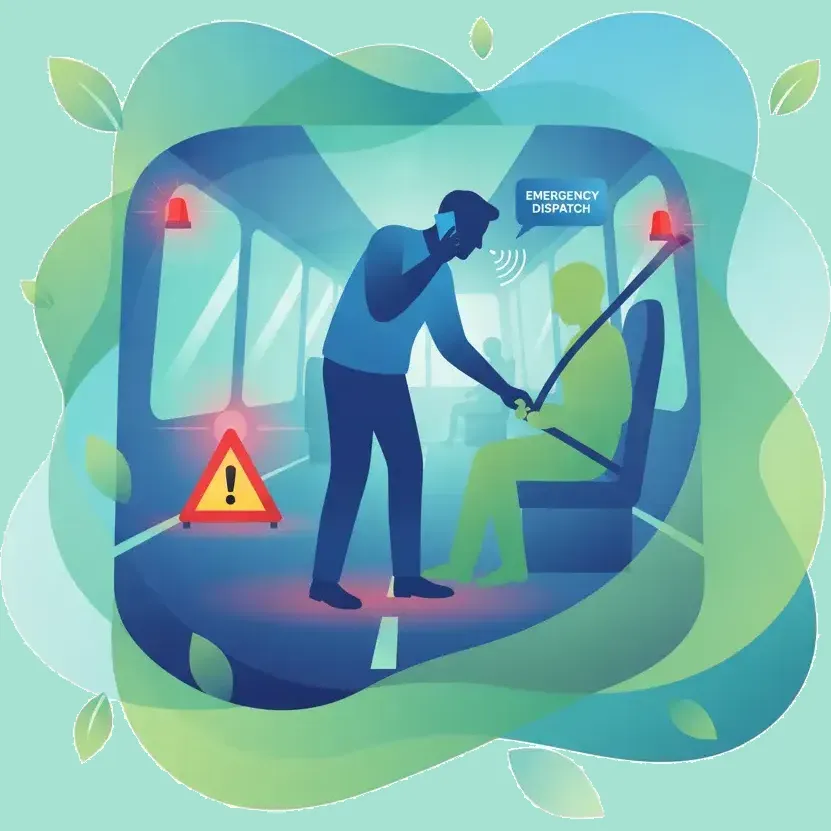
This lesson covers immediate response steps for critical on-board events, including passenger medical emergencies and engine compartment fires. Learners will study the location and proper application of fire extinguishers, safety hammers, and first aid kits. It also explains how to coordinate effectively with French emergency services (SAMU, Fire Brigade) and reassure passengers to maintain calm during an incident.

This lesson details the emergency protocols for handling mechanical breakdowns or tire blowouts on public highways and motorways. Drivers will learn how to park the vehicle in the safest possible location, activate hazard warning lights, and deploy the reflective warning triangle. It teaches precise commands and steps for evacuating passengers quickly through safety exits, positioning them behind protective guardrails.

In this lesson, learners will be equipped with the essential steps to take in the event of an emergency involving their goods vehicle, such as accidents, spills, or fires. The content covers the correct usage of the European emergency number 112, immediate safety measures to protect the scene, and the required use of driver emergency equipment like fire extinguishers and spill kits. Additionally, the lesson details the obligatory reporting processes, documentation of incidents, and cooperation with emergency services and law enforcement.
This lesson outlines the core operational roles that drivers must perform, from ensuring safe passenger boarding to maintaining precise vehicle control throughout the journey. It details the active risk assessments required to identify hazards on the road and handle unexpected delays safely. Additionally, candidates will understand the specific procedures for reporting accidents and communicating effectively with both passengers and operations hubs.

In this lesson, drivers will learn the essential steps to take following an accident involving a goods vehicle. The content covers contacting emergency services via 112, providing first aid, and safely positioning the vehicle to protect other road users. Learners will be instructed on documenting the incident, notifying insurance providers, and fulfilling legal obligations for accident reporting, including gathering witness statements.

This lesson provides step-by-step instructions for utilizing vehicle accessibility systems, including wheelchair ramps, lifts, and specialized tie-down restraints. Drivers will study French regulatory frameworks mandating equal access to public transport services for all individuals. Crucially, the lesson covers respectful, safe, and efficient communication methods for guiding passengers with sensory, physical, or cognitive impairments.
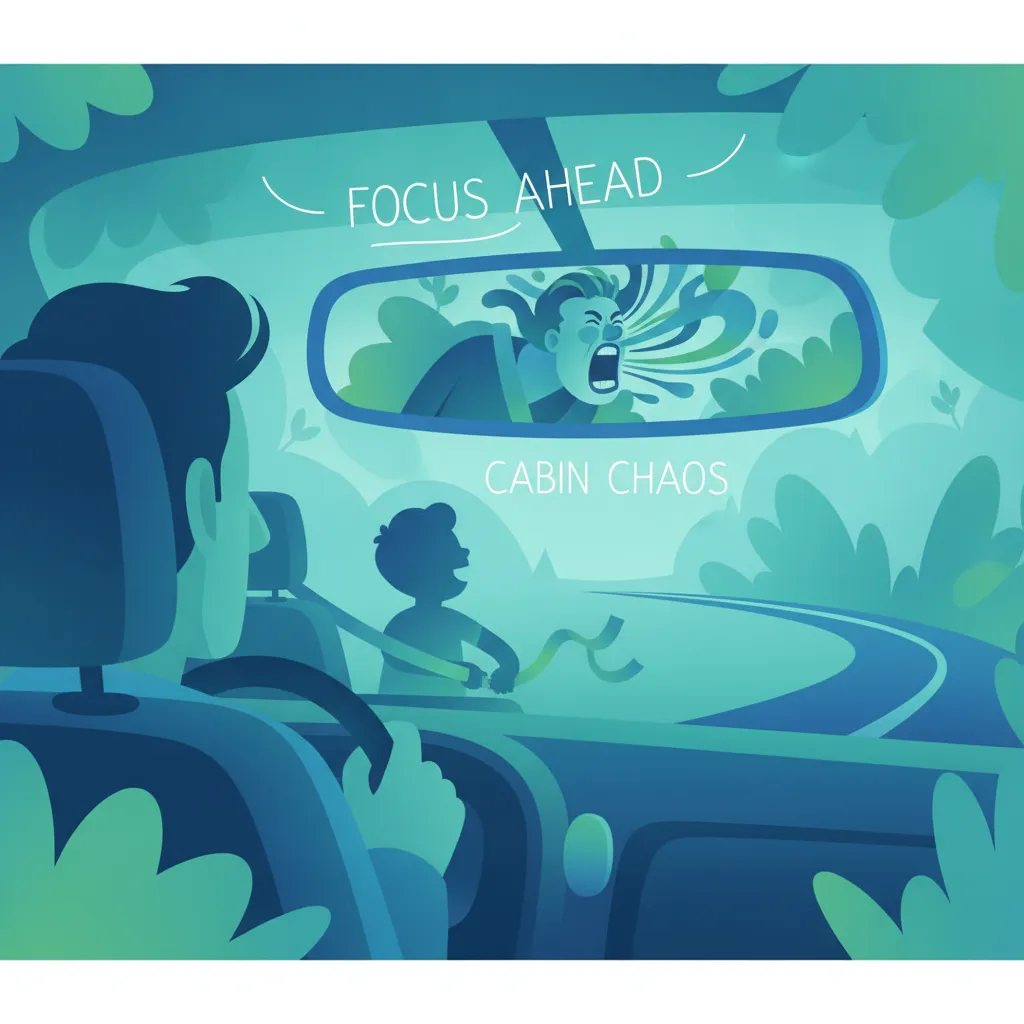
This lesson focuses on techniques for monitoring and managing passenger behavior to maintain a calm and safe environment during transit. Drivers will learn how to enforce seatbelt rules, manage noise levels, and de-escalate verbal conflicts between passengers. Proactive safety announcements and a confident, polite professional demeanor are highlighted as key tools to prevent behavioral issues before they compromise road safety.
This lesson covers the preparation and execution of long-distance intercity coach services (such as "Macron buses" in France). Drivers will learn to integrate European Union social regulations on driving limits and mandatory rest breaks into their journey planning. Strategies for checking weather reports, tracking fuel consumption, and monitoring passenger comfort during long transit times are fully explained.
This lesson covers the rules of driving passenger vehicles on high-speed French motorways (autoroutes). Learners will study entry-ramp merging protocols, lane restrictions for vehicles over 3.5 tonnes, and motorway-specific speed limits. The lesson also highlights the correct use of toll booths (péages), emergency hard-shoulder safety procedures, and accessing dedicated coach rest areas.

This lesson examines the flow of passengers entering and exiting the vehicle and how to organize this movement to reduce stop delays safely. Drivers will study the operation of door safety interlocks, sensitive edges, and onboard monitoring cameras to prevent boarding accidents. It also covers coordinating priority boarding for elderly, pregnant, or injured passengers in a polite and structured manner.
Find clear answers to common questions learners have about Documentation and Regulatory Compliance. Learn how the lesson is structured, which driving theory objectives it supports, and how it fits into the overall learning path of units and curriculum progression in France. These explanations help you understand key concepts, lesson flow, and exam focused study goals.
Failing to present required documents like transport permits or valid logbooks can lead to significant fines and potential suspension of transport activities. In the exam, always prioritize immediate access to these documents.
Yes, the chronotachygraphe (or digital tachograph) is a mandatory legal device that records driving times and rest periods. It is subject to strict verification by authorities.
Yes, for commercial passenger transport, having an accurate and updated manifest is a strict legal requirement to ensure passenger safety and regulatory adherence.
The exam often uses scenario-based questions where you must identify the correct action to take during a routine check or determine if a vehicle is legally prepared for departure.
Ready to focus your study? Use the practice search to find exactly the French driving theory questions you need for the Code de la route and permis de conduire ETG. Refine your knowledge on specific topics or challenging rules to boost your confidence and exam readiness.