
This lesson explores the critical relationship between vehicle mass, weight distribution, and road safety for heavy goods vehicles. You will learn how to interpret French weight regulations and implement proper loading techniques to ensure your vehicle remains stable and compliant with the Code de la route.

Lesson content overview
Operating a heavy goods vehicle (HGV) in France requires a deep understanding of weight regulations, vehicle physics, and load dynamics. Whether you are driving a rigid vehicle (Category C) or an articulated combination (Category CE), compliance with weight limits is not just a administrative chore—it is a critical safety practice.
Exceeding weight limits or failing to distribute cargo properly damages road infrastructure, accelerates mechanical wear, and fundamentally alters the vehicle’s handling, steering, and braking performance. This lesson details the regulatory framework of the French Code de la route, the physical principles of axle loading, and the practical methods for ensuring your vehicle remains safe and compliant.
To operate legally and safely under French transport law, you must master the standard weight classifications and acronyms used on vehicle registration certificates (Certificat d'immatriculation, historically known as the Carte Grise).
The Poids à Vide (PV) is the weight of the vehicle in running order without any cargo or passengers. This includes the chassis, the bodywork, all mechanical fluids (such as coolant and engine oil), a standard fuel tank (typically filled to 90% capacity), and the tools required for basic maintenance.
The Poids Total Autorisé en Charge (PTAC)—increasingly referred to in European legislation as Masse Maximale Autorisée (MMA)—is the maximum permissible weight of a single vehicle when fully loaded. This limit is defined by the vehicle manufacturer and certified by the regulatory authorities. It represents the absolute legal and physical threshold for the combined weight of:
The PTAC must never be exceeded under any circumstances. It determines the vehicle's classification, which directly influences driver licensing requirements, access routes, and toll rates.
For Category CE drivers, the Poids Total Roulant Autorisé (PTRA) is a critical metric. This is the maximum permissible total weight of a vehicle combination—typically a tractor unit (tracteur routier) and a semi-trailer (semi-remorque), or a rigid truck towing a trailer. It represents the absolute maximum weight of the towing vehicle, the towed vehicle, and their respective loads combined.
The Charge Utile (CU) is the maximum weight of cargo that a vehicle can legally carry. It is calculated using a simple formula:
Any calculations regarding cargo load must factor in the weight of securing equipment (such as straps, chains, and timber dunnage), which counts as part of the payload.
The French Code de la route (specifically Article R312-4) establishes general limits on the weights of vehicles allowed to operate on public roads. These regulations are designed to protect the integrity of the road network and prevent catastrophic bridge failures.
While specific exceptions exist for specialized transport, the standard limits for heavy goods vehicles in France are structured as follows:
While the total gross weight (PTAC or PTRA) is highly visible, the distribution of that weight across individual axles is equally critical. The Charge Maximale par Essieu (CME) defines the maximum static weight that can be supported by a single axle or group of axles.
An HGV can be well below its total legal PTAC and still be operating illegally if a single axle is overloaded.
The damage caused to road pavements by vehicle axles increases exponentially with the weight on those axles. Road engineers use the Fourth Power Law to estimate road wear. This physical principle states that if you double the load on an axle, the wear on the road surface increases by a factor of sixteen ().
By enforcing strict CME standards, French authorities preserve the longevity of asphalt, concrete, and bridge joints, saving millions of euros in infrastructure repairs.
Under Article R312-5 and R312-6 of the French Code de la route, the legal limits depend on whether the axle is a driving axle (connected to the engine transmission) or a carrying/steering axle:
Understanding how cargo placement affects the handling of an HGV is a foundational skill for professional drivers. Incorrect load distribution alters the vehicle's center of gravity and changes its dynamic behavior during steering, braking, and cornering.
To maintain optimal handling, cargo should be distributed according to the vehicle's design ratios. For a typical rigid truck, a standard rule of thumb is the 40/60 distribution ratio: approximately 40% of the payload weight should rest on the front axle, and 60% should rest on the rear axle group.
If cargo is placed too far forward, excessive weight is transferred to the steering axle:
If cargo is placed too far back, or if a semi-trailer is loaded heavily at the rear, the weight on the front steering axle is reduced too much (known as the "teeter-totter" effect):
Cargo must always be centered laterally (from left to right). Placing heavy machinery or pallets on one side of the cargo bed shifts the center of gravity away from the longitudinal centerline.
Overloading is defined as exceeding either the vehicle's legal PTAC/PTRA or any single CME. It represents a direct threat to the mechanical integrity of the vehicle.
The kinetic energy () of a moving vehicle is directly proportional to its mass () and the square of its velocity ():
When you double the weight of a vehicle, you double the kinetic energy that the braking system must convert into heat to bring the vehicle to a stop. Overloaded vehicles suffer from:
When navigating hilly terrain, gravity constantly acts on the vehicle's mass. This creates dynamic weight transfers that do not occur when parked on a flat weighbridge.
                  ▲ Dynamic Weight Transfer
                 /  (Downhill: Heavy load shifts forward)
                /
    +----------+--+
    |  [Cargo]    |      =======>  Direction of Travel (Downhill)
  O O             O
=====================\
                      \  Slope (Gradient)
                       \
The French State strictly enforces weight limits through both fixed infrastructure and mobile enforcement units (Contrôles routiers).
Enforcement authorities utilize several methods to detect overloaded vehicles:
In France, overloading is classified as a class 4 contravention (contravention de 4e classe).
To ensure compliance and maximum safety before departing on any transport run, follow this structured checklist:
Check the paperwork: Verify the vehicle's PTAC/PTRA on the registration certificate and compare it against the shipping manifest (consignment note / lettre de voiture).
Calculate the payload margin: Subtract the vehicle's unladen weight (PV) from the PTAC to ensure the cargo weight does not exceed the legal payload capacity.
Inspect cargo positioning: Ensure heavy cargo is centered laterally and distributed longitudinally according to the vehicle's axle limits (e.g., placing the heaviest pallets directly over the rear drive axles rather than at the very rear of the trailer).
Account for secondary weights: Factor in the weight of fuel (up to several hundred kilograms for large dual tanks), passengers, and heavy cargo-securing systems (such as steel chains or heavy wooden dunnage).
Secure the load against shift: Use high-tensile lashing straps or chains to prevent cargo from sliding during transit. A shifting load can instantly overload an axle during hard braking or cornering.
Understanding weight limits and axle distribution is a core competency of professional driving.
This lesson covers the essential French weight regulations for heavy goods vehicles, distinguishing between total weight limits (PTAC/PTRA) and individual axle load limits (CME), and explaining how these legal thresholds protect both road infrastructure and vehicle safety. Learners must understand that exceeding PTAC or PTRA, or overloading any single axle, constitutes a class 4 contravention in France with progressive fines and potential immobilization. The physics of load distribution—particularly the 40/60 front-to-rear ratio for rigid trucks and the dangerous consequences of front or rear overload on steering, traction, and braking—form the practical safety core of this lesson, along with the critical reminder that dynamic weight shifts on slopes can create axle overloads not visible on static weighbridges.
A short set of high-value points that capture the most important learning from this lesson.
PTAC (Poids Total Autorisé en Charge) is the absolute maximum weight for a single vehicle, while PTRA applies to vehicle combinations; neither can ever be exceeded.
Axle load limits (CME) are independent of total weight limits—a vehicle can be legal on PTAC but illegal if a single axle exceeds its permitted weight.
The Fourth Power Law means doubling axle load causes sixteen times more road surface damage, making CME enforcement critical for infrastructure protection.
Proper load distribution (approximately 40/60 front-to-rear for rigid trucks) maintains steering control, traction, and braking efficiency.
Dynamic weight shifts on hills and during braking can overload axles that appear legal when the vehicle is stationary on a weighbridge.
Explore all units and lessons included in this driving theory course.
Two-axle rigid vehicles max out at 19T PTAC, three-axle at 26T, four-axle at 32T; articulated combinations range from 38T to 44T PTRA.
Single non-drive axles are limited to 10T, single drive axles to 13T (some routes 11.5T), tandem groups to 11.5–20T, and tri-axle groups to 21–24T depending on spacing.
Charge Utile (CU) = PTAC minus PV (unladen weight), and securing equipment like straps and dunnage count toward the payload.
Front axle overload causes steering strain and tire blowouts; rear axle overload causes loss of steering grip and traction issues.
Overload exceeding 5% of legal limits triggers immediate vehicle immobilization in France.
Assuming that if total vehicle weight is legal, all axle weights must also be legal—axle-specific overloads are common with poor cargo placement.
Forgetting to include the weight of lashing straps, chains, timber dunnage, and fuel when calculating whether cargo exceeds the Charge Utile.
Believing static weighbridge readings fully represent road conditions—dynamic load shifts on hills can create overloads not shown on a stationary weighbridge.
Confusing PTAC (single vehicle maximum) with PTRA (combination maximum), which leads to calculation errors for articulated trucks.
Placing heavy cargo at the extreme rear of a semi-trailer assuming it will balance, when it actually unloads the steering axle and causes dangerous understeer.
Lesson content overview
A short set of high-value points that capture the most important learning from this lesson.
PTAC (Poids Total Autorisé en Charge) is the absolute maximum weight for a single vehicle, while PTRA applies to vehicle combinations; neither can ever be exceeded.
Axle load limits (CME) are independent of total weight limits—a vehicle can be legal on PTAC but illegal if a single axle exceeds its permitted weight.
The Fourth Power Law means doubling axle load causes sixteen times more road surface damage, making CME enforcement critical for infrastructure protection.
Proper load distribution (approximately 40/60 front-to-rear for rigid trucks) maintains steering control, traction, and braking efficiency.
Dynamic weight shifts on hills and during braking can overload axles that appear legal when the vehicle is stationary on a weighbridge.
Explore all units and lessons included in this driving theory course.
Two-axle rigid vehicles max out at 19T PTAC, three-axle at 26T, four-axle at 32T; articulated combinations range from 38T to 44T PTRA.
Single non-drive axles are limited to 10T, single drive axles to 13T (some routes 11.5T), tandem groups to 11.5–20T, and tri-axle groups to 21–24T depending on spacing.
Charge Utile (CU) = PTAC minus PV (unladen weight), and securing equipment like straps and dunnage count toward the payload.
Front axle overload causes steering strain and tire blowouts; rear axle overload causes loss of steering grip and traction issues.
Overload exceeding 5% of legal limits triggers immediate vehicle immobilization in France.
Assuming that if total vehicle weight is legal, all axle weights must also be legal—axle-specific overloads are common with poor cargo placement.
Forgetting to include the weight of lashing straps, chains, timber dunnage, and fuel when calculating whether cargo exceeds the Charge Utile.
Believing static weighbridge readings fully represent road conditions—dynamic load shifts on hills can create overloads not shown on a stationary weighbridge.
Confusing PTAC (single vehicle maximum) with PTRA (combination maximum), which leads to calculation errors for articulated trucks.
Placing heavy cargo at the extreme rear of a semi-trailer assuming it will balance, when it actually unloads the steering axle and causes dangerous understeer.
Explore search topics learners often look for when studying Weight Limits and Axle Load Distribution. These topics reflect common questions about road rules, driving situations, safety guidance, and lesson level theory preparation for learners in France.
Browse additional driving theory lessons that cover connected traffic rules, road signs, and common driving situations related to this topic. Improve your understanding of how different rules interact across everyday traffic scenarios.
Understand the criteria for selecting safe and compliant routes for heavy vehicles, including how to navigate urban delivery zones while respecting weight, dimension, and environmental restrictions. This guide covers the practical application of road signage and access policies for professional drivers operating within the French transport network.
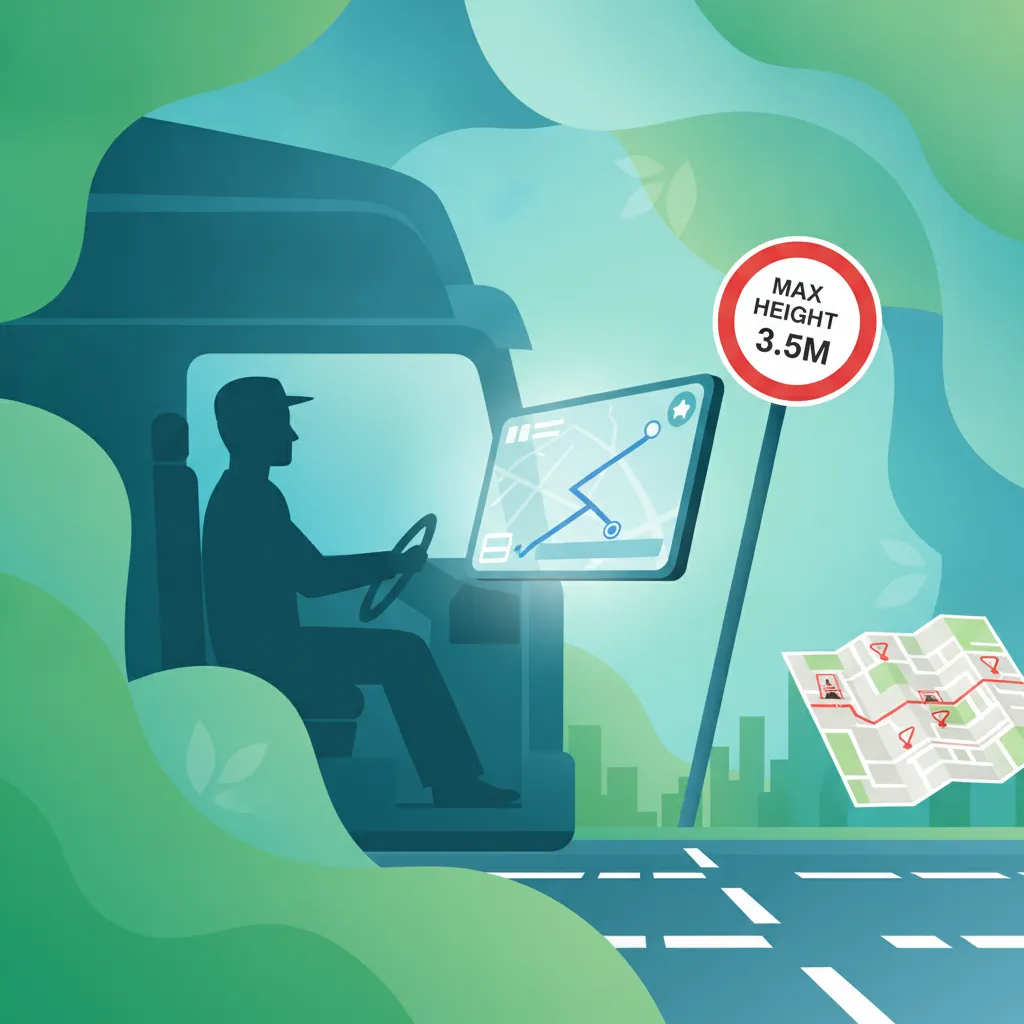
This lesson provides guidance on selecting preferred routes for heavy vehicles, taking into account freight corridors, toll roads, and restricted zones. Learners will be introduced to practical tools for route optimization, including GPS systems tailored for goods vehicles, and strategies for minimizing travel time while adhering to legal constraints. Emphasis is placed on balancing delivery efficiency with compliance to French transport policies.
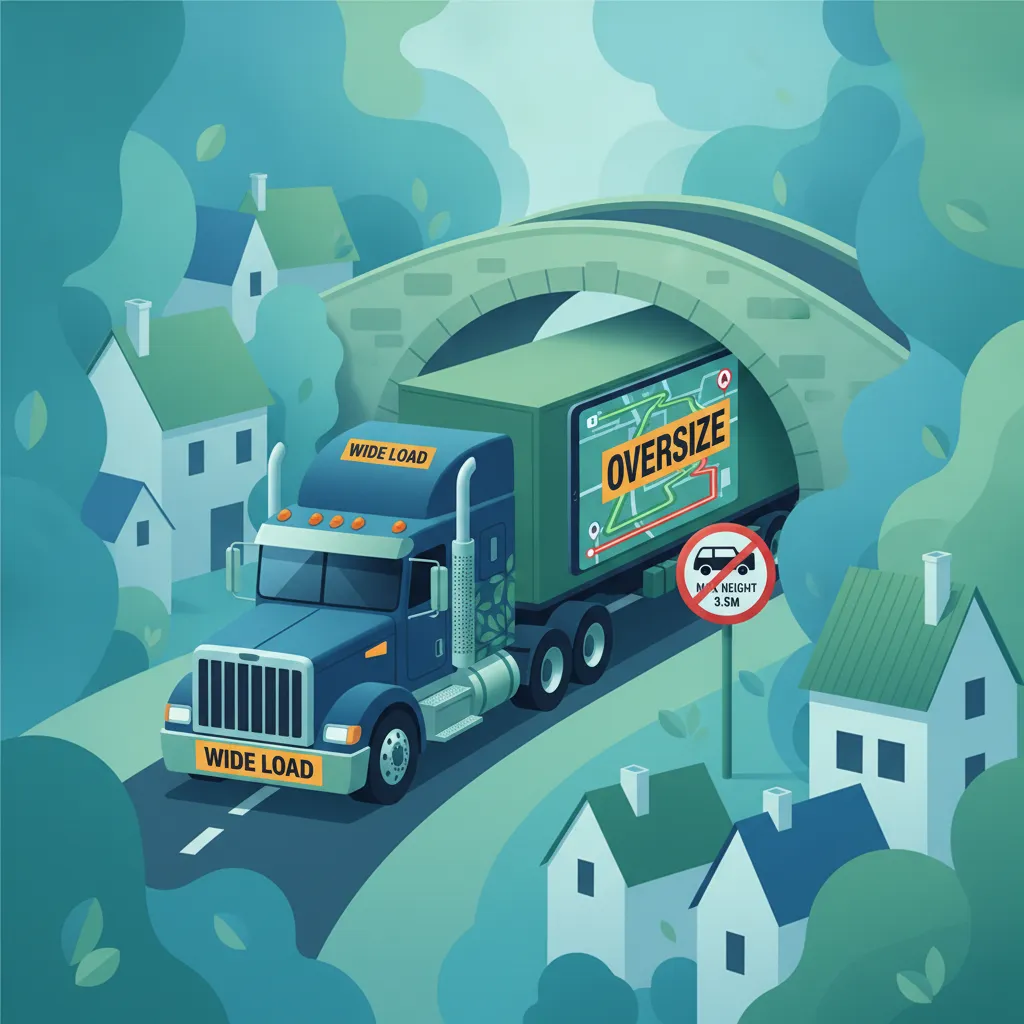
This lesson provides strategies for planning routes that accommodate oversized goods vehicles while complying with French road restrictions. Learners will learn how to identify prohibited routes, evaluate bridge and tunnel limitations, and obtain necessary access permits. The content also addresses the use of specialised GPS systems for heavy vehicle routing and the importance of contingency planning for detours, ensuring safe and efficient transport operations.
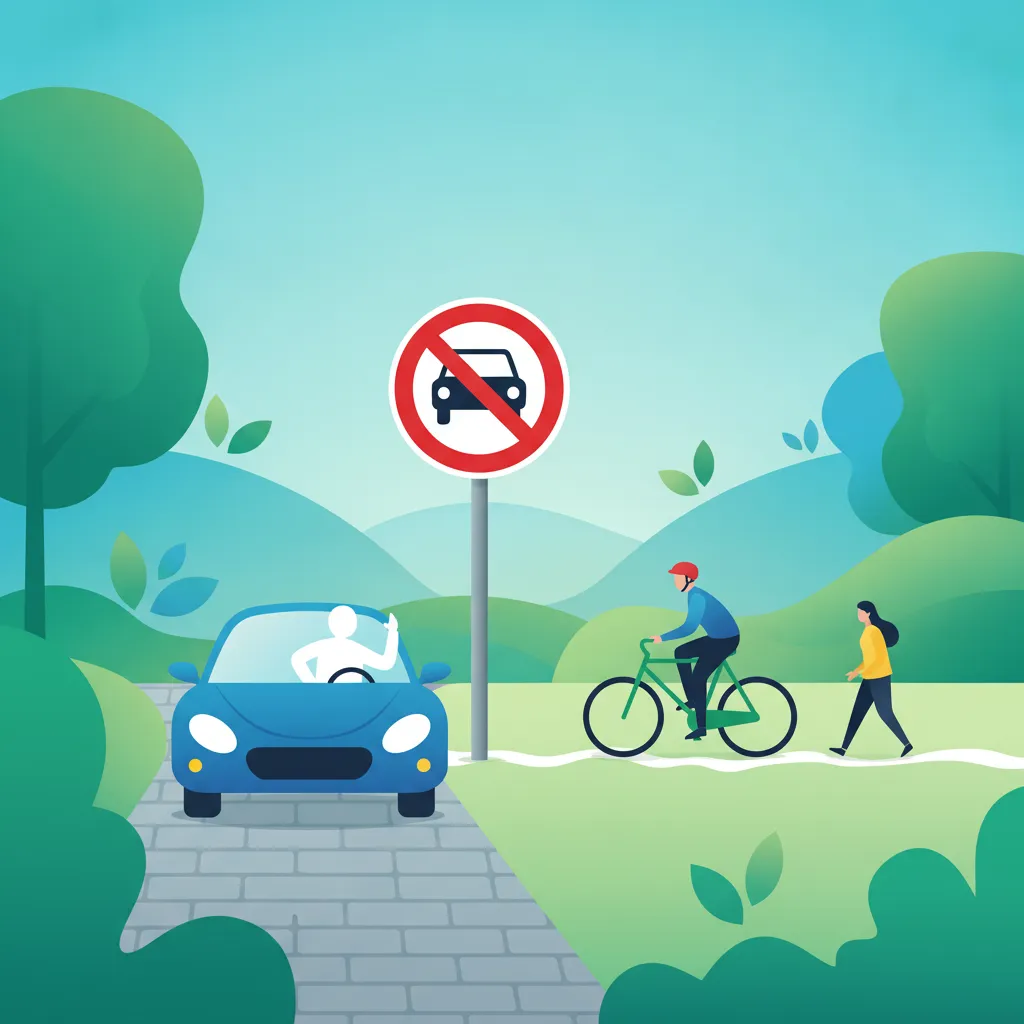
In this lesson, learners will explore the various access restrictions that apply to goods vehicles in France, such as low emission zones and weight-restricted areas. The focus is on understanding the process to obtain necessary access permits and authorisations, and how these restrictions influence route planning and operational decisions. Learners will also be introduced to specific regulations governing vehicle entry into city centres and environmentally sensitive zones.
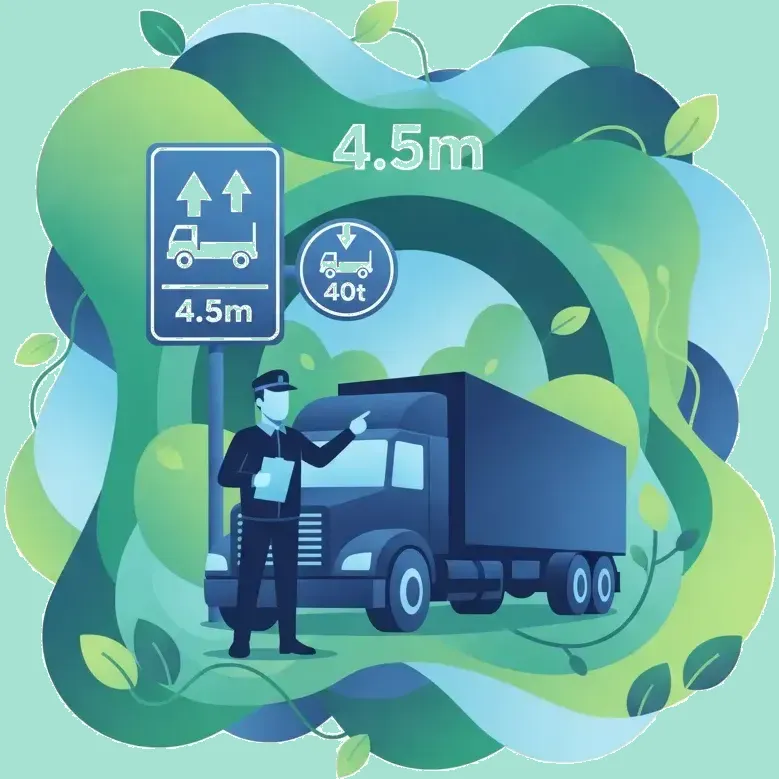
This lesson focuses on the weight and dimension restrictions that goods vehicles must adhere to while traveling on French roads. Learners will understand bridge caps, tunnel clearances, and other physical limitations imposed by infrastructure, and how these restrictions impact route planning and vehicle loading. The content also highlights legal load limits and the importance of compliance checks to avoid fines and roadblocks.

In this lesson, drivers will learn how to plan and execute wide turns with goods vehicles, taking into account turning radius, pivot points, and articulation angles. The content emphasizes the necessity of using the full width of the lane, correctly aligning the vehicle through the turn, and anticipating the movement of the trailer. Learners will also explore road marking guidelines for turning and the importance of giving clear signals to surrounding traffic.
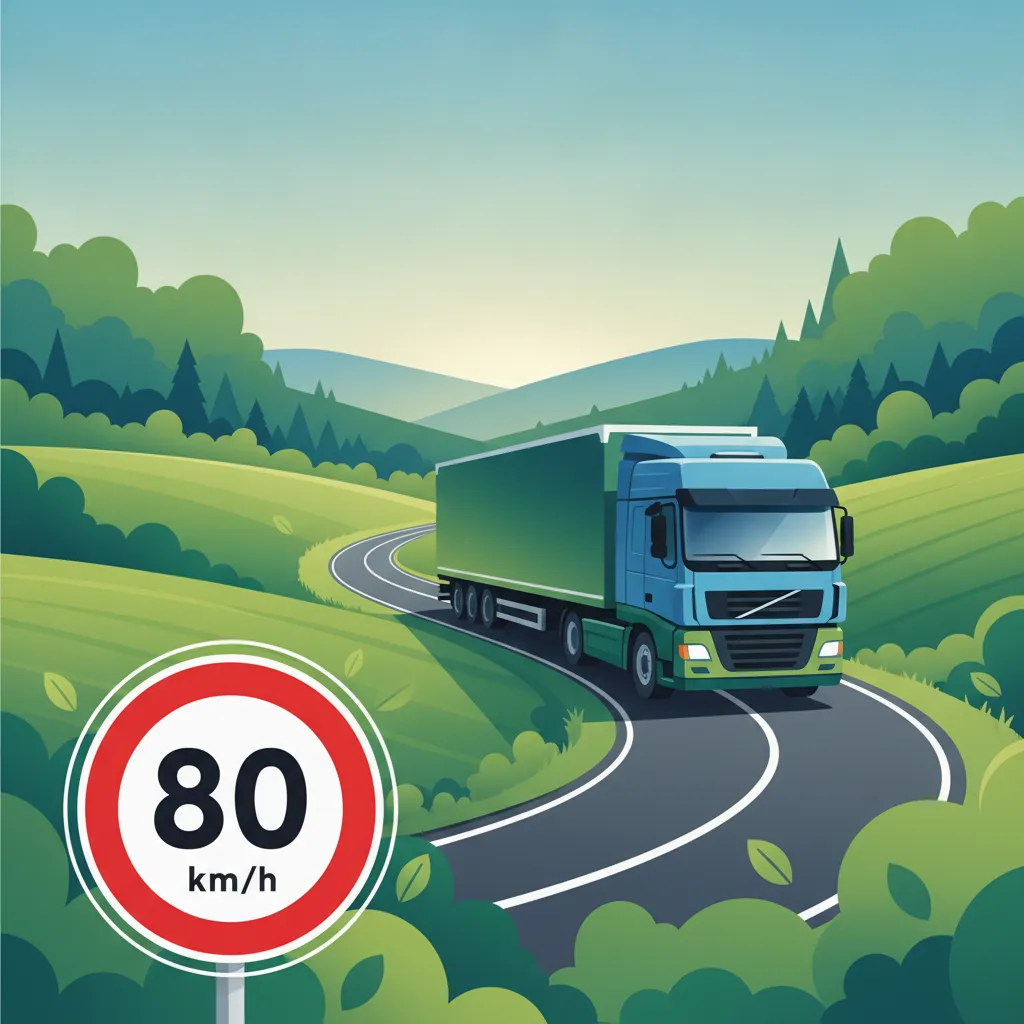
In this lesson, drivers will learn the specific speed limits that apply to goods vehicles across different road types in France, including urban areas, rural roads, and motorways. The content covers the differences between speed limit signs for heavy vehicles and standard passenger cars, the legal basis for these limits, and the importance of speed adaptation based on vehicle category and load. Learners will also be introduced to speed enforcement methods used in France, such as radar and speed cameras.

This lesson examines how goods vehicle drivers should approach and navigate roadworks zones and temporary traffic restrictions. Learners will be taught to recognize temporary speed limit signs, follow detour routes safely, and respect lane closures. The content also highlights the importance of maintaining safe distances from workers, adjusting for reduced lane width, and ensuring compliance with temporary regulations to avoid penalties.
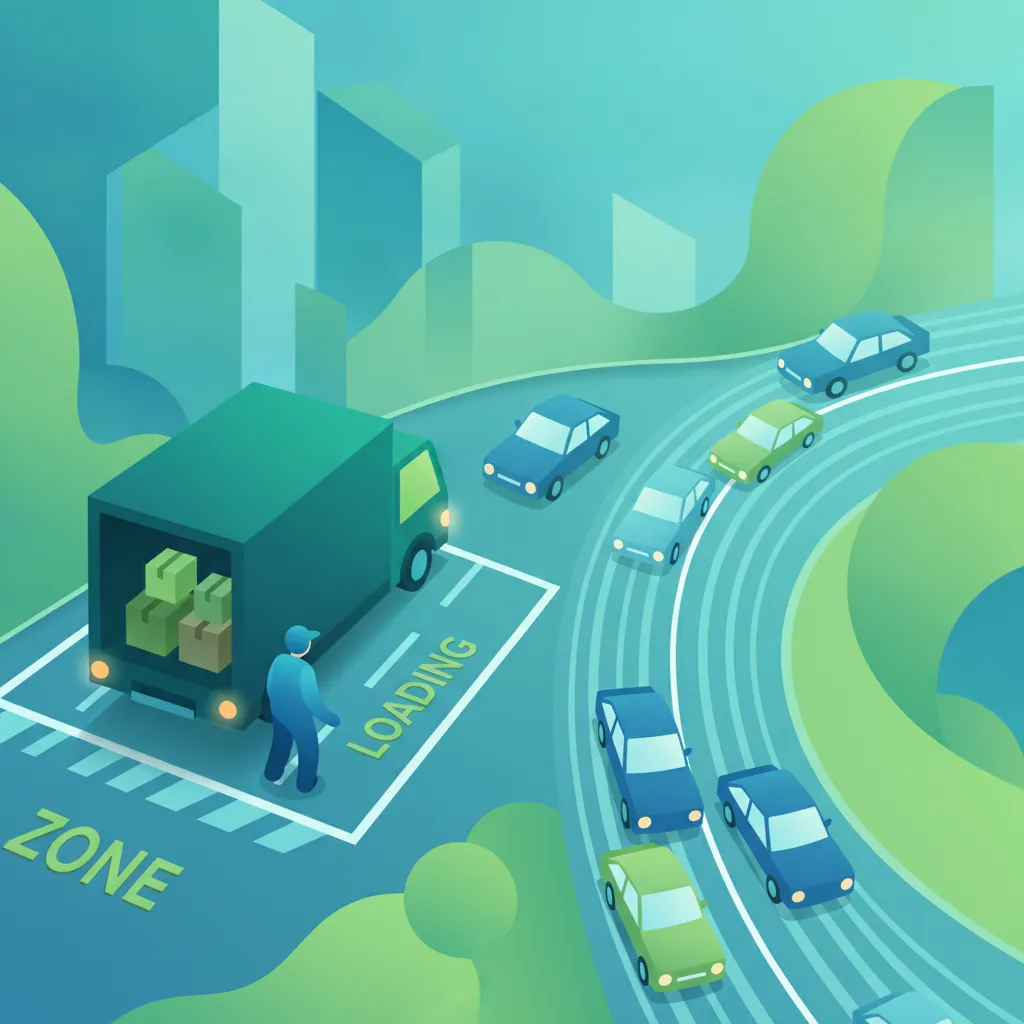
In this lesson, drivers will learn how to navigate urban delivery zones, understanding the rules surrounding loading bays, time windows, and restricted access areas. The content includes the process for obtaining delivery permits, strategies for safe maneuvering in congested city streets, and best practices for minimizing impact on pedestrian traffic. Learners will also be introduced to French city-specific regulations that govern goods vehicle deliveries.
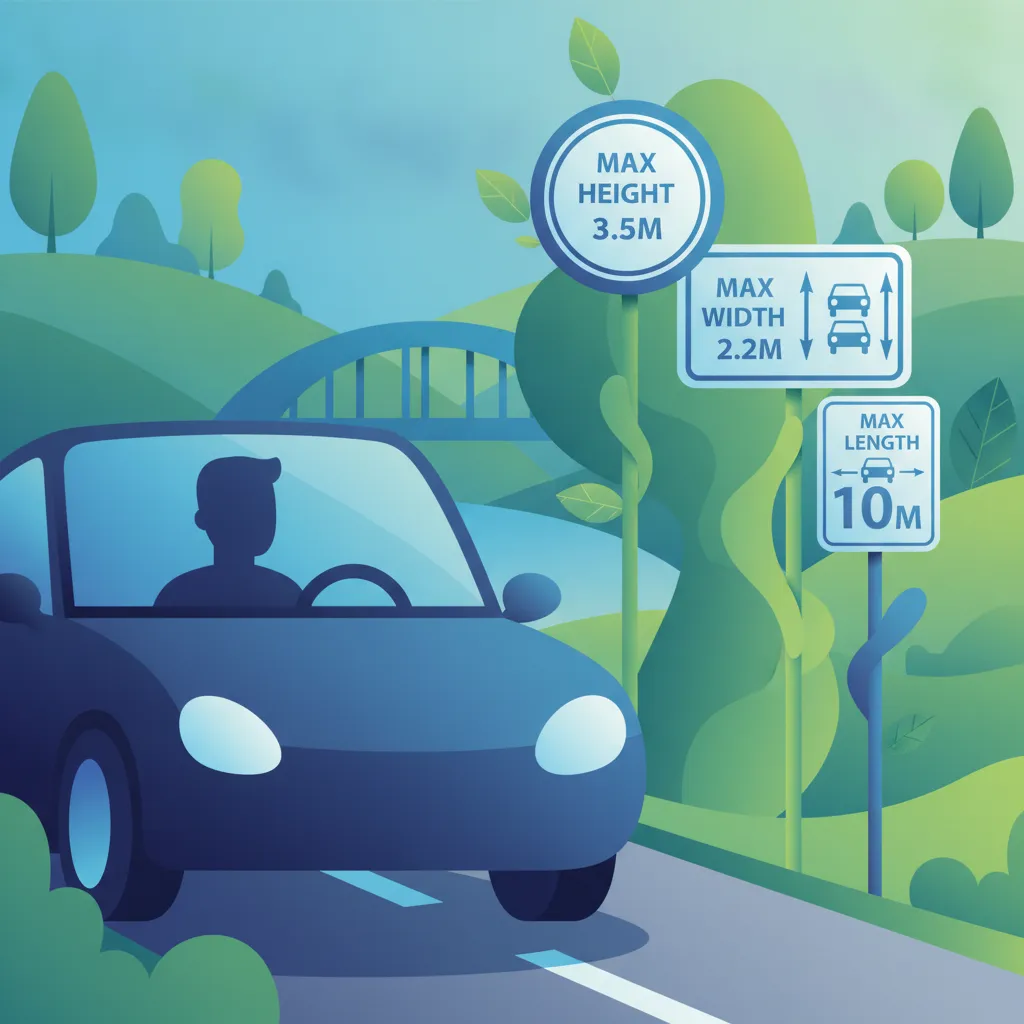
This lesson provides an in-depth analysis of how goods vehicles are classified according to their overall dimensions, such as length, width, height, and wheelbase. Learners will understand the legal limits imposed by French regulations for each vehicle class, and how these dimensions affect the vehicle’s classification and permissible routes. The material also explains the impact of cab size versus cargo space on maneuverability and route planning, highlighting the importance of accurate dimension assessment.
Learn the physical principles behind load distribution, center of gravity, and rollover risks for heavy goods vehicles. This lesson explains how to secure cargo effectively to maintain vehicle stability and prevent hazardous shifts during transit, ensuring your driving practices align with safety standards for professional transport in France.

In this lesson, learners explore the fundamental principles governing load distribution in goods vehicles, focusing on how cargo placement affects the centre of gravity and overall vehicle stability. The content emphasizes the importance of achieving longitudinal and lateral balance to prevent adverse vehicle dynamics such as excessive sway or unintended pivoting. By understanding weight transfer phenomena and the impact of cargo positioning on the vehicle’s pivot point, drivers can make informed decisions to ensure safe loading.

In this lesson, drivers will learn about the relationship between a vehicle’s centre of gravity and its susceptibility to rollover incidents. The content covers how high-center-of-gravity loads, load shifts, and overloading can compromise lateral stability, especially during cornering or evasive maneuvers. Learners will gain insight into calculating safety margins and understanding the impact of cargo weight distribution on the overall stability of the vehicle.
Find clear answers to common questions learners have about Weight Limits and Axle Load Distribution. Learn how the lesson is structured, which driving theory objectives it supports, and how it fits into the overall learning path of units and curriculum progression in France. These explanations help you understand key concepts, lesson flow, and exam focused study goals.
Even if your total gross vehicle weight is legal, uneven load distribution can put excessive stress on a single axle or the road surface. This imbalance significantly affects steering, braking efficiency, and vehicle stability, increasing the risk of accidents.
Exceeding an individual axle limit is still a legal violation and a safety hazard. It can cause premature mechanical failure, such as tyre bursts, and lead to fines or being prohibited from continuing your journey until the load is correctly redistributed.
A high centre of gravity, caused by placing heavy items at the top of the load, makes the vehicle unstable in turns. Proper loading involves placing heavy cargo as low as possible and centered over the axles to maintain the vehicle's balance and prevent tipping.
The theory exam primarily focuses on understanding the rules, the risks of non-compliance, and the impact of weight on road wear and safety. Expect questions that test your ability to identify dangerous loading practices rather than complex math.
Ready to focus your study? Use the practice search to find exactly the French driving theory questions you need for the Code de la route and permis de conduire ETG. Refine your knowledge on specific topics or challenging rules to boost your confidence and exam readiness.