
This lesson introduces the core physics of weight distribution for heavy goods vehicles, including C, C1, CE, and C1E categories. You will learn how cargo placement directly influences vehicle stability, steering, and braking performance, which is essential for your professional driving theory exam and safe operation on French roads.

Lesson content overview
Operating heavy goods vehicles (HGVs) under the French Code de la route requires a sophisticated understanding of physical forces, structural limitations, and vehicle dynamics. Loading a vehicle is not merely a matter of fitting cargo into the available space; it is a critical safety task that dictates how the vehicle handles, stops, and corners.
In this lesson, we will explore the fundamental principles of load distribution (répartition des charges) for rigid trucks (Category C) and articulated vehicles (Category CE). We will study how cargo placement alters the vehicle's centre of gravity, how longitudinal and lateral balance affect handling, and how dynamic weight transfer impacts braking and steering.
The Centre of Gravity (CoG)—referred to in French as the Centre de Gravité (CdG)—is the theoretical point at which the entire concentrated mass of the vehicle and its cargo behaves as if it were a single point. Every movement the vehicle makes, whether braking, accelerating, or turning, revolves around this point.
When loading a goods vehicle, you must manage the CoG across three distinct planes:
The Rollover Threshold: As a vehicle enters a bend, centrifugal force pushes the vehicle outward. If the vertical CoG is too high, this force will easily overcome the stabilizing weight on the inside tyres, causing the vehicle to tip over even at speeds well below the posted limit. Keep heavy cargo as low as possible.
Longitudinal balance refers to the even distribution of cargo weight along the length of the vehicle, ensuring that neither the front steering axle nor the rear driving/trailer axles are overloaded or underloaded.
A dangerous dynamic state where excessive cargo weight placed at the far rear of the vehicle acts as a lever over the rear axle, lifting weight off the front steering axle and reducing tyre adhesion.
Placing heavy cargo exclusively at the rear of the cargo area or trailer bed causes several severe safety hazards:
Conversely, placing excessive weight too far forward causes its own set of critical handling failures:
Lateral balance represents the symmetrical distribution of weight across the left and right sides of the vehicle. Symmetrical loading is essential for maintaining predictable handling characteristics during cornering and avoiding uneven component wear.
When a vehicle corners, weight transfers laterally to the outside wheels. If the cargo is loaded heavily to one side (e.g., the left side), the vehicle starts with an inherent lateral bias.
When cornering to the right, the centrifugal force and the pre-existing left-side weight bias combine to create an extreme roll moment. Under these conditions, even low-speed maneuvers can cause a rollover.
Load distribution is not static. When a vehicle is in motion, every driver action—accelerating, braking, or steering—initiates dynamic weight transfer (transfert de charge).
[ Acceleration ]  -->  Weight shifts to the REAR axles
[ Hard Braking ]  -->  Weight shifts to the FRONT axles
[ Left Turn ]     -->  Weight shifts to the RIGHT side
[ Right Turn ]    -->  Weight shifts to the LEFT side
During heavy braking, the vehicle's momentum causes weight to pivot forward around the CoG, overloading the front axle and unloading the rear axle. If the vehicle is already loaded incorrectly:
To assist drivers and transport managers in placing cargo safely, manufacturers provide vehicle-specific load diagrams (abaques de répartition des charges). These charts illustrate the allowable longitudinal zones for cargo based on its weight.
A load diagram typically features:
To load safely, you must locate the intersection of your cargo's weight and its center of physical mass. If this intersection point falls outside the plotted curve, the cargo must be redistributed or rearranged, even if the total weight is below the vehicle's maximum limit.
In France, the Code de la route strictly regulates vehicle weights to protect road infrastructure and ensure public safety. Operating a vehicle that exceeds these limits is a serious offense subject to heavy class 4 or class 5 fines (contraventions), vehicle immobilization, and points deduction from your professional licence.
The maximum weight allowed on individual axles under the French Code de la route (Article R312-4) is designed to minimize road wear:
Check the Vehicle Data Plate: Consult the metal manufacturer's plate (plaque de tare) fixed to the chassis or cab to find the exact PTAC, PTRA, and maximum axle capacities.
Calculate the Total Payload: Ensure the combined weight of the vehicle and the cargo does not exceed the PTAC (for rigid trucks) or PTRA (for combinations).
Assess Axle Weight Distribution: Verify that the cargo's center of mass complies with the load diagram so that no individual axle limit is exceeded.
Confirm Securement: Ensure the cargo is secured using appropriate lashing points to prevent any shifting during transport that could alter this distribution.
Tyre safety is directly linked to load distribution. A perfectly distributed load can still cause tyre failure if the tyres are not rated for the weight or are improperly inflated.
Every commercial vehicle tyre features a tyre load index (indice de charge) on its sidewall. This index is a numerical code indicating the maximum load the tyre can support at the speed indicated by its speed rating.
Example: A tyre marked with a load index of 152 is rated to carry a maximum of 3,550 kg. If a drive axle has four tyres (dual configuration) with this rating, the axle's total tire load capacity is 14,200 kg, which safely accommodates France's 13-tonne single axle legal limit.
When an axle is overloaded or its tyres are under-inflated:
Let us analyze how these principles apply to specific driving scenarios that professional drivers encounter on European and French roads.
Load distribution for French Category C and CE vehicles requires managing the centre of gravity across vertical, longitudinal, and lateral planes, as each dimension directly affects rollover risk, steering response, and braking performance. Longitudinal balance prevents délestage (front axle lift) and traction loss, while lateral symmetry is critical for predictable cornering—uneven side loading dramatically lowers the rollover threshold when combined with centrifugal force. Dynamic weight transfer during acceleration, braking, and steering continuously redistributes the static load, meaning drivers must anticipate these shifts during maneuvers. French regulations set specific axle weight limits (steer axle 8t, drive axle 13t) and require manufacturers' load diagrams to identify safe cargo zones by weight and position.
A short set of high-value points that capture the most important learning from this lesson.
The centre of gravity operates across three planes—vertical, longitudinal, and lateral—each affecting vehicle stability differently and requiring separate management.
Longitudinal balance distributes weight between front steering and rear driving axles; improper balance causes délestage (front axle lift) or overloaded steer axles with dangerous consequences.
Lateral imbalance dramatically increases rollover risk during cornering because the pre-existing weight bias combines with centrifugal force to create extreme roll moment.
Dynamic weight transfer means static load placement is only part of the picture—braking, accelerating, and steering all shift weight between axles and sides in predictable ways.
Manufacturer load diagrams define safe cargo zones by weight and position; exceeding the permissible loading curve is unsafe even if total weight stays below PTAC.
Explore all units and lessons included in this driving theory course.
France's single steer axle limit is 8 tonnes, drive axle is 13 tonnes, with tandem axle limits varying by suspension type (11.5–20 tonnes).
A high vertical CoG dramatically lowers the rollover threshold—always keep heavy cargo as low as possible.
Rear-heavy loading reduces weight on the front steering axle (délestage), causing loss of steering precision and potential trailer sway at motorway speeds.
Tyre load index codes translate to maximum weight capacity—ensure combined axle tyre ratings exceed French axle weight limits.
PTAC is the maximum weight of a single vehicle; PTRA is the maximum weight of a tractor-trailer combination—both must be respected separately.
Assuming total weight below PTAC means safe loading, ignoring that cargo position on the chassis also determines whether axle limits are respected.
Underestimating how a high vertical CoG from stacked cargo makes a vehicle susceptible to rollover even at posted speed limits on roundabouts.
Misinterpreting load diagram boundaries—the shaded curve represents the safe loading envelope, and points outside it require cargo redistribution.
Believing that once the vehicle is loaded, stability is static; failing to account for dynamic weight transfer during braking or cornering can be fatal.
Confusing PTAC and PTRA—the single vehicle weight limit does not apply to a tractor-trailer combination's total mass.
Lesson content overview
A short set of high-value points that capture the most important learning from this lesson.
The centre of gravity operates across three planes—vertical, longitudinal, and lateral—each affecting vehicle stability differently and requiring separate management.
Longitudinal balance distributes weight between front steering and rear driving axles; improper balance causes délestage (front axle lift) or overloaded steer axles with dangerous consequences.
Lateral imbalance dramatically increases rollover risk during cornering because the pre-existing weight bias combines with centrifugal force to create extreme roll moment.
Dynamic weight transfer means static load placement is only part of the picture—braking, accelerating, and steering all shift weight between axles and sides in predictable ways.
Manufacturer load diagrams define safe cargo zones by weight and position; exceeding the permissible loading curve is unsafe even if total weight stays below PTAC.
Explore all units and lessons included in this driving theory course.
France's single steer axle limit is 8 tonnes, drive axle is 13 tonnes, with tandem axle limits varying by suspension type (11.5–20 tonnes).
A high vertical CoG dramatically lowers the rollover threshold—always keep heavy cargo as low as possible.
Rear-heavy loading reduces weight on the front steering axle (délestage), causing loss of steering precision and potential trailer sway at motorway speeds.
Tyre load index codes translate to maximum weight capacity—ensure combined axle tyre ratings exceed French axle weight limits.
PTAC is the maximum weight of a single vehicle; PTRA is the maximum weight of a tractor-trailer combination—both must be respected separately.
Assuming total weight below PTAC means safe loading, ignoring that cargo position on the chassis also determines whether axle limits are respected.
Underestimating how a high vertical CoG from stacked cargo makes a vehicle susceptible to rollover even at posted speed limits on roundabouts.
Misinterpreting load diagram boundaries—the shaded curve represents the safe loading envelope, and points outside it require cargo redistribution.
Believing that once the vehicle is loaded, stability is static; failing to account for dynamic weight transfer during braking or cornering can be fatal.
Confusing PTAC and PTRA—the single vehicle weight limit does not apply to a tractor-trailer combination's total mass.
Explore search topics learners often look for when studying Principles of Load Distribution. These topics reflect common questions about road rules, driving situations, safety guidance, and lesson level theory preparation for learners in France.
Browse additional driving theory lessons that cover connected traffic rules, road signs, and common driving situations related to this topic. Improve your understanding of how different rules interact across everyday traffic scenarios.
Learn the mechanics of executing wide turns and safe reversing procedures for articulated lorries. This theory explanation focuses on planning movements in tight loading docks and urban environments to ensure control and avoid common collision risks associated with heavy vehicle dimensions.

In this lesson, drivers will learn how to plan and execute wide turns with goods vehicles, taking into account turning radius, pivot points, and articulation angles. The content emphasizes the necessity of using the full width of the lane, correctly aligning the vehicle through the turn, and anticipating the movement of the trailer. Learners will also explore road marking guidelines for turning and the importance of giving clear signals to surrounding traffic.

In this lesson, drivers will learn best practices for manoeuvring goods vehicles into loading docks and other confined spaces. The content covers the use of spotting aids, guidance markings, and reverse assistance technologies. Learners will understand how to align the vehicle and trailer correctly with dock doors, maintain situational awareness, and use proper signaling for safety. The lesson also emphasizes the importance of communication with dock personnel.
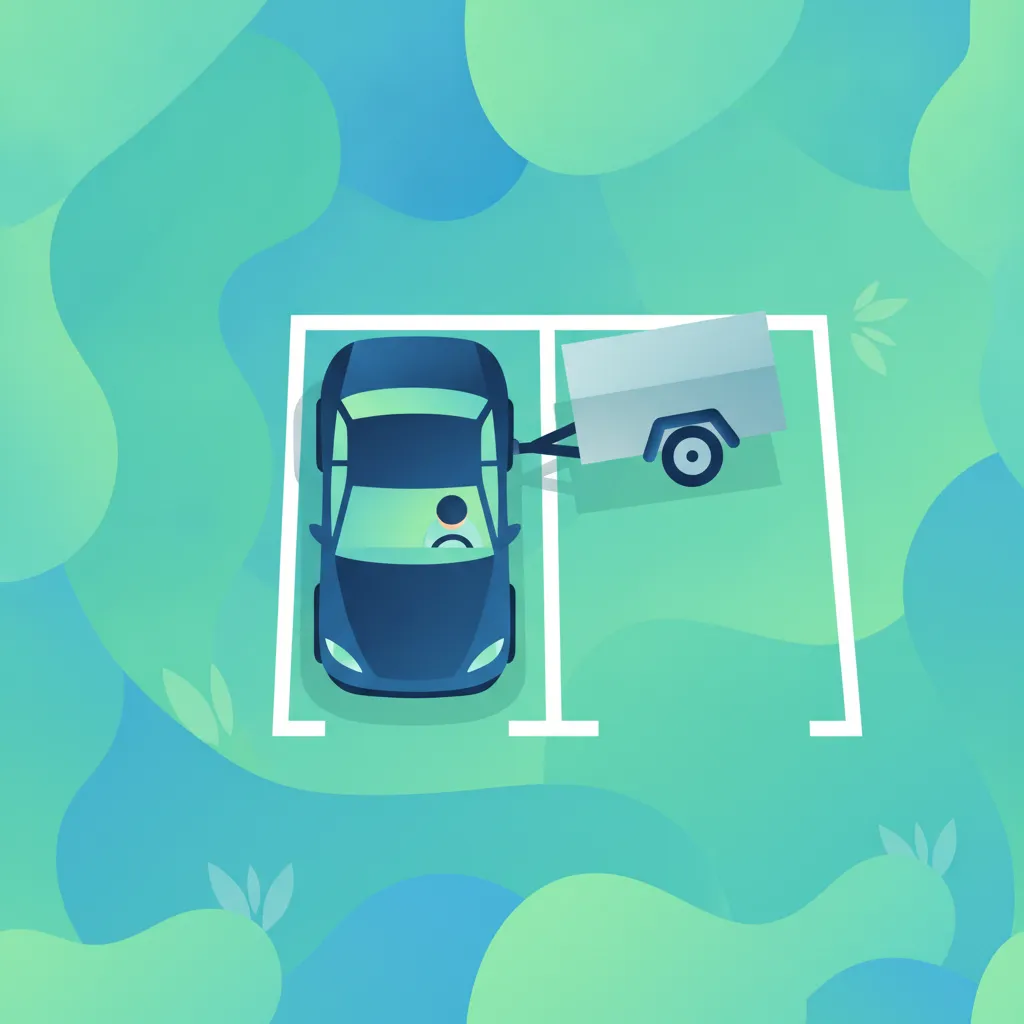
This lesson focuses on techniques for reversing safely with a trailer attached, including the use of spotters, mirrors, and backup cameras to mitigate blind spots. Learners will understand the steps for proper trailer coupling before reversing, how to control trailer sway, and the importance of using reverse gear properly. The content also covers safety checks to perform before reversing, such as ensuring the area is clear.

This lesson analyzes the technical path a long wheelbase vehicle must take when turning at intersections and navigating roundabouts. Drivers will learn to calculate tail swing and rear-wheel tracking, intentionally swinging wide to clear roadside curbs and poles safely. The lesson emphasizes yielding protocols for pedestrians and cyclists who may be crossing the target street during the turn.
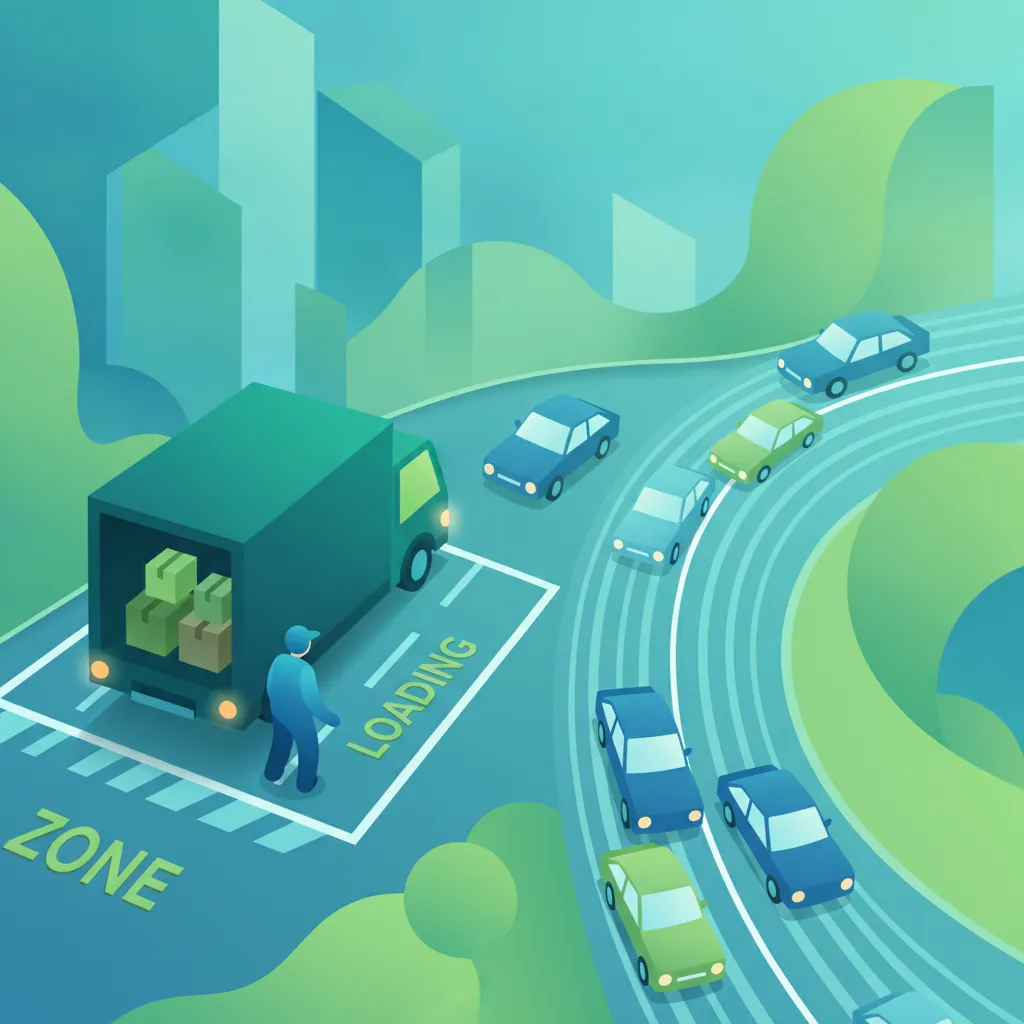
In this lesson, drivers will learn how to navigate urban delivery zones, understanding the rules surrounding loading bays, time windows, and restricted access areas. The content includes the process for obtaining delivery permits, strategies for safe maneuvering in congested city streets, and best practices for minimizing impact on pedestrian traffic. Learners will also be introduced to French city-specific regulations that govern goods vehicle deliveries.

This lesson focuses on the unique challenges of performing deliveries in dense urban areas. Learners will explore best practices for loading and unloading safely, navigating traffic congestion, and minimizing risks to pedestrians and cyclists. The content also covers compliance with city regulations for delivery zones, scheduling considerations, and the importance of careful maneuvering to avoid accidents.

This lesson analyzes the various traffic challenges unique to operating large passenger vehicles in historic and modern French urban areas. Drivers will learn to manage narrow street layouts, double-parked delivery trucks, and high-density multi-lane roundabouts safely. The lesson emphasizes defensive driving strategies, route adjustments, and maintaining mental focus under severe schedule and time pressures.
Understand the physics of vehicle stability including centre of gravity management and dynamic weight transfer during braking or cornering. This guide explains how to prevent rollover risks and manage extreme load conditions when navigating motorways and rural roads under the French Code de la route.

In this lesson, drivers will learn about the relationship between a vehicle’s centre of gravity and its susceptibility to rollover incidents. The content covers how high-center-of-gravity loads, load shifts, and overloading can compromise lateral stability, especially during cornering or evasive maneuvers. Learners will gain insight into calculating safety margins and understanding the impact of cargo weight distribution on the overall stability of the vehicle.
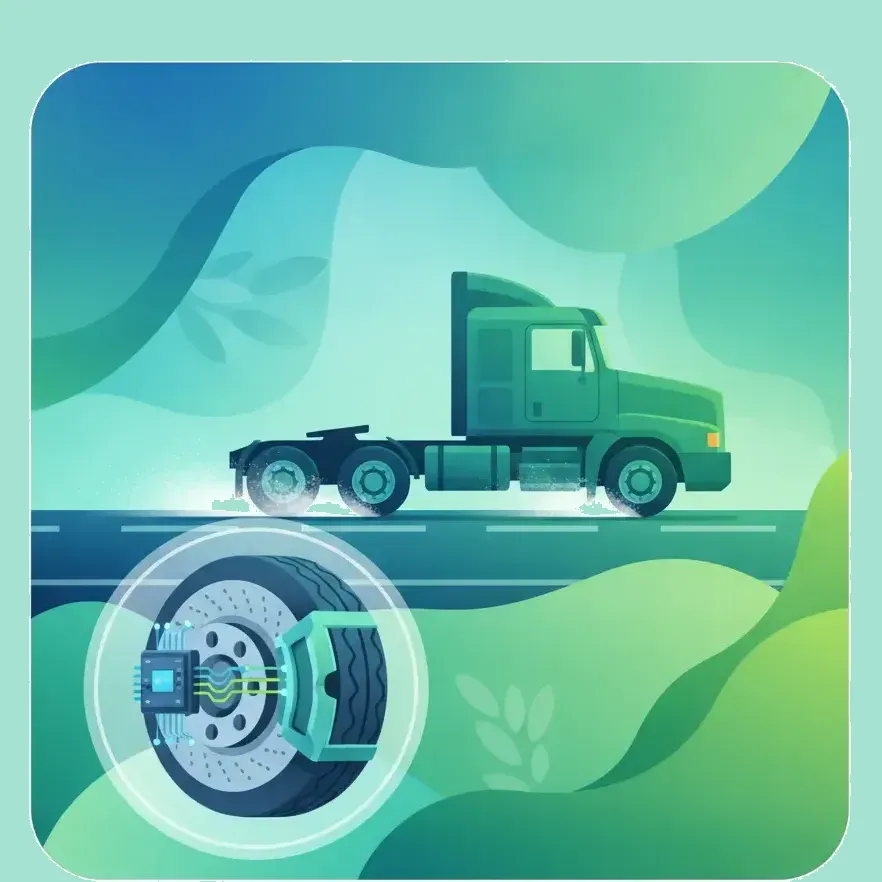
In this lesson, learners will explore the functions and benefits of ABS and ESP systems in goods vehicles, including how they enhance braking stability and prevent skids. The content explains the technology behind these systems, their activation conditions, and their role in emergency braking scenarios. Learners will also be introduced to the maintenance requirements and limitations of ABS and ESP in heavy vehicle operation.

This lesson focuses on passenger comfort and safety by teaching drivers how to control load transfers during acceleration and gear shifts. Smooth throttle control and progressive gear engagement reduce sudden cabin shifts, preventing standing passengers from falling. Candidates will also explore eco-driving techniques that reduce fuel consumption and wear on mechanical parts without compromising route timetables.

This lesson covers the secure loading, distribution, and stowage of passenger luggage inside designated holding areas and overhead storage bins. Candidates will analyze how physical load distribution directly influences vehicle stability, braking distances, and center of gravity during maneuvers. By learning to secure loose cargo effectively, drivers prevent unexpected load shifts that could endanger passengers or degrade vehicle control.

This lesson covers techniques for managing gradients while driving goods vehicles, focusing on downhill control, engine braking, and appropriate gear selection. Learners will understand how load distribution and vehicle dynamics affect descending performance and the importance of avoiding brake overheating. The content includes practical advice on using hill start assistance systems and maintaining safe speeds on steep slopes.

Carrying heavy loads or pulling trailers significantly alters a passenger vehicle's braking distances and stability characteristics. This lesson covers how to read weight limits (like gross vehicle weight ratings), distribute cargo weight evenly, and secure items inside the boot or on roof racks. You will learn to use specialized cargo straps and understand the risks of overloading your suspension and tyres.

In this lesson, drivers will learn how to adjust their driving techniques in response to adverse weather conditions such as rain, fog, snow, ice, and strong winds. The content covers strategies for maintaining visibility, managing reduced traction on wet or icy surfaces, and adjusting speed and braking distances accordingly. Learners will also be introduced to the use of anti-skid and stability control systems under challenging weather.
Find clear answers to common questions learners have about Principles of Load Distribution. Learn how the lesson is structured, which driving theory objectives it supports, and how it fits into the overall learning path of units and curriculum progression in France. These explanations help you understand key concepts, lesson flow, and exam focused study goals.
A high centre of gravity significantly increases the risk of the vehicle rolling over during sharp turns or emergency maneuvers. Proper load distribution ensures the weight stays low and centered to maintain stability.
Longitudinal balance refers to the weight distribution between the front and rear axles, while lateral balance refers to the left-to-right distribution. Poor balance in either axis can affect steering responsiveness and braking distance.
Exam questions often test your knowledge of how an incorrectly loaded vehicle (e.g., heavy at the rear) can cause the front wheels to lose traction under braking, leading to steering failure and extended stopping distances.
While this lesson focuses on the physics of load distribution, understanding these principles is a prerequisite for correctly applying the cargo security techniques covered in the next lesson of this unit.
Ready to focus your study? Use the practice search to find exactly the French driving theory questions you need for the Code de la route and permis de conduire ETG. Refine your knowledge on specific topics or challenging rules to boost your confidence and exam readiness.