Drivers in Germany must navigate a complex landscape of traffic restrictions, including targeted diesel driving bans. This guide breaks down the legal basis for these prohibitions, how they differ from standard environmental zones, and which vehicles are typically restricted. Mastering this knowledge is key to avoiding penalties and driving legally across different urban areas in Germany.
Article content overview
Driving in Germany requires more than just mastering road signs and priority rules; it demands an understanding of complex environmental regulations. As cities strive to meet European Union air quality standards, localized diesel driving bans, or Fahrverbote, have become a significant part of the urban traffic landscape. While many drivers are familiar with the standard environmental zones (Umweltzonen), these targeted diesel restrictions operate differently, and failing to adhere to them can lead to substantial fines.
It is a common point of confusion for both new learners and experienced drivers to conflate environmental zones with specific diesel driving bans. An Umweltzone is a designated urban area where vehicles must display a specific colored sticker—typically green—to indicate they meet certain emission standards. These zones are generally broad and apply to all motor vehicles, including petrol and diesel engines that do not meet the minimum emission requirements.
In contrast, Fahrverbote are targeted traffic restrictions. These bans are implemented under the Federal Immission Control Act (BImSchG) to specifically combat nitrogen dioxide (NO₂) pollution. Unlike the broad environmental zones, these restrictions often target specific streets, road sections, or neighborhoods and are frequently tied to a vehicle’s specific Euro emission standard.
The implementation of diesel bans is usually a direct response to court rulings, often involving the Deutsche Umwelthilfe (DUH), which has successfully sued several municipalities to ensure compliance with air quality limits. For example, cities like Stuttgart have implemented comprehensive bans that may restrict Euro 4 diesel vehicles year-round, while Euro 5 diesel vehicles may face restrictions during periods of high air pollution alerts.
Drivers should be aware that these bans are not static. They can change based on air quality monitoring data and local municipal ordinances. While major transit routes often remain open, secondary roads or city center districts are the most common locations for these prohibitions. It is essential to check the official signage and local government websites before entering unfamiliar urban areas, especially if you are driving an older diesel vehicle.
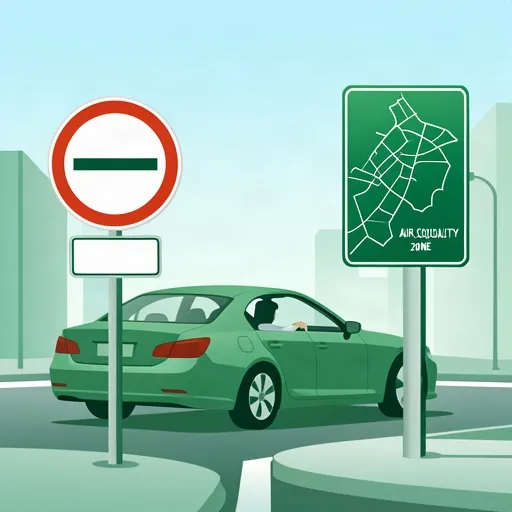
The authority to restrict traffic is granted by the Straßenverkehrs-Ordnung (StVO). When you see a sign indicating a traffic prohibition, it often includes a supplemental sign (Zusatzzeichen) that specifies the type of vehicle affected or the reason for the restriction.
Enforcement of these bans is rigorous and relies on a combination of automated technology and police monitoring. Many cities utilize fixed ANPR (Automatic Number Plate Recognition) cameras, while local police authorities conduct random spot checks to ensure that vehicles in restricted areas comply with the required emission standards. If you are caught driving a non-compliant vehicle in a restricted zone, you can expect a fine, which is typically around 100 Euros.
Diesel driving bans (Fahrverbote) in Germany are targeted restrictions separate from broader environmental zones, implemented under the Federal Immission Control Act to combat NO₂ pollution. These bans often apply to specific streets or neighborhoods and are tied to a vehicle's Euro emission standard, with Euro 6 diesel vehicles typically exempt. Drivers must check field V.9 of their registration documents for their emission class and monitor local municipal announcements, as restrictions can change based on air quality data. Enforcement is automated via ANPR cameras and police checks, with fines around 100 euros for non-compliance.
A short set of high-value points that capture the most important ideas from this article.
Environmental zones (Umweltzonen) and targeted diesel bans (Fahrverbote) are separate restrictions that can coexist in the same city
Fahrverbote are implemented under the Federal Immission Control Act (BImSchG) specifically to reduce nitrogen dioxide (NO₂) pollution
These bans are often street-specific rather than covering entire urban areas and can change based on air quality monitoring data
Euro 6 diesel vehicles are generally exempt from targeted diesel driving bans in German cities
Enforcement uses both automatic number plate recognition cameras and police spot checks
Your vehicle's Euro emission standard is listed in field V.9 of your registration document (Zulassungsbescheinigung Teil I)
A green environmental sticker alone does not guarantee access in areas with additional diesel-specific bans
Look for supplemental signs (Zusatzzeichen) beneath prohibition signs that specify affected Euro classes
Hardship exemptions exist but must be applied for in advance through local authorities
The Straßenverkehrs-Ordnung (StVO) grants the authority to implement these traffic restrictions
Assuming that cities without Umweltzonen have no diesel restrictions
Believing a green sticker automatically permits driving in all restricted urban areas
Driving older diesel vehicles (Euro 4 or below) into restricted streets without checking current local ordinances
Neglecting to verify emission class requirements before entering unfamiliar cities
Overlooking supplemental signage that modifies the scope of general prohibition signs
Article content overview
A short set of high-value points that capture the most important ideas from this article.
Environmental zones (Umweltzonen) and targeted diesel bans (Fahrverbote) are separate restrictions that can coexist in the same city
Fahrverbote are implemented under the Federal Immission Control Act (BImSchG) specifically to reduce nitrogen dioxide (NO₂) pollution
These bans are often street-specific rather than covering entire urban areas and can change based on air quality monitoring data
Euro 6 diesel vehicles are generally exempt from targeted diesel driving bans in German cities
Enforcement uses both automatic number plate recognition cameras and police spot checks
Your vehicle's Euro emission standard is listed in field V.9 of your registration document (Zulassungsbescheinigung Teil I)
A green environmental sticker alone does not guarantee access in areas with additional diesel-specific bans
Look for supplemental signs (Zusatzzeichen) beneath prohibition signs that specify affected Euro classes
Hardship exemptions exist but must be applied for in advance through local authorities
The Straßenverkehrs-Ordnung (StVO) grants the authority to implement these traffic restrictions
Assuming that cities without Umweltzonen have no diesel restrictions
Believing a green sticker automatically permits driving in all restricted urban areas
Driving older diesel vehicles (Euro 4 or below) into restricted streets without checking current local ordinances
Neglecting to verify emission class requirements before entering unfamiliar cities
Overlooking supplemental signage that modifies the scope of general prohibition signs
Explore related topics, search based questions, and concepts that learners often look up when studying German Diesel Driving Bans. These themes reflect real search intent and help you understand how this topic connects to wider driving theory knowledge in Germany.
Find clear and practical answers to common questions learners often have about German Diesel Driving Bans. This section helps explain difficult points, remove confusion, and reinforce the key driving theory concepts that matter for learners in Germany.
A Fahrverbot is a localized, legally mandated driving ban for specific vehicle types—often older diesel engines—on certain streets or within specific city areas to improve air quality.
An Umweltzone (environmental zone) requires a sticker for broad access to a city, whereas a Fahrverbot is a stricter, often street-specific ban targeting vehicles that fail to meet higher Euro emission norms, regardless of stickers.
Generally, no. Most current diesel driving bans in German cities specifically target older Euro 4 or Euro 5 diesel vehicles; Euro 6 vehicles are currently exempt from these specific restrictions.
Enforcement is managed by local authorities through police checks and, in many cases, fixed automated number plate recognition (ANPR) cameras that identify non-compliant vehicles.
Didn't find what you were looking for? Continue your German driving theory preparation by exploring related articles, specific road sign categories, or in-depth guides on complex traffic situations. Deepen your understanding before the official test.