
Achieving success in the German practical driving test requires more than just vehicle control; it demands a disciplined application of traffic laws in real-world urban scenarios. This guide breaks down the essential performance standards outlined by official examination authorities and explains how to approach the test with confidence. Readers will learn how to align their driving habits with the official driving task catalogue to ensure they meet the rigorous requirements for a German driver's license.
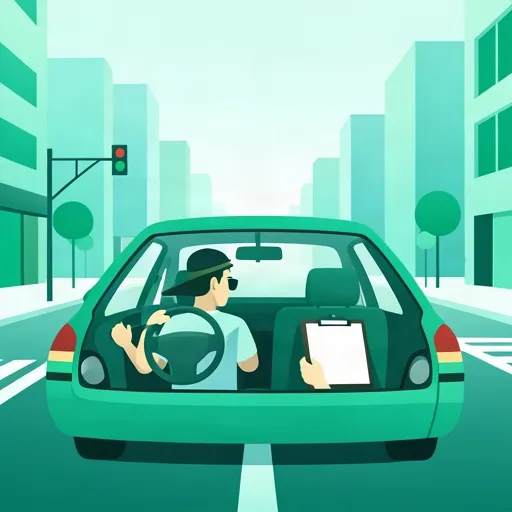
Article content overview
Passing the German practical driving test is a significant milestone that requires far more than basic vehicle control. It is an objective assessment of your ability to apply the Straßenverkehrs-Ordnung (StVO) in real-world scenarios, ranging from quiet residential streets to complex, multi-lane urban intersections. Examiners evaluate your performance based on a standardized driving task catalogue, which ensures that every candidate is held to the same high safety and responsibility criteria, regardless of where the test takes place.
The German practical examination is designed to determine if a novice driver can navigate traffic safely, responsibly, and independently. Rather than looking for perfection in every maneuver, examiners focus on your consistent application of traffic rules and your ability to perceive and react to hazards early. The evaluation is conducted using a digital test protocol, which tracks your performance across various driving tasks. These tasks include everything from basic vehicle handling and speed adaptation to complex interactions with cyclists, pedestrians, and public transport.
The official set of criteria and maneuvers that examiners use to evaluate a learner's competency during the practical driving test. It ensures that all tests are fair, transparent, and aligned with national road safety standards.
Urban driving in Germany often presents the greatest challenge for learners. High traffic density, the presence of vulnerable road users, and complex priority rules require constant vigilance. To succeed, you must demonstrate mastery over five essential competencies: proactive traffic observation, precise right-of-way management, correct lane selection, speed adaptation, and calm, rational error correction.
One of the most common reasons for failure in the practical exam is a misunderstanding or misapplication of priority rules at intersections. You must be able to identify priority signs, road markings, and the fundamental "right before left" (Rechts-vor-Links) rule instantly. Even when you believe you have the right of way, the examiner expects you to demonstrate defensive driving, ensuring that the intersection is clear before proceeding.
Exam anxiety is a natural response, but it can cloud your judgment if not managed effectively. The best way to combat nerves is through realistic, objective preparation. Many candidates benefit from mock tests that simulate the real examination environment. By analyzing your performance after a mock session—without the pressure of an official examiner—you can identify patterns in your driving that need adjustment. Remember, small mistakes are often forgivable if you recognize them immediately and react safely; it is the repeated, dangerous, or illegal maneuvers that usually lead to a failed test.
When you realize you have made a small mistake during the test, do not dwell on it. Stay calm, correct your behavior immediately if safe to do so, and focus entirely on the next task. Examiners look for your ability to remain composed under pressure.
| Competency | Focus Area | Goal |
|---|---|---|
| Observation | Mirrors and Blind Spot | Full awareness of surrounding traffic |
| Lane Selection | Pre-sorting | Smooth transition through multi-lane roads |
| Speed | Signage and Conditions | Adaptation to weather and traffic flow |
| Priority | Right-of-way rules | Safe and predictable interaction |
Whether you are pursuing a Class B license or specialized categories like B197 or motorcycles, the core requirement remains the same: proving that you can drive independently. While intensive training courses are popular, they are simply one way to reach the required level of competence. Choose a path that fits your learning speed and ensures you have sufficient time to practice in varied traffic conditions.
The German practical driving test assesses five core competencies: proactive traffic observation, right-of-way management, correct lane selection, appropriate speed adaptation, and calm error correction. Examiners use a standardized driving task catalogue with a digital protocol to evaluate consistent rule application under real-world conditions rather than perfect maneuvers. Priority rules—especially the Rechts-vor-Links principle at unmarked intersections—are frequent failure points, requiring early speed reduction and systematic right-side checking before proceeding. Managing exam anxiety through realistic mock practice helps you maintain composure during actual evaluation, as examiner composure and defensive driving behavior are key evaluation factors.
A short set of high-value points that capture the most important ideas from this article.
The practical test evaluates your consistent rule application, not perfection in every maneuver
Five core competencies are assessed: observation, lane selection, speed adaptation, priority management, and error correction
Examiners use a digital protocol and standardized driving task catalogue for fair, transparent evaluation across all candidates
Defensive driving means verifying intersections are clear even when you technically have priority
Small mistakes are forgivable if you recognize and correct them immediately without dwelling on them
At unmarked intersections, always apply the Rechts-vor-Links rule: yield to traffic approaching from your right
Reduce speed well in advance at intersections to maintain full control before checking for traffic
Prioritize early hazard perception over perfect vehicle handling to demonstrate safety awareness
Stay calm during mistakes—examiner composure is part of the evaluation criteria
The five competency areas are observation (mirrors and blind spots), lane selection, speed adaptation, priority rules, and error correction
Failing to yield at unmarked intersections by not checking traffic from the right first
Fixating on a small error instead of recovering safely and focusing on the next task
Insufficient mirror and blind spot checks before lane changes or turns
Adjusting speed inappropriately—either too fast for conditions or unrealistically slow
Relying only on intensive courses without sufficient varied practice in real traffic conditions
Article content overview
A short set of high-value points that capture the most important ideas from this article.
The practical test evaluates your consistent rule application, not perfection in every maneuver
Five core competencies are assessed: observation, lane selection, speed adaptation, priority management, and error correction
Examiners use a digital protocol and standardized driving task catalogue for fair, transparent evaluation across all candidates
Defensive driving means verifying intersections are clear even when you technically have priority
Small mistakes are forgivable if you recognize and correct them immediately without dwelling on them
At unmarked intersections, always apply the Rechts-vor-Links rule: yield to traffic approaching from your right
Reduce speed well in advance at intersections to maintain full control before checking for traffic
Prioritize early hazard perception over perfect vehicle handling to demonstrate safety awareness
Stay calm during mistakes—examiner composure is part of the evaluation criteria
The five competency areas are observation (mirrors and blind spots), lane selection, speed adaptation, priority rules, and error correction
Failing to yield at unmarked intersections by not checking traffic from the right first
Fixating on a small error instead of recovering safely and focusing on the next task
Insufficient mirror and blind spot checks before lane changes or turns
Adjusting speed inappropriately—either too fast for conditions or unrealistically slow
Relying only on intensive courses without sufficient varied practice in real traffic conditions
Explore related topics, search based questions, and concepts that learners often look up when studying Mastering the German Practical Driving Test. These themes reflect real search intent and help you understand how this topic connects to wider driving theory knowledge in Germany.
Find clear and practical answers to common questions learners often have about Mastering the German Practical Driving Test. This section helps explain difficult points, remove confusion, and reinforce the key driving theory concepts that matter for learners in Germany.
The driving task catalogue is the official document used by examiners to evaluate a candidate's driving competence. It defines specific tasks, requirements, and assessment criteria to ensure a uniform examination process across Germany.
No, the examiner assesses whether you can drive safely and responsibly. It is about the consistent application of traffic rules and reacting correctly to hazards rather than achieving a flawless performance.
Managing anxiety is best achieved through realistic mock testing and objective analysis of your driving errors. Regular practice in various traffic densities helps build the confidence needed to perform consistently under pressure.
Didn't find what you were looking for? Continue your German driving theory preparation by exploring related articles, specific road sign categories, or in-depth guides on complex traffic situations. Deepen your understanding before the official test.