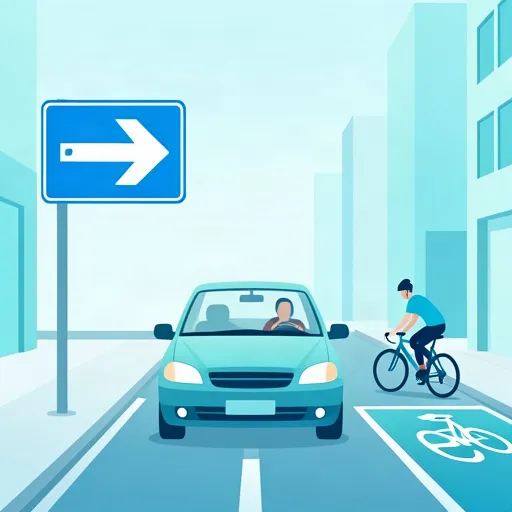
Navigating one-way streets in Germany requires a precise understanding of the Straßenverkehrs-Ordnung (StVO). This guide clarifies the meaning of sign Zeichen 220, the importance of identifying cyclists allowed to travel against the direction of traffic, and the correct legal conduct if you mistakenly enter a one-way street. By mastering these rules, you will be well-prepared for both real-world city driving and the challenging questions often found in your theoretical driving test.
Article content overview
Article content overview
Explore related topics, search based questions, and concepts that learners often look up when studying German One-Way Street Rules. These themes reflect real search intent and help you understand how this topic connects to wider driving theory knowledge in Germany.
Find clear and practical answers to common questions learners often have about German One-Way Street Rules. This section helps explain difficult points, remove confusion, and reinforce the key driving theory concepts that matter for learners in Germany.
It indicates a one-way street. Drivers must only travel in the direction indicated by the arrow.
Yes, but only if the sign is supplemented by an additional sign (Zusatzzeichen) that specifically permits it, such as 'Radfahrer frei'.
You must reverse carefully back to the entry point, provided it is safe to do so. You are strictly forbidden from continuing forward against the traffic flow.
Yes, unlike bidirectional roads where you must park on the right, you are permitted to park on either side of a one-way street, provided there are no other prohibitions such as no-parking signs.
Didn't find what you were looking for? Continue your German driving theory preparation by exploring related articles, specific road sign categories, or in-depth guides on complex traffic situations. Deepen your understanding before the official test.