
This lesson guides you through the unique challenges of driving on rural roads and Landstraßen, which are a common focus in the German Category B theory exam. You will learn to identify specific hazards such as blind curves, hidden farm exits, and slow-moving agricultural vehicles, helping you prepare for both the test and real-world safety. Building on your knowledge of general speed limits, this lesson ensures you can navigate non-urban environments with confidence.

Lesson content overview
Driving on rural roads, known as Landstraßen in Germany, presents a unique set of challenges and demands greater vigilance from drivers compared to urban or motorway driving. These roads often connect smaller towns and villages, traversing diverse landscapes that can include forests, open fields, and hilly terrain. This lesson delves into the specific characteristics and hazards associated with Landstraßen, including B-Class roads (Bundesstraßen), and provides essential guidance for safe navigation in these environments. Understanding these aspects is crucial for every driver preparing for the German Category B driving license theory exam.
Landstraßen are the backbone of Germany's non-urban road network. They are designed to carry traffic between built-up areas and are distinct from Autobahnen (motorways) by their general characteristics and speed limits. While they may offer scenic routes, their design often includes features that require heightened driver awareness.
Landstraßen are typically two-lane roads, one lane in each direction, without a physical barrier separating opposing traffic. They often lack the extensive safety infrastructure found in urban areas or on Autobahnen, such as continuous lighting, numerous signs, or separate pedestrian and cycle paths. The environment surrounding Landstraßen can change rapidly, from dense forests to open fields, influencing visibility and potential hazards.
Within the network of Landstraßen, B-Class roads, or Bundesstraßen, are primary federal highways. They serve as major arterial routes connecting larger towns and cities where Autobahnen do not directly reach. While they are a type of Landstraße, Bundesstraßen are usually better maintained, may have wider lanes, and sometimes feature more elaborate junctions compared to smaller, regional Landstraßen. Despite their importance, they share many of the same hazards as other rural roads, such as limited visibility and shared use with various types of traffic.
The general maximum speed limit for passenger cars and other vehicles up to 3.5 tonnes on Landstraßen in Germany is 100 km/h, unless otherwise indicated by signage. However, this is a maximum limit, not a recommended speed for all conditions. Vehicles with trailers, or those over a certain weight, often have lower speed limits, such as 80 km/h. It is paramount that drivers adjust their speed not only to the posted limit but also to the actual road, traffic, weather, and visibility conditions. This principle is known as Anpassungsgeschwindigkeit (adapted speed).
Always select a speed that allows you to stop safely within the distance you can clearly see ahead. This is especially critical on rural roads where hazards can appear unexpectedly.
Rural roads present several hazards that demand increased driver caution and skill. Being able to anticipate and react to these dangers is a hallmark of a safe driver.
Blind corners and bends are common features on Landstraßen. These are sections of the road where your view ahead is obstructed by hills, dense vegetation, buildings, or other terrain features. This means you cannot see oncoming traffic, pedestrians, cyclists, or obstacles until you are already in or very close to the turn.
When approaching a blind corner:
Unlike many urban intersections, rural junctions frequently lack traffic lights, clear road markings, or specific right-of-way signs. Similarly, private driveways, farm entrances, or access roads may merge directly onto Landstraßen without warning.
At unmarked junctions, the fundamental German rule of Rechts vor Links (right before left) generally applies. This means that any vehicle approaching from the right has priority, unless specific signage indicates otherwise (e.g., a priority road sign).
When approaching any junction or entrance on a rural road:
Rural roads often feature numerous hidden entrances to farms, forests, or private properties. Vehicles, pedestrians, or animals may emerge from these entrances without much warning. Overhanging trees or dense hedges can further obscure visibility. Always be on the lookout for gaps in foliage or signs of activity that might indicate a hidden access point.
Two distinct features of the rural environment pose significant challenges to drivers: slow-moving farm machinery and unpredictable wildlife.
Landstraßen are frequently shared with agricultural vehicles such as tractors, combines, and other farm machinery. These vehicles are typically very large, heavy, and operate at much lower speeds than cars, often around 20-40 km/h. They can significantly impact traffic flow and require careful handling when encountered.
When driving near agricultural vehicles:
Attempting to overtake a slow-moving farm vehicle in an unsafe spot is a leading cause of serious accidents on rural roads. Always ensure a clear view of the road ahead and sufficient space to complete the maneuver safely.
Rural and forested areas are home to various wild animals that frequently cross roads, particularly at dawn, dusk, or during the night. Deer, wild boars, foxes, and smaller animals can appear suddenly, posing a high risk of collision.
In areas with high wildlife activity:
Mastering specific driving techniques is vital for safe navigation on Landstraßen. These include appropriate speed selection, safe overtaking, and effective observation.
As mentioned, the posted speed limit is merely the maximum allowed under ideal conditions. On rural roads, conditions are rarely ideal. Anpassungsgeschwindigkeit means adapting your speed to:
Your speed must always allow you to stop within the distance you can see ahead. If you cannot see around a bend or over a hill, you must slow down until your visible stopping distance is adequate.
Overtaking on a two-lane rural road (one lane each direction) is one of the most hazardous maneuvers. It requires careful judgment and strict adherence to rules.
Before attempting to overtake:
Never overtake if there's any doubt about safety or legality. Patience is a virtue on rural roads, and saving a few seconds is not worth risking an accident.
Beyond general speed limits, several specific regulations and principles are particularly relevant for driving on Landstraßen.
As previously highlighted, the Rechts vor Links rule is fundamental at unmarked intersections on German rural roads. This rule dictates that vehicles approaching from the right have priority. It is crucial to internalize this rule and apply it diligently, as failure to do so is a common cause of collisions. Always confirm the absence of signs that might override this rule (e.g., a "Give Way" sign or a priority road sign).
The Straßenverkehrs-Ordnung (StVO – German Road Traffic Regulations) explicitly prohibits overtaking in certain situations on Landstraßen, including:
Outside built-up areas, especially on Landstraßen, it is generally mandatory to use dipped headlights (Abblendlicht) during the day, even if your vehicle has daytime running lights. This is particularly important for increasing your visibility to oncoming traffic, especially in wooded areas or during adverse weather conditions. At night, ensure your headlights are correctly adjusted and use main beam headlights (Fernlicht) whenever possible, switching to dipped headlights when meeting oncoming traffic or following another vehicle.
The inherent variability of Landstraßen means drivers must constantly adapt to changing conditions.
Night driving on Landstraßen presents unique challenges:
Use main beam headlights whenever there is no oncoming traffic and you are not following another vehicle. Switch to dipped headlights early to avoid dazzling other road users. Be extra vigilant for wildlife, pedestrians, and cyclists who may be less visible.
Rural roads are more susceptible to varied and sometimes poor road surfaces:
Always adjust your speed and driving style to the prevailing road surface conditions.
Driving on German Landstraßen requires a proactive and defensive approach. Drivers must exercise heightened vigilance, particularly regarding blind corners, unmarked junctions, slow-moving agricultural vehicles, and wildlife. Adapting speed to prevailing conditions, understanding and applying the Rechts vor Links rule, and practicing safe overtaking are critical for preventing accidents. Always prioritize safety over speed and be prepared for the unexpected in these less regulated but often beautiful environments. A thorough understanding of these characteristics is fundamental for passing your German Category B driving theory exam and becoming a safe driver.
This lesson covers the essential knowledge for driving on German rural roads (Landstraßen), which are typically two-lane roads without physical barriers connecting towns and villages. Key focus areas include speed adaptation (Anpassungsgeschwindigkeit), which requires selecting a speed that allows you to stop within your visible distance, and the Rechts vor Links priority rule at unmarked intersections. The lesson also addresses specific rural hazards such as blind corners, unmarked junctions, slow-moving agricultural vehicles, and wildlife crossings, providing clear guidance on safe driving techniques and overtaking restrictions under StVO regulations. Weather adaptation, lighting requirements, and road surface variations are covered to prepare learners for real-world conditions on these challenging roads.
A short set of high-value points that capture the most important learning from this lesson.
The general speed limit on German Landstraßen is 100 km/h, but you must always adapt to actual conditions using Anpassungsgeschwindigkeit
At unmarked rural junctions, Rechts vor Links (right before left) applies unless priority road signs indicate otherwise
Blind corners require significant speed reduction so you can stop within your visible distance
Never overtake on blind bends, hill crests, or junctions where visibility is insufficient
Wildlife often travels in groups—if you see one animal, expect more to follow
Explore all units and lessons included in this driving theory course.
Bundesstraßen are primary federal highways within the Landstraßen network, often better maintained but sharing the same hazards
Agricultural vehicles may swing wide when turning; maintain safe following distance and never attempt risky overtakes
Use dipped headlights (Abblendlicht) outside built-up areas on Landstraßen even during daytime
If a wildlife collision is imminent, brake firmly and steer straight—swerving often causes worse accidents
On wet, icy, or debris-covered roads, reduce speed significantly as traction and stopping distances are severely affected
Treating the 100 km/h limit as a target speed rather than a maximum, failing to reduce speed for conditions
Assuming all junctions have signage—many rural entrances rely on the Rechts vor Links rule
Attempting to overtake slow agricultural vehicles in insufficient visibility or on blind bends
Using main beam headlights when oncoming traffic is present, dazzling other drivers
Not scanning road edges and ditches for hidden farm entrances, pedestrians, or wildlife before they appear
Lesson content overview
A short set of high-value points that capture the most important learning from this lesson.
The general speed limit on German Landstraßen is 100 km/h, but you must always adapt to actual conditions using Anpassungsgeschwindigkeit
At unmarked rural junctions, Rechts vor Links (right before left) applies unless priority road signs indicate otherwise
Blind corners require significant speed reduction so you can stop within your visible distance
Never overtake on blind bends, hill crests, or junctions where visibility is insufficient
Wildlife often travels in groups—if you see one animal, expect more to follow
Explore all units and lessons included in this driving theory course.
Bundesstraßen are primary federal highways within the Landstraßen network, often better maintained but sharing the same hazards
Agricultural vehicles may swing wide when turning; maintain safe following distance and never attempt risky overtakes
Use dipped headlights (Abblendlicht) outside built-up areas on Landstraßen even during daytime
If a wildlife collision is imminent, brake firmly and steer straight—swerving often causes worse accidents
On wet, icy, or debris-covered roads, reduce speed significantly as traction and stopping distances are severely affected
Treating the 100 km/h limit as a target speed rather than a maximum, failing to reduce speed for conditions
Assuming all junctions have signage—many rural entrances rely on the Rechts vor Links rule
Attempting to overtake slow agricultural vehicles in insufficient visibility or on blind bends
Using main beam headlights when oncoming traffic is present, dazzling other drivers
Not scanning road edges and ditches for hidden farm entrances, pedestrians, or wildlife before they appear
Explore search topics learners often look for when studying Characteristics of Rural Roads and B-Class Roads. These topics reflect common questions about road rules, driving situations, safety guidance, and lesson level theory preparation for learners in Germany.
Browse additional driving theory lessons that cover connected traffic rules, road signs, and common driving situations related to this topic. Improve your understanding of how different rules interact across everyday traffic scenarios.
Understand the specific hazards of German rural roads (Landstraßen), including blind corners and agricultural traffic. Learn safe overtaking procedures and speed selection rules to avoid dangerous situations as per the StVO.
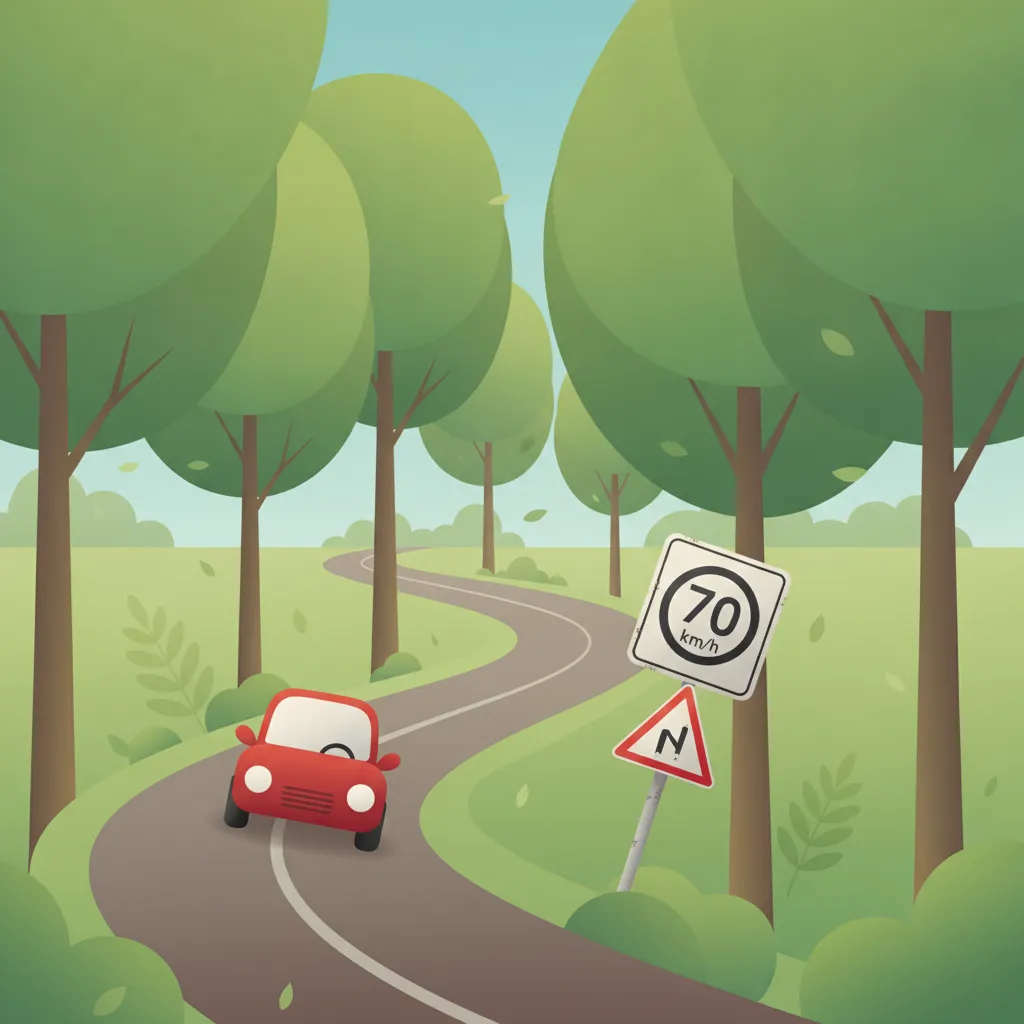
This lesson examines the specific hazards associated with driving on rural roads. It covers how to handle narrow lanes, sharp bends, and poor road surfaces, as well as how to anticipate and safely interact with slow-moving agricultural vehicles or livestock. Strategies for speed adaptation due to limited visibility and the risks associated with overtaking in these conditions are thoroughly discussed.
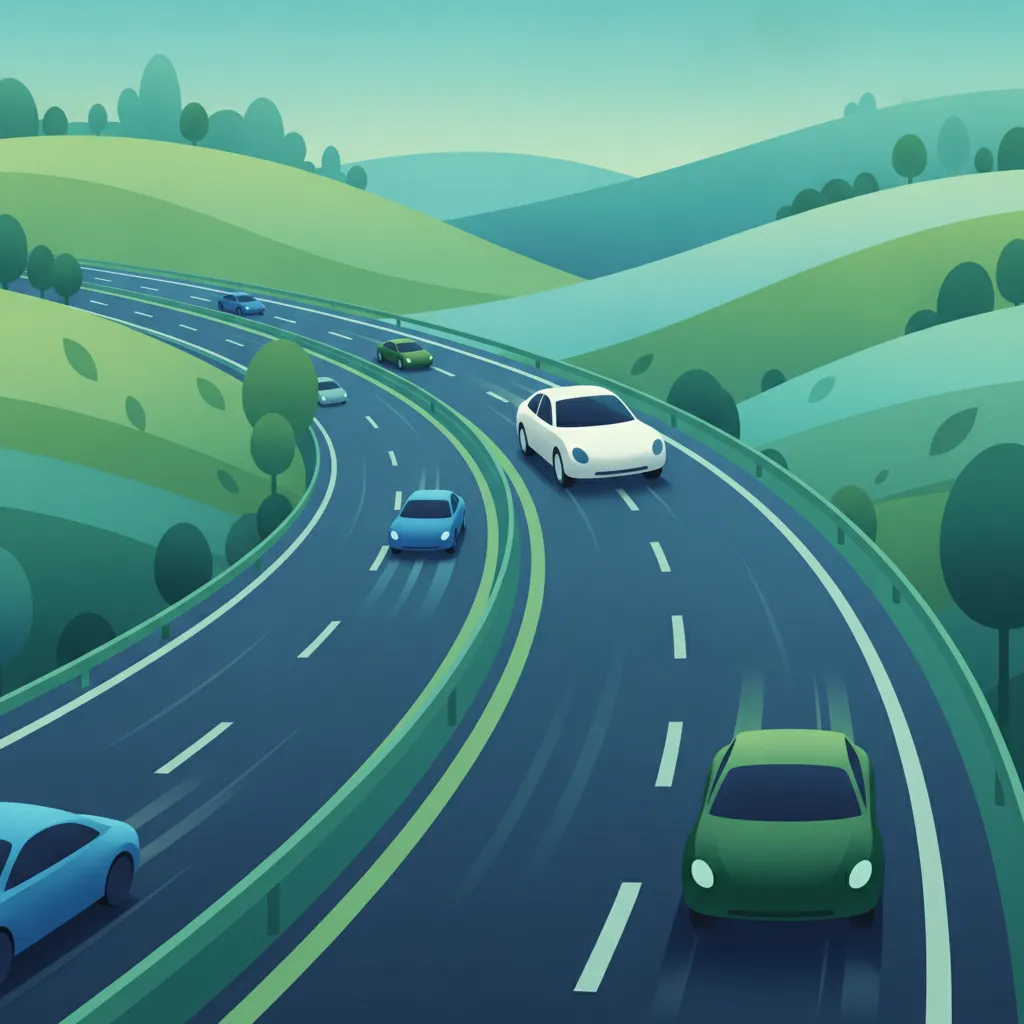
This lesson provides a complete guide to driving on the German Autobahn. It covers the correct procedure for entering and exiting via acceleration and deceleration lanes, the strict lane discipline rule of keeping right ('Rechtsfahrgebot'), and the principle of overtaking only on the left. It also explains the recommended speed limit and the critical procedure for forming an emergency corridor ('Rettungsgasse') in a traffic jam.
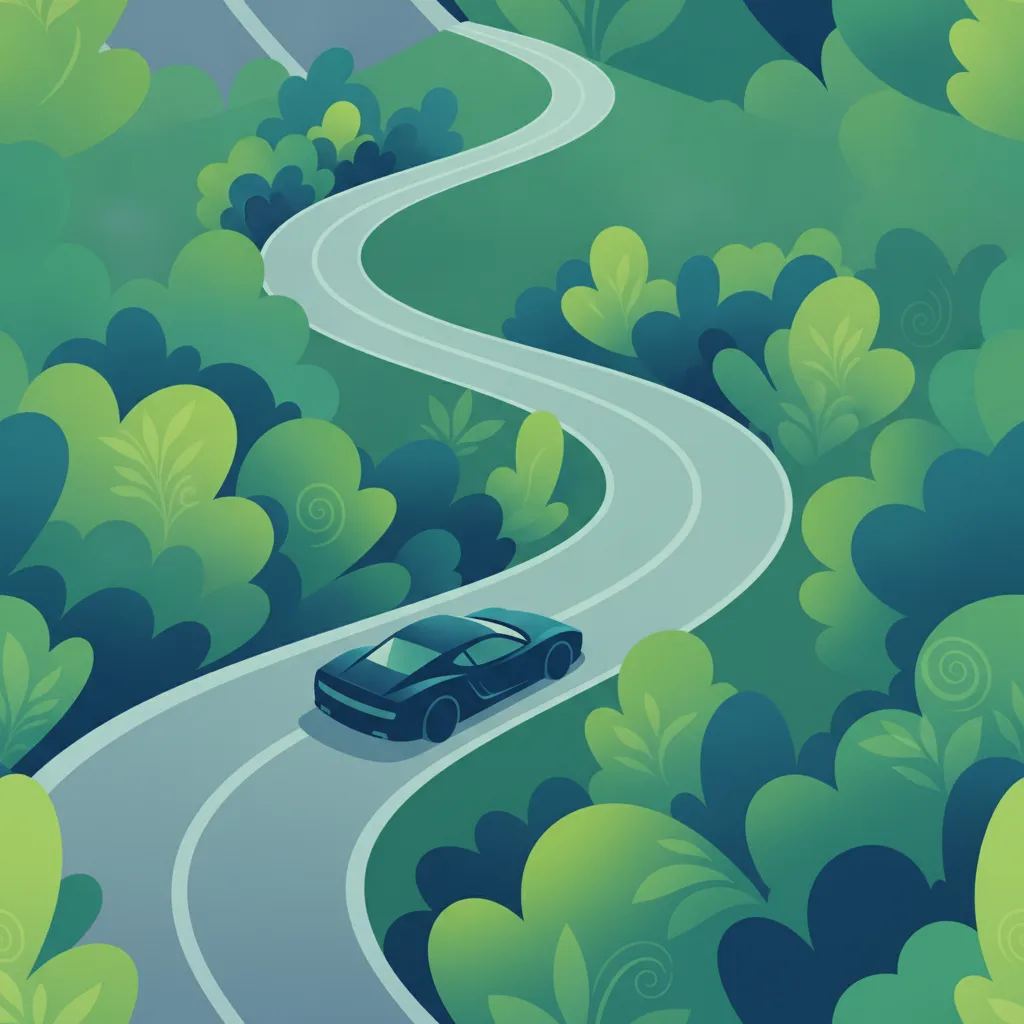
This lesson provides a systematic approach to safely negotiating blind corners where visibility is limited. It teaches riders to control their entry speed, adopt a defensive lane position, and use visual scanning techniques to assess the road ahead. The content emphasizes adjusting lean angle and being prepared for unexpected hazards that may be hidden around the bend.

This lesson explores the critical role of visibility in safe driving, covering topics such as sight distance, managing blind spots, and the correct use of mirrors. It provides guidance on how to adjust your driving in conditions of reduced visibility, such as at night, in fog, or during heavy rain, including the proper use of headlights. The importance of the over-the-shoulder check ('Schulterblick') is also a key focus.
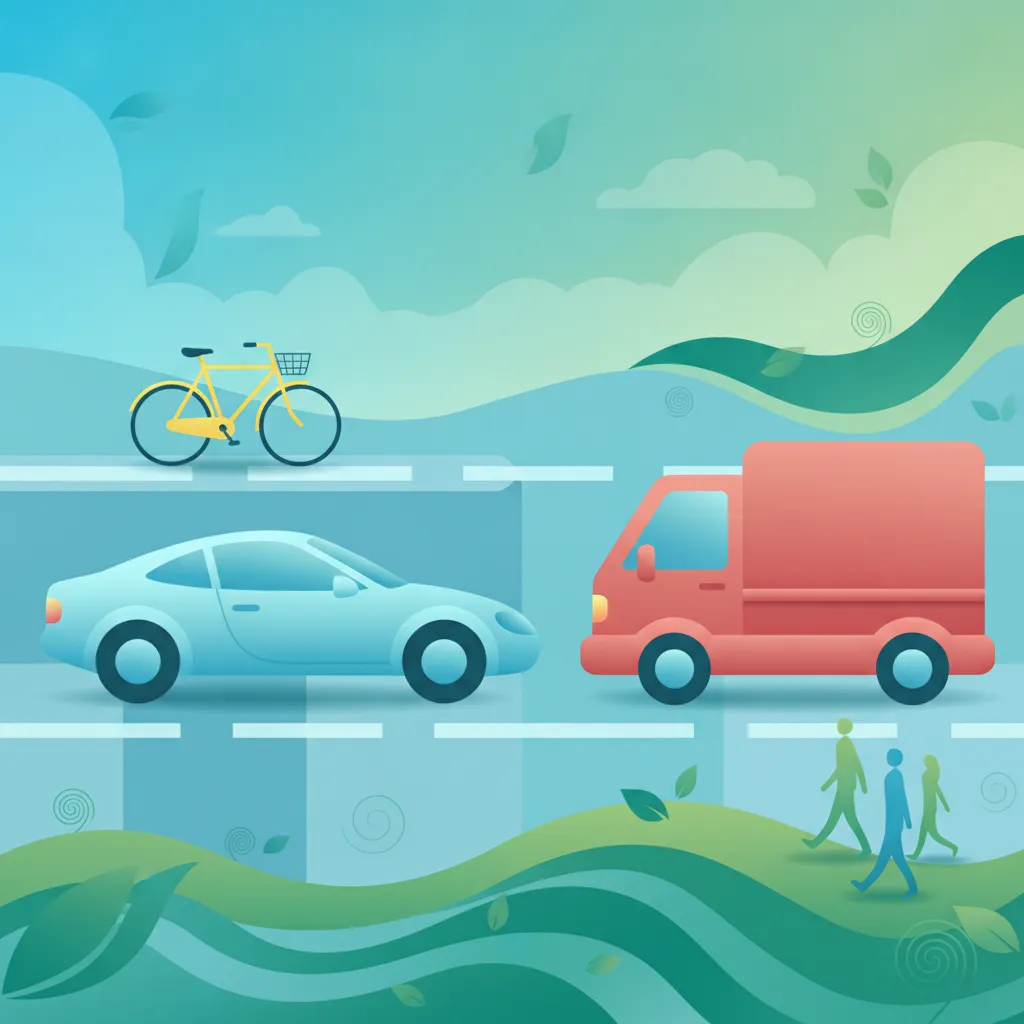
This lesson covers the regulations and safe techniques for overtaking other vehicles in urban environments. It emphasizes the importance of thorough observation, including mirror and blind spot checks, before committing to the maneuver. Learners will understand how to choose a safe gap, manage their speed differential, and maintain strict lane discipline throughout the overtaking process.
This lesson covers the rules and safety considerations for overtaking ('Überholen'). It explains where overtaking is prohibited and how to assess whether it is safe and necessary to do so. The procedure for checking traffic, signaling, moving out, passing, and safely returning to the lane is detailed, with a strong focus on judging the speed and distance of oncoming traffic.

This lesson focuses on the high-risk maneuver of reversing, emphasizing the importance of all-around observation due to limited visibility. It teaches techniques for controlling the vehicle at very low speeds and using mirrors and direct observation to manage large blind spots behind the car. The priority is to ensure the path is clear of pedestrians and obstacles at all times.
This lesson introduces the concept of defensive driving ('vorausschauendes Fahren'), a proactive approach focused on anticipating and mitigating potential risks. It teaches techniques for scanning the road ahead, identifying potential hazards early, and managing the space around your vehicle to create a safety buffer. The goal is to develop a mindset that prioritizes safety and collision avoidance above all else.
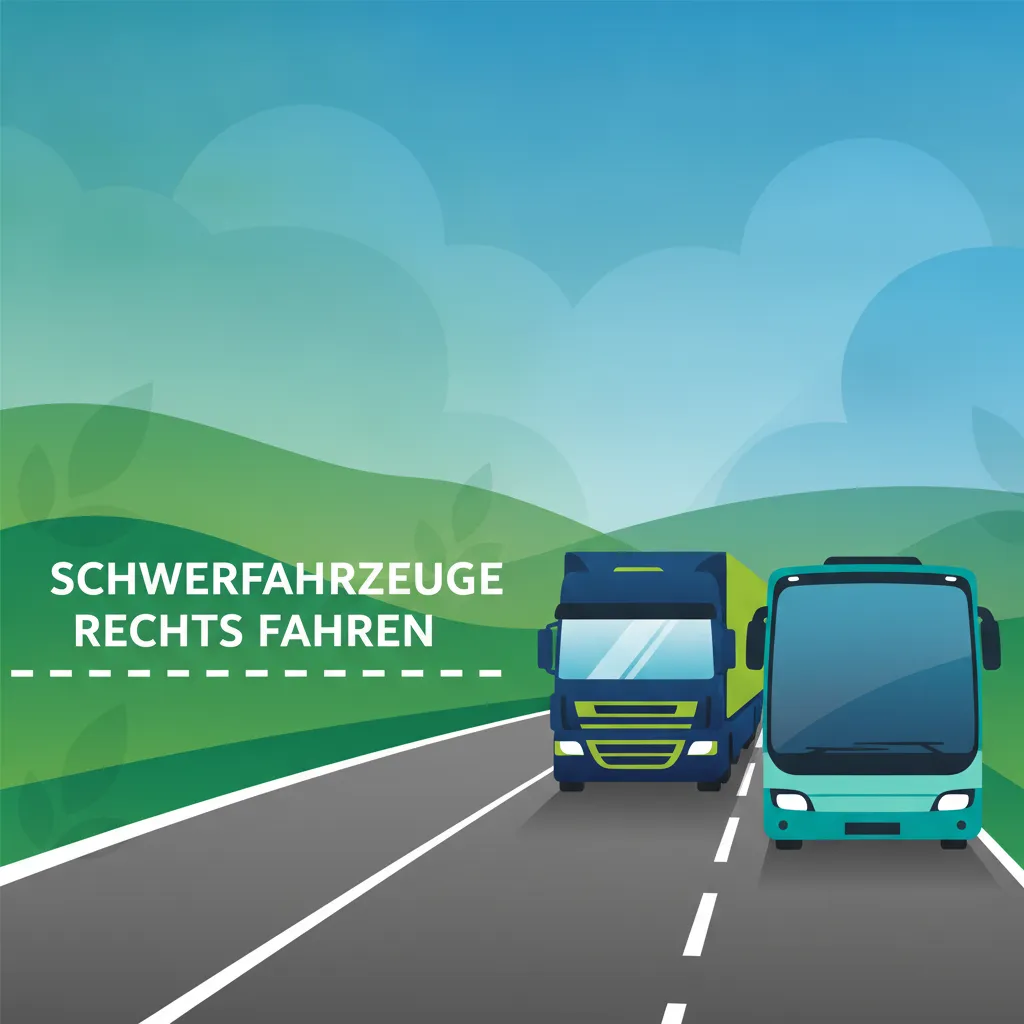
This lesson explains the specific regulations for operating heavy vehicles on Autobahnen, including speed limits, lane discipline, and overtaking rules. It discusses the use of dedicated truck lanes and the importance of maintaining appropriate following distances. The content also covers procedures for merging and exiting high-speed roads safely.

This lesson teaches the systematic observation techniques required for safe driving, starting with how to scan the road far ahead, nearby, and to the sides. It details the correct frequency for checking interior and exterior mirrors to maintain situational awareness. The lesson highlights the indispensable over-the-shoulder check ('Schulterblick') to cover the vehicle's blind spot before any change in direction.
Explore driving theory relevant to diverse German road conditions beyond urban settings. This includes understanding rural roads, Autobahnen, tunnels, and adverse weather effects on driving, as detailed in the StVO.
This lesson provides a complete guide to driving on the German Autobahn. It covers the correct procedure for entering and exiting via acceleration and deceleration lanes, the strict lane discipline rule of keeping right ('Rechtsfahrgebot'), and the principle of overtaking only on the left. It also explains the recommended speed limit and the critical procedure for forming an emergency corridor ('Rettungsgasse') in a traffic jam.
This lesson examines the specific hazards associated with driving on rural roads. It covers how to handle narrow lanes, sharp bends, and poor road surfaces, as well as how to anticipate and safely interact with slow-moving agricultural vehicles or livestock. Strategies for speed adaptation due to limited visibility and the risks associated with overtaking in these conditions are thoroughly discussed.
This lesson explores the complex and fast-paced nature of urban traffic environments. It covers topics such as high traffic density, frequent pedestrian crossings, and complex intersections that require heightened awareness. Learners will develop strategies for adapting their speed and lane positioning to navigate these challenges safely, especially during peak rush hour periods and in areas with traffic calming measures.
This lesson focuses on complex traffic environments where different types of road users share the same space. It provides guidance on situations like driving on streets with integrated tram tracks or where bus and bicycle lanes are part of the roadway. The content emphasizes understanding the specific priority rules and being extra vigilant to anticipate potential conflicts in these busy, shared zones.
This lesson introduces the concept of defensive driving ('vorausschauendes Fahren'), a proactive approach focused on anticipating and mitigating potential risks. It teaches techniques for scanning the road ahead, identifying potential hazards early, and managing the space around your vehicle to create a safety buffer. The goal is to develop a mindset that prioritizes safety and collision avoidance above all else.
This lesson explores how different weather conditions impact driving safety and vehicle performance. It discusses the risks of hydroplaning in heavy rain, reduced visibility in fog, and loss of traction on snow and ice. Drivers will learn how to adapt their speed, increase following distances, and make smooth control inputs to maintain vehicle stability and prevent skids in these challenging conditions.

This lesson teaches drivers how to safely manage their vehicle in challenging weather. It explains the dangers of aquaplaning in heavy rain, the loss of traction on snow and ice (including 'black ice'), and the severely reduced visibility in fog. You will learn to adjust your speed, increase following distances, and use lights correctly to suit these conditions.
This lesson covers the principles of correct vehicle positioning and lane discipline, which are essential for predictable and safe driving. It reinforces the 'Rechtsfahrgebot' (drive on the right) principle and explains how to choose the appropriate lane on multi-lane roads and motorways. Proper positioning for turns and maintaining a safe space cushion around the vehicle are also key topics.

This lesson provides a thorough explanation of traffic light systems ('Lichtzeichenanlagen') used in Germany. It details the meaning of red, amber, and green lights and the correct response to each phase of the signal sequence. The lesson also covers special signals, such as the green arrow for turning right on red, pedestrian and cyclist signals, and the authority of signals given by a police officer, which override all other signs.
This lesson covers the specific rules and safety precautions for driving through tunnels. This includes turning on dipped headlights, maintaining a safe distance, and knowing the location and use of emergency exits and equipment. It also addresses the potential hazards on bridges, such as increased risk of ice in winter and susceptibility to strong crosswinds.
Find clear answers to common questions learners have about Characteristics of Rural Roads and B-Class Roads. Learn how the lesson is structured, which driving theory objectives it supports, and how it fits into the overall learning path of units and curriculum progression in Germany. These explanations help you understand key concepts, lesson flow, and exam focused study goals.
Unless indicated otherwise by signs, the speed limit for passenger cars on rural roads in Germany is 100 km/h.
Junctions on rural roads are often poorly marked or hidden. Overtaking prevents you from seeing vehicles turning out of the junction or turning across your path, creating a high risk of head-on collisions.
Approach with caution and reduce speed immediately. Only overtake if you have a clear, long-distance view of the road ahead and are certain no oncoming traffic exists, as these vehicles are often wider than they appear.
Yes, rural roads often cut through forests and fields where wildlife activity is high, especially at dawn and dusk. Always be prepared to brake if you see warning signs for animal crossings.
Begin your targeted revision now. Use our practice search to quickly find specific German driving theory questions. Filter by StVO rules, road signs, or hazard perception to create your focused study plan. Master challenging areas and prepare confidently for your theoretical driving test.