
This lesson guides you through safe driving techniques for challenging weather conditions like heavy rain, snow, fog, and black ice. You will learn to adjust your speed, maintain safe following distances, and manage visibility to meet the strict safety standards of the German driving theory exam.

Lesson content overview
Driving on German roads requires constant vigilance and adaptation, especially when facing challenging weather conditions. Rain, snow, fog, and ice significantly alter the road environment, impacting vehicle dynamics, driver visibility, and overall safety. This lesson provides essential knowledge and practical strategies to manage your vehicle safely and responsibly during adverse weather, aligning with the principles of the German Driving License Theory – Comprehensive Category B Course.
Understanding how to react to these conditions is not just about avoiding accidents; it's also about legal compliance and demonstrating responsible driving behavior. We will explore the specific risks associated with each weather type, delve into vehicle controls like lighting and tires, and review the necessary adjustments to your driving style.
Weather is a primary factor influencing road safety. When conditions deteriorate, the fundamental interaction between your vehicle's tires and the road surface changes dramatically, and your ability to perceive hazards is compromised. This necessitates a proactive approach to driving, where speed, following distance, and the use of vehicle systems are carefully adjusted. The core principles of safe driving in adverse weather revolve around:
Adhering to these principles is crucial for preventing loss of control, reducing braking distances, and avoiding collisions in challenging circumstances.
Rain is a common weather phenomenon that quickly turns ordinary roads into hazardous ones. Even light rain can reduce tire grip, while heavy downpours introduce the risk of aquaplaning.
Aquaplaning occurs when a layer of water builds up between your vehicle's tires and the road surface, causing a complete loss of traction. The tires essentially 'float' on the water, making steering, braking, and acceleration ineffective.
This phenomenon is also known as hydroplaning. It happens when the tire tread cannot displace water quickly enough for the rubber to maintain direct contact with the road. The risk of aquaplaning increases with speed, tire wear, and the depth of the standing water. Even vehicles equipped with modern safety systems like ABS cannot prevent aquaplaning, as these systems rely on tire-to-road contact to function.
When aquaplaning occurs, you will feel a sudden lightness in the steering, the engine RPM might increase if you are accelerating, and the vehicle may begin to slide uncontrollably.
To mitigate the risks associated with rain, particularly heavy rain:
Never assume that because your vehicle has ABS or other electronic stability systems, you are immune to aquaplaning. These systems cannot create friction where there is none.
Snow and ice present perhaps the most challenging driving conditions due to extremely low friction. Even a small amount of ice can render a road dangerously slippery, often without visible warning.
Black ice is a thin, transparent layer of ice that forms on the road surface, often appearing as wet pavement rather than ice. It is extremely dangerous because it offers virtually no friction and is nearly invisible to the driver.
Black ice typically forms when temperatures drop to freezing point or below, especially on shaded parts of the road, bridges, overpasses, or areas where melted snow refreezes. Its invisibility means drivers often encounter it unexpectedly, leading to a sudden and complete loss of grip.
Driving on snow and ice demands extreme caution and a gentle touch:
M+S or Alpine symbol). These tires are mandatory in certain winter conditions (e.g., black ice, snow, slush, glaze ice). They offer significantly better grip than summer tires in cold and icy conditions.Reduced visibility is another major challenge posed by adverse weather. Fog, heavy rain, and intense snowfall can severely limit your ability to see the road, other vehicles, signs, and vulnerable road users.
Fog consists of tiny water droplets suspended in the air, scattering light and making it difficult to see.
Heavy rain and snowfall also drastically reduce visibility, similar to fog.
Proper use of your vehicle's lighting systems is fundamental for safe driving in adverse weather. Incorrect use can be as dangerous as no lights at all.
Low beam headlights provide illumination directly ahead of the vehicle without causing glare to oncoming traffic or dazzling drivers in front.
High beam headlights provide maximum illumination, casting a long and wide beam for unlit roads where no other traffic is present.
Fog lights are specifically designed to improve visibility in severe conditions.
Front fog lights are low-mounted headlamps that produce a wide, flat beam designed to cut through fog, heavy rain, or snowfall without reflecting glare back at the driver. Rear fog lights are brighter red lights (similar to brake lights) designed to make your vehicle more visible from behind in severely reduced visibility.
Your tires are the only part of your vehicle that touches the road. Their condition is paramount for safety in all weather, but especially in adverse conditions.
Tire tread depth refers to the remaining depth of the grooves in a tire's tread pattern. These grooves are essential for channeling water away from the tire's contact patch and for gripping loose surfaces like snow.
The German road traffic regulations (StVO) clearly outline obligations for drivers in adverse weather, ensuring safety and accountability.
Being aware of typical mistakes can help you avoid them:
Driving behavior in adverse weather also needs to be adapted to the specific context of the road and time of day.
Mastering driving in adverse weather conditions is a hallmark of a safe and responsible driver. The principles of adjusting speed, increasing following distances, and utilizing your vehicle's lighting and tire capabilities are not merely suggestions but essential safety measures and legal requirements for obtaining your German Category B driving license. Always be proactive: anticipate weather changes, prepare your vehicle, and modify your driving style to ensure your safety and the safety of all other road users.
This lesson covers safe driving techniques for rain, snow, fog, and ice conditions as tested in the German Category B theory exam. Key topics include aquaplaning prevention through speed reduction and tire maintenance, the invisible danger of black ice on bridges and shaded areas, proper use of low beam headlights versus fog lights (with the 50-meter visibility threshold for rear fog lights), and the exponential increase in stopping distances on slippery surfaces. The content aligns with StVO requirements and emphasizes that electronic safety systems cannot compensate for insufficient tire grip or inappropriate speeds.
A short set of high-value points that capture the most important learning from this lesson.
Speed reduction is the single most critical adjustment across all adverse weather conditions
Aquaplaning eliminates tire-to-road contact, making steering and braking completely ineffective regardless of vehicle safety systems
Black ice forms invisibly on bridges, overpasses, and shaded road sections where temperatures drop fastest
Rear fog lights are legally restricted to use only when visibility falls below 50 meters in Germany
Winter tires with M+S or Alpine symbol markings are legally required during certain winter conditions in Germany
Explore all units and lessons included in this driving theory course.
In heavy rain, maintain at least a 3-4 second following gap instead of the normal 2-second rule
High beams must never be used in fog, heavy rain, or snowfall as light reflects off moisture particles causing glare
Braking distances on ice can extend to ten times those on dry asphalt
The legal minimum tire tread depth is 1.6 mm, but experts recommend at least 3-4 mm for wet and winter conditions
If visibility is limited to 50 meters, your speed must allow you to stop safely within that distance
Using high beam headlights in fog believing brighter light improves visibility, when it actually creates dangerous glare
Assuming ABS or electronic stability systems prevent aquaplaning or provide full safety on slippery surfaces
Keeping rear fog lights activated when visibility improves beyond 50 meters, dazzling following drivers
Failing to use low beam headlights during daytime precipitation, reducing vehicle visibility to other road users
Making sudden steering or braking inputs on icy surfaces, causing immediate loss of traction and control
Lesson content overview
A short set of high-value points that capture the most important learning from this lesson.
Speed reduction is the single most critical adjustment across all adverse weather conditions
Aquaplaning eliminates tire-to-road contact, making steering and braking completely ineffective regardless of vehicle safety systems
Black ice forms invisibly on bridges, overpasses, and shaded road sections where temperatures drop fastest
Rear fog lights are legally restricted to use only when visibility falls below 50 meters in Germany
Winter tires with M+S or Alpine symbol markings are legally required during certain winter conditions in Germany
Explore all units and lessons included in this driving theory course.
In heavy rain, maintain at least a 3-4 second following gap instead of the normal 2-second rule
High beams must never be used in fog, heavy rain, or snowfall as light reflects off moisture particles causing glare
Braking distances on ice can extend to ten times those on dry asphalt
The legal minimum tire tread depth is 1.6 mm, but experts recommend at least 3-4 mm for wet and winter conditions
If visibility is limited to 50 meters, your speed must allow you to stop safely within that distance
Using high beam headlights in fog believing brighter light improves visibility, when it actually creates dangerous glare
Assuming ABS or electronic stability systems prevent aquaplaning or provide full safety on slippery surfaces
Keeping rear fog lights activated when visibility improves beyond 50 meters, dazzling following drivers
Failing to use low beam headlights during daytime precipitation, reducing vehicle visibility to other road users
Making sudden steering or braking inputs on icy surfaces, causing immediate loss of traction and control
Explore search topics learners often look for when studying Weather Conditions: Rain, Snow, Fog, Ice. These topics reflect common questions about road rules, driving situations, safety guidance, and lesson level theory preparation for learners in Germany.
Browse additional driving theory lessons that cover connected traffic rules, road signs, and common driving situations related to this topic. Improve your understanding of how different rules interact across everyday traffic scenarios.
Expand your understanding of driving in challenging weather. Learn specific German traffic regulations (StVO) for rain, snow, fog, and ice, including risks like aquaplaning and black ice, and advanced techniques for safe travel.
This lesson explores how different weather conditions impact driving safety and vehicle performance. It discusses the risks of hydroplaning in heavy rain, reduced visibility in fog, and loss of traction on snow and ice. Drivers will learn how to adapt their speed, increase following distances, and make smooth control inputs to maintain vehicle stability and prevent skids in these challenging conditions.
This lesson examines the specific hazards posed by different weather conditions. It explains how rain can lead to hydroplaning and reduced grip, how fog impairs visibility, and how strong winds can affect stability. Riders will learn practical strategies, such as reducing speed and increasing following distance, to mitigate these risks.
This lesson addresses the challenges posed by various weather conditions on heavy vehicle operation. It discusses the effects of crosswinds on stability, reduced traction in rain or ice, and diminished visibility in fog. The content provides guidance on adjusting speed and using vehicle technologies to maintain control.

This lesson examines how different weather conditions, such as rain, strong winds, and fog, directly impact motorcycle safety. It explains how wet surfaces reduce tyre grip and increase braking distances, requiring smoother rider inputs. The content also provides strategies for managing reduced visibility and the physical effects of crosswinds on the motorcycle's stability.

This lesson explores the critical role of visibility in safe driving, covering topics such as sight distance, managing blind spots, and the correct use of mirrors. It provides guidance on how to adjust your driving in conditions of reduced visibility, such as at night, in fog, or during heavy rain, including the proper use of headlights. The importance of the over-the-shoulder check ('Schulterblick') is also a key focus.
Understand how weather impacts visibility and the critical role of vehicle lights. This lesson covers legal requirements for daytime running lights, headlights, fog lights, and signal lights in different German traffic situations and weather.
This lesson provides a comprehensive guide to a vehicle's lighting systems, explaining the purpose and correct usage of each type of light. It covers dipped and main beam headlights, fog lights, and the legally required use of lights during the day or in poor visibility. You will also review the function of brake lights, indicators, and hazard warning lights for communication and safety.
This lesson explores the critical role of visibility in safe driving, covering topics such as sight distance, managing blind spots, and the correct use of mirrors. It provides guidance on how to adjust your driving in conditions of reduced visibility, such as at night, in fog, or during heavy rain, including the proper use of headlights. The importance of the over-the-shoulder check ('Schulterblick') is also a key focus.
This lesson provides a thorough explanation of traffic light systems ('Lichtzeichenanlagen') used in Germany. It details the meaning of red, amber, and green lights and the correct response to each phase of the signal sequence. The lesson also covers special signals, such as the green arrow for turning right on red, pedestrian and cyclist signals, and the authority of signals given by a police officer, which override all other signs.

This lesson covers the lighting and reflector requirements for heavy vehicles, including headlamps, side markers, and brake lights. It explains the function of these systems and the necessity of underrun protection to safeguard other road users. The content also discusses regulations governing lighting systems and their importance for safety in all conditions.
This lesson teaches the proper adjustment of all required mirrors to maximize the field of vision and minimize blind spots. It discusses the limitations of indirect vision and the importance of aligning mirrors based on the driver's seating position. The content also outlines the typical blind zones for heavy vehicles and strategies to mitigate them.
Effective communication is critical for road safety, and this lesson details the correct use of a vehicle's signaling devices. It explains when and how to use turn signals (indicators), hazard warning lights, the horn, and headlight flashes to clearly communicate your intentions to other road users. Proper signaling helps prevent misunderstandings and is a key component of defensive and cooperative driving.
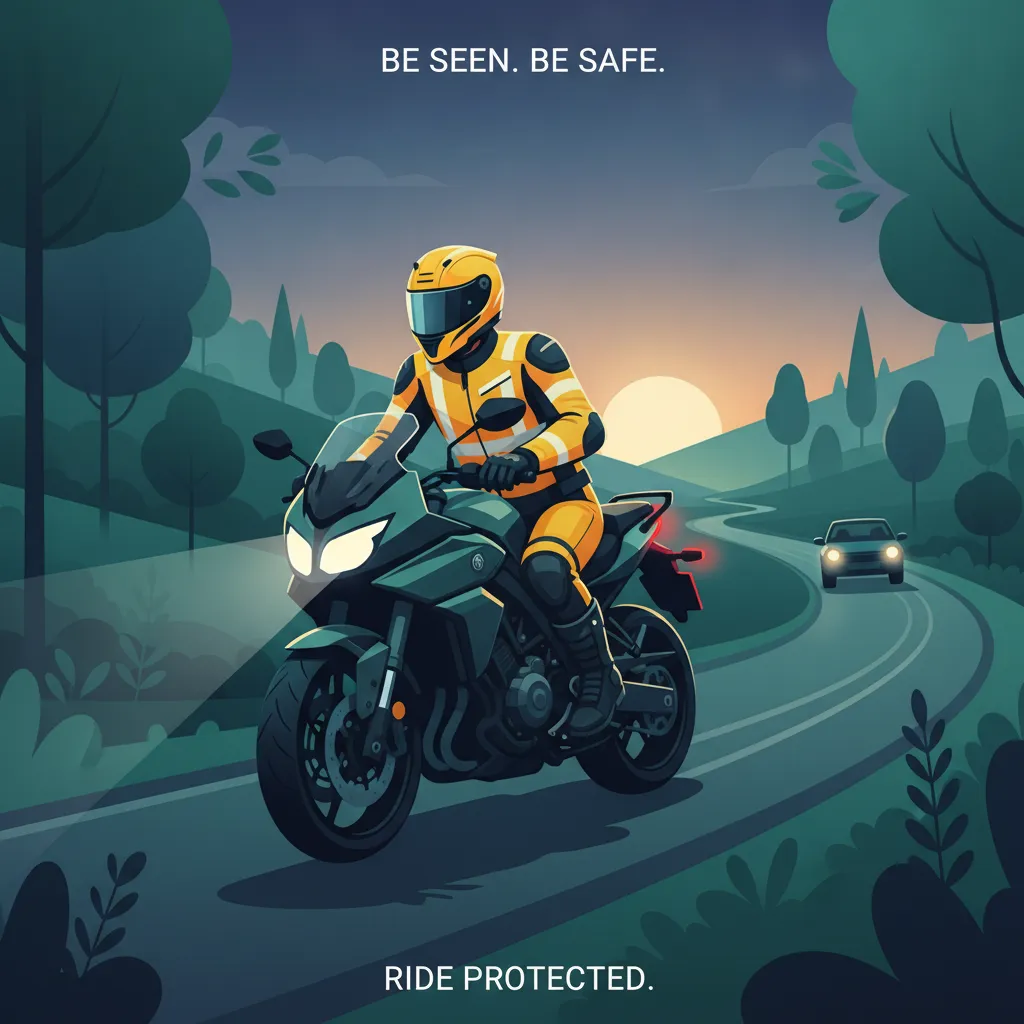
This lesson details the importance of personal protective equipment for rider safety. It covers the legal standards for helmets in Germany, the benefits of wearing abrasion-resistant jackets and gloves, and the value of high-visibility clothing. It also explains the proper use of vehicle lighting systems to ensure visibility to others.
Find clear answers to common questions learners have about Weather Conditions: Rain, Snow, Fog, Ice. Learn how the lesson is structured, which driving theory objectives it supports, and how it fits into the overall learning path of units and curriculum progression in Germany. These explanations help you understand key concepts, lesson flow, and exam focused study goals.
You may only switch on your rear fog light when visibility is severely restricted by fog, specifically to less than 50 meters. It is crucial to switch it off immediately when visibility improves to avoid dazzling drivers behind you.
You should reduce your speed immediately by taking your foot off the accelerator, keep the steering wheel straight, and avoid sudden braking. Pumping the brakes or turning the wheel sharply can cause you to lose control of the vehicle completely.
On snow or ice, you must significantly increase your following distance compared to dry roads. Because your braking distance is much longer due to reduced tire grip, the standard two-second rule should be extended to four or more seconds for safety.
Yes, in Germany, you are required to use tires suitable for weather conditions (winter or all-season tires with the Alpine symbol) when driving on roads covered in slush, snow, or ice. Failing to do so can result in fines and insurance issues.
Begin your targeted revision now. Use our practice search to quickly find specific German driving theory questions. Filter by StVO rules, road signs, or hazard perception to create your focused study plan. Master challenging areas and prepare confidently for your theoretical driving test.