
This lesson guides you through the unique safety requirements for navigating tunnels and bridges, which are vital components of the German road network. You will learn the correct procedures for lighting, following distance, and emergency responses to help you pass your Category B theory exam and drive confidently.
Lesson content overview
Driving on German roads, whether for a daily commute or a long-distance journey, often involves encountering a variety of special road structures. Tunnels and bridges, in particular, present unique challenges and require specific driving techniques and adherence to safety regulations. This comprehensive guide, part of the German Driving License Theory – Comprehensive Category B Course, will equip you with the knowledge needed to safely navigate these distinctive environments.
Understanding the specific rules and potential hazards associated with tunnels, bridges, and other special road structures is crucial for all drivers. These environments can significantly alter visibility, vehicle stability, and required reaction times, making proactive awareness and adaptation essential for safe travel.
Tunnels are enclosed road sections designed to pass through natural obstacles like mountains or under bodies of water, thereby limiting natural light and air circulation. They can range from short underpasses to several kilometres long, each presenting a unique driving environment.
One of the most critical rules for driving in tunnels is the mandatory use of dipped headlights (Abblendlicht). Upon entering any tunnel, regardless of the time of day or the level of artificial lighting inside, you must switch on your dipped headlights. This regulation is not merely a recommendation; it is a legal requirement in Germany (StVO).
Even on a bright sunny day, the sudden transition from intense sunlight to the dimmer light inside a tunnel can temporarily impair your vision. Dipped headlights help your eyes adapt more smoothly and ensure your vehicle remains visible to others.
Using dipped headlights improves your visibility to other road users and ensures you can clearly see the road ahead, traffic signs, and any potential hazards within the tunnel. High beams, or Fernlicht, should never be used in a tunnel as they can cause severe glare for oncoming drivers and those ahead of you, creating dangerous situations.
Due to confined spaces, reduced visibility, and the potential for rapid traffic changes, maintaining an adequate safe following distance (Sicherheitsabstand) is even more critical in tunnels. The general rule of maintaining a distance equivalent to half your speed in metres (e.g., 50 metres at 100 km/h) applies, but it's often advisable to increase this distance further in tunnels, especially longer ones.
A larger gap allows for more reaction time if the vehicle ahead brakes suddenly, reduces the risk of chain-reaction collisions, and provides space for emergency manoeuvres if needed. Traffic conditions, vehicle speed, and individual visibility should all influence your chosen following distance.
While there isn't always a specific lower speed limit for tunnels, drivers must adapt their speed to the prevailing conditions. If visibility is poor, traffic is heavy, or you feel uncomfortable, reduce your speed accordingly. Always be prepared for sudden stops, debris on the road, or unexpected breakdowns.
Tunnel-specific hazards include:
Never stop or reverse in a tunnel unless absolutely necessary for safety reasons or directed by emergency services.
Bridges are elevated structures that span obstacles such as rivers, valleys, or other roads. While they offer vital connections, they also present specific environmental and structural challenges for drivers.
One of the most significant hazards on bridges, especially during colder months, is the increased likelihood of ice formation (Glatteisbildung). Bridges are exposed to the elements from all sides – above, below, and horizontally. This means their road surfaces cool down more quickly and freeze faster than regular roads, which are insulated by the ground beneath them.
A thin, transparent layer of ice that forms on road surfaces, often invisible to the driver, making the road extremely slippery.
Even when surrounding roads appear dry, bridge surfaces can be dangerously icy. Always assume that bridges will be more slippery than other road sections during freezing temperatures or when there's frost. Reduce your speed significantly when approaching and driving over bridges in winter conditions. Avoid sudden braking or steering movements, which can easily lead to a loss of traction.
Due to their exposed nature, bridges are also highly susceptible to strong crosswinds (Seitenwind). These winds blow perpendicular to the direction of travel and can exert considerable force on vehicles, pushing them sideways or causing instability. This risk is particularly pronounced for:
When driving on a bridge in windy conditions, be prepared to counter-steer gently into the wind to maintain your lane. Reduce your speed to improve vehicle stability and maintain an even larger following distance, as sudden braking might make your vehicle less stable. Pay close attention to wind warning signs, which are often displayed before bridges known for strong crosswinds.
Safety in tunnels is paramount, and this includes robust provisions for emergencies. As a driver, it's essential to be aware of and understand how to use these facilities.
Tunnels are equipped with clearly marked emergency exits (Notausgänge) and sometimes rescue bays (Pannenbuchten) or emergency lanes. Emergency exits are typically illuminated with green signs showing a running person and an arrow, directing you to a safe escape route, often leading to a parallel escape tunnel or outside.
Upon entering a tunnel, make a mental note of the distance markers and the location of the nearest emergency exits. Knowing their approximate distance can save crucial time in an emergency. Rescue bays are designated areas where you can safely pull over if your vehicle breaks down, allowing emergency services clear passage.
Beyond exits, tunnels are also equipped with various emergency tools:
Notruftelefone): These phones connect directly to emergency services or the tunnel control centre, allowing you to report incidents quickly.Feuerlöscher): Often located near emergency phones or within rescue bays, these are for initial response to small fires.Hydranten): Some tunnels have these for fire brigade use.Familiarize yourself with the layout and emergency provisions of long tunnels you frequently use. This preparedness can be life-saving.
In the event of an emergency (e.g., fire, major accident):
If traffic is stopped, turn off your engine, leave the key in the ignition, and activate your hazard warning lights.
Exit your vehicle immediately and quickly move to the nearest emergency exit, following the green illuminated signs.
Help others if it is safe to do so, but prioritize your own safety.
Use an emergency phone to alert authorities if you haven't already seen emergency services arrive.
Effective visibility management is a cornerstone of safe driving, particularly when encountering tunnels and bridges. The rapid changes in lighting and environmental conditions demand a conscious effort from the driver.
As discussed, dipped headlights are mandatory in tunnels. Their primary role is to ensure that your vehicle is clearly seen by others, preventing rear-end collisions or head-on crashes in multi-lane tunnels with opposing traffic. They also illuminate the road directly in front of and around your vehicle without causing glare that might temporarily blind other drivers.
Never rely solely on automatic light sensors in tunnels, as they might not react quickly enough to the sudden change in light or might choose an inappropriate light setting (e.g., daytime running lights, which are insufficient). Manually switch to dipped headlights.
Any reduction in visibility, whether due to a tunnel's dimness, fog on a bridge, or the glare from oncoming traffic, directly impacts a driver's reaction time. If you cannot see far enough ahead, your brain has less time to process information, assess risks, and initiate a response. This reduced reaction time necessitates:
The German Road Traffic Act (Straßenverkehrs-Ordnung - StVO) sets out clear rules for driving in these special environments, emphasizing safety and preparedness.
Ignoring these rules can lead to significant penalties, including fines and points on your driving license. For instance, failing to use dipped headlights in a tunnel or driving too close to the vehicle in front are common violations that are subject to fines. The rationale behind these penalties is to reinforce safe driving behaviour and prevent accidents that can have severe consequences in confined spaces like tunnels or on exposed structures like bridges.
Even experienced drivers can sometimes make errors when navigating tunnels and bridges. Awareness of these common pitfalls can help you avoid them.
A frequent mistake is not switching on dipped headlights, especially on brightly lit days when entering a tunnel, or relying on daytime running lights which are insufficient. Another error is switching on high beams out of habit or misconception. Always make a conscious effort to select the correct lighting.
Many drivers underestimate the risk of ice on bridges, assuming that because the main road is clear, the bridge will be too. Similarly, the force of crosswinds is often underestimated until a vehicle is already being buffeted. Pay close attention to temperature warnings, weather forecasts, and windsock indicators.
The temptation to follow the vehicle ahead too closely in low visibility can be strong, but it's incredibly dangerous. It severely limits your reaction time. Always consciously increase your following distance in tunnels, on bridges, and in adverse weather.
In an emergency, panic can lead to dangerous decisions, such as attempting a U-turn in a tunnel or trying to reverse. Familiarize yourself with emergency procedures and trust the marked exits and equipment.
Safe driving is highly contextual. Your approach to tunnels and bridges must vary depending on specific circumstances.
Driving through tunnels and over bridges demands a heightened sense of awareness and specific safety measures. To ensure your safety and the safety of others:
Abblendlicht) when entering a tunnel, regardless of ambient light. Adapt your speed to maintain clear visibility.Sicherheitsabstand) in tunnels and on bridges, increasing it in adverse conditions.Glatteisgefahr) and when encountering strong crosswinds (Seitenwind).Notausgänge) and equipment within tunnels. Know the procedure for evacuation in an emergency.Adhering to these principles and understanding the unique challenges of these structures will make you a safer and more confident driver on Germany's roads.
This lesson covers the essential safety rules for navigating tunnels and bridges in Germany, emphasizing that dipped headlights are mandatory in all tunnels under StVO, following distances must be increased due to confined spaces and reduced visibility, and bridges present unique hazards including faster ice formation and exposure to strong crosswinds. The lesson also details emergency procedures including how to locate and use emergency exits, rescue bays, fire extinguishers, and emergency phones, while warning against common mistakes like relying on automatic lights, underestimating bridge ice risks, or panicking during tunnel emergencies. Understanding these specific rules and hazards is critical for passing the Category B theory exam and driving safely on German roads.
A short set of high-value points that capture the most important learning from this lesson.
Dipped headlights (Abblendlicht) are legally mandatory in all German tunnels under StVO Section 17, regardless of ambient light conditions outside
Bridge surfaces freeze faster than regular roads because they lack ground insulation beneath them, creating black ice hazards even when adjacent roads appear dry
Emergency exits in tunnels are marked with green illuminated signs showing a running person, and drivers should note their locations upon entering
Strong crosswinds on bridges pose particular danger to high-sided vehicles, lightweight cars, and vehicles towing trailers
Never stop or reverse in a tunnel unless directed by emergency services; use rescue bays (Pannenbuchten) for breakdowns instead
Explore all units and lessons included in this driving theory course.
The rule of half your speed in metres as minimum following distance (e.g., 50m at 100 km/h) applies but should be increased in tunnels and on bridges
Bridges are exposed from all sides, so their surfaces cool and freeze faster than normal roads during cold weather
Wind warning signs are often displayed before bridges known for strong crosswinds; reduce speed and counter-steer gently if needed
High beams (Fernlicht) must never be used in tunnels as they cause dangerous glare for other drivers
Emergency equipment in tunnels includes Notruftelefone (emergency phones), Feuerlöscher (fire extinguishers), and clearly marked Notausgänge (emergency exits)
Relying solely on automatic light sensors in tunnels instead of manually switching to dipped headlights, as sensors may not react quickly enough to sudden light changes
Assuming a bridge is safe from ice just because surrounding roads appear dry; bridges freeze first due to exposure from all sides
Following the vehicle ahead too closely in tunnel conditions, severely limiting reaction time in confined spaces
Attempting to reverse or make a U-turn in a tunnel during an emergency instead of proceeding to the nearest emergency exit
Underestimating crosswind force on bridges until the vehicle is already being pushed sideways, especially when driving high-sided or trailer vehicles
Lesson content overview
A short set of high-value points that capture the most important learning from this lesson.
Dipped headlights (Abblendlicht) are legally mandatory in all German tunnels under StVO Section 17, regardless of ambient light conditions outside
Bridge surfaces freeze faster than regular roads because they lack ground insulation beneath them, creating black ice hazards even when adjacent roads appear dry
Emergency exits in tunnels are marked with green illuminated signs showing a running person, and drivers should note their locations upon entering
Strong crosswinds on bridges pose particular danger to high-sided vehicles, lightweight cars, and vehicles towing trailers
Never stop or reverse in a tunnel unless directed by emergency services; use rescue bays (Pannenbuchten) for breakdowns instead
Explore all units and lessons included in this driving theory course.
The rule of half your speed in metres as minimum following distance (e.g., 50m at 100 km/h) applies but should be increased in tunnels and on bridges
Bridges are exposed from all sides, so their surfaces cool and freeze faster than normal roads during cold weather
Wind warning signs are often displayed before bridges known for strong crosswinds; reduce speed and counter-steer gently if needed
High beams (Fernlicht) must never be used in tunnels as they cause dangerous glare for other drivers
Emergency equipment in tunnels includes Notruftelefone (emergency phones), Feuerlöscher (fire extinguishers), and clearly marked Notausgänge (emergency exits)
Relying solely on automatic light sensors in tunnels instead of manually switching to dipped headlights, as sensors may not react quickly enough to sudden light changes
Assuming a bridge is safe from ice just because surrounding roads appear dry; bridges freeze first due to exposure from all sides
Following the vehicle ahead too closely in tunnel conditions, severely limiting reaction time in confined spaces
Attempting to reverse or make a U-turn in a tunnel during an emergency instead of proceeding to the nearest emergency exit
Underestimating crosswind force on bridges until the vehicle is already being pushed sideways, especially when driving high-sided or trailer vehicles
Explore search topics learners often look for when studying Tunnels, Bridges, and Special Road Structures. These topics reflect common questions about road rules, driving situations, safety guidance, and lesson level theory preparation for learners in Germany.
Browse additional driving theory lessons that cover connected traffic rules, road signs, and common driving situations related to this topic. Improve your understanding of how different rules interact across everyday traffic scenarios.
Learn essential emergency protocols for tunnels and unique road structures in Germany. This includes understanding emergency exits, equipment, and dealing with specific hazards to ensure safety.
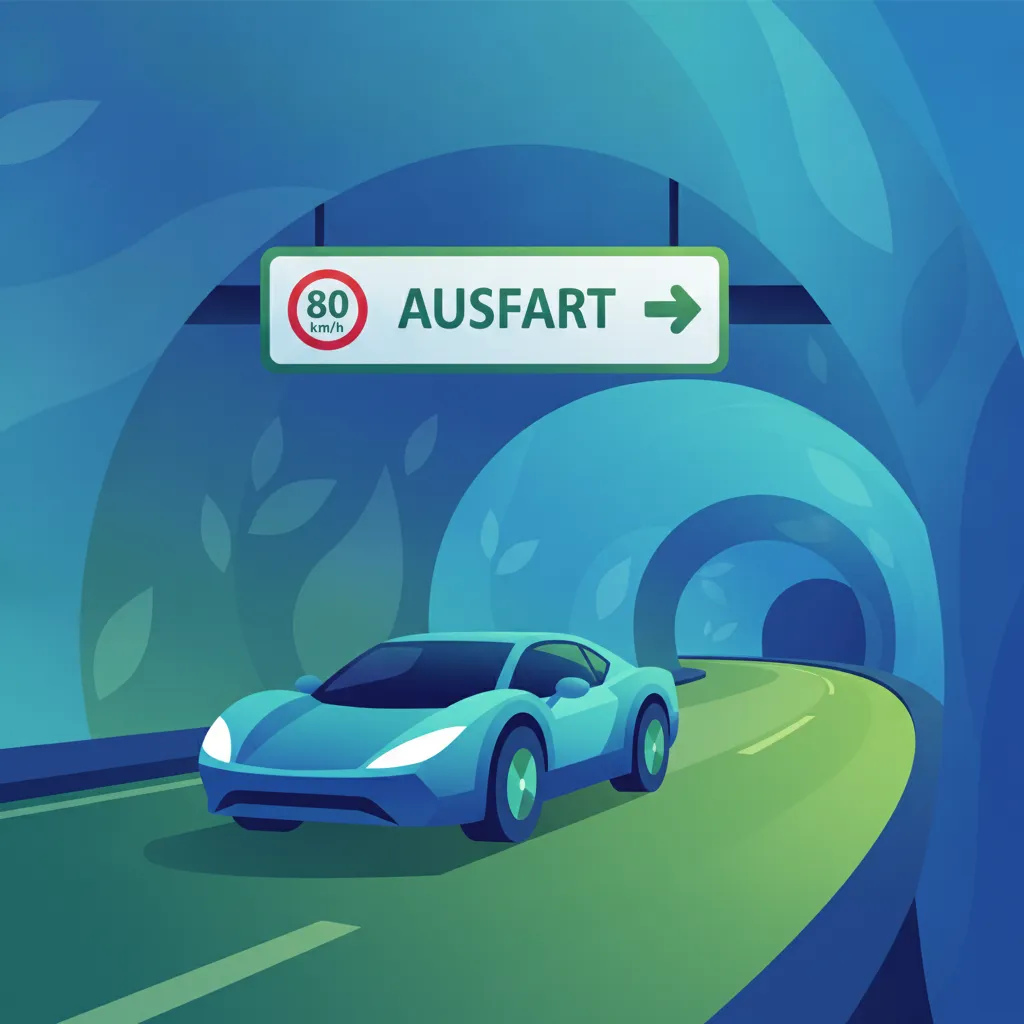
This lesson details the specific regulations and safety considerations for driving in tunnels. It explains the importance of using headlights, adhering to lower speed limits, and maintaining a steady pace to ensure smooth traffic flow. Learners will also be taught how to interpret tunnel-specific signage and the correct procedures to follow in case of a breakdown or fire, including locating emergency exits and breakdown bays.
This lesson focuses on the safe navigation of road tunnels, covering aspects like adjusting to changes in lighting at the entrance and exit. It explains the importance of adhering to specific tunnel speed limits and maintaining lane discipline. Learners will also be taught the correct emergency procedures to follow in case of a breakdown, accident, or fire inside a tunnel.
This lesson focuses on the safe passage of heavy vehicles through tunnels and over bridges, with an emphasis on clearance checks. It explains how to interpret height restriction signs and assess whether the vehicle's load complies with limits. The content also covers appropriate speed control and emergency procedures specific to these structures.
Understand specific German StVO rules for driving through tunnels and over bridges. Learn about dipped headlights, safe distances, emergency exits, and hazards like crosswinds and winter ice.
This lesson details the specific regulations and safety considerations for driving in tunnels. It explains the importance of using headlights, adhering to lower speed limits, and maintaining a steady pace to ensure smooth traffic flow. Learners will also be taught how to interpret tunnel-specific signage and the correct procedures to follow in case of a breakdown or fire, including locating emergency exits and breakdown bays.
This lesson focuses on the safe passage of heavy vehicles through tunnels and over bridges, with an emphasis on clearance checks. It explains how to interpret height restriction signs and assess whether the vehicle's load complies with limits. The content also covers appropriate speed control and emergency procedures specific to these structures.
This lesson focuses on the safe navigation of road tunnels, covering aspects like adjusting to changes in lighting at the entrance and exit. It explains the importance of adhering to specific tunnel speed limits and maintaining lane discipline. Learners will also be taught the correct emergency procedures to follow in case of a breakdown, accident, or fire inside a tunnel.
Find clear answers to common questions learners have about Tunnels, Bridges, and Special Road Structures. Learn how the lesson is structured, which driving theory objectives it supports, and how it fits into the overall learning path of units and curriculum progression in Germany. These explanations help you understand key concepts, lesson flow, and exam focused study goals.
Yes, you must switch on your dipped headlights immediately when entering a tunnel to ensure you are visible to others and to improve your own vision, even if the tunnel is illuminated.
Bridges are prone to rapid temperature changes, which often leads to ice forming on the surface earlier than on surrounding roads. They are also more exposed to strong crosswinds, which can affect vehicle stability.
Turn on your hazard lights, try to reach an emergency bay, switch off the engine, and leave the vehicle using the marked emergency exits. Use the nearest emergency telephone to call for help; do not walk in the tunnel.
Generally, yes, unless specific regulatory signs indicate otherwise. However, you should always adjust your speed to match the current weather conditions, which can be significantly more treacherous on bridges.
Begin your targeted revision now. Use our practice search to quickly find specific German driving theory questions. Filter by StVO rules, road signs, or hazard perception to create your focused study plan. Master challenging areas and prepare confidently for your theoretical driving test.