
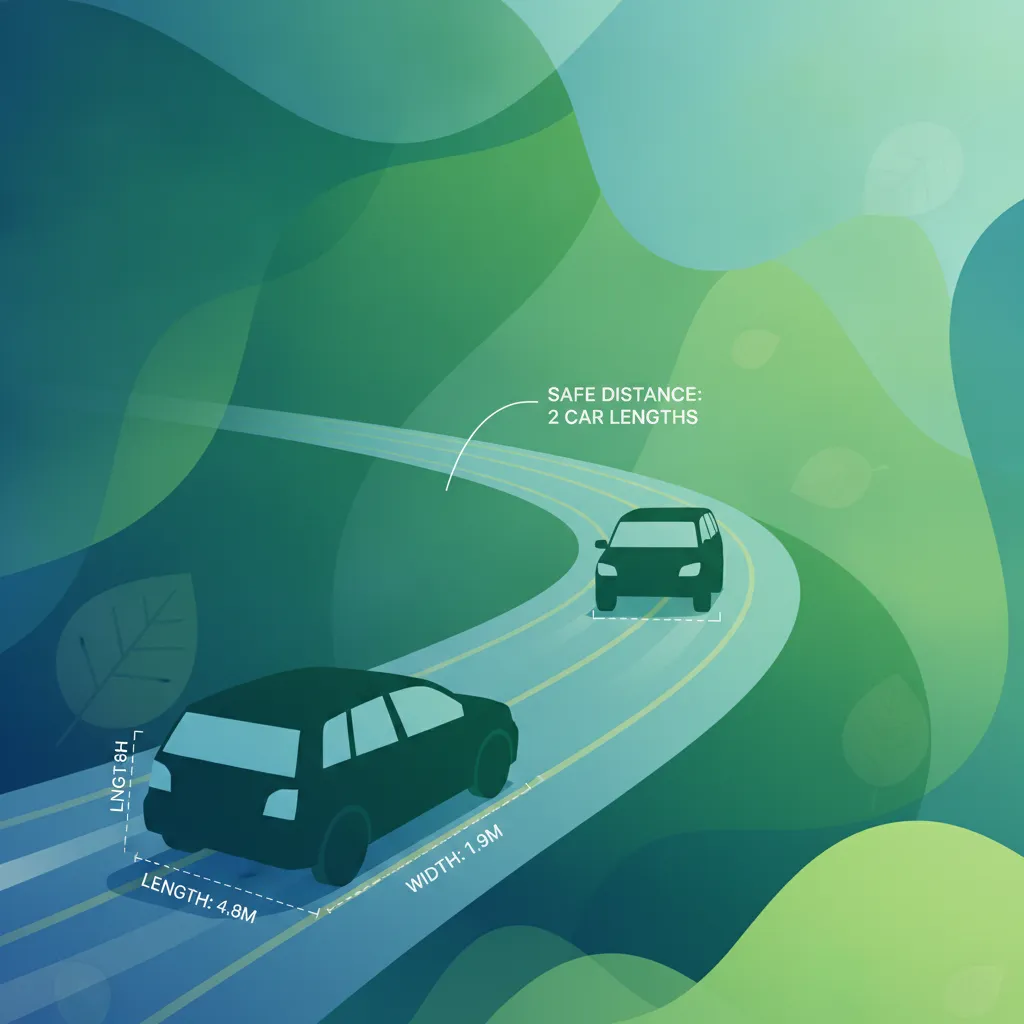
This unit explores how a passenger vehicle's physical characteristics—such as its dimensions, weight, and load distribution—affect its handling and stability. Learners will develop techniques for smooth acceleration and progressive braking to ensure passenger comfort and safety. It emphasizes the critical skills of adapting speed to conditions and calculating appropriate following distances to prevent accidents and maintain control.

This comprehensive curriculum prepares aspiring professional drivers for the German theoretical examination for passenger vehicle categories D1, D1E, D, and DE. It provides a robust foundation in German road traffic law, vehicle dynamics, and the specific responsibilities associated with transporting passengers. The course focuses on developing the knowledge needed to ensure passenger safety, manage vehicle controls effectively, and navigate complex traffic scenarios safely and professionally.
The Vehicle Dimensions, Smooth Control, Speed, Braking and Following Distance unit is a key part of the German Bus & Coach Theory (D) curriculum and helps learners in Germany understand essential theory topics in a clear and practical way. Each lesson breaks down a specific theme that often appears in the German driving theory exam. With structured explanations and examples taken from real traffic situations, this unit helps learners study smarter, fix common misunderstandings, and build the knowledge required for confident exam performance.
Upon completing this unit, you will possess a comprehensive understanding of how your passenger vehicle's physical attributes directly influence its behaviour on the road. You'll be equipped with practical techniques for executing smooth acceleration and braking, ensuring a comfortable and secure environment for your passengers. Crucially, you will learn to dynamically adjust your speed and maintain appropriate following distances, vital skills for preventing accidents and navigating complex German traffic scenarios effectively. This knowledge is directly applicable to the German D1, D1E, D, and DE theory examinations and will significantly enhance your confidence and competence as a professional driver responsible for passenger safety.
This unit is essential for aspiring professional drivers preparing for the German D1, D1E, D, or DE licence theory exams. It is particularly beneficial for those needing to understand how vehicle dynamics impact safe operation when carrying passengers and who want to build a solid foundation for safe driving practices.
See all lessonsExplore key lessons that shape the Vehicle Dimensions, Smooth Control, Speed, Braking and Following Distance unit in the German Bus & Coach Theory (D) curriculum. These lessons focus on exam related topics, important rules, and practical skills that help you progress faster and prepare effectively for the driving theory exam in Germany.

This lesson teaches you how to manage the dimensions, turning radius, and swept path of D1, D, and DE vehicles to ensure safe maneuvering and passenger safety. It is critical for passing the professional driving theory exam and mastering real-world coach operation.

Learn how the placement of passengers and luggage affects vehicle stability and rollover risk for categories D1, D1E, D, and DE. This lesson provides the critical knowledge needed to manage weight distribution safely for both the exam and professional driving duties.
Learn the essential techniques of smooth acceleration and deceleration to ensure passenger safety and professional handling of large passenger vehicles. This lesson provides the technical knowledge required for the D and DE category theory exams in Germany.

Learn the essential techniques for calculating safe following distances and managing speed for large passenger vehicles. Mastering these concepts is vital for ensuring passenger safety and successfully passing your category D or DE theory examination in Germany.
Get answers to common questions about the Vehicle Dimensions, Smooth Control, Speed, Braking and Following Distance unit and how it fits within the German Bus & Coach Theory (D) curriculum. Learn how long the unit takes, how the lessons are structured, and how this unit supports your preparation for the driving theory exam in Germany.
The Vehicle Dimensions, Smooth Control, Speed, Braking and Following Distance unit stands out because it teaches essential topics in a way that is simple, clear, and focused on exam success. All content is aligned with real requirements in Germany and designed to help learners build practical understanding, not just memorise facts. Whether you are revising or learning the material for the first time, this unit provides reliable guidance that supports measurable progress inside the German Bus & Coach Theory (D) curriculum.
Discover additional units that form the complete German Bus & Coach Theory (D) curriculum. These units cover a wide range of essential topics that help learners in Germany strengthen their understanding of road rules, traffic behaviour, and exam relevant theory. Exploring the other units gives you a broader view of the full learning path and helps you continue your progress with confidence.

This unit introduces the scope of D1, D1E, D, and DE driving licences in Germany, focusing on the paramount importance of passenger safety, duty of care, and professional conduct for drivers.
3 lessons
Learn about passenger vehicle construction, vital control systems, and daily safety checks essential for roadworthiness and passing the German professional driver theory test.
4 lessons
Master passenger safety, comfort, accessibility, and conduct for your German D1, D, DE theory test. Essential knowledge for professional passenger transport and creating a positive travel experience.
5 lessons
Master safe passenger exchange at German bus stops, including vehicle positioning, door operation, boarding, alighting, and managing passenger movement for your D/DE theory exam.
6 lessons
Learn to navigate urban traffic safely, focusing on bus lanes, special signals, and interactions with trams, cyclists, and pedestrians for your German professional driver theory exam.
5 lessons
Learn to protect vulnerable road users, manage school transport safely, and navigate high-risk stop areas according to German traffic law. Essential for your D/DE licence theory exam.
4 lessons
Master advanced driving techniques for large passenger vehicles and trailer combinations, including complex turns, blind spot management, and safe reversing, crucial for D1E and DE license holders in Germany.
5 lessons
Master driving on rural roads, Autobahnen, and through tunnels, plus manage weather effects and plan long trips. Essential for German professional passenger vehicle drivers.
5 lessons
Master emergency protocols for German passenger transport: fatigue, breakdowns, fire, evacuation, and passenger incidents. Essential for your D1/D/DE theory exam and professional driving.
5 lessonsBegin your journey to a German driving licence by diving into our extensive collection of practice questions. Identify your strengths and weaknesses across all theory topics and build the confidence needed to pass your official theoretical driving test with ease.