
This lesson focuses on the critical techniques of smooth acceleration and deceleration, which are essential for professional passenger vehicle drivers. By mastering these skills, you ensure passenger comfort, vehicle stability, and increased fuel efficiency. This builds upon your knowledge of vehicle control systems and prepares you for the practical handling scenarios required in your theory exam.

Lesson content overview
Operating large passenger vehicles, such as those in the D1, D1E, D, and DE licence categories, demands a high degree of skill and precision, particularly when controlling speed. Smooth acceleration and deceleration are fundamental techniques that not only ensure passenger comfort and safety but also contribute significantly to vehicle stability, fuel efficiency, and reduced wear and tear on components. This lesson explores the principles, techniques, and practical applications required to achieve an exceptionally smooth ride, crucial for any professional driver.
Smooth acceleration and deceleration refer to the progressive application and release of the accelerator and brake pedals, avoiding any sudden or harsh movements. For professional drivers transporting passengers, this is more than just a preference; it is a critical aspect of duty of care and professional responsibility. Abrupt changes in speed can cause discomfort, anxiety, or even injury to passengers, especially those who are elderly, have mobility issues, or are standing. Moreover, large vehicles react differently to sudden inputs due to their mass and dimensions, making smooth operation essential for maintaining control and stability.
This lesson builds upon foundational knowledge of basic vehicle controls, fundamental traffic rules, and an understanding of vehicle dynamics, particularly how vehicle length, width, height, turning radius, center of gravity, and load distribution impact handling. Mastering smooth speed changes is interconnected with effective speed management and maintaining appropriate following distances, all of which cumulatively enhance safety and efficiency on the road.
Achieving smooth acceleration and deceleration relies on several interconnected principles that professional drivers must internalize and apply consistently. These principles form the bedrock of an efficient, safe, and comfortable driving style.
The technique of applying or releasing the accelerator and brake pedals gradually and steadily, rather than abruptly or with sudden force.
Progressive pedal operation is the cornerstone of smooth driving. It means gradually increasing pressure on the accelerator to build speed, and gradually releasing the accelerator or applying the brakes to slow down. The goal is to minimize any perceptible jerks or jolts inside the vehicle. This technique is vital for maintaining vehicle stability, particularly in longer and heavier passenger vehicles where sudden shifts in momentum are more pronounced and can significantly impact handling. Mastering this requires precise control and a constant awareness of traffic conditions to anticipate the need for speed adjustments.
The practice of continuously observing the road environment far ahead, anticipating potential traffic situations, and planning driving actions in advance to allow for smooth and gradual responses.
Anticipatory driving is a critical mental discipline that enables smooth speed adjustments. By constantly scanning the road ahead, observing traffic flow, and predicting the actions of other road users (e.g., pedestrians, cyclists, other vehicles), a driver can foresee upcoming situations like traffic lights changing, vehicles slowing, or turns approaching. This foresight allows for early, gentle adjustments to speed, eliminating the need for sudden braking or rapid acceleration. It transforms reactive driving into proactive driving, contributing significantly to a consistently smooth and safe journey.
The deceleration of a vehicle achieved by reducing the engine's power output (by releasing the accelerator pedal) or by downshifting gears, using the engine's natural resistance to slow the vehicle.
Engine braking, known in German as "Motorbremse," is a highly effective method for smoothly reducing vehicle speed. Instead of relying solely on the friction brakes, engine braking uses the resistance created by the engine itself when the throttle is reduced or gears are downshifted. This technique provides smoother deceleration, reduces wear on the brake system, and helps prevent the vehicle from becoming destabilized, especially on long descents or when carrying a heavy load. Effective engine braking requires knowledge of appropriate gear changes and foresight to reduce speed sufficiently before applying the service brakes.
Smooth acceleration and deceleration are directly linked to fuel efficiency and environmental sustainability. Avoiding unnecessary rapid acceleration and sudden braking reduces fuel consumption spikes that occur during these aggressive maneuvers. A consistent, smooth driving style optimizes the engine's performance, minimizes fuel waste, and lowers emissions, contributing to more economical operation and a reduced environmental footprint. This is particularly important for professional transport companies managing large fleets.
The distribution of passenger weight and any cargo significantly influences a vehicle's handling characteristics during acceleration and deceleration. A fully loaded passenger vehicle, especially a bus with many standing passengers, has a higher center of gravity and more mass in motion. Understanding how this load shifts during speed changes is crucial. During acceleration, weight tends to shift towards the rear, and during braking, it shifts towards the front. Being mindful of these load shifts allows drivers to adjust their technique to maintain stability and avoid unexpected vehicle behavior, such as excessive sway or nose-diving.
The theoretical principles outlined above translate into specific practical techniques for both increasing and decreasing vehicle speed.
The gradual and controlled increase of throttle pressure to smoothly raise the vehicle's speed without causing abrupt forward surges.
Progressive acceleration is the art of gently increasing throttle pressure to bring the vehicle up to the desired speed. This means avoiding the urge to "floor" the accelerator, which can cause an uncomfortable jerk for passengers and place unnecessary strain on the drivetrain. For low-speed changes, such as moving off from a stop, very light and steady pressure is needed. For higher speed gains, like merging onto a motorway, moderate but still gradual pressure should be applied.
The key is to feel the vehicle's response and adjust accordingly. In longer passenger vehicles, the impact of sudden acceleration is amplified, potentially leading to instability. For instance, when pulling away from a bus stop, a professional driver will apply the accelerator gently and steadily, allowing the vehicle to gain momentum smoothly, ensuring standing passengers maintain their balance without difficulty. This technique is always coupled with anticipatory driving, ensuring there's enough space and time to accelerate gradually.
The gradual reduction of vehicle speed, primarily utilizing engine braking combined with light, controlled application of the service brakes, to bring the vehicle to a smooth stop or lower speed.
Progressive deceleration prioritizes a gradual reduction of speed, aiming to avoid harsh stops that can throw passengers forward. This technique primarily involves using engine braking (by releasing the accelerator and potentially downshifting) as the initial method of slowing down. Once engine braking has reduced speed considerably, light and consistent pressure on the service brakes is applied to bring the vehicle to a complete, smooth stop.
Consider approaching a traffic light: an anticipatory driver will release the accelerator well in advance, allowing the vehicle to coast and engine brake. If further deceleration is needed, a gentle, increasing pressure on the brake pedal will follow, culminating in a smooth halt. This contrasts sharply with sudden, hard braking, which causes passenger discomfort, increases brake wear, and can destabilize the vehicle, especially if it's heavily loaded or on slippery surfaces.
Engine braking is a powerful tool for controlling vehicle speed, particularly useful for professional passenger vehicles. It involves converting the vehicle's kinetic energy into engine resistance, effectively slowing the vehicle without relying heavily on the friction brakes.
Anticipate: Identify situations where speed reduction is needed well in advance, such as approaching a downhill slope, a junction, or a traffic light.
Release Accelerator: Lift your foot completely off the accelerator pedal. This immediately cuts fuel supply to the engine (in modern vehicles), allowing the engine's internal friction and compression to slow the vehicle.
Downshift (if necessary): For more significant deceleration or on steeper descents, manually downshift to a lower gear. This increases the engine's revolutions per minute (RPM), enhancing the braking effect. Ensure gear changes are smooth to avoid jerking.
Combine with Brakes: If engine braking alone is insufficient or a quicker stop is required, apply the service brakes lightly and progressively, working in conjunction with the engine's slowing effect.
The primary advantages of using engine braking include significantly reduced brake wear, prevention of brake fade (overheating) on long descents, and enhanced vehicle control, particularly in adverse weather conditions. Professional drivers must make engine braking their default method for initial speed reduction.
The continuous practice of adjusting and maintaining an appropriate vehicle speed based on prevailing traffic conditions, road type, environmental factors, and the characteristics of the vehicle being driven.
Smooth acceleration and deceleration are integral components of overall speed management. This involves more than just adhering to speed limits; it's about maintaining a speed that is safe, efficient, and comfortable for passengers, while also allowing ample time for smooth maneuvers. Proactive speed adjustment, rather than reactive braking, is the hallmark of a professional driver.
For example, when approaching a roundabout, instead of maintaining speed and then braking sharply, a skilled driver will adjust speed well in advance, using progressive deceleration to arrive at the roundabout at an appropriate speed for merging smoothly. This approach minimizes stress on the vehicle, optimizes fuel use, and ensures a seamless transition for passengers.
As noted, the way a vehicle is loaded — the number of passengers, their distribution, and any luggage — significantly impacts how it behaves during acceleration and deceleration. A high center of gravity, common in buses, makes the vehicle more susceptible to weight transfer effects.
Professional drivers must always be mindful of their vehicle's load and adjust their acceleration and deceleration inputs accordingly. A fully occupied bus requires even gentler, more extended applications of pedals than an empty one.
While specific numerical fines for "non-smooth driving" are not typically codified in the German Road Traffic Act (StVO - Straßenverkehrs-Ordnung), the principles of smooth operation are implicitly mandatory under general provisions requiring drivers to drive responsibly, avoid unnecessary noise or pollution, and ensure the safety and comfort of passengers. Non-compliance often falls under broader offenses related to negligent driving or failing to adapt to conditions.
For professional drivers, maintaining high standards of passenger comfort and safety through smooth driving techniques is not just a best practice; it reflects adherence to the duty of care inherent in their profession.
Failure to adhere to smooth driving techniques can lead to several undesirable outcomes:
The principles of smooth acceleration and deceleration must be adapted to various driving conditions to maintain optimal safety and comfort.
When driving near pedestrians, cyclists, or children, especially around bus stops or schools, professional drivers must exercise extreme caution. All speed changes, whether accelerating after a stop or decelerating to allow passage, must be exceptionally smooth and predictable. Abrupt movements can startle vulnerable users or create an impression of aggression, increasing accident risk.
The way a professional driver accelerates and decelerates has direct and measurable consequences.
Smooth acceleration and deceleration are indispensable skills for professional drivers in the D1, D1E, D, and DE licence categories. These techniques are rooted in the principles of progressive pedal operation, anticipatory driving, and effective engine braking. By consistently applying these methods, professional drivers ensure superior passenger comfort, significantly reduce vehicle wear and maintenance costs, improve fuel efficiency, and enhance overall road safety.
Always prioritize looking ahead and planning your maneuvers, using engine braking as your primary method of speed reduction, and applying friction brakes gently and progressively. Remember to account for the vehicle's load distribution and adapt your driving style to varying weather, road, and traffic conditions, particularly when vulnerable road users are present. Mastering these techniques reflects a commitment to professionalism and a high standard of passenger care.
Smooth acceleration and deceleration are essential professional driving skills for D-category licence holders, involving gradual pedal inputs to ensure passenger comfort and vehicle stability. Key techniques include progressive pedal operation, anticipatory driving that reads the road ahead, and engine braking as the primary method for speed reduction. Vehicle dynamics play a critical role—load distribution causes weight transfer during speed changes, requiring adjusted technique for heavier vehicles. Professional drivers must adapt these principles to varying conditions such as weather, road type, and vehicle load, always prioritizing the duty of care owed to passengers.
A short set of high-value points that capture the most important learning from this lesson.
Progressive acceleration and deceleration—gradual pedal inputs—prevent passenger discomfort and maintain vehicle stability.
Engine braking (Motorbremse) is the primary method for reducing speed smoothly and preventing brake fade on descents.
Anticipatory driving allows early, gentle speed adjustments by reading traffic ahead and planning responses in advance.
Load distribution shifts weight during acceleration (rearward) and braking (forward), requiring adjusted technique for passenger safety.
Smooth driving techniques directly improve fuel efficiency, reduce component wear, and minimize accident risk.
Explore all units and lessons included in this driving theory course.
For acceleration, gently increase throttle pressure; for deceleration, release the accelerator first, then apply brakes progressively.
Engine braking alone is preferred for initial speed reduction before using friction brakes.
Fully loaded vehicles require gentler and longer pedal applications than empty vehicles due to greater mass and higher center of gravity.
On slippery surfaces, maintain larger following distances and use even gentler inputs to preserve traction.
Anticipatory driving transforms reactive braking into proactive speed management through continuous forward observation.
Using sudden, hard braking instead of progressive deceleration, causing passenger discomfort and brake wear.
Relying solely on friction brakes on downhill stretches, risking dangerous brake fade.
Accelerating aggressively when merging or departing stops, unsettling passengers especially those with mobility issues.
Failing to account for load shift effects, leading to unexpected vehicle behavior like nose-dive or rear squat.
Waiting until the last moment to adjust speed near intersections, forcing sudden inputs that compromise smoothness.
Lesson content overview
A short set of high-value points that capture the most important learning from this lesson.
Progressive acceleration and deceleration—gradual pedal inputs—prevent passenger discomfort and maintain vehicle stability.
Engine braking (Motorbremse) is the primary method for reducing speed smoothly and preventing brake fade on descents.
Anticipatory driving allows early, gentle speed adjustments by reading traffic ahead and planning responses in advance.
Load distribution shifts weight during acceleration (rearward) and braking (forward), requiring adjusted technique for passenger safety.
Smooth driving techniques directly improve fuel efficiency, reduce component wear, and minimize accident risk.
Explore all units and lessons included in this driving theory course.
For acceleration, gently increase throttle pressure; for deceleration, release the accelerator first, then apply brakes progressively.
Engine braking alone is preferred for initial speed reduction before using friction brakes.
Fully loaded vehicles require gentler and longer pedal applications than empty vehicles due to greater mass and higher center of gravity.
On slippery surfaces, maintain larger following distances and use even gentler inputs to preserve traction.
Anticipatory driving transforms reactive braking into proactive speed management through continuous forward observation.
Using sudden, hard braking instead of progressive deceleration, causing passenger discomfort and brake wear.
Relying solely on friction brakes on downhill stretches, risking dangerous brake fade.
Accelerating aggressively when merging or departing stops, unsettling passengers especially those with mobility issues.
Failing to account for load shift effects, leading to unexpected vehicle behavior like nose-dive or rear squat.
Waiting until the last moment to adjust speed near intersections, forcing sudden inputs that compromise smoothness.
Explore search topics learners often look for when studying Smooth Acceleration and Deceleration. These topics reflect common questions about road rules, driving situations, safety guidance, and lesson level theory preparation for learners in Germany.
Browse additional driving theory lessons that cover connected traffic rules, road signs, and common driving situations related to this topic. Improve your understanding of how different rules interact across everyday traffic scenarios.
Explore the essential driving techniques for smooth acceleration and deceleration. Understand how anticipatory driving and progressive control enhance passenger comfort, vehicle stability, and fuel efficiency according to German traffic regulations.

This lesson focuses on the factors contributing to passenger comfort during a journey. It explains how to effectively operate climate control and ventilation systems to maintain a pleasant temperature and air quality. Additionally, it discusses strategies for minimizing noise and vibration and the importance of smooth driving techniques to enhance the overall ride experience for passengers.

This lesson delves into the critical control systems of a passenger vehicle: steering, braking, and acceleration. It explains the mechanics of hydraulic and pneumatic brakes and the function of safety aids like ABS and ESP. Learners will understand how to apply smooth acceleration and deceleration techniques to ensure passenger comfort and maintain vehicle stability under various driving conditions.

This lesson covers the crucial skills of managing speed and maintaining a safe buffer from other vehicles. It teaches methods for calculating an appropriate following distance, such as the time-gap method, which adapts to different speeds and conditions. Learners will understand how to adjust their speed based on traffic flow, road surface, and weather to ensure they always have enough time and space to stop safely.

This lesson explores how different weather conditions impact driving safety and vehicle performance. It discusses the risks of hydroplaning in heavy rain, reduced visibility in fog, and loss of traction on snow and ice. Drivers will learn how to adapt their speed, increase following distances, and make smooth control inputs to maintain vehicle stability and prevent skids in these challenging conditions.

This lesson provides strategies for proactively managing passenger behavior to maintain a safe environment for everyone. It covers techniques for supervising passengers, enforcing rules on seat belt use, smoking, and alcohol, and managing luggage placement. The lesson also addresses how to handle disruptive behavior and the driver's role in assisting passengers during an emergency evacuation to ensure an orderly process.

This lesson provides instruction on the rules and best practices for operating a large passenger vehicle on the Autobahn. It covers the principles of strict lane discipline, regulations for minimum speed, and correct procedures for overtaking and merging. The importance of maintaining significantly increased following distances at high speeds and planning for exits well in advance is a key focus.
This lesson introduces the concept of defensive driving ('vorausschauendes Fahren'), a proactive approach focused on anticipating and mitigating potential risks. It teaches techniques for scanning the road ahead, identifying potential hazards early, and managing the space around your vehicle to create a safety buffer. The goal is to develop a mindset that prioritizes safety and collision avoidance above all else.

This lesson examines the professional standards expected of passenger-vehicle drivers. It covers the importance of maintaining public trust through reliability, punctuality, and a professional demeanor. Key skills such as effective passenger communication, conflict resolution, and stress management are discussed as vital components of a driver's accountability and adherence to regulations.

This lesson focuses on the critical relationship between load distribution, the center of gravity, and vehicle stability. It explains how the placement of passengers and luggage can raise the center of gravity, increasing the risk of rollover during turns or sudden maneuvers. Learners will understand how to manage loading within legal weight limits to maintain optimal handling, braking performance, and overall safety.

This lesson addresses the mental aspects of professional driving, focusing on managing stress and eliminating distractions. It identifies common stressors like time pressure and difficult traffic, offering coping strategies to maintain composure. The lesson also categorizes and explains the dangers of visual, manual, and cognitive distractions, providing techniques to maintain full situational awareness and focus on the driving task.
Understand how vehicle length, width, height, turning radius, center of gravity, and load distribution affect driving dynamics. Learn about smooth acceleration, deceleration, and maintaining appropriate following distances as per German traffic law.
This lesson focuses on the critical relationship between load distribution, the center of gravity, and vehicle stability. It explains how the placement of passengers and luggage can raise the center of gravity, increasing the risk of rollover during turns or sudden maneuvers. Learners will understand how to manage loading within legal weight limits to maintain optimal handling, braking performance, and overall safety.
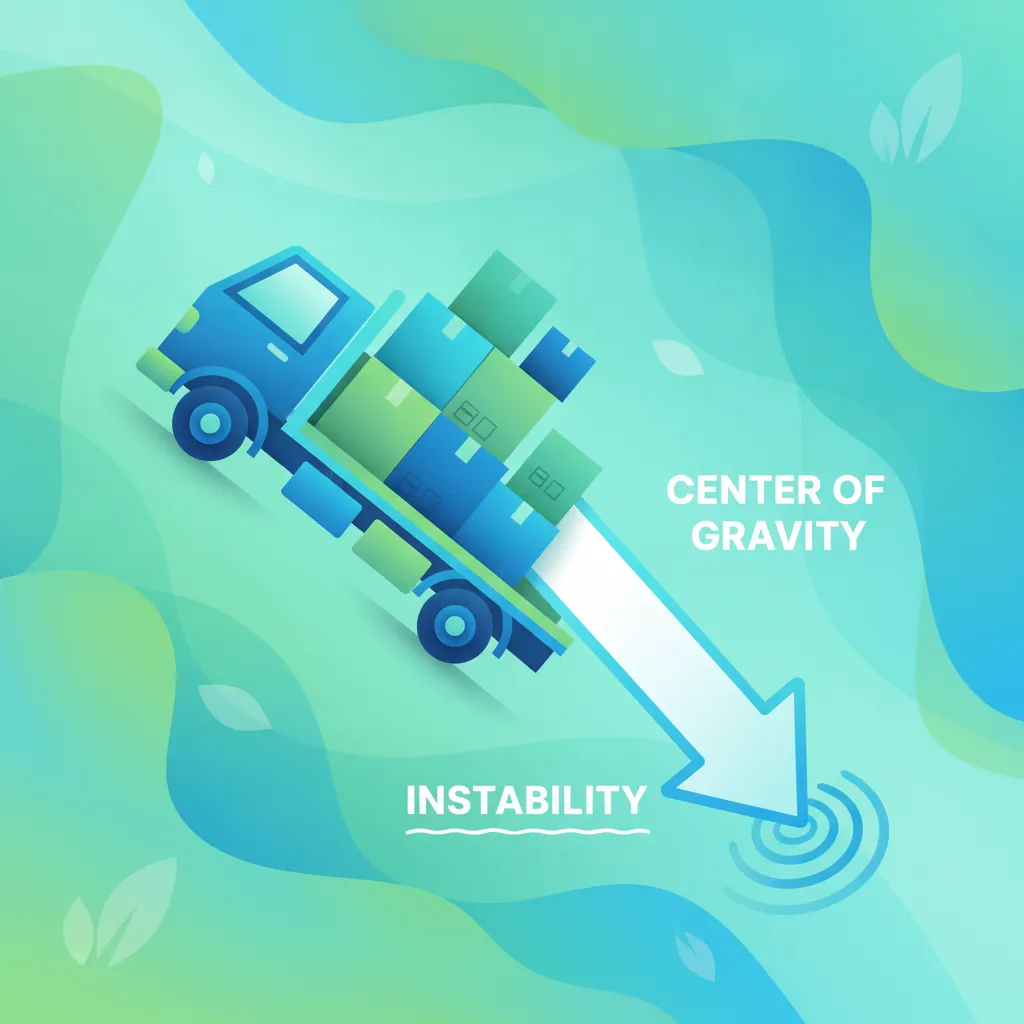
This lesson introduces the principles of load distribution and the impact of the centre of gravity on vehicle stability. It explains how cargo placement influences axle loads and the overall balance of the vehicle. The content emphasizes the importance of maintaining a low centre of gravity to reduce rollover risk.
This lesson introduces the concept of defensive driving ('vorausschauendes Fahren'), a proactive approach focused on anticipating and mitigating potential risks. It teaches techniques for scanning the road ahead, identifying potential hazards early, and managing the space around your vehicle to create a safety buffer. The goal is to develop a mindset that prioritizes safety and collision avoidance above all else.

This lesson serves as an introduction to the driver's interface with the car. It explains the function of the primary controls—steering wheel, accelerator, brake, and clutch—and the gear selector. You will also learn to identify and understand the various symbols and gauges on the dashboard, including the speedometer, fuel gauge, and critical warning lights.
This lesson covers the principles of correct vehicle positioning and lane discipline, which are essential for predictable and safe driving. It reinforces the 'Rechtsfahrgebot' (drive on the right) principle and explains how to choose the appropriate lane on multi-lane roads and motorways. Proper positioning for turns and maintaining a safe space cushion around the vehicle are also key topics.

This lesson examines the direct impact of a passenger vehicle's dimensions on its operation. It explains key concepts such as turning radius, swept path, and rear overhang, which are crucial for safe maneuvering in confined areas. Learners will understand how to account for these characteristics when positioning the vehicle in a lane, making turns, and navigating challenging urban environments to avoid collisions.

This lesson covers the dimensional limits for heavy vehicles, focusing on height, width, and length restrictions. It explains how to interpret clearance signage for bridges, tunnels, and overhead obstacles, and discusses the implications for route planning. The content also addresses the importance of understanding turning radii and swept paths to avoid collisions.

This lesson examines the risks associated with load shifting during braking and cornering maneuvers. It explains how inertia and weight transfer can cause cargo to move, potentially leading to instability or loss of control. The content emphasizes the importance of proper load securing to mitigate these risks and maintain vehicle stability.
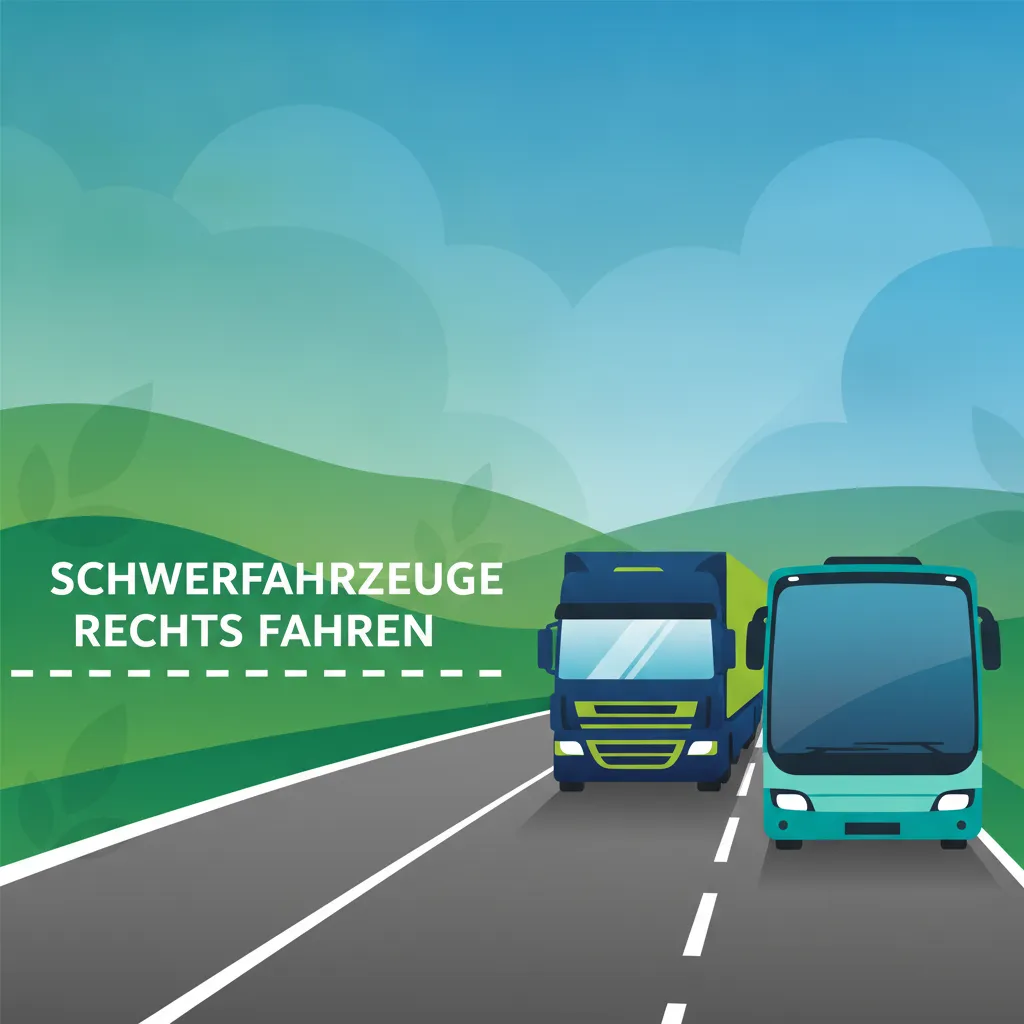
This lesson explains the specific regulations for operating heavy vehicles on Autobahnen, including speed limits, lane discipline, and overtaking rules. It discusses the use of dedicated truck lanes and the importance of maintaining appropriate following distances. The content also covers procedures for merging and exiting high-speed roads safely.
This lesson provides specialized instruction for drivers of D1E and DE category vehicles, which involve towing a trailer. It covers the physics of vehicle combinations, including the effects of the articulation point on turning and reversing. Learners will understand principles of split braking systems, proper load distribution to prevent trailer sway, and the additional safety checks required before operating such a combination.
Find clear answers to common questions learners have about Smooth Acceleration and Deceleration. Learn how the lesson is structured, which driving theory objectives it supports, and how it fits into the overall learning path of units and curriculum progression in Germany. These explanations help you understand key concepts, lesson flow, and exam focused study goals.
Professional drivers carry standing passengers or multiple occupants who are susceptible to injury from sudden jolts. Smooth operation is a legal and ethical requirement to maintain passenger comfort and prevent falls inside the vehicle.
Anticipatory driving allows the driver to spot hazards or changes in traffic early, enabling the use of engine braking or light, progressive pedal application. This avoids the need for harsh, sudden braking which is dangerous for passengers and harder on the vehicle's components.
Yes, heavy passenger vehicles have different momentum and power-to-weight ratios. Accelerated or harsh inputs lead to instability, increased fuel consumption, and higher stress on the driveline and braking systems.
Many learners fail to account for the physical dimensions and weight of the vehicle. Questions often require identifying the need for a longer following distance and earlier, more gradual braking to maintain full control and safety.
Begin your targeted revision now. Use our practice search to quickly find specific German driving theory questions. Filter by StVO rules, road signs, or hazard perception to create your focused study plan. Master challenging areas and prepare confidently for your theoretical driving test.